广告
加载中

安踏上半年营收增长12.9%达435.1亿元 AI工具赋能突显

廖紫琳 2026-08-26 16:03
廖紫琳 2026/08/26 16:03

邦小白快读

EN
全文速览

本文核心是披露安踏集团2026年上半年的财报业绩与最新运营动向,核心干货信息如下

1.核心业绩数据:上半年营收435.1亿元,同比增长12.9%,净利润79.38亿元同比增长12.9%,毛利率提升至63.9%,研发投入11.1亿元占收入2.5%;对比同期海外巨头,阿迪达斯营收增长但耐克大中华区全年营收下滑11%,安踏整体表现稳健。

2.品牌与渠道动向:多品牌矩阵中高端专业品牌增长迅猛,所有其他品牌整体增长44.2%,主品牌收缩低效门店,高端品牌持续拓店,还推出了“安踏市集”新业态,推进灯塔店计划优化下沉市场布局。

3.数字化落地成果:安踏已经将AI工具落地全链路,自研灵龙设计大模型、灵犀穿搭大模型,赋能从研发到零售全环节,提升运营效率与消费体验。

本文为运动品牌运营商提供了多品牌运营与数字化转型的可参考案例,核心干货如下

1.品牌增长策略:打造阶梯式多品牌矩阵,覆盖大众到高端不同层级,聚焦细分专业运动场景,通过赞助顶级赛事、核心商圈开概念店强化专业认知,旗下高端专业品牌整体营收同比增长44.2%,远高于成熟品牌增速,是核心增长引擎。

2.渠道建设方向:持续推进DTC转型,目前直营加电商占比已经达到76.9%,电商占比提升至35.7%,传统批发占比持续下降;不同品牌门店策略分化,成熟品牌收缩低效门店,新兴品牌持续拓店,还通过新业态、概念店激活线下流量。

3.产品研发升级:上半年研发投入11.1亿元,用AI工具赋能全链路,从设计、趋势预测到终端零售都实现AI提效,带动整体毛利率提升0.5个百分点,验证了研发投入的价值。

安踏财报透露出运动服饰赛道的增长趋势与可借鉴的运营经验,核心干货如下

1.赛道增长机会:当前高端专业运动细分赛道处于高速增长阶段,安踏旗下迪桑特、可隆等品牌都保持拓店态势,所有其他品牌整体营收同比增长44.2%,增速远高于大众品牌,是值得布局的增量市场。

2.渠道转型方向:DTC模式已经成为行业主流,安踏DTC收入占比已经提升至76.9%,电商收入同比增长15.7%,传统批发占比持续下降到24%,卖家需要及时调整渠道结构,加大直营与电商布局。

3.可借鉴经验与风险提示:可以学习安踏用AI工具赋能零售端,提升响应速度、转化率与用户体验,通过差异化业态打造社群粘性;同时要注意存量市场竞争下,需要及时清理低效门店,优化零售效率,避免门店冗余拉低整体利润。

安踏的最新运营策略给生产制造端带来了明确的需求变化与转型启示,核心干货如下

1.产品生产设计需求变化:当下运动消费偏向细分专业场景,滑雪、高尔夫、徒步、铁人三项等专业运动品类需求增长快,要求工厂配套对应专业品类的生产设计能力,匹配品牌新品开发需求。

2.生产运营模式调整要求:安踏采用AI预测趋势结合小单快反模式,对工厂的快速响应能力要求大幅提升,需要工厂配合品牌的前置备货、快速翻单需求,才能适配品牌的供应链节奏。

3.商业机会与数字化启示:安踏多品牌矩阵中的高端新兴品牌持续扩张,新品上新频率高,订单需求增量大,工厂可以提前布局专业品类产能,对接品牌订单需求;同时需要跟上品牌的数字化转型步伐,对接智能供应链的相关要求,提升自身竞争力。

安踏的数字化实践透露出当前服饰行业的发展趋势与服务商的市场机会,核心干货如下

1.行业发展趋势:AI全链路赋能服饰行业已经从概念落地到实际运营,头部品牌已经率先完成多环节AI应用布局,接下来会有更多品牌跟进,AI赋能相关服务市场空间广阔。

2.品牌客户核心痛点:传统运营模式下,设计效率低、市场趋势预测不准、终端零售服务能力参差不齐、用户体验不足等问题突出,传统方法很难有效解决,品牌对AI解决方案有迫切需求。

3.可布局的解决方案方向:头部品牌已经验证了三类核心AI需求,分别是设计端的草图转设计稿大模型、供应链端的热点趋势预测工具、零售端的定制穿搭大模型、智能客服、销售培训AI工具,服务商可以围绕这些场景开发成熟产品,对接品牌需求。

安踏的渠道转型动向给各类平台带来了明确的行业风向与调整方向,核心干货如下

1.品牌端的需求变化:当前头部运动品牌都在加速DTC转型,对平台的需求从过去的批发招商转向DTC运营服务、数字化工具支持,尤其需要平台对接品牌AI赋能零售的相关需求。

2.招商与运营调整方向:运动品牌门店布局呈现明显分化,成熟大众品牌在收缩低效门店,而高端专业细分品牌持续保持拓店态势,线上线下都有增量需求,平台招商可以重点倾斜这类高增长品牌,获得新增量。

3.风向规避方向:传统批发渠道持续萎缩,占比已经下降到24%,平台需要及时调整自身业务结构,加大对DTC模式、品牌直营电商的服务投入,围绕品牌数字化、AI赋能升级自身运营能力,适配行业变化趋势。

安踏这份财报反映出中国运动服饰产业的最新发展动向,具备较高的研究价值,核心干货如下

1.产业发展新动向:本土头部运动品牌已经形成成熟的多品牌并购运营模式,通过收购布局高端细分赛道,高端专业运动已经成为产业新的增长极,增速远高于大众成熟品类,改变了过去行业增长依赖大众品牌的格局。

2.商业模式新变化:AI已经全面融入服饰产业全链路,从产品设计、供应链预测到终端零售都实现了商业化落地,成为提升产业效率的新基础设施;渠道结构已经完成转型,DTC模式占比超过75%,成为绝对主流,批发模式持续萎缩。

3.线下零售新变化:线下门店出现分化,大众品牌收缩优化,高端品牌持续扩张,同时出现了体验型、社群型新业态,线下零售从交易场景转向体验场景,这一新动向值得深入研究,也为研究本土品牌的增长模式提供了典型案例。

返回默认
声明:快读内容全程由AI生成,请注意甄别信息。如您发现问题,请发送邮件至 run@ebrun.com 。

我是 品牌商 卖家 工厂 服务商 平台商 研究者 帮我再读一遍。

Quick Summary

This article unpacks Anta Group’s H1 2026 financial results and latest operational developments, with key takeaways as follows:

1. Core performance metrics: The company posted RMB 43.51 billion in half-year revenue, up 12.9% year-over-year, alongside a 12.9% YoY increase in net profit to RMB 7.938 billion. Gross margin improved to 63.9%, and R&D investment hit RMB 1.11 billion, accounting for 2.5% of total revenue. Compared with overseas giants over the same period, Adidas recorded revenue growth while Nike’s full-year revenue in Greater China declined 11%, putting Anta’s steady overall performance in a positive light.

2. Brand and channel developments: High-end professional brands within Anta’s multi-brand portfolio are growing rapidly, with all non-core brands posting an overall 44.2% YoY revenue increase. The group is closing underperforming stores for its core Anta brand while continuing expansion for high-end labels. It has also launched a new retail format called "Anta Market" and rolled out its Lighthouse Store initiative to optimize its footprint in lower-tier markets.

3. Digital transformation outcomes: Anta has integrated AI tools across its entire value chain. It has developed two proprietary large language models – LingLong for product design and LingXi for outfit recommendation – that empower every link from R&D to retail, boosting operational efficiency and improving customer experience.

This article offers a actionable reference case of multi-brand management and digital transformation for sportswear brand operators, with key insights below:

1. Brand growth strategy: Anta has built a tiered multi-brand portfolio covering segments from mass-market to premium, focusing on niche professional sports scenarios. It reinforces its professional positioning through sponsorship of top-tier events and opening concept stores in core commercial districts. Its high-end professional brands delivered a 44.2% YoY overall revenue increase, far outpacing growth of mature brands and becoming the group’s core growth engine.

2. Channel development direction: Anta continues to advance its DTC transformation, with direct-to-consumer (including e-commerce) now accounting for 76.9% of total revenue, and e-commerce alone making up 35.7%. The share of traditional wholesale continues to decline. The group pursues differentiated store strategies across brands: it closes inefficient locations for mature brands while expanding footprint for emerging labels, and leverages new formats and concept stores to drive offline foot traffic.

3. Product R&D upgrading: Anta invested RMB 1.11 billion in R&D in H1 2026, and has adopted AI tools to boost efficiency across its entire value chain, from design and trend forecasting to in-store retail. This improvement in operational efficiency lifted overall gross margin by 0.5 percentage points, validating the value of R&D investment.

Anta’s financial results reveal key growth trends and actionable operational lessons for sellers in the sportswear sector, with key takeaways below:

1. Growth opportunities in the sector: The niche high-end professional sportswear segment is currently experiencing rapid growth. Anta’s brands including Descente and Kolon Sport continue to expand their store footprint, with all non-core brands posting 44.2% YoY revenue growth – far outpacing mass-market brands. This makes the segment a high-potential incremental market worth entering.

2. Channel transformation direction: DTC has become the industry standard, with DTC revenue accounting for 76.9% of Anta’s total. Its e-commerce revenue grew 15.7% YoY, while traditional wholesale dropped to just 24% of revenue. Sellers need to adjust their channel mix proactively and increase investment in direct sales and e-commerce operations.

3. Actionable lessons and risk alerts: Sellers can learn from Anta’s adoption of AI to empower retail operations, improving response speed, conversion rates and customer experience, and building community stickiness through differentiated retail formats. At the same time, in an increasingly saturated market, sellers should proactively exit underperforming stores and optimize retail efficiency to avoid margin erosion from redundant locations.

Anta’s latest operational strategy signals clear shifts in demand and offers transformation insights for sportswear manufacturers, with key takeaways below:

1. Shifts in product design and production demand: Consumer demand is shifting toward niche professional sports scenarios, with categories including skiing, golf, hiking and triathlon growing rapidly. This requires factories to build specialized production and design capabilities matching these categories to align with brands’ new product development needs.

2. Adjustments required for production and operations: Anta combines AI-powered trend forecasting with a fast-turn small-batch production model, which has significantly raised requirements for factories’ rapid response capabilities. Factories need to accommodate brands’ needs for advanced preparation and fast reorders to keep up with brands’ supply chain rhythms.

3. Business opportunities and digital insights: High-end emerging brands in Anta’s multi-brand portfolio are expanding rapidly, with high frequency of new product launches and strong incremental order demand. Factories can proactively build production capacity for professional categories to secure these brand orders. They also need to keep pace with brands’ digital transformation, meet requirements for smart supply chain integration, and improve their own competitiveness.

Anta’s digital practices reveal key industry trends and market opportunities for service providers in the apparel sector, with key takeaways below:

1. Industry trend: AI-powered end-to-end赋能 has moved from concept to real-world implementation in the apparel industry. Leading brands have already rolled out AI applications across multiple business functions, and more brands will follow suit, creating large market potential for AI-related services.

2. Core pain points of brand clients: Traditional operational models suffer from low design efficiency, inaccurate market trend forecasting, inconsistent in-store retail service quality and poor customer experience, problems that are hard to solve with traditional methods. Brands have an urgent demand for AI-powered solutions.

3. Promising solution directions: Leading brands like Anta have validated three core categories of AI demand: design large models that convert sketches to production-ready designs, trend forecasting tools for supply chains, and retail-side AI tools including outfit recommendation models, smart customer service and sales training. Service providers can build mature products tailored to these scenarios to meet brand demand.

Anta’s channel transformation signals clear industry trends and adjustment directions for platform operators, with key takeaways below:

1. Shifting demand from brands: Leading sportswear brands are accelerating DTC transformation. Their demand for platforms has shifted from wholesale merchant recruitment to DTC operation services and digital tool support, with especially high demand for platforms to support brands’ AI-powered retail initiatives.

2. Adjustments to merchant recruitment and operations: Sportswear brands’ store expansion strategies have grown sharply differentiated: mature mass-market brands are closing underperforming stores, while high-end professional niche brands continue to expand their footprint, driving incremental demand both online and offline. Platforms can shift recruitment focus to these high-growth brands to capture new growth.

3. Risk mitigation direction: The traditional wholesale channel continues to shrink, now accounting for just 24% of total industry revenue. Platforms need to adjust their business structure proactively, increase investment in services for DTC models and brand direct e-commerce, and upgrade their operational capabilities around brand digitalization and AI empowerment to adapt to industry changes.

Anta’s latest financial report reveals new trends in China’s sportswear industry and offers high research value, with key insights below:

1. New industry development trends: Leading domestic sportswear brands have developed mature multi-brand operation models via acquisition, entering high-end niche segments through M&A. High-end professional sportswear has become the industry’s new growth engine, with far faster growth than mature mass-market categories, reshaping the industry’s previous growth model that relied heavily on mass-market brands.

2. New business model developments: AI has been fully integrated across the entire apparel industry value chain, with commercialized implementations from product design and supply chain forecasting to in-store retail. It has become new infrastructure for improving industry efficiency. The channel structure transformation is complete, with DTC accounting for over 75% of revenue to become the dominant model, while wholesale continues to decline.

3. New trends in offline retail: Offline store networks are diverging: mass-market brands are optimizing and shrinking their footprints, while high-end brands continue to expand. Meanwhile, new experience-focused, community-oriented offline formats have emerged, and offline retail is shifting from a transaction venue to an experience venue. This new trend is worthy of in-depth research, and Anta provides a typical case for studying the growth model of local Chinese brands.

Disclaimer: The "Quick Summary" content is entirely generated by AI. Please exercise discretion when interpreting the information. For issues or corrections, please email run@ebrun.com .

I am a Brand Seller Factory Service Provider Marketplace Seller Researcher Read it again.

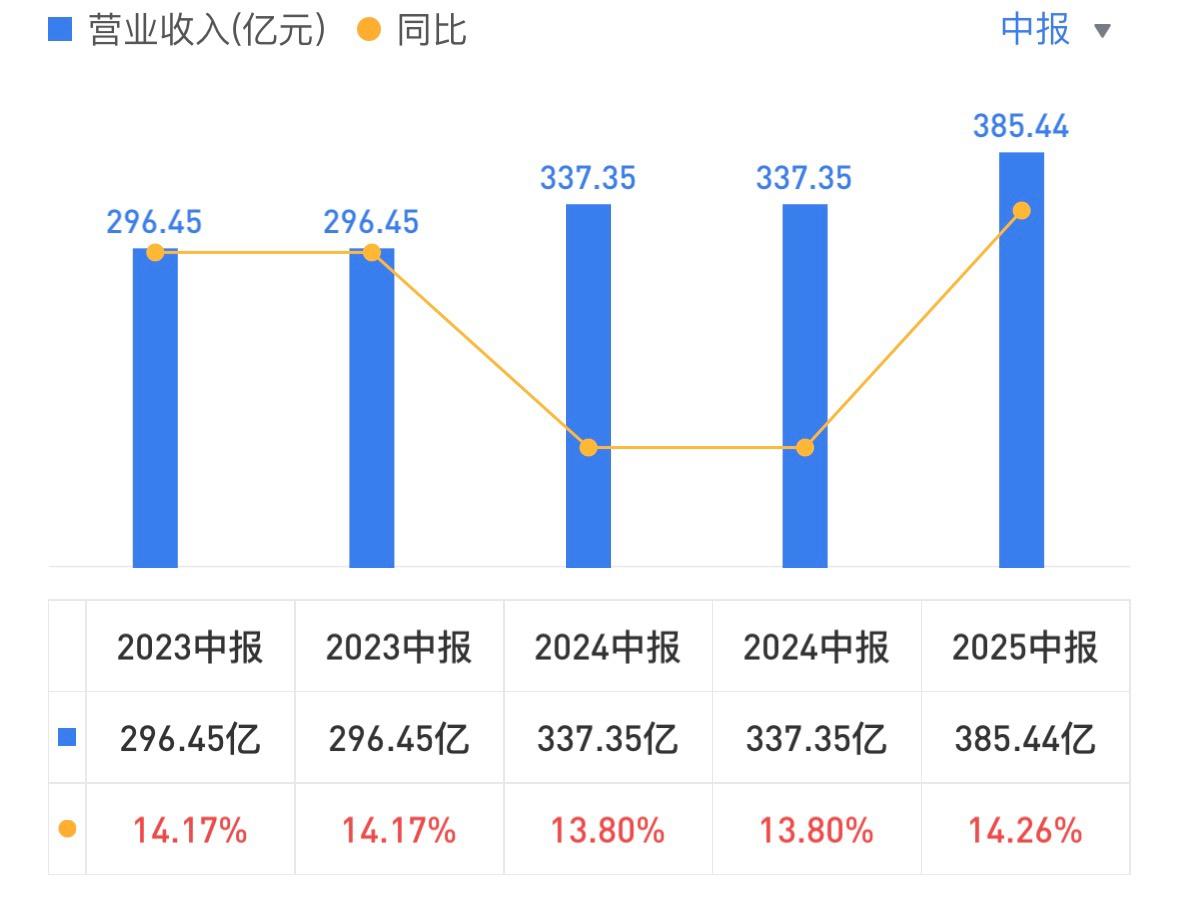
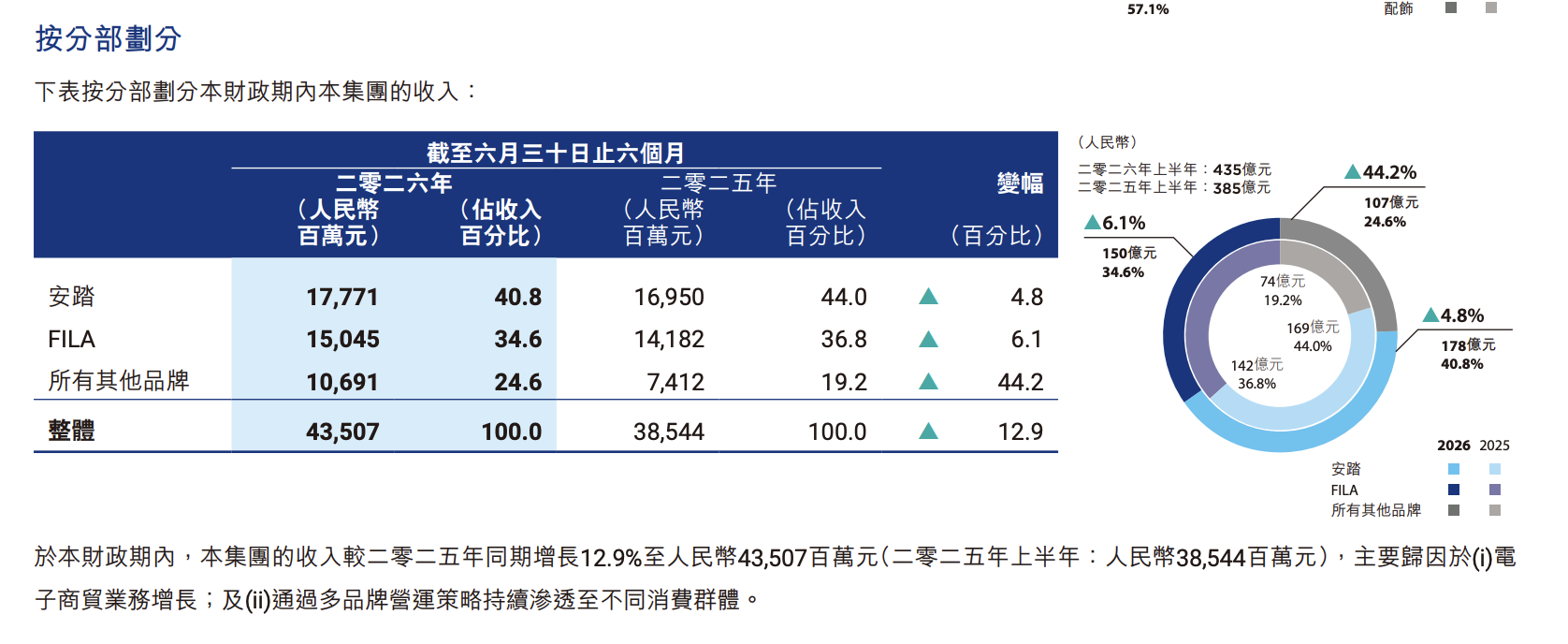
【亿邦原创】今日,安踏集团发布2026年上半年财报业绩:营收达到435.1亿元,同比增长12.9%;净利润同比增长12.9%至79.38亿元(剔除Amer Sports配售事项导致2026年权益摊薄所产生的获利);集团毛利率提升0.5个百分点至63.9%;研发投入11.1亿元,占集团整体收入2.5%。

可以比较的是,同期,阿迪达斯营收达133亿欧元(折合人民币约1042亿元),同比增长14%,其中大中华区上半年实现营收20.9亿欧元,同比增长15%,已连续13个季度实现同比增长。2026财年,耐克全年营收464亿美元,与上一财年持平,大中华区全年营收下降11%至58.47亿美元。

分品牌来说,安踏品牌上半年营收177.7亿元,同比增长4.8%;斐乐品牌150.5亿元,同比增长6.1%;包括可隆、迪桑特在内的所有其他品牌收入106.9亿元,同比增长44.2%。财报中提到,安踏去年收购的JACK WOLFSKIN已确定全场景专业徒步定位,正在推进全面复兴计划,今年下半年将落地全新形象门店和产品。

迪桑特依然是安踏集团的增长永动机。围绕滑雪、高尔夫及铁人三项专业运动场景,报告期内迪桑特合作及赞助有影响力的重大赛事,持续强化品牌专业影响力。与此同时,匹配在滑雪、骑行、跑步、高尔夫等方面的新品上新,和在一线及新一线城市的高端核心商圈开不同类型的概念店,持续带动业绩高增长。本次财报未披露具体业绩数字。

分渠道来看,DTC收入(直营零售+电商)占比合计高达76.9%,去年同期为73.5%,比例上升主要由电商占比提升带来。电商收入占集团整体收入35.7%(去年同期为34.8%),按照绝对金额来计算,电商收入同比增长15.7%。而传统批发收入由去年同期的26.5%进一步下降到24%,金额约42.62亿元。

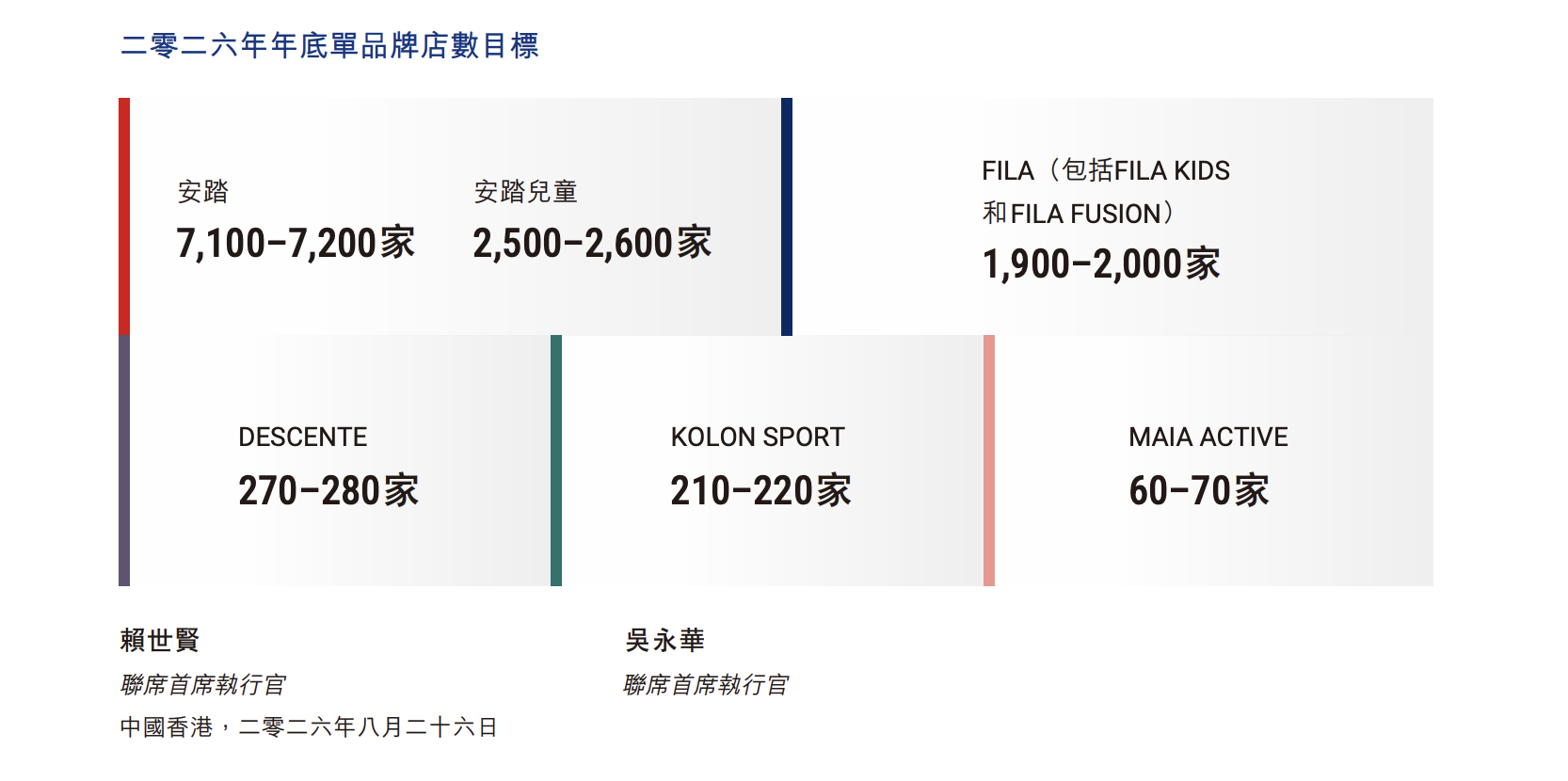
门店数量方面,报告期内,安踏集团多品牌线下门店数量达13000家,其中安踏、FILA相关门店数量进一步减少中,而迪桑特、可隆、MAIA ACTIVE在线下依然保持拓店态势,且根据财报显示下半年将延续这一趋势。

相较于去年底,安踏品牌门店数量由7203家缩减至今年的7122家,安踏儿童门店由2652家减少到2560家;FILA门店净减少43家至1230家,FILA KIDS门店减少30家至548家,FUSION门店从189家减少到176家。迪桑特门店从256家扩张至261家,可隆从209家增加到212家,MAIA ACTIVE增加1家门店到53家。

值得注意的是,今年上半年,安踏还在尝试新的差异化零售业态“安踏市集”,主打运动体验和社群互动。财报透露,安踏下半年还将持续推进灯塔店计划,优化下沉市场门店布局,改善整体零售效率。FILA品牌也在持续推动门店形象焕新与主题概念店铺落地,其中主题概念店ICONA与BIELLA完成升级后,已相继进驻多个城市。

目前,安踏集团仍在持续推进数字化“AI 365”战略:在产品研发环节,自研“灵龙”设计大模型,15秒将概念由草图转化为设计稿;在供应链与营销层面,用AI预测工具分析社交媒体热点数据,提前半年至1年预测市场趋势,并结合小单快反模式与智能仓网前置备货。

而在终端零售场景,穿搭大模型“灵犀”正式上线应用,消费者输入使用场景需求,即可获得定制化穿搭方案与虚拟试衣服务,全面升级线上线下购物体验;AI客服使整体响应速度、满意度、客单转化率显著提高;AI工具赋能一线零售团队,通过产品知识输送与销售场景培训,强化专业服务能力。

亿邦持续追踪报道该情报,如想了解更多与本文相关信息,请扫码关注作者微信。

本文首发于 亿邦动力 官方网站

文章来源:亿邦动力

广告
微信
朋友圈

FAQ回顾

安踏集团2026年上半年经营业绩如何?

安踏集团2026年上半年营收达435.1亿元,同比增长12.9%;净利润同比增长12.9%至79.38亿元,毛利率提升0.5个百分点至63.9%,研发投入11.1亿元,占集团整体收入的2.5%。

安踏的AI数字化战略有哪些落地应用?

安踏推进数字化“AI 365”战略,产品端自研“灵龙”设计大模型15秒可将草图转设计稿;供应链端用AI工具提前半年至1年预测市场趋势;零售端上线“灵犀”穿搭大模型,搭配AI客服、AI零售培训提升服务效率。

安踏集团旗下各品牌2026年上半年营收表现怎么样?

2026年上半年安踏品牌营收177.7亿元,同比增长4.8%;斐乐品牌营收150.5亿元,同比增长6.1%;可隆、迪桑特等其他品牌合计收入106.9亿元,同比增长44.2%,迪桑特是核心增长引擎。

安踏2026年上半年渠道布局有什么调整?

2026年上半年安踏DTC收入占比达76.9%,电商收入占比35.7%、同比增长15.7%;线下总门店13000家,安踏、FILA相关门店缩减,迪桑特、可隆等高端运动品牌保持拓店态势。

这么好看,分享一下?

朋友圈 分享

APP内打开

+1
+1
微信好友 朋友圈 新浪微博 QQ空间
关闭
收藏成功
发送
/140 0