广告
加载中

深耕充电安全、拓展家庭AIoT体系 绿联科技生态布局“两路并进”

王昱 2026-09-16 09:48
王昱 2026/09/16 09:48

邦小白快读

EN
全文速览

你可重点关注绿联发布会公布的两大生态布局信息,作为日常消费选购的实用参考。

1. 充电类产品相关:绿联正从单一充电产品的安全能力,升级为覆盖多产品、多使用场景的充电安全生态。针对当下快充、移动电源普及,多设备同时充电成为日常的现状,品牌将通过系统化技术解决全流程充电安全问题,后续相关产品会更侧重场景化使用的安全性与体验感,而非单纯比拼充电功率和速度。

2. 家庭智能产品相关:绿联正在搭建以本地算力中枢为核心的家庭AIoT生态,中枢设备可接入不同品牌的智能家电,用户只需说出自然语言指令,就能实现多设备协同响应,不用逐个操作设备;产品采用本地优先的安全架构,数据主要存在本地,断网也能使用核心功能,还能唤醒存储的照片、视频等数据主动提供服务。

目前绿联全球累计用户超3亿,充电创意产品、智能存储业务近年增长迅猛,相关AI NAS产品曾拿下NAS品类全球众筹第一,可作为相关产品选购的市场参考。

绿联“两路并进”的生态战略,对消费电子品牌的趋势捕捉、产品研发、生态搭建有较强参考价值。

1. 用户需求与消费趋势洞察:当前充电产品用户的决策逻辑已经变化,从早期单纯关注功率、充电速度,转向更看好多设备充电场景下的安全性与使用体验;家庭智能领域,用户厌倦单设备单指令的繁琐操作,对跨设备协同、数据安全可控、低操作门槛的智能体验需求强烈,同时反感单设备堆砌AI功能带来的高售价问题。

2. 产品与生态布局思路:一方面在成熟核心品类上构筑差异化壁垒,比如充电品类从单品安全延伸至全场景充电安全生态,跳出参数同质化竞争;另一方面抓住AI落地机遇拓展第二增长曲线,将传统NAS存储硬件升级为家庭AI算力中枢,开放接入第三方设备搭建AIoT生态,通过算力复用摊薄用户使用成本,同时联动大模型合作伙伴,兼顾本地算力与云端复杂推理能力。

公开数据显示绿联全球累计超3亿用户,2026上半年两大核心品类增速分别达50%、85%以上,验证了布局方向的市场接受度。

绿联公布的最新业务数据与生态布局,能为3C、智能家居类卖家明确高增长赛道、需求变化方向与可借鉴的经营思路。

1. 高增长赛道机会提示:当前两大细分品类增长势头强劲,2026上半年全球充电创意产品业务同比增长超50%,受AI需求带动的消费级智能存储业务同比增长超85%;其中绿联AI NAS产品曾在众筹平台募资超880万美元,拿下NAS品类全球众筹第一,是国内电商、跨境电商都值得重点布局的增量市场。

2. 消费需求变化方向:充电类产品用户不再只关注功率、充电速度,多设备充电场景下的安全性、使用体验已成为新的核心决策点;智能家居领域,用户更偏好跨设备联动、操作门槛低、数据本地存储、断网可用的产品,对单设备堆砌高成本AI功能导致的高售价接受度较低。

3. 可借鉴的经营思路:核心品类不要局限于卖单品,可做场景化生态延伸,参考“核心单品+生态中枢+周边配套”的模式围绕用户场景组合产品,打造开放的产品接入体系,提升用户复购与粘性,避免陷入参数堆砌的同质化竞争。

绿联最新的生态布局与业务增长数据,为3C消费电子、智能家居类工厂指明了产品设计方向、潜在商业机会与发展思路。

1. 明确产品设计生产新需求:充电类产品要跳出单一比拼功率的设计思路,强化多设备适配、全场景充电安全的系统化能力,匹配用户多设备同时快充、移动电源高频使用的日常场景;智能存储类产品要跳出单一文件存储的功能定位,预留AI算力接入、多设备协议适配空间,满足作为家庭算力中枢的使用需求。

2. 捕捉生态配套商业机会:绿联正在搭建开放的家庭AIoT生态,除核心的算力中枢设备外,还需要适配室内外摄像头、智能音箱、智能相框、扫地机器人、3D打印机等大量生态配套产品,相关品类工厂可提前做协议适配,争取进入绿联生态供应链体系。

3. 生产研发启示:工厂可重点倾斜资源布局高增长品类,目前充电创意产品、AI类消费级NAS相关产品增速分别达50%、85%以上,市场需求旺盛;智能家居产品不必单独堆砌高成本AI算力,可通过适配通用家庭算力中枢降低生产成本,打造高性价比产品;也可结合线上渠道的用户反馈快速调整设计,提升数字化柔性生产能力,匹配消费电子市场的快速变化。

绿联披露的业务布局与用户需求变化,为消费电子、智能家居领域的服务商明确了行业发展趋势、客户核心痛点与服务机会。

1. 把握行业技术发展趋势:消费电子领域两大发展方向清晰,一是充电类产品的竞争从单品功能竞争,转向全场景安全生态的系统化能力竞争;二是家庭智能领域正从单设备智能,转向本地AI中枢主导的跨设备协同,本地算力部署、端侧大模型适配、多设备协议打通、本地优先安全架构将成为未来技术投入的核心方向。

2. 瞄准产业链客户核心痛点:充电类品牌的普遍痛点是难以构建覆盖多产品、多场景的系统化安全能力,容易陷入功率参数比拼的同质化竞争;智能家居品牌的核心痛点是单设备配置AI算力成本过高、不同品牌设备无法协同、用户操作门槛高、云端存储存在数据隐私顾虑、断网时核心功能失效。

3. 对应解决方案方向:可针对充电品牌提供全场景充电安全的技术检测、系统搭建服务;针对智能家居、智能存储品牌提供多设备协议适配、本地大模型轻量化部署、自然语言交互优化等服务,帮助客户降低成本,优化跨设备协同体验。

绿联公布的业务增长数据与生态战略,能为各类电商、众筹平台明确招商方向、运营重点与消费风向。

1. 明确招商与品类运营重点:两大高增长品类值得平台倾斜资源扶持,一是全场景安全类充电创意产品,2026上半年该品类为绿联贡献近半营收,业务同比增长超50%,用户基数大市场规模广;二是AI带动的消费级NAS及家庭AIoT相关产品,该品类2026上半年同比增长超85%,其中绿联AI NAS产品曾在众筹平台募资超880万美元,拿下NAS品类全球众筹第一,用户付费意愿强,是优质增量品类。

2. 优化消费引导方向:平台在做品类运营与消费引导时,要跳出过去对充电产品“唯功率论”“唯速度论”的宣传逻辑,重点突出多场景安全、使用体验等用户新关注点;智能家居品类要重点突出跨设备协同、低操作门槛、本地数据安全、断网可用等核心卖点,契合用户最新需求。

3. 生态合作与风险规避:平台可对接搭建开放AIoT生态的品牌开设专区,打通跨品牌设备控制入口提升用户体验,同时注意规避产品参数虚标、安全性能不足、数据隐私保护不到位等风险。

绿联“两路并进”的生态布局与最新经营数据,为消费电子产业转型、家庭AIoT商业模式创新研究提供了典型微观样本。

1. 消费电子产业新动向:传统3C消费电子品牌正从单一硬件销售转向生态化布局,一方面在成熟品类上构筑差异化竞争壁垒,竞争维度从单一参数比拼,比如充电产品的功率、速度,转向全场景系统化能力,比如全场景充电安全的竞争;另一方面抓住AI向端侧、边缘侧落地的产业机遇,将传统功能性硬件,比如NAS,升级为家庭算力中枢,开辟全新第二增长曲线。

2. 家庭AIoT的商业模式创新:不同于过去智能家居行业“单设备自带独立AI能力”的主流模式,绿联提出的“家庭中枢共享算力”模式,通过中枢设备统一提供存储与AI能力,开放接入第三方设备,既能够提升AI算力在家庭场景的复用率,摊薄单设备配置AI能力的成本,也能通过本地优先架构解决用户数据隐私顾虑、断网功能失效的痛点,是家庭AI落地的全新探索路径。

此外公开的业务增长数据、搭载高算力芯片的新一代中枢产品参数,也能为端侧AI硬件迭代、消费电子产业升级研究提供扎实的产业参考。

返回默认

声明:快读内容全程由AI生成,请注意甄别信息。如您发现问题,请发送邮件至 run@ebrun.com 。

我是 品牌商 卖家 工厂 服务商 平台商 研究者 帮我再读一遍。

Quick Summary

Ugreen’s latest launch event unveiled two key ecosystem strategies that can serve as practical guidance for your everyday consumer tech purchases.

1. Charging product lineup: Ugreen is shifting its focus from standalone charging product safety to a cross-product, cross-scenario charging safety ecosystem. As fast charging and power banks become ubiquitous and charging multiple devices at once grows into a daily routine, the brand will deploy systematic technologies to address charging safety across the entire user journey. Future charging products will prioritize scenario-specific safety and user experience, rather than purely competing on charging wattage and speed.

2. Smart home product lineup: Ugreen is building a home AIoT ecosystem centered on a local computing hub. The hub is compatible with smart home devices from different brands, allowing users to control multiple connected devices with simple natural language commands, instead of operating each device individually. Built on a local-first security architecture, the system stores most user data locally, supports core functions even without an internet connection, and can proactively deliver services by accessing locally stored photos, videos and other personal files.

To date, Ugreen has amassed more than 300 million global users. Its innovative charging products and smart storage business have recorded rapid growth in recent years, with its AI NAS product line ranking first globally in crowdfunding for the NAS category — a useful market reference for related purchase decisions.

Ugreen’s dual-track ecosystem strategy offers valuable reference for consumer electronics brands on trend identification, product R&D and ecosystem building.

1. User demand and consumer trend insights: Purchase decision-making for charging products has evolved: early priority on raw wattage and charging speed has been replaced by growing demand for safety and smooth experience in multi-device charging scenarios. In the smart home segment, users are frustrated by the cumbersome one-device, one-command operation model, and show strong demand for cross-device collaboration, controllable data security, and low-friction smart experiences. They are also resistant to the high price tags caused by stacking redundant AI features on individual devices.

2. Product and ecosystem layout approach: On one hand, Ugreen builds differentiated barriers in its mature core categories — for example, extending its charging business from standalone product safety to a full-scenario charging safety ecosystem, escaping homogenized competition centered on technical specs. On the other hand, it is seizing AI implementation opportunities to build a second growth curve, upgrading traditional NAS storage hardware into a home AI computing hub, opening access to third-party devices to build an AIoT ecosystem, leveraging shared computing power to lower user costs, and partnering with large model developers to balance local computing capabilities and cloud-based complex reasoning.

Public data shows Ugreen has over 300 million global users, with its two core categories recording growth of over 50% and 85% respectively in the first half of 2026, validating market acceptance of its strategic direction.

Ugreen’s latest business performance data and ecosystem layout outline high-growth tracks, shifting demand signals, and actionable operational insights for 3C and smart home sellers.

1. High-growth track opportunities: Two fast-growing subcategories show strong momentum: innovative charging products recorded over 50% year-over-year global growth in H1 2026, while consumer-grade smart storage, driven by surging AI demand, grew more than 85% over the same period. Ugreen’s AI NAS line raised over $8.8 million on crowdfunding platforms, becoming the top global crowdfunding project in the NAS category, representing a high-potential incremental market for both domestic e-commerce and cross-border sellers.

2. Evolving consumer demand: Charging product buyers no longer prioritize wattage and speed alone; safety and user experience in multi-device charging scenarios have become core decision factors. In the smart home segment, consumers prefer products that support cross-device linkage, have low operation barriers, store data locally, and function without internet access, while showing low acceptance of premium pricing caused by stacking expensive AI features on single devices.

3. Actionable operational takeaways: For core categories, sellers should move beyond standalone product sales and expand into scenario-based ecosystems. Adopting a "core product + ecosystem hub + supporting accessories" model to build bundled offerings around user scenarios, creating an open product access system, can boost repurchase rates and user loyalty, and help avoid homogenized competition driven by endless spec stacking.

Ugreen’s latest ecosystem layout and business growth data point to clear product design directions, potential business opportunities, and development paths for 3C consumer electronics and smart home factories.

1. New product design and manufacturing requirements: Charging product design should move away from the single-minded pursuit of higher wattage, and instead strengthen systematic capabilities for multi-device compatibility and full-scenario charging safety, to fit daily use cases such as simultaneous fast charging for multiple devices and high-frequency power bank usage. Smart storage products should expand beyond the single function of file storage, reserving capacity for AI computing access and multi-device protocol adaptation to meet requirements for serving as a home computing hub.

2. Ecosystem supporting business opportunities: As Ugreen builds its open home AIoT ecosystem, it will require a wide range of compatible supporting products beyond the core computing hub, including indoor and outdoor security cameras, smart speakers, smart photo frames, robot vacuums, and 3D printers. Factories in related categories can conduct protocol adaptation in advance to secure positions in Ugreen’s ecosystem supply chain.

3. R&D and production insights: Factories should allocate resources to high-growth categories: innovative charging products and AI-powered consumer NAS are currently recording growth of over 50% and 85% respectively, indicating strong market demand. Smart home products do not need to be equipped with expensive standalone AI computing hardware; instead, they can cut production costs and deliver higher cost performance by adapting to universal home computing hubs. Factories can also leverage user feedback from online channels to iterate designs rapidly, and build digital flexible production capabilities to keep pace with the fast-changing consumer electronics market.

Ugreen’s disclosed business layout and shifting user demand signals clarify industry trends, core client pain points, and service opportunities for service providers in the consumer electronics and smart home sectors.

1. Key industry technology trends: Two clear development directions are emerging in consumer electronics: first, competition in the charging segment is shifting from standalone product functionality to systematic capabilities for full-scenario safety ecosystems; second, the smart home sector is evolving from single-device intelligence to cross-device collaboration led by local AI hubs, making local computing deployment, on-device large model adaptation, multi-device protocol integration, and local-first security architecture core focus areas for future technology investment.

2. Core pain points across the industry value chain: A common pain point for charging brands is the difficulty of building systematic safety capabilities covering multiple products and scenarios, leaving them trapped in homogenized competition around wattage specs. For smart home brands, core pain points include excessively high costs of equipping individual devices with standalone AI computing power, incompatibility across devices of different brands, high user operation barriers, data privacy concerns related to cloud storage, and loss of core functions during internet outages.

3. Corresponding solution opportunities: Service providers can offer full-scenario charging safety testing and system building services for charging brands; for smart home and smart storage brands, they can provide services including multi-device protocol adaptation, lightweight deployment of local large models, and natural language interaction optimization, helping clients reduce costs and improve cross-device collaboration user experience.

Ugreen’s disclosed business growth data and ecosystem strategy offer clear guidance on merchant recruitment priorities, operation focus, and consumer trends for e-commerce and crowdfunding platforms.

1. Merchant recruitment and category operation priorities: Two high-growth categories merit dedicated resource support from platforms. The first is scenario-safe innovative charging products, which contributed nearly half of Ugreen’s revenue in H1 2026 with over 50% year-over-year growth, supported by a large user base and broad market size. The second is AI-driven consumer NAS and related home AIoT products, which recorded over 85% year-over-year growth in H1 2026. Ugreen’s AI NAS line alone raised over $8.8 million on crowdfunding platforms to become the top global crowdfunding project in the NAS category, demonstrating strong user willingness to pay and making it a high-quality incremental category.

2. Optimized consumer guidance: When running category operations and consumer education, platforms should move away from the old promotional logic for charging products that prioritized wattage and speed above all else, and instead highlight new user priorities including multi-scenario safety and user experience. For smart home categories, platforms should emphasize core selling points aligned with latest user demand: cross-device collaboration, low operation barriers, local data security, and offline functionality during internet outages.

3. Ecosystem cooperation and risk mitigation: Platforms can partner with brands building open AIoT ecosystems to launch dedicated zones, and integrate cross-brand device control portals to improve user experience. At the same time, platforms should mitigate risks including exaggerated product specs, insufficient safety performance, and inadequate data privacy protection.

Ugreen’s dual-track ecosystem layout and latest operating data provide a representative micro-level sample for research on consumer electronics industry transformation and home AIoT business model innovation.

1. New trends in the consumer electronics industry: Traditional 3C consumer electronics brands are shifting from standalone hardware sales to ecosystem-based layout. On one hand, they are building differentiated competitive barriers in mature categories, as competition evolves from single-dimensional spec comparison — such as charging wattage and speed — to competition over full-scenario systematic capabilities, including end-to-end charging safety. On the other hand, they are seizing the industrial opportunity of on-device and edge AI deployment, upgrading traditional functional hardware such as NAS into home computing hubs to open up entirely new second growth curves.

2. Home AIoT business model innovation: Different from the mainstream smart home model of equipping each individual device with independent AI capabilities, Ugreen’s "shared computing power via home hub" model centralizes storage and AI capabilities on a central hub and opens access to third-party devices. This model improves the utilization rate of AI computing power in home scenarios, dilutes the cost of equipping each device with standalone AI capabilities, and addresses user pain points around data privacy concerns and offline function failure through a local-first architecture, representing a new exploration path for consumer-facing home AI implementation.

In addition, Ugreen’s disclosed business growth data and the technical specs of its new high-computing-power hub product provide solid empirical reference for research on on-device AI hardware iteration and consumer electronics industry upgrading.

Disclaimer: The "Quick Summary" content is entirely generated by AI. Please exercise discretion when interpreting the information. For issues or corrections, please email run@ebrun.com .

I am a Brand Seller Factory Service Provider Marketplace Seller Researcher Read it again.

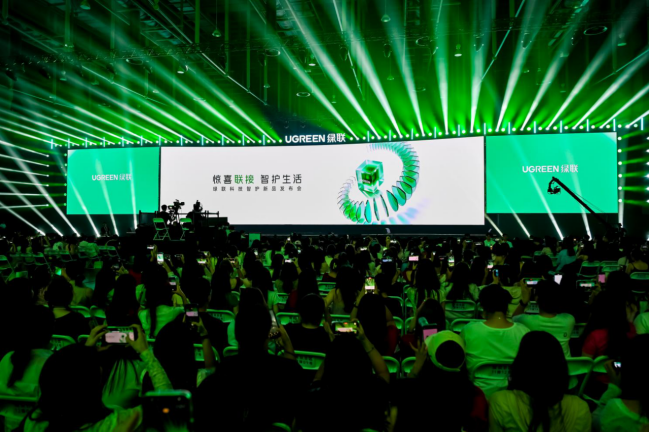
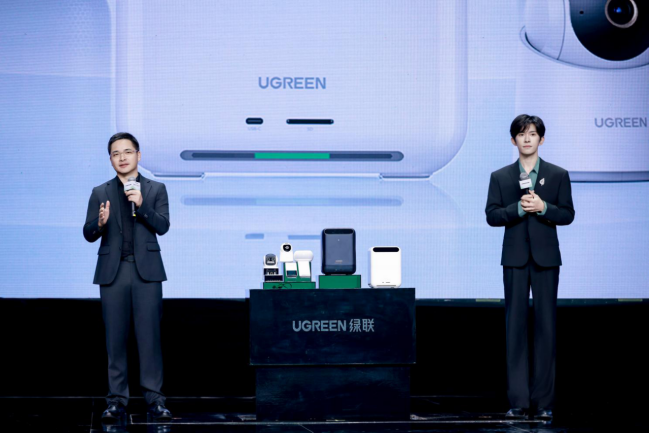
9月12日,UGREEN绿联在厦门举办了主题为「惊喜联接·智护生活」的品牌全球发布会,公布了其在充电安全生态与AIoT生态产品方面的最新战略。

绿联在发布会上披露多项重磅最新数据:目前,绿联在全球已经拥有超过3亿用户。2025年,绿联在泛拓展类消费电子产品实现全球出货量第一;2026上半年,全球充电创意产品业务同比增长超50%,智能存储业务也同比增长超过85%;AI NAS iDX系列在Kickstarter众筹平台募资超880万美元,拿下NAS品类全球众筹第一名。

从业务表现来看,充电产品和NAS产品也正是绿联近年来发展最为迅猛的两大增长引擎。

其最新半年报显示,2026年上半年,其充电创意品类实现收入26.67亿元,同比增长50.02%,贡献了接近一半的营收;受AI需求带动的消费级NAS业务则实现收入7.70亿元,同比增长85.53%,成为公司营收增速最快的产品线。

在本次大会上,围绕这两大“明星品类”,绿联首次明确了其生态布局“两路并进”的战略目标。

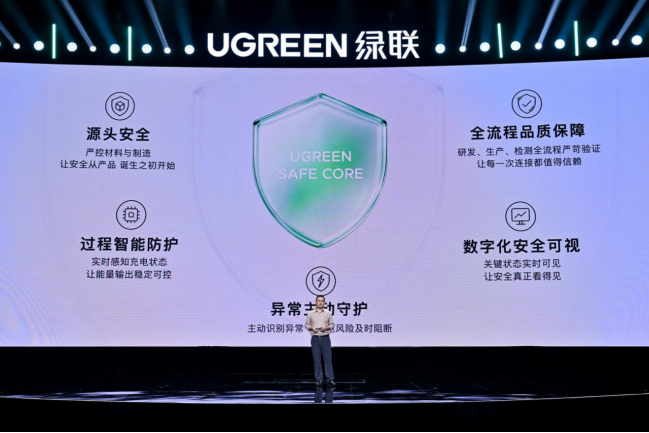
聚焦充电领域,绿联希望推动业务从单一产品的安全能力,进一步走向覆盖更多产品和使用场景的充电安全生态。

绿联科技充电产品负责人 祝新传

过去,消费者对充电产品的关注更多集中在功率和速度上,而随着快充设备、移动电源以及多设备同时充电逐渐成为日常使用场景,安全性和使用体验的重要性也在提升。绿联希望将安全能力从单品延展到更多产品和场景,通过系统化的技术能力解决用户在充电过程中的安全问题。

而在存储领域,绿联则试图突破AI NAS产品只被用来存储文件的传统定位,试图将本地存储、算力与AI智能体结合,使NAS从一个数据存储设备进一步向能够理解、处理和调用数据的个人算力中心演进。

为了实现这一目标,在技术层方面,绿联已经与千问达成深度合作。在面对更加复杂的高难度推理任务时,用户也可切换至云端大模型。

而在应用层,随着AI从云端逐步走向边缘和本地,绿联则希望让AI从云端工具进一步走向更多本地真实生活场景。

绿联科技智能存储产品负责人 魏婷

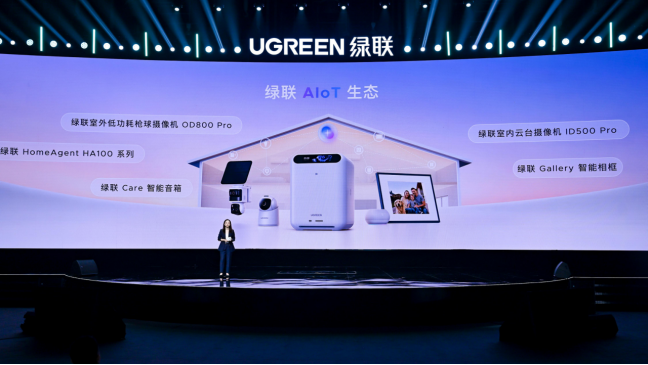
这也意味着,绿联的智能存储业务正在逐渐跳出NAS设备本身,从单一的存储硬件向家庭智能生态延伸。目前,其产品布局已经从NAS进一步拓展至HomeAgent以及AIoT生态产品矩阵。

绿联创始人张清森表示,绿联希望构建一个以AIoT中枢为核心的家庭智能生态。这个中枢既承担中央存储和中央算力,也可以通过协议向扫地机器人、3D打印机等设备共享算力和AI能力。

在这一模式下,每一件家电不必单独配置完整的AI能力和算力,而是由家庭中枢根据不同设备的需求提供相应能力。张清森认为,这种方式可以提高AI算力在家庭中的复用率,同时摊薄单个设备配置AI能力所产生的成本。

绿联科技创始人 张清森

Home Agent作为AIoT的中枢设备,负责提供存储和算力,承担着家庭智能生态“大脑”的角色。

按照绿联的规划,HomeAgent将适配室内及室外摄像头、智能音箱、智能相框等生态产品,同时开放接入更多第三方设备,实现不同设备之间的智能协同。

绿联科技智能存储产品负责人魏婷在发布会上表示,基于本地AI的自然语言交互能力,HomeAgent能够进一步降低家庭智能设备的操作门槛。用户无需逐一操作不同设备,只需要直接表达需求,即可通过一句指令实现多设备联动,从而响应更加复杂的家庭生活场景。

例如,用户可以根据自身生活习惯创建专属场景,让不同设备按照预设逻辑协同工作。相比传统智能家居依赖单设备、单指令的控制方式,HomeAgent试图进一步向跨设备、跨空间的智能协同迈进。

张清森则将绿联HomeAgent的核心价值概括为“唤醒、主动、可信”三个关键词。

在他看来,数据如果只是存放在设备中,长期处于“沉睡”状态,最终只是不断占用存储空间;AI则可以进一步唤醒照片、视频和文件等数据,通过理解和调用这些数据,让原本沉睡的数据产生新的价值。

“主动”则意味着,智能设备不应只是被动等待用户下达指令,而是能够主动感知和理解家庭状态,并在合适的时间提供相应服务。

而在这套体系中,“可信”则是绿联强调的另一项核心能力。绿联采用本地优先的安全架构,用户数据主要存储在本地,即使在断网状态下,核心功能仍能够稳定运行。

如果说HomeAgent瞄准的是家庭日常生活场景,那么此次发布会正式亮相的MasterAgent,则进一步将绿联对于本地AI算力的想象推向了更高的性能层级。

据介绍,MasterAgent是绿联下一代具备更强算力的AI智能体中枢,也是全球首款搭载NVIDIA Jetson Thor™T5000的本地AI智能体存储设备,算力最高可达2070 TFLOPS,能够在本地运行122B参数规模的大模型。结合Arm架构Armv9.2 Neoverse CPU与NVIDIA GPU和 Tensor Core AI加速能力,能满足产品组合中要求更高的AI工作负载,进而根据每个目标细分市场的性能和用户体验要求,灵活选择所需主控性能与算力配置方案,在多元产品上打造差异化的本地AI体验。


本文首发于 亿邦动力 官方网站

文章来源:亿邦动力

广告
微信
朋友圈

FAQ回顾

绿联科技近年的两大核心增长业务是什么?

绿联科技近年两大核心增长引擎为充电创意产品与消费级NAS业务。2026年上半年充电创意品类营收26.67亿元,同比增长50.02%,贡献近半营收;消费级NAS营收7.70亿元,同比增长85.53%,为公司增速最快的产品线。

绿联家庭AIoT生态的核心中枢HomeAgent有什么功能?

HomeAgent是绿联家庭AIoT生态的核心中枢,承担家庭中央存储与中央算力角色,可向接入的各类智能设备共享算力与AI能力,支持自然语言交互实现跨设备联动,采用本地优先安全架构,断网状态下核心功能仍可稳定运行。

绿联MasterAgent本地AI智能体设备有哪些性能优势?

MasterAgent是绿联下一代高算力AI智能体中枢,是全球首款搭载NVIDIA Jetson Thor T5000的本地AI智能体存储设备,算力最高可达2070 TFLOPS,能够在本地运行122B参数规模大模型,可支撑高要求AI工作负载。

绿联在充电领域的最新生态布局方向是什么?

绿联在充电领域将从单一充电产品的安全能力建设,升级为覆盖多产品、多使用场景的充电安全生态,通过系统化技术能力,解决消费者多设备日常充电场景下的安全与体验痛点。

这么好看,分享一下?

朋友圈 分享

APP内打开

赞 +1
+1
微信好友 朋友圈 新浪微博 QQ空间
关闭
收藏成功
发送
/140 0