





广告
加载中

京东发布物理AI建设新成果 加速建设“全球最大物理世界运营中心”

亿邦动力 2026-09-11 10:50
亿邦动力 2026/09/11 10:50

邦小白快读

EN
全文速览

你可以重点关注本次京东科技探索者大会发布的、和日常生活直接相关的AI落地成果,这些功能将直接提升消费、健康、居家等多场景的体验。

1. 购物体验升级,新版京东APP上线AI购物助手“东东”,可精准理解用户真实需求,不再只做商品检索,而是围绕用户要解决的问题匹配海量商品与服务,大幅缩短购物决策时间,让消费更省心。

2. 健康服务升级,京东健康发布的京医千询3.0搭载全智能名医智能体,可模拟专家问诊逻辑,结合用户输入的症状、病史、检查报告给出就医方向,还能联动家用健康监测设备、在线问诊、到家快检、护士上门等服务,把健康管理落到实处。

3. 居家与物流体验升级,JoyInside附身智能已和200余家品牌合作,为家电、家居等硬件植入AI能力,实现全屋主动智能服务;物流“超脑”3.0把包裹路径规划从分钟级压缩到秒级,配送准确率和速度都将进一步提升。

本次京东发布的物理AI建设成果与开放合作计划,为品牌方在产品升级、渠道增长、用户运营层面提供了清晰的合作方向与红利机会。

1. 产品智能化升级支持,京东开放JoyInside附身智能技术,可为家电、家居、玩具、机器人等多品类硬件植入AI大脑,帮助产品从单品响应升级为全屋主动服务,目前已有超200家品牌达成合作,可有效提升产品核心竞争力。

2. 赛道扶持红利,京东零售计划2028年前投入百亿资源布局机器人赛道,目标助力100个相关品牌单品牌独立销售额破10亿元,推动产品进入百万终端场景、覆盖千万用户,赛道内品牌可对接资源获取流量与政策倾斜。

3. 用户运营提效,京东AI购物助手可深度识别用户真实消费需求、精准匹配商品服务,品牌可依托该能力提升商品与用户需求的匹配效率,降低获客成本;超级AI供应链能力也可帮助品牌打通研产销全链路,缩短产品落地周期。

京东本次公布的物理AI落地系列计划,释放了明确的平台扶持方向、赛道增长机会与履约提效红利,卖家可结合自身经营品类对接相关资源。

1. 高增长赛道机会,机器人、智能硬件类产品将成为平台重点扶持品类,京东将投入百亿资源推动该类产品进入百万终端、覆盖千万用户,目标打造100个销售额破10亿的相关品牌,卖家可提前布局相关品类,对接平台招商扶持政策。

2. 转化效率提升机会,平台上线的AI购物助手“东东”可精准识别用户真实需求并匹配对应商品,卖家可优化商品的需求表达,借助AI能力精准触达目标客群,降低引流成本、提升转化效率。

3. 履约成本优化机会,京东物流“超脑”3.0大模型可将亿级包裹端到端路径规划从分钟级压缩至秒级,物流场景具身智能执行成功率达96.7%,可有效提升配送时效、降低履约环节的损耗与成本;此外智能健康、全屋智能类消费需求将随服务能力升级持续释放,卖家可提前布局相关商品抓住增长机会。

京东开放的超级AI供应链能力与机器人产业布局规划,为生产制造类工厂在研发提效、订单获取、数字化转型层面带来了明确的落地机会。

1. 研发设计提效工具支持,京东工业发布的JoyIndustrial2.0大模型,可通过简单语言指令完成机械设计工作,配套3D快速打印能力,能够大幅提升工程师的设计效率,工厂可接入该能力缩短产品研发周期、降低设计成本。

2. 产业配套订单机会,京东未来5年将在全国布局80余个RoboBase机器人产业基地,提供中试组装、生产制造等一体化服务;同时发起成立机器人零部件产业发展联盟,未来3年将助力100家零部件供应商业绩倍增、100家机器人本体厂商全品类降本,相关制造工厂可对接资源获取稳定订单、优化供应链成本。

3. 数字化转型参考,京东打造的“智能飞轮+产业飞轮”双轮模式,可降低新技术从验证到规模化应用的门槛,工厂可参考该逻辑推进生产环节的数字化、智能化改造,对接京东供应链体系拓宽产品销路。

本次京东发布的物理AI技术落地路径与产业开放计划,明确了AI赋能实体产业的发展趋势,也为服务商指明了技术布局方向与客户痛点的解决思路。

1. 行业核心痛点明确,当前物理AI落地普遍面临具身智能训练数据不足、实体场景应用门槛高、机器人规模化落地后配套服务缺失等问题,服务商可围绕这些共性痛点布局对应服务能力。

2. 可复用的技术能力参考,京东已搭建起成熟的AI基建体系:算力端联合摩尔线程等合作伙伴打造国产万卡集群、规划十万卡自主可控算力底座;数据端建成覆盖数据全流程的具身数据基础设施,开源了首批EgoLive数据集;模型端形成覆盖通用与垂域的大模型矩阵,服务商可基于这些开放能力,为千行百业客户打造场景化AI解决方案。

3. 服务市场新机遇,机器人产业快速扩容将带来大量数据采集、场景落地、售后维修服务需求,京东计划5年内建成覆盖全球百余个国家的机器人维修服务网络,创造超10万个售后服务岗位,相关服务商可对接网络承接对应服务需求。

京东在本次科技探索者大会上展示的物理AI融合供应链的平台建设路径,为各类平台的能力建设、生态布局、用户运营提供了可落地的实践参考。

1. 核心能力建设参考,京东以“云、数、模、端、场、链”六大模块为基础打造超级AI供应链,形成智能迭代与产业赋能双飞轮,既通过真实场景数据持续优化AI能力,又通过供应链连接降低技术落地门槛,平台可参考该逻辑,将AI能力深度融入交易、履约全链路,提升整体运营效率。

2. 生态招商布局参考,京东围绕机器人赛道推出全周期扶持计划,覆盖数据采集、产业基地、零部件供应链、零售渠道扶持、场景应用采购、售后网络搭建全链条,平台可借鉴该生态化扶持模式,针对高潜力赛道出台全链路支持政策,吸引优质商家入驻。

3. 用户运营与风险规避参考,京东上线AI购物助手,从传统货架交易升级为需求导向的智能服务,同时拓展健康、居家等多元场景,可有效提升用户粘性;此外推进算力等核心基建的自主可控,也能帮助平台规避外部技术供应链风险,保障服务稳定。

京东本次发布的物理AI落地进展与全产业布局计划,展现了AI从数字世界向物理世界渗透的最新产业动向,正如京东集团技术委员会主席、京东云总裁曹鹏提出的,京东的AI诞生于生产线、仓库、配送站等供应链全流程实践,而非单纯的实验室研发,这些实践为学术与产业研究提供了鲜活的样本。

1. 产业发展新动向,AI落地实体场景的核心载体是深度融合的供应链体系,京东提出的超级AI供应链模式,通过双飞轮机制打通技术迭代与产业落地的堵点,破解了以往AI研发与实体场景脱节的问题;当前具身智能领域面临明确的“数据荒”问题,行业正通过大规模真实场景操作数据采集、开源数据集建设破解瓶颈,京东首批开源的EgoLive数据集已吸引全球8个国家百所科研机构申请使用。

2. 商业模式新探索,京东围绕机器人产业构建了覆盖数据采集、基地建设、供应链整合、零售扶持、场景应用、售后网络的全周期赋能体系,这种全链路参与的模式为硬科技产业规模化落地提供了新的商业范式。

3. 待研究的新议题,当前具身智能在物流多任务场景执行成功率已达96.7%,京东发布的世界模型在导航权威评测中拿到81.6分的顶尖成绩,但如何提升开放复杂场景下的可靠性、如何建立跨行业的物理AI应用标准,都是值得深入研究的方向。

返回默认
声明:快读内容全程由AI生成,请注意甄别信息。如您发现问题,请发送邮件至 run@ebrun.com 。

我是 品牌商 卖家 工厂 服务商 平台商 研究者 帮我再读一遍。

Quick Summary

Key takeaways for everyday users center on AI-powered, life-relevant launches from JD’s Discovery Tech Conference, which will upgrade user experiences across shopping, healthcare, smart home, and logistics scenarios.

1. Smoother shopping experience: The updated JD app rolls out "Dongdong", an AI shopping assistant that does more than retrieve product listings. It interprets users’ actual underlying needs, matches them with a massive pool of relevant products and services, and cuts down decision-making time for more hassle-free purchases.

2. Upgraded healthcare services: JD Health’s Jingyi Qianxun 3.0 features an AI-powered expert consultant agent that simulates the diagnostic logic of top clinicians. Drawing on users’ reported symptoms, medical history, and lab results, it provides clinical guidance, and connects seamlessly with connected home health monitoring devices, online consultations, at-home rapid testing, and visiting nurse services to deliver practical, end-to-end health management.

3. Improved smart home and logistics experiences: Its JoyInside embedded AI solution has partnered with over 200 brands to build AI capabilities into home appliances and furnishings, enabling proactive, whole-home smart services. Meanwhile, JD Logistics’ "Super Brain 3.0" reduces end-to-end parcel routing planning from minutes to seconds, further boosting delivery accuracy and speed.

JD’s newly unveiled physical AI development outcomes and open partnership roadmap present clear collaboration pathways and growth opportunities for brands across product upgrades, channel expansion, and user operation.

1. Support for intelligent product upgrades: JD is opening up its JoyInside embedded AI technology, which can integrate an "AI brain" into hardware across categories including home appliances, home goods, toys, and robotics. The technology moves products beyond isolated, reactive functions to deliver proactive, whole-home scenarios. More than 200 brands have already partnered on the solution, which effectively strengthens core product competitiveness.

2. High-growth track incentives: JD Retail plans to invest RMB 10 billion in resources to develop the robotics sector by 2028, targeting 100 brands in the category to exceed RMB 1 billion in independent brand sales, expand products into millions of end-use scenarios, and reach tens of millions of users. Brands in the track can access these resources to secure traffic support and preferential policies.

3. More efficient user operations: JD’s AI shopping assistant can deeply identify users’ real consumption needs and precisely match products and services, allowing brands to improve demand-matching efficiency and lower customer acquisition costs. Its super AI supply chain capabilities also help brands connect the full R&D, production, and sales cycle to shorten product launch timelines.

JD’s newly announced series of physical AI rollout plans signals clear platform support priorities, high-growth track opportunities, and fulfillment efficiency gains. Sellers can align their category portfolios to access relevant resources.

1. High-growth category opportunities: Robotics and smart hardware will be key supported categories. JD will invest RMB 10 billion in resources to push these products into millions of end scenarios, reach tens of millions of users, and cultivate 100 brands with over RMB 1 billion in sales. Sellers can position their portfolios in these categories early to access platform merchant recruitment and support policies.

2. Conversion improvement opportunities: The platform’s newly launched AI shopping assistant "Dongdong" accurately identifies user needs and matches them to relevant products. Sellers can optimize how product listings address user needs, leverage the AI capability to precisely reach target audiences, reduce traffic acquisition costs, and improve conversion rates.

3. Fulfillment cost optimization opportunities: JD Logistics’ Super Brain 3.0 large model compresses end-to-end route planning for hundreds of millions of parcels from minutes to seconds, with a 96.7% execution success rate for embodied intelligence in logistics scenarios, improving delivery timeliness and reducing fulfillment-related waste and costs. In addition, consumer demand for smart health services and whole-home smart solutions will continue to grow as supporting capabilities improve, creating early-mover opportunities for sellers that stock relevant products.

JD’s open super AI supply chain capabilities and robotics industry layout plans create tangible opportunities for manufacturing factories across R&D efficiency improvement, order acquisition, and digital transformation.

1. R&D and design efficiency tools: JD Industrial’s JoyIndustrial 2.0 large model can complete mechanical design tasks via simple natural language prompts, paired with rapid 3D printing capabilities, to sharply improve engineer design efficiency. Factories can integrate this capability to shorten product R&D cycles and reduce design costs.

2. Industrial supporting order opportunities: Over the next five years, JD will build more than 80 RoboBase robotics industrial bases across China, providing integrated services including pilot testing, assembly, and manufacturing. It has also launched a robotics components industry development alliance, targeting 100 component suppliers to double their revenue and 100 robotics body manufacturers to reduce costs across all product lines in the next three years. Eligible manufacturing factories can connect with these resources to secure stable orders and optimize supply chain costs.

3. Digital transformation references: JD’s dual-flywheel model, combining an "intelligence flywheel" and "industry flywheel", lowers the threshold for moving new technologies from validation to large-scale application. Factories can reference this framework to advance digital and intelligent upgrades of production processes, and connect with JD’s supply chain system to expand product sales channels.

JD’s newly released physical AI implementation roadmap and industry open plan clarifies the trajectory of AI empowering the real economy, and points service providers to clear directions for technology positioning and client pain point resolution.

1. Clear core industry pain points: Current physical AI deployment universally faces challenges including insufficient embodied intelligence training data, high barriers to real-scenario application, and a lack of supporting services after scaled robotics rollout. Service providers can build targeted service offerings around these common pain points.

2. Replicable technology capability references: JD has built a mature AI infrastructure system: on the computing power side, it has partnered with Moore Threads and other partners to build a domestic 10,000-GPU cluster, with plans for a 100,000-GPU self-controlled computing base; on the data side, it has built an embodied data infrastructure covering the full data workflow, and open-sourced its first batch of EgoLive datasets; on the model side, it has developed a large model matrix covering general and vertical domains. Service providers can build on these open capabilities to develop scenario-specific AI solutions for clients across industries.

3. New service market opportunities: The rapid expansion of the robotics industry will create massive demand for data collection, scenario deployment, and after-sales maintenance services. JD plans to build a robotics maintenance service network covering more than 100 countries worldwide within five years, creating over 100,000 after-sales service roles; relevant service providers can join the network to take on corresponding service demand.

JD’s integrated physical AI and supply chain platform development roadmap, showcased at the Discovery Tech Conference, provides actionable practical references for all types of platforms across capability building, ecosystem layout, and user operation.

1. Core capability building references: JD built its super AI supply chain on six core modules: cloud, data, model, device, scenario, and supply chain, forming a dual flywheel of intelligent iteration and industry empowerment. It uses real-world scenario data to continuously optimize AI capabilities, while leveraging supply chain connections to lower technology deployment thresholds. Platforms can reference this logic to deeply integrate AI capabilities across the full transaction and fulfillment chain to improve overall operational efficiency.

2. Ecosystem investment and merchant recruitment references: JD has launched a full-lifecycle support program for the robotics track, covering the full value chain including data collection, industrial bases, component supply chains, retail channel support, scenario application procurement, and after-sales network construction. Platforms can draw on this ecosystem support model to roll out full-chain support policies for high-potential tracks and attract high-quality merchants.

3. User operation and risk mitigation references: JD’s launch of its AI shopping assistant moves the platform beyond traditional shelf-based e-commerce to need-oriented intelligent services, while expanding into diverse scenarios including healthcare and smart home to effectively boost user stickiness. In addition, advancing self-controlled core infrastructure such as computing power helps platforms mitigate external technology supply chain risks and ensure service stability.

JD’s latest updates on physical AI implementation and full-industry layout plans reflect the latest industry trend of AI expanding from the digital world to the physical world. As Cao Peng, Chairman of JD Group’s Technical Committee and President of JD Cloud, noted, JD’s AI is developed from real-world practice across the full supply chain — production lines, warehouses, delivery stations — rather than purely in lab settings, offering vivid, practical samples for academic and industry research.

1. New industry development trends: The core carrier for AI deployment in physical scenarios is a deeply integrated supply chain system. JD’s proposed super AI supply chain model uses a dual-flywheel mechanism to unblock bottlenecks between technology iteration and real-world implementation, solving the longstanding disconnect between AI R&D and physical scenario needs. The embodied intelligence field currently faces a clear "data drought", and the industry is addressing this bottleneck through large-scale real-scenario operational data collection and open dataset construction. JD’s first open-sourced EgoLive dataset has already received access applications from hundreds of research institutions across eight countries worldwide.

2. New business model exploration: JD has built a full-lifecycle empowerment system for the robotics industry covering data collection, base construction, supply chain integration, retail support, scenario application, and after-sales networks. This full-value-chain participation model offers a new commercial paradigm for the scaled deployment of hard tech industries.

3. Emerging research topics: Embodied intelligence has already reached a 96.7% task execution success rate in multi-task logistics scenarios, and JD’s released world model scored a top-tier 81.6 points on authoritative navigation benchmarks. However, key directions for further research remain, including how to improve reliability in open, complex scenarios, and how to establish cross-industry application standards for physical AI.

Disclaimer: The "Quick Summary" content is entirely generated by AI. Please exercise discretion when interpreting the information. For issues or corrections, please email run@ebrun.com .

I am a Brand Seller Factory Service Provider Marketplace Seller Researcher Read it again.

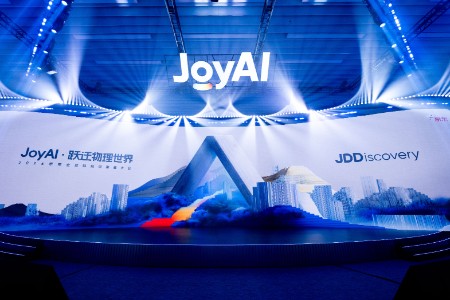
9月9日,以“JoyAI· 跃迁物理世界”为主题的JDDiscovery-2026京东全球科技探索者大会在北京举行。大会上,京东全面展示建设“全球最大物理世界运营中心”的战略理念和最新成果,启动“物理AI加速计划”,将在具身智能领域实现六项“全球第一”。

京东正将算力、数据、模型能力与供应链深度融合,应用到零售、物流、科技、健康、工业、产发、金融、外卖、家政等海量场景中,并向行业和社会开放,推动AI从数字世界走向物理世界,在千行百业和千家万户发挥重要价值。

打造超级AI供应链 加速建设“全球最大物理世界运营中心”

“京东的AI不是在论文里诞生的,是在生产线、仓库、配送站,在供应链全流程中一单一单磨出来的。京东的供应链,是AI走向物理世界最好的训练场和第一站。”JDD大会上,京东集团技术委员会主席、京东云总裁曹鹏如此阐述京东AI的独特价值。

基于长期积累的实体场景与供应链能力,京东提出建设“全球最大物理世界运营中心”,打造“超级AI供应链”,推动AI深入生产、流通、服务等真实环节,在物理世界中参与实际任务。

京东超级AI供应链以“云、数、模、端、场、链”六大模块为基础,将算力、数据、模型与智能终端、真实场景深度融合。场景产生数据,数据训练模型,模型驱动终端,任务反馈再推动AI持续进化,形成“智能飞轮”;同时,供应链连接研发、制造、销售、交付和维修,降低新技术从验证到产品化、再到规模化应用的门槛,形成“产业飞轮”。

推出JoyAI-Echo WM世界模型

JDD大会上,京东公布了算力、数据和模型三大AI基建的最新进展。

算力方面,面向物理AI对实时响应、低延迟、高可靠等要求,京东云已与摩尔线程等合作伙伴打造国产万卡集群,并规划建设十万卡集群,成为国内AI云领域自主可控的超大规模算力底座,为大规模模型训练和真实场景应用提供稳定算力支撑。

数据方面,京东云1000万小时人类最大规模数据采集行动顺利推进中。京东云建设了覆盖“采、存、标、训、评、仿、测”全流程的具身数据基础设施,将人类在真实场景中的操作转化为行业急需的数据“燃料”,供具身模型学习训练。目前首批开源的数据集EgoLive已对外开放,超过8个国家、百所高校和科研机构申请使用。

模型方面,京东已形成覆盖多模态模型、世界模型和具身模型的JoyAI基础模型矩阵。JDD上,京东发布了实时可交互的世界模型JoyAI-Echo WM,它在面向交互式世界模型的权威公开评测WBench Navigation中,以81.6分排名第一,达到行业顶尖水平。

此外,京东物流"超脑"3.0、京东工业JoyIndustrial2.0、京东健康京医千询3.0等垂域大模型也重磅发布。京东物流 “超脑” 大模型3.0,是物流行业首个贯通仓储、运输、配送全链路,由AI统一决策、协同与执行的工业级大模型应用集成体,率先实现决策AI、流程AI与物理AI三位一体,将亿级包裹端到端最优路径规划的求解时间从分钟级压缩至秒级,具身智能模型在物流多任务场景下执行成功率达96.7%,让每一件包裹能够更快、更准确地送到消费者手中;京东工业JoyIndustrial2.0大模型,通过简单语言指令就能完成机械设计,并由3D快速打印出成品,大幅提升工程师设计效率和使用体验。

加速物理AI产业落地,迈向机器人领域六个“全球第一”

京东超级AI供应链不只在自身场景中深度应用,还全面开放,推动AI在千行百业实现成本效率的跃迁。其中围绕机器人产业,京东启动“物理AI加速计划”,赋能机器人训练、研发、制造、销售、应用和服务的全链路、全周期,在数年内实现六项“全球第一”:

京东云将建成全球最大的具身智能数据采集中心,两年内采集超1000万小时人类真实场景视频数据,破解具身智能“数据荒”;

未来5年,京东将在全国布局80余个RoboBase机器人产业基地,打造全球最大的机器人产业基地,实现机器人展示交付、维修保养、研发设计、中试组装、数据采集、生产制造、迭代升级一体化服务;

京东工业发起成立“机器人零部件产业发展联盟”,未来3年助力100家机器人本体厂商全品类降本、100家零部件供应商业绩倍增,成为全球最大的机器人零部件供应商;

京东零售也将于2028年前投入百亿资源,助力100个品牌独立销售额破10亿元,推动机器人产业进入百万个终端场景、覆盖千万用户,成为全球最大的机器人零售渠道;

物流是机器人应用前景最广阔的场景之一,京东物流致力于打造全球最大规模的具身机器人应用军团,将在5年内采购300万台机器人、100万台无人车及10万架无人机,进一步推进物流全流程无人化落地。其中“超脑”大模型负责复杂场景下的智能决策与协同调度,“狼族”机器人军团已在仓储、配送等环节落地“九狼”,包括近期新增的“母狼”、“仓狼”、“智狼”低温版以及全新升级的具身灵巧臂“异狼”等。

京东物流还将打造全球最大的机器人维修服务网络。目前京东物流已构建国内8大维修中心;未来5年,机器人售后服务能力计划覆盖全球100多个国家,创造超过10万个机器人售后服务工程师就业岗位,为机器人产品规模化落地和持续运营提供保障。

京东APP上线AI购物助手“东东”,提升数亿用户体验

京东的AI能力除了深入产业,也开始服务千家万户,提升数亿用户的消费体验。

在零售场景,京东进一步将AI能力融入用户从需求产生、商品选择到购买决策、履约服务的完整链路。在今年JDD上发布的新版京东APP,不仅实现了现有购物模式的AI增强,也推出AI购物助手“东东”,融合了AI对于用户需求的精准理解,从帮助用户找到一个商品,到理解用户现在需要解决什么问题,并调度海量商品和服务满足用户需求,让用户的购物决策更高效、让购物体验更省心。

在健康场景,京医千询3.0让医疗AI更懂病情、更会判断、更能落地。京东健康发布首个全智能名医智能体,把专家看病思路装进AI——用户输入症状、病史和检查报告,它就能像专家一样问病情、看指标、给出就医方向,并提醒复诊用药和随访。同时,通过“AI+硬件+服务”,把血糖仪、血压计等设备接入个人健康档案,联动在线问诊、到家快检、护士上门,让健康管理从口头建议变成真正送到身边的服务。

在家庭场景,京东附身智能JoyInside为硬件植入AI大脑,推动智能设备从单品响应走向全屋主动服务,目前已与超200家品牌达成技术合作,覆盖家电、家居、玩具、机器人等众多品类产品。

本文首发于 亿邦动力 官方网站

文章来源:亿邦动力

广告
微信
朋友圈

FAQ回顾

什么是京东超级AI供应链?

京东超级AI供应链以"云、数、模、端、场、链"六大模块为基础,深度融合算力、数据、模型与智能终端、真实场景,形成持续迭代的"智能飞轮"与"产业飞轮",可降低新技术规模化应用门槛,目前已落地零售、物流、工业、健康等多类场景并面向行业开放。

京东JoyAI-Echo WM世界模型的性能处于什么水平?

JoyAI-Echo WM是京东发布的实时可交互世界模型,属于JoyAI基础模型矩阵的组成部分。在面向交互式世界模型的权威公开评测WBench Navigation中,该模型以81.6分的成绩排名第一,性能达到行业顶尖水平。

京东物理AI加速计划在机器人领域有哪些布局目标?

京东物理AI加速计划覆盖机器人训练、研发、制造、销售、应用、服务全链路全周期赋能,计划数年内实现六项"全球第一",涵盖具身数据采集、产业基地建设、零部件供应、零售渠道、机器人应用军团及全球维修服务网络六大方向。

京东APP的AI购物助手"东东"能提供什么服务?

AI购物助手"东东"是新版京东APP上线的C端AI功能,可精准识别用户的实际需求,从单一商品检索升级为调度平台海量商品与服务匹配用户待解决的问题,帮助用户提升购物决策效率,获得更省心的消费体验。

这么好看,分享一下?

朋友圈 分享

APP内打开

+1
+1
微信好友 朋友圈 新浪微博 QQ空间
关闭
收藏成功
发送
/140 0

