





广告
加载中

家电财报季:海尔远见、美的效率、格力固执

龚作仁 2026-05-06 17:59
龚作仁 2026/05/06 17:59

邦小白快读

EN
全文速览

家电三巨头财报揭示业绩分化与长期布局的重要性,关键信息包括短期波动原因和长期战略选择。

1. 短期业绩:美的集团2026Q1营收利润微增但依赖非经常性损益,主业利润下滑;海尔智家受北美市场关税、汇兑和天气影响下滑,剔除后利润稳定;格力电器2025年主业下滑拖累整体,2026Q1微增源于空调业务企稳。

2. 长期战略:海尔智家靠全球化、高端化(卡萨帝销售380亿元)和智慧家庭(AI之眼技术)布局,5年利润复合增长率17.11%;美的集团以效率优势(运营、资源整合)稳住基本盘,全球化通过合作收购快速落地;格力电器固执主业(空调占营收八成),自主品牌出海稳步推进。

3. 实操干货:企业应聚焦长期主义,如海尔提前卡位三大赛道对冲风险,美的精细化管控提升抗周期韧性,格力坚守主业但需破解增长瓶颈,以在存量竞争中打开增量空间。

家电行业品牌策略呈现高端化、全球化和技术引领趋势,海尔、美的、格力的做法提供借鉴。

1. 品牌营销与高端化:海尔智家卡萨帝品牌连续10年高端市场第一,2025年销售380亿元,验证高端转型成功;美的集团快速落地COLMO高端品牌,2024年与东芝双品牌零售额超170亿元,推出全屋智能方案;格力电器高端化布局滞后,依托主业延伸。

2. 品牌渠道与全球化:海尔智家海外营收占比超50%,全球化布局成熟;美的集团转型自有品牌,通过合资(如伊莱克斯)和收购(如Residentia)高效拓展北美和澳洲市场;格力电器自主品牌出口占比从30%提升至70%,稳步推进但节奏慢。

3. 产品研发与消费趋势:智慧家庭成为焦点,海尔智家原创AI之眼技术引领“无人家务”趋势;消费需求向高端和智能化转移,企业需避免价格战,如海尔摆脱内卷锁定向上空间。

家电市场机会与风险并存,海外增长、消费需求变化和商业模式可提供学习点。

1. 增长市场与机会:海外市场如北美、澳洲是重点,美的集团B端业务扛起增长,Q1增量来自该领域;消费需求高端化和智能化趋势明显,海尔智慧家庭布局带来新机会;合作方式包括美的与伊莱克斯设立合资公司,高效整合资源。

2. 风险提示与应对:汇率波动和关税风险显著,海尔智家2026Q1因汇兑损失6.9亿,企业需对冲;国内市场存量竞争压力大,原材料价格上行影响;格力电器主业高度依赖导致业绩弹性受限,风险较高。

3. 可学习点与商业模式:海尔远见布局(全球化、高端化)提供穿越周期能力;美的效率优势(供应链精细化管理)在行业下行期稳住基本盘;最新商业模式如B端业务拓展,卖家可借鉴以多元化收入来源。

家电生产聚焦高端产品设计、海外商业机会和数字化启示,海尔、美的案例提供参考。

1. 产品生产与设计需求:高端家电需求增长,海尔卡萨帝产品设计成功,年销售380亿元;智慧家庭产品如AI之眼技术引领行业,工厂需投入研发;格力电器空调主业设计集中,但面临创新滞后挑战。

2. 商业机会:海外市场扩张带来机会,海尔全球化布局成熟,海外营收超50%;美的通过收购和合作快速提升份额,工厂可探索代工或自有品牌出口;数字化电商启示如美的供应链精细化管理,提升抗风险能力。

3. 推进数字化启示:工厂应借鉴美的效率优势,整合资源快速落地产品;海尔智慧家庭技术展示数字化趋势,工厂需拥抱AI和智能化生产以应对消费升级。

家电行业发展趋势包括全球化、高端化和新技术应用,客户痛点如波动风险需解决方案。

1. 行业发展趋势:全球化加速,海尔海外占比超50%,美的通过收购高效拓展;高端化成为主流,卡萨帝和COLMO品牌成功;智慧家庭趋势兴起,海尔AI之眼技术引领“无人家务”方向。

2. 新技术与客户痛点:AI技术如海尔AI之眼2.0版本是创新点;客户痛点包括汇率波动(海尔汇兑损失6.9亿)、关税影响和原材料价格上行;单一业务依赖风险,如格力空调占营收八成导致业绩受限。

3. 解决方案:服务商可提供风险管理工具对冲汇率和关税;海尔远见布局展示长期战略解决方案;美的效率模型(如资源整合)提供运营优化方案,帮助客户提升抗周期韧性。

商业对平台需求包括B端增长和高效运营,平台做法涉及招商、管理和风险规避。

1. 商业需求与问题:B端业务需求增长,美的集团Q1增量完全来自该领域;平台需支持全球化扩张,如海尔海外布局;风险规避如应对汇率波动和关税影响。

2. 平台做法与招商:美的集团通过战略合作(如伊莱克斯合资)和收购快速招商,高效整合资源;海尔智家智慧家庭技术吸引跟随者,平台可加强技术招商;运营管理需精细化,如美的供应链管控稳住基本盘。

3. 风向规避:平台应学习海尔全球化底盘对冲单一市场风险;格力固执主业展示高分红稳定性,但增长空间受限,平台需规避类似风险;整体强调高效落地和长期布局以打开增量空间。

家电产业新动向呈现三种战略路径,新问题如业务依赖和政策建议隐含长期主义。

1. 产业新动向:海尔智家全球化、高端化、智慧家庭布局引领趋势,5年利润复合增长率17.11%;美的集团效率模型(运营、资源整合)成为行业稳健案例;格力电器固执主业路径清晰,但转型缓慢。

2. 新问题与商业模式:单一业务依赖问题突出,格力空调占营收八成导致业绩波动;全球化风险如汇率和关税影响海尔业绩;商业模式创新如海尔高端化摆脱价格战,美的B端业务增长。

3. 政策建议与启示:研究强调长期主义深耕核心赛道,政策应支持企业对冲外部风险;启示包括海尔远见布局提供穿越周期能力,美的效率优势可复制,格力需破解增长瓶颈以平衡稳定与创新。

返回默认
声明:快读内容全程由AI生成,请注意甄别信息。如您发现问题,请发送邮件至 run@ebrun.com 。

我是 品牌商 卖家 工厂 服务商 平台商 研究者 帮我再读一遍。

Quick Summary

Financial reports from China's top three appliance giants reveal diverging performances and the importance of long-term strategy. Key insights cover short-term fluctuations and strategic choices.

1. Short-term Performance: Midea Group saw slight revenue and profit growth in Q1 2026, but relied on non-recurring gains as core profits declined. Haier Smart Home's profits were impacted by North American tariffs, forex, and weather; profits were stable after adjusting for these factors. Gree Electric's 2025 core business decline dragged down overall performance, with Q1 2026's slight growth stemming from stabilized air conditioner sales.

2. Long-term Strategy: Haier Smart Home leverages global reach, premiumization (Casarte sales of ¥38 billion), and smart home tech (AI Eye) to achieve a 17.11% 5-year profit CAGR. Midea Group relies on operational efficiency and resource integration to maintain its base, accelerating globalization via partnerships and acquisitions. Gree Electric remains focused on its core business (air conditioners account for 80% of revenue), steadily expanding its own-brand overseas presence.

3. Key Takeaways: Companies should prioritize long-termism. Haier's early bets on three key sectors hedge risk, Midea's refined management boosts cyclical resilience, while Gree must overcome growth bottlenecks to find new opportunities in a saturated market.

Appliance brand strategies highlight trends in premiumization, globalization, and tech leadership, with Haier, Midea, and Gree offering valuable lessons.

1. Brand Marketing & Premiumization: Haier's Casarte brand leads China's high-end market for the 10th consecutive year, with 2025 sales of ¥38 billion validating its premium shift. Midea rapidly deployed its COLMO premium brand, with combined retail sales with Toshiba exceeding ¥17 billion in 2024, launching full-home smart solutions. Gree's premiumization efforts lag, relying mainly on core business extensions.

2. Brand Channels & Globalization: Haier derives over 50% of revenue overseas, demonstrating mature global operations. Midea is shifting to own-brand sales, efficiently expanding in North America and Australia via joint ventures (e.g., with Electrolux) and acquisitions (e.g., Residentia). Gree increased its own-brand export share from 30% to 70%, progressing steadily but slowly.

3. Product R&D & Consumer Trends: Smart homes are a key focus, with Haier's original AI Eye technology leading the 'unmanned housework' trend. As demand shifts towards premium and smart products, brands must avoid price wars, exemplified by Haier escaping intense competition by targeting the high-end segment.

The appliance market presents both opportunities and risks, with overseas growth, shifting consumer demand, and business models offering key learnings for sellers.

1. Growth Markets & Opportunities: Overseas markets like North America and Australia are key growth areas; Midea's B2B business drove its Q1 growth. Premiumization and smart home trends are clear, with Haier's smart home ecosystem creating new opportunities. Partnership models, like Midea's joint venture with Electrolux, enable efficient resource integration.

2. Risk Alerts & Mitigation: Forex volatility and tariff risks are significant; Haier suffered a ¥690 million forex loss in Q1 2026, highlighting the need for hedging. Domestic market competition is intense amid stagnant demand, with rising raw material costs adding pressure. Gree's heavy reliance on its core business limits earnings flexibility, representing a higher risk profile.

3. Learnings & Business Models: Haier's foresight in globalization and premiumization provides cycle-resistant resilience. Midea's operational efficiency and refined supply chain management stabilize performance during downturns. New models like B2B expansion offer sellers strategies for diversifying revenue streams.

Appliance manufacturing focuses on high-end product design, overseas opportunities, and digitalization insights, with Haier and Midea providing key references.

1. Product Production & Design Demand: Demand for premium appliances is growing; Haier's Casarte product design success, with annual sales of ¥38 billion, is a benchmark. Smart home products like the AI Eye technology lead the industry, necessitating R&D investment. Gree's concentrated focus on air conditioner design faces innovation lag challenges.

2. Business Opportunities: Overseas market expansion presents opportunities; Haier's mature global operations, with over 50% overseas revenue, is a model. Midea's rapid market share gains via acquisitions and partnerships show factories can explore OEM or own-brand exports. Digital/e-commerce insights, like Midea's refined supply chain management, enhance risk resilience.

3. Digitalization Insights: Factories should emulate Midea's efficiency in resource integration for rapid product deployment. Haier's smart home technology demonstrates the digital trend, urging factories to adopt AI and smart manufacturing to meet consumer upgrade demands.

Appliance industry trends include globalization, premiumization, and new tech adoption, with client pain points like volatility risks requiring solutions.

1. Industry Trends: Globalization is accelerating, with Haier's overseas revenue exceeding 50% and Midea expanding efficiently via acquisitions. Premiumization is mainstream, evidenced by Casarte and COLMO's success. The smart home trend is rising, led by Haier's AI Eye technology towards 'unmanned housework'.

2. New Tech & Client Pain Points: AI tech, like Haier's AI Eye 2.0, is an innovation hotspot. Client pain points include forex volatility (Haier's ¥690 million loss), tariff impacts, and rising raw material costs. Over-reliance on a single business line, like Gree's 80% revenue from air conditioners, constrains performance.

3. Solutions: Service providers can offer risk management tools for forex and tariff hedging. Haier's long-term strategic layout demonstrates visionary planning solutions. Midea's efficiency model (e.g., resource integration) provides operational optimization solutions, helping clients build cyclical resilience.

Commercial demands on platforms include B2B growth and efficient operations, involving merchant acquisition, management, and risk mitigation strategies.

1. Commercial Needs & Problems: B2B business demand is growing, driving Midea's entire Q1 incremental growth. Platforms must support global expansion, as seen with Haier's overseas footprint. Risk mitigation, like handling forex and tariff impacts, is crucial.

2. Platform Strategies & Merchant Acquisition: Midea rapidly onboards partners via strategic collaborations (e.g., Electrolux JV) and acquisitions, efficiently integrating resources. Haier's smart home technology attracts followers; platforms can enhance tech-led merchant acquisition. Operations require refined management, exemplified by Midea's supply chain control stabilizing its base business.

3. Risk Mitigation: Platforms should learn from Haier's global footprint to hedge single-market risk. Gree's focus on its core business offers high dividend stability but limited growth; platforms must avoid similar pitfalls. Overall, emphasis is on efficient execution and long-term layout to unlock new growth spaces.

The appliance industry exhibits three distinct strategic paths, with emerging issues like business concentration and policy implications underscoring the need for long-termism.

1. Industry Dynamics: Haier Smart Home leads with its globalization, premiumization, and smart home strategy, achieving a 17.11% 5-year profit CAGR. Midea Group's efficiency model (operations, resource integration) is a benchmark for stability. Gree Electric's clear focus on its core business is accompanied by slow transformation.

2. Emerging Issues & Business Models: Over-reliance on a single business line is pronounced; Gree's 80% revenue dependency on air conditioners causes volatility. Globalization risks, like forex and tariffs, impact Haier's performance. Business model innovation is key, as seen in Haier's premiumization escape from price wars and Midea's B2B growth.

3. Policy Implications & Insights: Research emphasizes long-term深耕 (deep cultivation) in core sectors; policies should support firms in hedging external risks. Insights include Haier's foresight enabling cycle navigation, Midea's replicable efficiency advantages, and Gree's need to balance stability with innovation by overcoming growth bottlenecks.

Disclaimer: The "Quick Summary" content is entirely generated by AI. Please exercise discretion when interpreting the information. For issues or corrections, please email run@ebrun.com .

I am a Brand Seller Factory Service Provider Marketplace Seller Researcher Read it again.

随着美的集团2026年一季报披露,家电三巨头2025年报及2026一季报全部出炉。在国内市场存量竞争、海外关税与汇率波动、原材料价格上行的多重压力下,美的集团、海尔智家、格力电器交出了不同的答卷。

短期业绩分化背后,是三家企业长期战略路径的清晰分野——海智家尔靠远见布局穿越周期、美的集团以效率优势稳住基本盘、格力电器凭主业固执守住基本盘,三者共同勾勒出当前家电行业的生存与成长图谱。

短期业绩画像:增长承压,分化明显

从最新财报数据看,三巨头短期表现差异显著,业绩波动各有成因。

先看美的集团。2025全年营收、利润的双增长,2026Q1营收、利润微增。从财报拆解看,美的集团ToB业务扛起了大旗,Q1增量几乎完全来自B端。其中,Q1的利润增长主要依赖非经常性损益,该部分占净利润比例达13.5%,剔除后主业利润同比下滑。

再看海尔智家。2025全年营收、利润的双增长,2026Q1营收、利润下滑。Q1业绩下滑主要受北美市场关税、汇兑、极端暴风雪天气影响。就拿汇兑来说,2025Q1赚了4.9亿外汇差价,今年同期亏了6.9亿,这两项加起来差了11.8亿。把这个外汇波动去掉后,实际的利润跟上年差不多。如果剔除北美市场的影响,海尔智家的经营利润同比增长超过了10%。

最后看格力电器。2025年营收、利润均下滑,主要原因是占营收近八成的消费电器(空调为主)同比下滑10.44%;2026年一季度重回微增轨道。格力电器对主业依赖度高,业绩弹性与空调周期高度绑定。

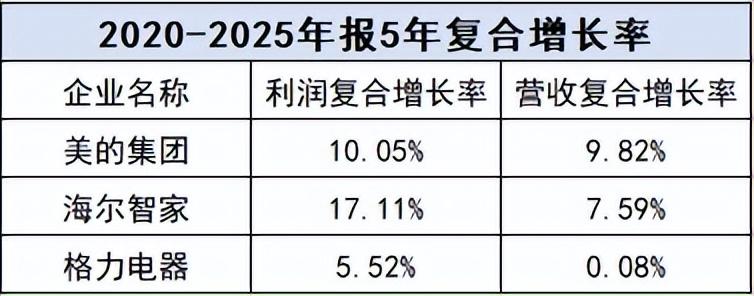
投资圈有句话叫“短期波动不改长期趋势”。那从中长期来看,海尔智家5年利润复合增长率以17.11%增速最高,其次美的集团,格力电器增速相对平缓。这也印证了短期业绩看执行,长期增长看布局。

(数据来自外部报道整理)

长期战略选择:海尔远见、美的效率、格力固执

一、海尔智家远见先行,布局换长期空间

海尔智家的核心竞争力,在于提前卡位全球化、高端化、智慧家庭三大长期赛道,以战略远见对冲短期波动。

1.全球化:最早创牌,深度最稳。作为行业最早出海创牌的企业,海尔智家海外营收占比已超50%,全球化布局成熟度领先。虽2026年一季度受北美市场扰动业绩承压,但全球化底盘为其提供了穿越单一市场周期的能力,是长期增长的核心支撑。

2.高端化:卡萨帝领跑,验证成功路径。海尔智家旗下卡萨帝连续10年稳居高端家电市场第一,2025年销售规模突破380亿元,率先跑通高端化转型逻辑,摆脱价格战内卷,锁定向上空间。

3.智慧家庭:作为智慧家庭领域的最早布局者,海尔智家始终以原创科技,引领行业发展,成为行业跟随模仿的对象。AI时代率先发布AI之眼并升级至2.0版本,带领行业迈向“无人家务”,这也是中国家电长期发展的趋势之一。

短期业绩波动,是成熟全球化布局的阶段性代价。长期看,远见布局让海尔智家具备穿越行业周期的核心底气。

二、美的集团不做先行者,但做高效落地者

美的集团的关键词是效率—— 运营效率、资源整合效率、落地效率,支撑其在行业压力下保持稳健增长。

1.运营效率:精细化管控,抗风险能力强。即便2026年一季度增长依赖非经常性损益,但其全年营收、利润双增,依托全品类布局、供应链与渠道精细化管理,在行业下行期稳住规模与利润基本盘,抗周期韧性突出。

2.全球化:转型自有品牌,加码海外市场。美的集团转型自有品牌主要通过战略合作与精准收购扩张进行的。如与伊莱克斯设立合资公司深耕北美,拟收购澳洲渠道商Residentia,以高效整合快速提升海外市场份额,布局节奏务实高效。

3.高端化:紧跟高端趋势,快速落地COLMO。自美的集团2018年布局COLMO,其加速落地高端品牌布局,到2024年与东芝双高端品牌零售额超170亿元。并以COLMO为核心推出推出全屋智能解决方案。不做先行者,但通过高效落地,快速兑现技术与品牌价值。

美的集团没有激进的战略冒险,而是以极致效率把现有优势做深做透,是行业中稳健的选手。

三、格力电器固执坚守,主业筑护城河

格力电器的标签是固执坚守空调核心主业,坚持自主品牌与高分红,路径清晰但边界明确。

1.主业固执:空调为基,成也集中、忧也集中。消费电器(空调)占营收近八成,2025年主业下滑直接拖累整体业绩,2026年一季度回暖也源于空调业务企稳。高度聚焦让格力电器拥有空调行业最强护城河,但也导致业绩弹性受限、抗风险能力较弱。

2.出海固执:坚持自主品牌,稳步推进。不依赖代工,自主品牌出口占比从2015年不足30%提升至70%,坚守品牌价值。但全球化节奏偏慢、海外营收占比偏低,短期难以对冲国内市场压力。

3.转型固执:缓慢切入,聚焦主业延伸。高端化、AI化布局相对滞后,多依托现有主业延伸。这种 “固执” 守住了现金流与利润稳定性,高分红政策持续落地,但也面临增长空间受限的挑战。

格力电器的固执,是对主业护城河的坚守,短期能守住利润与现金流,长期则需破解单一业务依赖的增长瓶颈。

家电财报季清晰呈现:海尔智家靠远见布局未来、美的集团靠效率稳住当下、格力电器靠固执守住基本盘。他们没有绝对优劣,只有适配与否。对于行业而言,三种路径共同证明:唯有坚持长期主义、深耕核心赛道,才能穿越周期,在存量竞争中打开增量空间。

注:文/龚作仁,文章来源:Laborer,本文为作者独立观点,不代表亿邦动力立场。

文章来源:Laborer

广告
微信
朋友圈

这么好看,分享一下?

朋友圈 分享

APP内打开

+1
+1
微信好友 朋友圈 新浪微博 QQ空间
关闭
收藏成功
发送
/140 0

