广告
加载中

速卖通明确“POP+跨境托管”双轨驱动 POP商家地位大幅提升

王浩然 2024-09-12 14:17
王浩然 2024/09/12 14:17

邦小白快读

EN
全文速览

速卖通调整跨境品类解决方案,明确“POP+跨境托管”双轨驱动策略,提升POP商家地位,提供实操干货。

1. POP发货时效要求放宽,新品上网时效从72小时延长至96小时,增加商家灵活性。

2. 优质POP商家获得全方位支持,包括新品孵化、重点国家流量、免罚额度、供应链优惠、发品额度和结算周期优化。

3. 非标品类鼓励POP模式自主经营,可选择半托管或JIT发货;标品建议仓发主打低价,平台提供“N元N件”和“超级爆发日”营销渠道。

4. 平台不强制造商仓发,商家可自行选择模式,仓发品主推性价比,POP商品主推丰富度。

5. 速卖通送货时效缩短50%,重点国家送达时效提升到5-7天,Choice订单占比达70%,显示平台效率提升。

速卖通策略调整影响品牌运营,涉及渠道建设、定价竞争和产品研发。

1. 品牌渠道建设:POP模式提升地位,允许品牌自主经营非标品类,选择灵活发货方式如半托管或JIT,增强品牌控制力。

2. 品牌定价和价格竞争:标品仓发主打低价策略,可能影响品牌定价;非标品POP模式主推丰富度,避免价格战。

3. 产品研发和消费趋势:非标品类鼓励产品多样性,涉及研发创新;用户行为偏好快速交付,送货时效缩短50%,重点国家5-7天送达,反映消费趋势。

4. 平台支持机会:优质POP商家获得流量和孵化支持,提供品牌营销机遇,Choice订单占比70%显示平台增长潜力。

政策解读揭示增长机会和扶持措施,帮助卖家应对变化。

1. 政策解读:速卖通明确“POP+托管”双轨驱动,POP地位提升,放宽发货时效、升级金银牌体系,Choice商品分层管理。

2. 机会提示:非标品类POP模式提供灵活经营机会,标品仓发有营销渠道如“N元N件”;优质POP商家获得新品孵化、流量和免罚额度支持。

3. 风险提示和应对:不强制造商仓发,商家可自行选择模式,避免强制风险;仓发品主打低价,POP商品主推丰富度,分散经营风险。

4. 扶持政策和合作方式:平台提供全方位支持,包括供应链优惠和结算周期优化;半托管作为物流升级服务,增加全托管通道,便于合作。

策略提供产品生产和电商启示,揭示商业机会。

1. 产品生产和设计需求:标品和轻小件商品建议仓发生产,主打低价;非标品类适合POP模式,鼓励产品丰富度和设计创新。

2. 商业机会:POP模式提升地位,提供灵活性如JIT发货,工厂可参与非标品供应;仓发权益加码,涉及标品生产机会。

3. 推进数字化和电商启示:物流时效缩短50%,重点国家5-7天送达,显示电商效率提升;Choice订单占比70%,启示数字化供应链管理。

行业趋势和客户痛点解决方案,提供发展导向。

1. 行业发展趋势:速卖通提升POP地位,实施双轨驱动策略,Choice业务占比70%成为增长主力。

2. 客户痛点:物流时效问题突出,商家需应对发货要求;商品定位模糊,需清晰区分POP和托管。

3. 解决方案:平台放宽POP发货时效至96小时,提供半托管或JIT选项;商品分层管理,非标品鼓励POP,标品建议仓发,解决定位问题;时效提升50%显示物流优化方案。

平台最新做法满足商业需求,涉及招商和运营管理。

1. 平台的最新做法:明确“POP+跨境托管”双轨驱动,POP地位提升,放宽发货要求、升级金银牌体系,Choice商品分层。

2. 商业需求和问题:商家需清晰运营方向,平台提供非标品POP自主经营、标品仓发低价策略;不强制造商仓发,解决强制风险。

3. 平台招商和运营管理:加大对优质POP商家的投入,提供流量、免罚额度和孵化支持;仓发权益加码,涉及“N元N件”营销渠道;运营中送货时效缩短50%,重点国家5-7天送达,优化管理。

产业新动向和商业模式分析,提供政策启示。

1. 产业新动向:速卖通从Choice业务重点转向POP提升,实施双轨驱动策略,反映电商平台调整;送货时效缩短50%,重点国家5-7天送达,显示物流进步。

2. 商业模式:POP与托管各有定位,非标品POP主推丰富度,标品仓发主打低价;Choice订单占比70%,体现托管模式主导。

3. 政策法规建议和启示:平台不强制造商仓发,商家可自行选择,启示灵活监管;商品分层和金银牌体系升级,提供运营优化启示;数据如时效提升和订单占比,支持产业研究。

返回默认

声明:快读内容全程由AI生成,请注意甄别信息。如您发现问题,请发送邮件至 run@ebrun.com 。

我是 品牌商 卖家 工厂 服务商 平台商 研究者 帮我再读一遍。

Quick Summary

AliExpress has adjusted its cross-border category solutions, clearly adopting a dual-track strategy of "POP + Cross-border Hosting" to elevate the status of POP merchants and provide practical guidance.

1. POP shipping time requirements have been relaxed, with the new product online time extended from 72 hours to 96 hours, increasing flexibility for sellers.

2. High-quality POP merchants receive comprehensive support, including new product incubation, targeted traffic in key countries, penalty waivers, supply chain benefits, listing quotas, and optimized settlement cycles.

3. Non-standard categories are encouraged to adopt the POP model for independent operation, with options for semi-hosted or JIT shipping; standard products are advised to focus on low prices through warehouse shipping, supported by platform marketing channels like "N items for N Yuan" and "Super Promotion Day".

4. The platform does not mandate warehouse shipping; sellers can choose their model freely. Warehouse-shipped items focus on cost-effectiveness, while POP items emphasize variety.

5. AliExpress has reduced delivery times by 50%, achieving 5-7 day delivery in key countries, with Choice orders accounting for 70%, indicating improved platform efficiency.

AliExpress's strategic adjustments impact brand operations, involving channel building, pricing competition, and product development.

1. Brand Channel Building: The elevated POP model allows brands to independently manage non-standard categories with flexible shipping options like semi-hosting or JIT, enhancing brand control.

2. Brand Pricing and Competition: Standard products shipped from warehouses emphasize low-price strategies, potentially affecting brand pricing; non-standard POP items focus on variety to avoid price wars.

3. Product Development and Consumer Trends: Non-standard categories encourage product diversity, driving R&D innovation; consumer preference for fast delivery is reflected in the 50% reduction in delivery time, with 5-7 day delivery in key countries.

4. Platform Support Opportunities: High-quality POP merchants gain traffic and incubation support, offering marketing opportunities, while the 70% share of Choice orders indicates platform growth potential.

Policy interpretations reveal growth opportunities and support measures to help sellers adapt to changes.

1. Policy Interpretation: AliExpress clarifies its dual-track strategy of "POP + Hosting," elevating POP status, relaxing shipping times, upgrading the Gold/Silver tier system, and implementing tiered management for Choice products.

2. Opportunity Highlights: The POP model offers flexible operation for non-standard categories, while warehouse-shipped standard products benefit from marketing channels like "N items for N Yuan"; high-quality POP merchants receive support such as new product incubation, traffic, and penalty waivers.

3. Risk Warnings and Responses: Sellers are not forced to use warehouse shipping, allowing model choice to avoid coercion; warehouse items focus on low prices, and POP items on variety, diversifying operational risks.

4. Support Policies and Collaboration: The platform provides comprehensive support, including supply chain benefits and optimized settlement cycles; semi-hosting serves as a logistics upgrade, with added fully-hosted options for easier cooperation.

The strategy offers insights into product production and e-commerce, revealing business opportunities.

1. Product Production and Design Needs: Standard and lightweight items are recommended for warehouse shipping with a focus on low prices; non-standard categories suit the POP model, encouraging product variety and design innovation.

2. Business Opportunities: The elevated POP model provides flexibility, such as JIT shipping, allowing factories to supply non-standard items; enhanced warehouse shipping benefits create opportunities for standard product production.

3. Digitalization and E-commerce Insights: A 50% reduction in logistics time and 5-7 day delivery in key countries reflect improved e-commerce efficiency; the 70% share of Choice orders highlights the need for digital supply chain management.

Industry trends and customer pain point solutions provide development direction.

1. Industry Trends: AliExpress is elevating the POP model, implementing a dual-track strategy, with Choice orders accounting for 70% as a key growth driver.

2. Customer Pain Points: Logistics timeliness is a major issue, requiring sellers to adapt to shipping demands; unclear product positioning necessitates differentiation between POP and hosted models.

3. Solutions: The platform has relaxed POP shipping times to 96 hours and offers semi-hosted or JIT options; tiered product management encourages POP for non-standard items and warehouse shipping for standard items, resolving positioning issues; the 50% timeliness improvement reflects logistics optimization.

The platform's latest practices address business needs, involving merchant recruitment and operations management.

1. Platform's Latest Practices: A clear dual-track strategy of "POP + Cross-border Hosting" elevates POP status, relaxes shipping requirements, upgrades the Gold/Silver tier system, and implements tiered management for Choice products.

2. Business Needs and Issues: Sellers require clear operational direction, with the platform offering POP autonomy for non-standard items and low-price strategies for warehouse-shipped standard items; no mandatory warehouse shipping mitigates coercion risks.

3. Merchant Recruitment and Management: Increased investment in high-quality POP merchants provides traffic, penalty waivers, and incubation support; enhanced warehouse benefits include marketing channels like "N items for N Yuan"; operational improvements include a 50% reduction in delivery time and 5-7 day delivery in key countries.

Industry developments and business model analysis offer policy insights.

1. Industry Developments: AliExpress is shifting focus from Choice to elevating the POP model, adopting a dual-track strategy reflecting e-commerce platform adjustments; a 50% reduction in delivery time and 5-7 day delivery in key countries indicate logistics progress.

2. Business Models: POP and hosted models have distinct roles—POP emphasizes variety for non-standard items, while warehouse shipping focuses on low prices for standard items; the 70% share of Choice orders highlights the dominance of the hosted model.

3. Policy Recommendations and Insights: The platform's non-coercive approach to warehouse shipping allows seller choice, suggesting flexible regulation; tiered product management and upgraded tier systems offer operational optimization insights; data on timeliness improvements and order shares support industry research.

Disclaimer: The "Quick Summary" content is entirely generated by AI. Please exercise discretion when interpreting the information. For issues or corrections, please email run@ebrun.com .

I am a Brand Seller Factory Service Provider Marketplace Seller Researcher Read it again.

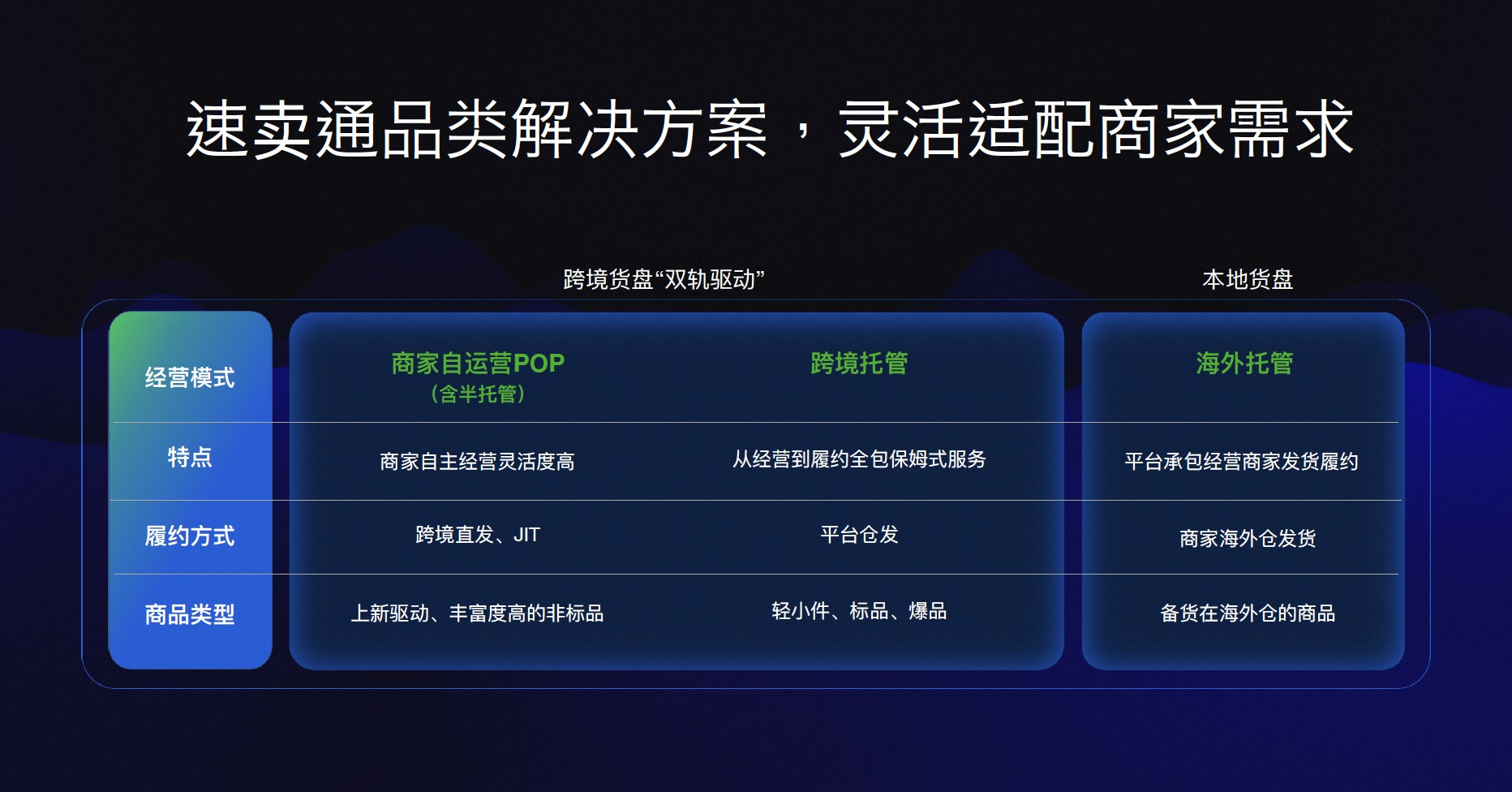
【亿邦原创】亿邦动力从多位速卖通商家处获悉,速卖通正在调整跨境品类解决方案,POP(即商家自运营模式)的地位将大幅提升。据悉,多位速卖通小二向商家透露,速卖通内部已明确了“POP+托管”双轨驱动策略,为不同类目的商品提供清晰的运营方向。

从2023年年初至今,速卖通将Choice业务(全托管+半托管模式)作为发展重点,在阿里巴巴2024财年第三季度的财报中,蒋凡提及,Choice业务已经成为拉动速卖通业绩增长的主要业务;如今,速卖通重新将POP模式放到一个更为重要的地位上。

近期的一系列公告也传递了同样的信号:例如放宽POP的发货时效要求、对POP的金银牌体系进行升级、对Choice商品进行分层管理,仓发权益加码等等。

相关培训资料显示,此次品类解决方案升级,最核心的是让跨境托管的商品和POP商品各有清晰的定位。其中,半托管作为POP商家的一项物流升级服务,会继续提供支持;如果品类更适合仓发,也会为半托管商品增加全托管的通道。

针对上新驱动、商品丰富度高的非标品类,速卖通平台鼓励商家以POP模式自主经营,可以选择灵活的发货方式,包括半托管或者JIT(有订单再发货),优质POP商家将获得更多权益。速卖通9月9日后台公告显示,速卖通宣布对一些特色类目的POP发货考核时效进行延长,30天内新品上网时效从72H延长至96H;平台将重点加大对优质POP商家的投入,在新品孵化、重点国家流量、免罚额度、供应链优惠、发品额度、结算周期等提供全方位支持。

针对标品、轻小件为主的商品,平台则建议现货仓发,主打入仓+低价。平台会提供“N元N件”“超级爆发日”等营销渠道,强化商品价格力。

值得注意的是,在“是否仓发”的问题上,速卖通并没有强制商家仓发,商家可以自行选择适合自己的模式,仓发品主打性价比,POP商品主打丰富度。

据悉,过去两年,速卖通的全球平均送货时效缩短了50%,重点国家送达时效提升到了5-7天;根据阿里巴巴最新财报,速卖通的Choice订单占比已达70%。

亿邦持续追踪报道该情报,如想了解更多与本文相关信息,请扫码关注作者微信。

文章来源:亿邦动力

广告
微信
朋友圈

这么好看,分享一下?

朋友圈 分享

APP内打开

+1
+1
微信好友 朋友圈 新浪微博 QQ空间
关闭
收藏成功
发送
/140 0