广告
加载中

京东七鲜超市上线新鲜零食:用“减法”重新定义零食的新鲜标准

龚作仁 2026-09-07 16:05
龚作仁 2026/09/07 16:05

邦小白快读

EN
全文速览

本文介绍了当前国内零食行业的新发展趋势,以及京东七鲜推出的新鲜零食的核心特点,能帮助普通消费者了解健康零食的新选择,掌握选零食的参考方向。

1. 当前零食行业已经进入赛道分化阶段,传统量贩零食陷入低价存量竞争,主打新鲜健康的新鲜零食成为新的热门增长方向,更符合当下消费者对健康解馋的需求。

2. 京东七鲜推出的自有品牌新鲜零食主打减法哲学,坚持0防腐剂、0反式脂肪酸、0人工色素,砍掉不必要添加,靠更短保质期倒逼更高周转来锁住新鲜,保质期普遍控制在3-6个月,超六成在3个月以内,能最大程度保留食材本味。

3. 目前七鲜新鲜零食已经推出多款认可度较高的爆品,涵盖果干、肉脯、膨化三大热门品类,包括配料只有苹果的冻干苹果、物理保鲜的黑椒猪肉脯、低吸油量的杂粮八爪烧,都兼顾美味和健康,适合追求健康零食的消费者选购。

本文梳理了国内零食行业当前的竞争格局和消费趋势,为品牌商开展产品创新、差异化竞争提供了清晰的参考方向。

1. 行业趋势层面:传统量贩零食已经陷入低价内卷和存量竞争,消费者健康意识提升后,对干净配料、新鲜本味的零食需求越来越旺盛,主打短保、少添加的新鲜零食已经成为确定性最高的增长赛道之一,是品牌破局的新方向。

2. 产品研发层面,可以学习七鲜的减法创新逻辑,跳出传统零食依赖重添加、长保质期的固有路径,通过精简配料、缩短保质期倒逼供应链周转,打造差异化产品,还可以把原有品类积累的心智延伸到新赛道,比如七鲜把生鲜的新鲜心智延伸到零食领域。

3. 品牌营销层面,可以学习七鲜“真新鲜 看得见”的思路,用透明包装直观传递产品优势,靠干净到极致的配料表打动成分党消费者,快速建立差异化品牌心智。

本文分析了零食行业的赛道变化,梳理了新的增长机会,给各类零售卖家选品、运营提供了明确的方向参考和风险提示。

1. 赛道机会与风险提示:传统量贩零食赛道已经进入存量低价竞争阶段,进入门槛低、利润空间小、竞争激烈,风险较高;而主打短保少添加的新鲜零食,精准匹配当下消费者健康化的消费需求,属于蓝海增长赛道,切入后可以避开低价内卷,获得新的增长空间。

2. 可学习的经验:卖家可以学习七鲜的产品开发思路,主打健康新鲜的减法概念,砍掉不必要的食品添加剂,通过缩短保质期保障产品新鲜度,选品可以优先在果干、肉脯、膨化这些大众熟知的经典品类做升级创新,更容易打造爆品,被消费者接受。

3. 运营方向:适配即时零售等快周转渠道的特点,主打新鲜健康的心智,契合成分党消费者的需求,能够有效提升产品复购和用户信任。

本文透露出当前零食行业终端的需求变化,给零食生产加工工厂带来了新的商业机会和发展启示。

1. 产品生产设计需求变化:当下消费者已经不认可传统零食重调味、重添加、长保质期的路线,越来越偏好保留食材本味、配料干净、短保新鲜的产品,工厂需要调整传统的生产工艺研发方向,转而研发物理保鲜、锁鲜工艺,替代化学添加,适配新的产品需求。

2. 商业机会:新鲜零食作为新崛起的增长赛道,包括京东七鲜在内的不少零售平台都在布局相关自有品牌产品,工厂可以对接零售平台的新品需求,开发符合短保少添加标准的产品,获得新的订单增长,开辟新的业务曲线。

3. 发展启示:工厂需要同步提升自身的供应链周转效率,才能适配短保产品的运营要求,支撑短保新鲜产品的落地,跟上行业新趋势。

本文分析了当前零食行业的发展趋势和行业痛点,为服务零食行业的各类服务商指明了新的业务方向。

1. 行业发展趋势:传统零食赛道已经陷入存量低价内卷,整个行业正在向健康化、新鲜化转型,主打短保少添加的新鲜零食成为新的增长核心,行业对相关服务的需求也发生了明显变化。

2. 客户核心痛点:传统零食品牌、生产工厂当前普遍面临同质化竞争、利润下滑的痛点,想要转型做差异化的新鲜零食,缺成熟的物理锁鲜保鲜工艺,缺适配短保产品的高效供应链周转方案,也缺能够打动消费者的差异化营销方案。

3. 业务方向:服务商可以针对性开发适配新鲜零食的工艺技术服务,帮助品牌和工厂实现少添加物理保鲜的需求,也可以推出差异化的营销策划服务,帮助品牌打造新鲜健康的用户心智,助力客户切入新赛道,抓住行业增长红利。

本文介绍了京东七鲜布局新鲜零食的最新实践,给各类零售平台尤其是即时零售平台的品类运营、差异化竞争提供了参考思路。

1. 用户需求与平台机会:当下消费者对零食的需求已经从过去追求低价解馋,转向追求健康、新鲜、配料干净,平台想要避开和传统量贩零食店的低价竞争,需要调整品类结构,开拓新鲜零食这一新的增长曲线,形成差异化竞争力。

2. 可借鉴的运营做法:平台可以依托自身原有优势延伸心智,比如七鲜依托生鲜品类积累的新鲜心智,将新鲜概念延伸到零食赛道,推出自有品牌新鲜零食;产品层面主打减法策略,坚持三0添加、短保高周转,用透明包装直观传递新鲜理念,靠爆品带动整个品类发展。

3. 运营注意事项:布局短保新鲜零食需要平台提升自身的供应链周转能力,才能保障产品新鲜度,兑现对消费者的新鲜承诺,避免出现临期损耗问题,保障品类健康运营。

本文记录了国内零食行业最新的产业变化,推出了新鲜零食这一新物种的发展实践,为产业研究者提供了新的研究样本和方向。

1. 产业新动向:当前国内零食行业格局正在重构,传统量贩零食赛道陷入存量低价内卷,增长乏力;以短保、少添加为核心特征的新鲜零食作为行业新物种快速崛起,成为最具确定性的增长赛道之一,正在重塑零食行业的产品内涵和竞争逻辑。

2. 创新商业模式样本:京东七鲜作为即时零售领域的平台,依托自身在生鲜赛道积累的新鲜心智和供应链周转能力,将新鲜概念从生鲜品类延伸到零食赛道,通过自有品牌打造差异化竞争优势,这种依托原有优势跨界延伸品类的模式,是存量市场中创新破局的典型样本。

3. 研究启示:本次七鲜的实践证明,产业创新不一定需要开发全新的赛道,也可以贴合消费需求变化,在传统经典品类中通过产品逻辑的创新重构,实现差异化破局,为存量市场的产业升级提供了新的研究方向。

返回默认
声明:快读内容全程由AI生成,请注意甄别信息。如您发现问题,请发送邮件至 run@ebrun.com 。

我是 品牌商 卖家 工厂 服务商 平台商 研究者 帮我再读一遍。

Quick Summary

This article outlines the latest emerging trends in China's snack industry and introduces the core features of fresh snacks launched by JD 7Fresh, helping ordinary consumers understand new options for healthy snacks and gain clear guidance for making purchasing choices.\n1. The snack industry has now entered a phase of category segmentation. Traditional bulk snack brands are trapped in low-price,存量 competition, while fresh snacks centered on health and freshness have emerged as a fast-growing new segment that better aligns with today's consumers' demand for both satisfying cravings and supporting health.\n2. JD 7Fresh's private-label fresh snacks are built around a "subtraction philosophy": they contain zero preservatives, zero trans fats, and zero artificial colors, cutting out all unnecessary additives. To lock in freshness, shorter shelf lives force faster inventory turnover: most products have shelf lives of 3 to 6 months, with over 60% falling under 3 months, allowing them to retain the natural flavor of raw ingredients to the greatest extent possible.\n3. 7Fresh has already launched multiple hit products in this line, covering three popular categories: dried fruit, meat jerky, and puffed snacks. Standouts include freeze-dried apple made with only apples, physically preserved black pepper pork jerky, and low-octopus puffed grain snacks. All balance great taste and health, making them ideal for consumers seeking healthier snack options.

This article maps out China's current snack industry competitive landscape and consumer trends, offering clear strategic reference for brands looking to pursue product innovation and differentiated competition.\n1. Industry trend perspective: Traditional bulk snacks are mired in low-price cutthroat存量 competition. As consumers become more health-conscious, demand for snacks with clean labels and natural, fresh flavor has grown rapidly. Fresh snacks centered on short shelf lives and minimal additives have become one of the most reliable high-growth segments, representing a new path for brands to break out of market saturation.\n2. Product R&D perspective: Brands can learn from 7Fresh's "subtraction innovation" logic, moving away from the traditional snack industry's reliance on heavy additives and extended shelf lives. By streamlining ingredient lists and shortening shelf lives to force faster supply chain turnover, brands can build truly differentiated products. Brands can also extend existing consumer mindshare to the new segment, just as 7Fresh extended its established "freshness" positioning from fresh produce to snacks.\n3. Brand marketing perspective: Brands can adopt 7Fresh's "True freshness, visible to all" strategy: use transparent packaging to showcase product advantages directly, and win over ingredient-focused consumers with ultra-clean ingredient labels to quickly build differentiated brand awareness.

This article analyzes shifting segment dynamics in the snack industry, maps out new growth opportunities, and provides clear product selection, operations guidance and risk warnings for all types of retail sellers.\n1. Segment opportunity and risk assessment: The traditional bulk snack segment has entered low-price存量 competition, marked by low barriers to entry, thin profit margins, intense rivalry, and high risk. In contrast, fresh snacks focused on short shelf lives and minimal additives perfectly match today's consumer shift toward healthier eating, representing an untapped growth segment. Entering this space allows sellers to avoid low-price cutthroat competition and unlock new growth.\n2. Actionable takeaways: Sellers can adopt 7Fresh's product development approach, centering the healthy, fresh "subtraction" concept by cutting unnecessary additives and using shorter shelf lives to guarantee product freshness. For product selection, prioritize innovation and upgrades in well-established popular categories such as dried fruit, meat jerky and puffed snacks — this approach makes it far easier to launch hit products that resonate quickly with consumers.\n3. Operations strategy: Align offerings with the fast turnover model of instant retail channels, build a "fresh and healthy" brand positioning, and cater to ingredient-focused consumers to effectively boost repeat purchases and build long-term user trust.

This article outlines shifting end-consumer demand in today's snack industry, revealing new business opportunities and strategic insights for snack manufacturing and processing factories.\n1. Shifts in product design demand: Consumers no longer favor the traditional snack model of heavy flavoring, excessive additives and extended shelf lives. They increasingly prefer products that retain natural ingredient flavor, have clean labels, and offer short-shelf-life freshness. Factories need to adjust their traditional R&D and production focus, and instead develop physical fresh-locking and preservation technologies to replace chemical additives, to adapt to new product requirements.\n2. New business opportunities: Fresh snacks are a fast-growing emerging segment, and many retail platforms including JD 7Fresh are now developing private-label product lines in this space. Factories can partner with retail platforms to meet their demand for new products, develop offerings aligned with short-shelf-life, low-additive standards, unlock new order growth, and build out new business lines.\n3. Strategic insights: Factories need to simultaneously improve their own supply chain turnover efficiency to meet the operational requirements of short-shelf-life products, support the successful launch of short-shelf-life fresh snacks, and keep up with new industry trends.

This article analyzes current development trends and pain points in the snack industry, outlining new business directions for all types of service providers serving the snack sector.\n1. Industry trend overview: Traditional snack segments are trapped in low-price cutthroat存量 competition, and the entire industry is shifting toward healthier, fresher offerings. Fresh snacks centered on short shelf lives and minimal additives have become the new core of industry growth, driving clear shifts in demand for related industry services.\n2. Core client pain points: Traditional snack brands and manufacturing factories are broadly grappling with homogeneous competition and declining profits. When looking to transition to differentiated fresh snack offerings, they lack mature physical fresh-locking preservation technologies, efficient supply chain turnover solutions adapted for short-shelf-life products, and differentiated marketing strategies that resonate with consumers.\n3. New business directions: Service providers can develop targeted technical and engineering services tailored for fresh snacks, to help brands and factories achieve low-additive physical preservation. They can also offer differentiated marketing planning services to help brands build a "fresh and healthy" positioning among consumers, support clients in entering the new segment, and capture industry growth dividends.

This article shares JD 7Fresh's latest practice in rolling out fresh snack offerings, providing strategic reference for category operations and differentiated competition for all types of retail platforms, especially instant retail platforms.\n1. User demand and platform opportunity: Today's consumer demand for snacks has shifted from prioritizing low prices and craving satisfaction to demanding health, freshness and clean ingredients. To avoid low-price competition with traditional bulk snack retailers, platforms need to adjust their category mix, develop fresh snacks as a new growth curve, and build out differentiated competitive advantages.\n2. Replicable operational practices: Platforms can extend existing brand positioning by leveraging their inherent advantages, just as 7Fresh extended its established freshness positioning built in the fresh produce category to the snack segment when launching its private-label fresh snack line. On the product level, adopt the "subtraction strategy" of zero three additives, short shelf lives and high turnover, use transparent packaging to visually convey the freshness concept, and drive growth of the entire category through hit products.\n3. Key operational considerations: Rolling out short-shelf-life fresh snacks requires platforms to improve their own supply chain turnover capacity to guarantee product freshness, deliver on the freshness promise to consumers, avoid losses from near-expiry products, and support healthy, sustainable operation of the category.

This article documents the latest industrial changes in China's snack industry and presents development practices for the new "fresh snack" category, offering new research samples and directions for industry researchers.\n1. New industrial dynamics: China's current snack industry landscape is undergoing restructuring. Traditional bulk snack segments are trapped in low-price cutthroat存量 competition with stagnant growth. As a new industry category defined by short shelf lives and minimal additives, fresh snacks have emerged rapidly to become one of the most reliably growing segments, reshaping the product definition and competitive logic of the overall snack industry.\n2. Sample of innovative business models: As a leading instant retail platform, JD 7Fresh leveraged its existing freshness positioning and supply chain turnover capabilities built in the fresh produce segment, and extended the freshness concept from fresh groceries to the snack category. It built differentiated competitive advantages through a private-label model. This strategy of cross-category extension leveraging existing strengths is a typical example of breaking out in a saturated存量 market.\n3. Research insights: 7Fresh's practice demonstrates that industrial innovation does not require building entirely new categories. Instead, players can align with shifting consumer demand and achieve differentiated breakouts through rethinking and restructuring product logic within traditional classic categories, offering a new research direction for industrial upgrading in saturated存量 markets.

Disclaimer: The "Quick Summary" content is entirely generated by AI. Please exercise discretion when interpreting the information. For issues or corrections, please email run@ebrun.com .

I am a Brand Seller Factory Service Provider Marketplace Seller Researcher Read it again.

2026年,中国零食行业最热的关键词,非“新鲜零食”莫属。在传统量贩零食赛道进入存量竞争的背景下,新鲜零食正成为最具确定性的增长赛道之一。

今年7月,京东七鲜超市在山西首店集中上新自有品牌新鲜零食,成为即时零售领域首家上线自有品牌新鲜零食的平台。在传统零食行业深陷“重调味、重添加、长保质期”内卷的当下,主打新鲜与健康的七鲜新鲜零食凭借一套极简的“减法哲学”,打开了差异化突破口。

做减法:让食材本味成为主角

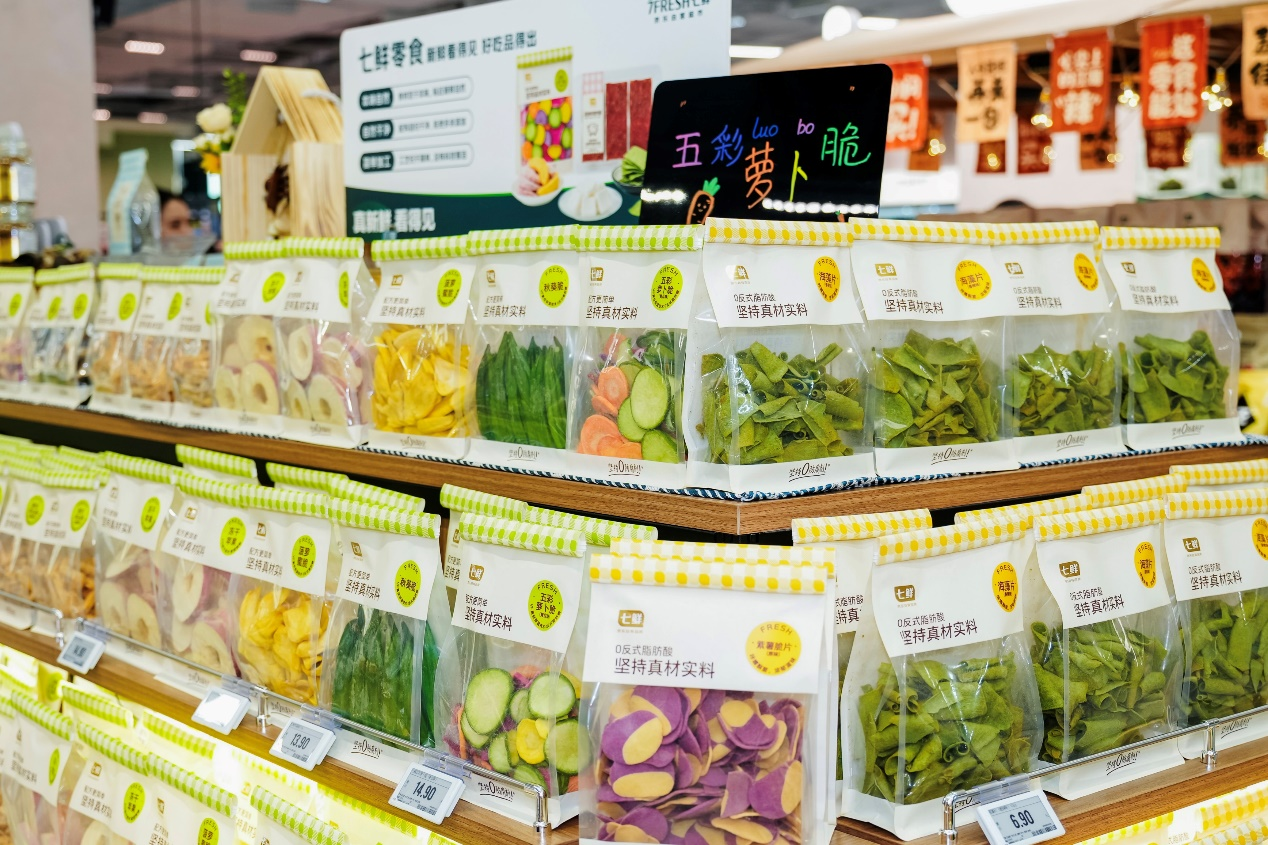
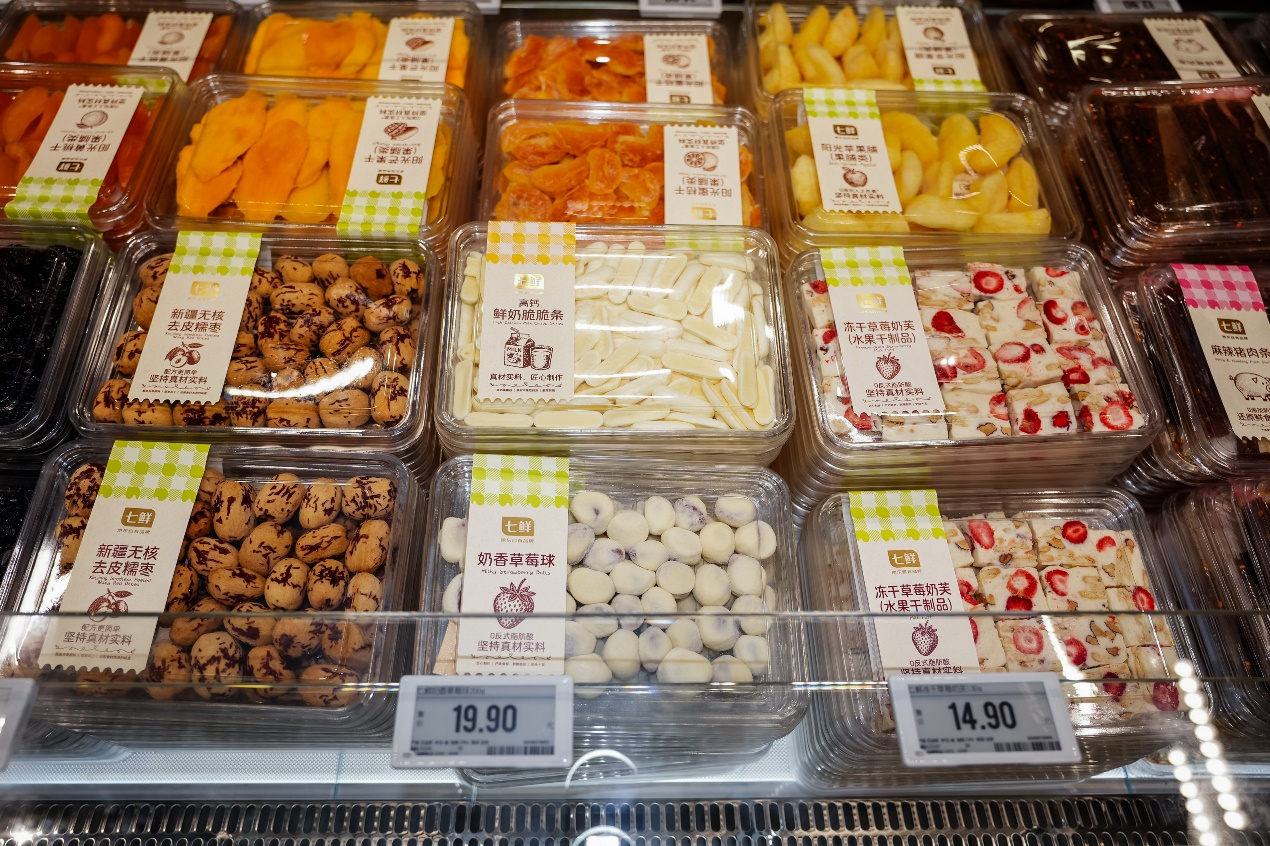
走近七鲜超市新鲜零食货架,透明包装让每一颗果干、每一片肉脯清晰可见——这不是简单的设计,而是“真新鲜 看得见”理念的直观表达。

七鲜的开发逻辑很明确:减掉防腐剂、人工色素与不必要的添加,坚持0防腐剂、0反式脂肪酸、0人工色素,通过简单加工保留食材本味。

这套“减法”彻底跳出了行业固有模式。传统零食为延长货架期,普遍将保质期做到9至12个月,依赖重调味掩盖食材新鲜度;而七鲜新鲜零食的保质期普遍控制在3至6个月,超60%在3个月以内。用更短保质期倒逼更快周转,用更快周转锁住真正的新鲜——“新鲜”与“零食”这两个看似矛盾的词,在七鲜这里被有效链接。

多款爆品:每一口都在诠释“新鲜”

七鲜相关零食系列目前覆盖果干蜜饯、风味零食与膨化食品三大品类,其中三款明星产品尤其能体现其商品开发上的差异化心智。

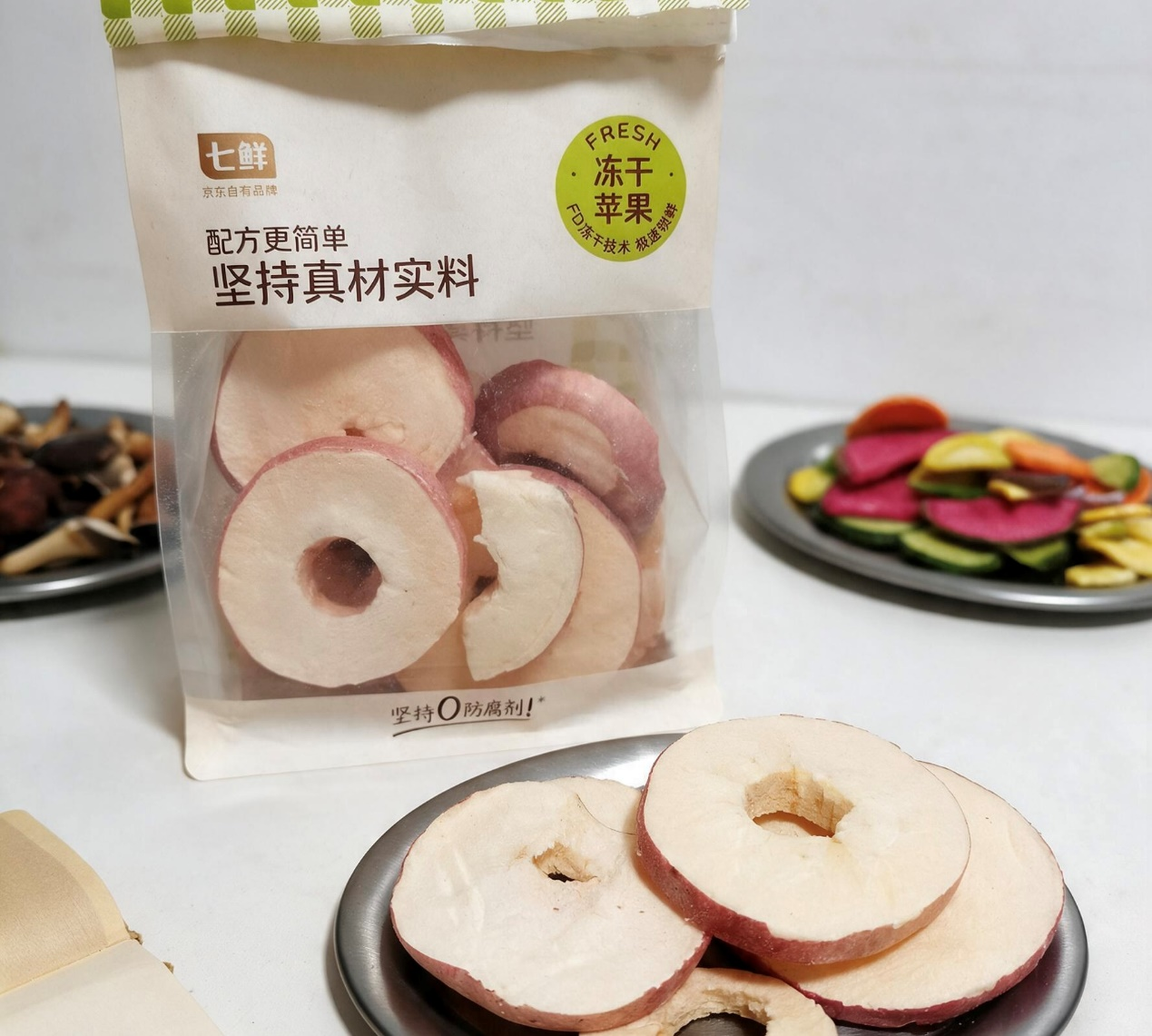
一款“配料表只有苹果”的七鲜冻干苹果,一上市便长期占据七鲜超市整体果蔬蜜饯类零食和七鲜新鲜零食排行榜前三名。通过鲜果原切山东红富士苹果,再用FD冻干技术急速锁鲜,其最大程度保留苹果原果的膳食纤维与维生素C。

与传统果脯添加白砂糖、香精、防腐剂不同,七鲜冻干苹果没有任何多余添加。一口咬下是果肉的扎实感和天然果香,泡水则还原一杯清甜苹果水。一物两吃,既是零食也是饮品原料。这也是当下“成分党”消费者最买账的逻辑——干净到极致的配料表,本身就是最有力的品质宣言。

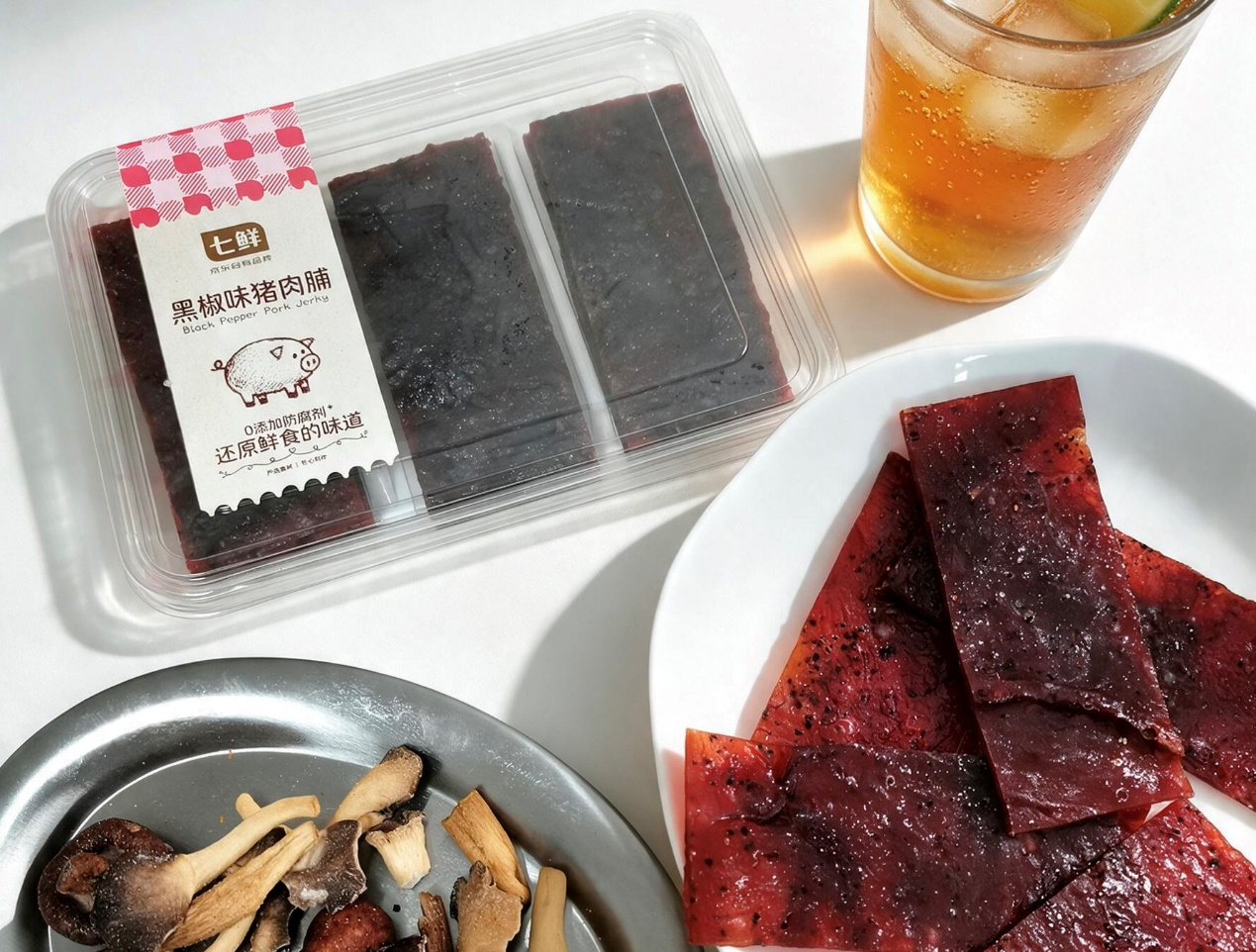
而在零食界的经典品类上,七鲜黑椒味猪肉脯也走出了一条不同的“新鲜路”:市面多数猪肉脯依赖防腐剂和增味剂延长货期、降低成本。七鲜靠工艺而非化学添加实现物理保鲜。

其选用猪后腿肉,肉质紧实,黑胡椒中和油脂感、去腥提鲜;两段式慢火低温烘烤,干香有嚼劲、不硬不柴,达到国标优级标准。咬下去肉丝纤维清晰可见,无碎肉压模的粉感,吃完手指不油不黏——这才是优质肉脯该有的样子。

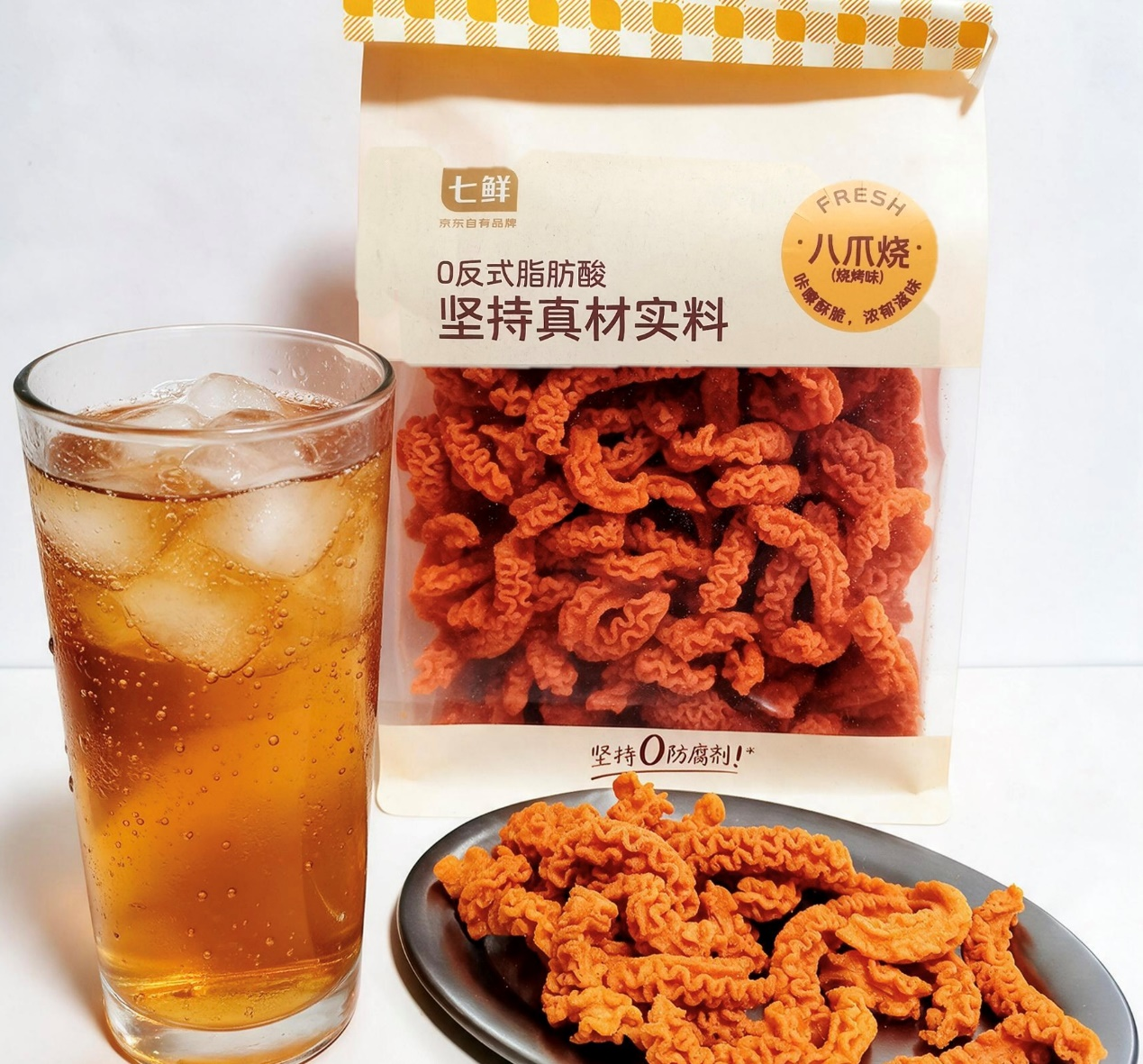
膨化食品向来是“不健康”的代名词——高油、高盐、重调味。七鲜八爪烧却在这个品类里找到了突破口,带来膨化零食的“少油革命”。

其以杂粮粉料为基底,富含碳水与膳食纤维,蓬松多孔结构让吸油量大幅降低,食用负担更轻。口感扎实耐嚼,少量即可带来饱腹感,调味采用山东威海鱼露提鲜,无多余添加。当传统膨化零食靠数十种配料和重口味制造“上瘾感”时,七鲜用少油工艺+干净配料证明:酥脆可以不用油炸,香浓可以不靠香精。

“新鲜”的底层逻辑

当传统量贩零食在低价内卷中挣扎时,以“短保、少添加”为标签的“新鲜零食”新物种正悄然改写行业格局。七鲜超市正是精准踩中这一趋势——从“24小时鲜”生鲜到短保啤酒,再到新鲜零食,将“新鲜”从生鲜品类延伸至零食赛道。

“真新鲜 看得见”不只是一句品牌主张,更是一份承诺。当一包零食敢于把配料表精简到只剩食材本身,敢于把保质期从行业普遍的12个月缩短到3个月,这种“减法”背后,是供应链的能力,更是对消费者的诚意。

零食可以不靠添加剂“续命”,美味可以来自食材本身。七鲜超市正在证明一件事:好吃的零食,也可以很新鲜;新鲜的零食,也可以很零食。这不仅是品类的创新,更是对“零食”二字内涵的重塑——让每一口解馋,都同样很健康。

注:文/龚作仁,文章来源:Laborer,本文为作者独立观点,不代表亿邦动力立场。

文章来源:Laborer

广告
微信
朋友圈

FAQ回顾

新鲜零食有什么特点?

新鲜零食主打短保、少添加,普遍减掉防腐剂、人工色素与不必要的添加,坚持0防腐剂、0反式脂肪酸、0人工色素,保质期多控制在3至6个月,超60%在3个月以内,通过简单加工保留食材本味。

京东七鲜的新鲜零食覆盖哪些品类?

七鲜新鲜零食目前覆盖果干蜜饯、风味零食与膨化食品三大品类,代表产品包括仅用苹果制作的冻干苹果、无额外添加的黑椒味猪肉脯、少油工艺制作的八爪烧,均主打干净配料表。

新鲜零食相比传统零食有哪些优势?

传统零食普遍重调味、重添加,保质期多为9至12个月,依赖添加剂延长货架期;新鲜零食减少不必要添加,保质期更短,保留食材本味,食用负担更轻,兼顾美味与健康。

这么好看,分享一下?

朋友圈 分享

APP内打开

赞 +1
+1
微信好友 朋友圈 新浪微博 QQ空间
关闭
收藏成功
发送
/140 0