



广告
加载中

米兰冬奥会现场 淘宝Vision打造AI数字购物之旅

龚作仁 2026-02-10 15:25
龚作仁 2026/02/10 15:25

邦小白快读

EN
全文速览

淘宝Vision在米兰冬奥会打造AI数字购物体验,让游客沉浸式创建数字人并参与虚拟冰雪舞会。

1. 体验流程包括AI助手引导签到、拍照生成专属入场券,随后进入虚拟试衣区通过手势交互推荐服饰,提供20套主题穿搭如东方、极地主题。

2. 虚拟试妆区选妆容,试香区结合嗅觉和视觉感知香水调调,最终数字人“喷香”后参加舞会生成高光时刻。

3. 技术支持基于阿里巴巴云和AI底座,使用3D高斯真人数字人技术实现实时渲染和空间交互,提升购物互动性和个性化。

阿里巴巴通过冬奥会事件强化品牌营销,展示AI技术在购物中的创新应用。

1. 品牌营销策略体现在设置“米兰·阿里廊”体验馆,结合水晶球和冰晶穹顶设计,吸引国际奥委会主席参观提升全球形象。

2. 品牌渠道建设通过大型活动推广淘宝Vision,如成为首个上架Apple Vision Pro的中国电商应用,拓展新渠道。

3. 产品研发突出AI和3D融合开发虚拟试衣、试妆功能,结合环保材质和航天技术如领奖服的锁温透湿设计。

4. 消费趋势显示用户偏好个性化和沉浸式体验,AI助手识别风格提供定制推荐,推动数字购物从2D向3D空间转型。

冬奥会事件提供增长市场机会,淘宝Vision案例展示应对消费需求变化的可学习点。

1. 事件应对措施包括在米兰设体验馆开放游客体验,利用AI助手引导流程,适应大型场合吸引流量。

2. 消费需求变化体现用户追求沉浸式个性化购物,如虚拟试穿减少决策风险,需求向3D和AI结合转移。

3. 机会提示有新商业模式如空间计算购物,可学习整合技术提升互动性,例如手势交互推荐服饰增加销售转化。

4. 风险提示涉及技术普及挑战,但扶持政策从淘宝上架Vision Pro看出平台支持创新合作方式。

淘宝Vision体验启示工厂在产品设计和生产中融入功能性与数字化元素创造商业机会。

1. 产品生产和设计需求显示推荐服饰如冬奥领奖服采用双胜雪花纹设计,结合环保材质和航天技术实现锁温透湿功能满足用户需求。

2. 商业机会源自数字化购物推动,工厂可开发多功能产品适配虚拟试用如20套主题穿搭多样化设计。

3. 推进数字化启示是学习AI技术优化生产,例如通过用户反馈改进产品功能性或结合3D渲染展示设计。

行业趋势向AI和3D购物发展,服务商可关注新技术解决客户痛点提供解决方案。

1. 行业发展趋势是电商迈向空间计算时代,淘宝Vision引领从2D平面转向3D沉浸式购物体验。

2. 新技术包括阿里巴巴自研3D高斯真人数字人技术、实时渲染与空间交互,解决客户痛点如购物互动性不足和决策不准确问题。

3. 解决方案展示全链路AI购物如虚拟试衣试妆试香,提供多感官体验提升客户满意度例如香水视觉化展示。

淘宝作为平台商在冬奥会展示最新做法满足用户需求并进行运营创新。

1. 平台最新做法包括打造“米兰·阿里廊”体验馆,使用AI助手实现从挑选到虚拟试用的链路,优化运营管理如夜间变水晶球为投影表面。

2. 商业对平台需求是用户期望沉浸式购物,平台通过上架Apple Vision Pro提供3D空间体验响应需求。

3. 平台招商和合作方式间接通过大型事件吸引合作,如国际奥委会伙伴关系支持风向规避风险确保可持续性。

淘宝Vision案例揭示产业新动向如AI+3D购物转型并提供商业模式研究启示。

1. 产业新动向是电商从2D走向3D空间开始,结合AI和云技术如千问大模型生成数字人推动创新。

2. 新问题涉及技术普及挑战但商业模式体现事件营销如在冬奥会推广创建专属体验,参考国际奥委会认可。

3. 政策法规启示源于大型活动应用,如奥委会支持AI科技未来应用,建议研究标准化和推广策略。

返回默认
声明:快读内容全程由AI生成,请注意甄别信息。如您发现问题,请发送邮件至 run@ebrun.com 。

我是 品牌商 卖家 工厂 服务商 平台商 研究者 帮我再读一遍。

Quick Summary

Taobao Vision created an AI-powered digital shopping experience at the Milan Winter Olympics, allowing visitors to immerse themselves in creating digital avatars and participating in a virtual snow ball.

1. The experience began with an AI assistant guiding check-in and photo-taking to generate personalized digital tickets, followed by entry into a virtual fitting area where gesture-based interactions recommended outfits, offering 20 themed styles such as Eastern and Polar themes.

2. Visitors could select makeup in a virtual try-on zone and experience fragrances in a scent-testing area combining smell and visual cues, culminating in their digital avatar "spritzing" perfume before joining a virtual ball to capture highlight moments.

3. The technology was powered by Alibaba Cloud and AI infrastructure, utilizing 3D Gaussian splatting for realistic digital humans to enable real-time rendering and spatial interactions, enhancing shopping engagement and personalization.

Alibaba leveraged the Winter Olympics to strengthen brand marketing by showcasing innovative AI applications in shopping.

1. The brand strategy featured a "Milan·Ali Corridor" experience pavilion with crystal ball and ice dome designs, attracting visits from IOC leadership to boost global visibility.

2. Channel expansion involved promoting Taobao Vision through major events, including becoming the first Chinese e-commerce app on Apple Vision Pro.

3. Product R&D emphasized AI-3D integration for virtual try-ons, alongside eco-friendly materials and aerospace-inspired technologies like temperature-regulating podium wear.

4. Consumer trends highlighted demand for personalized immersion, with AI assistants identifying styles to drive the shift from 2D to 3D spatial shopping.

The Winter Olympics case revealed growth opportunities for sellers to adapt to evolving consumer demands through Taobao Vision’s approach.

1. Tactics included launching a Milan pavilion for visitor experiences, using AI assistants to streamline large-scale traffic engagement.

2. Shifting demand toward immersive, personalized shopping—such as virtual try-ons reducing decision risks—signals a move to 3D and AI integration.

3. Opportunities include spatial commerce models; learnings show gesture-based recommendations can boost conversion.

4. Risks involve technology adoption hurdles, but platform support (e.g., Taobao on Vision Pro) indicates partnerships for innovation.

Taobao Vision’s experience highlights how factories can integrate functionality and digital elements into product design.

1. Demand insights: Olympic podium wear featured dual-victory snowflake patterns, eco-materials, and aerospace tech for breathable insulation.

2. Digital shopping drives opportunities for multifunctional products adaptable to virtual try-ons, like 20 themed outfit designs.

3. Digitalization lessons: Use AI and user feedback to refine functionality or employ 3D rendering for design presentation.

Industry trends toward AI and 3D shopping invite service providers to address pain points with new solutions.

1. Trend: E-commerce is entering the spatial computing era, with Taobao Vision leading the shift from 2D to 3D immersion.

2. Tech highlights: Alibaba’s 3D Gaussian avatars and real-time rendering solve issues like low interactivity and inaccurate decisions.

3. Solutions: End-to-end AI shopping (e.g., virtual try-ons for clothing, makeup, scent) enhances multisensory satisfaction.

Taobao demonstrated platform innovation at the Olympics to meet user needs and operationalize new strategies.

1. Initiatives: The "Milan·Ali Corridor" pavilion used AI assistants for end-to-end virtual trials, with operational tweaks like nighttime projection displays.

2. User demand for immersion drove platform actions, such as launching on Apple Vision Pro for 3D experiences.

3. Partnership models: High-profile events (e.g., IOC collaborations) mitigate risks and ensure sustainability.

The Taobao Vision case reveals industry shifts toward AI-3D shopping and offers business model insights.

1. Trend: E-commerce is transitioning from 2D to 3D spaces, fueled by AI and cloud tech like large language models for avatar generation.

2. Challenges include adoption barriers, but event-based marketing (e.g., Olympic activations) provides scalable reference models.

3. Policy implications: IOC endorsement of AI tech suggests research avenues for standardization and promotion strategies.

Disclaimer: The "Quick Summary" content is entirely generated by AI. Please exercise discretion when interpreting the information. For issues or corrections, please email run@ebrun.com .

I am a Brand Seller Factory Service Provider Marketplace Seller Researcher Read it again.

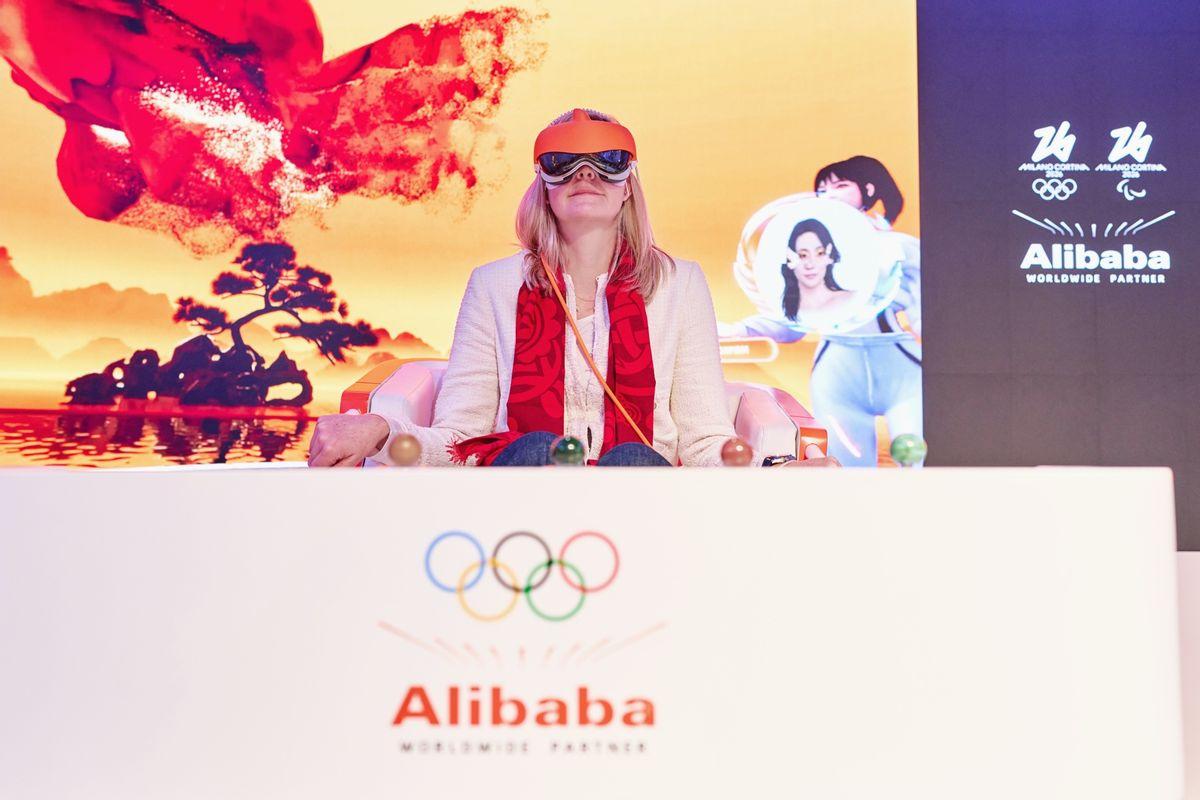
米兰·科尔蒂纳冬奥会2月6日正式开幕。在意大利米兰斯福尔扎古堡前广场,国际奥委会主席柯丝蒂·考文垂参观了充满未来感的“米兰·阿里廊”(Alibaba Wonder on Ice),沉浸式体验了AI数字购物。

(图:国际奥委会主席考文垂在“米兰·阿里廊”沉浸式体验AI数字购物)

淘宝Vision打造了一个未来购物空间,为冬奥会带来 “AI+3D+XR”相融合的先锋体验。游客戴上头显后,就能在AI助手帮助下,创建基于千问大模型生成的专属数字人形象,选择服饰、妆容、喷上香水,参加一场奇妙的冰雪舞会。

这场全观感奇幻之旅,基于阿里巴巴的云和AI技术底座。淘宝Vision自研的3D高斯真人数字人技术,通过实时渲染与空间交互,实现从挑选货物到虚拟试用的AI数字购物链路,让更多人以数字化、个性化的方式参与冬奥会,拥有属于自己的奥运时刻。

"米兰·阿里廊"是阿里巴巴在米兰斯福尔扎古堡前广场设置的体验馆,于米兰冬奥会和残奥会期间对游客开放。展馆由一颗直径8.8米的透明水晶球和一座总长约30米的冰晶穹顶组成。水晶球白天作为互动空间,夜间变身为AI生成视觉内容的投影表面。

“Ciao~我是来自Alibaba的AI小助手!欢迎你来到Wonder on Ice的梦幻舞会。”游客进入"米兰·阿里廊"后,AI助手就会打招呼,引导签到、拍照、生成专属入场券,随后就进入了虚拟试衣体验区。

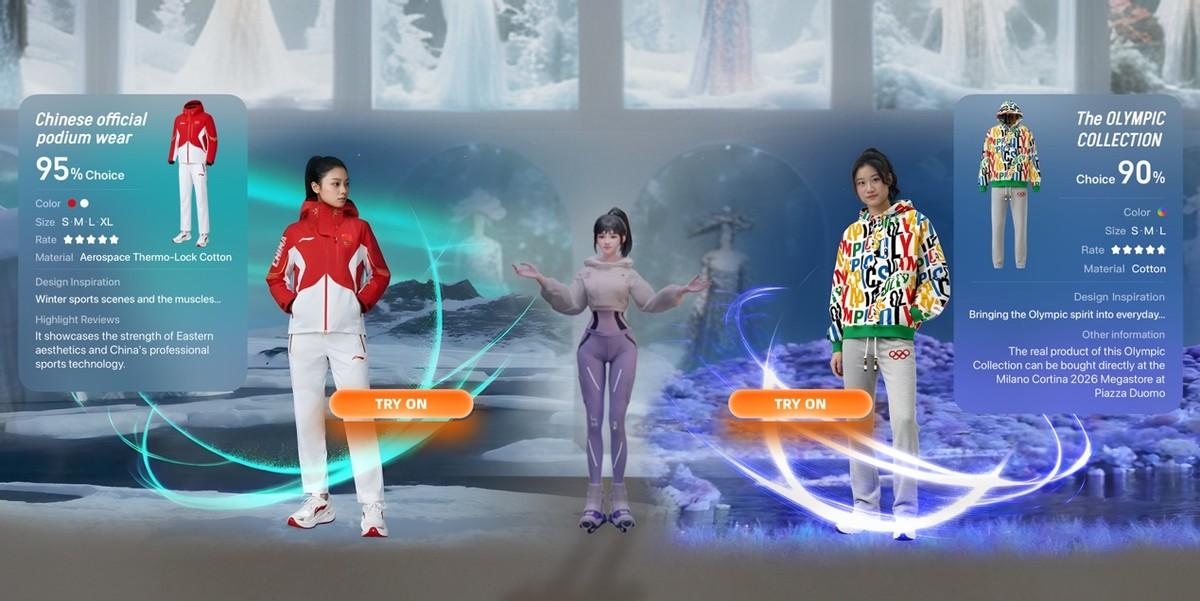
在这里,AI助手会识别体验者的穿衣风格,通过简单问答和手势交互,推荐舞会穿搭。“你看看这两款怎么样?左边这款采用仿生学设计,环保材质,可以凸显你的身材,右边这款具有防水保温的功效。”

(图:游客可以生成专属数字人,体验虚拟换装)

备选的20套穿搭分为东方主题、极地主题、花园主题和未来主题,颇具风格和设计感,其中包括2026米兰冬奥会中国体育代表团的领奖服,衣服上有“双胜雪花纹”,还结合了航天技术,实现锁温、透湿功能。

选择好穿搭后,体验者就会进入虚拟试妆体验区,在AI助手的推荐下,为自己的数字人挑选舞会妆容。然后来到虚拟试香体验区,拿起试香盖闻香的同时,在头显中看到香水前、中、后调对应的物体和风景,让体验者能用嗅觉、视觉、触觉沉浸式感知香型。

当游客专属的数字人完成穿搭、妆容、“喷上”香水后,就能以崭新的形象步入冰雪舞会,生成自己在米兰冬奥会现场的高光时刻。

据悉,淘宝是第一个上架 Apple Vision Pro 的中国电商购物应用,打造了3D沉浸式空间购物体验,增加购物的互动性、决策的准确性,让更多用户享受到空间计算和人工智能带来的购物乐趣,是电商购物从2D走向3D,从平面走向空间的开始。

考文垂表示,全球正在进入AI时代,“阿里巴巴是国际奥委会极其珍贵的合作伙伴,因为阿里巴巴始终与我们并肩前行,用AI科技引领奥运走向未来。”

注:文/龚作仁,文章来源:Laborer,本文为作者独立观点,不代表亿邦动力立场。

文章来源:Laborer

广告
微信
朋友圈

这么好看,分享一下?

朋友圈 分享

APP内打开

+1
+1
微信好友 朋友圈 新浪微博 QQ空间
关闭
收藏成功
发送
/140 0