广告
加载中

出海巴西:在税制迷城与本土化博弈中找到生存法则

马蹄社 2025-03-21 10:53
马蹄社 2025/03/21 10:53

邦小白快读

EN
全文速览

本文整理了中国企业出海巴西的核心信息和实操经验,干货如下:

1. 巴西市场税制复杂,合规清关综合税率可达60%-80%,最新税改规定50美元以下进口电商商品需缴纳20%进口关税加17%增值税,超过50美元额外叠加60%进口综合税,只有本土化率超过60%的企业才能建立竞争优势;

2. 除税务问题外,出海巴西还要解决基础设施适配、品牌心智的问题,比如巴西同一城市存在110V、220V双电压,消费者对中国品牌认知度远低于北美品牌,需要长期渗透;

3. 巴西市场也有大量机会,拥有2亿多人口、平均年龄仅31-32岁,消费能力较强,大量消费品依赖进口,搭配本土化运营可获得不错收益,参考做法有布局本土仓、对齐分期周期定价提升客单价等。

本文梳理了品牌出海巴西的核心挑战、消费趋势和可落地的运营方向,核心干货如下:

1. 合规层面,巴西实行差异化税制,倒逼品牌提升本土化率,只有本土化率超过60%才能构筑护城河,跨境直邮模式在新税改后已经丧失价格优势,需要尽早调整策略;

2. 产品研发层面,需要适配巴西本地基础设施特点,产品要兼容110V与220V双电压标准,满足不同区域的使用需求;

3. 营销和定价层面,巴西消费者对中国品牌心智认知低,需要长期做内容渗透建立认知;消费端分期文化盛行,分期消费占比超60%,可以将产品价格锚点和信用卡分期周期对齐,能有效提升客单价;

4. 市场机会层面,巴西2亿年轻化人口、大量消费品依赖进口,是非常有潜力的增量市场。

本文针对打算出海巴西的卖家梳理了政策变化、风险机会和应对方案,核心干货如下:

1. 政策解读:去年巴西实施税改,原本免税的50美元以下跨境进口商品,现在需要缴纳20%进口关税+17%增值税,超过50美元额外加征60%综合税,依赖跨境直邮的模式已经丧失优势,合规风险大幅提升;

2. 风险提示:除税务问题外,还面临本土注册公司财税压力大、基础设施割裂、品牌心智壁垒高、文化差异难穿透等多重挑战;

3. 机会和应对建议:巴西是增长潜力极高的新兴市场,2亿人口年轻化,消费能力强,支付基础设施完善,可以参考头部企业的做法,逐步建设本土仓储、把供应链向本地产业带迁移,将本土化率提升至60%以上,适配本地分期消费习惯调整定价,也可以通过海外社媒打开初始销路。

本文对服务出海巴西生意或者计划出海的工厂,梳理了需求变化、商业机会和转型启示,核心干货如下:

1. 产品生产设计需求:巴西市场基础设施存在天然割裂,同一城市同时存在110V和220V两种电压标准,对工厂的产品设计提出了新要求,产出的产品必须兼容两种电压才能适配全市场;

2. 商业机会:巴西政府为了保护本土产业推出差异化税率,化纤成品税率提高到25%,棉纺原料享受低税政策,已经推动服装产业集群在巴西东南七州崛起,中国服装供应链工厂可以抓住政策机会,迁移产能到巴西本地布局,享受税收红利,对接本地品牌和电商需求;

3. 数字化和电商转型启示:出海巴西的大趋势下,工厂需要贴合品牌客户的本土化需求,逐步推进本地产能布局,提前规划合规财税方案,依托巴西2亿年轻消费群体的市场需求获得长期增量。

本文梳理了中国企业出海巴西的行业趋势和核心痛点,给出海服务商带来的干货总结如下:

1. 行业发展趋势:巴西作为人口体量巨大、增长潜力高的新兴市场,已经成为中国出海企业的核心布局方向,整个行业正在从早期的跨境试水转向深度本土化运营,出海企业对本土化配套服务的需求正在快速增长,市场空间很大;

2. 客户核心痛点:绝大多数出海企业都不熟悉巴西复杂的税制规则,清关合规难度大,本土公司运营的财税压力高,同时大多缺乏本仓储物流资源,没有适配本地市场的产品调研经验,也缺乏搭建本地品牌心智的运营能力,痛点非常明确;

3. 解决方案方向:服务商可以针对性开发细分服务,比如合规财税咨询、本地仓储物流合作、产品本地化调研、本地内容营销代运营等服务,精准匹配出海企业的需求,抓住这波出海巴西的行业红利。

本文梳理了巴西电商市场的政策变化、商家需求和成功平台经验,核心干货总结如下:

1. 风险提示:巴西去年实施的税改政策对跨境直邮模式冲击极大,加税后依赖跨境进口的平台完全丧失价格优势,平台如果不提前调整布局,会面临很大的增长压力,需要尽早规避政策风险;

2. 商家需求:当前布局巴西的出海商家,核心需求就是本土化运营配套支持,大部分商家没有能力独立搭建本地仓储物流网络,也不熟悉合规清关和本地税务规则,需要平台提供配套服务解决这些问题;

3. 运营和布局参考:头部平台Shopee的经验值得借鉴,提前布局巴西本土化,自建本地物流网络做本地仓发货,税改后依托本土优势脱颖而出,实现单量大幅增长。平台可以参考这个路径,提前布局本土基础设施,招商时引导商家走本土化路线,扶持商家提升本土化率,适配本地政策要求,建立平台的核心竞争力。

本文通过一线案例和从业者经验,呈现了中国企业出海新兴市场的新动向新问题,对产业研究的干货总结如下:

1. 产业新动向:当前中国企业出海已经进入新的阶段,从早期试水欧美成熟市场、做跨境直邮卖货,转向开拓巴西这类体量巨大的新兴市场,并且从流量卖货转向深度本土化运营,供应链本化、运营本土化已经成为新的产业趋势,巴西凭借人口和消费优势,成为中国出海品牌的核心增量目的地;

2. 新问题研究:研究发现新兴市场的合规壁垒远高于预期,复杂税制和频繁政策调整对传统跨境商业模式冲击极大,同时还存在基础设施割裂、本土品牌心智壁垒高等多重问题,新兴市场不再是单纯的流量红利市场,对企业的综合运营能力要求更高;

3. 商业模式研究:成功的巴西出海商业模式,核心是适配本地政策和消费特征,通过提升本土化率构筑竞争护城河,企业需要平衡短期红利和长期增长,这份一线案例对研究中国企业新兴市场出海路径,提供了非常珍贵的样本。

返回默认

声明:快读内容全程由AI生成,请注意甄别信息。如您发现问题,请发送邮件至 run@ebrun.com 。

我是 品牌商 卖家 工厂 服务商 平台商 研究者 帮我再读一遍。

Quick Summary

This article compiles core information and practical insights for Chinese companies expanding into the Brazilian market. Key takeaways are as follows:

1. Brazil has an extremely complex tax regime, with total combined import and clearance rates reaching 60% to 80%. A recent tax reform requires imported e-commerce goods under $50 to pay a 20% import tariff plus 17% value-added tax; goods over $50 incur an additional 60% composite import tax. Only companies with a localization rate exceeding 60% can build a sustainable competitive advantage.

2. Beyond tax compliance, companies expanding to Brazil must also solve infrastructure adaptation and brand awareness challenges. For example, the same city in Brazil can operate on both 110V and 220V voltage standards, and consumer awareness of Chinese brands is far lower than that of North American brands, requiring long-term market penetration.

3. Brazil also offers substantial market opportunities: it has a population of over 200 million with an average age of just 31 to 32, strong purchasing power, and high reliance on imported consumer goods. With localized operations, companies can achieve solid returns. Common proven strategies include establishing local warehouses and aligning product pricing with local installment cycles to boost average order value.

This article outlines core challenges, consumer trends and actionable operational directions for brands expanding into Brazil. Key takeaways are as follows:

1. On the compliance front, Brazil's differentiated tax regime forces brands to increase their localization rate. Only brands with a localization rate above 60% can build a competitive moat, as cross-border direct mail models have lost their price advantage following the new tax reform, requiring early strategy adjustment.

2. On product development, products must adapt to Brazil's local infrastructure characteristics, and be compatible with both 110V and 220V voltage standards to meet usage needs across different regions.

3. On marketing and pricing, Brazilian consumers have low awareness of Chinese brands, requiring long-term content penetration to build brand recognition. Installment payments are deeply ingrained in local consumer culture, accounting for over 60% of transactions. Aligning product price anchoring with credit card installment cycles can effectively increase average order value.

4. In terms of market opportunity, Brazil has 200 million young consumers and relies heavily on imported consumer goods, making it a high-potential incremental market.

This article organizes policy changes, risk assessments, opportunities and response solutions for sellers planning to enter Brazil. Key takeaways are as follows:

1. Policy interpretation: Brazil implemented a tax reform last year. Previously duty-free cross-border imports under $50 are now subject to a 20% import tariff plus 17% VAT; imports over $50 incur an additional 60% composite tax. Models relying on cross-border direct mail have lost their competitive edge, and compliance risks have increased significantly.

2. Risk alert: Beyond tax issues, sellers also face multiple challenges including high fiscal pressure from local company registration, fragmented infrastructure, high brand awareness barriers, and cultural gaps that are hard to bridge.

3. Opportunities and recommended actions: Brazil is a high-growth potential emerging market with 200 million young consumers, strong purchasing power and well-developed payment infrastructure. Following the example of leading players, sellers can gradually build local warehouses, shift supply chains to local industrial belts, raise localization rates above 60%, adjust pricing to fit local installment consumption habits, and use overseas social media to build an initial customer base.

This article summarizes shifting demand, business opportunities and transformation insights for factories serving or planning to enter the Brazil market. Key takeaways are as follows:

1. Product design and manufacturing requirements: Brazil's infrastructure is naturally fragmented, with both 110V and 220V voltage standards coexisting in the same city, creating new requirements for factory product design. Products must be compatible with both voltages to serve the entire national market.

2. Business opportunities: To protect local industry, the Brazilian government introduced differentiated tax rates: the tax rate for finished chemical fiber products increased to 25%, while cotton raw materials enjoy preferential low tax rates. This has spurred the rise of apparel industry clusters in seven southeastern Brazilian states. Chinese apparel supply chain factories can seize this policy opportunity by relocating production capacity to local Brazil, unlocking tax benefits, and meeting the demand of local brands and e-commerce platforms.

3. Insights for digital and e-commerce transformation: Against the broader trend of expansion into Brazil, factories need to align with brand clients' localization requirements, gradually build out local production capacity, plan compliant fiscal and tax frameworks in advance, and capture long-term incremental growth driven by demand from Brazil's 200 million young consumers.

This article outlines industry trends and core pain points for Chinese companies expanding into Brazil, with key takeaways for global expansion service providers as follows:

1. Industry development trends: As a large, high-growth potential emerging market, Brazil has become a core strategic destination for Chinese expanding companies. The industry is shifting from early-stage cross-border testing to deep localized operation, and demand for localized supporting services from expanding companies is growing rapidly, creating substantial market opportunity.

2. Core client pain points: The vast majority of expanding companies are unfamiliar with Brazil's complex tax rules, face high clearance and compliance barriers and high fiscal pressure from local company operations. Most also lack access to local warehousing and logistics resources, have limited experience with local market product research, and lack the operational capabilities to build local brand awareness. Pain points are well-defined and consistent.

3. Solution directions: Service providers can develop targeted segmented services to precisely match the needs of expanding companies and capture the industry dividend of the Brazil expansion wave, including compliance and tax consulting, local warehousing and logistics partnerships, localized product research, and local content marketing operation outsourcing.

This article organizes policy changes, merchant demand and successful platform experiences for Brazil's e-commerce market, with key takeaways as follows:

1. Risk alert: The tax reform implemented in Brazil last year has severely impacted the cross-border direct mail model. After the tax increase, platforms relying on cross-border imports have completely lost their price advantage, and platforms that do not adjust their layout early will face significant growth pressure, requiring early mitigation of policy risk.

2. Merchant demand: The core demand of expanding merchants currently entering Brazil is support for localized operation. Most merchants cannot independently build local warehousing and logistics networks, and are unfamiliar with compliant clearance and local tax rules, requiring platforms to provide supporting services to solve these problems.

3. Operation and layout reference: The experience of leading platform Shopee is worth learning from. Shopee laid out localization in Brazil early, built its own local logistics network and fulfilled orders from local warehouses, and stood out thanks to its localization advantages after the tax reform, achieving substantial order growth. Platforms can follow this path: lay out local infrastructure early, guide merchants to adopt a localization strategy in merchant recruitment, support merchants to increase their localization rate to meet local policy requirements, and build the platform's core competitiveness.

Drawing on first-hand cases and practitioner insights, this article presents new trends and challenges for Chinese companies expanding into emerging markets, with key takeaways for industry research as follows:

1. New industry trends: Chinese outbound expansion has entered a new phase: it has shifted from early testing in mature Western markets via cross-border direct mail to targeting large, high-potential emerging markets such as Brazil, and from traffic-driven arbitrage selling to deep localized operation. Localized supply chains and localized operations have become the new industry trend, and Brazil has emerged as a core incremental destination for Chinese expanding brands thanks to its demographic and consumption advantages.

2. Key new research questions: Research finds that compliance barriers in emerging markets are far higher than expected. Complex tax systems and frequent policy adjustments have severely impacted traditional cross-border business models. Combined with fragmented infrastructure and high barriers to local brand building, emerging markets are no longer simple traffic arbitrage opportunities, and require far stronger comprehensive operational capabilities from companies.

3. Business model research: Successful outbound business models in Brazil are centered on adapting to local policies and consumption characteristics, and building a competitive moat by increasing localization rates. Companies must balance short-term opportunities and long-term growth. The first-hand cases presented in this article provide a very valuable sample for research on the outbound expansion paths of Chinese companies in emerging markets.

Disclaimer: The "Quick Summary" content is entirely generated by AI. Please exercise discretion when interpreting the information. For issues or corrections, please email run@ebrun.com .

I am a Brand Seller Factory Service Provider Marketplace Seller Researcher Read it again.

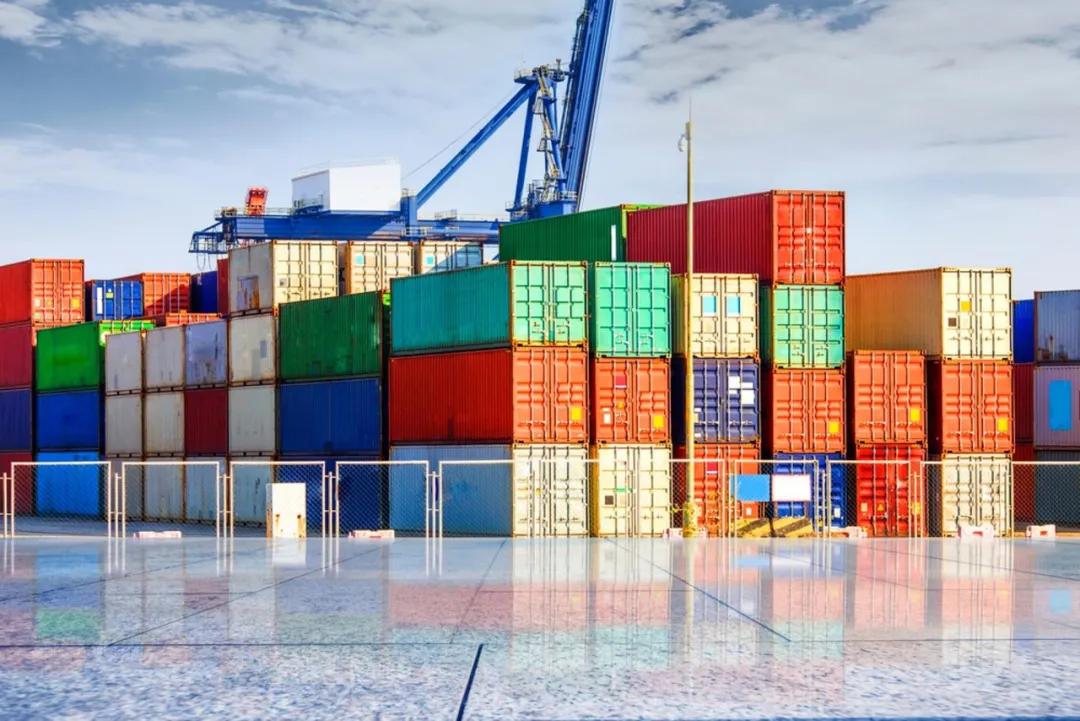
几年前,一位智能会议设备品牌创始人向巴西客户寄送价值800美元的样品,竟收到一张税率高达200%的关税账单,这让他果断放弃了这个市场的探索。而这场“税务启蒙课”也揭示了巴西消费市场的复杂底色。


图片


某国家公司的巴西负责人指出:“合规清关的综合税率可达60%-80%,只有本土化率超过60%的企业才能构筑护城河。”


这种压力测试正在重塑中国企业的出海策略。就像一家美术用品出海品牌的例子——他们通过海外社媒的辐射意外打开巴西销路,但其创始人坦言:“去巴西开设本土公司面临巨大的财税压力,但仅靠跨境通道又难以穿透巴西市场的文化壁垒。


不过,税务压力也倒逼出企业深层的运营智慧。比如,SHEIN在巴西的转型路径就颇具标杆意义:其本土化率已从两年前不足40%提升至如今的60%,服装品类供应链加速向本地产业带迁移。这种“基因改造”的背后,有个重要因素是巴西政府通过差异化税率构建产业护城河——化纤成品税率提高至25%,而棉纺原料享受低税政策,变相推动“虎门式”服装集群在巴西东南七州崛起。


再比如,Shopee也较早地在巴西进行了本土化,自建物流网络,实现本地仓发货。去年巴西税改,对原本免税的50美金以下电商进口商品实施新规——支付20%的进口关税和17%的ICMS(增值税),超过50美金的商品则额外叠加60%的进口综合税,这让依赖跨境直邮的平台直接丧失优势,但Shopee则凭借本地仓储网络脱颖而出,实现了单量的巨大突破。


图片


除了关税和本土化问题,巴西市场对很多出海企业来说也有着物理层面的挑战。比如,某咖啡机品牌调研发现,巴西同一城市就存在110V与220V双轨电压标准,这种基础设施的“天然割裂”要求产品必须具备更强的兼容性。


另外某耳机品牌的调研显示,巴西消费者对北美品牌认知度远超中国品牌,这种心智壁垒更需要长期的内容渗透。 


然而,在风险、挑战之外,巴西市场巨大的机会则推动众多玩家克服艰难险阻去开拓。比如,巴西2亿多的人口、较高的年轻化程度(平均年龄31-32岁)、较强的消费能力,以及大量消费品依赖进口的产业格局,都在它成为出海商家很好的新兴市场选择。


此外,值得一提的是,巴西当地的支付习惯与基础设施的错位,也隐藏着机会密码。一方面巴西的信用卡普及率极高,甚至公园里随便一个小商贩都能提供刷卡机;另一方面,巴西本地有PIX支付(即巴西中央银行2020年推出的一种即时支付系统),广泛应用于个人和商户间的交易。


此外,巴西年轻人比较喜欢分期付款。据J.P. Morgan数据显示,巴西分期消费占比超60%。这种独特的信贷文化正在改变定价逻辑。某母婴品牌尝试将产品价格锚点与当地信用卡分期周期对齐,客单价提升30%。


关于未来方向的预判,理性与野心正在达成微妙平衡。正如某家纺企业创始人的观察:“拉美市场第一口水总是甜的,但真正的赢家必须跨越合规鸿沟。”另一家经历过关税危机的创业者则总结到:“在巴西,保持对2亿年轻消费群体的敬畏,远比追逐短期红利更重要。”  


图片


本文核心观点及案例内容来自马蹄友局第3期研讨分享实录精编,内容已经过脱敏处理并隐去企业具体信息。


文章来源:马蹄社

广告
微信
朋友圈

FAQ回顾

巴西市场的进口商品综合税率是多少?

巴西合规清关的综合税率可达60%-80%。根据2023年税改,50美元以下商品需支付20%进口关税和17%增值税,超过50美元的商品额外叠加60%的进口综合税。

中国企业在巴西市场如何实现本土化?

本土化率需超过60%才能构筑护城河。具体措施包括建立本地供应链(如SHEIN服装品类迁移)、自建物流网络(如Shopee本地仓发货),以及适应双轨电压标准等基础设施要求。

巴西消费者有哪些独特的支付习惯?

巴西消费者普遍使用信用卡(公园小贩均可刷卡)、中央银行推出的PIX即时支付系统,以及分期付款(占比超60%)。某母婴品牌通过匹配分期周期使客单价提升30%。

这么好看,分享一下?

朋友圈 分享

APP内打开

+1
+1
微信好友 朋友圈 新浪微博 QQ空间
关闭
收藏成功
发送
/140 0