广告
加载中

快,是给世界的答案;慢,是给自己的问题

邢大鹏 2025-02-19 15:14
邢大鹏 2025/02/19 15:14

邦小白快读

EN
全文速览

这篇内容是马蹄社研学团美国参访后的感悟,核心观点是商业发展要把握快与慢的平衡,颠覆行业的核爆点往往诞生在用慢功夫熬制快变量的平衡中,主要干货如下:

1. 出海方面:要快速决策布局,但落地要慢,需要创始人带领核心团队躬身入局,统一认知,不能只派海外负责人,产品要做本地化适配,重视当地渠道的展示包装设计。

2. AI发展方面:要快速拥抱AI,但企业不要盲目做AI,应该走+AI路线,先打好数字化基础,把数据思维融入经营,慢慢积累,不能急功近利。

3. 成长方面:向外看学习要快,向内求沉淀要慢,AI时代提出真问题比找标准答案更重要,企业做增长规划的同时也要做组织学习规划,才能穿越周期。

本文给出海品牌和AI转型品牌提供了快慢平衡的发展思路,干货如下:

1. 出海趋势:当前出海已经成为必然选择,2024年中国出口规模突破25万亿,贸易顺差达7.1万亿,数据印证出海是品牌增长的必选项,品牌要快速做出海决策,但本地化落地要慢打磨。

2. 产品和渠道建设:不能直接复制国内产品到海外,要打造“本地话”产品,适配当地消费习惯和使用需求,比如智能锁创业者花两年打磨适配美式门框的产品,同时要重视Home Depot、Costco等当地主流渠道的产品展示和包装设计,才能做好本地品牌。

3. 转型和长期发展:拥抱AI要快,但品牌不要盲目跟风做AI,优先走+AI路线,先补数字化基础,长期来看,品牌要平衡业务增长和组织能力沉淀,才能穿越周期。

本文给出海卖家和AI转型卖家提供了行动指南、机会提示和风险提醒,干货如下:

1. 增长机会:当前出海已经是最大的增长市场之一,2024年出口数据创新高,卖家必须抓住出海机会,要快速决策布局,核心风险是不要只找一个海外负责人就开展业务,当前企业最大的成本是核心团队的认知共识成本,必须创始人带领核心团队亲自出海,统一认知才能降低风险。

2. 落地要求:进入海外市场要慢打磨,沉下心了解当地市场环境和消费习惯,做适配本地需求的产品,重视当地渠道的展示包装,尊重市场规律,慢打磨反而能更快打开市场,快进快出反而容易失败。

3. AI转型建议:要快速拥抱AI抓住技术红利,但转型要慢,先补好数字化基础,积累数据、养成数据思维,再落地AI应用,做业务增长规划的同时要搭配组织学习规划,才能持续增长。

本文给国内制造工厂出海布局和数字化转型提供了清晰的方向,干货如下:

1. 商业机会:当前出海已经是工厂增量发展的必然选择,2024年中国出口突破25万亿,贸易顺差创下峰值,出海已经从可选项变为必选项,工厂要快速做出海决策,抓住这一轮市场增量。

2. 产品生产设计要求:出海不能直接照搬国内产品线,必须针对目标市场的需求做定制化开发,比如智能锁创业者花两年打磨适配美式门框的产品才获得市场认可,还要适配当地的生活习惯,比如美国人偏爱DIY,产品设计要符合这类需求。

3. 数字化转型启示:工厂要快速拥抱AI,但不能盲目跟风上AI项目,多数工厂数字化基础薄弱,要先补数字化筑基,积累生产经营各环节的数据,养成数据思维,再逐步推进+AI,急功近利反而会失败,李泽湘教授的共享工厂模式也值得工厂参考,共享资源培育新项目。

本文梳理了当前中国企业服务市场的两大核心趋势,总结了客户的核心痛点,给服务商指明了业务方向,干货如下:

1. 行业发展趋势:当前中国企业出海和AI转型是两大核心风口,大量企业都有相关的服务需求,市场空间广阔,面向企业的认知升级、本地化服务、数字化转型服务都有大量缺口。

2. 客户核心痛点:出海企业的核心痛点是核心团队认知不统一,对海外市场缺乏深度了解,产品无法适配本地化需求;AI转型企业的核心痛点是多数企业数字化基础薄弱,缺乏数据积累和数据思维,盲目转型容易失败。

3. 解决方案方向:服务商可以针对出海企业开发本地化研学、市场调研、产品适配设计、渠道对接等服务,帮助企业核心团队统一认知;针对AI转型企业可以提供数字化体系搭建、数据思维培养等基础服务,还可以开发高端企业家海外研学产品,满足企业认知升级的需求。

本文从企业需求端出发,给各类出海服务平台、产业服务平台的招商运营提供了参考,干货如下:

1. 企业核心需求:出海企业不再满足于平台仅提供交易流量服务,需要平台提供深度本地化服务,帮助对接本地资源、了解本地消费习惯、适配本地渠道规则;AI转型企业大多需要轻量化的+AI服务,不需要从零搭建AI体系,需要平台提供数字化基础工具和落地辅导。

2. 招商方向:平台招商要优先吸引愿意沉下心做本地化产品适配的企业,这类企业生命力更强,长期增长空间更大,能提升平台整体的质量,避免劣币驱逐良币。

3. 运营和风险规避:平台运营要引导企业做好本地化基础工作,帮助商家优化符合当地渠道要求的产品展示和包装,同时要引导企业理性转型AI,不要过度营销AI概念,帮助企业打好数字化基础,降低企业转型失败的风险,也能规避平台的风口波动风险。

本文基于2025年中国企业家美国研学的一手观察,提出了很多新的产业观点和研究方向,干货如下:

1. 产业新动向:当前中国产业发展有两大核心新动向,一是企业出海已经从要不要出海进入到如何出海的新阶段,从产品出海转向团队和品牌出海,AI转型从盲目追捧AI+转向务实的+AI路线,多数企业选择先补数字化基础再落地AI。

2. 新问题与新观点:提出了商业发展的快慢平衡悖论,指出颠覆行业的核爆点来自慢功夫熬制快变量,还提出中国企业出海最大的成本是核心团队的认知共识成本,这是以往研究中较少关注的核心问题,同时提出AI时代提出真问题比寻找标准答案更重要。

3. 新经验总结:总结了出海成功公式:共识决心×长期定力×时间投入×躬身入局,还提出企业穿越周期的双齿轮模型,即内求合道与外求时俱相互咬合,这些新观点和一手观察都为产业研究提供了新的样本和方向。

返回默认

声明:快读内容全程由AI生成,请注意甄别信息。如您发现问题,请发送邮件至 run@ebrun.com 。

我是 品牌商 卖家 工厂 服务商 平台商 研究者 帮我再读一遍。

Quick Summary

This article reflects on insights from a research study tour of the U.S. organized by Mati Club, with a core thesis that business development relies on striking a balance between speed and patience. Industry-disrupting breakthroughs often emerge at the intersection of deliberate, long-term effort and fast-evolving variables. Key takeaways are as follows:

1. Cross-border expansion: Make decisions and move to lay out your footprint quickly, but take time to execute on the ground. Founders must lead their core teams to immerse themselves in the local market and align on shared goals, rather than simply delegating to an overseas head. Products must be localized, with extra attention paid to in-store display and packaging for local channels.

2. AI adoption: Embrace AI quickly, but do not rush to build standalone AI solutions blindly. A better approach is "industry plus AI": first solidify digital foundations, embed data-driven thinking into daily operations, and build momentum incrementally instead of chasing quick gains.

3. Organizational growth: Learn quickly from external best practices, but take time to internalize insights and build long-term capabilities. In the age of AI, asking the right questions matters more than chasing the "correct" answer. Companies need to pair growth plans with organizational learning strategies to navigate full business cycles.

This article outlines a balanced, speed-patience framework for brands expanding overseas and undergoing AI transformation. Key insights are as follows:

1. The cross-border trend: Going global has become an unavoidable strategic choice for growth. China’s total exports exceeded 25 trillion yuan in 2024, with a trade surplus of 7.1 trillion yuan, confirming that outbound expansion is a must for brand growth. Brands should decide to enter global markets quickly, but take the time to refine their localized execution.

2. Product and channel development: Brands cannot simply replicate domestic products for overseas markets. They need to build "local-first" products tailored to local consumer habits and needs. For example, one smart lock startup spent two years developing a product compatible with American door frames to gain market traction. Brands must also prioritize in-store display and packaging design to meet the requirements of major local retailers such as Home Depot and Costco to build a strong local brand presence.

3. Transformation and long-term growth: Move quickly to embrace AI, but avoid blindly jumping into standalone AI development. Prioritize the "industry plus AI" path and first shore up gaps in digital infrastructure. Over the long term, brands must balance business growth and organizational capability building to successfully navigate business cycles.

This article provides a practical action framework, opportunity alerts and risk warnings for cross-border sellers and sellers undergoing AI transformation. Key takeaways are as follows:

1. Growth opportunities: Cross-border expansion is now one of the largest available growth markets, with 2024 Chinese export data hitting a new all-time high. Sellers must seize this opportunity and make quick decisions to lay out their global footprint. The biggest risk is delegating the entire expansion to a single overseas head: the single largest cost for companies today is aligning shared understanding among the core team, so founders must lead their core teams to enter overseas markets in person to align on strategy and reduce risk.

2. On-the-ground execution requirements: Take time to refine your offering after entering an overseas market. Invest deeply to understand the local market environment and consumer habits, adapt products to local needs, and prioritize display and packaging for local channels. Respecting market fundamentals and building slowly actually helps companies open up markets faster, while rushed, short-term approaches are far more likely to end in failure.

3. AI transformation advice: Move quickly to embrace AI to capture technological dividends, but transform incrementally. First shore up digital foundations, accumulate data and build a data-driven culture before rolling out AI applications. Pair business growth plans with organizational learning strategies to sustain long-term growth.

This article outlines a clear strategic direction for Chinese manufacturing factories looking to expand globally and complete digital transformation. Key insights are as follows:

1. Business opportunity: Outbound expansion has become an unavoidable path for factories to capture new growth. China’s total exports exceeded 25 trillion yuan in 2024, with the trade surplus hitting a record high, turning cross-border expansion from an optional strategy into a must-do. Factories should make the decision to go out quickly to capture this wave of incremental growth.

2. Product design and manufacturing requirements: Factories cannot simply copy their domestic product lines for overseas markets. They must develop customized products tailored to the needs of target markets. For example, one smart lock startup spent two years refining a product compatible with American door frames before winning market acceptance. Products must also align with local lifestyles: for instance, U.S. consumers favor DIY installation, so product design needs to accommodate this preference.

3. Digital transformation takeaways: Factories should move quickly to embrace AI, but should not blindly rush into standalone AI projects. Most Chinese factories have weak digital foundations, so they should first prioritize building out core digital infrastructure, accumulate data across all production and operation links, and build data-driven thinking before incrementally rolling out "manufacturing plus AI" initiatives. Chasing quick gains will almost always lead to failure. Professor Li Zexiang’s shared factory model, which allows factories to share resources to incubate new projects, is also a valuable reference.

This article sorts out the two core trends in China’s enterprise services market, summarizes key client pain points, and outlines clear strategic directions for service providers. Key takeaways are as follows:

1. Industry trends: Chinese companies’ cross-border expansion and AI transformation are the two core growth windfalls today. A huge number of enterprises have unmet demand for related services, creating massive market opportunities. There are particularly large gaps in services for cognitive upgrading, localized market support, and digital transformation.

2. Core client pain points: For cross-border enterprises, the biggest pain points are misalignment among core leadership teams, lack of in-depth understanding of overseas markets, and inability to adapt products to local needs. For AI-transforming enterprises, the biggest challenges are weak digital foundations, a lack of data accumulation and data-driven thinking, and the high risk of failure from blind transformation.

3. Solution direction: Service providers can develop localized research tours, market research, product adaptation design, and channel matching services for cross-border clients to help core teams align on a shared understanding. For enterprises undergoing AI transformation, providers can offer foundational services such as digital system building and data thinking training. Service providers can also develop high-end overseas research tour products for founders to meet demand for organizational cognitive upgrading.

This article draws insights from enterprise demand to provide actionable reference for the recruitment and operations of cross-border service platforms and industrial service platforms. Key takeaways are as follows:

1. Core enterprise demand: Cross-border enterprises are no longer satisfied with platforms that only provide transaction traffic. They now require deep localized services to help connect with local resources, understand local consumer habits, and adapt to local channel rules. For AI transformation, most enterprises need lightweight "industry plus AI" services rather than building AI systems from scratch, so they require platforms to provide foundational digital tools and on-the-ground implementation guidance.

2. Merchant recruitment direction: Platforms should prioritize recruiting enterprises willing to invest the time to adapt their products for local markets. These businesses have stronger resilience and greater long-term growth potential, which improves the overall quality of the platform and avoids a race to the bottom driven by low-quality players.

3. Operations and risk mitigation: Platform operations should guide enterprises to complete foundational localization work, helping merchants optimize product display and packaging to meet local channel requirements. Platforms should also guide enterprises to pursue AI transformation rationally, avoid overhyping AI concepts, and help businesses build solid digital foundations to reduce the risk of transformation failure, which in turn reduces the platform’s own exposure to boom-and-bust volatility from trend-driven hype.

Based on first-hand observations from a 2025 research tour of the U.S. by Chinese entrepreneurs, this article puts forward a number of new industrial perspectives and research directions. Key insights are as follows:

1. New industrial trends: There are two core emerging trends in China’s industrial development today. First, corporate cross-border expansion has moved beyond the question of "whether to go out" and entered a new phase focused on "how to go out," shifting from pure product exporting to team localization and brand building. Second, AI transformation has shifted from the blind hype of standalone "AI plus" to a more pragmatic "industry plus AI" approach, with most enterprises choosing to first shore up digital foundations before rolling out AI applications.

2. New questions and new perspectives: This article proposes the "speed-patience paradox" for business development, arguing that industry-disrupting breakthroughs emerge when deliberate, slow capability-building is applied to fast-changing variables. It also notes that the single largest cost for Chinese companies expanding overseas is the cost of aligning shared consensus among core teams — a core issue that has received little attention in prior research. It further argues that in the age of AI, asking the right question is more important than finding a standard answer.

3. New empirical summary: The article summarizes a formula for outbound success: Consensus & Determination × Long-term Conviction × Time Investment × Hands-on Immersion. It also proposes a dual-gear model for companies to navigate business cycles, where internal alignment with fundamental principles and external adaptation to market trends work in tandem. These new perspectives and first-hand observations provide new research samples and directions for industrial research.

Disclaimer: The "Quick Summary" content is entirely generated by AI. Please exercise discretion when interpreting the information. For issues or corrections, please email run@ebrun.com .

I am a Brand Seller Factory Service Provider Marketplace Seller Researcher Read it again.

2025新年伊始,来自马蹄社的十余位先锋企业家一起游学美国旧金山、洛杉矶和拉斯维加斯,从谷歌总部闪着代码流光的未来实验室,到斯坦福教堂穹顶下炸裂的脑暴现场,再到CES展区被会跳舞的机器人军团"包围"……横跨科技宇宙的奇幻漂流,我们不是见证者,而是亲手拆开了通往2035的时空胶囊。

在谷歌实验室,算法以纳秒级进化;穿过斯坦福拱廊时,藤蔓正以毫米级攀爬。CES展馆里沸腾着每分钟诞生的黑科技,伯克利教授的咖啡杯却凝着二十年未变的思考痕迹——这趟穿越未来浓度的旅程,让我们在科技狂飙的“快”与人文沉淀的“慢”之间,触摸到了商业最性感的悖论:原来颠覆行业的核爆点,往往诞生于“用慢功夫熬制快变量”的微妙平衡。当中国企业家带着东方智慧闯入这场时空折叠实验,他们会有怎样的感悟呢?

以下内容分享自本次研学同学邢大鹏

邢大鹏极睿科技合伙人、毕博方略董事、马蹄社杭州分社秘书长

《2025美国参访游学感悟——“快”与“慢”》

今天是大年初一,作为2025农历新年的开端,不禁想起一个月前在美国度过的元旦。时空交叠间,两个"新年第一天"如同镜像——在美国迎接了2025,又在中国的鞭炮声里开启新春。

时间过的很“快”,一个月后的今天落笔写下这篇美国本土商业研学的感悟,感觉又有点“慢”,我决定用这种快与慢的时空折叠来纪念2024、开启2025。

TikTok洛杉矶总部的文化墙

01

出海“要快”,入海“要慢”

2024年中国出口规模突破25万亿,贸易顺差达7.1万亿峰值,2024年12月当月贸易顺差首次突破了1000亿美元。“出海”是2024年大家提及率最高的词之一,而这些数字也印证着出海已成必然选择。

如今的2025年与1985年的日本颇有相似之处——四十年对日本本土是“失去的时代”,对海外拓展却是“再造的传奇”。历史和当下都在面前,所以未来不是“要不要出海”而是“如何出海”,且要快速出海、肉身出海,这对企业来说不仅是战略选择,更是认知突围:决策要快,但认知沉淀需慢。

出海,不止是老板一个人出海,更要带领核心团队一起出海。在我看来,企业现在最大的成本不是人员和研发等成本,而是老板与核心团队的认知共识。如果老板认为找一个海外负责人就是做出海业务的发展,这种风险还是挺大的。且不说能不能找到合适的人,就算找到了,能“管”的好,也能“放”的也好,这是一门学问。

在拉斯维加斯CES展遇见智能锁创业者阿彬,他用两年时间打磨适配美式门框的产品,印证了我们的“出海公式”:共识决心×长期定力×时间投入×躬身入局。这提醒我们:出海不是派个海外负责人就能成功,唯有创始人带着核心团队亲历市场,才能跨越“认知共识”这个最大的成本。

2025拉斯维加斯的CES展

再聊聊入海。

从东海岸的纽约、新泽西到西海岸的旧金山、洛杉矶、从内华达沙漠里的拉斯维加斯再到太平洋沿海边的西雅图……参加了CES展,也参观了很多的公司、大学,还逛了很多卖场和商场,见了很多朋友与合作伙伴,听了超多的课程和分享——“入海要慢”的感悟,来自美国生活的细节。

从酒店办理的check in到当地工作的时间节奏,让我不由的感慨:美国人对航天、AI、高科技追逐的是“快”,但对家居、生活追求反而没那么快,他们享受DIY,享受过程和节奏,享受这样的一种“慢”的生活方式与态度,这是值得我们思考的。

“本地话”产品+“本地化”团队,是衡量入海深度的一把尺。

直接把中国产品复制到美国,这只能是探探路,最终要做出品牌的话,就一定要有“本地话”的产品。为什么要用这个“话”?是因为我们出海的产品不仅要能入乡随俗,有“价值乡气”和“功能地气”,更要自己“会说话”。

在Home Depot或Costco这种连锁商场,产品的展示和包装是非常重要的,出海的产品一定要重视在这方面的设计和内容表达。正如在CES展看到的那把智能锁,两年沉淀终将换来市场回响。

入海,要了解水温、水位、水里的动植物、水域周边的环境等等。有时快就是慢,慢也是快,我们要尊重时间,尊重规律。

Home Depot里的产品介绍物料

02

拥抱AI要快,+AI要慢

2024年,除了出海,讨论最多的一定是AI。

这个春节,DeepSeek给外国友人端上了一盘好吃不贵的“中国式饺子”,惊艳世界。而我在硅谷参观了Google和Microsoft,听闻了他们和OpenAI之间爱恨情仇般的战略抉择与“创新者窘境”的故事;在斯坦福大学人工智能中心李飞飞实验室,听博士后研究员分享了World Labs通过构建大世界模型推动AI在3D领域的空间智能;在洛杉矶亲自体验了Cybertruck基于AI模型数据达到了L3水平的自动驾驶;在CES展上看到了诸多包含AI创新的软硬件产品...这些都昭示着AI将如互联网般重塑我们的生活。

CES展上三星AI for All展示墙

未来,AI会进入到我们生活的各个场景,所以拥抱AI要快,快在认知与行动。但拥抱AI不代表自己要干AI,相比“AI+”,我更倾向于“+AI”,这两者有着本质的不同。

AI需要数据、算法、算力的三重奏,但多数企业尚未完成数字化筑基。所以企业+AI,我建议一定要先做好数字化和数智化(这里不单是数据,也包括广义的企业生产资料),先修炼"数据肌肉记忆"——将数据思维渗透到经营场景,补上过去不重视数据、不积累数据、不会用数据、“拍脑门决策”欠下的课。

这件事情快不来,要慢慢积累。就如同农耕:翻土可快,插秧须慢,急功近利只会揠苗助长。

03

看和思要快,向外学要快,学术要快;

问和习要慢,向内求要慢,求道要慢。

看和思要快,这个“看”不止是看企业出海的未来发展,也要看自身和下一代的未来发展。

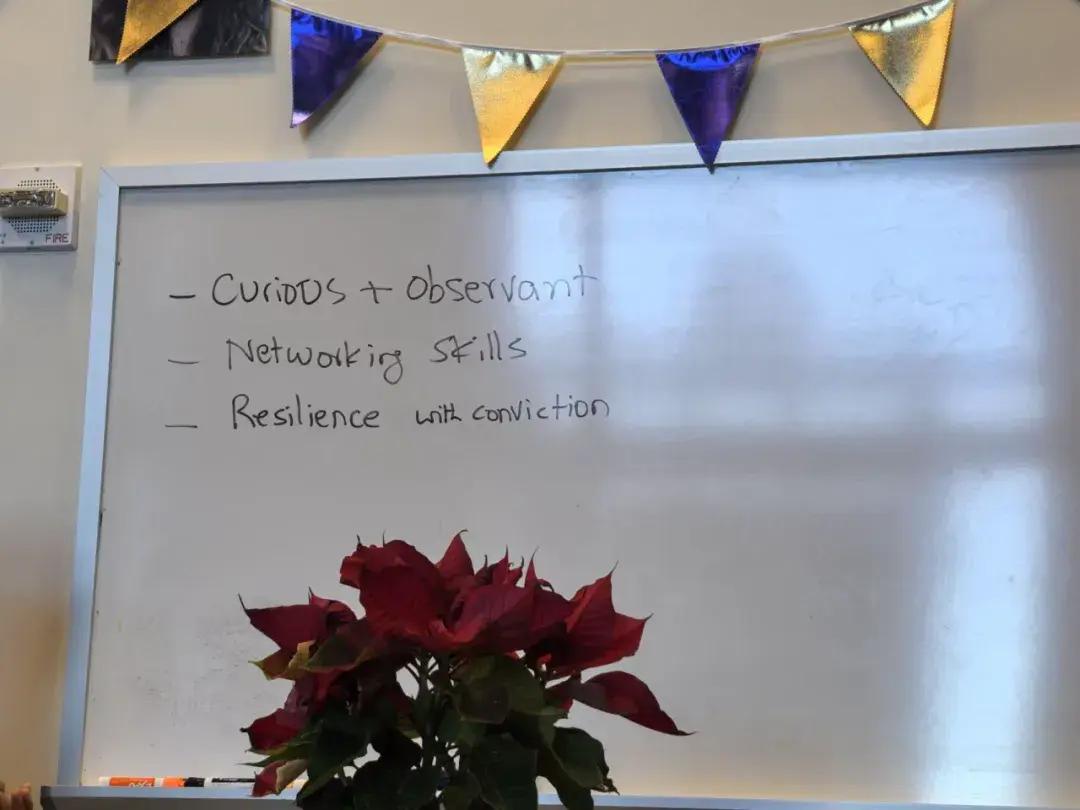
在伯克利大学,Zafar教授在白板写下优秀创业者所具备三大特质:

第一个是好奇心和洞察力;

第二个是交际和团队协作能力;

第三个是韧性与念力。

这也对应着企业进化的三重修炼:向外看要快——保持技术雷达灵敏度;向内求要慢——培育组织认知体系;向上长要韧——构建知识复利系统。

当时我就在思考,自身如何修炼这三个特质,以及该如何培养下一代子女也具备这三个特质。

之前有人采访DeepSeeK的梁文峰,他说:“从长远看,经验没那么重要,好奇心、创造力和热爱更重要。”从一个家庭到一个企业甚至到一个国家,如何培养这些能力,值得我们好好思考。

这次在美国让我最感动的是碰到了李泽湘教授,听他分享他的3126实验室、共享工厂,字字珠玑,他在用心培育更多优秀的中国智能科技企业,打造中国版的“欧林书院”,这是在布道。

被李教授感染,我的心中也种下了一颗种子,希望日后能发芽成长。

伯克利商学院Zafar教授课上手写的答案

这次美国研学,最触动我的是"Good Question文化":在斯坦福课堂、创投路演甚至企业会议中,都在鼓励大家提好问题,同时也都会给好问题点赞,这是一种思维方式,更是一种鼓励创新思考的文化。

在AI时代,提出真问题的能力比寻找标准答案更重要,因为有了更好的问题才会有更好的答案,问题代表着思考,代表着深浅度,代表着已知和未知,代表着好奇与探索,代表着求同和不同,代表着迭代和创新,代表着内求和外求。正如梁文峰所说:"未来属于保持童真的追问者。"

结语

“学”后一定要“习”,这些文字也是我给自己的“习”。“习”的慢不在于速度,它更是一种迭代,不是一次就结束,而是不断用“习”去思考“学”,去迭代“学”。

就好像读书,你的下一本书可能是从当下这本书中找到的。

“习”会让“学”有了转化和验证,更是自我内化变成认知的一个沉淀过程。

向内求要慢、求道要慢,组织能力是慢工出细活的。很多企业在年底都会做第二年的业务增长规划,我认为企业在做业务增长规划的同时,更需要老板和团队一起做第二年的组织学习规划,两者要相辅,因果方相成。

这次美国研学走访了很多大企业,比如谷歌、微软、亚马逊、波音等等,为什么它们能够穿越一个又一个周期?我想其中一个很重要因素是向内求——当外部环境不断变化时,自己能不能向内求以及是否了解应当如何向内求,就成为了很重要的因素。企业要具备全方位把内求合道与外求时俱的双齿轮咬合的能力。

西雅图的亚马逊标志建筑The Domes

临别西雅图时,亚马逊墙上的箴言仍在回响:"Success doesn‘t lead to feeling good,Feeling good leads to success(成功不会带来快乐,但快乐会导向成功)。"这恰是快慢哲学的终极注脚——当我们穿越CES的科技迷雾,走过伯克利的梧桐大道,终将明白:商业文明的精髓,不在追逐速度,而在把握节奏。

正如中国水墨的留白智慧,在动静相宜间,自有时光沉淀的力量。

在快与慢中修炼,在允执厥中成长!

邢大鹏

2025年1月29日大年初一夜

这场美国研学早已超越"参观学习",而是用科技望远镜对准了人类文明的下一站!

马蹄社美国本土商业研学总裁班二期正在筹备中,有兴趣一起同行的朋友们可以提前预约席位啦~

注:文/邢大鹏,文章来源:Laborer,本文为作者独立观点,不代表亿邦动力立场。

文章来源:马蹄社

广告
微信
朋友圈

FAQ回顾

中国企业出海需要遵循哪些关键策略?

出海决策要快但认知沉淀需慢,需创始人带领核心团队亲历市场。成功公式为共识决心×长期定力×时间投入×躬身入局,产品需实现本地化改造和包装设计。

企业如何有效推进AI转型?

建议采用“+AI”而非“AI+”路径,先完成数字化筑基。需积累数据肌肉记忆,将数据思维渗透到经营场景,补上数据积累和应用的短板。

优秀创业者需要具备哪些核心特质?

伯克利教授提出三大特质:好奇心和洞察力、交际和团队协作能力、韧性与念力。对应企业需快速保持技术敏感度,慢速培育组织认知体系。

这么好看,分享一下?

朋友圈 分享

APP内打开

赞 +1
+1
微信好友 朋友圈 新浪微博 QQ空间
关闭
收藏成功
发送
/140 0