广告
加载中

千峰访谈天源迪科:不造基座,专注打造行业智能体改造四大行业

亿邦动力 2026-11-02 15:24
亿邦动力 2026/11/02 15:24

邦小白快读

EN
全文速览

总1:文章核心是天源迪科不造基座、专注行业智能体,2026年完成50多个AI产品,业务覆盖通信、金融、公安、央国企采购供应链四大行业,软件从问答式转向自主决策式。

1.落地产品包括通信智能方案生成、智能投标、工单智能运维,金融反洗钱监控、信贷报告生成、电催机器人,公安警情研判、执法规范智能体,央国企智能辅助评审、智能标书助手、采购智能体等。

2.采购供应链案例可量化:天枢工业品大模型物料识别准确率93%,协助某央企完成300万级物料标准化;智能辅助评标使人工成本降低50%以上;采购智能体使人机协同效率提升80%以上;采购方节省8%至10%综合采购成本。

总2:AI进入研发交付全流程的实操启示。

1.研发模式变为产品人员定方向、AI承担编程、工程师负责校验。

2.岗位职责合并、项目团队精简、管理架构更扁平,核心是把资深专家能力批量复制给普通员工。

总1:产品研发路线清晰:不重复造通用基座,对接多家主流大模型,把资源集中到行业知识本体沉淀建模与智能体技术优化,2026年完成50多个AI产品,取得大模型备案与国产GPU信创兼容认证。

1.产品形态从问答式转向自主决策式,企业采购可自主完成任务的智能体。

2.以AI原生应用开拓新市场,教育培训等已落地,同时用智能体改造通信运营商、银行、政府等原有优势行业。

总2:用户行为与价格竞争出现新变化。

1.产业智能体改写B2B,交互入口由搜索框转为对话框,采购人员转向提需求、审依据、控风控;商业模式从流量撮合升级为代理决策能力。

2.垂类大模型在部分场景具成本优势,采购方可节省8%至10%综合采购成本,评标人工成本降50%以上、采购效率提升80%以上,物料标准化使部件跨企业可比可竞价。

总1:增长市场与机会:以AI原生应用开拓新市场,央国企采购供应链、教育培训等行业已落地,同时用智能体改造通信运营商、银行、政府等优势行业,2026年完成50多个AI产品。

1.最新商业模式是产业智能体从流量撮合升级为代理决策能力,懂行业、可担责的智能体成为业务主入口,每笔交易沉淀产业数据形成数据复利。

2.可学习点是通用基座无需重复打造、垂类能力必须自建,核心在行业本体和可信推理架构;合作方式包括对接多家主流大模型、采购外部Token补充算力、依托隐私计算推动跨主体数据协同。

总2:风险与合作提示。

1.风险方面,产业数据语义标准不一,跨主体共享需兼顾技术可信与权责清晰,数据真实性要求高。

2.机会方面,公司拥有国家发改委价格监测定点、唯一工业品价格指数采集单位、参与中国电信数据要素建设、合肥公共数据授权运营首批合伙人等资质,并取得大模型备案与国产GPU信创兼容认证。

总1:产品生产与设计相关的干货集中在工业品标准化和采购供应链智能化:天枢工业品大模型基于数千万条数据训练,物料识别准确率93%,已协助某央企完成300万级物料标准化。

1.采购方AI产品可节省8%至10%综合采购成本;智能辅助评标直接处理非结构化招标文件,人工成本降低50%以上,已在两家央企落地;采购智能体辅助决策,人机协同效率提升80%以上。

2.央国企采购供应链推出智能辅助评审、智能标书助手、采购智能体、智能商品运营平台、智慧采购价格管控平台、智慧采购供应链合规监管平台六大产品,受到能源、化工、金融等行业央国企欢迎。

总2:推进数字化与电商的启示。

1.不造基座,专注行业智能体与行业知识本体,具备私有化部署与国产化适配能力。

2.物料标准化使同一部件跨企业可比可竞价,客观上拓宽中小供应商市场准入通道,能力可复制至能源、化工、运营商等场景。

总1:行业趋势是软件从给人用转为给智能体用,产品从问答式向自主决策式演变,产业智能体从交互入口、商业模式、数据沉淀三方面改写B2B。

1.新技术包括对接多家主流大模型、行业知识本体沉淀建模、可信推理企业智能体架构、AI Agent、隐私计算、大模型备案与国产GPU信创兼容认证。

2.客户痛点与解决方案:非标物料叫法各异难比价,用天枢工业品大模型实现93%识别准确率和300万级物料标准化;评标依赖专家主观经验、串标难识别,用冷启动智能辅助评标降人工成本50%以上;采购链条长依赖经验,用采购智能体提升效率80%以上。

总2:交付与数据支撑能力。

1.AI全面落地产品研发、项目实施、交付运维,岗位职责合并、团队精简、架构扁平。

2.数据要素从连接走向认知,企业需把业务术语、口径、规则沉淀为本体,并以隐私计算实现跨主体数据融合且不输出原始数据。

总1:商业对平台的需求变化:交互入口由搜索框转为对话框,采购人员重心转向提需求、审依据、控风控;商业模式从流量撮合升级为代理决策能力,懂行业、可担责的智能体成为业务主入口。

1.平台需具备行业本体与可信推理能力,不重复造基座,把资源投向行业知识本体和智能体优化。

2.平台最新做法可参考:用AI原生应用开拓新市场,用智能体改造通信运营商、银行、政府等优势行业;每笔交易沉淀产业数据形成数据复利。

总2:运营管理与风向规避。

1.生态合作上,对接多家主流大模型,参与中国电信数据要素建设,入选合肥公共数据授权运营首批合伙人覆盖七大领域,拥有国家发改委价格监测定点、唯一工业品价格指数采集单位等数据授权资质。

2.风险方面,产业数据语义标准不一需靠大模型与本体建模统一;跨主体共享要兼顾技术可信与权责清晰;数据真实性要求高,需依托定点授权采集保障稳定可靠。

总1:产业新动向是软件从给人用变为给智能体用,企业采购从固化软件转向可自主完成任务的智能体;天源迪科不造基座、专注行业智能体应用,2026年完成50多个AI产品。

1.理论判断:通用基座无需重复打造,垂类能力必须自建,工业、运营商、金融存在通用语料未覆盖的隐性业务规则,垂类大模型部分场景有成本优势。

2.核心命题是行业本体,可信推理企业智能体架构是智能体与本体有机结合;产业智能体从搜索框转对话框、流量撮合转代理决策、交易沉淀数据形成数据复利。

总2:新问题、护城河与政策启示。

1.数据要素从连接走向认知,稀缺的是业务术语、口径、规则本体化;挑战包括语义标准不一、跨主体共享技术可信与权责清晰、数据真实性。

2.护城河由行业本体知识、私有化部署与国产化适配、稀缺数据授权资质、数千人交付团队与成熟AI产品构成。

3.政策与资质启示包括大模型备案、国产GPU信创兼容认证、国家发改委价格监测定点、唯一工业品价格指数采集单位、合肥公共数据授权运营首批合伙人。

返回默认
声明:快读内容全程由AI生成,请注意甄别信息。如您发现问题,请发送邮件至 run@ebrun.com 。

我是 品牌商 卖家 工厂 服务商 平台商 研究者 帮我再读一遍。

Quick Summary

Summary 1: The article's core point is that Tianyuan Dike does not build foundation models but focuses on industry agents. By 2026 it will complete more than 50 AI products, covering four sectors: telecommunications, finance, public security, and procurement and supply chains of central and state-owned enterprises. Its software is shifting from Q&A to autonomous decision-making.

1. Deployed products include telecom intelligent solution generation, intelligent bidding, and intelligent work-order O&M; financial anti-money-laundering monitoring, credit report generation, and debt-collection robots; public security incident analysis and law-enforcement compliance agents; and AI-assisted review, intelligent bid-document assistants, and procurement agents for central and state-owned enterprises.

2. The procurement and supply chain case is quantifiable: the Tianshu industrial-products large model achieves 93% material recognition accuracy and helped a central SOE standardize materials at the 3 million level; AI-assisted bid evaluation cuts labor costs by more than 50%; procurement agents improve human-machine collaboration efficiency by more than 80%; and buyers save 8% to 10% in total procurement costs.

Summary 2: Practical implications of integrating AI across the R&D and delivery process.

1. The R&D model has changed: product staff set direction, AI handles coding, and engineers are responsible for validation.

2. Job responsibilities are consolidated, project teams are streamlined, and management structures are flatter. The core goal is to replicate senior experts' capabilities at scale among ordinary employees.

Summary 1: The product R&D route is clear: it does not rebuild general foundation models, connects to multiple mainstream large models, and concentrates resources on accumulating and modeling industry knowledge ontologies and optimizing agent technology. By 2026 it will complete more than 50 AI products and obtain large-model filing and domestic GPU and Xinchuang compatibility certification.

1. Product form is shifting from Q&A to autonomous decision-making, with enterprise procurement agents able to complete tasks autonomously.

2. It uses AI-native applications to open new markets, including education and training, while transforming its established strengths in telecom operators, banks, and government with agents.

Summary 2: New changes in user behavior and price competition.

1. Industry agents are reshaping B2B: the interaction entry point moves from the search box to the dialogue box; procurement staff shift toward specifying demand, reviewing evidence, and controlling risk; and the business model upgrades from traffic matching to agent-based decision-making capability.

2. Vertical large models have cost advantages in some scenarios. Buyers can save 8% to 10% in total procurement costs, bid-evaluation labor costs fall by more than 50%, procurement efficiency rises by more than 80%, and material standardization makes components comparable and biddable across enterprises.

Summary 1: Growth markets and opportunities: it uses AI-native applications to open new markets, with deployments in central and state-owned enterprise procurement and supply chains and in education and training; at the same time, it uses agents to transform established sectors such as telecom operators, banks, and government. By 2026 it will complete more than 50 AI products.

1. The latest business model is that industry agents upgrade from traffic matching to agent-based decision-making capability. Agents that understand the industry and can take responsibility become the main business entry point, and each transaction accumulates industry data, creating data compounding.

2. The lesson is that general foundation models do not need to be rebuilt, while vertical capabilities must be built in-house. The core lies in industry ontologies and a trusted reasoning architecture. Cooperation approaches include connecting to multiple mainstream large models, purchasing external tokens to supplement computing power, and relying on privacy-preserving computation to promote cross-entity data collaboration.

Summary 2: Risks and cooperation notes.

1. On risks, industry data semantic standards vary; cross-entity sharing must balance technical trustworthiness with clear rights and responsibilities; and data authenticity requirements are high.

2. On opportunities, the company holds qualifications including being a designated price monitoring unit of the National Development and Reform Commission, the sole industrial-product price index data collection unit, a participant in China Telecom's data element development, and one of the first partners for authorized operation of public data in Hefei. It has also obtained large-model filing and domestic GPU and Xinchuang compatibility certification.

Summary 1: The practical points related to product production and design center on industrial-product standardization and intelligent procurement and supply chains. The Tianshu industrial-products large model is trained on tens of millions of data records, achieves 93% material recognition accuracy, and has helped a central SOE standardize materials at the 3 million level.

1. AI procurement products can save buyers 8% to 10% in total procurement costs. AI-assisted bid evaluation directly processes unstructured tender documents, cutting labor costs by more than 50%, and has been deployed at two central SOEs. Procurement agents support decision-making and improve human-machine collaboration efficiency by more than 80%.

2. For central and state-owned enterprise procurement and supply chains, it offers six products: AI-assisted review, intelligent bid-document assistant, procurement agent, intelligent merchandise operations platform, smart procurement price control platform, and smart procurement supply chain compliance supervision platform. These are welcomed by central and state-owned enterprises in energy, chemicals, finance, and other sectors.

Summary 2: Implications for advancing digitalization and e-commerce.

1. It does not build foundation models but focuses on industry agents and industry knowledge ontologies, with private deployment and domestic adaptation capabilities.

2. Material standardization makes the same component comparable and biddable across enterprises, objectively broadening market access for small and medium-sized suppliers. The capabilities can be replicated in energy, chemicals, telecom operators, and other scenarios.

Summary 1: The industry trend is that software is shifting from being used by people to being used by agents; products are evolving from Q&A to autonomous decision-making; and industry agents are reshaping B2B through interaction entry points, business models, and data accumulation.

1. New technologies include connecting to multiple mainstream large models, modeling industry knowledge ontologies, trusted-reasoning enterprise agent architecture, AI agents, privacy-preserving computation, large-model filing, and domestic GPU and Xinchuang compatibility certification.

2. Customer pain points and solutions: non-standard materials have different names and are hard to compare, so the Tianshu industrial-products large model delivers 93% recognition accuracy and 3 million-level material standardization; bid evaluation relies on subjective expert experience and collusion is hard to identify, so cold-start AI-assisted bid evaluation cuts labor costs by more than 50%; procurement chains are long and experience-dependent, so procurement agents improve efficiency by more than 80%.

Summary 2: Delivery and data support capabilities.

1. AI is fully applied across product R&D, project implementation, and delivery and O&M, with consolidated job responsibilities, streamlined teams, and flatter structures.

2. Data elements are moving from connection to cognition. Enterprises need to codify business terminology, definitions, and rules into ontologies, and use privacy-preserving computation to achieve cross-entity data fusion without exporting raw data.

Summary 1: Changes in business demand for platforms: the interaction entry point shifts from the search box to the dialogue box, and procurement staff focus more on specifying demand, reviewing evidence, and controlling risk. The business model upgrades from traffic matching to agent-based decision-making capability, and agents that understand the industry and can take responsibility become the main business entry point.

1. Platforms need industry ontologies and trusted reasoning capabilities. They should not rebuild foundation models but direct resources toward industry knowledge ontologies and agent optimization.

2. The latest platform practices for reference: use AI-native applications to open new markets and use agents to transform established sectors such as telecom operators, banks, and government; each transaction accumulates industry data, creating data compounding.

Summary 2: Operations management and risk avoidance.

1. In ecosystem cooperation, it connects to multiple mainstream large models, participates in China Telecom's data element development, and was selected as one of the first partners for authorized operation of public data in Hefei, covering seven major domains. It also holds data authorization qualifications such as being a designated price monitoring unit of the National Development and Reform Commission and the sole industrial-product price index data collection unit.

2. On risks, inconsistent semantic standards for industry data need to be unified through large models and ontology modeling; cross-entity sharing must balance technical trustworthiness with clear rights and responsibilities; and data authenticity requirements are high, requiring stable and reliable collection backed by designated authorization.

Summary 1: A new industry trend is that software is shifting from being used by people to being used by agents, and enterprise procurement is moving from fixed software to agents that can complete tasks autonomously. Tianyuan Dike does not build foundation models but focuses on industry-agent applications, and by 2026 it will complete more than 50 AI products.

1. Theoretical judgment: general foundation models do not need to be rebuilt, while vertical capabilities must be built in-house. Industrial, telecom-operator, and financial sectors contain implicit business rules not covered by general corpora, and vertical large models have cost advantages in some scenarios.

2. The core proposition is industry ontologies; trusted-reasoning enterprise agent architecture is the organic combination of agents and ontologies. Industry agents move from search boxes to dialogue boxes, from traffic matching to agent-based decision-making, and transactions accumulate data to create data compounding.

Summary 2: New issues, moats, and policy implications.

1. Data elements are moving from connection to cognition, and what is scarce is the ontologization of business terminology, definitions, and rules. Challenges include inconsistent semantic standards, technical trustworthiness and clear rights and responsibilities in cross-entity sharing, and data authenticity.

2. The moat consists of industry ontology knowledge, private deployment and domestic adaptation, scarce data authorization qualifications, a delivery team of thousands of people, and mature AI products.

3. Policy and qualification implications include large-model filing, domestic GPU and Xinchuang compatibility certification, designation as a price monitoring unit by the National Development and Reform Commission, the sole industrial-product price index data collection unit, and selection as one of the first partners for authorized operation of public data in Hefei.

Disclaimer: The "Quick Summary" content is entirely generated by AI. Please exercise discretion when interpreting the information. For issues or corrections, please email run@ebrun.com .

I am a Brand Seller Factory Service Provider Marketplace Seller Researcher Read it again.

【亿邦原创】天源迪科定位为产业数智化综合解决方案提供商,策略上不造基座,专注打造行业智能体应用,2026年已完成50多个AI产品,并取得大模型备案与国产GPU信创兼容性认证,业务覆盖通信、金融、公安、央国企采购供应链四大行业领域。本届千峰奖访谈中,天源迪科围绕AI驱动的产业模态进化,分享了公司在行业智能体、数据要素与研发交付方式上的实践与判断。

亿邦:本届千峰奖聚焦产业能力的深层重构。结合您所在的行业,您如何理解这一轮由AI驱动的产业模态进化?天源迪科在AI能力建设上看到了哪些行业机会,做了哪些核心战略布局?能否具体介绍一下公司的定位及业务模式?

天源迪科:我们公司的定位是产业数智化综合解决方案提供商。多年来,公司持续投入研发力量,对全球前沿IT技术进行追踪、研究、引入与应用。

这一轮AI驱动的模态进化,我的理解是:软件正从“给人用”转变为“给智能体用”。我们在2026年半年报中明确提出,产品正从“问答式”向“自主决策式”演变——企业采购的不再是固化的软件,而是能够自主完成任务的智能体。

公司策略方面,我们的布局是:不造基座,专注打造行业最先进的智能体应用。我们对接多家主流大模型,着力推动行业知识本体的沉淀与建模、智能体技术优化。2026年已完成50多个AI产品,并取得大模型备案与国产GPU信创兼容性认证;在通信、公安、央国企采购供应链等垂直行业,均已跻身第一梯队。

市场方面,我们紧抓企业数智化转型带来的AI技术机遇:一方面以AI原生应用产品开拓新市场,目前已在央国企采购供应链、教育培训等行业成功落地;另一方面以智能体改造公司原有优势行业,覆盖通信运营商、银行、政府等领域。

亿邦:您提到“不造基座,专注打造行业最先进的智能体应用”。为什么选择不造基座?对接多家主流大模型,和自研基座相比,这个选择对天源迪科的产品路线意味着什么?

天源迪科:通用基座无需重复打造,但垂类能力必须自建。工业、运营商、金融领域存在大量通用语料未能覆盖的隐性业务规则,垂类大模型在部分场景下仍具较高的成本优势。但相比大模型本身,行业本体才是核心,可信推理的企业智能体架构,本质上是智能体与本体的有机结合。我们的策略是对接多家主流大模型,把资源集中在行业知识本体的沉淀与建模、智能体技术优化上,而不是重复投入基座训练。

亿邦:目前贵公司在哪些核心业务环节落地了AI/大模型技术?形成了怎样独具特色的AI或数智化竞争力体系?

天源迪科:我们将大模型技术在四个行业领域进行了落地。

一是在通信行业推出智能方案生成、商机数字助手、智能投标、营业厅业务受理、工单智能运维等产品,已在多个运营商实现规模化应用。

二是在金融行业推出反洗钱全流程自动监控、信贷报告自动生成、法律合规知识库、电催机器人、智能质检等产品,已应用于多家大型金融机构。

三是在公安行业推出交通管理智能指挥、警情研判、道路交通事故预测、执法规范智能体等产品,助力警务工作智能化转型。

四是在央国企采购供应链领域推出智能辅助评审、智能标书助手、采购智能体、智能商品运营平台、智慧采购价格管控平台、智慧采购供应链合规监管平台六大新产品,受到能源、化工、金融等行业央国企的欢迎。

亿邦:能否分享一个最具代表性的“AI+价值链”创新实践案例?它解决了哪些行业共性痛点,创造了哪些可感知、可量化的价值?

天源迪科:最具代表性的案例,是我们为企业提供的采购供应链“AI+价值链”解决方案。它针对性解决了三个共性痛点。其一,非标物料叫法各异、难以横向比价——“天枢工业品大模型”基于数千万条数据进行训练,物料识别准确率达93%,已协助某央企完成300万级物料的标准化。其二,评标长期依赖专家主观经验、串标行为难以识别——“智能辅助评标”采用冷启动设计,可直接处理非结构化招标文件,人工成本降低50%以上,已在两家央企落地应用。其三,采购供应链业务复杂、链条长,高度依赖人员经验,且存在大量低效的日常工作——“采购智能体”采用AI Agent技术辅助完成采购决策,人机协同使采购工作效率提升80%以上。

从价值维度看,对于采购方,我们的AI产品已帮助企业节省8%至10%的综合采购成本;对于上下游伙伴,物料标准化使同一部件实现跨企业可比、可竞价,客观上拓宽了中小供应商的市场准入通道;对于公司自身,这套能力可复制至能源、化工、运营商等多个行业场景,形成可规模化的商业模式。

亿邦:您提到天源迪科拥有自有算力用于产品研发,同时也会采购外部第三方Token资源作为补充。算力和Token成本方面是什么策略?

天源迪科:我们公司拥有自有算力用于产品研发,同时也会采购外部第三方Token资源作为补充。具体Token消耗与算力成本暂不披露。

亿邦:在推进AI规模化落地过程中,数据要素扮演了怎样的支撑角色?天源迪科更侧重自有产业数据深耕,还是推进跨主体、跨行业的数据协同?核心挑战是什么、如何应对?

天源迪科:在AI规模化落地过程中,数据要素扮演的是“从连接走向认知”的角色。我在2026年华为全联接大会上讲过一句话:从数据连接到知识连接——数据连接解决“能不能拿到”的问题,知识连接解决“能不能算得出”的问题。模型参数可以购买、可以调优,但企业真正稀缺的是把业务术语、口径、规则沉淀为本体的能力,这正是让智能体敢于在强监管行业实现自主决策的前提。

数据要素方面的优势主要体现在三大身份:一是国家发改委价格监测中心全国价格监测定点单位、唯一工业品价格指数采集单位;二是参与中国电信数据要素建设;三是2026年入选合肥公共数据授权运营首批合伙人,覆盖七大领域。

我们既深耕自有产业数据,也积极推动跨主体数据协同,依托隐私计算实现数据融合,确保不输出原始数据。当前面临的主要挑战包括:产业数据语义标准不一,需依靠大模型与本体建模实现统一;跨主体共享需兼顾技术可信与权责清晰;数据真实性要求极高,需依托定点授权采集保障其稳定可靠。

亿邦:您怎么看产业智能体改写B2B?垂类大模型是否有长远发展必要?产业互联网公司的AI护城河在何处?

天源迪科:产业智能体从三个方面重塑B2B:一是交互入口由搜索框转为对话框,采购人员的工作重心转变为提需求、审依据、控风控;二是商业模式从流量撮合升级为代理决策能力,懂行业、可担责的智能体将成为业务主入口;三是智能体每完成一笔交易都会沉淀产业数据,持续迭代形成数据复利。

通用基座无需重复打造,但垂类能力必须自建——工业、运营商、金融领域存在大量通用语料未能覆盖的隐性业务规则,垂类大模型在部分场景下仍具较高的成本优势。但相比大模型本身,行业本体才是核心,可信推理的企业智能体架构,本质上是智能体与本体的有机结合。

我认为,公司的AI护城河主要包括:难以复制的行业本体知识;私有化部署与国产化适配能力;稀缺的数据授权资质;数千人的交付团队与几十款成熟的AI产品。这些要素相互支撑、环环相扣,新入局者短期内难以补齐。

亿邦:作为一家以提供技术服务为主的企业,在技术研发和交付方面是否已全面使用AI进行提升?这对公司的研发方式和团队配置带来了哪些改变?如何评价这种变化?

天源迪科:AI已全面落地研发与交付全流程,覆盖产品研发、项目实施、交付运维三大环节。借助AI赋能,我们将大量岗位的职责进行合并,项目团队规模精简、管理架构更加扁平。研发模式亦随之转变:产品人员定方向、AI承担研发编程、工程师负责校验。

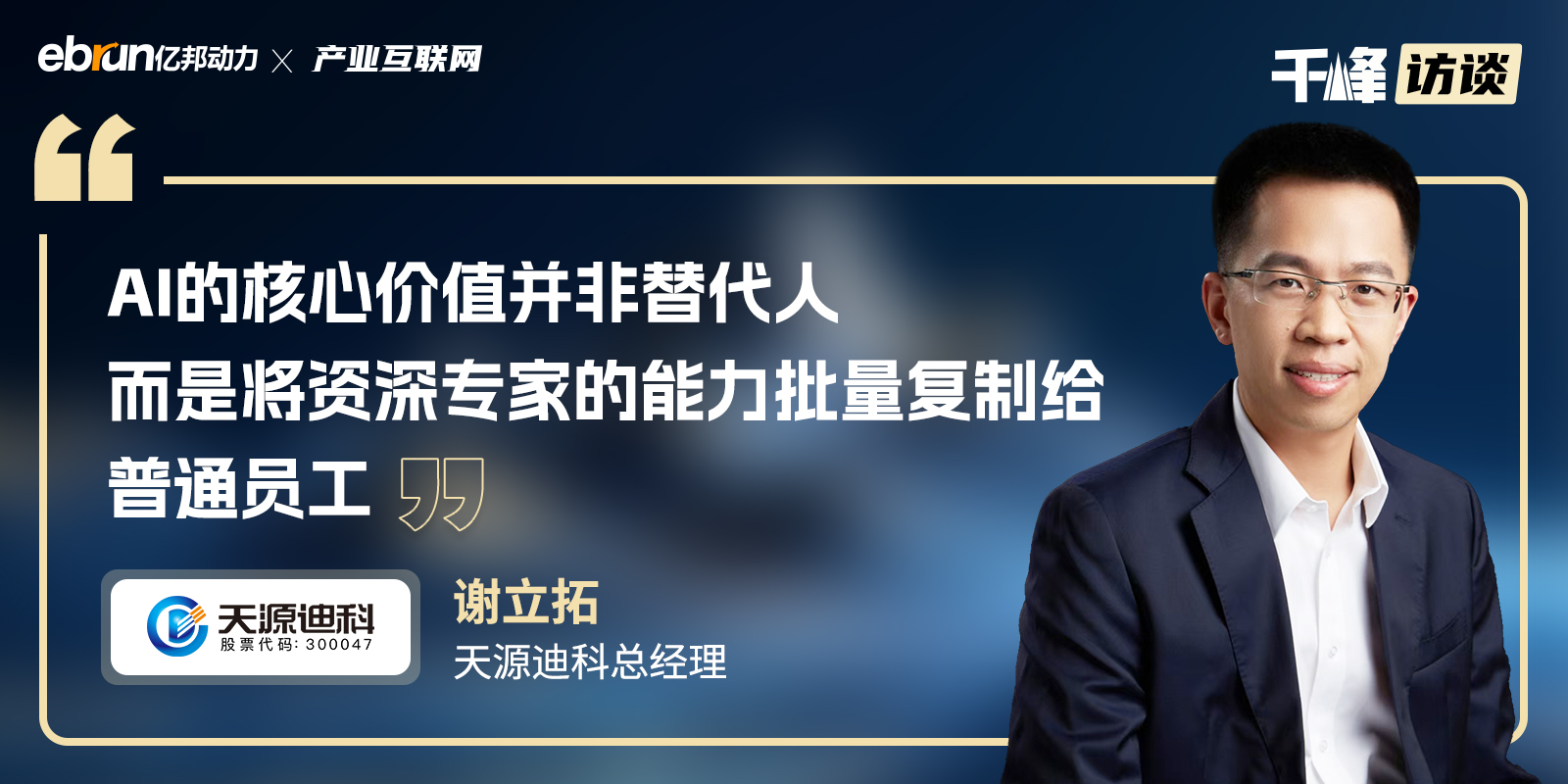
我们认为,AI的核心价值并非替代人,而是将资深专家的能力批量复制给普通员工。我们尤为重视能够把公司多年积累的行业知识与交付经验,提炼为行业本体与业务规则的专家型人才。这些专家将带领团队,以AI为核心的研发组织方式完成未来的软件技术服务。

作为TO B领域年度风向标,“2026第八届亿邦产业互联网年会暨首届产业智能体大会”将于2026年11月20日在北京召开。主题定为“AI与出海带来的模态进化”,聚焦产业智能体落地、AI供应链价值重构、数据要素与TOKEN经济、产业出海新生态等前沿议题深度思辨。大会将集结学界权威、央国企标杆、产业龙头、投资机构、服务生态伙伴,汇聚产业核心力量、拆解产业数智化转型路径、分享前沿实战经验。同期还将发布年度产业互联网报告及标杆案例,举办决策人闭门会、“千峰奖”颁奖盛典。


本文首发于 亿邦动力 官方网站

文章来源:亿邦动力

广告
微信
朋友圈

FAQ回顾

天源迪科是做什么的?

天源迪科定位为产业数智化综合解决方案提供商,策略上不造基座,专注打造行业智能体应用。2026年已完成50多个AI产品,取得大模型备案与国产GPU信创兼容性认证,业务覆盖通信、金融、公安、央国企采购供应链四大行业。

天源迪科为什么不自研大模型基座?

天源迪科认为通用基座无需重复打造,但垂类能力必须自建。工业、运营商、金融领域存在大量通用语料未覆盖的隐性业务规则,垂类大模型在部分场景仍有成本优势。相比大模型本身,行业本体才是核心,企业智能体架构是智能体与本体的有机结合,因此公司对接多家主流大模型,将资源集中于行业知识本体沉淀、建模与智能体技术优化。

天源迪科行业智能体已落地哪些行业和产品?

天源迪科将大模型技术落地四大行业:通信行业落地智能方案生成、智能投标、工单智能运维等;金融行业落地反洗钱全流程自动监控、信贷报告自动生成、智能质检等;公安行业落地交通管理智能指挥、警情研判、执法规范智能体等;央国企采购供应链落地智能辅助评审、采购智能体、智慧采购价格管控等六大产品。

天源迪科采购供应链AI解决方案能带来哪些价值?

天源迪科采购供应链AI方案可解决非标物料比价、评标依赖专家经验、采购链条低效等痛点。天枢工业品大模型物料识别准确率达93%,已协助某央企完成300万级物料标准化;智能辅助评标使人工成本降低50%以上,已在两家央企落地;采购智能体使人机协同效率提升80%以上,并帮助企业节省8%至10%的综合采购成本。

产业互联网公司的AI护城河在何处?

天源迪科认为AI护城河包括难以复制的行业本体知识、私有化部署与国产化适配能力、稀缺的数据授权资质,以及数千人交付团队和几十款成熟AI产品。这些要素相互支撑,新入局者短期内难以补齐。

这么好看,分享一下?

朋友圈 分享

APP内打开

赞 +1
+1
微信好友 朋友圈 新浪微博 QQ空间
关闭
收藏成功
发送
/140 0