广告
加载中

姚顺雨 坐在马化腾旁边

冯雨晨 周佳丽 2026-10-10 14:46
冯雨晨 周佳丽 2026/10/10 14:46

邦小白快读

EN
全文速览

总1:腾讯把AI放到了战略核心,正在用真实投入和产品数据说明AI落地情况。

1. 姚顺雨1998年出生,从清华姚班、普林斯顿到OpenAI,入腾讯不到一年就负责基础模型、AI Infra、AI Data,覆盖混元大模型全链路;28岁进入《财富》商界精英榜。这是普通人理解大厂AI人才战的典型案例。

2. 2026年二季度腾讯研发支出272.8亿元,同比增长35%;资本开支527.8亿元,同比增长176%,主要投向算力。说明AI基础设施还在高强度投入,相关岗位和相关应用会继续增加。

总2:对普通人实用的干货来自可直接使用的AI产品。

1. 元宝月活突破1亿,WorkBuddy、CodeBuddy触达千万用户,AI办公、编程、问答已经进入主流使用阶段。

2. 混元Hy3上线一周调用量较上一代增长超68倍,Hy4 preview开源并支持1M上下文。长文本、复杂任务的AI处理能力大幅提升,普通用户可以在文档分析、编程辅助、信息整理等场景里省时间。

总1:品牌商需要关注的不是某个AI公司,而是用户使用AI的方式正在迁移。

1. 腾讯旗下元宝月活突破1亿,WorkBuddy和CodeBuddy触达千万用户,说明一批用户已经把AI工具纳入工作流。品牌要思考如何在这些AI入口里被推荐、被引用、被评价。

2. 腾讯选择把AI放进高价值场景,用业务反馈反向驱动模型迭代,说明AI产品会越来越懂业务;品牌商的客服、内容、导购等场景也可以按这种闭环逻辑做AI化改造。

总2:产品研发和生态选择层面有明确信号。

1. 混元Hy3上线一周调用量增长超68倍,Hy4 preview开源,总参数770B、激活参数49B、上下文长度突破1M。品牌选择AI底座时,应关注迭代速度、开放程度和长上下文能力,这些直接影响品牌内容生成和用户互动质量。

2. 广东提出做强通用和垂类大模型并强化应用推广,为品牌商在垂直行业做AI应用提供了政策与基础设施配套机会。

总1:AI被政策和大厂同时推高,卖家可以从中找增量市场。

1. 广东AI核心产业规模2025年突破3000亿元,同比增长超40%,约占全国四分之一;122个大模型通过国家备案,147家人工智能专精特新小巨人企业全国第一。这代表AI相关产品和服务的区域需求在快速增长。

2. 广东省委书记要求腾讯深度参与广东AI基础设施建设,加大在粤算力布局,做强通用和垂类大模型并强化应用推广。卖家可关注AI应用推广带来的培训、代理、内容服务、模型定制等业务机会。

总2:腾讯的AI打法给卖家提供可复用的经营思路和风险提示。

1. 腾讯不做盲目跨界,而是把AI落地到元宝、WorkBuddy、CodeBuddy等高价值场景,用业务反馈反向驱动模型迭代。卖家也可以把AI工具嵌入自身主营场景,通过真实用户反馈优化选品、客服、营销。

2. 需要注意的是,AI投入极重:腾讯二季度研发支出272.8亿元、资本开支527.8亿元,主因是算力采购。中小卖家不宜重资产自建模型和算力,应优先使用成熟AI工具与平台能力,控制现金流风险。

总1:全产业链智能化是工厂可以抓住的升级方向,文章给出了政策、技术和数据信号。

1. 广东已经把人工智能基础设施建设、算力布局、通用和垂类大模型应用推广列为重点;这意味制造型工厂在智能排产、质量检测、供应链协同等环节更容易找到政策资源支持。

2. 腾讯混元Hy4 preview开源,总参数770B、激活参数49B、上下文长度达1M。工厂可研究在开源模型基础上做私有化部署和行业微调,避免把核心生产数据全部交给外部平台。

总2:腾讯的研发投入和产品路径对工厂数字化有启示。

1. 腾讯2026年二季度研发支出272.8亿元、资本开支527.8亿元,主要投入算力;平台算力基础设施扩张后,工厂使用AI应用的成本可能下降。

2. 腾讯用业务反馈反向驱动模型迭代,而不是先做模型再找场景。工厂数字化也应先选设备维护、工艺优化等高频痛点,让AI在实际生产数据中快速迭代,少做展示型项目。

总1:行业趋势和客户痛点很集中,服务商的机会在于帮企业把AI落到业务闭环里。

1. 马化腾承认腾讯早期AI基础能力不突出,甚至觉得“上了船发现船漏水”;许多客户也有类似困境。服务商可以先诊断客户真实场景,再设计AI嵌入方案,而不是直接推销算力或模型。

2. 腾讯把AI放进元宝、WorkBuddy、CodeBuddy,靠业务反馈反向驱动模型迭代。这种模式可直接复制到服务商项目,用客户业务数据持续优化模型效果,形成可量化的价值。

总2:技术迭代和市场空间决定了服务商的服务方向。

1. 混元Hy3上线一周调用量增长超68倍,Hy4 preview开源且上下文长度突破1M;长上下文意味着合同分析、行业研究、复杂知识库等企业需求更有解,服务商应优先掌握这些能力。

2. 广东AI核心产业规模超3000亿元,并明确要求强化通用和垂类大模型应用;服务商可以聚焦算力服务、垂类模型、AI应用集成和培训落地,切入区域市场。

总1:腾讯的最新AI布局是一个完整的平台战略样本。

1. 平台做法:腾讯不搞跨界抢地盘,而是把AI落地到元宝、WorkBuddy、CodeBuddy等高价值场景,靠业务反馈反向驱动模型迭代。这说明平台商做好AI的关键是让AI深度嵌入存量优势业务。

2. 组织保障:姚顺雨同时负责基础模型部、AI Infra部、AI Data部,覆盖混元全链路。平台要快速推进AI,应当给予技术负责人跨部门资源和明确授权,避免多头管理。

总2:生态、招商和风险控制是平台商关心的重点。

1. 混元Hy4 preview开源,元宝月活破1亿,WorkBuddy和CodeBuddy触达千万用户;平台商可利用开源模型和大流量AI产品招募开发者、服务商,构建应用生态,提供数据、算力和分发配套。

2. 平台商要控制风险:腾讯2026年二季度研发支出272.8亿元、资本开支527.8亿元,主要由于算力采购,且明确不再用单季度利润约束AI创新。这种高投入策略对现金流要求很高,平台商应建立算力投入与商业化回报之间的边界。

总1:这篇文章提供了研究平台型AI产业变迁和人才代际更替的第一手案例。

1. 产业新动向:腾讯从承认AI基础能力不强,转为重仓AI基础设施,用高价值业务场景反向驱动模型迭代;这构成了一个平台型AI商业模式的研究样本,与跨界抢地盘模式形成对比。

2. 人才和组织:姚顺雨从清华姚班、普林斯顿到OpenAI,27岁成为腾讯AI一号位,执掌基础模型、AI Infra、AI Data三大部门;可研究大厂如何通过打破资历天花板争夺年轻AI人才,以及这种授权方式对组织效率的影响。

总2:政策和区域产业数据是研究者可继续深挖的素材。

1. 广东AI核心产业规模2025年突破3000亿元、同比增长超40%、约占全国四分之一;122个大模型通过备案,147家AI专精特新小巨人企业全国第一。这些数字可用于分析区域AI产业集聚和政策效果。

2. 广东省委书记要求腾讯参与AI基础设施建设、加大算力布局、做强通用和垂类大模型并强化应用推广;这为研究地方政府如何与企业协同布局算力、模型、应用产业链提供了具体政策方向。

3. 值得关注的问题:腾讯2026年二季度资本开支527.8亿元,同比增长176%,主要投向算力,且不再用单季度利润约束AI创新。如何平衡巨额AI投入与长期商业化回报,是重要的产业经济课题。

返回默认
声明:快读内容全程由AI生成,请注意甄别信息。如您发现问题,请发送邮件至 run@ebrun.com 。

我是 品牌商 卖家 工厂 服务商 平台商 研究者 帮我再读一遍。

Quick Summary

Overall 1: Tencent has put AI at the center of its strategy and is using real investment and product data to show how AI is being deployed.

1. Yao Shunyu, born in 1998, went from Tsinghua's Yao Class and Princeton to OpenAI; within less than a year at Tencent, he took charge of foundation models, AI Infra, and AI Data, covering the full Hunyuan model chain. At 28, he appeared on Fortune's business elite list. This is a typical case for understanding the AI talent war among big tech companies.

2. In Q2 2026, Tencent's R&D spending reached RMB 27.28 billion, up 35% year on year; capital expenditure reached RMB 52.78 billion, up 176%, mainly directed at computing power. This shows AI infrastructure is still receiving intensive investment, and related jobs and applications will continue to grow.

Overall 2: The practical value for ordinary users comes from AI products that can be used directly.

1. Yuanbao's monthly active users surpassed 100 million, while WorkBuddy and CodeBuddy reached tens of millions of users. AI office tools, coding, and Q&A have entered the mainstream adoption stage.

2. Hunyuan Hy3 saw weekly call volume grow more than 68 times versus the previous generation within one week of launch; Hy4 preview was open-sourced and supports a 1M context. AI processing power for long-text and complex tasks has improved significantly, helping ordinary users save time in document analysis, coding assistance, and information organization.

Overall 1: What brands should watch is not a particular AI company but the way users are shifting to AI-driven workflows.

1. Tencent's Yuanbao surpassed 100 million MAU, and WorkBuddy and CodeBuddy reached tens of millions of users. This shows a large group of users has already integrated AI tools into their workflows. Brands need to think about how they can be recommended, cited, and reviewed inside these AI entry points.

2. Tencent has chosen to place AI in high-value scenarios and use business feedback to drive model iteration. This means AI products will become increasingly business-aware. Brands can apply the same closed-loop logic to AI transformation in customer service, content, and shopping guidance.

Overall 2: There are clear signals in product development and ecosystem selection.

1. Hunyuan Hy3's weekly call volume grew more than 68 times within its first week; Hy4 preview was open-sourced, with 770B total parameters, 49B activated parameters, and context length exceeding 1M. When choosing an AI foundation, brands should pay attention to iteration speed, openness, and long-context capability, as these directly affect content generation quality and user interaction.

2. Guangdong has proposed strengthening both general and vertical large models and expanding application promotion, creating policy and infrastructure opportunities for brands building vertical AI applications.

Overall 1: AI is being pushed up by both policy and big tech, and sellers can find incremental market opportunities from it.

1. Guangdong's core AI industry scale exceeded RMB 300 billion in 2025, up more than 40% year on year, accounting for about one-fourth of the national total. A total of 122 large models passed national filing, and the province ranks first nationally with 147 AI-specialized 'little giant' firms. This indicates rapid growth in regional demand for AI-related products and services.

2. The Guangdong provincial party secretary asked Tencent to deeply participate in the province's AI infrastructure construction, increase computing power deployment, strengthen general and vertical large models, and intensify application promotion. Sellers can watch for business opportunities in training, agency services, content services, and model customization brought by AI application promotion.

Overall 2: Tencent's AI approach gives sellers a reusable business playbook and risk reminders.

1. Tencent did not blindly diversify into other fields. Instead, it deployed AI in high-value scenarios such as Yuanbao, WorkBuddy, and CodeBuddy, using business feedback to drive model iteration. Sellers can also embed AI tools into their own main business scenarios and use real user feedback to optimize product selection, customer service, and marketing.

2. A key risk to note: AI investment is extremely heavy. Tencent's Q2 R&D spending was RMB 27.28 billion and capital expenditure was RMB 52.78 billion, mainly due to computing power procurement. Small and medium sellers should not build models or own computing infrastructure with heavy assets. They should prioritize mature AI tools and platform capabilities to control cash flow risk.

Overall 1: Full-industry-chain intelligentization is an upgrade direction factories can seize, and the article provides policy, technology, and data signals.

1. Guangdong has made AI infrastructure construction, computing power layout, and application of general and vertical large models key priorities. This means manufacturing factories can more easily find policy support in intelligent scheduling, quality inspection, and supply chain coordination.

2. Tencent's Hunyuan Hy4 preview was open-sourced, with 770B total parameters, 49B activated parameters, and a 1M context length. Factories can explore private deployment and industry-specific fine-tuning based on open-source models, avoiding handing all core production data to external platforms.

Overall 2: Tencent's R&D spending and product path offer lessons for factory digitalization.

1. Tencent's Q2 2026 R&D spending was RMB 27.28 billion, and capital expenditure was RMB 52.78 billion, mainly invested in computing power. As platform-level computing infrastructure expands, the cost for factories to use AI applications may decline.

2. Tencent uses business feedback to drive model iteration rather than building a model first and then finding a use case. Factory digitalization should similarly start with high-frequency pain points such as equipment maintenance and process optimization, letting AI iterate quickly on real production data while avoiding showcase-oriented projects.

Overall 1: Industry trends and client pain points are concentrated, and the opportunity for service providers is to help enterprises embed AI into a business closed loop.

1. Ma Huateng admitted that Tencent's early AI capabilities were not outstanding, saying it felt like 'getting on the boat and finding it was leaking.' Many clients face a similar situation. Service providers should first diagnose the client's real scenarios and then design AI integration plans, rather than directly selling computing power or models.

2. Tencent placed AI in Yuanbao, WorkBuddy, and CodeBuddy and used business feedback to drive model iteration. This model can be directly replicated in service provider projects: use client business data to continuously optimize model effectiveness and create quantifiable value.

Overall 2: Technology iteration and market space determine the direction of service providers.

1. Hunyuan Hy3's weekly call volume grew more than 68 times within one week of launch; Hy4 preview was open-sourced with context length exceeding 1M. Long-context capability makes enterprise needs such as contract analysis, industry research, and complex knowledge bases more solvable. Service providers should prioritize mastering these capabilities.

2. Guangdong's core AI industry scale has exceeded RMB 300 billion, and there is an explicit requirement to strengthen application of general and vertical large models. Service providers can focus on computing services, vertical models, AI application integration, and training to enter regional markets.

Overall 1: Tencent's latest AI layout is a complete platform strategy sample.

1. Platform approach: Tencent has not crossed into unrelated territory. Instead, it embeds AI into high-value scenarios such as Yuanbao, WorkBuddy, and CodeBuddy, and uses business feedback to drive model iteration. The key for platform companies is to integrate AI deeply into existing advantageous businesses.

2. Organizational support: Yao Shunyu leads the foundation model department, AI Infra department, and AI Data department simultaneously, covering the full Hunyuan chain. To advance AI quickly, platforms should give technology leaders cross-department resources and clear authorization, avoiding fragmented management.

Overall 2: Ecosystem building, developer recruitment, and risk control are key concerns for platform companies.

1. Hunyuan Hy4 preview was open-sourced; Yuanbao's MAU surpassed 100 million; and WorkBuddy and CodeBuddy reached tens of millions of users. Platform companies can use open-source models and high-traffic AI products to recruit developers and service providers, build an application ecosystem, and provide supporting data, computing power, and distribution.

2. Platform companies must control risk: Tencent's Q2 2026 R&D spending was RMB 27.28 billion and capital expenditure was RMB 52.78 billion, mainly due to computing power procurement, and Tencent explicitly said it will no longer use single-quarter profit to constrain AI innovation. This high-investment strategy places great pressure on cash flow. Platform companies should set clear boundaries between computing investment and commercialization returns.

Overall 1: This article provides a first-hand case for studying platform-based AI industry transformation and generational talent replacement.

1. New industry trend: Tencent moved from acknowledging weak AI capabilities to heavily investing in AI infrastructure, using high-value business scenarios to drive model iteration. This forms a research sample of the platform-based AI business model and contrasts with the cross-sector land-grab approach.

2. Talent and organization: Yao Shunyu went from Tsinghua's Yao Class and Princeton to OpenAI, and at 27 became the No. 1 person in charge of Tencent AI, leading three departments: foundation models, AI Infra, and AI Data. Researchers can study how big tech companies break the seniority ceiling to compete for young AI talent, and how this authorization model affects organizational efficiency.

Overall 2: Policy and regional industry data provide material for further research.

1. Guangdong's core AI industry scale exceeded RMB 300 billion in 2025, up more than 40% year on year, accounting for about one-fourth of the national total; 122 large models passed national filing and 147 AI-specialized 'little giant' firms made Guangdong the national leader. These figures can be used to analyze regional AI industry clustering and policy effectiveness.

2. The Guangdong provincial party secretary asked Tencent to participate in AI infrastructure construction, expand computing power layout, strengthen general and vertical large models, and intensify application promotion. This provides concrete policy direction for studying how local governments and enterprises collaborate across the computing, model, and application value chain.

3. A notable issue: Tencent's Q2 2026 capital expenditure reached RMB 52.78 billion, up 176% year on year, mainly directed at computing power, and the company no longer uses single-quarter profit to constrain AI innovation. How to balance massive AI investment with long-term commercialization returns is an important industrial economics topic.

Disclaimer: The "Quick Summary" content is entirely generated by AI. Please exercise discretion when interpreting the information. For issues or corrections, please email run@ebrun.com .

I am a Brand Seller Factory Service Provider Marketplace Seller Researcher Read it again.

10月8日,国庆长假后上班第一天。

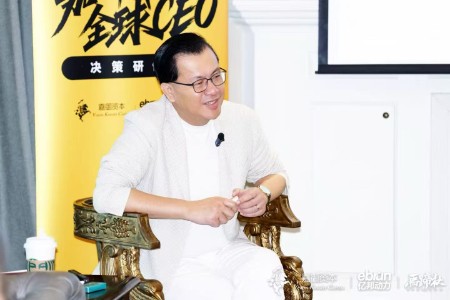
据《广东新闻联播》报道,广东省委书记黄坤明来到深圳,走进了腾讯总部。印象深刻一幕,坐在马化腾旁边参与分享的,是一位生于1998年的年轻人——腾讯首席AI科学家姚顺雨。

两人成名年纪有些奇妙的偶然:1998年,27岁的马化腾果断辞去高薪工作创立腾讯。时间流转,2025年,27岁的姚顺雨担任腾讯首席AI科学家并成为腾讯AI一号位。

产业更迭,年轻人面孔不断地走到台前。

98年,首席科学家坐在马化腾旁边

姚顺雨何人?

时间回到2025年12月,腾讯正式宣布任命姚顺雨为CEO/总裁办公室首席AI科学家,彼时这一消息迅速成为AI圈的重磅新闻。当时在外界看来,不论是入职规格,还是姚顺雨加入之后的一系列对应调整,无不体现出腾讯对AI人才和姚顺雨的重视。

再翻看姚顺雨履历,俨然一部天才少年的成长史:

安徽合肥人,高中就读于合肥一中。2015年,姚顺雨以704分的高考成绩进入清华姚班,学习计算机科学,师从清华学长、深度学习大牛吴佳俊,开始系统性接触通用人工智能;

2019年,姚顺雨赴普林斯顿大学读博,原本主攻计算机视觉,但姚顺雨认为自然语言处理更有潜力,改道自然语言处理与强化学习,结识了导师Karthik Narasimhan。此时,赫赫有名的Transformer架构横空出世已经两年,自然语言处理正值热门方向;

博士毕业后,姚顺雨于2024年加入OpenAI,参与Operator、DeepResearch和计算机使用智能体等重点项目研发。

至今加入腾讯不到一年,姚顺雨除了手握基础模型部、AI Infra部两大部门之外,还已成为AI Data部负责人,完整覆盖混元大模型全链路。“这也许是腾讯史上权力最大的年轻高管”,有大厂人士此前感慨。

这般AI天才的黄金时代,造富浪潮也汹涌。最新2026年《财富》中国40位40岁以下的商界精英榜单上,28岁的腾讯首席AI科学家姚顺雨榜上有名。

产业变迁缩影

姚顺雨与马化腾同席,无疑让腾讯押注AI的决心更加具象化。

回想今年5月,马化腾曾在腾讯股东大会上回应“腾讯AI是否落后”。他承认,腾讯早期在AI领域的基础能力并非突出,“原来一年前,我们以为上了船,后来发现那个船漏水了”。

直到姚顺雨的加入,这场AI战事有了新的走向。

区别于市场上“跨界、抢地盘”的思路,腾讯选择把AI落地到自己的高价值场景里——元宝、WorkBuddy、CodeBuddy等产品,靠业务反馈反向驱动模型迭代。

与此同时,腾讯也在用真金白银追赶。2026年二季度财报显示,AI是腾讯当前的核心主线,投入巨大:研发支出272.8亿元,同比增长35%;资本开支527.8亿元,同比增长176%,环比增长65%——增幅的主要来源是算力采购。

面对这场决定未来命运的时代叙事,腾讯选择拉长评价周期,不再用单季度利润约束AI创新。

成效已经显现。混元Hy3完成从预览版到正式版的快速迭代,上线一周调用量较上一代模型增长超68倍。8月,更大参数规模的Hy4 preview发布并开源,总参数770B、激活参数49B,上下文长度突破1M。产品侧,AI办公效率工具WorkBuddy和AI编程工具CodeBuddy正触达千万用户,元宝月活也突破了1亿。

如此,过去依靠社交、游戏建立起庞大商业版图的腾讯,如今正在大模型与智能体时代,重新建立起自己的技术护城河。

腾讯重仓AI,放在广东整个产业棋盘上看,有了更完整的叙事语境。公开数据显示,2025年广东人工智能核心产业规模突破3000亿元,同比增长超40%,总量约占全国四分之一。122个大模型通过国家备案,人工智能专精特新“小巨人”企业147家,数量居全国第一。

此次调研座谈会上,广东省委书记黄坤明提出,希望腾讯深度参与广东人工智能基础设施建设,持续加大在粤算力布局,着力做强通用和垂类大模型并强化应用推广,助力广东加快全产业链智能化发展。

回想1989年,马化腾考入深圳大学计算机系。1998年,27岁的他和几位同学创办了腾讯。2025年底,另一位27岁的年轻人加入腾讯,投身于这家公司的AI未来。

时间划了一个圈。

产业变迁,一代人开始老去,一代人正年轻。浪潮不息,接力已然开始。

注:文/冯雨晨 周佳丽,文章来源:投资界(公众号ID:pedaily2012),本文为作者独立观点,不代表亿邦动力立场。

文章来源:投资界

广告
微信
朋友圈

这么好看,分享一下?

朋友圈 分享

APP内打开

赞 +1
+1
微信好友 朋友圈 新浪微博 QQ空间
关闭
收藏成功
发送
/140 0