广告
加载中

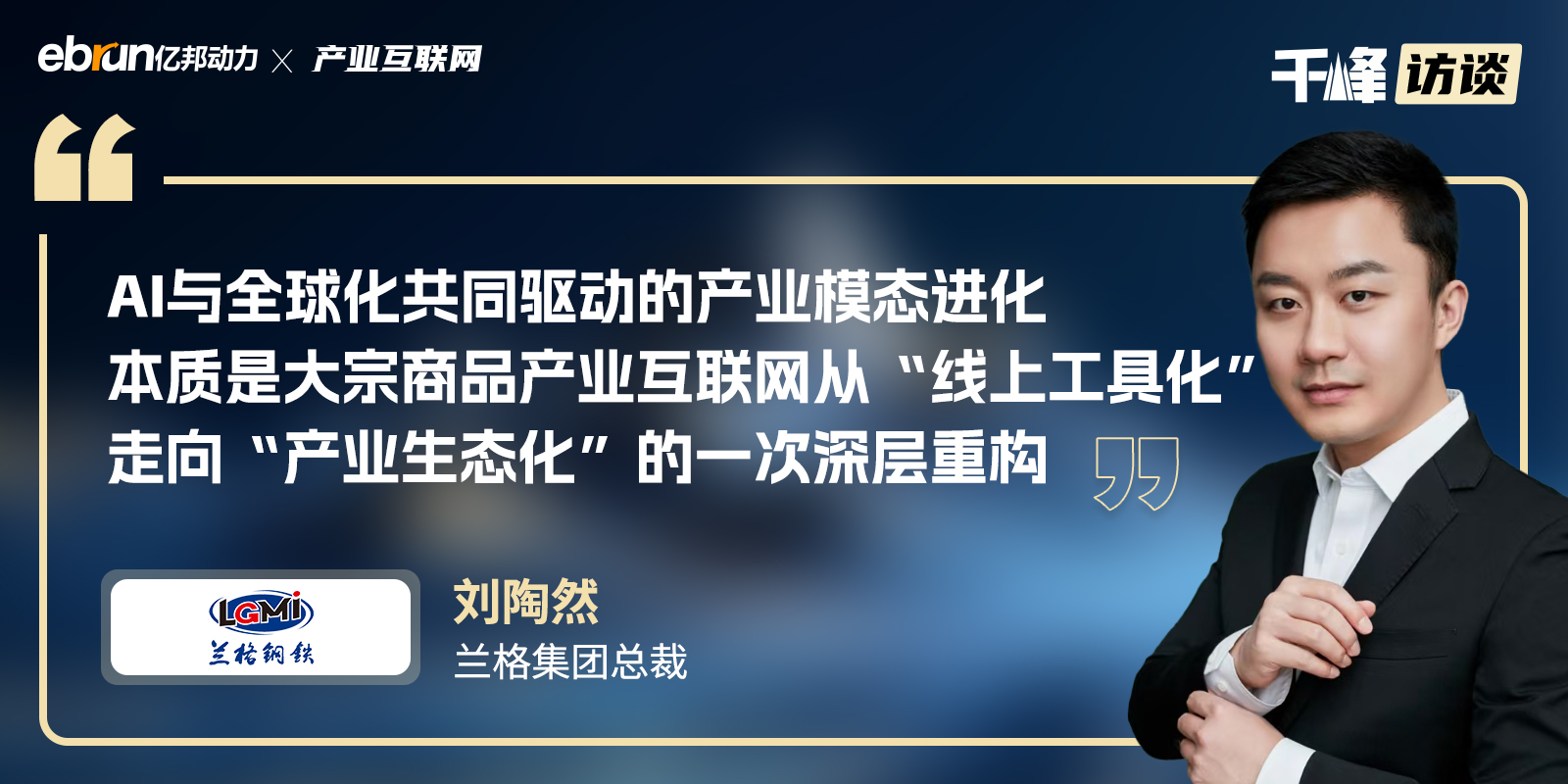
千峰访谈兰格云商刘陶然:从“线上工具化”走向“产业生态化”

亿邦动力 2026-11-18 14:04
亿邦动力 2026/11/18 14:04

邦小白快读

EN
全文速览

总1:文章核心干货是钢铁产业互联网正从线上工具化走向产业生态化。

1.兰格云商定位为钢铁全产业链数字生态服务商,深耕钢铁三十年,构建数据资讯、数字供应链、产业数字化解决方案、AI智能应用四大能力矩阵。

2.国内以EBC产业数字化系统服务数十家大中型钢铁集团,覆盖数亿吨产能,并用钢铁智策、工程智采等AI产品赋能经营决策。

3.AI已落地市场研判、采购决策、成本核算、生产排产、供需匹配、供应链风控六大环节;钢厂变频除尘风机智慧管控平台用AI动态变频,节能率可达8%—20%。

总2:出海与实操启示。

1.以中东为全球化战略高地,聚焦阿联酋、海湾诸国,辐射北非、南亚基建活跃区域。

2.不复制国内系统,支持CIF、FOB贸易条款和信用证结算,针对在途、已订货、在库混合库存定制加权平均成本核算,系统柔性可配置。

3.不投重资产自建实体供应链仓库,输出经过中国市场验证的整套产业数字能力,并与本地伙伴能力共建。

总1:品牌定位与差异化。

1.兰格云商把自己定位为钢铁全产业链数字生态服务商,强调三十年垂直深耕,坚持“一米宽、一百米深”,形成垂直赛道品牌壁垒。

2.品牌能力以数据资讯、数字供应链、产业数字化解决方案、AI智能应用四大矩阵为支撑;数智竞争力概括为钢铁产业知识库、行业模型、软硬一体化系统载体三位一体。

总2:渠道与产品研发。

1.国内渠道通过EBC产业数字化系统服务数十家大中型钢铁集团、覆盖数亿吨产能;海外以中东为战略高地,搭建跨境钢铁数字协同网络,打通中外双向资源对接。

2.产品研发拒绝通用大模型炫技,坚持产业机理+行业数据+AI算法融合,AI深度落地市场研判、采购决策、成本核算、生产排产、供需匹配、供应链风控。

3.钢铁智策、工程智采等AI产品以及变频除尘风机智慧管控平台,构成面向经营决策和绿色低碳的产品组合。

总3:趋势与价格竞争。

1.产业趋势是从线上工具化走向产业生态化,通用大模型概念红利退去,垂直产业know-how重新成为核心壁垒。

2.价格与结算方面,兰格基准价格指数成为国内钢铁行业广泛采信的交易结算参考依据;AI动态成本核算帮助破解多批次、多来源库存混杂下人工核算易出错、报价亏损的顽疾。

总1:市场机会与增长空间。

1.对内,国内钢铁产业链需要AI破解成本核算、市场预判、供应链协同痛点;对外,中东、东南亚等新兴市场基建兴起,但数据缺失、数字化底座薄弱、跨境供应链协同难,形成中国成熟产业互联网能力输出窗口。

2.中东被列为全球化核心战略市场,重点聚焦阿联酋、海湾诸国,辐射北非、南亚基建活跃区域。

总2:风险提示与事件应对。

1.中东市场多币种、多国际贸易条款并行,信用证结算普遍,清关和在途库存管理复杂;出海不能把国内系统复制粘贴,需尊重当地贸易惯例、海关清关规则和结算体系。

2.国内数据协同存在标准不统一、业务口径差异大、数据安全顾虑等挑战,需要分级数据治理与合规体系,企业私有数据坚持“数据可用不可见”。

总3:可学习点与合作模式。

1.可学习点是业务模式本地化、柔性可配置、能力共建而非单向技术输出,不投入重资产自建实体供应链仓库。

2.最新商业模式是输出经过中国市场验证的整套产业数字能力,搭建跨境数字协同价值链,分层输出数字化方案、全球钢铁数据洞察与AI决策能力、双向产业桥梁。

3.合作方式包括联合国内钢厂、贸易集团、工程企业探索可信数据价值共创,与中东本地产业伙伴共同打磨实践。文章还提到立足共建“一带一路”合作框架,属于可关注的政策合作背景。

总1:生产端AI与设计需求。

1.在生产端,AI辅助智能排产、废料优化、多维度动态成本核算,破解多批次、多来源库存混杂场景下人工核算易出错、报价亏损的行业顽疾。

2.上游可用AI做原料需求预测、采购计划智能建议,下游面向工程终端做项目用钢需求拆解与集采辅助决策,实现从原料采购到终端交付全链条智能贯通。

总2:节能降耗与硬件载体。

1.钢厂变频除尘风机智慧管控平台针对传统定频运行、风机满负荷运转、能耗浪费突出问题,用AI智能动态变频控制替代定频控制,柔性变频算法替代人工调频,大模型预测替代专家经验,节能率可达8%—20%。

2.工厂数字化不是单独上AI工具,而是让AI内嵌在EBC系统的采购、库存、成本核算、生产排产、销售结算等业务流程中,打开系统就能用。

总3:商业机会与数字化启示。

1.中东钢铁制造企业大量依赖跨境进口原料,采购周期长、清关复杂、多币种结算,造成在途、已订货、在库混合库存突出,需要定制加权平均成本核算,并适配CIF、FOB贸易条款与信用证结算。

2.推进数字化和电商的启示是系统柔性可配置、尊重企业原有管理习惯,不强制统一业务口径,通过模型层映射转换兼容现有业务体系。

总1:行业趋势判断。

1.大宗商品产业互联网正从线上工具化走向产业生态化,AI让数据转化为经营决策生产力,全球化把区域产业链协同拓展为全球资源配置。

2.未来竞争有两个变化:通用大模型概念红利逐步褪去,垂直产业know-how重新成为核心壁垒;产业互联网竞争从单一国内市场比拼,走向国内能力沉淀+全球化价值输出的综合实力较量。

总2:新技术与解决方案。

1.兰格坚持产业机理+行业数据+AI算法深度融合,形成钢铁产业知识库、行业模型、软硬一体化系统载体三位一体能力;AI深度落地市场研判、采购决策、成本核算、生产排产、供需匹配、供应链风控六大环节。

2.横向以AI助力合同流、物流、资金流、发票流四流合一,智能校验匹配合同单据、物流运单、资金收付凭证、发票信息;纵向贯通产供销全链路。

3.钢厂变频除尘风机智慧管控平台以AI动态变频、柔性算法、大模型预测替代人工调频和专家经验,节能率8%—20%。

总3:客户痛点与应对。

1.客户痛点包括成本核算易错、报价亏损、数据标准不统一、数据安全顾虑、跨境清关与混合库存管理复杂、多币种和信用证结算等。

2.解决方案包括四大能力矩阵、EBC系统内嵌AI、分级数据治理与合规体系、数据可用不可见、系统柔性可配置、业务模式本地化、能力共建而非单向输出。

总1:商业对平台的需求与问题。

1.企业并非为AI而AI,独立AI工具需要先建数据接口、再做业务对齐,落地成本和复杂程度高;企业更需要AI内嵌在采购、库存、成本核算、生产排产、销售结算等原有业务流程中,拿来即用。

2.平台还要面对国内钢铁产业链数据标准不统一、不同市场主体业务口径差异大、数据安全顾虑等现实问题;海外则要应对多币种、信用证结算、清关复杂和在途、已订货、在库混合库存。

总2:平台最新做法与运营管理。

1.兰格以EBC产业数字化系统为载体,把AI能力内嵌业务流程;以数据资讯、数字供应链、产业数字化解决方案、AI智能应用四大矩阵协同,数据做底座、供应链连交易履约、解决方案落企业系统、AI在业务环节产生决策价值。

2.运营上做柔性适配,不强制统一客户原有业务口径,通过模型层映射转换兼容企业现有体系;建立分级数据治理与合规体系,区分公有行情数据和企业私有业务数据,私有数据坚持数据可用不可见。

总3:平台合作与风向规避。

1.合作方向包括联合国内钢厂、贸易集团、工程企业探索可信数据价值共创,与中东本地产业伙伴共同打磨数字化实践,构建共生产业价值链。

2.风向规避包括不盲目追逐大模型参数竞赛,不把国内系统直接复制出海,不投入重资产自建实体供应链仓库,海外AI决策仅使用公开行情类信息、不涉及中方企业业务数据出境。

总1:产业新动向。

1.大宗商品产业互联网从线上工具化走向产业生态化;AI与全球化双轮驱动,重塑大宗商品生产、流通、交易与决策范式。

2.产业互联网竞争格局将出现两个变化:通用大模型概念红利退去,垂直产业know-how成为核心壁垒;竞争从单一国内市场比拼走向国内能力沉淀+全球化价值输出的综合较量。

总2:新问题与政策法规启示。

1.新问题包括产业链数据标准不统一、业务口径差异大、数据安全顾虑、跨境供应链协同难、中东混合库存与多币种信用证结算复杂,以及通用大模型脱离产业机理难以落地。

2.政策法规启示是跨主体数据协同须在严格合规前提下推进,建立分级数据治理与合规体系,区分公有行情数据和企业私有业务数据,私有数据践行数据可用不可见;海外输出全球钢铁数据洞察与AI决策能力仅使用公开行情类信息,不涉及中方企业业务数据出境。文章还提到立足共建“一带一路”合作框架。

总3:商业模式。

1.兰格形成数据资讯+数字供应链+产业数字化解决方案+AI智能应用四大能力矩阵,国内以EBC系统服务大中型钢铁集团,海外以中东为战略高地输出整套产业数字能力。

2.海外模式分三层:输出全链路数字化解决方案,输出全球钢铁数据洞察与AI决策能力,扮演中国—中东双向产业桥梁;坚持能力共建、不投重资产自建实体供应链仓库,做“一米宽、一百米深”的垂直产业生态。

返回默认
声明:快读内容全程由AI生成,请注意甄别信息。如您发现问题,请发送邮件至 run@ebrun.com 。

我是 品牌商 卖家 工厂 服务商 平台商 研究者 帮我再读一遍。

Quick Summary

Summary 1: The core takeaway is that the steel industry internet is moving from online tools to an industrial ecosystem.

1. Lange Cloud Commerce positions itself as a digital ecosystem service provider across the entire steel value chain. With 30 years in steel, it has built four capability matrices: data and intelligence, digital supply chain, industrial digital solutions, and AI applications.

2. Domestically, its EBC industrial digital system serves dozens of large and medium-sized steel groups, covering hundreds of millions of tons of capacity. AI products such as Steel Intelligence and Engineering Smart Procurement support operational decision-making.

3. AI is deployed in six areas: market analysis, procurement decisions, cost accounting, production scheduling, supply-demand matching, and supply-chain risk control. The smart control platform for variable-frequency dust-removal fans at steel mills uses AI-driven dynamic frequency control, achieving energy savings of 8%–20%.

Summary 2: Global expansion and practical implications.

1. The Middle East is the strategic high ground for globalization, focused on the UAE and Gulf countries, with outreach to North Africa and South Asia, where infrastructure activity is strong.

2. It does not copy domestic systems. The platform supports CIF and FOB trade terms and letter-of-credit settlement, and provides customized weighted-average cost accounting for mixed inventory consisting of in-transit, ordered, and on-hand stock. The system is flexible and configurable.

3. It does not invest in heavy assets to build its own physical supply-chain warehouses. Instead, it exports a full set of industry digital capabilities proven in the Chinese market and co-builds capabilities with local partners.

Summary 1: Brand positioning and differentiation.

1. Lange Cloud Commerce positions itself as a digital ecosystem service provider across the entire steel value chain, emphasizing 30 years of vertical depth and a 'one meter wide, one hundred meters deep' strategy to build a brand moat in a vertical track.

2. The brand is supported by the four matrices of data and intelligence, digital supply chain, industrial digital solutions, and AI applications. Its digital-intelligence competitiveness combines three elements: a steel-industry knowledge base, industry models, and an integrated software-hardware system carrier.

Summary 2: Channels and product R&D.

1. Domestically, it reaches dozens of large and medium-sized steel groups through the EBC industrial digital system, covering hundreds of millions of tons of capacity. Overseas, it uses the Middle East as a strategic high ground to build a cross-border steel digital collaboration network and connect resources between China and overseas markets.

2. Product R&D avoids showing off general-purpose large models. It insists on integrating industrial mechanisms, industry data, and AI algorithms. AI is deeply deployed in market analysis, procurement decisions, cost accounting, production scheduling, supply-demand matching, and supply-chain risk control.

3. AI products such as Steel Intelligence and Engineering Smart Procurement, together with the smart control platform for variable-frequency dust-removal fans, form a product portfolio aimed at operational decision-making and green, low-carbon operations.

Summary 3: Trends and price competition.

1. The industry trend is a shift from online tools to an industrial ecosystem. As the hype around general-purpose large models fades, vertical industry know-how is again becoming a core barrier.

2. On pricing and settlement, the Lange benchmark price index has become a widely adopted reference for transaction settlement in China's steel industry. AI-driven dynamic cost accounting helps solve the chronic problems of manual errors and unprofitable quotations when inventory is mixed across multiple batches and sources.

Summary 1: Market opportunities and growth space.

1. Domestically, the steel value chain needs AI to address pain points in cost accounting, market forecasting, and supply-chain collaboration. Overseas, infrastructure is rising in emerging markets such as the Middle East and Southeast Asia, but missing data, weak digital foundations, and difficult cross-border supply-chain collaboration create a window for exporting China's mature industrial internet capabilities.

2. The Middle East is designated as a core strategic market for globalization, focused on the UAE and Gulf countries, with outreach to North Africa and South Asia, where infrastructure activity is strong.

Summary 2: Risk warnings and event responses.

1. The Middle East market involves multiple currencies and international trade terms in parallel, with letter-of-credit settlement common and customs clearance and in-transit inventory management complex. Going overseas cannot mean copy-pasting domestic systems; local trade practices, customs clearance rules, and settlement systems must be respected.

2. Domestic data collaboration faces challenges such as inconsistent standards, large differences in business definitions, and data-security concerns. Tiered data governance and compliance systems are needed, and enterprises' private data should follow the principle of 'data usable but not visible.'

Summary 3: Learnings and cooperation models.

1. Key learnings are localization of business models, flexible configurability, and capability co-building rather than one-way technology export. The company does not invest in heavy assets to build its own physical supply-chain warehouses.

2. The latest business model is to export a full set of industry digital capabilities proven in the Chinese market, build a cross-border digital collaborative value chain, and deliver digital solutions, global steel data insights and AI decision-making capabilities, and a two-way industry bridge in layers.

3. Cooperation includes working with domestic steel mills, trading groups, and engineering companies to explore trusted data value co-creation, and working with local Middle East industry partners to refine practices. The article also mentions the Belt and Road cooperation framework as a policy cooperation background worth watching.

Summary 1: Production-side AI and design requirements.

1. On the production side, AI assists with intelligent scheduling, scrap optimization, and multidimensional dynamic cost accounting, addressing the industry-wide problem of manual errors and unprofitable quotations in scenarios with mixed inventory from multiple batches and sources.

2. Upstream, AI can be used for raw-material demand forecasting and intelligent procurement-plan recommendations. Downstream, it can break down project steel demand for engineering end users and support centralized procurement decisions, enabling intelligent connectivity across the entire chain from raw-material procurement to final delivery.

Summary 2: Energy saving and hardware carriers.

1. The smart control platform for variable-frequency dust-removal fans at steel mills targets the prominent problems of traditional fixed-frequency operation, full-load fan operation, and energy waste. It replaces fixed-frequency control with AI-driven dynamic variable-frequency control, replaces manual frequency adjustment with flexible variable-frequency algorithms, and replaces expert experience with large-model forecasting, achieving energy savings of 8%–20%.

2. Factory digitalization is not about deploying standalone AI tools. It embeds AI in business processes such as procurement, inventory, cost accounting, production scheduling, and sales settlement within the EBC system, so users can use it as soon as they open the system.

Summary 3: Business opportunities and digitalization implications.

1. Steel manufacturers in the Middle East rely heavily on cross-border imported raw materials, with long procurement cycles, complex customs clearance, and multi-currency settlement. This makes mixed inventory of in-transit, ordered, and on-hand stock prominent, requiring customized weighted-average cost accounting and adaptation to CIF and FOB trade terms and letter-of-credit settlement.

2. The implication for advancing digitalization and e-commerce is that systems should be flexible and configurable, respect enterprises' existing management practices, avoid forcing unified business definitions, and use model-layer mapping and conversion to remain compatible with existing business systems.

Summary 1: Industry trend assessment.

1. The commodity industrial internet is moving from online tools to an industrial ecosystem. AI turns data into productivity for business decisions, and globalization expands regional industrial-chain collaboration into global resource allocation.

2. Future competition will see two changes: the hype dividend of general-purpose large models will gradually fade, and vertical industry know-how will again become a core barrier; competition in the industrial internet will shift from single-market domestic rivalry to a comprehensive contest of domestic capability accumulation plus global value export.

Summary 2: New technologies and solutions.

1. Lange insists on deep integration of industrial mechanisms, industry data, and AI algorithms, forming a three-in-one capability combining a steel-industry knowledge base, industry models, and an integrated software-hardware system carrier. AI is deeply deployed in six areas: market analysis, procurement decisions, cost accounting, production scheduling, supply-demand matching, and supply-chain risk control.

2. Horizontally, AI helps integrate the four flows of contracts, logistics, funds, and invoices, intelligently verifying and matching contract documents, logistics waybills, payment and receipt vouchers, and invoice information. Vertically, it connects the entire production-supply-sales chain.

3. The smart control platform for variable-frequency dust-removal fans at steel mills replaces manual frequency adjustment and expert experience with AI-driven dynamic variable-frequency control, flexible algorithms, and large-model forecasting, achieving energy savings of 8%–20%.

Summary 3: Customer pain points and responses.

1. Customer pain points include error-prone cost accounting, unprofitable quotations, inconsistent data standards, data-security concerns, complex cross-border customs clearance and mixed-inventory management, and multi-currency and letter-of-credit settlement.

2. Solutions include the four capability matrices, AI embedded in the EBC system, tiered data governance and compliance systems, data usable but not visible, flexible and configurable systems, localization of business models, and capability co-building rather than one-way output.

Summary 1: Business needs and problems for platforms.

1. Enterprises are not adopting AI for AI's sake. Standalone AI tools require building data interfaces first and then aligning business processes, which is costly and complex. Enterprises more need AI embedded in existing business processes such as procurement, inventory, cost accounting, production scheduling, and sales settlement, ready to use.

2. Platforms also face real problems in China's steel value chain, such as inconsistent data standards, large differences in business definitions among market participants, and data-security concerns. Overseas, they must handle multiple currencies, letter-of-credit settlement, complex customs clearance, and mixed inventory of in-transit, ordered, and on-hand stock.

Summary 2: Latest platform practices and operations management.

1. Lange uses the EBC industrial digital system as the carrier to embed AI capabilities in business processes. It coordinates four matrices: data and intelligence, digital supply chain, industrial digital solutions, and AI applications. Data serves as the foundation, the supply chain connects transactions and fulfillment, solutions are deployed in enterprise systems, and AI generates decision value in business processes.

2. Operationally, it provides flexible adaptation, does not force unification of customers' existing business definitions, and uses model-layer mapping and conversion to remain compatible with existing enterprise systems. It establishes tiered data governance and compliance systems, distinguishing public market data from enterprise private business data, and follows data usable but not visible for private data.

Summary 3: Platform cooperation and risk avoidance.

1. Cooperation directions include working with domestic steel mills, trading groups, and engineering companies to explore trusted data value co-creation, working with local Middle East industry partners to refine digitalization practices, and building a symbiotic industrial value chain.

2. Risk avoidance includes not blindly chasing large-model parameter competitions, not directly copying domestic systems overseas, not investing in heavy assets to build physical supply-chain warehouses, and ensuring overseas AI decisions use only public market information and do not involve outbound transfer of Chinese enterprises' business data.

Summary 1: New industry developments.

1. The commodity industrial internet is moving from online tools to an industrial ecosystem. AI and globalization are dual drivers reshaping the paradigms of commodity production, circulation, trading, and decision-making.

2. The competitive landscape of the industrial internet will see two changes: the hype dividend of general-purpose large models will fade, and vertical industry know-how will become a core barrier; competition will shift from single-market domestic rivalry to a comprehensive contest of domestic capability accumulation plus global value export.

Summary 2: New issues and policy/regulatory implications.

1. New issues include inconsistent data standards across the industrial chain, large differences in business definitions, data-security concerns, difficult cross-border supply-chain collaboration, complex mixed-inventory and multi-currency letter-of-credit settlement in the Middle East, and the difficulty of deploying general-purpose large models that are disconnected from industrial mechanisms.

2. The policy and regulatory implication is that cross-entity data collaboration must proceed under strict compliance. Tiered data governance and compliance systems should be established, distinguishing public market data from enterprise private business data, and private data should follow data usable but not visible. Overseas export of global steel data insights and AI decision-making capabilities uses only public market information and does not involve outbound transfer of Chinese enterprises' business data. The article also mentions the Belt and Road cooperation framework.

Summary 3: Business model.

1. Lange has formed four capability matrices: data and intelligence, digital supply chain, industrial digital solutions, and AI applications. Domestically, it serves large and medium-sized steel groups with the EBC system; overseas, it uses the Middle East as a strategic high ground to export a full set of industry digital capabilities.

2. The overseas model has three layers: exporting full-chain digital solutions, exporting global steel data insights and AI decision-making capabilities, and acting as a two-way industry bridge between China and the Middle East. It insists on capability co-building, does not invest in heavy assets to build physical supply-chain warehouses, and builds a vertical industrial ecosystem that is one meter wide and one hundred meters deep.

Disclaimer: The "Quick Summary" content is entirely generated by AI. Please exercise discretion when interpreting the information. For issues or corrections, please email run@ebrun.com .

I am a Brand Seller Factory Service Provider Marketplace Seller Researcher Read it again.

【亿邦原创】刘陶然,北京兰格云商科技有限公司总裁。兰格云商深耕钢铁产业三十年,定位为钢铁全产业链数字生态服务商,构建“数据资讯+数字供应链+产业数字化解决方案+AI智能应用”四大能力矩阵,国内以EBC产业数字化系统服务数十家大中型钢铁集团,海外以中东为全球化战略高地,输出经过中国市场验证的整套产业数字能力。本届千峰奖访谈中,刘陶然围绕AI与出海带来的模态进化,分享了兰格云商在钢铁产业互联网方向的实践与判断。

亿邦:本届千峰奖以「AI与出海带来的模态进化」为核心主题,聚焦产业能力的深层重构。结合钢铁产业互联网,您如何理解这一轮由AI和全球化共同驱动的产业模态进化?兰格云商在AI能力建设与全球化出海上有哪些核心战略布局?能否具体介绍一下公司的定位及业务模式?

刘陶然:在我看来,AI与全球化共同驱动的产业模态进化,本质是大宗商品产业互联网从“线上工具化”走向“产业生态化”的一次深层重构。过去产业互联网更多解决业务线上化的问题;而新的时代,AI让数据真正转化为经营决策生产力,全球化则打破国别市场边界,把区域产业链协同拓展为全球资源配置,二者双轮驱动,重塑大宗商品的生产、流通、交易与决策范式。

钢铁作为全球化属性极强的基础工业品类,机遇体现在两个层面:对内,国内钢铁产业链迫切需要用AI破解成本核算、市场预判、供应链协同的传统痛点;对外,以中东、东南亚为代表的新兴市场基建蓬勃兴起,但普遍面临数据缺失、数字化底座薄弱、跨境供应链协同难的现实矛盾,这正是中国成熟产业互联网能力向外输出的重大窗口期。

兰格集团深耕钢铁产业三十年,我们的定位是钢铁全产业链数字生态服务商,构建“数据资讯+数字供应链+产业数字化解决方案+AI智能应用”四大能力矩阵。国内,我们以EBC产业数字化系统服务数十家大中型钢铁集团,覆盖数亿吨产能,依托“钢铁智策、工程智采”等AI产品赋能产业链经营决策;海外,我们以中东作为全球化战略高地,不是简单输出一套软件产品,而是输出经过中国市场验证的整套产业数字能力,搭建跨境钢铁数字协同网络,打通中外钢铁双向资源对接。我们坚持做“一米宽、一百米深”,扎根钢铁垂直赛道,以数据为底座、AI为引擎,对内赋能国内产业高质量发展,对外链接全球钢铁供需,实现国内升级与海外拓展双向互促。

亿邦:您提到兰格构建了“数据资讯+数字供应链+产业数字化解决方案+AI智能应用”四大能力矩阵,国内以EBC产业数字化系统服务数十家大中型钢铁集团。这四块能力之间怎么协同?为什么不是只做数据资讯或只做AI应用?

刘陶然:四块能力不是并列的产品线,而是层层咬合的:数据资讯提供产业数据底座,数字供应链连接交易与履约,产业数字化解决方案把能力落到企业系统里,AI智能应用在具体业务环节产生决策价值。只做数据资讯,解决不了企业经营问题;只做AI应用,没有数据和系统底座,AI也落不了地。我们坚持做“一米宽、一百米深”,就是把四块能力在钢铁垂直赛道里做深做透。

亿邦:目前贵公司在哪些核心业务环节落地了AI/大模型技术?形成了怎样独具特色的AI或数智化竞争力体系?

刘陶然:兰格的产业AI,拒绝脱离产业机理的通用大模型炫技,坚持产业机理+行业数据+AI算法三者深度融合,把AI扎根到钢铁真实业务全链路当中。目前AI已经深度落地市场研判、采购决策、成本核算、生产排产、供需匹配、供应链风控六大核心业务环节。

纵向看,在产供销全链路:上游,AI实现原料需求预测、采购计划智能建议;生产端,AI辅助智能排产、废料优化、多维度动态成本核算,破解多批次、多来源库存混杂场景下人工核算易出错、报价亏损的行业顽疾;流通环节,实现国内钢材资源智能撮合匹配;下游面向工程终端,做项目用钢需求拆解与集采辅助决策,实现从原料采购到终端交付全链条的智能贯通。

横向维度,AI重点助力实现合同流、物流、资金流、发票流“四流合一”。依托AI的识别、校验与比对能力,对合同单据、物流运单、资金收付凭证、发票信息进行智能校验匹配,及时发现数据差异与业务风险,打通业务、物流、财务之间的数据壁垒,提升业务对账、结算的效率与准确性。

亿邦:您特别提到钢厂变频除尘风机智慧管控平台,通过AI智能动态进行除尘风机变频控制,节能率可达8%—20%。这个平台具体怎么运行?为什么它能支撑产业绿色低碳发展?

刘陶然:钢厂除尘风机传统大多采用定频运行,无论生产工况如何变化,风机始终满负荷运转,能耗浪费突出。我们在节能降耗方面做了探索,做了钢厂变频除尘风机智慧管控平台,通过AI智能动态进行除尘风机变频控制,实现变频控制替代定频控制,柔性变频算法替代人工调频作业,大模型预测替代专家经验,节能率可达到8%—20%,有力地支撑了产业绿色低碳发展。

亿邦:您把兰格的数智竞争力概括为“三位一体”:钢铁产业知识库、行业模型、软硬一体化系统载体。这三者分别解决什么问题?为什么AI能力要深度内嵌在EBC数字化平台里,而不是做成独立工具?

刘陶然:我们形成的独特数智竞争力,可以概括为“三位一体”:一是厚沉淀的钢铁产业知识库,三十年积累海量行情、交易、生产、进出口真实产业数据,解决AI“懂不懂钢铁行业”的基础问题;二是贴合冶金、钢铁贸易业务机理的行业模型,而非通用大模型直接套用,解决通用大模型不懂产业业务逻辑,输出结果脱离现实的问题;三是软硬一体化可落地的系统载体,解决的是AI能不能真正用起来的问题。

这里我要特别说明一点:并不是AI能力必须依附在数字化系统里才能存在,而是反过来——我们交付给企业的EBC系统,本身就把AI能力内嵌在业务流程的各个环节中。企业的采购、库存、成本核算、生产排产、销售结算,本来就在这套数字化系统里跑;AI长在这些环节上,企业不需要再单独搭一套系统、再对接一次数据,打开系统就能用,管理动作与AI判断是同一件事。

我们认为,比起为了适用AI独立工具,企业需要先建数据接口、再做业务对齐的落地成本和复杂程度,我们把AI做进载体里,让企业拿来即用,才能真正做到AI服务业务,而不是业务适配AI。

亿邦:在推进AI规模化落地过程中,数据要素扮演了怎样的支撑角色?兰格更侧重自有产业数据深耕,还是推进跨主体、跨行业的数据协同?核心挑战是什么、如何应对?

刘陶然:对于产业AI而言,算法是外壳,高质量、场景化的产业数据才是核心底座。没有经过产业校验的行业数据,再先进的大模型也很难产生真正的业务价值。数据要素是兰格AI能力能够持续迭代的根基。

经过三十年深耕,兰格沉淀了国内较为完整的钢铁产业数据集,涵盖市场行情、交易样本、生产工艺、进出口、工程项目、物流履约多维度数据,兰格基准价格指数更是成为国内钢铁行业广泛采信的交易结算参考依据。我们坚持两条路径并行:第一,深耕自有垂直产业数据,持续做数据治理、标签化、场景化加工,夯实钢铁领域核心数据底盘;第二,在严格合规前提下,积极探索国内产业链跨主体的数据协同,联合国内钢厂、贸易集团、工程企业探索可信的数据价值共创机制。

我们遇到的核心挑战,主要来自两方面:一是国内钢铁产业链内部数据标准不统一,不同钢厂、不同市场主体业务口径差异巨大,给数据融合分析带来阻碍;二是产业链各参与方普遍存在数据安全顾虑,对原始数据对外流通较为谨慎。对此我们的解法,一方面,在产品层面做灵活适配,不强制统一客户原有业务口径,通过模型层做映射转换,兼容企业现有业务体系;另一方面,建立分级数据治理与合规体系,区分公有行情数据、企业私有业务数据,对于企业私有业务数据严格践行“数据可用不可见”的原则,在合规框架下挖掘释放数据要素价值。

亿邦:海外布局方面,兰格目前布局了哪些核心市场?做了哪些关键本地化调整?

刘陶然:现阶段我们把中东作为全球化的核心战略市场,重点聚焦阿联酋、海湾诸国,辐射北非、南亚基建活跃区域。中东市场有非常鲜明的特征:钢铁制造企业大量依赖跨境进口原料,多币种、多国际贸易条款并行,信用证结算普遍;同时本地产业数字化起步相对较晚,大量业务依赖人工,供应链链路长,清关、在途库存管理复杂度高,和国内成熟产业环境差异很大。

我们在出海过程中,坚决摒弃把国内系统直接复制粘贴出海的思路,做了多重本地化适配。第一,业务模式本地化,尊重当地贸易惯例、海关清关规则、结算体系,系统层面完整支持CIF、FOB主流贸易条款,适配信用证等本地主流结算模式,针对海外“在途、已订货、在库”混合库存场景,定制加权平均成本核算能力;第二,不强行输出国内业务流程,尊重本土企业原有管理习惯,系统做柔性可配置,而不是要求本地企业来适配我们的流程;第三,坚持能力共建而非单向技术输出,和中东本地产业伙伴共同打磨数字化实践,理解本地工程、制造、贸易企业的真实痛点,联合迭代解决方案,构建共生的产业价值链,而不是把海外市场作为技术试验场。

亿邦:您提到中东市场有“在途、已订货、在库”混合库存场景,兰格为此定制了加权平均成本核算能力。这个场景为什么在国内不突出?本地化适配难在哪里?

刘陶然:国内钢厂原料采购周期短、在途库存占比有限。而中东钢铁企业大量依靠跨境进口原料,采购周期长、清关流程复杂,叠加多币种结算,造成“在途、已订货、在库”混合库存现象非常突出。针对该痛点我们定制加权平均成本核算,同时适配CIF、FOB贸易条款与信用证结算。

本地化最大难点,不是简单复刻国内系统,而是要充分尊重当地贸易惯例、海关与结算规则,做柔性化改造。

亿邦:在海外深度价值链建设上,兰格形成了怎样的模式?为海外合作伙伴和当地产业创造什么价值?

刘陶然:兰格在海外不投入重资产自建实体供应链仓库,我们的出海模式核心是输出成熟的产业数字能力,搭建跨境数字协同价值链。核心能力分为三层:第一层,输出经过国内大规模验证的数字化解决方案,覆盖采购、清关、库存、成本核算、生产、销售、财务全链路,解决当地企业内部经营数字化痛点;第二层,输出全球钢铁数据洞察与AI决策能力(仅使用公开行情类信息,不涉及中方企业业务数据出境),为本地企业提供市场研判、智能供需匹配、供应链风控;第三层,扮演双向产业桥梁,立足共建“一带一路”合作框架,打通中国—中东两大钢铁市场的供需、商贸双向通道,既把全球优质资源引入中东,也助力中东本土优质钢铁产品对接全球市场。

这套模式带给当地产业的价值体现在企业与产业两个维度:对企业端,帮助制造、贸易企业告别高错误率的人工核算,实现成本可控、风险可预警、经营数据可视,直接提升经营效益;对产业生态层面,我们希望联合本地机构共同完善区域钢铁产业信息基础设施,打破信息孤岛,提升整个区域钢铁产业链资源配置效率,助力中东钢铁产业高质量可持续发展。

亿邦:面向2026年及未来两年,兰格在AI能力迭代与全球化布局上有哪些重点投入规划?您预判这会给行业竞争格局带来哪些关键变化?

刘陶然:面向未来两年,兰格会坚持国内、海外双线投入。在AI能力迭代上,我们不会盲目追逐大模型参数竞赛,我们将持续深耕钢铁垂直产业智能体建设,进一步强化成本智能核算、跨境供应链风控、工程用钢需求预测、生产环节节能降耗等场景化AI能力,持续打磨“数据+机理+算法”的产业AI体系,把更多AI能力产品化、模块化,降低产业链大中小企业的数字化使用门槛。

全球化方面,我们持续深耕中东核心市场,与本地伙伴共同沉淀可复用的海外数字化实践,在此基础之上逐步向更多新兴经济体辐射,搭建更广域的全球钢铁数字协同网络,完善中外双向资源对接的平台能力。

放眼整个产业互联网行业,我预判竞争格局会发生两个重要变化:第一,通用大模型的概念红利逐步褪去,垂直产业know-how会重新成为核心壁垒,仅仅掌握算力和通用模型、但缺少对实体产业深度理解的企业会逐步被市场淘汰;第二,产业互联网的竞争将从单一国内市场的比拼,走向“国内能力沉淀+全球化价值输出”的综合实力较量。未来能够走得更远的产业互联网企业,既要扎根本土吃透垂直产业,又具备把成熟产业能力向海外新兴市场输出的综合实力,真正实现以数字技术赋能全球实体产业。

作为TO B领域年度风向标,“2026第八届亿邦产业互联网年会暨首届产业智能体大会”将于2026年11月20日在北京召开。主题定为“AI与出海带来的模态进化”,聚焦产业智能体落地、AI供应链价值重构、数据要素与TOKEN经济、产业出海新生态等前沿议题深度思辨。大会将集结学界权威、央国企标杆、产业龙头、投资机构、服务生态伙伴,汇聚产业核心力量、拆解产业数智化转型路径、分享前沿实战经验。同期还将发布年度产业互联网报告及标杆案例,举办决策人闭门会、“千峰奖”颁奖盛典。

本文首发于 亿邦动力 官方网站

文章来源:亿邦动力

广告
微信
朋友圈

FAQ回顾

兰格云商是什么公司?其业务定位和模式是什么?

兰格云商是北京兰格云商科技有限公司,定位为钢铁全产业链数字生态服务商,深耕钢铁产业三十年,构建“数据资讯、数字供应链、产业数字化解决方案、AI智能应用”四大能力矩阵。国内以EBC产业数字化系统服务数十家大中型钢铁集团,覆盖数亿吨产能,并以“钢铁智策、工程智采”等AI产品赋能产业链经营决策。

钢铁产业互联网中的AI主要落地在哪些业务场景?

兰格云商的产业AI已深度落地市场研判、采购决策、成本核算、生产排产、供需匹配、供应链风控六大核心环节。在产供销全链路,AI可用于原料需求预测、采购计划建议、智能排产、废料优化、动态成本核算和钢材资源智能撮合;面向工程终端可做项目用钢需求拆解与集采辅助决策,并助力合同流、物流、资金流、发票流“四流合一”。

兰格云商如何解决钢铁企业成本核算和混合库存管理难题?

针对多批次、多来源库存混杂场景下人工核算易出错、报价亏损的问题,兰格云商用AI做多维度动态成本核算。面向中东跨境进口原料采购周期长、清关复杂和多币种结算造成的“在途、已订货、在库”混合库存,定制加权平均成本核算能力,并适配CIF、FOB主流贸易条款和信用证结算模式。

兰格云商为什么把中东作为出海核心市场?

中东钢铁制造企业大量依赖跨境进口原料,多币种、多国际贸易条款并行,信用证结算普遍;本地产业数字化起步较晚,业务依赖人工,供应链链路长,清关和在途库存管理复杂。兰格云商以阿联酋、海湾诸国为重点,辐射北非、南亚基建活跃区域,输出经过中国市场验证的产业数字能力和跨境数字协同价值链。

产业互联网未来竞争格局会因AI与出海发生什么变化?

兰格云商判断,通用大模型的概念红利会逐步褪去,垂直产业know-how将重新成为核心壁垒,缺少实体产业深度理解的企业会逐步被淘汰。产业互联网竞争将从单一国内市场比拼,走向“国内能力沉淀+全球化价值输出”的综合实力较量;企业既要扎根本土垂直产业,也要具备向海外新兴市场输出成熟产业能力的综合实力。

这么好看,分享一下?

朋友圈 分享

APP内打开

赞 +1
+1
微信好友 朋友圈 新浪微博 QQ空间
关闭
收藏成功
发送
/140 0