广告
加载中

千峰访谈千寻韩峰涛:具身智能是产业AI从“数字优化”走向“物理执行”的核心

亿邦动力 2026-10-09 10:23
亿邦动力 2026/10/09 10:23

邦小白快读

EN
全文速览

总:这篇文章的核心干货是具身智能如何从概念走向产业落地,以及千寻智能的具体路径和给普通人的启示。

1. 核心判断:AI正从数字世界的信息处理走向物理世界的行动执行,机器人从执行预设脚本的自动化设备,升级为具备自主感知、决策、执行能力的智能体,将重塑制造业和服务业形态。

2. 落地场景已出现:在新能源产线,机器人承担装配辅助和高危工序作业,替代重复性、高风险人工环节,提升产线节拍稳定性;在零售门店,机器人承担服务引导和基础作业,优化服务效率与人力配置。

3. 数据是燃料:具身智能需要真实物理世界的第一视角、带动作反馈、包含异常与失败案例的数据。千寻用可穿戴数采设备把采集成本压缩到遥操作的十分之一,已在全国100多个城市布局超40万个采集点位。

4. 给创业者的实操建议:先筑牢通用技术底座,再谈场景拓展和全球化,避免陷入Demo好看、落地困难的困境。

总:对品牌商而言,这篇文章提示了机器人进入商业场景后可能带来的服务体验、产品研发和生产供应链变化。

1. 消费趋势与用户行为观察:零售门店将出现承担服务引导和基础作业的机器人,它们能优化服务效率与人力配置。品牌商可关注机器人对门店体验、消费者动线和排队时长的影响,提前设计人机协同的服务流程。

2. 产品研发启示:具身智能走通用大脑路线,同一套模型可适配不同硬件形态和应用场景。这意味着未来商业服务机器人的迭代速度可能更快,品牌商在选择智能化工具时应关注其通用性与可迁移性,而不是只买单一功能设备。

3. 生产与供应链价值:新能源产线已用机器人承担装配辅助和高危工序作业,提升节拍稳定性。品牌商在制造端可评估这类智能劳动力对品控、交付稳定性和成本结构的影响。

4. 产业协作方式:千寻与宁德时代、京东、博世等产业伙伴深度协同,将真实需求转化为模型迭代输入。品牌商可借鉴这种生态协同模式,借助外部数据和技术能力反向优化自身业务。

总:卖家可从这篇文章中看到具身智能带来的新品类、新场景和新商业模式机会,同时要警惕落地风险。

1. 增长市场与消费需求变化:具身智能正在从工业场景走向商服场景,零售门店服务引导、基础作业是明确的落地方向;新能源产线等高危环节也出现自动化替代需求,相关设备与服务存在增量空间。

2. 商业模式与合作方式:千寻的业务模式是通用具身大模型加机器人本体加场景数据闭环,合作方式是先跑通工业、商服场景,再与宁德时代、京东、博世等产业伙伴协同,把场景需求转化为模型迭代输入。卖家可关注这些头部伙伴的供应链需求,寻找配套或代理机会。

3. 风险提示与可学习点:韩峰涛建议先筑牢通用技术底座再谈场景拓展与全球化,认为许多企业急于铺场景、冲出海容易陷入Demo好看、落地困难。卖家在拥抱新概念时应重点考察技术成熟度和真实落地方案,避免被概念透支。

4. 事件应对:行业竞争核心正从Demo表演转向真实场景落地能力和数据闭环能力,卖家应关注能提供标准化产品和解决方案的具身智能企业。

总:对工厂而言,这篇文章直接展示了具身智能在生产端带来的生产力重构机会,以及工厂参与智能化升级的关键要点。

1. 产品生产需求:搭载自研具身基座模型的机器人已在新能源产线落地,承担装配辅助、高危工序作业,替代重复性和高风险人工环节。工厂可评估这类机器人对产线节拍稳定性的帮助,优先在人员流动大、安全风险高的工位引入。

2. 设计与协同需求:具身智能需要真实物理世界的交互数据,工厂的产线场景、异常案例和失败案例是模型迭代的关键输入。工厂与机器人企业合作时,可以提供真实工况数据,换取更适配的自动化方案。

3. 数字化与智能化启示:AI正从数字优化走向物理执行,机器人从自动化设备升级为智能生产单元,具备跨环境泛化能力,不再依赖定制化脚本。工厂推进数字化时应关注底层智能底座而非零散硬件叠加,避免形成信息孤岛。

4. 商业机会:千寻坚持先工业、再商服、后家庭的路径,工业场景是当前商业化重点。工厂若希望转型智能装备供应商或集成商,可关注通用具身大脑带来的标准化部件与解决方案市场。

总:服务商从这篇文章可提炼出具身智能赛道的技术趋势、客户痛点与可复制的服务方案。

1. 行业趋势:AI正从数字优化走向物理执行,机器人成为智能劳动力;竞争核心将从硬件参数比拼转向真实场景落地能力、工程化能力与数据闭环能力,服务商需提前布局一体化服务能力。

2. 新技术方向:具身基座模型是驱动机器人升级的底座,数据金字塔体系覆盖互联网视频、可穿戴采集、人类遥操作、真机回流;轻量化可穿戴数采设备把数据采集成本压缩到遥操作的十分之一,这类技术可能成为企业服务的新切入点。

3. 客户痛点:高价值物理交互数据采集成本高、标注难度大是行业共性挑战;很多企业急于铺场景、冲出海,却忽略底层技术打磨,最终陷入落地困难。服务商可围绕数据采集清洗标注、场景适配、工程化落地等方向提供专业支持。

4. 解决方案参考:千寻通过全自动化管线形成可持续运转的数据飞轮,并采用先工业再商服后家庭的渐进路径。服务商可借鉴这种分阶段验证、用真实场景驱动技术迭代的方法,帮助客户降低试错成本。

总:平台商可以从这篇文章理解具身智能企业对产业生态和平台能力的新需求,以及平台在AI落地中的角色机会。

1. 平台需求:具身智能企业需要真实场景数据来训练模型,也需要供应链、交付网络和产业伙伴协同。平台商可在自身生态中链接制造、零售、物流等多场景,为具身智能企业提供数据来源和落地试验场。

2. 最新做法:千寻坚持先工业、再商服、后家庭,目前重点夯实国内工业、商服场景商业化,并与宁德时代、京东、博世等产业伙伴深度协同。平台商可参考这种与头部企业共建场景闭环的模式,打造行业垂直平台。

3. 运营管理:机器人进入零售门店承担服务引导和基础作业,将改变门店的人力调度和服务流程。平台商在运营管理中需要加入人机协同规则、数据回流机制和风险控制标准。

4. 风向规避:行业竞争正从单一产品竞争转向技术体系与产业生态竞争,平台商布局时应避免只追逐概念或硬件参数,而要关注可复制、可迁移的落地能力,建立护城河。

总:研究者可从这篇文章获取具身智能产业的新动向、商业模式和政策启示,是观察AI与产业融合的重要案例。

1. 产业新动向:具身智能被定义为产业AI从数字优化走向物理执行的关键跃迁,机器人正在从自动化设备升级为智能体,重塑制造业与服务业生产力形态;竞争核心转向真实场景落地、工程化与数据闭环能力。

2. 商业模式:千寻采用通用具身大模型加机器人本体加场景数据闭环的业务模式,坚持先工业、再商服、后家庭的三步走战略。这种以通用底座摊薄边际成本、以场景数据反哺模型迭代的模式值得深入研究。

3. 新问题与建议:高价值物理交互数据采集成本高、标注难度大是行业共性挑战;文章建议企业先筑牢通用技术底座再谈全球化,避免透支概念。研究者可进一步探讨具身智能数据要素的产权、流转与治理机制。

4. 全球竞争启示:中国企业凭借完整供应链、丰富产业场景、海量真实数据和人才红利,可能在具身智能全球竞争中占据重要位置。政策层面可考虑支持底层模型研发和公共数据基础设施建设。

返回默认
声明:快读内容全程由AI生成,请注意甄别信息。如您发现问题,请发送邮件至 run@ebrun.com 。

我是 品牌商 卖家 工厂 服务商 平台商 研究者 帮我再读一遍。

Quick Summary

The core value of this article is how embodied intelligence moves from concept to industrial deployment, and the specific path of Qianxun Intelligence along with its implications for the general public.

1. Core insight: AI is shifting from information processing in the digital world to action execution in the physical world. Robots are evolving from automated devices that execute pre-scripted programs into intelligent agents with autonomous perception, decision-making, and execution capabilities, which will reshape the forms of manufacturing and service industries.

2. Deployment scenarios are emerging: In new-energy production lines, robots take on assembly assistance and high-risk process operations, replacing repetitive and hazardous manual steps and improving line rhythm stability; in retail stores, robots handle customer guidance and basic tasks, optimizing service efficiency and workforce allocation.

3. Data is fuel: Embodied intelligence requires first-person data from the real physical world, with action feedback, including anomalies and failure cases. Qianxun uses wearable data-collection devices to reduce collection costs to one-tenth of teleoperation, and has deployed more than 400,000 collection points across over 100 cities nationwide.

4. Practical advice for entrepreneurs: First build a solid general-purpose technology foundation, then pursue scenario expansion and globalization, avoiding the trap of "good-looking demos but difficult deployment."

For brands, this article highlights how robots entering commercial scenarios may change service experience, product development, and production supply chains.

1. Consumer trends and user behavior: Retail stores will see robots handling service guidance and basic tasks, optimizing service efficiency and workforce allocation. Brands should monitor the impact of robots on store experience, customer flow, and queue times, and design human-robot collaborative service processes in advance.

2. Product development implications: Embodied intelligence follows a general-purpose "brain" approach, where the same model can adapt to different hardware forms and application scenarios. This means commercial service robots may iterate faster in the future; brands selecting intelligent tools should focus on generality and transferability rather than buying single-function devices.

3. Production and supply chain value: New-energy production lines are already using robots for assembly assistance and high-risk operations, improving rhythm stability. Brands can assess the impact of such intelligent labor on quality control, delivery stability, and cost structures in manufacturing.

4. Industry collaboration: Qianxun works deeply with industrial partners such as CATL, JD.com, and Bosch, turning real-world needs into inputs for model iteration. Brands can learn from this ecosystem-coordination model and leverage external data and technical capabilities to optimize their own operations.

Sellers can see from this article new category, scenario, and business-model opportunities from embodied intelligence, while also needing to beware of deployment risks.

1. Growth markets and demand shifts: Embodied intelligence is moving from industrial to commercial-service scenarios; retail store service guidance and basic tasks are clear deployment directions; new-energy production lines and other high-risk segments also show automation-replacement demand, creating incremental space for related equipment and services.

2. Business models and cooperation methods: Qianxun's business model combines a general-purpose embodied foundation model, robot hardware, and a scenario-data closed loop. Its cooperation approach is to first validate industrial and commercial-service scenarios, then coordinate with industrial partners like CATL, JD.com, and Bosch to turn scenario needs into model-iteration inputs. Sellers should watch the supply-chain needs of these leading partners and seek supporting or agency opportunities.

3. Risk warnings and takeaways: Han Fengtao suggests building a solid general-purpose technology foundation before expanding scenarios and going global, noting that many companies rush to broaden scenarios and target overseas markets, falling into the trap of "good demos, hard deployment." Sellers embracing new concepts should focus on technical maturity and real deployment plans to avoid being overextended by buzzwords.

4. Response to events: The core of industry competition is shifting from demo performance to real-scenario deployment capability and data-loop capability. Sellers should focus on embodied intelligence companies that provide standardized products and solutions.

For factories, this article directly demonstrates how embodied intelligence can reshape productivity on the production side, along with key points for participating in intelligent upgrades.

1. Production demands: Robots equipped with self-developed embodied foundation models are already operational on new-energy production lines, handling assembly assistance and high-risk processes and replacing repetitive and dangerous manual work. Factories should assess how such robots can improve line rhythm stability and prioritize introducing them at workstations with high turnover or high safety risks.

2. Design and collaboration needs: Embodied intelligence requires interaction data from the real physical world; factory line scenarios, anomaly cases, and failure cases are key inputs for model iteration. When cooperating with robot companies, factories can provide real operating-condition data in exchange for more suitable automation solutions.

3. Digitalization and intelligence insights: AI is moving from digital optimization to physical execution; robots are upgrading from automated equipment to intelligent production units with cross-environment generalization, no longer relying on custom scripts. When advancing digitalization, factories should focus on the underlying intelligent foundation rather than piecemeal hardware additions, avoiding information silos.

4. Business opportunities: Qianxun adheres to a path of "industry first, commercial services second, home third," with industrial scenarios as the current commercial focus. Factories looking to transform into intelligent equipment suppliers or integrators can watch the market for standardized components and solutions enabled by a general-purpose embodied "brain."

Service providers can extract from this article the technology trends, client pain points, and replicable service solutions in the embodied intelligence sector.

1. Industry trends: AI is moving from digital optimization to physical execution, with robots becoming intelligent labor. The core competition will shift from hardware-parameter comparisons to real-scenario deployment ability, engineering capability, and data-loop capability. Service providers should build integrated service capabilities in advance.

2. New technology directions: Embodied foundation models are the base driving robot upgrades. The data-pyramid system covers internet videos, wearable collection, human teleoperation, and real-robot feedback. Lightweight wearable data-collection devices reduce data-collection costs to one-tenth of teleoperation; such technologies could become new entry points for enterprise services.

3. Client pain points: High-value physical interaction data is costly to collect and difficult to annotate—a common industry challenge. Many companies rush to expand scenarios and target overseas markets while neglecting underlying technology refinement, eventually falling into deployment difficulties. Service providers can offer professional support in data collection, cleaning, annotation, scenario adaptation, and engineering deployment.

4. Solution reference: Qianxun uses a fully automated pipeline to form a continuously running data flywheel, and adopts a gradual path from industrial to commercial-service to home scenarios. Service providers can learn from this phased-validation method, using real scenarios to drive technology iteration and help clients reduce trial-and-error costs.

Platform operators can understand from this article the new demands embodied intelligence companies place on industry ecosystems and platform capabilities, as well as the role opportunities for platforms in AI deployment.

1. Platform needs: Embodied intelligence companies need real-scenario data to train models, as well as supply chains, delivery networks, and industrial partner coordination. Platform operators can connect manufacturing, retail, logistics, and other scenarios within their ecosystems to provide data sources and deployment testbeds for embodied intelligence companies.

2. Latest practices: Qianxun sticks to a "industry first, commercial services second, home third" strategy, currently focusing on strengthening commercialization in domestic industrial and commercial-service scenarios, with deep coordination with industrial partners like CATL, JD.com, and Bosch. Platform operators can learn from this model of building scenario closed loops with leading companies to create vertical industry platforms.

3. Operations management: Robots entering retail stores for service guidance and basic tasks will change store workforce scheduling and service processes. Platform operators should incorporate human-robot collaboration rules, data feedback mechanisms, and risk control standards into their operations.

4. Avoiding wind direction traps: Industry competition is moving from single-product competition to competition among technology systems and industry ecosystems. When planning, platform operators should avoid merely chasing concepts or hardware specs, and instead focus on replicable, transferable deployment capabilities to build a moat.

Researchers can gain insights from this article into new trends, business models, and policy implications in the embodied intelligence industry, making it an important case for observing the intersection of AI and industry.

1. Industry trends: Embodied intelligence is defined as a key transition in industrial AI from digital optimization to physical execution. Robots are upgrading from automated equipment to intelligent agents, reshaping productivity in manufacturing and services. The core competition is shifting to real-scenario deployment, engineering, and data-loop capabilities.

2. Business model: Qianxun adopts a business model combining a general-purpose embodied foundation model, robot hardware, and a scenario-data closed loop, following a three-step strategy of "industry first, commercial services second, home third." This model of using a general-purpose foundation to dilute marginal costs and using scenario data to feed model iteration deserves in-depth research.

3. New issues and suggestions: High-value physical interaction data is costly to collect and hard to annotate—a common industry challenge. The article advises companies to build a solid general-purpose technology foundation before globalizing, avoiding the overuse of concepts. Researchers could further explore the property rights, circulation, and governance mechanisms for embodied intelligence data factors.

4. Global competition insights: Chinese companies may occupy an important position in global embodied intelligence competition, leveraging a complete supply chain, rich industry scenarios, massive real-world data, and demographic dividends. At the policy level, support for foundational model R&D and public data infrastructure could be considered.

Disclaimer: The "Quick Summary" content is entirely generated by AI. Please exercise discretion when interpreting the information. For issues or corrections, please email run@ebrun.com .

I am a Brand Seller Factory Service Provider Marketplace Seller Researcher Read it again.

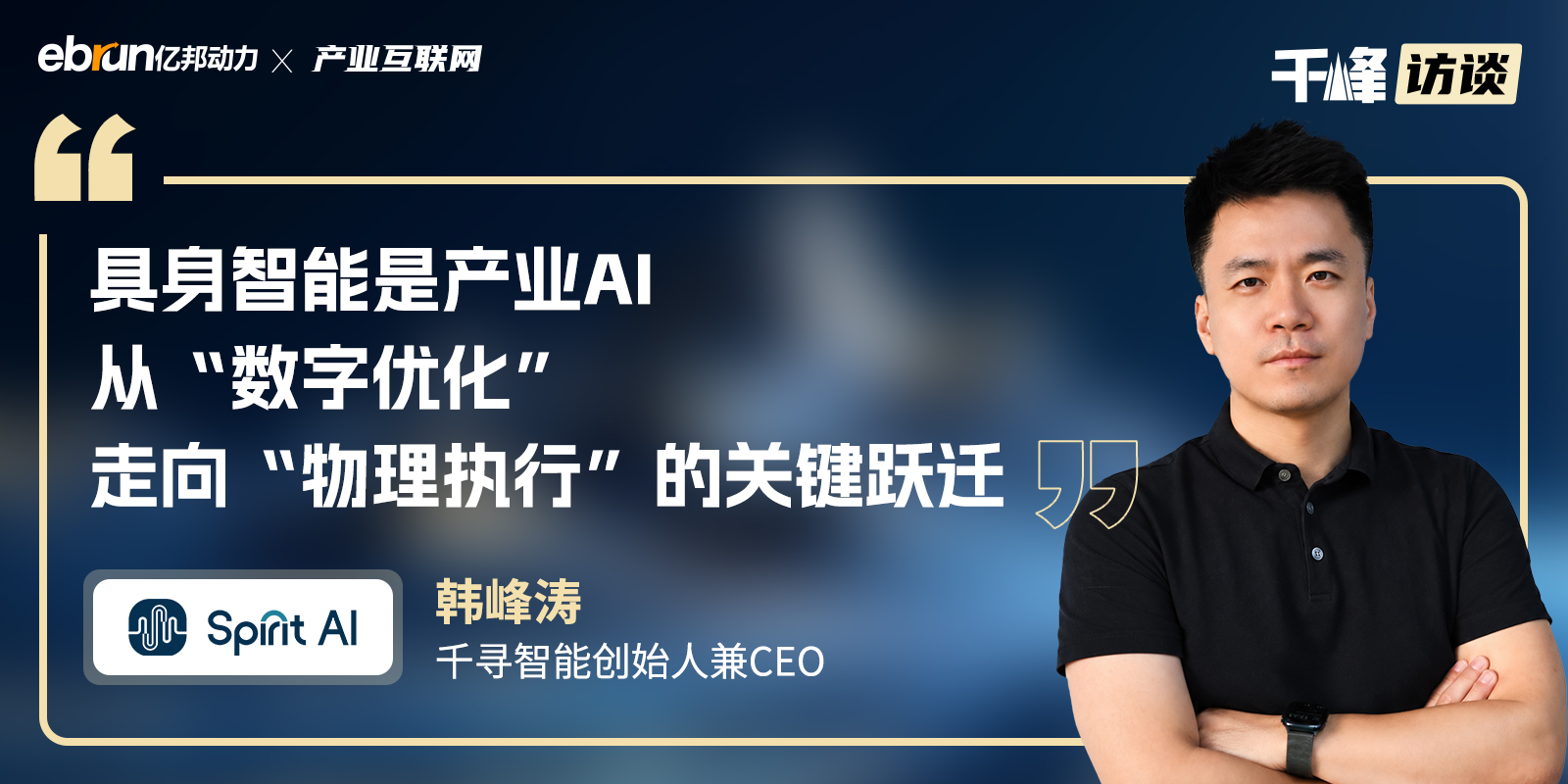
【亿邦原创】韩峰涛,千寻智能创始人兼CEO。千寻智能定位机器人通用大脑构建者,业务模式围绕“通用具身大模型+机器人本体+场景数据闭环”展开,坚持“先工业、再商服、后家庭”三步走战略,聚焦Spirit系列具身基座模型研发。本届千峰奖访谈中,韩峰涛围绕AI与出海带来的模态进化,分享了千寻智能在具身智能方向的实践与判断。

亿邦:本届千峰奖以「AI与出海带来的模态进化」为核心主题,聚焦产业能力的深层重构。结合具身智能行业,您如何理解这一轮由AI和全球化共同驱动的产业模态进化?千寻在AI能力建设与全球化出海两大方向上,看到了哪些行业机会,做了哪些核心战略布局?能否具体介绍一下公司的定位及业务模式?

韩峰涛:我认为,这一轮AI与全球化共同驱动的产业模态进化,核心是AI正在从“数字世界的信息处理”向“物理世界的行动执行”延伸。对具身智能赛道而言,这不是简单的技术叠加,而是生产工具的底层范式变革——机器人正从执行预设脚本的自动化设备,进化为具备自主感知、决策、执行能力的智能体,最终将深度重塑全球制造业与服务业的生产力形态。

千寻智能的核心定位是机器人通用大脑的构建者,业务模式围绕“通用具身大模型+机器人本体+场景数据闭环”展开。我们坚持“先工业、再商服、后家庭”的三步走战略,优先在工业场景跑通技术与商业闭环,再逐步向商服、生活场景延伸。AI能力建设上,我们聚焦Spirit系列具身基座模型研发,构建起“模型—硬件—数据—场景”四位一体的自我迭代体系,形成技术与场景双向驱动的正向循环。

全球化是具身智能产业的长期方向,我们的节奏非常清晰:先把国内的技术底座、产品成熟度、场景交付能力做扎实,再稳步推进全球化。当前我们重点夯实国内工业、商服场景的商业化落地,同步开展海外市场需求研究、技术标准适配与人才储备,不盲目追求短期出海规模。对我们而言,全球化的前提是产品能力足够过硬,而非提前透支概念。

亿邦:目前贵公司在哪些核心业务环节落地了AI/大模型技术,例如产业智能体、智能装备、流程智能优化等?AI技术在纵向打通产供销全链路、横向整合物流/金融/园区等产业资源,或是品牌溢价、绿色发展等价值链升级方向上,分别发挥了怎样的作用?形成了怎样独具特色的AI或数智化竞争力体系?

韩峰涛:对具身智能而言,具身基座模型不是单点环节的效率工具,而是驱动机器人从“自动化设备”升级为“智能生产单元”的核心底座。我们的AI技术全栈贯穿模型研发、硬件控制、场景落地全链路:例如,在工业场景,搭载自研Spirit具身基座模型的Moz1机器人已落地新能源产线,承担装配辅助、高危工序作业,替代重复性、高风险人工环节,提升产线节拍稳定性;在商服场景,Moz2机器人也将逐步落地零售门店,承担服务引导、基础作业,优化服务效率与人力配置。

纵向来看,AI打通了从模型训练、硬件控制到场景交付的完整链路,让机器人具备跨环境泛化能力,不再依赖定制化脚本;横向来看,我们与宁德时代、京东、博世等产业伙伴深度协同,将产业场景的真实需求转化为模型迭代输入,同时沉淀可复制的行业解决方案,形成“技术能力—场景验证—价值落地”的正向循环。我们的核心竞争力,不是单一硬件或算法,而是一套可自我进化的具身智能落地体系。

亿邦:在推进AI规模化落地、挖掘价值链深度价值的过程中,数据要素扮演了怎样的支撑角色?能否介绍贵公司数据要素竞争力情况?贵公司更侧重自有产业数据深耕,还是推进跨主体、跨行业的数据协同?过程中遇到的核心挑战是什么,是如何应对的?

韩峰涛:在具身智能领域,数据是模型能力的核心燃料。与传统数字AI不同,具身智能需要的不是规整的结构化数据,而是真实物理世界中第一视角、带动作反馈、包含异常与失败案例的物理交互数据。

我们构建了覆盖互联网视频、可穿戴采集、人类遥操作、真机现场回流的“数据金字塔”体系,自研多代轻量化可穿戴数采设备,将成本压缩到遥操作的十分之一,并在全国100多个城市、布局超40万个采集点位,形成从采集、清洗、标注到回流的全自动化管线。我们不追求实验室的“完美数据”,反而主动收录扰动、失败等边界样本,让模型在真实世界的“不完美”中训练泛化能力。

我们既深耕自有场景的真机数据,也推进跨场景、跨伙伴的数据协同。过程中核心挑战在于高价值物理交互数据的采集成本高、标注难度大。我们的应对方式是通过技术工具降本提效,同时依托真机落地场景持续产生增量数据,形成可持续运转的数据飞轮。

亿邦:您在补充分享中提到,具身智能是产业AI从“数字优化”走向“物理执行”的关键跃迁。这个判断怎么理解?千寻为什么坚持通用具身大脑的技术路线?

韩峰涛:具身智能是产业AI从“数字优化”走向“物理执行”的关键跃迁。过去产业AI更多聚焦流程、决策层面的效率提升,而具身智能直接把AI能力注入物理装备,让机器人成为可复制、可迁移的“智能劳动力”,这是对产业生产力的深层重构。

千寻坚持通用具身大脑的技术路线,同一套Spirit具身基座模型可适配工业、商服等不同形态的硬件产品与应用场景,一次模型迭代可同时覆盖多条业务线,最大化释放通用智能的价值。未来产业AI的竞争,不会停留在单点技术,而是比拼“通用智能底座+场景落地能力+数据闭环体系”的综合实力。谁能先把通用智能的成本打下来、把场景跑通,谁就能在产业变革中占据主动。

亿邦:面向2026年及未来两年,贵公司在AI能力迭代与全球化布局上有哪些重点投入规划?您预判这会给行业竞争格局带来哪些关键变化?

韩峰涛:面向2026年及未来两年,我们的核心投入集中在三个方向:一是持续攻坚Spirit具身基座模型,提升泛化能力、长时序任务能力与数据效率,夯实通用大脑底座;二是完善数据采集与回流体系,扩大真实场景数据储备;三是推进国内工业、商服场景落地,沉淀标准化产品与解决方案。全球化方面,我们会稳步推进前期调研与能力储备,节奏服从于技术成熟度,不做冒进的规模化扩张。

我预判行业竞争格局会发生两个关键变化:第一,竞争核心从Demo表演、硬件参数比拼,转向真实场景的落地能力、工程化能力与数据闭环能力;第二,全球竞争会从单一产品竞争,转向技术体系与产业生态的竞争。中国企业凭借完整的供应链、丰富的产业场景、海量的真实数据与人才红利,会在全球具身智能竞争中占据越来越重要的位置。

亿邦:如果给刚刚起步、希望同时构建AI竞争力与全球化能力的同行企业提一条最核心的建议,这条建议会是什么?

韩峰涛:如果给同时布局AI能力与全球化的同行提一条最核心的建议,我会说:先筑牢通用具身智能的核心技术底座,再谈场景拓展与全球化布局。

具身智能本质是长周期硬科技,核心壁垒从来不是场景数量或硬件样机,而是基座模型能力、真实世界数据体系与软硬协同的工程化能力。很多企业急于铺场景、冲出海,却忽略了底层技术的长期打磨,最终容易陷入“Demo好看、落地困难”的困境。对起步阶段的企业而言,最核心的是把资源聚焦在具身大模型架构、数据飞轮体系、真实世界泛化能力这些底层技术上,把技术底座打牢,再基于通用能力有序延伸场景、推进全球化,才能形成可持续的长期竞争力。

作为TO B领域年度风向标,“2026第八届亿邦产业互联网年会暨首届产业智能体大会”将于2026年11月20日在北京召开。主题定为“AI与出海带来的模态进化”,聚焦产业智能体落地、AI供应链价值重构、数据要素与TOKEN经济、产业出海新生态等前沿议题深度思辨。大会将集结学界权威、央国企标杆、产业龙头、投资机构、服务生态伙伴,汇聚产业核心力量、拆解产业数智化转型路径、分享前沿实战经验。同期还将发布年度产业互联网报告及标杆案例,举办决策人闭门会、“千峰奖”颁奖盛典。


本文首发于 亿邦动力 官方网站

文章来源:亿邦动力

广告
微信
朋友圈

FAQ回顾

具身智能是什么?它和传统产业AI有什么区别?

具身智能是将AI能力注入物理装备,让机器人从执行预设脚本的自动化设备,进化为具备自主感知、决策、执行能力的智能体。千寻智能创始人韩峰涛指出,具身智能是产业AI从“数字优化”走向“物理执行”的关键跃迁,不再局限于流程层面的效率提升,而是直接作用于物理世界的生产执行。

千寻智能是做什么的?

千寻智能定位为机器人通用大脑构建者,业务围绕“通用具身大模型+机器人本体+场景数据闭环”展开,坚持“先工业、再商服、后家庭”三步走战略,聚焦Spirit系列具身基座模型研发,已与宁德时代、京东、博世等产业伙伴深度协同,推动机器人在工业与商服场景落地。

通用具身大模型相比传统机器人方案有什么优势?

通用具身大模型是驱动机器人从“自动化设备”升级为“智能生产单元”的核心底座。千寻智能的Spirit系列具身基座模型可适配工业、商服等不同形态的硬件产品与应用场景,一次模型迭代可同时覆盖多条业务线,让机器人具备跨环境泛化能力,不再依赖定制化脚本。

具身智能行业2026年竞争格局将发生哪些变化?

行业竞争将发生两个关键变化:一是竞争核心从Demo表演、硬件参数比拼,转向真实场景的落地能力、工程化能力与数据闭环能力;二是全球竞争从单一产品竞争,转向技术体系与产业生态的竞争。中国企业凭借完整供应链、丰富产业场景和人才红利,将在全球具身智能竞争中占据重要位置。

具身智能落地需要什么样的数据?

具身智能需要真实物理世界中第一视角、带动作反馈、包含异常与失败案例的物理交互数据,而非传统规整的结构化数据。千寻智能构建了覆盖互联网视频、可穿戴采集、人类遥操作、真机现场回流的“数据金字塔”体系,在全国100多个城市布局超40万个采集点位,采集成本压缩到遥操作的十分之一。

这么好看,分享一下?

朋友圈 分享

APP内打开

赞 +1
+1
微信好友 朋友圈 新浪微博 QQ空间
关闭
收藏成功
发送
/140 0