广告
加载中

养老服务消费补贴电商首单落地京东 助洁、助浴等居家养老服务解失能老人大难题

龚作仁 2026-07-02 11:03
龚作仁 2026/07/02 11:03

邦小白快读

EN
全文速览

本次事件核心信息为,国家民政部、财政部推行的养老服务消费补贴,已经在京东平台完成全国首单落地,京东成为首个承接该补贴落地的电商平台,符合要求的失能老人可线上领取补贴享受居家养老服务,干货实操信息如下:

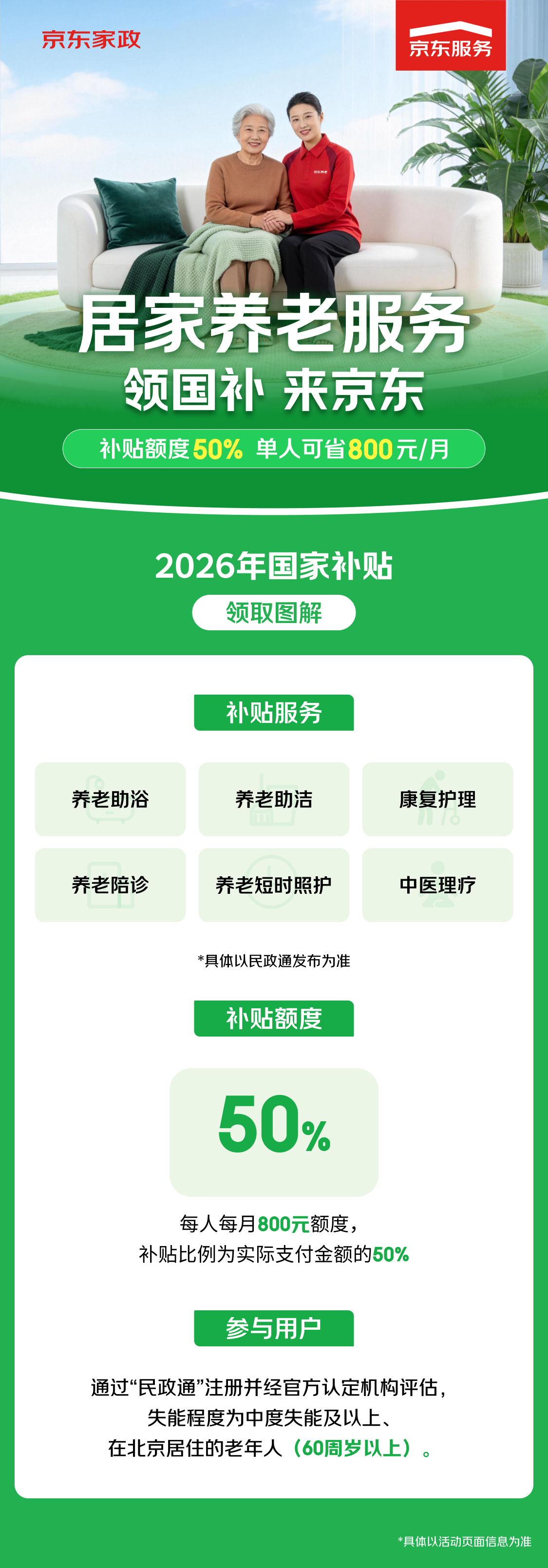
1. 补贴规则:面向北京中度及以上失能老年群体,本次落地的居家养老服务可抵扣50%服务金额,每人每月最高可领800元,覆盖助浴、助洁、陪诊、康复理疗等高频刚需服务。

2. 操作流程:符合条件的老人通过“民政通”完成身份认证后,在京东App搜索“养老补贴”即可领取,支付时自动抵扣,子女家属可使用老人账号代下单预约服务,全流程线上完成。

3. 服务保障:本次服务由京东家政自营提供,服务人员都经过背景审核和20项标准流程的系统化培训,服务质量有保障。

本次落地事件释放了养老服务领域的多个行业信号,对品牌商布局养老赛道有较高参考价值,核心干货如下:

1. 消费趋势:当前失能老人家庭的居家照护刚需缺口较大,助浴、助洁、短时照护等高频服务需求迫切,家庭对减轻照护负担、降低照护成本的需求强烈,市场空间广阔。

2. 渠道机遇:国家养老服务补贴正式打通电商渠道,电商平台成为养老服务触达用户的新渠道,依托电商的流量和便捷性,可以有效降低用户获取服务的门槛,品牌商可对接电商平台拓展新服务场景。

3. 用户特征:目前相当多养老服务是子女代为老人下单,品牌需要适配代操作的使用场景,同时要重视服务标准化建设,才能获得用户和监管层面的信任。

养老服务补贴接入电商,给养老服务类卖家带来了明确的增长机会和可参考的经验,核心干货如下:

1. 市场机会:居家养老服务是当前政策重点扶持的增量市场,补贴接入电商直接降低了用户消费门槛,会快速释放大量刚需订单,市场增长动力充足。

2. 可学习运营经验:可以参考京东的做法,采用全链路服务管理模式,对服务人员做背景审核和标准化培训,借助数字化工具实现服务和资金的可追溯,提升用户信任。

3. 合作与机会:目前京东已经开放入驻通道,北京本地的养老服务机构、社区养老驿站都可以上线接入补贴通道,获取平台流量和订单,拓展业务覆盖范围。

4. 风险提示:从业者需要符合补贴相关资质要求,保障服务质量,才能合规持续运营。

本次养老服务电商化落地,给养老相关产品生产工厂带来了新的商业机会和数字化转型启示,核心干货如下:

1. 产品需求方向:随着居家养老服务行业的快速发展,针对失能老人的助浴设备、健康监测设备、康复理疗辅具、助餐配套产品等周边产品需求会持续增长,工厂可针对性研发适配居家养老场景的产品,契合市场新需求。

2. 数字化转型启示:养老服务行业已经开始通过数字化打通政策渠道、供需两端和监管链路,工厂也可参考该思路,推进自身数字化建设,主动对接电商平台和政策相关渠道,拓展面向C端的销售路径。

3. 商业合作机会:一站式居家养老新生态正在形成,工厂可对接养老服务平台,依托服务场景推出配套产品,绑定场景拓展销路,获得新的增长空间。

本次事件反映了养老服务行业的最新发展趋势,也明确了行业客户的核心痛点,对各类养老相关服务商有较高参考价值,核心干货如下:

1. 行业发展趋势:当前数字技术与实体供应链深度融合,政策大力支持居家养老服务发展,一站式、多维度的居家社区养老新生态正在加速形成,电商平台已经成为政策补贴落地和服务触达用户的重要载体,行业空间正在快速打开。

2. 核心客户痛点:传统模式下养老补贴领取渠道窄、申请流程繁琐,失能老人行动不便申请难度大,同时补贴资金流向监管难度大,市场上合格的居家养老服务供给不足,无法满足家庭刚需。

3. 可参考解决方案:可以参考本次京东的做法,对接官方政务系统打通身份认证,实现补贴线上领取核销全流程,支持子女代操作,用数字化实现资金流向全程可追溯,同时建立标准化服务体系保障服务质量。

本次京东承接养老补贴落地的实践,给各类布局养老领域的平台商提供了很多运营、招商和风险管控的参考,核心干货如下:

1. 用户和市场需求:用户层面,符合条件的老人希望补贴领取使用流程便捷,支持子女代操作,能就近选择靠谱熟悉的养老服务,对助浴助洁等高频刚需居家服务需求强烈;市场层面,政策支持平台接入养老补贴落地,平台可借助政策东风完善养老服务布局。

2. 可参考运营做法:对接官方政务“民政通”系统实现数据打通,实现补贴线上领取、核销全流程自动化,支付环节自动抵扣,借助数字化工具实现补贴资金流向全程可追溯,满足监管要求。

3. 招商和运营方向:平台可在自营服务基础上,开放接入本地合规的养老服务机构、社区养老驿站,丰富服务供给,满足用户多样化选择需求。

4. 风险规避:需要严格审核服务提供者的资质,推动服务商建立标准化服务体系,保障补贴切实落到用户身上,规避合规风险。

本次养老服务补贴电商首单落地是我国养老产业的创新尝试,出现了很多新的产业动向和商业模式,值得研究者关注,核心干货如下:

1. 产业新动向:我国养老服务补贴开始从传统线下申请转为线上电商渠道落地,借助市场化电商平台的流量和数字化能力,解决传统线下模式流程繁琐、监管难、供给不足的问题,数字技术开始深度融入养老产业政策落地环节,加速催生一站式多维度的居家社区养老新生态。

2. 创新商业模式:本次探索形成了“政策补贴+电商平台数字化能力+自营打底+第三方机构入驻”的新型居家养老服务模式,兼顾了服务品质管控和生态开放,为养老产业商业化落地提供了新的思路。

3. 研究价值:本次北京率先试点,为后续全国其他地区推广养老服务补贴线上化提供了可参考的样本,对于研究完善我国养老产业政策落地方式、解决失能老人照护难题都有较高的参考启示意义。

返回默认

声明:快读内容全程由AI生成,请注意甄别信息。如您发现问题,请发送邮件至 run@ebrun.com 。

我是 品牌商 卖家 工厂 服务商 平台商 研究者 帮我再读一遍。

Quick Summary

This article outlines the key details of China's first national elderly care service consumption subsidy transaction completed on JD.com, the first e-commerce platform to roll out this program jointly launched by the Ministry of Civil Affairs and the Ministry of Finance. Eligible disabled seniors can now claim the subsidy online for in-home elderly care services. Key takeaways are as follows:

1. **Subsidy rules**: For the current rollout, the program covers moderately and severely disabled seniors in Beijing. It covers 50% of the cost of eligible in-home care services, with a maximum monthly subsidy of 800 yuan per person, covering high-frequency essential services including bath assistance, cleaning assistance, medical escort, and rehabilitation therapy.

2. **Application process**: After completing identity verification via the "Minzheng Tong" (civil affairs unified platform) system, eligible seniors can search for "elderly care subsidy" on the JD app to claim the benefit, which is automatically applied at checkout. Family members can place orders and book services on behalf of seniors using their accounts, with the entire process completed entirely online.

3. **Service guarantees**: All services are provided by JD's in-house housekeeping division. All care workers have passed background checks and completed systematic training covering 20 standardized service protocols to ensure consistent service quality.

This first subsidy rollout sends multiple key industry signals for brands looking to enter the elderly care sector, with core takeaways as follows:

1. **Consumer trends**: There is currently a large unmet demand for in-home care for families with disabled seniors. Demand for high-frequency services such as bath assistance, cleaning assistance, and short-term care is particularly urgent, as families strongly seek solutions to reduce caregiving burdens and lower costs, creating significant untapped market potential.

2. **Channel opportunities**: National elderly care subsidies have now been formally integrated into e-commerce channels, turning e-commerce platforms into a new channel for reaching elderly care users. Leveraging e-commerce's traffic advantages and user convenience can effectively lower the barrier for users to access services, and brands can partner with e-commerce platforms to expand into new service scenarios.

3. **User characteristics**: A large share of elderly care orders are currently placed by adult children on behalf of their parents, so brands need to optimize their experience for proxy usage scenarios. In addition, prioritizing standardized service delivery is essential to build trust with both users and regulators.

The integration of elderly care subsidies into e-commerce creates clear growth opportunities and actionable lessons for elderly care service sellers. Key takeaways are as follows:

1. **Market opportunity**: In-home elderly care is an incremental market prioritized for policy support. Integrating subsidies into e-commerce directly lowers consumer barriers, which will quickly unlock substantial demand-driven order volume and create strong market growth momentum.

2. **Operational lessons to learn**: Sellers can follow JD's example by adopting an end-to-end service management model, conducting mandatory background checks and standardized training for all care workers, and leveraging digital tools to enable full traceability of both services and funds to build user trust.

3. **Partnership and growth opportunities**: JD has already opened an onboarding channel for this program. Local elderly care institutions and community elderly care stations in Beijing can go online to access the subsidy channel, gain platform traffic and orders, and expand their business coverage.

4. **Risk note**: Operators must meet the qualification requirements tied to the subsidy program and maintain consistent service quality to operate compliantly on an ongoing basis.

This e-commerce-based rollout of elderly care services creates new business opportunities and digital transformation insights for manufacturers of elderly care-related products. Key takeaways are as follows:

1. **Product demand direction**: As the in-home elderly care industry grows rapidly, demand for ancillary products adapted for disabled seniors—including bathing equipment, health monitoring devices, rehabilitation aids, and meal support products—will continue to rise. Manufacturers can develop products tailored specifically for in-home care scenarios to align with this new market demand.

2. **Digital transformation insights**: The elderly care industry has already begun integrating policy channels, supply and demand sides, and regulatory oversight through digitalization. Manufacturers can adopt this same approach to advance their own digital transformation, proactively partner with e-commerce platforms and policy-linked channels, and expand direct-to-consumer sales paths.

3. **Business partnership opportunities**: A new one-stop in-home elderly care ecosystem is emerging. Manufacturers can partner with elderly care service platforms to launch complementary products tied to service scenarios, expand sales channels through scenario integration, and unlock new growth.

This case reflects the latest development trends in the elderly care industry and clarifies core pain points for industry clients, offering valuable insights for all types of elderly care service providers. Key takeaways are as follows:

1. **Industry development trends**: Digital technology is now deeply integrated with physical supply chains, and policy strongly supports the development of in-home elderly care. A one-stop, multi-dimensional new ecosystem of community-based in-home care is accelerating its formation. E-commerce platforms have become a key carrier for policy subsidy rollout and user outreach, and the industry's overall market is expanding rapidly.

2. **Core client pain points**: Under traditional models, subsidy application channels are limited, application processes are cumbersome, and disabled seniors with limited mobility face high barriers to access. At the same time, regulating the flow of subsidy funds is difficult, and the market lacks sufficient supply of qualified in-home care services to meet family demand.

3. **Recommended solution framework**: Providers can follow JD's example by integrating with official government systems to enable seamless identity verification, build a fully online process for subsidy application and redemption, support proxy ordering by family members, use digital tools to enable full traceability of subsidy flows, and establish a standardized service system to guarantee service quality.

JD's practice of hosting the first rollout of this elderly care subsidy offers many valuable lessons for platforms entering the elderly care sector across operations, merchant onboarding, and risk management. Key takeaways are as follows:

1. **User and market demand**: From the user side, eligible seniors want a simple and convenient subsidy application and usage process that supports proxy ordering by family members, and allows them to book reliable, local elderly care services. Demand for high-frequency essential in-home services such as bath assistance and cleaning is particularly strong. From the market side, policy supports platforms hosting elderly care subsidy rollouts, so platforms can leverage policy momentum to expand their elderly care service offerings.

2. **Operational best practices**: Integrate with the official "Minzheng Tong" government system to enable data connectivity, build a fully automated end-to-end online process for subsidy claim and redemption with automatic deduction at checkout, and use digital tools to enable full traceability of subsidy flows to meet regulatory requirements.

3. **Merchant onboarding and operational direction**: Beyond offering in-house services, platforms can open access to local compliant elderly care institutions and community elderly care stations to enrich service supply and meet users' diverse needs.

4. **Risk mitigation**: Platforms must strictly vet service providers' qualifications, require service providers to build standardized service systems, ensure subsidies actually reach end users, and mitigate compliance risks.

The first e-commerce-based rollout of elderly care service subsidies is an innovative trial for China's elderly care industry, bringing new industry trends and business models that merit researcher attention. Key takeaways are as follows:

1. **New industry trends**: China's elderly care service subsidies have shifted from traditional offline application to online rollout via e-commerce channels. Leveraging the traffic and digital capabilities of market-oriented e-commerce platforms addresses the core pain points of traditional offline models: cumbersome processes, regulatory difficulties, and insufficient supply. Digital technology is now deeply integrated into the implementation of elderly care industry policy, accelerating the formation of a one-stop, multi-dimensional new ecosystem of community-based in-home care.

2. **Innovative business model**: This trial has established a new in-home elderly care service model that combines "policy subsidies + e-commerce platform digital capabilities + in-house core services + third-party institution onboarding". This model balances service quality control and ecosystem openness, offering a new framework for commercializing the elderly care industry.

3. **Research value**: The initial pilot in Beijing provides a referenceable sample for the rollout of online elderly care subsidies across other regions of China. It offers high reference value for research on improving policy implementation in China's elderly care industry and addressing the care needs of disabled seniors.

Disclaimer: The "Quick Summary" content is entirely generated by AI. Please exercise discretion when interpreting the information. For issues or corrections, please email run@ebrun.com .

I am a Brand Seller Factory Service Provider Marketplace Seller Researcher Read it again.

“真没想到,给老头子约了几个小时的上门照护,还能像用优惠券一样直接减钱。”近日,北京西城区的董阿姨通过京东App为患病的老伴预约了上门居家养老服务,涵盖健康监测、饮食照护、休闲陪伴等个性化自选项目,极大减轻了她的日常照料负担。董阿姨也成为全国首位在电商平台上领取养老服务补贴并完成支付的用户,标志着国家养老服务补贴正式打通了电商渠道。

据了解,该项补贴由民政部、财政部共同推行,主要面向中度及以上失能老年群体,针对居家养老、机构养老、喘息服务、日托服务等进行补贴,旨在切实缓解失能老人家庭的经济与照护负担。此次上线京东的为居家养老服务,补贴可抵扣服务金额的50%,每人每月最高可领800元。作为首家承接该项补贴落地的电商平台,京东与 “民政通”成功对接,拓宽了补贴领取和使用渠道,增加了服务供给。

目前,北京已率先试点电商平台接入该补贴系统,符合条件的老年人通过“民政通”完成身份认证后,在京东App搜索“养老补贴”,即可领取补贴、选择服务,支付时自动抵扣,子女和家属可使用老人账号下单,为老人预约上门服务,实现了补贴线上领取、核销及线下服务的全流程贯通。

此次率先纳入补贴支付范畴的,是助浴、助洁、陪诊、康复理疗、短时照护等最迫切、最高频的居家服务,获得补贴服务资格的京东家政依托自营模式,通过全链路服务管理,切实保障国家补贴落到实处、发挥实效。服务人员统一招聘并接受背景审核,还通过校企合作、全域招募、系统培育、引入AI助教等智能化培训手段等方式,持续吸纳年轻从业者。在入职后,这些从业者均需通过涵盖20项标准服务流程的系统化培训,确保专业技能覆盖老人日常生活的方方面面。

与此同时,京东借助数字化工具协助政府部门以电子消费券形式发放养老补贴,实现了资金流向的全程可追溯。京东方面还表示,在自营服务基础上,北京市养老服务机构、社区养老驿站等也将持续上线并支持使用补贴,方便老人选择就近或熟知的服务。

从基础的家政服务到护士上门、线上问诊及线上助餐,再到如今国家养老服务消费补贴上线京东等消费场景,数字技术与实体供应链的深度融合,正在加速催生一个一站式、多维度的居家社区养老新生态,让更多老年人享受到有温度、有品质的晚年生活。

注:文/龚作仁,文章来源:Laborer,本文为作者独立观点,不代表亿邦动力立场。

文章来源:Laborer

广告
微信
朋友圈

FAQ回顾

养老服务消费补贴面向哪些群体?

该项补贴由民政部、财政部共同推行,主要面向中度及以上失能老年群体,可用于居家养老、机构养老、喘息服务、日托服务等场景,能够切实缓解失能老人家庭的经济与照护双重负担。

养老服务消费补贴在京东怎么使用?

目前北京已率先试点电商平台接入补贴系统,符合条件的老年人先通过“民政通”完成身份认证,在京东App搜索“养老补贴”即可领取补贴、选择服务,支付时自动抵扣,子女家属也可使用老人账号代下单。

养老服务消费补贴的抵扣标准是什么?

当前上线京东的居家养老服务类补贴,可抵扣服务金额的50%,每人每月最高可领800元,率先纳入补贴支付范畴的有助浴、助洁、陪诊、康复理疗、短时照护等高频刚需服务。

京东承接养老服务消费补贴有什么优势?

作为首家承接该项补贴落地的电商平台,京东依托自营家政的全链路服务管理保障服务品质,还借助数字化工具以电子消费券形式发放补贴,实现资金流向全程可追溯。

这么好看,分享一下?

朋友圈 分享

APP内打开

+1
+1
微信好友 朋友圈 新浪微博 QQ空间
关闭
收藏成功
发送
/140 0