广告
加载中

爆款增长方法论(下):广告做对之后 如何让爆款可持续?

龚作仁 2026-07-06 13:16
龚作仁 2026/07/06 13:16

邦小白快读

EN
全文速览

本文是分享沃尔玛跨境平台打造可持续爆款的实操干货,核心提出爆款打造需要产品力、投放力、持续力三个维度协同,上篇讲解前两个维度,本篇重点拆解保障爆款可持续的“持续力”运营方法。

1.给出了三层日常数据监控框架:广告效率层关注CTR、CVR、CPC三个指标定位广告效果下滑问题,投资回报层按广告类型分别设置ROAS健康阈值,排名层关注目标关键词自然排名判断正向飞轮运转状态。

2.推荐了适合不同场景的四类数据分析报告工具,满足周度复盘、商品健康诊断、关键词优化、深度趋势分析的不同需求。

3.梳理了爆款投放中四类高频误区,明确正确操作方向,同时针对不同阶段卖家给出了不同的切入点建议。

本文针对布局沃尔玛跨境渠道的品牌商,提供了从单品爆卖到打造可持续品牌竞争力的实操参考,覆盖品牌营销、渠道运营、资产沉淀等多方面干货。

1.品牌做沃尔玛渠道运营,可通过搭建三层数据监控体系,实时掌握广告效果、投产效率、市场份额的变化,及时响应竞争环境、用户搜索习惯的变动,调整运营策略。

2.指导品牌驱动正向爆款飞轮,通过广告撬动自然流量积累,逐步降低获客成本,扩大利润空间,同时沉淀品牌资产,形成可持续的竞争壁垒。

3.提醒品牌避开四类营销误区,明确要先优化产品Listing保障转化能力,再投放广告放大流量,不要过度依赖广告买流量,要借助广告积累自然排名,成熟头部品牌可逐步从单品爆款向整体品牌竞争力升级。

本文针对做沃尔玛平台的跨境卖家,给出了打造可持续爆款的完整可落地方法论,梳理了常见运营风险、对应解决方案和不同阶段卖家的成长路径,实操性极强。

1.明确爆款可持续的核心是搭建动态的数据运营机制,给出了三层核心监控指标和四类适配不同场景的分析工具,帮助卖家快速定位广告效果下滑的具体环节。

2.拆解了正向爆款飞轮的内在运转逻辑,指导卖家通过运营逐步降低广告依赖,降低整体获客成本,形成可持续的竞争优势。

3.梳理了爆款投放中四类高频误区,明确提示了踩误区的负面影响,给出了正确操作方向,同时针对不同阶段卖家给出对应切入点:新卖家重心放在产品力和冷启动数据积累,有基础的卖家优化广告结构,头部卖家推进品牌竞争力升级。

本文对布局跨境电商的工厂把握线上商业机会、推进电商数字化运营有较强的启示意义,结合沃尔玛爆款打造逻辑给出了清晰的方向。

1.当前沃尔玛跨境平台仍有孵化头部爆品的市场机会,工厂做自有电商业务不能靠单点碰运气,需要搭建产品力、投放力、持续力三位一体的系统化增长体系,才能获得稳定增长。

2.启发工厂做电商要重视数据化运营能力建设,可参考文中三层数据监控框架,实时感知竞争环境、用户需求、投放效果的变化,实现快速响应调整。

3.提醒工厂做线上运营要避开常见陷阱:不要在产品未就绪时提前投广告,不要冷启动阶段过度砸预算,不要过度依赖广告买流量,要先打磨好产品和Listing,逐步积累数据和用户口碑,最终沉淀可持续的线上竞争优势。

本文梳理了当前沃尔玛跨境电商卖家的核心痛点和行业发展趋势,对跨境电商运营服务商优化服务产品、匹配客户需求有较高的参考价值。

1.行业发展趋势方面,当前沃尔玛跨境卖家已经从追求偶发性爆单,转向追求可系统化复用的爆款孵化能力,解决爆款不可持续的问题是卖家的核心需求。

2.客户痛点方面,大多数卖家对数据运营体系搭建没有清晰思路,对广告投放中的系统性误区缺乏认知,很多卖家明明投放数据相近,最终增长结果差异极大。

3.服务商可围绕文中的三层数据监控框架、爆款飞轮逻辑开发标准化运营服务,还可针对性推出冷启动运营指导、广告结构优化、关键词管理精细化等服务,帮助卖家避开常见陷阱,提升爆款孵化的成功率,匹配卖家不同阶段的增长需求。

本文基于卖家打造爆款的实际运营场景,梳理了卖家对平台的核心需求,以及当前卖家运营存在的普遍问题,对跨境电商平台优化运营服务、推进招商有参考意义。

1.卖家打造可持续爆款对数据工具有精细化需求,当前卖家已经普遍使用平台提供的四类报告工具满足不同分析需求,平台可进一步优化数据工具功能,提升自定义维度分析能力,更好支撑卖家精细化运营。

2.大量新卖家以及中小卖家在广告投放、冷启动阶段存在系统性误区,严重影响存活和增长,平台可针对新入驻卖家推出官方运营指导内容,帮助卖家快速掌握正确方法,提升平台整体卖家的成交额和留存率。

3.不同阶段卖家有不同的增长需求,头部卖家有从单品爆款到品牌升级的需求,平台可针对性推出分层的商家扶持政策,吸引不同阶段的优质卖家入驻,完善平台的品类和品牌结构。

本文提出了跨境电商平台孵化爆款的三角增长方法论,梳理了当前跨境电商出口运营的新动向新问题,对电商增长领域的研究有较高的资料参考价值。

1.产业新动向方面,当前跨境电商出口的增长已经从早期的流量红利驱动,转向系统化运营驱动,卖家不再满足于偶发性爆单,需要可复制复用的系统化爆款增长方法论,本文总结了行业的这一新变化。

2.梳理了当前卖家孵化爆款过程中存在的四类系统性问题,明确提出爆款不可持续的核心原因是运营体系链路断裂,而非市场机会消失,揭示了行业当前存在的普遍痛点。

3.总结了可持续爆款的正向飞轮商业模式,提出了产品力×投放力×持续力的三角增长框架,清晰梳理了爆款增长多环节协同的内在逻辑,为研究跨境电商增长规律提供了完整的案例和框架参考。

返回默认

声明:快读内容全程由AI生成,请注意甄别信息。如您发现问题,请发送邮件至 run@ebrun.com 。

我是 品牌商 卖家 工厂 服务商 平台商 研究者 帮我再读一遍。

Quick Summary

This article shares actionable insights for building sustainable top-selling products on Walmart's cross-border e-commerce platform. It argues that successful long-term hits rely on the synergy of three core dimensions: product strength, advertising capability, and sustained operation capability. While the first part of this series covered the first two dimensions, this article focuses on breaking down the "sustained operation capability" that keeps top sellers profitable over time.

1. It introduces a three-tier daily data monitoring framework: The advertising efficiency layer tracks CTR, CVR, and CPC to identify declines in ad performance; the return layer sets healthy ROAS thresholds by ad type; and the ranking layer monitors organic rankings for target keywords to assess whether a positive growth flywheel is operating effectively.

2. It recommends four categories of data analysis and reporting tools for different use cases, meeting diverse needs including weekly performance reviews, product health diagnostics, keyword optimization, and in-depth trend analysis.

3. It summarizes four common pitfalls in top-selling product advertising, clarifies correct operational practices, and provides tailored entry points for sellers at different growth stages.

This article provides practical guidance for brands with a presence on Walmart's cross-border channel to transition from single-product hits to building sustainable brand competitiveness, covering brand marketing, channel operations, and asset accumulation.

1. For brands operating on Walmart, a three-tier data monitoring framework enables real-time tracking of changes in ad performance, return on investment, and market share, allowing brands to adjust strategies promptly in response to shifting competitive landscapes and evolving user search habits.

2. It guides brands to build a positive hit growth flywheel: advertising fuels organic traffic accumulation, which gradually reduces customer acquisition costs, expands profit margins, accumulates brand equity, and builds sustainable competitive moats.

3. It alerts brands to avoid four common marketing pitfalls, clarifying that brands should optimize product listings to secure conversion capability first before scaling ad spend to expand traffic. Brands should not over-rely on paid traffic, and instead use advertising to build organic rankings. Mature leading brands can gradually upgrade from single-product hits to overall brand competitiveness.

This article offers a complete, actionable methodology for cross-border sellers on Walmart to build sustainable top-selling products. It summarizes common operational risks, corresponding solutions, and growth paths for sellers at different stages, with a strong focus on practical implementation.

1. It clarifies that the core of sustainable top sellers is building a dynamic data-driven operation mechanism, providing three tiers of core monitoring indicators and four categories of analysis tools for different scenarios to help sellers quickly pinpoint the specific causes of declining ad performance.

2. It breaks down the internal logic of the positive hit growth flywheel, guiding sellers to gradually reduce reliance on advertising and lower overall customer acquisition costs through targeted operations, thus building sustainable competitive advantages.

3. It summarizes four common pitfalls in top product advertising, outlines the negative impacts of these missteps, clarifies correct operational approaches, and offers tailored guidance by growth stage: new sellers should prioritize product strength and cold-start data accumulation, established sellers should focus on optimizing their ad structure, and leading sellers should push for upgrades to overall brand competitiveness.

This article offers clear insights and directional guidance for factories expanding into cross-border e-commerce to capture online business opportunities and advance data-driven digital operations, anchored in Walmart's hit-building logic.

1. There are still market opportunities to incubate leading top-selling products on Walmart's cross-border platform. For factories building their own e-commerce business, stable growth cannot rely on random luck. Instead, factories need to build a systematic three-dimensional growth framework combining product strength, advertising capability, and sustained operation capability to deliver consistent growth.

2. It highlights the importance of building data-driven operational capabilities for factories entering e-commerce. Factories can adopt the three-tier data monitoring framework outlined in this article to track changes in the competitive landscape, user demand, and ad performance in real time, enabling fast, responsive adjustments.

3. It alerts factories to avoid common traps in online operations: do not launch advertising before product and listing preparation is complete, do not overspend during the cold-start stage, and do not over-rely on paid traffic. Factories should refine their products and listings first, gradually accumulate data and user word-of-mouth, and ultimately build sustainable online competitive advantages.

This article summarizes the core pain points of current cross-border sellers on Walmart and outlines key industry development trends, offering high-value reference for cross-border e-commerce operation service providers to optimize their service offerings and align with customer demand.

1. In terms of industry trends, cross-border sellers on Walmart have shifted their focus from chasing occasional one-off viral orders to building systemically replicable hit incubation capabilities. Solving the problem of unsustainable top-seller performance has become sellers' core demand.

2. In terms of customer pain points, most sellers lack a clear roadmap for building data operation systems and have limited awareness of systematic mistakes in advertising. Many sellers see wildly different growth outcomes even with similar initial advertising performance data.

3. Service providers can develop standardized operation services based on the three-tier monitoring framework and hit flywheel logic outlined in this article. They can also launch tailored services including cold-start operation guidance, ad structure optimization, and refined keyword management to help sellers avoid common pitfalls, improve hit incubation success rates, and match the growth needs of sellers at different stages.

Based on real operational scenarios of sellers building top-selling products, this article summarizes sellers' core needs from the platform and common operational issues among sellers, offering reference for cross-border e-commerce platforms to optimize operational services and improve recruitment.

1. Sellers building sustainable top sellers have refined, granular needs for data tools. Currently, sellers widely use the four categories of reporting tools provided by platforms to meet different analysis needs. Platforms can further upgrade data tool functionality and improve custom dimension analysis capabilities to better support sellers' granular operations.

2. A large number of new and small-to-medium sellers fall into systematic mistakes in advertising and the cold-start stage, which severely hurts their survival and growth prospects. Platforms can launch official operation guidance content for newly joined sellers to help them master correct practices quickly, lifting overall platform GMV and seller retention.

3. Sellers at different stages have distinct growth needs: leading sellers demand upgrades from single-product hits to overall brand growth. Platforms can launch tiered seller support policies tailored to different segments, attract high-quality sellers across all growth stages, and improve the platform's overall category and brand structure.

This article proposes a triangular growth methodology for incubating top-selling products on cross-border e-commerce platforms, and summarizes new trends and emerging issues in current cross-border export e-commerce operations, offering valuable reference material for research on e-commerce growth.

1. In terms of new industry trends, growth in cross-border export e-commerce has shifted from being driven by early-stage traffic dividends to being driven by systematic operations. Sellers are no longer satisfied with occasional one-off viral orders, and instead need replicable, systematic methodologies for sustainable hit growth. This article summarizes this new shift in the industry.

2. It summarizes four categories of systematic problems in sellers' current hit incubation processes, and argues that the core cause of unsustainable top-seller performance is broken links in the operation system, rather than disappearing market opportunities, which reveals the widespread core pain point facing the industry today.

3. It summarizes the positive flywheel business model for sustainable top sellers, and proposes a triangular growth framework of Product Strength × Advertising Capability × Sustained Operation Capability. This framework clearly outlines the internal logic of cross-link collaboration for hit growth, providing a complete case and analytical framework reference for research on the growth laws of cross-border e-commerce.

Disclaimer: The "Quick Summary" content is entirely generated by AI. Please exercise discretion when interpreting the information. For issues or corrections, please email run@ebrun.com .

I am a Brand Seller Factory Service Provider Marketplace Seller Researcher Read it again.

爆款增长方法论上篇围绕跨境卖家的实际运营,梳理了爆款单品成立的两个前提:产品力与投放力——选品做对、沃尔玛广告投放策略做准,是一款单品从默默无闻进入头部的路径基础。

但进入头部,只是故事的一半。随着时间推移,有些卖家发现,广告还在持续投入,排名勉强维持,利润空间却在被慢慢蚕食。虽然爆款打出来了,但需要持续用力,一旦放松就开始下滑。这不是偶然,而是“持续力”缺失时几乎必然会出现的结果。

真正可持续的爆款,背后依靠的是一套能够及时感知变化并快速响应的数据运营机制。本篇聚焦“持续力”,通过构建广告日常数据监控框架,拆解爆款飞轮的内在运转逻辑,以及实际投放中出现频率最高的四类系统性误区。其中任何一类缺位,都足以让前两步“产品力”“投放力”的成功大打折扣。

持续力:维持爆款的数据运营体系

爆款不是一个固定状态,而是一个需要持续维护的动态结果。进入头部位置后,竞品会加大投入、平台竞价环境会持续变化、用户搜索习惯也在演进。真正可持续的爆款,背后依靠的是一套能够及时感知变化并快速响应的数据运营机制。

核心数据指标体系

建议围绕三个层次构建日常数据监控框架。

广告效率层关注CTR(点击率)、CVR(转化率)与CPC(单次点击成本)。CTR反映广告创意与关键词的市场吸引力,CVR衡量Listing的实际转化能力,CPC则反映竞价环境的竞争强度变化,三者综合评估,可快速定位广告效果下滑的具体环节。

投资回报层以ROAS(广告花费回报)为核心指标,衡量广告整体投产效率,建议按广告产品类型(SP/ SV/ SB)分别设定健康阈值,避免一刀切评估。

排名与市场份额层关注商品在目标关键词下的自然搜索排名变化,这是判断广告带动效果是否在积累的重要信号——排名上升说明正向飞轮在运转,排名停滞或下滑则需排查广告结构或Listing是否需要更新。

推荐报告与分析工具

建议参考以下四类报告工具:Advertiser Report 提供广告账户整体概览,适合周度复盘时快速掌握大盘表现;Item Health Report从商品维度诊断销售健康度,可发现潜在的库存、价格或内容问题;Keyword Performance Report 提供关键词维度的精细化分析,是词库优化的主要数据来源;Custom Report 支持自定义维度报告,适合深度分析特定广告活动或SKU的历史表现趋势。

爆款飞轮:持续力的内在机制

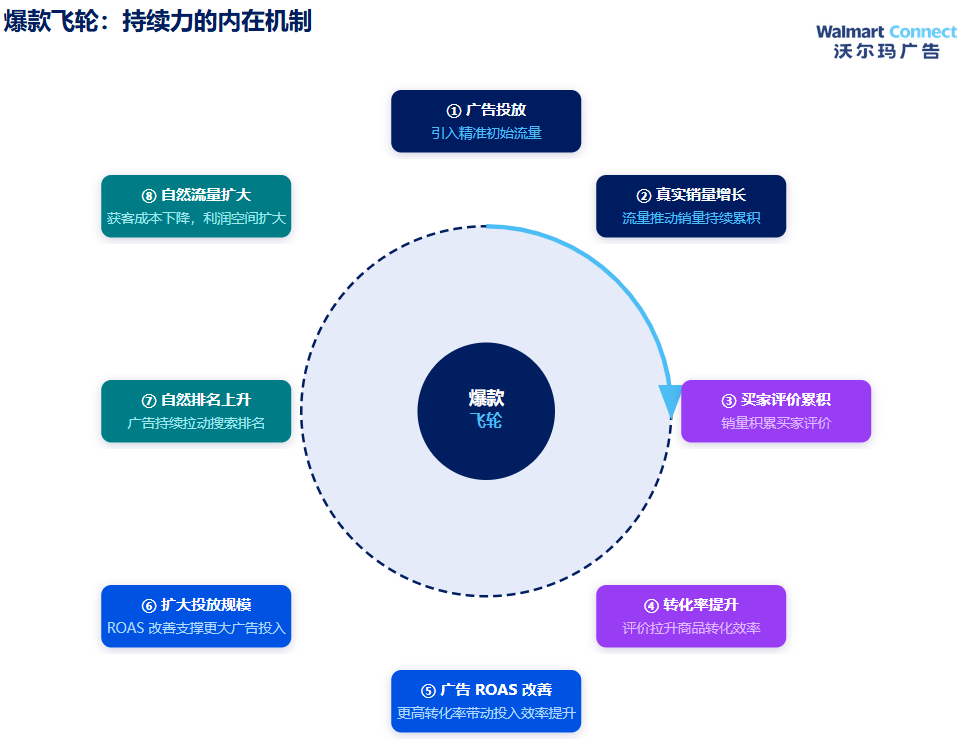
长期稳定运转的爆款,通常都在驱动正向飞轮:

广告引入精准流量 → 流量带来真实销量 → 销量积累买家评价

评价提升自然转化率 → 转化率改善广告ROAS→ 更高的ROAS支持更大的广告投入

更大的广告投入推动自然搜索排名上升 → 更高的排名带来更多无需广告成本的自然流量

自然流量降低广告依赖比例 → 整体获客成本下降 → 利润空间扩大,形成可持续竞争优势

常见误区

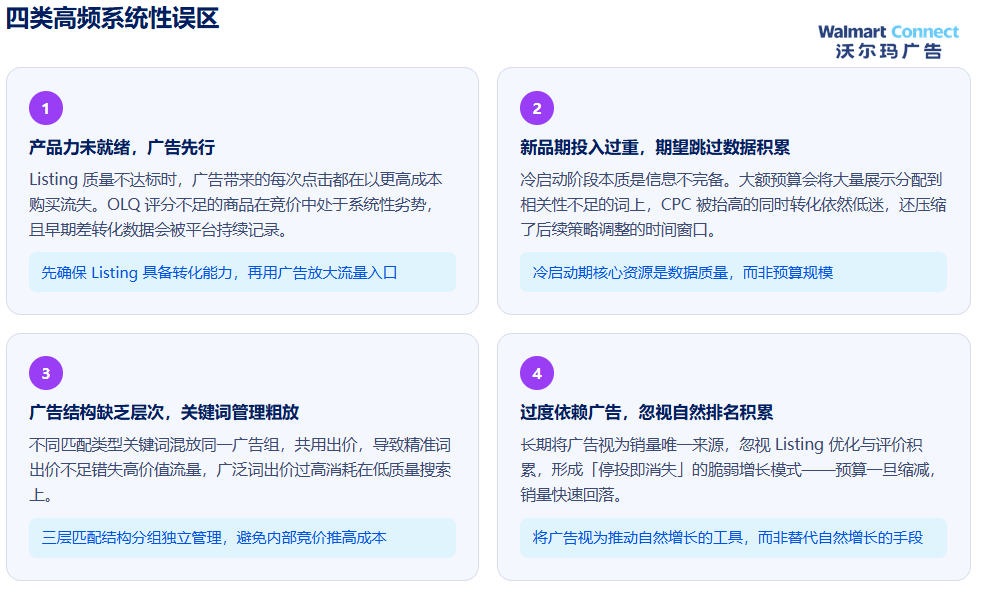
为什么投放数据相近,结果却大相径庭?这背后往往不是偶然,而是系统性误区在起作用。以下四类误区在实际投放中出现频率极高,每一类都对应着爆款孵化链条中的某个关键断裂点。

误区一:产品力未就绪,广告先行

这是许多卖家在第一步就踩进的坑。Listing质量不达标的商品,广告带来的每次点击都是在以更高的成本购买流失。OLQ评分不足的商品在广告竞价中处于系统性劣势,CPC更高、曝光位置更差。更重要的是,早期的差转化数据会被平台算法记录,影响商品在后续的流量分配权重,形成难以逆转的历史负面信号。正确的顺序是:先确保Listing具备转化能力,再用广告放大流量入口。

误区二:新品期投入过重,期望跳过数据积累

冷启动阶段的本质是信息不完备——此时加大预算,只是在加速消耗尚未验证的假设。大额预算会将大量展示分配到相关性不足的搜索词上,导致CPC被抬高而转化率依然低迷。此外,过早耗尽测试预算,会压缩后续数据积累与策略调整的时间窗口。冷启动期的核心资源不是预算规模,而是数据质量。

误区三:广告结构缺乏层次,关键词管理粗放

将不同匹配类型的关键词混放在同一广告组,在操作上看似节省时间,实际上显著降低了投放精细度。精准词和广泛词共用出价,导致要么精准词出价不足错失高价值流量,要么广泛词出价过高浪费在低质量搜索上。同一SKU出现在多个广告组中,会产生内部竞价竞争,人为抬高成本,并使数据难以解读。清晰的广告结构是精细化运营的基础,也是随着投放规模扩大后可维护性的关键。

误区四:过度依赖广告,忽视自然排名的积累

爆款飞轮的核心价值,在于随着时间推移逐步降低对广告的依赖比例。但如果卖家长期将广告视为销量的唯一来源,忽视Listing的持续优化与评价的自然积累,就会形成"停投即消失"的脆弱增长模式——高度依赖广告投入维持的销量,一旦预算缩减便快速回落,无法沉淀为真正意义上的可持续竞争优势。建议将广告视为推动自然增长的工具,而非替代自然增长的手段。广告效果最好的状态,是它正在帮助商品积累自然排名与品牌资产,而不是单纯在购买短暂的流量曝光。

打造爆款是一套可持续复用的方法论

回到方法论的核心,可以看到爆款不是一个时刻,而是一个系统。

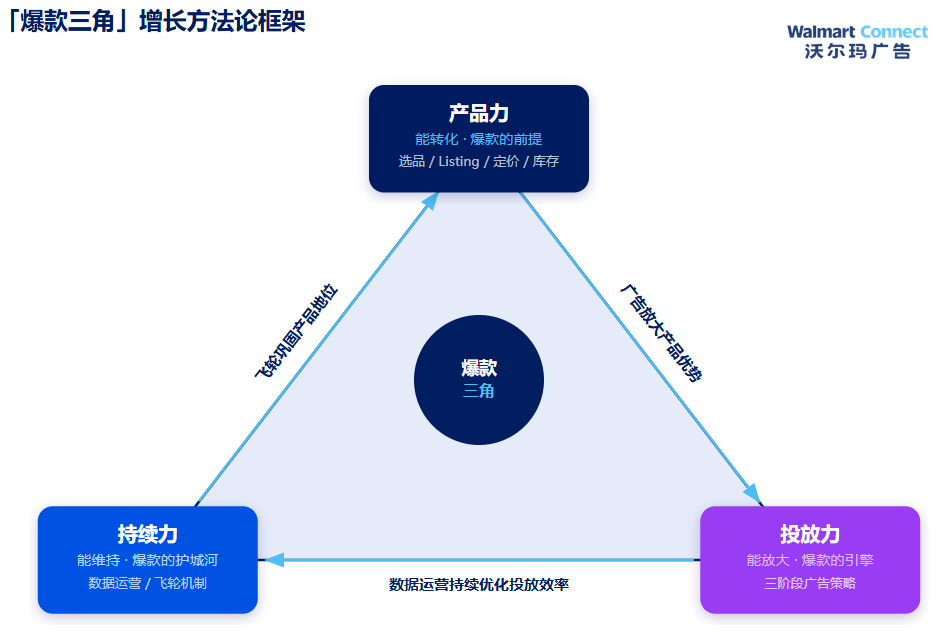
产品力决定广告能不能真正起效;投放力决定流量以什么效率被转化为销量与排名;持续力决定这一切能不能自我强化、持续运转。三个维度缺任何一个,增长都会在某一个节点停下来——不是因为市场机会不在了,而是因为体系里有一条断掉的链路。

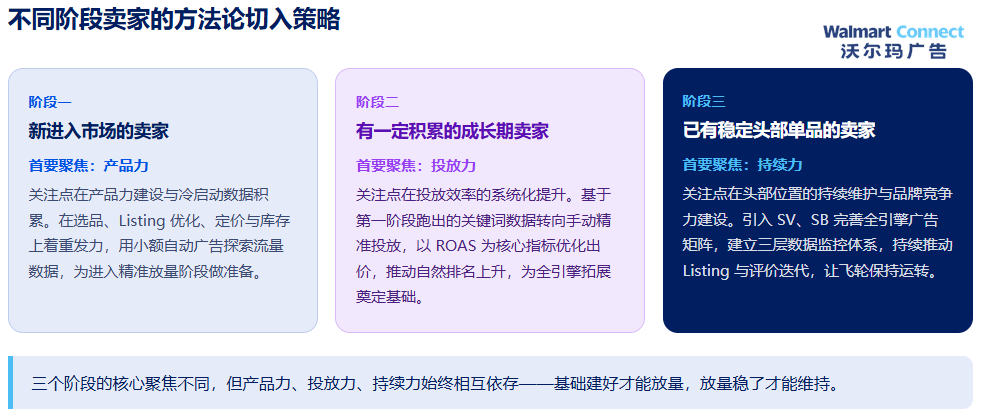
不同阶段的卖家,产品力 × 投放力 × 持续力框架的切入点有所不同:

初入沃尔玛的新卖家:应将重心放在产品力建设与冷启动数据积累上,不要急于规模化投入;

已有一定销量积累的卖家:可重点审查广告结构的合理性与关键词管理的精细度,看是否已进入正向飞轮的运转轨道;

已有稳定头部单品的卖家:则可重点评估全漏斗广告矩阵的完善程度与品牌资产的积累节奏,考虑从单品爆款向品牌竞争力升级。

每一款成功的爆款背后,都不是某一个单点技巧的胜利,而是产品、投放与运营三个维度持续协同的结果。这套方法论的意义,正是帮助卖家将这一过程从偶发性的成功经验,转化为可以被系统化、可以被团队复用的标准增长路径。

爆款没有捷径,但有方法论。产品力是前提,投放力是引擎,持续力是护城河——三者缺一,飞轮便难以真正转动。希望这套"三角增长"方法论,能成为你在沃尔玛平台系统化孵化头部单品的实用参考框架。

注:文/龚作仁,文章来源:Laborer,本文为作者独立观点,不代表亿邦动力立场。

文章来源:Laborer

广告
微信
朋友圈

FAQ回顾

沃尔玛平台打造可持续爆款需要具备哪些核心能力?

打造沃尔玛平台可持续爆款需要具备三大核心能力:一是产品力,确保Listing具备足够转化能力;二是投放力,精准制定沃尔玛广告投放策略提升流量转化效率;三是持续力,搭建可快速响应的广告数据运营体系,驱动正向增长飞轮运转。

沃尔玛跨境卖家广告数据监控需要关注哪些核心指标?

沃尔玛跨境卖家广告数据监控可从三个维度搭建框架:广告效率层关注CTR、CVR、CPC指标快速定位广告效果下滑环节;投资回报层以ROAS为核心按广告产品类型分别设置健康阈值;排名与市场份额层重点跟踪目标关键词下的自然搜索排名变化。

沃尔玛平台爆款运营常见的高频误区有哪些?

沃尔玛爆款运营常见四类高频误区:一是产品力未就绪就提前投放广告,留下负面历史数据信号;二是新品冷启动期投入过重,跳过数据积累环节;三是广告结构缺乏层次,关键词管理粗放;四是过度依赖广告,忽视自然排名与品牌资产积累。

刚进入沃尔玛的新卖家怎么搭建爆款增长体系?

初入沃尔玛的新卖家搭建爆款增长体系应优先聚焦产品力建设与冷启动数据积累,不要急于规模化投入广告,需先确保Listing具备足够转化能力,保障基础数据质量,再逐步放大流量入口,避免浪费投放预算,为后续增长打好基础。

这么好看,分享一下?

朋友圈 分享

APP内打开

+1
+1
微信好友 朋友圈 新浪微博 QQ空间
关闭
收藏成功
发送
/140 0