广告
加载中

从"看得见"到"测得准":吉翼智能光博会发布具身智能"工业慧眼"

龚作仁 2026-06-15 12:54
龚作仁 2026/06/15 12:54

邦小白快读

EN
全文速览

这篇文章核心介绍了2026长春国际光电博览会上,吉翼智能发布的三大具身智能光学领域核心技术突破,梳理了当前工业人形机器人行业的发展现状,干货内容如下

1. 行业现状:2026年被业内视为工业人形机器人量产元年,但光学感知是制约行业规模化落地的核心瓶颈,现有方案普遍存在多种问题,导致多数机器人只能停留在实验室,无法落地真实工业场景。

2. 本次发布的三大核心成果分别是:解决复杂场景定位漂移迷路问题的自主导航技术、打破高精度与大视场矛盾的亚毫米级手眼协同技术、可适应强光反光复杂工况的自研一体化3D工业相机“工业慧眼”。

3. 后续动态:成立仅10个月的吉翼智能将于6月27日举办首场新品发布会,推出质检机器人、商服机器人等多款新品,推进技术落地。

本文披露了工业具身智能领域的最新发展趋势与技术痛点,给布局人形机器人赛道的品牌商提供了产品研发与市场布局的参考,核心干货如下

1. 产业发展趋势:2026年是工业人形机器人量产元年,光学感知的鲁棒性与精度是品牌抢占量产落地市场的胜负手,当前行业存在多个未解决的核心痛点,掌握核心技术的品牌能快速突围。

2. 产品研发方向:品牌可重点围绕多传感器融合漂移失准、高精度与大视场不可兼得、复杂光照下成像失配三大行业痛点布局研发,可参考吉翼智能“全栈自研+亚毫米级精度+场景闭环”的技术路线。

3. 品牌营销参考:吉翼智能选择行业顶级展会首发核心技术抢占行业关注度,后续召开发布会推出落地新品的节奏,也给新创立的技术品牌做市场曝光提供了可参考的路径。

本文分析了工业人形机器人赛道当前的发展阶段,给切入该赛道的卖家指明了机会方向与注意事项,核心干货如下

1. 市场机会:当前工业人形机器人正处于从实验室演示走向批量落地的关键节点,光学感知环节有大量未被满足的真实需求,适配复杂工业场景的高精度视觉方案缺口较大,新进入者仍有突围空间。

2. 可参考的发展路径:卖家布局相关业务时,可围绕标定漂移、振动失准、精度视场矛盾、复杂光照干扰这些行业痛点切入,吉翼智能多传感器动态补偿、全栈自研硬件的技术思路具备参考价值。

3. 风险提示:如果没有解决光学感知的核心痛点,产品很难通过真实工业场景的考验,无法实现批量部署,卖家需要优先突破核心技术再推进商业化,避免过早大规模铺量导致损失。

本文披露了当前工业端对具身智能机器人的应用需求,给想要升级智能化生产、切入配套赛道的工厂提供了参考,核心干货如下

1. 智能化升级需求:传统工厂复杂工况下,传统视觉机器人常出现定位不准、检测误差大、受光照干扰失效等问题,吉翼智能的新方案解决了这些痛点,且不需要高昂的硬件改造成本,适合工厂升级产线时关注选用。

2. 商业合作机会:给具身智能行业做配套生产的工厂,可以围绕亚毫米精度光学部件、一体化工业相机等方向开发配套产品,适配当前行业量产落地的新增需求,拓展新的业务增长点。

3. 数字化升级启示:工厂推进智能化改造,要优先解决核心感知环节的精度和鲁棒性问题,可优先选择改造成本低、适配复杂工况的成熟方案,降低升级失败的风险。

本文明确了当前工业具身智能服务领域的行业发展趋势、核心客户痛点,给提供相关技术服务的服务商指明了方向,核心干货如下

1. 行业发展趋势:当前具身智能已经从技术验证阶段转向规模化交付阶段,光学感知是行业核心增长赛道,客户对光学感知的精度、鲁棒性、集成度的要求会持续提升,相关技术服务的需求会快速增长。

2. 核心客户痛点梳理:当前工业客户的核心痛点包括:多传感器融合存在标定漂移、振动失准问题,高精度检测和大视场难以兼顾,强光反光弱纹理等复杂工况下传统方案频繁失配,这些都是服务商可以切入的核心方向。

3. 可参考的解决方案:服务商可参考吉翼智能“全栈自研+亚毫米级精度+场景闭环”的思路,针对不同痛点开发对应方案,比如用多传感器动态融合补偿解决定位问题,多视角协同配准解决精度视场矛盾。

本文披露了工业光电、具身智能领域的产业发展情况,给布局该领域的产业平台提供了招商运营的方向参考,核心干货如下

1. 产业端对平台的需求:当前大量具身智能领域的创新企业,需要专业行业展会这类平台进行技术首发、品牌曝光、对接产业资源,平台需要针对这类创新企业的需求,搭建对应的曝光和资源对接渠道。

2. 平台招商方向:平台可以重点引入掌握核心光学感知技术的创新企业,这类企业是当前工业人形机器人量产环节的核心缺口,引入这类企业能有效丰富平台的产业生态,提升平台在智能制造领域的影响力。

3. 运营风向规避:平台要引导企业聚焦真实工业场景的痛点解决,避免引入只有实验室技术没有落地能力的项目,同时可以配合企业的技术首发、新品发布节奏打造分层活动矩阵,提升平台活跃度。

本文梳理了当前工业具身智能领域的最新产业动向和核心待解决问题,给相关产业研究者提供了一手行业信息,核心干货如下

1. 最新产业动向:2026年被业内定为工业人形机器人量产元年,具身智能已经完成从技术验证到规模化交付的阶段跨越,当前光学感知的精度、鲁棒性与集成度,已经成为区分实验室产品和工业级落地产品的核心分水岭,原始创新成为行业核心竞争力。

2. 核心待研究问题:当前制约行业规模化落地的核心问题是光学感知环节的三大痛点,分别是多传感器融合标定漂移振动失准、高精度与大视场难以兼顾、复杂工况下传统方案频繁失配,这些都是未来产业研究的核心方向。

3. 值得研究的创新路径:吉翼智能作为成立仅10个月的创业公司,聚焦核心环节单点突破,先通过行业展会发布技术抢占话语权,再召开发布会推出落地产品的路径,以及全栈自研结合场景闭环的技术路线,都具备较高的研究价值。

返回默认

声明:快读内容全程由AI生成,请注意甄别信息。如您发现问题,请发送邮件至 run@ebrun.com 。

我是 品牌商 卖家 工厂 服务商 平台商 研究者 帮我再读一遍。

Quick Summary

This article outlines three core technological breakthroughs in embodied intelligent optics unveiled by Jiyi Intelligence at the 2026 Changchun International Optoelectronics Expo, and sorts out the current development status of the industrial humanoid robot industry. Key takeaways are as follows:

1. Industry status quo: 2026 is widely seen in the industry as the first year of mass production for industrial humanoid robots. However, optical perception remains the core bottleneck restricting large-scale commercial adoption of the technology. Existing solutions suffer from a range of flaws that have kept most robots confined to laboratories and unable to perform in real-world industrial scenarios.

2. Three core breakthroughs unveiled at the expo: an autonomous navigation technology that solves positioning drift and navigation failure in complex scenarios; a sub-millimeter hand-eye coordination technology that breaks the long-standing tradeoff between high precision and large field of view; and a self-developed integrated 3D industrial camera "Industrial Smart Eye" that adapts to complex working conditions with strong light and reflective surfaces.

3. Upcoming developments: Founded just 10 months ago, Jiyi Intelligence will hold its first product launch conference on June 27, where it will unveil multiple new products including inspection robots and commercial service robots to advance commercial adoption of its technology.

This article outlines the latest development trends and core technical pain points in the industrial embodied intelligence sector, offering references for product R&D and market positioning for brands entering the humanoid robot track. Key insights are as follows:

1. Industry development trend: 2026 marks the first year of mass production for industrial humanoid robots. The robustness and precision of optical perception will be the key differentiator for brands competing in the mass production market. With multiple core pain points still unresolved in the industry, brands that master core technology will be able to quickly gain a competitive edge.

2. Product R&D direction: Brands can prioritize R&D targeting three long-standing industry pain points: calibration drift and inaccuracy in multi-sensor fusion, the tradeoff between high precision and large field of view, and imaging mismatch under complex lighting conditions. Jiyi Intelligence's technical roadmap of "full-stack in-house development + sub-millimeter precision + scenario closed-loop validation" offers a useful reference.

3. Brand marketing reference: Jiyi Intelligence's approach of debuting core technology at a top-tier industry exhibition to build industry attention, followed by a product launch to roll out commercial-ready products, provides a replicable go-to-market path for new technology startups.

This article analyzes the current development stage of the industrial humanoid robot track, and clarifies opportunity directions and key precautions for sellers entering the space. Key takeaways are as follows:

1. Market opportunities: Industrial humanoid robots are currently at a critical inflection point from laboratory demonstration to mass commercial deployment. The optical perception segment has large unmet real-world demand, with a significant gap in high-precision vision solutions adapted to complex industrial scenarios, leaving room for new entrants to break through.

2. Reference development path: When laying out related businesses, sellers can focus on industry pain points including calibration drift, vibration-induced inaccuracy, the precision-field of view tradeoff, and interference from complex lighting. Jiyi Intelligence's technical approaches of multi-sensor dynamic compensation and full-stack in-house hardware development offer valuable reference.

3. Risk warning: Without solving the core pain points of optical perception, products can hardly pass the test of real industrial scenarios and achieve mass deployment. Sellers should prioritize breaking through core technology before advancing commercialization, to avoid losses from premature large-scale expansion.

This article outlines current application demand for embodied intelligent robots in the industrial sector, offering references for factories looking to upgrade intelligent production or enter the industry's supply chain. Key insights are as follows:

1. Intelligent upgrading demand: In complex working conditions of traditional factories, conventional vision robots often suffer from inaccurate positioning, large detection errors, and failure caused by lighting interference. Jiyi Intelligence's new solution addresses these pain points without requiring high hardware retrofit costs, making it a strong option for factories to consider when upgrading production lines.

2. Business collaboration opportunities: Factories that produce supporting components for the embodied intelligence industry can develop supporting products targeting sub-millimeter precision optical components and integrated industrial cameras, to match the new demand generated by the industry's mass production transition and expand new growth points.

3. Insights for digital upgrading: When advancing intelligent transformation, factories should first prioritize solving the precision and robustness of core perception links, and select mature solutions with low retrofit costs and adaptation to complex working conditions to reduce the risk of upgrading failure.

This article clarifies current industry development trends and core client pain points in the industrial embodied intelligence service sector, pointing out directions for service providers offering related technical services. Key takeaways are as follows:

1. Industry development trend: Embodied intelligence has transitioned from the technology validation stage to large-scale delivery, and optical perception has become the core growth track of the industry. Client demand for higher precision, robustness and integration of optical perception will continue to grow, driving rapid expansion of demand for related technical services.

2. Core client pain points: The core pain points for industrial clients include calibration drift and vibration-induced inaccuracy in multi-sensor fusion, the difficulty of balancing high-precision detection and large field of view, and frequent mismatches of traditional solutions in complex working conditions such as strong light, reflection, and low-texture surfaces — all of which are core entry points for service providers.

3. Reference solution framework: Service providers can refer to Jiyi Intelligence's approach of "full-stack in-house development + sub-millimeter precision + scenario closed-loop validation" to develop targeted solutions for different pain points — for example, using multi-sensor dynamic fusion compensation to solve positioning problems, and multi-view collaborative registration to resolve the precision-field of view tradeoff.

This article outlines industrial development in the industrial optoelectronics and embodied intelligence sectors, offering a reference for investment promotion and operation direction for industrial platforms布局 this field. Key insights are as follows:

1. Industry demand for platforms: A large number of innovative startups in the embodied intelligence sector need professional industry exhibition platforms to debut new technologies, build brand exposure, and connect with industrial resources. Platforms need to build targeted exposure and resource matching channels to meet the needs of these innovative enterprises.

2. Investment promotion direction: Platforms should prioritize attracting innovative enterprises that master core optical perception technology. These companies fill a critical gap in the mass production of industrial humanoid robots; attracting them can effectively enrich the platform's industrial ecosystem and enhance the platform's influence in the smart manufacturing sector.

3. Operational risk mitigation: Platforms should guide enterprises to focus on solving pain points in real industrial scenarios, and avoid onboarding projects that only have laboratory-level technology without commercialization capabilities. Platforms can also build a tiered event matrix aligned with enterprises' technology debut and product launch schedules to boost platform activity.

This article sorts out the latest industry developments and core unsolved problems in the industrial embodied intelligence sector, providing first-hand industry information for relevant industry researchers. Key insights are as follows:

1. Latest industry developments: 2026 is widely recognized by the industry as the first year of mass production for industrial humanoid robots. Embodied intelligence has completed the transition from technology validation to large-scale delivery. Currently, the precision, robustness and integration of optical perception have become the core dividing line between laboratory products and industrial-ready commercial products, and original innovation has become the core competitive advantage of the industry.

2. Core open research questions: The core bottleneck restricting large-scale industry adoption lies in three pain points in the optical perception link: calibration drift and vibration inaccuracy in multi-sensor fusion, the difficulty of balancing high precision and large field of view, and frequent mismatches of traditional solutions in complex working conditions. These are core directions for future industry research.

3. Worth-studying innovation paths: As a startup founded just 10 months ago, Jiyi Intelligence's approach of focusing on single-point breakthrough in the core link, first claiming thought leadership by releasing technology at an industry exhibition, then launching commercial-ready products at a dedicated conference, as well as its technical route of full-stack in-house development combined with scenario closed-loop validation, both carry high research value.

Disclaimer: The "Quick Summary" content is entirely generated by AI. Please exercise discretion when interpreting the information. For issues or corrections, please email run@ebrun.com .

I am a Brand Seller Factory Service Provider Marketplace Seller Researcher Read it again.

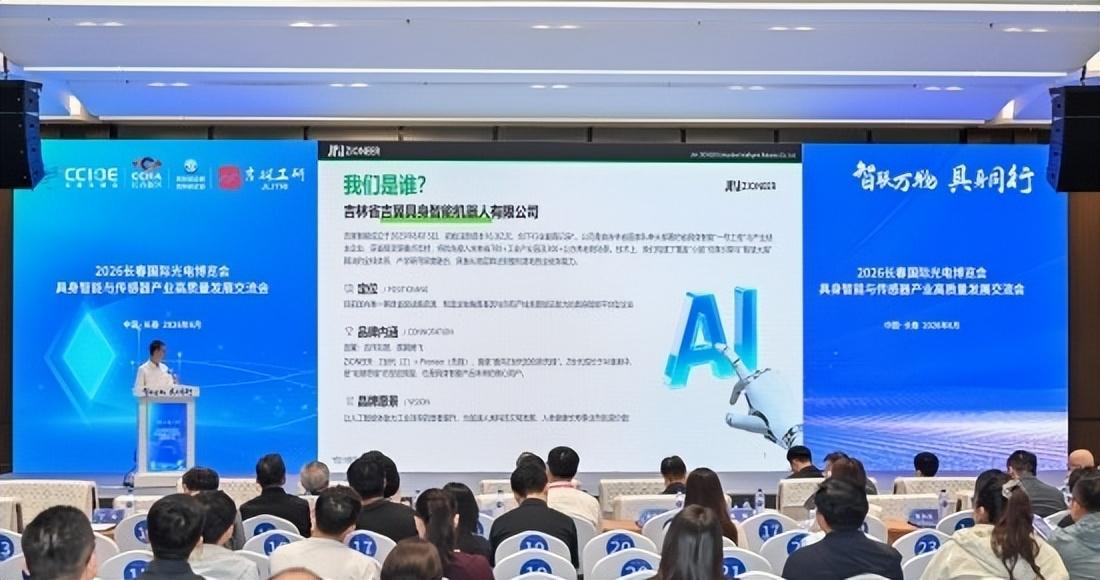
6月12日,2026长春国际光电博览会上,吉翼智能首次公开公司在自主导航、工业视觉感知与一体化工业相机三大领域的技术布局,董事长兼CEO王超,多模感知负责人、副总裁董培等出席活动。现场,董培发表《光引翼行》主题演讲,在行业普遍面临"看不清、测不准、扛不住干扰"等现实挑战的背景下,吉翼智能以"全栈自研+亚毫米级精度+场景闭环"的组合,展示了具身智能从"看得见"向"测得准"的关键跨越。

行业现状:光学感知成具身智能量产"胜负手"

2026年被业内视为工业人形机器人量产元年。然而,光学感知仍是制约行业规模化落地的突出瓶颈:多传感器融合普遍存在标定漂移、振动失准问题;工业检测中"高精度"与"大视场"难以兼顾,多次拍摄拼接又累积误差;强光、反光、弱纹理等复杂工况下,传统视觉方案频繁"失配"。这些现实挑战导致大量机器人只能停留在实验室演示,难以经受真实工业场景的严苛考验。光学系统的鲁棒性与精度,在很大程度上决定了具身智能能否从"样机"走向"批量部署"。

复杂环境下不再"迷路"的自主导航

吉翼智能发布的自主导航技术,核心解决了机器人在遮挡、光照突变、高动态干扰等复杂场景下的定位漂移与"迷路"难题。通过多传感器动态融合与智能补偿机制,机器人能够在工业厂房、高速服务区等真实环境中实现连续可靠的空间定位,为路径规划与作业执行提供稳定基准。

对行业而言,这一方案显著提升了机器人在真实工业场景中的环境适应能力,为具身智能大规模进入非结构化工业环境提供了更可靠的路径。

亚毫米级"手眼协同",打破精度与视场的长期矛盾

在工业视觉领域,吉翼智能针对"视场受限、小目标难识别、位姿误差累积"三大痛点,实现了有限视场下的亚毫米级6DoF位姿估计。机器人通过多视角协同拍摄与智能配准,无需更换昂贵的大视场镜头,即可完成对复杂工业零部件的完整三维重建与高精度定位。

这一突破打破了"高精度与大视场不可兼得"的长期瓶颈,在汽车级零部件检测、精密装配引导等场景中,企业无需支付高昂的硬件改造成本,即可实现亚毫米级检测与引导精度,显著降低了工业机器人的部署门槛。

自研"工业慧眼",强光下依然看得清、测得准

硬件层面,吉翼智能发布了一体化3D工业相机。该设备将2D高清成像与3D精密测量集成于单台相机,搭载自研光学镀层,在强光、反光等恶劣工业环境下依然保持清晰成像与稳定测量,z轴重复精度达到±0.1mm,2D成像支持50FPS高帧率与运动抓拍。

从产业应用角度看,强光干扰与边缘遮光是工业视觉的"顽疾",大量机器人因视觉系统在复杂光照下"失明"而无法作业。吉翼智能通过自研镀层与结构创新,让机器人真正拥有了适应复杂工况的"工业慧眼",可直接嵌入机械臂末端实现"手眼协同",为具身智能在真实工业现场的规模化应用提供了可靠的硬件底座。

随着具身智能从"技术验证"迈向"规模化交付",光学感知的精度、鲁棒性与集成度,正成为区分"实验室产品"与"工业级产品"的分水岭。吉翼智能此次发布的三大光学实践,为行业提供了从"看得见"到"测得准"的解题思路,也展示了吉林省在该领域的原始创新能力。演讲最后,董培预告:成立仅10个月的吉翼智能将于6月27日举办首场新品发布会,质检机器人、商服机器人等多款新品正式亮相,以"真实的产线、真实的交付"兑现技术承诺。

注:文/龚作仁,文章来源:Laborer,本文为作者独立观点,不代表亿邦动力立场。

文章来源:Laborer

广告
微信
朋友圈

这么好看,分享一下?

朋友圈 分享

APP内打开

+1
+1
微信好友 朋友圈 新浪微博 QQ空间
关闭
收藏成功
发送
/140 0