广告
加载中

星海图全球开发者大会:首秀双足人形机器人 启动百万小时真实数据计划

亿邦动力 2026-06-17 14:14
亿邦动力 2026/06/17 14:14

邦小白快读

EN
全文速览

本次星海图全球开发者大会发布多项具身智能领域核心成果,释放出明确的行业发展信号,核心干货信息如下

1. 本次大会星海图首秀双足人形机器人Kengo,开源新一代G0.5基础模型,该模型拿下全球六大权威榜单第一,处于国内第一国际第一梯队,星海图也成为中国唯一同时拥有顶尖模型与顶尖本体的具身智能企业,三年“整机+智能”战略正式闭环。

2. 行业发展进入新阶段,已经从原先比拼单机性能转向比拼生态构建能力,进入开放生态共建新阶段。

3. 本次大会星海图联合北京亦庄启动百万小时真实数据计划,联合发起星途计划投资早期具身智能创业项目,还提出了三阶段商业化路径和从工厂到家用逐层渗透的落地路径,明确了行业未来发展方向。

本文为具身智能领域品牌商指明了行业发展趋势与自身布局方向,核心干货如下

1. 行业发展新趋势:当前具身智能已从单机性能比拼进入开放生态共建阶段,单点技术无法支撑全链条发展,开放核心能力汇聚产业伙伴才能构建竞争优势,品牌可选择开放生态路线,区别于封闭自研自建场景的打法。

2. 核心壁垒构建方向:相比可复制的模型架构,规模化真实世界数据才是具身智能最难复制的壁垒,品牌可提前布局真实数据采集,依托中国硬件与数据供应链优势构建数据飞轮,夯实自身竞争力。

3. 商业化与产品落地参考:落地优先从结构化场景切入逐步延伸,商业模式分三阶段演进,长期重点布局智能驱动的方案订阅、token销售阶段,不盲目追求早期整机销售规模。

本文为布局具身智能赛道的从业者梳理了明确的机会方向与风险提示,核心干货如下

1. 创业合作机会:当前行业进入开放生态共建阶段,龙头企业星海图联合发起星途计划,面向具身智能早期创业团队提供资本、技术与产业资源支持,过去一年已投资18家相关企业,未来3-5年计划投资30-50家,上下游创业者都可对接获得支持,不少被投企业已经成为龙头的合作伙伴。

2. 落地路径参考:可优先从工厂、仓库快递分拣等环境固定、仅需厘米级精度的结构化场景切入,积累能力数据后再向高精度制造、农业家庭等非结构化场景延伸,降低前期落地难度。

3. 风险提示:具身智能是长期渗透的行业,比拼的是长期能力数据场景的滚动积累,不要盲目追求抢占短期爆发节点,需做好长期布局的准备。

本文为需要智能化转型以及布局具身智能赛道的工厂,提供了明确的方向与商业机会,核心干货如下

1. 产品生产与需求:具身智能行业快速发展,本体是核心组成部分,中国本身具备全球领先的硬件供应链优势,星海图推出双足人形机器人后,对本体制造、零部件生产的需求持续增长,相关工厂可对接龙头产业链获得稳定订单。

2. 自身智能化转型机会:具身智能落地的第一环就是工厂场景,这类场景环境固定,仅需厘米级精度就能满足要求,工厂可优先引入具身智能改造生产分拣流程,提升生产效率,降低人力成本。

3. 发展启示:具身智能全产业链需要多方协作,工厂可依托自身制造优势加入龙头开放生态,成为上下游合作伙伴,获得技术资源支持,共同推进产业数字化智能化发展,分享行业增长红利。

本文为具身智能领域相关服务商指明了行业趋势、客户痛点与发展机会,核心干货如下

1. 行业发展趋势:当前具身智能已经从单机竞争进入开放生态共建新阶段,行业产业链长分工细化,越来越多环节需要专业服务商参与,未来市场空间会持续放大,对服务商来说是重要的增长机遇。

2. 核心客户痛点:当前制约具身智能能力突破的核心瓶颈是缺乏系统规模化的真实世界数据,此前从来没有企业成规模系统采集过这类数据,而数据是智能进化的核心燃料,这是服务商可以切入的核心赛道。

3. 发展机会:中国具备全球领先的数据供应链优势,不管是场景多样性还是数据成本都优势明显,服务商可依托这些优势构建规模化真实数据采集运营体系,形成自身难以复制的竞争力,还可对接龙头生态计划获得合作资源。

本文为布局具身智能领域的平台商提供了生态构建、运营管理的参考方向,核心干货如下

1. 产业核心需求:具身智能行业链条很长,覆盖AI、制造、传感器、数据、场景等多个环节,没有任何一家企业可以独自完成全产业链布局,全行业都需要开放型平台作为生态基石,汇聚全球开发者与上下游伙伴共同发展。

2. 生态构建思路:可参考开源核心基础模型的打法,将核心能力开放给开发者,让开发者在开发测试反馈中帮助模型持续迭代,同时沉淀开发者资源到自身技术体系,构建生态基石,走开放路线差异化竞争。

3. 生态运营方向:可通过“资本+技术+产业资源”的方式孵化投资上下游创业项目,完善产业拼图,还可联合地方共建数据企业,推进核心真实数据的规模化采集,构建行业核心壁垒,同时做好长期布局准备,避免盲目追求短期爆发。

本文披露了具身智能行业最新发展动态,为产业研究提供了一手的干货信息,核心内容如下

1. 产业最新动向:当前具身智能行业正式完成发展阶段切换,从原先比拼单机性能的阶段,进入开放生态共建的新阶段,头部企业星海图已经完成三年“整机+智能”战略闭环,成为中国唯一同时掌握顶尖模型与顶尖本体的具身智能企业,行业格局出现新变化。

2. 行业核心新问题:当前行业已经明确,模型架构和参数都可以追赶复制,只有规模化真实世界数据是难以短期复制的核心壁垒,而目前行业还没有成规模系统采集这类数据,这是制约行业能力突破的核心新问题。

3. 新的商业模式与路径参考:头部企业提出了从整机销售到方案订阅再到token销售的三阶段商业化路径,以及从内到外逐层渗透的落地路径,开放生态共建的模式也为行业提供了不同于封闭自研的新样本,具备较高的研究价值。

返回默认

声明:快读内容全程由AI生成,请注意甄别信息。如您发现问题,请发送邮件至 run@ebrun.com 。

我是 品牌商 卖家 工厂 服务商 平台商 研究者 帮我再读一遍。

Quick Summary

At the recent Xinghaitu Global Developer Conference, the company unveiled several core breakthroughs in embodied intelligence, sending a clear signal on the sector's development direction. Key takeaways are as follows:

1. Xinghaitu showcased its bipedal humanoid robot Kengo for the first time and open-sourced its new generation G0.5 foundation model, which tops six global authoritative benchmarks. Ranking first domestically and among the top tier internationally, the model makes Xinghaitu China's only embodied intelligence firm that boasts both cutting-edge models and top-tier hardware. Its three-year "full robot + AI" strategy is now officially complete.

2. The industry has entered a new development phase, shifting the core competition from individual device performance to ecosystem building, marking the start of an open, collaborative era for the sector.

3. At the conference, Xinghaitu partnered with Beijing Yizhuang to launch the "Million Hours of Real-World Data" initiative, and co-launched the Star Road Program to invest in early-stage embodied intelligence startups. It also outlined a three-stage commercialization roadmap, as well as a penetration strategy that expands from factory applications to home use, clarifying the future direction for the entire industry.

This summary outlines industry trends and positioning strategies for brands in the embodied intelligence space. Key takeaways are as follows:

1. New industry trends: Embodied intelligence has shifted from competing on individual product performance to open ecosystem collaboration. Isolated point technologies cannot support end-to-end development; only by opening core capabilities and bringing together industry partners can brands build competitive advantages. Brands can adopt an open ecosystem strategy to differentiate from closed, in-house development models.

2. Building core moats: Unlike model architectures which can be easily replicated, large-scale real-world data is the hardest-to-copy barrier for embodied intelligence. Brands can start laying the groundwork for real-world data collection early, leveraging China's advantages in hardware and data supply chains to build a data flywheel and solidify their competitiveness.

3. Guidance for commercialization and product launch: Brands should prioritize entry into structured scenarios and expand gradually, and evolve their business models in three stages. In the long run, players should focus on AI-driven solution subscriptions and token-based sales, rather than blindly chasing high early-stage full-unit sales volume.

This summary clarifies opportunity directions and risk warnings for practitioners entering the embodied intelligence track. Key takeaways are as follows:

1. Startup and partnership opportunities: As the industry enters the open ecosystem collaboration phase, industry leader Xinghaitu has co-launched the Star Road Program, which provides capital, technology and industrial resources to early-stage embodied intelligence startups. It has already invested in 18 related companies over the past year, and plans to invest in 30 to 50 more over the next 3 to 5 years. Founders across the upstream and downstream can apply for support, and many portfolio companies have already become partners of the leading firm.

2. Guidance for go-to-market strategy: Players can prioritize entry into structured scenarios with fixed environments such as factories, warehouse sorting and delivery, which only require centimeter-level accuracy. After accumulating capabilities and data, teams can expand into unstructured scenarios such as high-precision manufacturing, agriculture and home use, lowering early-stage go-to-market barriers.

3. Risk warnings: Embodied intelligence is an industry that will penetrate gradually over the long term, where competitiveness depends on cumulative capabilities, data and scenario iteration. Players should not blindly chase a short-term inflection point, and must prepare for long-term布局.

This summary outlines clear directions and business opportunities for factories pursuing intelligent transformation and entering the embodied intelligence track. Key takeaways are as follows:

1. Production opportunities and demand: Hardware body is a core component of the fast-growing embodied intelligence industry, and China already has a globally leading hardware supply chain. Following Xinghaitu's launch of its bipedal humanoid robot, demand for body manufacturing and component production is growing steadily. Relevant factories can connect with the leading firm's industrial chain to secure stable orders.

2. Opportunities for in-house intelligent transformation: Factory environments are the first entry point for embodied intelligence deployment. These scenarios have fixed working environments and only require centimeter-level accuracy to meet operational requirements. Factories can prioritize introducing embodied intelligence to upgrade their production and sorting processes, boosting productivity and reducing labor costs.

3. Development insights: The full embodied intelligence supply chain requires collaboration across multiple players. Factories can leverage their manufacturing advantages to join the leading firm's open ecosystem, become an upstream or downstream partner, gain access to technical resources, jointly advance the industry's digital and intelligent transformation, and capture a share of the sector's growth dividend.

This summary outlines industry trends, customer pain points and growth opportunities for service providers in the embodied intelligence space. Key takeaways are as follows:

1. Industry development trends: Embodied intelligence has shifted from individual device competition to open ecosystem collaboration. The industry has a long value chain with increasingly refined division of labor, and more segments now require participation from professional service providers. The market will continue expanding, creating significant growth opportunities for service providers.

2. Core customer pain points: The core bottleneck holding back breakthroughs in embodied intelligence capabilities is the lack of systematically collected large-scale real-world data. No company has previously completed systematic large-scale collection of this type of data, and data is the core fuel for AI advancement. This represents a key market segment that service providers can enter.

3. Growth opportunities: China has globally leading advantages in data supply chains, with clear strengths in both scenario diversity and data cost. Service providers can leverage these advantages to build a system for large-scale real-world data collection and operation, develop hard-to-replicate competitive advantages, and connect with leading firms' ecosystem initiatives to access partnership resources.

This summary provides guidance on ecosystem building and operations for platform players active in the embodied intelligence space. Key takeaways are as follows:

1. Core industry demand: The embodied intelligence industry has an extensive value chain covering AI, manufacturing, sensors, data, scenarios and multiple other segments. No single company can build out the full value chain independently, so the entire sector needs an open platform as an ecosystem foundation to bring together global developers and upstream-downstream partners for collaborative development.

2. Ecosystem building strategy: Platforms can follow the open-source foundation model playbook: open core capabilities to developers, allowing continuous model iteration through developer development, testing and feedback, while accumulating developer resources into the platform's own technology stack to build the foundation of the ecosystem. This open approach enables differentiated competition.

3. Ecosystem operation direction: Platforms can use a "capital + technology + industrial resources" model to incubate and invest in upstream and downstream startups to complete the industry ecosystem. They can also partner with local governments to build data companies to advance large-scale collection of core real-world data, and build the industry's core barriers. Players should also prepare for long-term布局 and avoid blindly chasing short-term hype.

This article discloses the latest industry developments in embodied intelligence, providing first-hand key information for industry research. Key content is as follows:

1. Latest industry dynamics: The embodied intelligence sector has officially entered a new development stage, shifting from competition centered on individual device performance to open ecosystem collaboration. Leading player Xinghaitu has completed its three-year "full robot + AI" strategic cycle, becoming China's only embodied intelligence firm that masters both cutting-edge models and top-tier hardware, bringing new changes to the industry landscape.

2. New core industry challenges: The industry has now reached a clear consensus: model architectures and parameters can be replicated by competitors, but only large-scale real-world data is a core barrier that cannot be replicated in the short term. Currently, no player in the industry has completed systematic large-scale collection of this type of data, which is the core new challenge restricting industry capability breakthroughs.

3. New reference for business models and go-to-market paths: Leading firms have proposed a three-stage commercialization path that progresses from full-unit sales to solution subscriptions, and eventually to token sales, alongside a go-to-market strategy of gradual outward penetration. The open ecosystem collaboration model also provides the industry with a new alternative to the closed in-house development model, offering high research value.

Disclaimer: The "Quick Summary" content is entirely generated by AI. Please exercise discretion when interpreting the information. For issues or corrections, please email run@ebrun.com .

I am a Brand Seller Factory Service Provider Marketplace Seller Researcher Read it again.

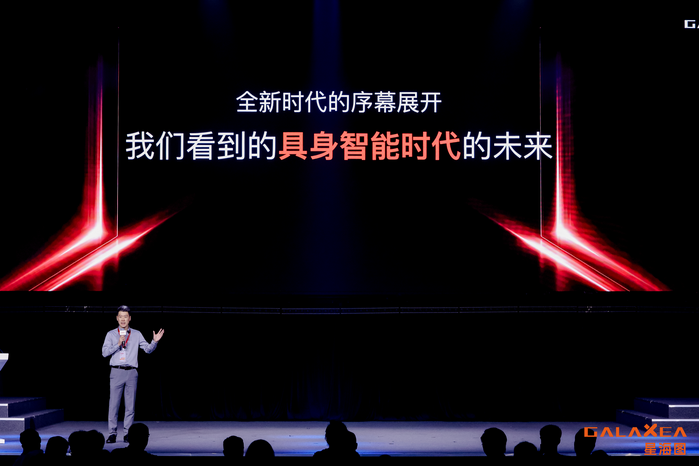
6月16日,星海图全球开发者大会(Galaxea WDC 2026)在北京亦庄举行,600余位全球开发者、顶尖学者、产业链上下游伙伴,以及全球各地的机器人企业和主流媒体代表参会。

近年来,具身智能行业从比拼单机性能,逐步转向比拼生态构建能力。本次大会上,星海图发布并开源新一代基础模型、首秀双足人形机器人,并联合北京亦庄共建数据公司、启动百万小时真实数据计划,与产业伙伴共同推动具身智能进入生态共建时代。

随着双足机器人Kengo发布,星海图成为中国唯一同时拥有顶尖模型与顶尖本体的具身智能企业,三年前确立的“整机+智能”战略正式闭环。这场大会也释放出明确信号:具身智能正从单机性能的比拼,进入开放生态共建的新阶段。

外界对星海图的判断几经变化:2024年说它是卖硬件的公司,2025年又说它是数据公司。高继扬回应称,这些标签都只看到了局部——星海图所有的路径,始终围绕同一个核心,即具身智能基础模型。

围绕这一核心,星海图自主构建了VLA基础模型G0.5、世界模型Fast-WAM等基础模型。本次大会发布并开源的G0.5,在全球六大权威榜单上取得第一名,稳居国际第一梯队、国内第一。其底层采用统一自回归VLA架构,将视觉理解、语言推理与动作生成融入同一链路,并沉淀出可迁移的基础动作单元,从而摆脱了对海量数据的依赖。

开源是星海图构建开发者生态的关键一步。当全球开发者基于G0.5开发、测试、反馈,模型会在使用中持续迭代,开发者也随之沉淀在星海图的技术体系内。把核心能力交到开发者手上,正是打好这块“生态基石”的第一步——这与封闭自研、自建场景的路线形成了不同的打法。

相比模型,数据是更难建立的壁垒。模型架构可以复现、参数可以追赶,但真实世界的数据需要长期、成规模地采集,难以在短期内被复制。语言大模型的能力涌现,是在互联网级别的数据量上发生的,而具身智能至今没有自己的互联网。真实世界的数据,从来没有人系统地、成规模地采集过。

星海图是行业内最早押注真实数据的公司,其去年开源的GOD数据集是全球第一个开放场景具身操作数据集,下载量接近60万次,至今仍是社区中质量最高的开放场景数据集之一。

但高继扬认为这只是开始。他认为,中国不但有硬件供应链优势,而且也有数据供应链优势,从设备、采集运营,到场景多样性、数据成本,中国都在全球遥遥领先。

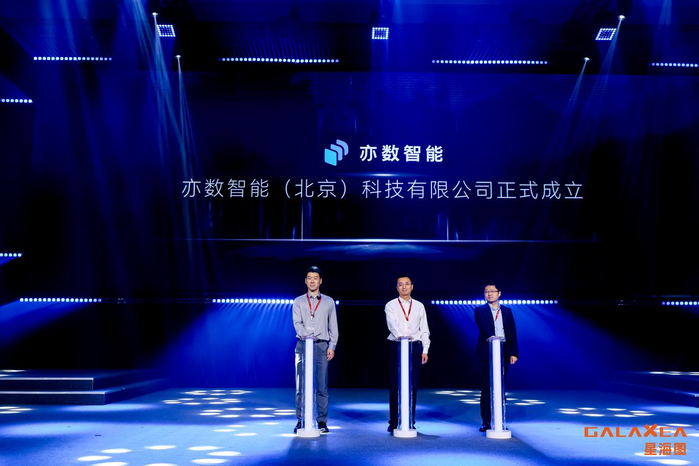
真实世界的数据飞轮是智能进化的燃料,率先建起规模化真实数据采集体系的企业,将掌握具身智能最难复制的壁垒。为此,星海图与亦庄共建的亦数智能正式揭牌,启动100万小时超高质量真实数据计划,规划今年完成百万小时、未来三年迈向千万小时。高继扬以一个类比说明这一量级的意义:一个人从0到18岁、清醒状态下与物理世界交互的总时长约为12万小时,百万小时约相当于8个人的学习总量,千万小时则相当于80多个人——这正是他判断具身基础模型将迎来突破性改变的数据区间。

在投资层面,星海图联合凯辉基金共同发起创业伙伴计划“星途计划”,以“征途向前,共赴星海”为口号,面向具身智能早期创业团队提供资本、技术与产业资源。高继扬透露,过去一年星海图已陆续投资18家企业,未来3到5年希望投资30到50家。在他看来,投资不只是为了财务回报,也是要与伙伴共同构建产业拼图——星海图过往投资支持的公司,已有不少成为其上下游伙伴。

具身智能行业链条很长,连接AI、机器人、本体、传感器、数据、制造、场景和服务,不是一家公司靠单点技术就能完成的。“产业成功的时候,不是我们一家企业的成功,而是一批企业的共同成功。”高继扬说。配合三大基础模型与双足机器人Kengo打下的技术与产品底座,星海图试图扮演的,正是这条产业链上的“生态基石”。

谈到商业化,高继扬认为机器人的价值不在于硬件,而在于它持续创造的生产力,商业模式将随之分三个阶段演进——从整机销售,到方案订阅,再到token销售,对应的市场空间逐级放大。第一阶段的整机销售与智能基本解耦,星海图并不在这一阶段求规模。“我们追求的,是从第二个阶段开始的、真正的智能驱动商业化。”高继扬说,这是公司未来三年的重要目标。

在高继扬的设想里,具身智能的落地将沿着生产力主线往外扩张。最里面一环是工厂、仓库、快递分拣,环境固定、厘米级精度即可;往外是毫米级精度的精密制造与高精度分拣;再往外是农业、建筑、家庭等非结构化场景;而最外面一环,是让生产力自己复制自己——一套能力在一个行业验证过,换个行业稍作调整就能复用。

从最里到最外,难度递增,市场也随之放大。这意味着,对身处其中的企业而言,未来具身智能行业比拼的不是某个爆发节点的抢占,而是谁能在漫长的渗透过程中,持续把能力、数据与场景滚动起来。

高继扬表示,没有任何一家公司能够独自定义具身智能,在通往终局的路上,需要全球开发者、客户和产业伙伴携手,才能创造未来。他向全场发出邀请——Build with Galaxea,让新世界来得更快一些。

文章来源:亿邦动力

广告
微信
朋友圈

这么好看,分享一下?

朋友圈 分享

APP内打开

+1
+1
微信好友 朋友圈 新浪微博 QQ空间
关闭
收藏成功
发送
/140 0