广告
加载中

城市微度假火了 锅圈找到第二张「餐桌」

刘诗雨 2026-06-10 09:49
刘诗雨 2026/06/10 09:49

邦小白快读

EN
全文速览

本文围绕城市微度假风口下,锅圈推出锅圈露营新业务展开,核心干货如下

1. 当前城市露营行业出现新变化,空手露营快速流行:消费者不需要自己准备装备、食材,只需要到场享受,这类需求明确但目前行业供给断层,供需缺口大

2. 锅圈露营的实操模式:把全套露营服务打包,推出99元-369元不等的套餐,客单价约74元,定位平价,分季节调整产品结构,春夏季推烤肉秋冬季推火锅,搭配不同节假日做主题活动,解决露营淡季客流下滑的问题

3. 郑州莲花公园案例验证了模式可行性:改造原本淡季冷清的普通社区公园,冬季周末仍需要提前预约,截至今年5月累计销售额185万元,全年预计可达350-400万元,目前该模式已经复制到全国百余个项目

本文对于品牌商把握新消费趋势、拓展第二增长曲线,有这些干货内容

1. 消费趋势洞察:当前城市微度假兴起,公园成为城市第四空间,轻量化空手露营、不过夜休闲露营成为主流需求,80%左右消费者选择不过夜露营,城市公园正在从公共休闲空间转变为承载亲子、社交、轻文旅的复合消费场景,全国多地推出“公园+”市场化运营政策,允许社会企业进场改造,存在明确的拓店机会

2. 品牌拓展参考:锅圈依托原有家庭餐桌业务积累的供应链、会员、门店网络能力,切入露营新场景,复用原有能力降低拓张成本,为成熟品牌拓展新场景提供了可复制的样本

3. 运营经验:锅圈通过分季节调整产品、节庆主题活动拉复购,平价定位吸引大众消费者,依托原有近8000万会员转化客流,有效解决了露营地缺客流、淡季营收低的痛点,营地盈利性优于普通社区门店

本文给想切入露营赛道的卖家,提供了行业趋势、机会、可借鉴模式等干货内容

1. 行业现状与机会:当前露营经济规模增长快,2025年核心市场规模已达2483.2亿元,预计2030年将增长到4879.8亿元,带动关联市场规模达2.4万亿元,但行业极度分散,28万家露营相关企业超七成注册资本低于200万,缺乏标准化运营能力,大量营地昙花一现,存在明确的整合机会

2. 政策与风险提示:全国多地放开“公园+”市场化运营,给卖家提供了拿场地的政策窗口,要规避重资产投入建设住宿营地的风险,多数消费者需求是不过夜休闲露营,走轻资产餐饮路线更符合当前趋势

3. 可学习的合作模式:锅圈采用自营标杆+加盟合作的混合模式,快速扩张,依托供应链和会员能力给合作营地赋能,解决中小营地缺食材供应、缺客流、缺运营能力的问题,这种模式风险低复制性强

本文给消费品生产工厂,把握户外露营新需求、拓展商业机会提供了这些干货内容

1. 产品生产设计需求变化:随着空手露营的流行,品牌方需要大量适配户外场景的标准化烧烤、火锅、烤鱼等食材产品,要求产品口味稳定、方便加工制作、符合食品安全标准,对工厂的规模化标准化生产能力提出了新要求

2. 商业合作机会:当前头部品牌锅圈已经正式布局露营业务,短短数月已经签约100多个露营项目,未来还会继续拓展全国网络,对标准化户外食材有持续稳定的大量需求,生产相关产品的工厂可以对接这类头部品牌获得稳定订单

3. 数字化转型启示:锅圈依托20个数字化中心仓,实现500公里配送半径次日达,能够应对露营客流波动大、备货不确定的问题,工厂可参考这种数字化仓配运营模式,提升响应市场需求的能力,降低备货库存风险

本文给露营相关行业的服务商,提供了行业趋势、客户痛点、解决方案参考等干货内容

1. 行业发展趋势:当前露营行业正处于整合期,原来分散的中小商家格局即将改变,头部餐饮零售品牌跨界入局,行业未来会从分散走向集中,行业的核心需求也从卖装备转向卖标准化体验服务,给服务商提供了新的服务方向

2. 核心客户痛点:当前绝大多数中小营地主都面临三个核心痛点:一是餐饮环节缺稳定的标准化食材供应,很难保证口味稳定和食品安全;二是获客难,没有稳定客流来源;三是运营难,不会持续做活动拉复购,淡季营收下滑严重

3. 可参考的解决方案:参考锅圈的模式,依托成熟供应链和会员运营能力,向营地输出食材供应、获客、运营一体化服务,既可以帮助中小营地解决痛点,自身也能依托场景拓展获得新的增长,实现双赢

本文给布局露营文旅相关业务的平台商,提供了行业需求、运营模式、风险规避等干货内容

1. 行业需求:当前中小露营经营者普遍缺供应链支持、获客渠道和标准化运营能力,行业需要能够提供一体化赋能服务的平台,来解决行业分散低效的问题,这给平台商带来了整合行业的机会

2. 可参考的运营扩张模式:锅圈采用自营标杆打造+加盟合作扩张的混合模式,依托已经建成的万店网络、近8000万会员和成熟供应链,给合作营地赋能,这种轻资产输出模式不需要大量重资产投入,能够快速扩张项目网络,复制效率高

3. 方向与风险规避:可以把握各地“公园+”市场化运营的政策风口,优先盘活城市社区公园这类闲置公共绿地资源,这类场地租金低、贴近客源,避开热门景区高额租金的竞争,主打不过夜轻量化露营,避开重资产住宿营地投入大、回本慢的风险

本文给研究餐饮零售、露营产业的研究者,提供了产业新动向、商业模式创新等干货内容

1. 产业新动向:城市微度假风口下,露营行业已经发生迭代,轻量化空手露营成为新的流行趋势,原来行业分散、低效、难以跑出龙头的格局正在被打破,头部餐饮零售企业依托原有能力跨界整合露营行业,成为产业新动向,也改变了露营行业原本的竞争格局

2. 创新性商业模式:锅圈提出第二餐桌增长战略,在原有家庭餐桌的基础上,依托已经构建好的上游供应链壁垒和下游渠道会员壁垒,将原有能力复制延伸到户外露营等新消费场景,通过增加消费场景厚度拉动增长,这种复用原有能力低成本拓张的模式,是非常值得研究的新商业模式

3. 行业启示:露营行业整合不一定需要走重资产收购路线,依托供应链和运营能力输出做轻资产整合,效率更高风险更低,也更契合当前消费者对轻量化露营的需求,给研究产业整合路径提供了新样本

返回默认
声明:快读内容全程由AI生成,请注意甄别信息。如您发现问题,请发送邮件至 run@ebrun.com 。

我是 品牌商 卖家 工厂 服务商 平台商 研究者 帮我再读一遍。

Quick Summary

This article focuses on Guoxuan's new camping business launched amid the booming trend of urban mini-vacations, with key takeaways as follows:

1. The urban camping industry is seeing a new shift: "hands-free camping" is rapidly gaining popularity. Consumers do not need to prepare their own gear or ingredients—they only need to show up and enjoy the experience. This demand is clear, but the current industry lacks sufficient supply, creating a large supply-demand gap.

2. Guoxuan Camping's operational model packages full camping services into set-priced packages ranging from 99 yuan to 369 yuan, with an average customer transaction value of around 74 yuan, positioning itself as an affordable option. It adjusts its product lineup seasonally: offering barbecue packages in spring and summer, and hot pot in autumn and winter, and runs themed events aligned with different holidays to address off-peak traffic declines.

3. A case study at Zhengzhou's Lotus Park has validated the model's feasibility. After transforming an originally off-peak, underused community park, weekend slots still require advance booking even in winter. As of May this year, cumulative sales reached 1.85 million yuan, with full-year projected sales of 3.5 to 4 million yuan. The model has now been replicated across more than 100 projects nationwide.

This article shares key insights for brands looking to capture new consumption trends and build a second growth curve:

1. Consumption trend insight: Amid the rise of urban mini-vacations, parks have become the "fourth urban space," with lightweight hands-free and non-overnight casual camping emerging as the mainstream demand. Around 80% of consumers choose non-overnight camping, and urban parks are transforming from public leisure spaces into composite consumption scenarios for parent-child activities, socializing, and light cultural tourism. Many regions across China have introduced market-oriented "park +" operation policies that allow private enterprises to enter and renovate spaces, creating clear expansion opportunities.

2. Reference for brand expansion: Leveraging its existing supply chain, member base, and store network built through its home dining business, Guoxuan entered the new camping scenario and reused its existing capabilities to lower expansion costs, providing a replicable example for mature brands expanding into new scenarios.

3. Operational takeaways: Guoxuan drives repeat purchases through seasonal product adjustments and holiday-themed events, attracts mass consumers with its affordable positioning, and converts traffic from its existing 80 million member base. This effectively addresses the core pain points of camping sites: insufficient traffic and low off-peak revenue, and campgrounds operated under this model deliver better profitability than traditional community stores.

This article provides industry trends, opportunity analysis, and replicable models for sellers looking to enter the camping track:

1. Industry status and opportunities: China's camping economy is growing rapidly. The core market is projected to reach 248.32 billion yuan by 2025, and grow to 487.98 billion yuan by 2030, driving related market size to 2.4 trillion yuan. However, the industry is extremely fragmented: over 70% of the 280,000 camping-related companies have registered capital below 2 million yuan, and lack standardized operation capabilities. A large number of camps fail quickly, creating clear consolidation opportunities.

2. Policy and risk reminders: Many regions have opened up market-oriented "park +" operations, creating a policy window for sellers to secure sites. Sellers should avoid the risk of heavy-asset investment in accommodation-focused camps; most consumers demand non-overnight casual camping, so a light-asset, food-focused route aligns better with current trends.

3. Replicable cooperation model: Guoxuan uses a hybrid model of self-operated flagship sites plus franchised cooperation to expand rapidly. It leverages its supply chain and member capabilities to empower partner camps, and solves the core pain points of small and medium-sized camps: lack of stable ingredient supply, insufficient traffic, and insufficient operational capabilities. This model carries low risk and is highly replicable.

This article shares insights for consumer goods manufacturers to capture new demand from outdoor camping and expand business opportunities:

1. Shifts in product design and production demand: With the popularity of hands-free camping, brands need large volumes of standardized barbecue, hot pot, grilled fish, and other ingredients adapted for outdoor use. These products require consistent flavor, easy preparation, and compliance with food safety standards, creating new requirements for factories' large-scale, standardized production capabilities.

2. Business cooperation opportunities: Leading brand Guoxuan has officially entered the camping business, and has signed more than 100 camping projects within just a few months. It will continue to expand its national network, creating sustained, stable, and large demand for standardized outdoor ingredients. Factories producing relevant products can partner with such leading brands to secure stable orders.

3. Insights for digital transformation: Guoxuan relies on 20 digital distribution centers to achieve next-day delivery within a 500-kilometer radius, enabling it to handle the high volatility of camping traffic and uncertain inventory demand. Factories can reference this digital warehouse and distribution operation model to improve their ability to respond to market demand and reduce inventory risk.

This article provides industry trends, customer pain point analysis, and solution references for service providers in the camping-related industry:

1. Industry development trends: The camping industry is currently in a consolidation phase. The original fragmented landscape of small and medium-sized players is set to change, as leading food retail brands enter the space cross-industry. The industry will shift from fragmentation to consolidation, and core industry demand is shifting from selling equipment to selling standardized experience services, creating new service directions for service providers.

2. Core customer pain points: The vast majority of small and medium-sized camp owners face three core pain points: first, the food segment lacks stable, standardized ingredient supply, making it hard to ensure consistent flavor and food safety; second, customer acquisition is difficult, with no stable source of traffic; third, operations are challenging, as many lack the ability to run sustained events to drive repeat purchases, leading to sharp revenue drops in off-peak seasons.

3. Referenceable solutions: Following Guoxuan's model, service providers can leverage mature supply chain and member operation capabilities to provide integrated services of ingredient supply, customer acquisition, and operations to camps. This not only helps small and medium-sized camps solve their pain points, but also allows service providers to achieve new growth through scenario expansion, creating a win-win outcome.

This article provides insights on industry demand, operational models, and risk mitigation for platform operators laying out camping and cultural tourism businesses:

1. Industry demand: Small and medium-sized camping operators generally lack supply chain support, customer acquisition channels, and standardized operation capabilities. The industry needs platforms that can provide integrated enabling services to solve the problems of fragmentation and inefficiency, creating an opportunity for platform operators to consolidate the industry.

2. Referenceable operational expansion model: Guoxuan uses a hybrid model of building self-operated flagship sites plus expanding through franchised cooperation. Leveraging its existing nationwide network of over 10,000 stores, 80 million members, and mature supply chain, it empowers partner camps. This light-asset output model requires no large heavy-asset investment, allows rapid expansion of the project network, and delivers high replication efficiency.

3. Strategic direction and risk mitigation: Platforms can capitalize on the policy tailwind of market-oriented "park +" operations across regions, and prioritize revitalizing underused public green space such as urban community parks. These sites have low rent and are close to customer sources, allowing operators to avoid competition with high-rent popular scenic spots. Focusing on non-overnight lightweight camping also avoids the risks of large investment and slow payback that come with heavy-asset accommodation-focused camps.

This article shares insights on new industry trends and business model innovation for researchers studying food retail and the camping industry:

1. New industry trends: Amid the boom in urban mini-vacations, the camping industry has undergone iteration, with lightweight hands-free camping becoming a new popular trend. The original fragmented, inefficient industry structure that struggled to produce leading players is being broken. Leading food retail enterprises are cross-industry consolidating the camping sector by leveraging their existing capabilities, which has become a new industry trend and is reshaping the original competitive landscape of the camping industry.

2. Innovative business model: Guoxuan has proposed a "second dining table" growth strategy. Building on its original home dining table business, it leverages its established upstream supply chain barriers and downstream channel and member barriers to replicate and extend its existing capabilities to new consumption scenarios such as outdoor camping. It drives growth by expanding the thickness of consumption scenarios. This low-cost expansion model that reuses existing capabilities is a new business model well worth studying.

3. Industry implications: Industry consolidation in camping does not have to follow the heavy-asset acquisition route. Light-asset consolidation based on output of supply chain and operational capabilities delivers higher efficiency and lower risk, and also better aligns with current consumer demand for lightweight camping. It provides a new sample for research on industrial consolidation paths.

Disclaimer: The "Quick Summary" content is entirely generated by AI. Please exercise discretion when interpreting the information. For issues or corrections, please email run@ebrun.com .

I am a Brand Seller Factory Service Provider Marketplace Seller Researcher Read it again.

公园,正在成为城市生活的「第四空间」。

每逢天气转暖,公园草坪、土坡上便会支起一顶顶帐篷,远看像泥土里冒出的蘑菇。

从时间线来看,城市露营热已经持续了四五年,不过今年出现了新的变化——相比前几年大包小包的搬家式露营,「空手露营」正在快速流行。

人们追求的不再是精致装备和出片儿,而是一场说走就走的城市「微度假」:帐篷有人搭,桌椅有人摆,食材有人准备,离开时也无需收纳,只负责享受就够了。

但这个看似简单的需求,目前仍处于供给断层的尴尬境地。

尽管全国露营相关企业已超过28万个,行业却始终困在市场分散、跑不出龙头企业的局面。由于缺乏供应链整合及标准化运营能力,许多区域性营地的服务能力不足,难以摆脱「次抛打卡地」的宿命。

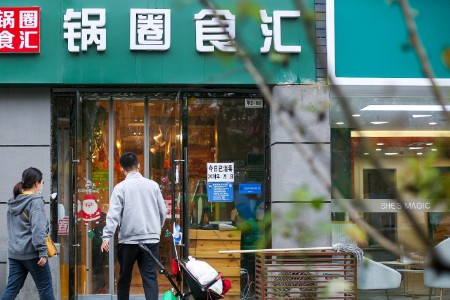
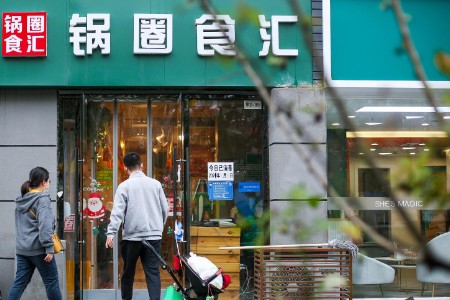
这一现状让主打「社区央厨」的锅圈看到了新的机遇。自去年10月「锅圈露营」首店落地郑州莲花公园,这个背靠锅圈食汇万店网络的新品牌,在短短数月内已签约100多个露营项目,快速将户外餐桌模式铺向全国。

专注家庭餐桌的锅圈,为何进军城市露营场景?这是否预示着露营行业将迎来新的产业整合者?

线索预埋于2025年10月。

01 空手露营,如何盘活一座社区公园?

2025年10月,锅圈露营计划进入郑州莲花公园时,这里还只是城市西北部一个再普通不过的社区公园。

作为社区公园,这里白天有附近居民散步、遛娃、赏莲,到了节假日也会热闹一阵,但消费性停留并不多。尤其入冬后,公园只剩残荷,人气也跟着气温一起降下来。

对于想做露营生意的人来说,莲花公园怎么看都不像一块能稳定运营下去的城市绿地。

但锅圈露营进入之后,事情很快有了变化。

锅圈将最熟悉的「在家吃饭」的解决方案从家庭搬到了草坪上——帐篷、天幕、桌椅、炉具、食材、饮品、游乐项目和节庆活动被打包在一起。人们不需要提前采购食材、也不用拖着沉重的露营车,就可以在拥抱自然的同时饱餐一顿火锅、烤肉或者小龙虾。

菜单显示,锅圈露营的产品基本以套餐形式销售,包含小龙虾、烤鱼、烤肉、火锅等品类,价格在99元到369元不等,此外还提供凉菜、饮料等自选食品。据大众点评显示,平均客单价约为74元/人,放在同类露营地中,算是相对平价的选择。

在配置上,莲花公园里配备18顶休闲小帐篷、1座50人团建阳光房、1座100人三联团建篷、16顶遮阳天幕,同时配套服务中心、奶茶店、咖啡店及多种玩乐设施。例如周边的彩虹滑梯、秋千攀爬架、沙坑、以及丛林探险等项目,均适合孩子游玩。

这让公园露营变成了一次轻量化的户外聚会。

原本露营具有强季节属性,冬季为露营淡季,但我们注意到,锅圈露营的生意并没有随气温一起冷下去。

社交媒体上的用户反馈来看,去年12月,消费者要想周末来锅圈露营,仍需要周一、周二就开始预约位置。

网友晒出的图片显示,冬天的锅圈帐篷被透明PVC保温层裹住,暖黄色灯串垂下来,火锅热气在帐篷内升腾,这让冬天的北方公园也有了烟火气。

这种烟火气也来自锅圈露营对不同季节产品结构的调整。据项目负责人透露,目前春夏季露营以锅圈烤肉套餐为主,到了秋冬季,锅圈火锅则成为主角,占比达到70%。

除了「吃什么」,锅圈露营还在用运营手段解决「为什么来」。今年母亲节,营地推出「妈妈的放空乐园」活动;六一期间,又用气球花海吸引亲子家庭。

空手露营场景+活动运营的效果,直接体现在商业回报上。上述项目负责人透露,截至今年5月底,莲花公园的锅圈露营基地累计销售额约为185万元,其中4月销售额约75万元,预计全年可达350万元至400万元。

持续增长的市场需求也为这一判断提供了乐观支撑。随着「公园20分钟」被当代人视作精神快充,城市公园正从公共空间变成更高频的生活场景,人们希望在这里同时满足亲子、社交、轻文旅等复合需求。

为了适应新趋势,全国多地开始推动「公园+」市场化运营,引入社会企业提升服务品质。

郑州高新区莲花公园便是在该背景下率先跑出来的一个样本。

如果将视线放到整个行业,会看到不只是锅圈,亦有其他餐饮企业盯上露营场景。比如海底捞目前已经在四川、河南、江苏、山东、浙江、北京等地开出近百家户外露营店,这些门店的选址往往偏爱热门景区。

而锅圈露营通过「自营标杆+加盟/合作营地」的混合模式运营,目前已在南昌九洲公园、郑州园博园、周口野生动物园等100多个项目点成功复制,并计划今年继续拓展全国门店网络。

02 新的行业整合者,不为租帐篷

餐饮零售企业纷纷入局露营行业,看中的是新的消费场景。

艾媒咨询数据显示,2025年我国露营经济核心市场规模已达2483.2亿元,预计到2030年将进一步增长至4879.8亿元,带动关联市场规模达到2.4万亿元。

但目前这个市场主要由中小企业构成,集中度较低。据企查查数据,截至2026年4月,国内现存的28万家露营相关企业中,超70%的注册资本在200万元以下,其中53%不足100万元。

以中小商家为主的格局,也导致行业始终缺乏一套能够稳定运营的商业基础设施。

对于大多数中小营地主来说,最大的挑战是建成之后如何运营:客流从哪里来?活动如何持续上新?怎么能让消费者复购?尤其是在餐饮环节,食材采购、口味稳定性、食品安全和服务标准化,几乎每一环节都存在高度挑战。

结果就是,大量露营地最终成为昙花一现。据中国旅游车船协会数据,2024年国内露营地数量较上一年有所下滑。

这让锅圈从中看到新的资源匹配机会。

首先是天然的供应链优势。锅圈目前拥有7大生产基地、20个数字化中心仓、上万家门店,不仅有专为户外场景专门研发的烧烤、火锅等标准化产品,还能在500公里配送半径内基本实现次日配送。通过将原本服务家庭餐桌的供应链复制到露营场景,锅圈可有效解决营地客流波动大、备货困难、后厨要求高等问题。

其次是会员规模优势。锅圈目前在全国拥有近8000万会员,而且其中有很大一部分是充值会员。通过会员转化、活动策划等运营能力,可以帮营地解决客流从哪来的问题。

其实早在2023年,锅圈便以营地食品供应商切入户外消费场景;到2025年,「锅圈露营」品牌正式上线,锅圈实现了从食材供应向营地经营者的跨越。

今年5月,锅圈露营文旅(四川)有限公司成立,标志着该业务正式进入系统性的场景深耕阶段。

相比动辄投入数百万甚至上千万元的重资产模式的住宿营地,锅圈从一开始就选择了「餐饮」路线。

这一路线也契合当下的消费趋势,小红书数据显示,如今在营地过夜的露营人群仅占20%至30%,多数人更倾向于不过夜的休闲露营。

露营这类全新消费场景也有机会拉高锅圈整体的盈利效率。

目前,锅圈的核心收入来源为「销售在家吃饭餐食产品及相关产品」,财报显示,2025年锅圈实现营业收入78.1亿元,核心经营利润4.6亿元,核心经营利润率为5.9%。

相比于社区店,营地卖的是「文旅体验+餐饮」,同样的食材在营地以套餐形式售出,消费者愿意为草坪、帐篷、灯光氛围等因素支付更高价格。据大众点评数据显示,目前锅圈露营郑州莲花公园店的客单价约74元。

露营也可以成为锅圈万店网络之外一个新的消费入口——比如锅圈露营支持会员余额消费,相当于在社区门店之外为这笔沉淀资金开辟了一个新鲜的消费理由。

03 第二个「餐桌」

曾有投资人指出,锅圈本质上是一个「两端构建壁垒」的模型——上游是供应链的复杂度与专业度,下游是渠道的密度与品牌壁垒。

如今,在「社区央厨新锅圈」的最新战略下,这个模型似乎有必要增加新的能力维度——消费场景的厚度。

消费场景的厚度,单一场景的频次和单价,以及渠道的密度,都能为一家企业带来规模性增长。但如果仅靠锅圈食汇现有的火锅和烧烤食材业务,几乎很难支撑起锅圈「社区央厨」的宏大愿景。

这是因为,火锅、烧烤都属于低频消费场景,消费者不可能一天三餐吃火锅,或者一周七天吃烧烤。

所以锅圈必须围绕「家庭」拓展出更多的日常餐食消费场景。

以此反观露营业务,这相当于锅圈在「在家吃饭」的餐桌之外,在户外场景支起的第二张餐桌。

沿着同一个逻辑,锅圈近两年也在大力发展锅圈大店、锅圈农场、锅圈小炒等创新业务。

大店承担的是更完整的线下承载能力。不同于传统门店,大店容纳更丰富的一日饮食需求,涵盖一人食、家庭聚餐、早餐、夜宵等消费场景,让锅圈的社区店有能力承接更多品类和更多时段。

锅圈农场则负责拉高客流。它主要布局水果、生鲜、粮油、肉蛋禽及休闲零食等刚需商品,通过「线上选品+门店自提」的模式,带动门店客流和交叉销售的增长,最终为加盟商带来收益增长。

锅圈小炒则聚焦社区正餐,也是更高频的餐食场景。它采用「超餐一体」模式,现炒产品承担的是即时消费和体验,速烹菜、食材包则把用户重新带回家庭厨房,形成餐饮和零售之间的联动。

而将这些新业务串联起来的正是锅圈已经建成的门店网络、即时零售能力和会员生态。

在锅圈门店突破万店后,其线下服务半径缩短为1.5公里。而借助店仓一体模式,锅圈的即时零售服务可延伸到2公里范围。

在此基础上,锅圈通过主营业务沉淀下来的近8000万会员,有望持续助力新业务转化。最终,会员消费频次、会员复购率、会员生命周期价值形成合力,带动锅圈的增长飞轮越转越快。

对于锅圈,千亿露营市场或许只是某一维度下的第二餐桌。几乎可以确定,锅圈未来会将「在家吃饭」的能力延伸到更多用户愿意停留和消费的场景里。

这是「新锅圈」的新命题。

注:文/刘诗雨,文章来源:降噪NoNoise,本文为作者独立观点,不代表亿邦动力立场。

文章来源:降噪NoNoise

广告
微信
朋友圈

这么好看,分享一下?

朋友圈 分享

APP内打开

+1
+1
微信好友 朋友圈 新浪微博 QQ空间
关闭
收藏成功
发送
/140 0