广告
加载中

CIC灼识重磅发布《全球跨境合规服务行业白皮书》 一站式合规服务构筑全球出海新生态

龚作仁 2026-06-03 10:46
龚作仁 2026/06/03 10:46

邦小白快读

EN
全文速览

本文是CIC灼识发布的《全球跨境合规服务行业白皮书》核心内容梳理,核心信息与实操干货如下

1. 行业整体变化:全球跨境贸易已经进入以合规与智能为核心的转型期,竞争核心从原来的流量与规模转向合规与韧性的内生能力,中国跨境合规市场规模增速领先全球,合规已经成为出海卖家的刚需。

2. 合规服务基本分类:合规服务分为税务合规、产品合规、知识产权合规、海外工商服务四大类,近年还涌现出数字化合规平台、数据隐私合规等新兴业务,覆盖出海全流程需求。

3. 行业发展趋势:行业正从单一被动的传统服务,向一站式、数智化、生态化服务转型,SaaS化合规服务相比传统人工模式效率更高、风险更低,头部服务商的马太效应会逐步凸显。

本文围绕跨境出海行业发展与合规布局,能为出海品牌商提供消费趋势、合规布局等多方面干货参考,具体内容如下

1. 消费与行业趋势:当前全球跨境电商进入稳态增长,中国出海呈现出口主导、平台卖家与独立站品牌化转型并行的格局,成熟市场增长靠客单价提升,新兴市场提供新增量,品牌化转型是主流发展方向。

2. 合规的战略价值:随着全球监管趋严、平台监管升级,合规已经不再是企业的成本项,而是出海品牌的核心运营支柱与品牌护城河,直接决定品牌能否稳定经营、拓展全球市场。

3. 合规布局参考:品牌商可搭建覆盖税务、产品、知识产权全领域的全链路合规体系,也可选择第三方头部一站式数智化合规服务,依托专业能力规避合规风险,保护品牌资产,支撑全球化扩张。

本文为跨境出海卖家梳理了行业环境、机会风险与应对方向,核心干货如下

1. 行业环境变化:当前跨境行业进入内生能力驱动的稳态增长期,合规已经成为卖家入驻平台和持续经营的核心门槛,自主合规面临规则碎片化、更新快、人力成本高、效率低等问题,催生了对第三方专业合规服务的刚性需求。

2. 机会提示:新兴市场为跨境出海带来增量空间,合规服务已经成为行业刚需,当前中小卖家正接力成为合规市场的核心增量,提前布局合规能有效提升自身竞争力,拿到更多市场机会。

3. 风险与应对提示:全球监管趋严、平台监管前置,不合规会面临商品下架、店铺封禁等处罚,建议卖家选择头部SaaS化一站式合规服务商,可应对突发合规风险,提升运营效率,降低合规成本。

本文为计划拓展跨境出海的工厂,梳理了产品需求、商业机会与数字化转型参考,核心干货如下

1. 产品生产设计需求:全球各目标市场对进口产品有严格的合规要求,产品合规贯穿设计、生产到销售的全生命周期,工厂做出口产品必须提前符合目标市场的强制性法规与行业标准,才能获得市场准入资格,规避监管风险。

2. 商业机会:中国跨境出口规模持续增长,出口占比已经接近79%,是行业增长的核心引擎,合规需求爆发式增长,工厂做自有品牌出海,合规是核心基础能力,能帮助工厂打造品牌壁垒,实现稳定增长。

3. 数字化转型启示:当前合规流程已经全面转向数字化,工厂推进出海数字化转型,可依托第三方合规服务商的数字化SaaS系统,降低自身转型的技术与人力成本,快速适配全球不同市场的监管要求。

本文梳理了跨境合规服务行业的发展现状、客户痛点与未来趋势,能为合规服务商提供行业参考,核心干货如下

1. 客户核心痛点:跨境卖家自主合规面临规则碎片化、法规更新快、学习门槛高的问题,政策跟踪、申报等环节消耗大量经营精力,传统人工合规模式效率低、风险高,卖家已经从单点合规需求升级为全链路一站式合规解决方案需求。

2. 行业发展趋势:行业正从单一、被动的传统业态,向一站式、数智化、品牌化、生态化的新服务范式转型,SaaS化是未来主流的服务交付形态,相比传统人工模式效率更高、风险更低,行业马太效应会逐步凸显。

3. 企业发展方向:头部服务商需要强化资本、技术与数据优势,构建“平台+服务商+本地伙伴”的三角协作生态,提升自身生态整合能力,打造全服务矩阵,才能获得更高市场份额,得到资本市场的认可。

本文梳理了当前跨境电商行业的合规环境、商家需求与平台发展方向,核心干货如下

1. 商家核心需求:随着商家出海覆盖市场越来越多,合规复杂度不断提升,商家的需求已经从单点合规升级为覆盖财税、产品、知识产权、数据安全的全链路合规解决方案,需要平台对接优质合规资源满足商家需求。

2. 平台监管的最新方向:当前平台监管已经从被动应对监管、事后核查,转为主动防控风险、前置审核,合规已经成为商家入驻和持续经营的核心门槛,平台需要将合规要求嵌入入驻与日常运营流程,降低自身的监管风险。

3. 平台运营与招商方向:平台可构建平台对接合规服务商的合作生态,为商家提供一站式合规服务,既可以提升商家的合规能力与留存率,也能吸引更多优质合规卖家入驻,帮助平台规避合规风险,实现长期稳健增长。

本文基于大量一手调研与数据分析,梳理了跨境合规服务行业的发展逻辑与新动向,对产业研究有较高参考价值,核心内容如下

1. 产业新动向:全球跨境贸易已经进入以合规为核心的转型阶段,竞争核心从流量规模转向合规与韧性的内生能力,中国跨境合规服务市场复合增速显著高于全球,行业增长动能已经从早期的政策驱动转向运营刚需,中小卖家成为核心增量来源。

2. 新商业模式与新问题:行业涌现出以数字化SaaS化为核心的合规科技服务,诞生了“合规中台”“合规即服务”“平台+服务商+本地伙伴”等新商业模式,合规从原来的企业成本项转变为企业的核心竞争力,同时也出现了监管碎片化、合规成本高等新问题。

3. 行业演进逻辑:行业清晰呈现从被动单点合规向主动全链路合规转型的逻辑,技术赋能推动行业形态升级,头部集中与生态化是未来主要发展方向,为研究全球跨境服务产业链演进提供了清晰的分析框架。

返回默认

声明:快读内容全程由AI生成,请注意甄别信息。如您发现问题,请发送邮件至 run@ebrun.com 。

我是 品牌商 卖家 工厂 服务商 平台商 研究者 帮我再读一遍。

Quick Summary

This article summarizes the core content of the *Global Cross-Border Compliance Service Industry White Paper* released by CIC灼识 Consulting, with key takeaways and practical insights as follows:

1. Overall industry changes: Global cross-border trade has entered a transformation period centered on compliance and intelligence. Industry competition has shifted from relying on traffic and scale to building internal capabilities in compliance and operational resilience. China's cross-border compliance market is growing faster than the global average, and compliance has become a fundamental necessity for Chinese sellers expanding overseas.

2. Basic classification of compliance services: Compliance services fall into four core categories: tax compliance, product compliance, intellectual property compliance, and offshore business registration services. In recent years, emerging segments including digital compliance platforms and data privacy compliance have emerged, covering the full spectrum of needs for overseas expansion.

3. Industry development trends: The sector is transitioning from fragmented, reactive traditional services to one-stop, digitally-enabled, ecosystem-oriented services. Compared with traditional manual service models, SaaS-based compliance services deliver higher efficiency and lower risk, and the Matthew Effect will gradually become more pronounced among top industry players.

This article provides actionable insights for cross-border brands on industry development and compliance strategy, covering consumer trends and compliance layout planning, with core takeaways as follows:

1. Consumer and industry trends: Global cross-border e-commerce is now growing at a steady pace. China's cross-border expansion is characterized by export-led growth, with platform sellers and independent stores both pursuing brand transformation. Growth in mature markets is driven by rising average order values, while emerging markets contribute new incremental volume, and brand transformation is the mainstream development direction.

2. Strategic value of compliance: Amid tightening global regulation and stricter platform enforcement, compliance is no longer just a business cost—it has become a core operational pillar and brand moat for cross-border brands, directly determining a brand's ability to operate stably and expand into global markets.

3. Guidance for compliance layout: Brands can either build a full-stack compliance system covering tax, product, and intellectual property, or partner with leading third-party one-stop digital compliance services. Leveraging professional expertise helps brands mitigate compliance risks, protect brand assets, and support global expansion.

This article outlines the industry landscape, opportunities, risks and response strategies for cross-border sellers, with core insights as follows:

1. Changing industry landscape: The cross-border industry has entered a period of steady growth driven by internal operational capabilities, and compliance is now a core requirement for platform onboarding and sustainable operation. In-house compliance faces pain points including fragmented regulatory rules, frequent policy updates, high labor costs, and low efficiency, creating strong rigid demand for professional third-party compliance services.

2. Opportunity outlook: Emerging markets have opened up new incremental space for cross-border expansion, and compliance services have become an industry-wide necessity. Small and medium-sized sellers are emerging as the core source of new growth for the compliance market. Early compliance layout can effectively improve competitiveness and unlock more market opportunities.

3. Risks and mitigation: With global regulation tightening and platforms shifting to pre-onboarding compliance checks, non-compliance can lead to penalties including product delisting and account suspension. Sellers are advised to partner with leading SaaS-enabled one-stop compliance service providers to respond to sudden compliance risks, improve operational efficiency, and lower compliance costs.

This article summarizes product requirements, business opportunities and digital transformation guidance for factories planning cross-border expansion, with core insights as follows:

1. Product design and manufacturing requirements: All major target markets enforce strict compliance requirements for imported goods, and product compliance applies across the entire product lifecycle from design and manufacturing to sales. Factories exporting goods must meet target markets' mandatory regulations and industry standards in advance to gain market access and avoid regulatory risks.

2. Business opportunities: China's cross-border export volume maintains sustained growth, accounting for nearly 79% of the country's overall cross-border sector and acting as the core engine of industry growth. Compliance demand is growing explosively. For factories building their own brands overseas, compliance is a core foundational capability that helps build brand barriers and enable sustained stable growth.

3. Insights for digital transformation: Compliance processes have fully shifted to digital operation. For factories advancing digital transformation for overseas expansion, partnering with third-party compliance providers to use their digital SaaS systems can reduce the technical and labor costs of in-house transformation, and enable rapid adaptation to regulatory requirements across different global markets.

This article outlines the current industry landscape, customer pain points and future trends for the cross-border compliance service industry, providing industry reference for compliance service providers, with core insights as follows:

1. Core customer pain points: In-house compliance for cross-border sellers faces challenges including fragmented rules, frequent regulatory updates, and high learning barriers. Processes such as policy tracking and declaration consume large amounts of operational resources, and traditional manual compliance models have low efficiency and high risk. Sellers have upgraded their demand from single-point compliance solutions to full-stack one-stop compliance services.

2. Industry development trends: The sector is transitioning from a fragmented, reactive traditional business model to a new service paradigm focused on one-stop access, digital intelligence, branding, and ecosystem building. SaaS will become the mainstream service delivery model in the future; compared with traditional manual models, it delivers higher efficiency and lower risk, and the Matthew Effect will gradually strengthen in the industry.

3. Strategic direction for enterprises: Leading service providers need to strengthen their advantages in capital, technology and data, build a triangular collaborative ecosystem of "platform + service provider + local partners", enhance ecosystem integration capabilities, and build a full-service matrix to capture larger market share and gain recognition from capital markets.

This article outlines the current compliance landscape, merchant needs and development direction for cross-border e-commerce platforms, with core insights as follows:

1. Core merchant needs: As sellers expand into more overseas markets, compliance complexity continues to increase. Merchant demand has evolved from single-point compliance to full-stack compliance solutions covering taxation, product, intellectual property and data security, requiring platforms to connect sellers with high-quality compliance resources to meet this demand.

2. Latest direction for platform compliance: Platform compliance management has shifted from reactive response to regulation and post-event inspection to proactive risk prevention and pre-onboarding auditing. Compliance is now a core threshold for merchant onboarding and sustained operation, and platforms need to embed compliance requirements into onboarding and daily operational processes to reduce their own regulatory risk.

3. Guidance for platform operation and merchant recruitment: Platforms can build a cooperative ecosystem that connects platforms and compliance service providers to offer one-stop compliance services for merchants. This model improves merchants' compliance capabilities and retention, attracts more high-quality compliant sellers to onboard, helps platforms mitigate their own compliance risks, and achieves long-term stable growth.

This article sorts out the development logic and new trends of the cross-border compliance service industry based on extensive first-hand research and data analysis, offering high reference value for industrial research, with core content as follows:

1. New industry trends: Global cross-border trade has entered a transformation period centered on compliance, and industry competition has shifted from competing for traffic and scale to building internal capabilities in compliance and operational resilience. The compound annual growth rate of China's cross-border compliance service market is significantly higher than the global average. Industry growth has shifted from early policy-driven growth to being driven by fundamental operational demand, and small and medium-sized sellers have become the core source of incremental growth.

2. New business models and emerging challenges: The industry has seen the rise of compliance technology services centered on digital SaaS, giving rise to new business models including "compliance middle office", "compliance as a service", and "platform + service provider + local partners". Compliance has transformed from a corporate cost item to a core competitive advantage, while new challenges such as regulatory fragmentation and high compliance costs have also emerged.

3. Industry evolution logic: The industry clearly shows an evolution path from reactive single-point compliance to proactive full-stack compliance. Technology empowerment is driving the upgrading of industry structure, and headquarter concentration and ecosystem building are the main development directions for the future. This provides a clear analytical framework for research on the evolution of the global cross-border service industry chain.

Disclaimer: The "Quick Summary" content is entirely generated by AI. Please exercise discretion when interpreting the information. For issues or corrections, please email run@ebrun.com .

I am a Brand Seller Factory Service Provider Marketplace Seller Researcher Read it again.

全球跨境贸易历经萌芽期、探索期、爆发期,现已进入以合规与智能为核心的转型阶段。跨境电商,尤其是B2C模式,在疫情催化下快速崛起,成为国际贸易的重要形态。尽管近期受通胀、地缘政治等因素影响增速略有回调,但行业已步入以内生能力驱动的稳态增长期,合规需求随之凸显。北美、欧洲等成熟市场增长转向客单价提升与监管强化,新兴市场则为跨境带来增量空间。中国跨境电商经历高速增长后步入理性发展,平台卖家主导、独立站品牌化转型并行。产业链中,合规服务(税务、产品、知识产权等)成为护航出海的关键环节,中国合规市场规模增速领先全球,反映卖家合规意识觉醒与服务刚需化。

在数字技术深入演进与AI应用加速赋能的今天,跨境贸易的竞争核心正从“流量与规模”向“合规与韧性的内生能力”迁移。合规服务,作为连接高速变化的全球市场规则与卖家实际运营的关键桥梁,其价值被赋予全新的战略意义。在此背景下,以数字化、SaaS化为特征的合规科技服务,正逐步从成本项转型为出海企业的核心运营支柱与品牌护城河。

在此背景下,CIC灼识重磅发布《全球跨境合规服务行业白皮书》。本报告基于大量的一手调研与数据分析,全面梳理了宏观环境与市场规模,聚焦跨境合规服务在新时代贸易体系中的定位与价值,重点剖析其增长的核心驱动、细分市场的演进路径,以及代表性企业的实践范式,旨在厘清行业从“被动响应”到“主动规划”的转型逻辑,为出海企业构建合规竞争力提供系统性洞察与参考。

1 全球跨境电商贸易概览

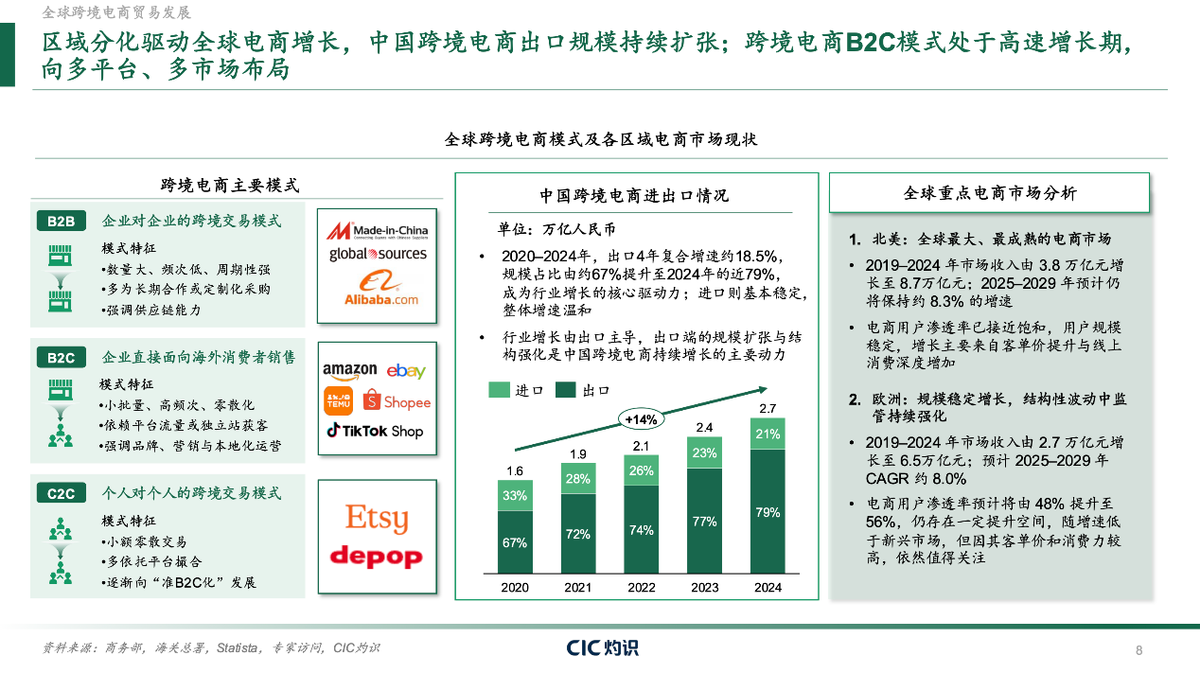
从商业模式看,全球跨境电商可解构为B2B、B2C与C2C三大核心形态:B2B模式以大批量、低频次、长周期为特征,强调供应链深度整合与定制化交付能力;B2C模式则依托平台流量或独立站直面海外消费者,呈现小批量、高频次、零散化交易特征,对品牌营销与本地化运营能力要求极高;C2C模式多依托平台撮合完成小额交易,并逐步向“准B2C化”演进。

聚焦中国跨境电商进出口表现,2020至2024年间出口端四年复合增速达约18.5%,规模占比由67%攀升至2024年的近79%,成为行业扩张的核心引擎;相较之下,进口规模基本稳定、增速温和,整体增长呈现显著的“出口主导”特征。

从区域市场维度审视,北美仍是全球最大、最成熟的电商市场,但用户渗透率已趋饱和,增长主要由客单价提升与线上消费深度渗透来驱动。欧洲市场用户渗透率预计将从48%提升至56%;尽管面临监管趋严带来的结构性波动,且增速不及新兴市场,但凭借高客单价与消费力,其战略价值仍不可忽视。

资料来源:商务部,海关总署,Statista,专家访问,CIC灼识

2 跨境合规服务类别

在B2C跨境电商产业链中,中游服务生态作为产业链的价值中枢,涵盖跨境电商平台、合规服务提供商、金融服务机构、物流服务商及软件技术供应商等多元主体。其中,在当前全球监管趋严与平台政策持续迭代的背景下,合规服务已跃升为支撑卖家全球化运营的基础设施,呈现显著的需求刚性特征。

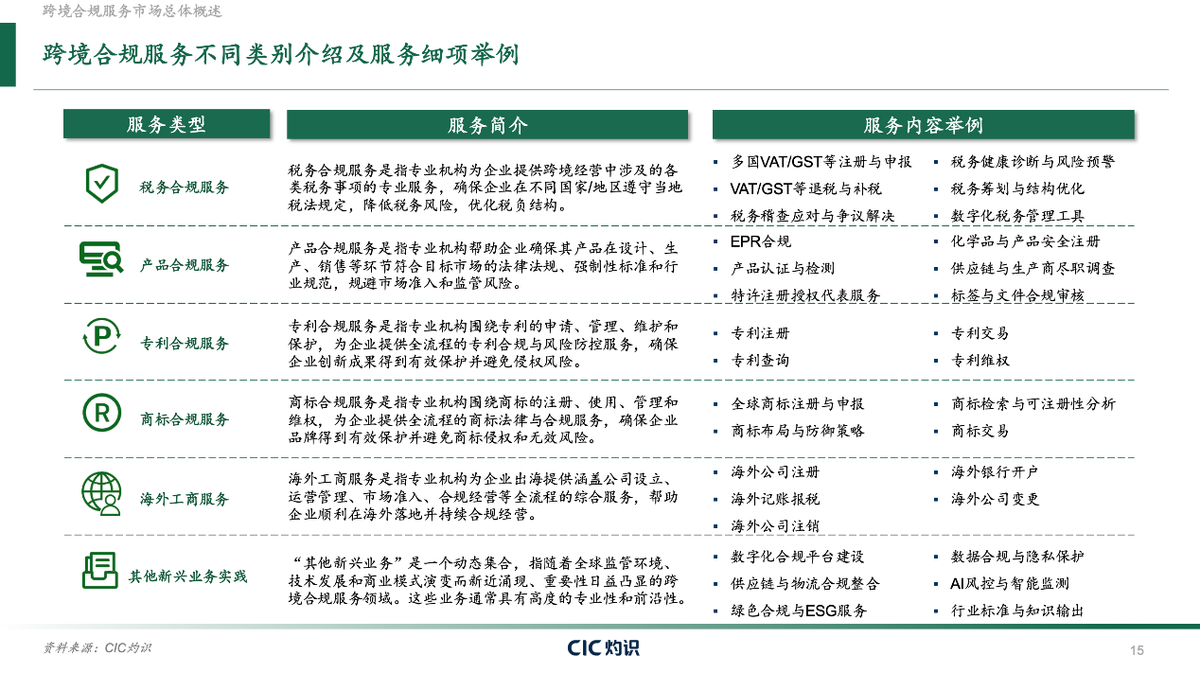
在服务类别上,跨境合规服务可依据服务属性与合规目标,细分为税务合规、产品合规、知识产权合规(含专利合规与商标合规)、海外工商服务及其他新兴业务多个板块,各板块均围绕“降低合规风险、保障市场准入、优化运营效率”这一核心目标展开。其中,税务合规服务聚焦企业在跨境经营中涉及的VAT/GST等税种的注册申报、退税补税、稽查应对及税务筹划,旨在确保企业全球税负结构的合法性与最优化;产品合规服务则贯穿产品设计、生产至销售全生命周期,通过EPR合规、产品认证检测、特许注册授权代表服务及标签文件审核等手段,帮助企业满足目标市场的强制性法规与行业标准,规避市场准入及监管风险。

在知识产权与海外主体布局层面,专利及商标合规覆盖注册、查询、交易与维权全流程,守护创新与品牌资产;海外工商服务贯穿公司设立、银行开户、记账报税至注销变更,保障主体合规存续。此外,伴随监管升级与技术迭代,数字化合规平台、数据隐私及AI风控等新兴业务加速涌现,推动行业从单点服务向全链路、智能化、生态化解决方案持续演进。

资料来源:CIC灼识

3 中国跨境合规服务市场发展

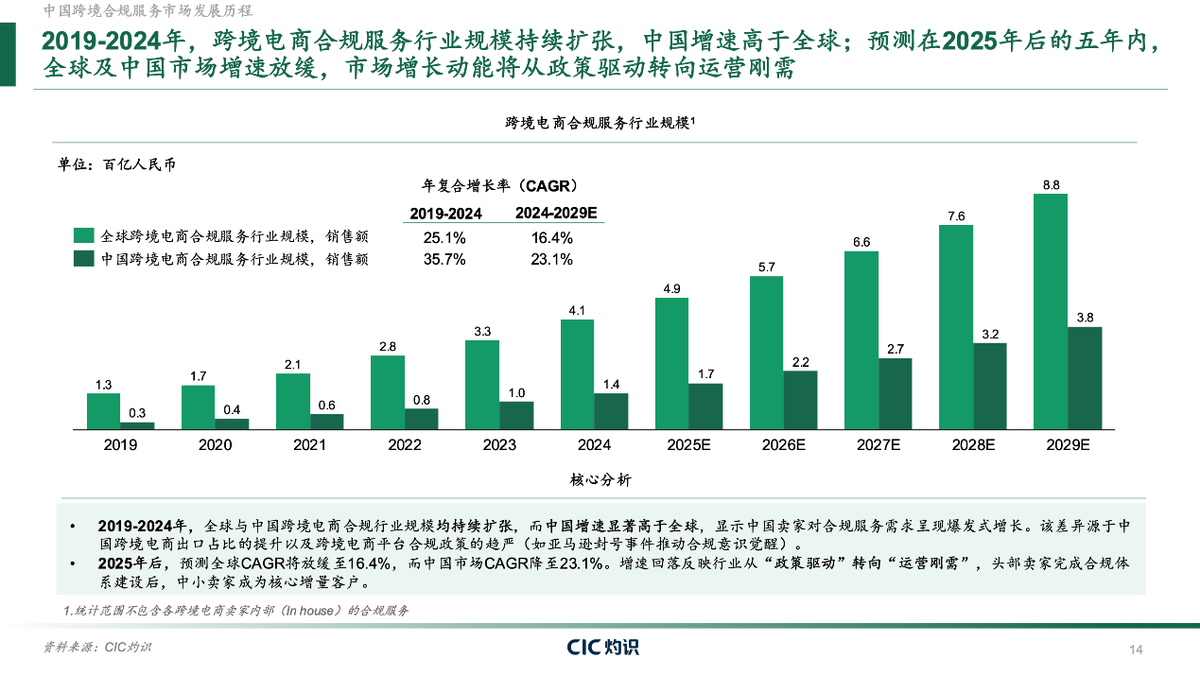
2019至2024年间,中国跨境电商合规服务行业规模均呈现持续扩张态势,复合增速显著高于全球,反映出中国卖家群体对合规服务的需求正经历爆发式增长。这一差异的核心驱动力在于:一方面,中国跨境电商出口占比持续提升,卖家基数与交易规模快速膨胀;另一方面,以亚马逊封号事件为标志的平台合规政策趋严,倒逼卖家合规意识系统性觉醒。

2025年后,中国市场增速预计将放缓,但仍高于全球市场整体增速。增速收敛标志着行业增长动能正从早期的“政策驱动”向“运营刚需”深刻转型。随着头部卖家逐步完成合规体系的基础建设,中小卖家正接力成为市场核心增量来源,合规服务进一步嵌入日常运营肌理,呈现出更为内生、稳健的增长逻辑。

资料来源:CIC灼识

4 驱动因素

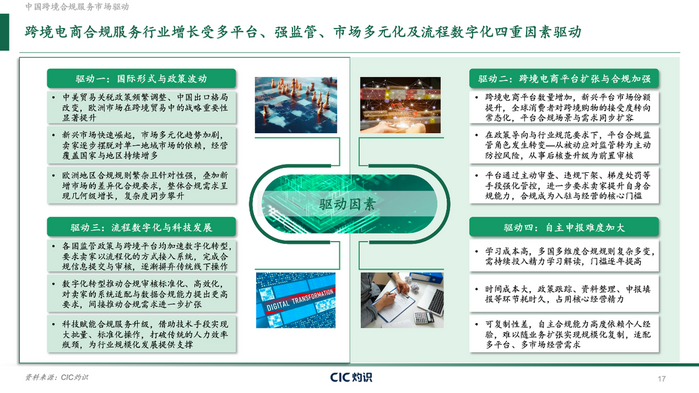
国际形式与政策波动:中美贸易关税政策的频繁调整正深刻重构中国跨境出口格局,欧洲市场的战略重要性显著提升,同时东南亚、中东等新兴市场的快速崛起推动卖家加速摆脱单一市场依赖,经营覆盖的国家与地区持续增多;而欧洲等地区本就繁杂且针对性强的合规规则,叠加差异化监管要求,使得合规复杂度攀升。

平台扩张与合规加强:跨境电商平台数量的增加促进了平台合规场景与需求的扩容;与此同时,平台自身监管角色发生也根本性转变:从被动应对监管转为主动防控风险,从事后核查升级为前置审核,通过主动审查、违规下架及梯度处罚等手段强化管控,进一步将合规能力固化为卖家入驻与持续经营的核心门槛。

流程数字化与科技发展:各国监管与跨境平台加速数字化转型,要求卖家以流程化的方式接入系统,完成合规信息提交与审核,传统线下操作模式被逐步摒弃;科技赋能合规服务升级,借助技术手段实现大批量、标准化操作,打破人力效率瓶颈,为行业规模化发展提供支撑。

自主申报难度加大:多国合规规则碎片化且无统一标准、法规高频更新导致学习门槛持续抬高,加之政策跟踪、资料整理、申报填报等环节消耗大量核心经营精力,且合规能力高度依赖个人经验、难以随业务扩张实现规模化复制,这些因素共同推高了自主合规的综合成本,进而催生了对第三方专业合规服务的刚性需求。

资料来源:CIC灼识

5 趋势洞察

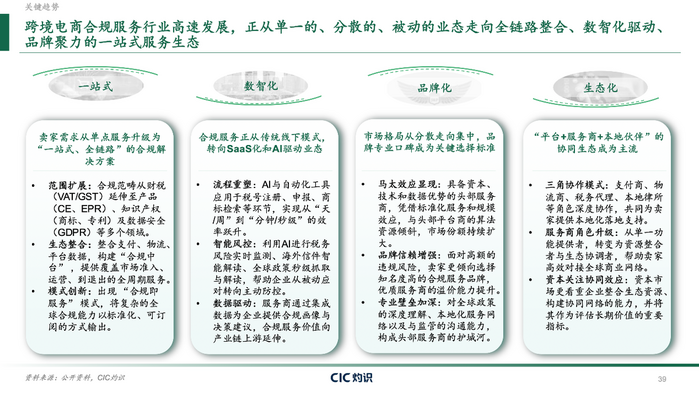
跨境电商合规服务行业正加速从单一、被动的传统业态,向一站式、数智化、品牌化、生态化的新服务范式演进。卖家需求已从单点合规升级为覆盖财税、产品、知识产权及数据安全等领域的全链路解决方案,“合规中台”与“合规即服务”模式应运而生。

同时,数智化SaaS技术正重塑服务交付形态。传统事务所模式依赖线下人工与纸质流程,不仅申报周期较长、运营成本偏高,且业务透明度不足,易因资料遗漏或人为疏漏埋下合规隐患。相比之下,SaaS化模式以线上申报系统为核心,实现全流程数字化重构:卖家可在线提交资料,通过系统归集文件并对接海外税局完成线上申报,大幅压缩周期,且全程进度实时可视、透明可控,通过专人审核与自动申报的双重校验,在提升效率的同时有效规避合规风险。

此外,市场中马太效应将逐渐显现,具备资本、技术与数据优势的头部服务商凭借品牌信赖与专业壁垒持续扩大市场份额。同时,“平台+服务商+本地伙伴”的三角协作生态将成为主流,服务商角色从功能提供者升级为资源整合者与生态协调者,其生态构建能力亦成为资本市场评估长期价值的关键指标。

资料来源:公开资料,专家访问,CIC灼识

6 跨境合规服务市场头部企业案例

资料来源:公开资料,CIC灼识

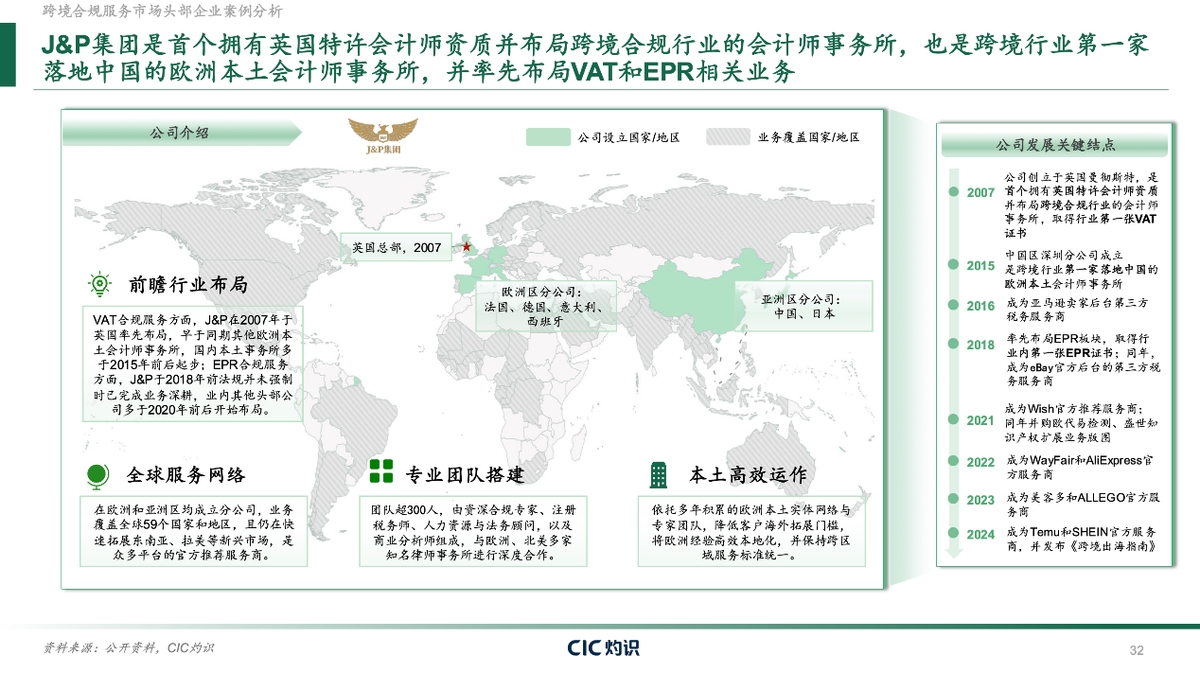
J&P集团作为跨境合规服务领域的标杆企业,创立于2007年,是首个拥有英国特许会计师资质并布局跨境合规行业的会计师事务所,亦是行业内首家落地中国市场的欧洲本土会计师事务所。通过19年的持续发展,构建了覆盖税务合规、产品合规、知识产权合规及跨境仓储物流的完整服务矩阵,形成了覆盖59国、横跨欧亚的实体服务网络,并向东南亚、拉美等新兴市场延伸,累计服务客户突破50万家,居行业首位。

在数字化建设方面,J&P集团自主研发了“跨境云智慧管理系统”,该系统以API直连、AI引擎及自动化工作流为核心,实现了合规服务从传统人工模式向智能SaaS平台的跨越式升级。同时,面对复杂多变的跨境监管环境,集团建立了7×24小时危机响应机制,针对各种突发风险提供快速介入服务,在追缴退税、罚金减免、封店解除、TRO应对及海关谈判等领域积累了丰富的实战经验。此外,集团发布了跨境行业第一本指南书籍《跨境出海指南》,全面助力跨境电商合规化经营。

注:文/龚作仁,文章来源:Laborer,本文为作者独立观点,不代表亿邦动力立场。

文章来源:Laborer

广告
微信
朋友圈

这么好看,分享一下?

朋友圈 分享

APP内打开

+1
+1
微信好友 朋友圈 新浪微博 QQ空间
关闭
收藏成功
发送
/140 0