广告
加载中

一张脸50元到200万元 AI短剧的人脸如何成为一门生意

胡镤心 2026-11-19 09:16
胡镤心 2026/11/19 09:16

邦小白快读

EN
全文速览

总1 关键数据与侵权风险:2026年上半年国内AI短剧约22.19万部,每部约20张脸,半年需四百多万张脸;98.7%的AI短剧跑不到盈亏平衡,合规授权不优先;盗脸侵权频发,可识别性成为核心标准,迪丽热巴案被称全球AI盗脸胜诉第一案,杨紫、易烊千玺、邓为、宋威龙维权,赵丽颖诉红果运营方等。

1. 制作方担心撞脸,常见backup是和解补授权或找仿妆达人救场。

2. 平台检测面部相似度,重合度超60限流或下架;广电11月专项治理盗脸偷声。

总2 价格与实操:人脸授权分层定价,明星一部剧50万到200万元;过气明星、网红、群演按分成,独家演员80%平台20%,非独家五五,海报或一集50元,一部短剧约2000元;素人调用一次50到100元;规则为单次付费、一事一议、单剧永久授权。

1. 永久买断灰产几十到几百元一张,甚至一元一张,风险高。

2. 制作方可用截图工具送审,一元查一次撞脸;FacesMarket完成超千万元天使轮融资。

总1 品牌营销与价格竞争:AI短剧人脸授权已分层定价,明星一部剧50万到200万元,中腰部按分成,独家演员80%平台20%,非独家五五,海报或一集50元、单剧约2000元,素人调用50到100元;规则是单次付费、一事一议、单剧永久授权,永久买断灰产低价会冲击价格体系。

1. 品牌使用AI脸不能只看低价,可识别性标准下,公众能认出即可能侵权。

2. 迪丽热巴案、杨紫等维权、赵丽颖诉红果等说明授权链和平台责任要前置。

总2 用户行为与产品研发:半年22.19万部AI短剧、每部约20张脸,带来四百多万张脸需求;98.7%不盈利,制作方普遍先做后处理,合规不优先,这是品牌合作的现实风险。

1. 平台对数字人面部相似度自动检测,重合度超60限流下架;红果下架修复43992部并上线虚拟形象确权。

2. 生成模型提供几千张模特库并以免责声明避风港;平台用流量、商单、白名单把风险甩回制作方,品牌渠道应建授权审核、标注和确权。

总1 政策与平台规则:广电总局11月部署微短剧专项治理,11月1日至12月底治盗脸偷声;红果截至2026年10月拦截、下架、修复疑似肖像侵权作品43992部,11月上线虚拟形象确权;抖音快手近三个月两轮AI内容标注规则,面部相似度自动检测,重合度超60限流或下架;迪丽热巴案确立可识别性标准,赵丽颖诉红果运营方等开庭未判。

1. 平台责任边界被推到台前,软性连带责任待司法落地。

2. 制作方先做后处理心态普遍,98.7%不盈利,合规成本敏感。

总2 市场机会与商业模式:半年22.19万部、每部20张脸,需四百多万张脸;授权价格分层,明星50万到200万元一部,中腰部独家演员80%分成、非独家五五,素人50到100元一次;撮合平台两个月百余笔订单、交易总额近7万元,一元查撞脸有需求;FacesMarket天使轮超千万元,新爪做人像库确权,Mirafans收高价值脸。

1. 可学习单次付费、一事一议、单剧永久授权和确权登记。

2. 风险是灰产永久买断、盗脸维权、低价脸库;机会是合规授权、撞脸排查、虚拟形象确权。

总1 生产与设计需求:AI短剧流水线上游是生成模型、下游是内容需求,人脸是不可缺少的耗材;2026上半年22.19万部、每部约20张脸,半年需四百多万张脸;脸由提示词生成、模板标准化美颜,或融脸真人照片,制作方担心撞脸时准备和解补授权、仿妆达人救场等backup。

1. 生成模型Seedance、Vidu、PixVerse、快乐马提供几千张不冒犯任何人的模特库,调用前签免责声明,避风港原则让模型厂商处于无责位置。

2. 工厂做内容生产要管素材来源、授权、审核,不能依赖来源不明脸库。

总2 商业机会与数字化启示:人脸授权已分层定价,明星50万到200万元一部,中腰部独家演员80%分成、非独家五五,海报或一集50元、单剧约2000元,素人50到100元一次;FacesMarket用截图工具一元查一次撞脸,新爪做人像库加确权,Mirafans收高价值脸;人脸ID可一键下架屏蔽马赛克,愿景类似ISBN和IMDb。

1. 数字化方向是人脸库、确权体系、自动比对、AI内容标注、单剧永久授权。

2. 风险是灰产永久买断、侵权下架和98.7%不盈利,机会在合规工具与素材管理。

总1 行业趋势与客户痛点:半年22.19万部AI短剧、每部约20张脸,需四百多万张脸;98.7%跑不到盈亏平衡,合规授权不优先,制作方普遍先做出来、有问题再处理;撞脸侵权频发,可识别性成为核心标准,迪丽热巴案胜诉,杨紫等维权,赵丽颖诉红果等;客户痛点是这张脸是谁的、能不能用、用了怎么算钱。

1. 平台检测面部相似度,重合度超60限流下架,广电专项治理盗脸偷声。

2. 发布平台用流量、商单、白名单软性杠杆,把风险甩回制作方。

总2 新技术与解决方案:人脸授权价格分层,明星50万到200万元一部,中腰部独家演员80%分成、非独家五五,素人50到100元一次,规则为单次付费、一事一议、单剧永久授权;FacesMarket桌面截图一键送审比对,一元一次,已完成超千万元天使轮融资;新爪做人像库加确权,Mirafans收高价值脸;平台上线虚拟形象确权、AI标注和自动检测阈值。

1. 可做确权登记、撞脸比对、授权撮合、合规审核、投诉下架。

2. 借鉴Content ID和脸ID,建唯一编码、永久档案和查询入口。

总1 平台需求与问题:AI短剧供给爆发,半年22.19万部、每部约20张脸,盗脸偷声频发;平台角色暧昧,通过流量扶持、商单、白名单等软性杠杆,把风险反向甩回制作方;赵丽颖将红果运营方笔墨留香、其全资股东抖音及一名自然人列为被告,平台责任边界被推到台前,软性连带责任待司法判决。

1. 制作方先做后处理,98.7%不盈利,合规动力弱。

2. 生成模型提供模特库并以免责声明和避风港原则处于无责位置,平台不能简单照搬。

总2 最新做法与风向规避:红果截至2026年10月累计拦截、下架、修复疑似肖像侵权作品43992部,11月上线虚拟形象确权;抖音快手近三个月两轮AI内容标注规则,数字人面部相似度自动检测,重合度超60直接限流或下架;广电总局11月6日部署专项治理,11月1日至12月底治盗脸偷声。

1. 平台可建确权库、授权查询、AI标注、阈值检测、投诉下架机制。

2. 招商运营要审核授权链,规避灰产永久买断、单剧永久授权边界和可识别性侵权风险。

总1 产业新动向与新问题:AI短剧半年22.19万部、每部约20张脸,需四百多万张脸;人脸授权形成野生市场,明星50万到200万元一部,中腰部独家演员80%分成、非独家五五、单剧约2000元,素人50到100元一次;撮合平台两个月百余笔订单、交易总额近7万元;98.7%不盈利,先做后处理;迪丽热巴案确立可识别性标准并被称为全球AI盗脸胜诉第一案,赵丽颖案平台责任未判。

1. 人脸是人格权延伸,不得转让继承,永久买断灰产存在法理争议。

2. 盗脸、融脸、拿照片做封面引流均引发维权和下架。

总2 政策法规与商业模式启示:广电专项治理盗脸偷声;红果下架修复43992部并上线虚拟形象确权;抖音快手标注规则和60%阈值;生成模型模特库、免责声明和避风港;FacesMarket一元查撞脸、天使轮超千万元,新爪人像库确权,Mirafans高价值脸;Content ID保护著作权,AIGC时代的ID保护脸;愿景类似ISBN和IMDb。

1. 建议建立授权登记、唯一编码、永久档案、查询入口和平台责任边界。

2. 商业模式包括授权撮合抽佣、确权比对、合规工具、虚拟形象运营。

返回默认
声明:快读内容全程由AI生成,请注意甄别信息。如您发现问题,请发送邮件至 run@ebrun.com 。

我是 品牌商 卖家 工厂 服务商 平台商 研究者 帮我再读一遍。

Quick Summary

Summary 1 Key data and infringement risks: In H1 2026, domestic AI short dramas totaled about 221,900; at about 20 faces per drama, more than 4 million faces are needed in half a year. 98.7% of AI short dramas cannot reach break-even, and compliant licensing is not prioritized. Face-theft infringement is frequent, and identifiability has become the core standard. The Dilraba case is called the world's first successful AI face-theft lawsuit; Yang Zi, Jackson Yee, Deng Wei, and Song Weilong have pursued rights protection; Zhao Liying sued the operator of Hongguo, among others.

1. Producers worry about lookalike faces; common backups are settlement plus supplementary licensing or bringing in makeup impersonators to fill in.

2. Platforms detect facial similarity; over 60% overlap leads to traffic limiting or takedown; in November, the NRTA launched a special campaign against unauthorized face and voice use.

Summary 2 Pricing and practical operations: Face licensing is tiered. Stars earn RMB 500,000 to RMB 2 million per drama; faded stars, influencers, and extras are paid on a revenue-share basis—exclusive actors get 80% and platforms 20%, while non-exclusive deals split 50/50; a poster or one episode costs RMB 50, and a short drama about RMB 2,000; ordinary individuals are charged RMB 50 to RMB 100 per use. The rules are pay-per-use, case-by-case negotiation, and perpetual licensing for a single drama.

1. Permanent buyouts in the grey market cost tens to hundreds of yuan per face, sometimes even one yuan, and carry high risks.

2. Producers can use screenshot tools to submit for review and check lookalike faces for one yuan per check; FacesMarket has completed an angel round of more than RMB 10 million.

Summary 1 Brand marketing and price competition: Face licensing for AI short dramas is now tiered. Stars cost RMB 500,000–2 million per drama; mid-tier talent is paid on revenue share; exclusive actors receive 80% and platforms 20%, while non-exclusive deals split 50/50; a poster or one episode costs RMB 50, or about RMB 2,000 per drama; ordinary individuals cost RMB 50–100 per use. The rules are pay-per-use, case-by-case negotiation, and perpetual licensing for a single drama; low-priced permanent buyouts in the grey market will disrupt the pricing system.

1. Brands using AI faces cannot focus only on low prices; under the identifiability standard, if the public can recognize the face, infringement may exist.

2. The Dilraba case, rights protection by Yang Zi and others, and Zhao Liying's suit against Hongguo show that licensing chains and platform responsibility must be addressed upfront.

Summary 2 User behavior and product R&D: 221,900 AI short dramas in half a year, at about 20 faces each, generate demand for more than 4 million faces. 98.7% are unprofitable, and producers generally make content first and handle issues later, with compliance not prioritized—this is a real risk for brand partnerships.

1. Platforms automatically detect facial similarity of digital humans; over 60% overlap leads to traffic limiting and takedown; Hongguo took down and remediated 43,992 works and launched virtual image rights confirmation.

2. Generative models offer model libraries of several thousand faces and use disclaimers to rely on safe harbors; platforms use traffic, sponsored orders, and whitelists to push risk back to producers; brand channels should establish licensing review, labeling, and rights-confirmation processes.

Summary 1 Policies and platform rules: In November, the National Radio and Television Administration deployed a special campaign on micro-short dramas, targeting unauthorized face and voice use from November 1 to the end of December. As of October 2026, Hongguo had intercepted, taken down, or remediated 43,992 works suspected of portrait infringement, and in November launched virtual image rights confirmation. Douyin and Kuaishou have issued two rounds of AI content labeling rules in the past three months, with automatic facial similarity detection; over 60% overlap leads to traffic limiting or takedown. The Dilraba case established the identifiability standard; Zhao Liying's suit against Hongguo's operator and others has been heard but not yet judged.

1. The boundary of platform responsibility has been pushed to the fore; soft joint liability awaits judicial clarification.

2. Producers generally have a make-first-handle-later mindset; 98.7% are unprofitable, and they are highly sensitive to compliance costs.

Summary 2 Market opportunities and business models: 221,900 dramas in half a year, at 20 faces each, require more than 4 million faces. Licensing prices are tiered: stars cost RMB 500,000–2 million per drama; mid-tier exclusive actors receive 80% revenue share, while non-exclusive deals split 50/50; ordinary individuals cost RMB 50–100 per use. A matchmaking platform had more than 100 orders in two months, with total transaction value of nearly RMB 70,000; there is demand for one-yuan lookalike checks. FacesMarket's angel round exceeded RMB 10 million; Xinzhua builds portrait libraries and rights confirmation; Mirafans collects high-value faces.

1. Learn from pay-per-use, case-by-case negotiation, perpetual single-drama licensing, and rights registration.

2. Risks are grey-market permanent buyouts, face-theft litigation, and low-priced face libraries; opportunities are compliant licensing, lookalike screening, and virtual image rights confirmation.

Summary 1 Production and design needs: The AI short-drama assembly line has generative models upstream and content demand downstream; faces are an indispensable consumable. In H1 2026, 221,900 dramas at about 20 faces each require more than 4 million faces in half a year. Faces are generated from prompts, standardized with beauty-filter templates, or blended with real photos. When producers worry about lookalike faces, they prepare backups such as settlement plus supplementary licensing or makeup impersonators.

1. Generative models Seedance, Vidu, PixVerse, and Kuailema provide model libraries of several thousand faces that offend no one; users sign disclaimers before use, and the safe-harbor principle leaves model vendors in a no-liability position.

2. Factories doing content production must manage source materials, licensing, and review, and cannot rely on face libraries of unknown origin.

Summary 2 Business opportunities and digitalization lessons: Face licensing is tiered: stars cost RMB 500,000–2 million per drama; mid-tier exclusive actors receive 80% revenue share, non-exclusive deals split 50/50; a poster or one episode costs RMB 50, or about RMB 2,000 per drama; ordinary individuals cost RMB 50–100 per use. FacesMarket uses a screenshot tool to check lookalike faces for one yuan per check; Xinzhua builds portrait libraries plus rights confirmation; Mirafans collects high-value faces; Face ID can support one-click takedown, blocking, and mosaicking, with a vision similar to ISBN and IMDb.

1. The digitalization direction is face libraries, rights-confirmation systems, automated comparison, AI content labeling, and perpetual single-drama licensing.

2. Risks are grey-market permanent buyouts, infringement takedowns, and the fact that 98.7% are unprofitable; opportunities lie in compliance tools and asset management.

Summary 1 Industry trends and customer pain points: 221,900 AI short dramas in half a year, at about 20 faces each, require more than 4 million faces. 98.7% cannot reach break-even, compliant licensing is not prioritized, and producers generally make the content first and deal with problems later. Lookalike infringement is frequent, and identifiability has become the core standard. The Dilraba case was won; Yang Zi and others have pursued rights protection; Zhao Liying sued Hongguo and others. Customer pain points are: whose face is this, can it be used, and how should payment be calculated once used.

1. Platforms detect facial similarity; over 60% overlap leads to traffic limiting and takedown; the NRTA is running a special campaign against unauthorized face and voice use.

2. Publishing platforms use traffic, sponsored orders, and whitelists as soft leverage to push risk back to producers.

Summary 2 New technologies and solutions: Face licensing prices are tiered: stars cost RMB 500,000–2 million per drama; mid-tier exclusive actors receive 80% revenue share, non-exclusive deals split 50/50; ordinary individuals cost RMB 50–100 per use. The rules are pay-per-use, case-by-case negotiation, and perpetual single-drama licensing. FacesMarket offers one-click desktop screenshot submission and comparison for one yuan per check, and has completed an angel round of more than RMB 10 million. Xinzhua builds portrait libraries plus rights confirmation; Mirafans collects high-value faces; platforms have launched virtual image rights confirmation, AI labeling, and automatic detection thresholds.

1. Services can include rights registration, lookalike comparison, licensing matchmaking, compliance review, and complaint-driven takedown.

2. Draw on Content ID and Face ID to build unique codes, permanent records, and query access.

Summary 1 Platform needs and problems: AI short-drama supply has exploded: 221,900 dramas in half a year, at about 20 faces each, with frequent unauthorized face and voice use. Platforms play an ambiguous role, using traffic support, sponsored orders, whitelists, and other soft leverage to push risk back to producers. Zhao Liying named Hongguo's operator Bimo Liuxiang, its wholly owned shareholder Douyin, and one individual as defendants, pushing the boundary of platform responsibility to the fore; soft joint liability awaits judicial judgment.

1. Producers make content first and handle issues later; 98.7% are unprofitable, so compliance incentives are weak.

2. Generative models provide model libraries and rely on disclaimers and the safe-harbor principle to remain in a no-liability position; platforms cannot simply copy this approach.

Summary 2 Latest practices and risk avoidance: As of October 2026, Hongguo had cumulatively intercepted, taken down, or remediated 43,992 works suspected of portrait infringement, and in November launched virtual image rights confirmation. Douyin and Kuaishou have had two rounds of AI content labeling rules in the past three months; digital human facial similarity is automatically detected, and over 60% overlap leads directly to traffic limiting or takedown. On November 6, the NRTA deployed a special campaign to address unauthorized face and voice use from November 1 to the end of December.

1. Platforms can build rights-confirmation databases, licensing queries, AI labeling, threshold detection, and complaint-driven takedown mechanisms.

2. Advertising and operations teams must review licensing chains and avoid risks from grey-market permanent buyouts, the boundaries of perpetual single-drama licensing, and identifiability-based infringement.

Summary 1 New industry developments and issues: In half a year, AI short dramas reached 221,900, at about 20 faces each, requiring more than 4 million faces. A wild market has formed for face licensing: stars cost RMB 500,000–2 million per drama; mid-tier exclusive actors receive 80% revenue share, non-exclusive deals split 50/50, and a single drama costs about RMB 2,000; ordinary individuals cost RMB 50–100 per use. A matchmaking platform had more than 100 orders in two months, with total transaction value of nearly RMB 70,000. 98.7% are unprofitable, and producers make content first and handle issues later. The Dilraba case established the identifiability standard and is called the world's first successful AI face-theft lawsuit; platform responsibility in the Zhao Liying case has not yet been judged.

1. A face is an extension of personality rights and cannot be transferred or inherited; permanent grey-market buyouts raise legal-theory disputes.

2. Face theft, face blending, and using photos as cover images for traffic generation have all triggered rights protection and takedowns.

Summary 2 Policy, regulation, and business-model lessons: The NRTA's special campaign targets unauthorized face and voice use; Hongguo took down and remediated 43,992 works and launched virtual image rights confirmation; Douyin and Kuaishou have labeling rules and a 60% threshold; generative models provide model libraries, disclaimers, and safe harbors; FacesMarket offers one-yuan lookalike checks and has raised more than RMB 10 million in its angel round; Xinzhua provides portrait libraries with rights confirmation; Mirafans collects high-value faces; Content ID protects copyright, while IDs in the AIGC era protect faces; the vision is similar to ISBN and IMDb.

1. Recommendations: establish licensing registration, unique codes, permanent records, query access, and the boundary of platform responsibility.

2. Business models include licensing matchmaking commissions, rights-confirmation comparison, compliance tools, and virtual image operations.

Disclaimer: The "Quick Summary" content is entirely generated by AI. Please exercise discretion when interpreting the information. For issues or corrections, please email run@ebrun.com .

I am a Brand Seller Factory Service Provider Marketplace Seller Researcher Read it again.

【亿邦原创】50元,大概是一名外卖员跑十几单、两个多小时的收入;也可以是一个素人把脸授权给AI短剧人脸库的价格。

在AI短剧的流水线上,上游是生成模型,下游是日夜不停的内容需求,人脸是不可缺少的耗材。

2026年上半年,国内AI短剧数量约22.19万部(《全国微短剧产业研究报告》),每一部都要20张左右的脸。这些脸由大模型生成、融合,或者从某个素材库里调用。

但问题是,这些脸是否涉及侵权?谁来授权?值多少钱?钱交给谁?

据亿邦AI调查,目前人脸授权已经形成了一个野生市场:明星、网红、素人定价差异巨大;人脸授权平台两个月撮合百余笔订单,交易总额近7万元;确权平台收集人脸库,为短剧制作方提供“一元钱查一次撞脸”服务。

01

剧里那张脸属于谁?

AI短剧爆款越多,说不清“剧里那张脸属于谁”的制作方就越多。

AIGC创作者王楠为亿邦AI讲述了他经历的一个真实事件。

今年4月,他的团队捏出第一部AI短剧的男主角,纯由提示词生成,结果很像两位顶流男明星。他担心存在风险,咨询其他头部AI短剧公司如何解决撞脸,得到的回复出奇一致:“我想合规,你告诉我去哪合规?”

按照22万部AI短剧,每部20张脸计算,半年需要四百多万张脸。绝大多数脸是捏出来的:提示词确定脸型、套上模板,产出标准化美颜脸;再往前一步是“融脸”,将版权不明甚至无版权的真人照片喂进模型,调出一张“谁都不像、又像所有人”的新面孔。

在行业快速向前冲、98.7%的AI短剧跑不到盈亏平衡的情况下,人脸的合规授权不在优先考虑范围内。“先做出来,等真的有问题再处理”是普遍心态。

据业内人士描述,有已经上过院线的AI短剧公司,剧组开拍前就私下准备好backup方案——万一撞脸,要么谈和解补授权,要么找仿妆达人救场。

由于AI“盗脸”而引发的侵权官司已经频频发生。

2025年12月,北京互联网法院审结迪丽热巴被AI换脸案件,法院认定,相同的提示词已经生不出这张脸,“技术巧合”没有被采信;社交平台出现大量“这是迪丽热巴”的指认;被告拿不出任何授权。制作方与播出方分别被判致歉、赔偿,这被认为是全球AI盗脸胜诉第一案。

“可识别性”由此成为AI肖像侵权的核心标准——不要求和本人一模一样,一般公众能认出来就算侵权。

2026年3月到8月,杨紫、易烊千玺、邓为、宋威龙相继因AI换脸或融脸发布维权声明,工作室委托律师取证,涉事作品陆续下架。

2026年11月,赵丽颖起诉红果短剧运营方笔墨留香、其全资股东抖音以及一名自然人,诉的是AI换脸、融脸,以及直接拿她的照片做封面引流。11月10日在门头沟法院云法庭开庭,未当庭宣判。

11月6日广电总局部署新一轮微短剧专项治理,11月1日至12月底,明确要治“盗脸”“偷声”。平台也开始动手,红果公告称,截至2026年10月累计拦截、下架、修复疑似肖像侵权作品43992部;11月又上线虚拟形象确权功能。抖音和快手近三个月更新了两轮AI内容标注规则,对数字人面部相似度设置自动检测阈值,重合度超60%直接限流或下架。

一头是急速膨胀的AIGC供给,一头是沉睡的肖像权和无处安放的排查义务。“这张脸是谁的、能不能用、用了怎么算钱”,从一句牢骚变成了结构性需求。

王楠因此发现了机会:大家都在AIGC里掘金,为什么没人卖合规这把铲子?第二天凌晨,他注册了FacesMarket的域名,将人脸合规作为一门生意,并于11月4日完成首轮超千万元天使轮融资。

02

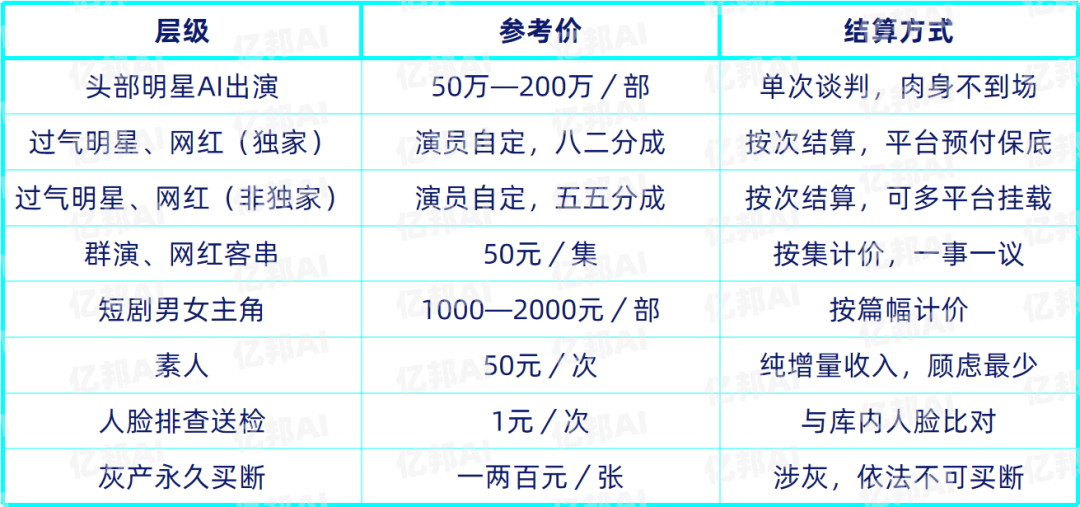
一张脸的价目表

人脸AI授权市场已经形成了一套价格体系。

最上层是头部明星,业内流传的报价是一部剧50万到200万,逻辑跟当年的抠图代言一样,要么找经纪团队,要么找独家授权的公司。

中间层是过气明星、网红、群演,拿短剧收入分成。演员独家授权可拿80%,平台拿20%;非独家授权五五开。售卖价格由演员自己定,大致一张海报或一集短剧50元,一部短剧可获得收入2000元左右。这种“赛博出演”对小网红和群演是有吸引力的。

最下面一层是素人,调用一次50-100元。对于普通人来说,算是一笔不费力的增量收入。

这些授权一般遵守三条规则:单次付费、一事一议、单剧永久授权(授权给一部剧之后,这部剧可以一直用下去,不会因为授权到期被要求下架)。

还有最下层“永久买断”的灰产,几十到几百元一张素人脸,打包出售。但人脸不是普通财产,是人格权的延伸,不得转让、继承,一旦放开买断,价格会被一路踩到底。王楠说他遇到过上门推销的,几百张脸,一元一张。

围绕着人脸授权的撮合交易,不少MCN机构成立授权平台,比如新爪做“人像库+确权体系”,先服务素人和愿意接受额外收入的普通人;Mirafans镜界则专收“高价值脸”,目标是“AI时代的无忧传媒”。

元脸FacesMarket的业务是把“创作者的排查义务”明码标价——它开发了一个桌面级截图工具,短剧人员在任何一个AI画布平台上捏出一张脸,按一个快捷键截图送审,跟库里收录的所有人脸做比对,一元钱一次。

短剧产业链的上游基础设施,Seedance、Vidu、PixVerse、快乐马等生成模型本身会提供几千张“不冒犯任何人”的模特库。使用者调用前需先签免责声明,再加上“避风港原则”,模型厂商由此处于“无责”位置。

发布平台的角色相对暧昧。平台通过流量扶持、商单、白名单这些软性杠杆,反向把风险甩回制作方。赵丽颖将红果列为被告之一,意味着“平台责任边界”被推到了台前,这种软性连带责任还需等待司法判决落地。

03

当脸成为一种数字资产

人脸授权和交易表面上是一门撮合和抽佣的生意,实则更关系到法律法规及行业基建。

YouTube早年上线过一套叫Content ID的系统,版权方把片子录入平台内容库,其后任何用户上传的新视频,系统都会24小时自动跟这座库比对;一旦撞上,就按版权方事先设定好的策略处置——要么直接屏蔽下架,要么插广告变现,要么只默默统计数据。唱片公司几乎是压倒性地选了它,因为比起满世界发律师函,这省事得多。

Content ID保护的是著作权,AIGC时代的ID,保护的是脸——人格权的延伸。

在王楠的设想里,实名登记过的演员或者素人发现自己的脸被人拿去恶搞、盗用、乱剪,他可以启用一个属于自己这张脸的ID,一键让全网那些视频下架、屏蔽,或者打上马赛克。

王楠觉得,这门生意的尽头,会类似书的ISBN码、电影圈的IMDb(Internet Movie Database)。前者是一本书在全世界有一个唯一的编号,后者是一个演员或一部作品在网络上有一张永久档案页,点开就能查到这个人演过什么、这部片子由谁参与。作品左下角可以标一个编码(f.wiki/查询码)或logo,观众点进去能查——这个角色有没有授权、授权到哪一步。

当一个人可以出售的,不仅仅是一段完整的劳动时间,而是五官比例、轮廓曲线、声纹波形,变成被AI定价、调用、撤销的零件,那完整的人格权如何保障,这将是一个长期而重要的话题。

亿邦持续追踪报道该情报,如想了解更多与本文相关信息,请扫码关注作者微信。

本文首发于 亿邦动力 官方网站

文章来源:亿邦动力

广告
微信
朋友圈

FAQ回顾

AI短剧使用人脸一般怎么收费?

头部明星业内报价约50万至200万元一部;过气明星、网红、群演多按短剧收入分成,独家授权演员拿80%、平台拿20%,非独家五五开,一张海报或一集短剧约50元,一部短剧约2000元;素人调用一次50至100元。常见规则为单次付费、一事一议、单剧永久授权。

AI短剧用真人脸可能涉及哪些肖像侵权风险?

核心标准是“可识别性”,不要求与本人完全一致,一般公众能认出即可认定侵权。迪丽热巴AI换脸案已判赔并致歉,杨紫、易烊千玺、邓为、宋威龙等相继维权,赵丽颖起诉红果短剧运营方等;平台对数字人面部相似度超60%可限流或下架。

短剧制作方如何排查AI生成人脸是否撞脸?

制作方可用元脸FacesMarket的桌面截图工具,在AI画布生成人脸后按快捷键截图送审,与库内所有人脸比对,费用一元一次;生成模型如Seedance、Vidu等提供模特库,调用前需签免责声明;抖音、快手等平台对数字人面部相似度设自动检测阈值,重合度超60%直接限流或下架。

AI短剧人脸确权平台有哪些代表玩家?

新爪做人像库确权体系,先服务素人和愿接受额外收入的普通人;Mirafans镜界专收高价值脸,目标做AI时代无忧传媒;元脸FacesMarket提供人脸比对排查并按次收费;红果于2026年11月上线虚拟形象确权功能。

AI短剧为什么需要人脸授权和确权服务?

2026年上半年国内AI短剧约22.19万部,每部约20张脸,半年需四百多万张脸;多数脸由提示词生成或融脸,版权不明,撞脸和盗脸诉讼频发。行业98.7%的AI短剧跑不到盈亏平衡,合规授权此前不优先,平台又下架大量疑似侵权作品,催生确权与排查需求。

这么好看,分享一下?

朋友圈 分享

APP内打开

赞 +1
+1
微信好友 朋友圈 新浪微博 QQ空间
关闭
收藏成功
发送
/140 0