广告
加载中

千峰访谈星源智刘东:让机器人真正成为能干活的生产力工具

黄斌 2026-10-29 17:32
黄斌 2026/10/29 17:32

邦小白快读

EN
全文速览

总:文章核心是具身智能让AI从数字世界进入物理世界,让机器人理解环境、规划任务、操作物体,成为能干活的生产力工具。

1. 星源智定位为具身智能生态提供通用具身大脑、世界模型和端侧算力平台,坚持大脑与本体解耦。

2. 现阶段聚焦移动加抓放、移动加轻操作两类能力,优先进入物流搬运、仓内拣选、药店夜间值守和电力巡检等场景。

3. 技术上看重一套基础能力在不同场景复用,并用自研端侧算力让模型本地运行,减少对远程网络依赖。

总:对普通读者有用的落地判断是,机器人做出动作不等于有商业价值。

1. 选场景要看效果乘效率除以成本,与原有方案相比综合评价是否大于1。

2. 物流叉车案例中,搭载其大脑的自动叉车可识别卡车、规划卸货顺序、分辨托盘类型,单车装卸由约90秒缩短到约1分钟,还会预判叉臂角度和深度风险。

3. 数据质量比总量更关键,摄像头与关节信息若不同步、空间位置不准或动作不完整,都会影响模型学习;2026年可能成为具身智能淘汰元年,能否形成持续收入和规模化交付是关键。

总:从品牌与产品定位看,星源智没有直接做机器人本体,而是做通用具身大脑、世界模型和端侧算力平台,强调大脑与本体解耦,以适配叉车、机器狗、人形机器人等不同形态。

1. 产品研发上聚焦移动加抓放、移动加轻操作两类能力,优先落地物流搬运、仓内拣选、药店夜间值守和电力巡检。

2. 其具身交互式世界模型ω-EVA采用设想、验证、执行思路,先预测动作后果,可能碰撞或抓取不稳就先修正再执行。

3. 端侧算力平台让模型本地运行,模型、底层软件和硬件联合优化,以满足真实作业对响应速度和稳定性的要求。

总:在价格竞争和客户经营上,文章给出可借鉴的商业判断。

1. 选场景看效果乘效率除以成本是否大于1,只有算得过账客户才会持续采购,方案才有机会规模化。

2. 客户可按能力组合产品,有的用完整模型和算力平台,有的已有抓取模型只补空间理解或任务规划,体现按需求提供支持的思路。

3. 与中力合作物流叉车场景,自动叉车自主识别卡车、规划卸货顺序、分辨托盘类型,装卸由约90秒缩短到约1分钟,并通过真实数据回流支撑模型迭代。

总:从增长市场和机会看,星源智现阶段聚焦移动加抓放、移动加轻操作,优先进入物流搬运、仓内拣选、药店夜间值守和电力巡检,这些是具身智能可切入的明确场景。

1. 物流场景需要识别货物和托盘、理解作业空间并完成搬运装卸;药店要把移动和拣选衔接起来满足夜间值守;电力巡检要打通室内外环境理解和导航。

2. 合作方式有两种:作为Tier1供应商向本体厂商提供具身大脑和端侧算力平台;面向终端客户与本体伙伴一起交付完整机器人解决方案。

3. 商业模式上坚持大脑与本体解耦,向本体厂商提供软硬件一体方案,同时与本体伙伴面向终端场景交付完整方案。

总:风险提示和可学习点也很明确。

1. 刘东判断2026年会成为具身智能淘汰元年,车企、手机和家电企业进入机器人领域会给原有整机创业公司带来压力。

2. 模型跑通不代表整套系统能交付,本体一致性、关节标定、传感器同步、端侧响应都可能影响执行,遇到处理不了的情况还要考虑恢复和人工介入。

3. 可学习点是先进入商业价值明确、能力边界可控的场景,把一批任务做扎实再扩展;同时重视高价值交互数据、真实场景评测和数据质量,外部数据清洗成本甚至可能高于重新采集。

总:对本体厂商而言,文章说明产品生产和设计需求正在围绕软硬件一体具身大脑展开。

1. 星源智向本体厂商提供软硬件一体的具身大脑解决方案,并坚持大脑与本体解耦,因为叉车、机器狗、人形机器人都有各自适合的任务,不能用一种形态覆盖所有需求。

2. 适配某一款机器人时,还要采集它的真机数据,完成从通用能力到具体本体的映射。

3. 模型跑通不等于系统能交付,本体一致性、关节标定、传感器同步、端侧响应都会影响执行结果,复杂产线对效率和成功率要求高、停线损失大。

总:商业机会和数字化启示集中在场景复用与数据闭环。

1. 可优先关注物流搬运、仓内拣选、药店夜间值守和电力巡检,尤其物流叉车场景中自动叉车可识别卡车、规划卸货顺序、分辨托盘类型,单车装卸由约90秒缩短到约1分钟。

2. 端侧算力要求模型、底层软件和硬件联合优化,减少对远程网络依赖,满足真实作业的响应速度和稳定性。

3. 数据科学中心先按统一采集、对齐和标注方式验证数据有效性,再形成标准流程推广到产业伙伴真实工况;机器人进入场景后,成功和失败经验回流模型训练,形成持续迭代闭环。

总:行业发展趋势是具身智能让AI从数字世界走进物理世界,让机器人理解环境、规划任务、操作物体,成为能干活的生产力工具;星源智提供通用具身大脑、世界模型和端侧算力平台,并坚持大脑与本体解耦。

1. 技术上,具身交互式世界模型ω-EVA采用设想、验证、执行思路,先提出动作并预测后果,可能碰撞或抓取不稳就修正再执行,把验证前置到执行之前。

2. 端侧算力让模型在机器人本地运行,减少远程网络依赖,但端侧算力有限,模型、底层软件和硬件必须联合优化。

3. 场景上聚焦移动加抓放、移动加轻操作,优先物流搬运、仓内拣选、药店夜间值守和电力巡检,强调基础能力在不同场景复用。

总:客户痛点与解决方案对应清楚。

1. 痛点是高价值交互数据不足、数据质量不稳定,摄像头与关节信息若没有时间同步、空间位置不准或动作不完整,都会影响模型学习,有些外部数据清洗成本甚至比重新采集还高。

2. 另一个痛点是依赖远程网络会带来延迟和断网影响,且模型跑通不代表整套系统能交付,本体一致性、关节标定、传感器同步、端侧响应都可能影响执行。

3. 解决方案包括建设数据科学中心,统一采集、对齐和标注并验证有效性,再推广到产业伙伴真实工况;用场景数据做后训练,把通用能力提升为场景高可用能力;以真实场景表现和版本进步做评测,并先进入商业价值明确、能力边界可控的场景。

总:从生态平台需求看,星源智定位为具身智能生态提供通用具身大脑、世界模型和端侧算力平台,坚持大脑与本体解耦,这等于用通用能力服务不同机器人形态和不同场景。

1. 平台做法是向本体厂商提供软硬件一体的具身大脑解决方案,同时与本体伙伴合作面向终端场景交付完整方案。

2. 客户可按能力组合产品,有的使用完整模型和算力平台,有的已有抓取模型只补空间理解或任务规划,体现平台按需求提供相应支持。

3. 数据科学中心先按统一采集、对齐和标注方式验证数据有效性,再形成标准流程推广到产业伙伴真实工况,具备向生态伙伴输出标准流程的平台化特征。

总:运营管理和风向规避上,文章给出边界与风险提示。

1. 现阶段聚焦移动加抓放、移动加轻操作,优先物流搬运、仓内拣选、药店夜间值守和电力巡检,先进入商业价值明确、能力边界可控的场景,把一批任务做扎实再扩展。

2. 选场景看效果乘效率除以成本是否大于1,只有算得过账客户才会持续采购,方案才有机会规模化。

3. 风险在于2026年可能成为具身智能淘汰元年,车企、手机和家电企业进入会带来竞争压力;同时模型跑通不代表系统能交付,本体一致性、关节标定、传感器同步、端侧响应及异常恢复都会影响落地。

总:产业新动向是具身智能从数字世界进入物理世界,机器人成为能干活的生产力工具;星源智以通用具身大脑、世界模型和端侧算力平台切入,并坚持大脑与本体解耦,以适配叉车、机器狗、人形机器人等不同形态。

1. 技术路线出现新变化,具身交互式世界模型ω-EVA采用设想、验证、执行思路,先提出动作并预测后果,可能碰撞或抓取不稳就先修正再执行,把验证前置到执行之前。

2. 端侧算力成为关键工程方向,模型在机器人本地运行可减少远程网络依赖,但端侧算力有限,模型、底层软件和硬件必须联合优化。

3. 场景选择上聚焦移动加抓放、移动加轻操作,优先物流搬运、仓内拣选、药店夜间值守和电力巡检,强调基础能力跨场景复用。

总:新问题与商业模式启示值得研究。

1. 新问题包括高价值交互数据不足、验证和评测手段不够、系统工程能力是否到位;数据质量比总量更重要,时间同步、空间位置和动作完整性都会影响模型学习,外部数据清洗成本甚至可能高于重新采集。

2. 商业模式上形成Tier1供应商和终端完整方案交付两种方式,客户可按能力组合产品;模型和算力平台被视为左右手,只有模型没有工程化载体或只有硬件没有模型都难形成更高价值。

3. 产业判断上,2026年可能成为具身智能淘汰元年,竞争分化取决于机器人能否真正成为生产力工具、能否形成持续收入和规模化交付能力;数据科学中心与真实场景评测也为规模化落地提供启示。

返回默认
声明:快读内容全程由AI生成,请注意甄别信息。如您发现问题,请发送邮件至 run@ebrun.com 。

我是 品牌商 卖家 工厂 服务商 平台商 研究者 帮我再读一遍。

Quick Summary

Overall: The article's core point is that embodied intelligence moves AI from the digital world into the physical world, enabling robots to understand environments, plan tasks, and manipulate objects, turning them into productivity tools that can do real work.

1. Xingyuanzhi positions itself as providing a general embodied brain, world model, and edge-computing platform for the embodied intelligence ecosystem, and insists on decoupling the brain from the robot body.

2. At this stage it focuses on two capability sets—mobile manipulation plus pick-and-place, and mobile manipulation plus light operation—prioritizing logistics handling, in-warehouse picking, nighttime pharmacy monitoring, and power-grid inspection.

3. Technically, it emphasizes reusing one set of foundational capabilities across different scenarios and using in-house edge computing to run models locally, reducing dependence on remote networks.

Overall: For ordinary readers, the practical takeaway is that a robot making movements does not equal commercial value.

1. Scenario selection should compare effect × efficiency ÷ cost against existing solutions; the combined evaluation must be greater than 1.

2. In the logistics forklift case, an autonomous forklift equipped with its brain can identify trucks, plan unloading sequences, and distinguish pallet types; per-vehicle loading and unloading time is cut from about 90 seconds to about one minute, and it also predicts risks related to fork-arm angle and depth.

3. Data quality matters more than volume. If camera and joint information are not synchronized, spatial positions are inaccurate, or actions are incomplete, model learning is affected. 2026 may become the first year of shakeout for embodied intelligence; the key is whether companies can generate sustained revenue and deliver at scale.

Overall: From a brand and product-positioning perspective, Xingyuanzhi does not directly build robot bodies. Instead, it builds a general embodied brain, world model, and edge-computing platform, emphasizing decoupling of brain and body to adapt to different forms such as forklifts, robot dogs, and humanoid robots.

1. Product R&D focuses on two capability sets—mobile manipulation plus pick-and-place, and mobile manipulation plus light operation—prioritizing logistics handling, in-warehouse picking, nighttime pharmacy monitoring, and power-grid inspection.

2. Its embodied interactive world model ω-EVA follows an imagine-verify-execute approach: it first predicts the consequences of an action, and if a collision or unstable grasp is likely, it corrects the action before execution.

3. The edge-computing platform runs models locally, with joint optimization of models, underlying software, and hardware to meet the response speed and stability requirements of real operations.

Overall: On price competition and customer management, the article offers business judgments worth borrowing.

1. Scenario selection depends on whether effect × efficiency ÷ cost is greater than 1. Customers will keep buying only when the economics work, and only then can a solution scale.

2. Customers can combine products by capability: some use the full model and computing platform, while others already have grasping models and only need spatial understanding or task planning, reflecting an approach of providing support according to need.

3. In the logistics forklift scenario with Zhongli, autonomous forklifts independently identify trucks, plan unloading sequences, and distinguish pallet types; loading and unloading is cut from about 90 seconds to about one minute, and real-world data flows back to support model iteration.

Overall: From the perspective of growth markets and opportunities, Xingyuanzhi currently focuses on mobile manipulation plus pick-and-place and mobile manipulation plus light operation, prioritizing logistics handling, in-warehouse picking, nighttime pharmacy monitoring, and power-grid inspection—clear scenarios where embodied intelligence can enter.

1. Logistics scenarios require identifying goods and pallets, understanding the workspace, and completing loading and unloading; pharmacies need to connect mobility and picking to support nighttime monitoring; power-grid inspection requires integrated indoor and outdoor environmental understanding and navigation.

2. There are two cooperation models: serving as a Tier 1 supplier providing embodied brains and edge-computing platforms to robot-body manufacturers; and delivering complete robot solutions to end customers together with robot-body partners.

3. The business model insists on decoupling brain and body, providing integrated software and hardware solutions to robot-body manufacturers while partnering with robot-body partners to deliver complete solutions for end scenarios.

Overall: The risk warnings and lessons are also clear.

1. Liu Dong judges that 2026 will be the first year of shakeout for embodied intelligence. Automakers, smartphone companies, and home-appliance companies entering robotics will pressure existing robot-body startups.

2. A working model does not mean the whole system can be delivered. Body consistency, joint calibration, sensor synchronization, and edge-side response can all affect execution; when situations cannot be handled, recovery and human intervention must also be considered.

3. The lesson is to enter scenarios with clear commercial value and controllable capability boundaries first, make a set of tasks solid, and then expand; meanwhile, value high-value interaction data, real-scenario evaluation, and data quality. External data cleaning costs may even exceed the cost of collecting data anew.

Overall: For robot-body manufacturers, the article shows that product production and design requirements are increasingly centered on an integrated software-hardware embodied brain.

1. Xingyuanzhi provides robot-body manufacturers with integrated software-hardware embodied brain solutions and insists on decoupling brain and body, because forklifts, robot dogs, and humanoid robots each suit different tasks and one form cannot cover all needs.

2. When adapting to a specific robot, it is also necessary to collect real-machine data for that robot and complete the mapping from general capabilities to the specific body.

3. A working model does not mean the system can be delivered. Body consistency, joint calibration, sensor synchronization, and edge-side response all affect execution results; complex production lines have high efficiency and success-rate requirements and large losses from line stoppages.

Overall: Commercial opportunities and digitalization lessons center on scenario reuse and data closed loops.

1. Priority should be given to logistics handling, in-warehouse picking, nighttime pharmacy monitoring, and power-grid inspection. In particular, in the logistics forklift scenario, autonomous forklifts can identify trucks, plan unloading sequences, and distinguish pallet types; per-vehicle loading and unloading time is cut from about 90 seconds to about one minute.

2. Edge computing requires joint optimization of models, underlying software, and hardware to reduce dependence on remote networks and meet the response speed and stability requirements of real operations.

3. The data science center first validates data effectiveness through unified collection, alignment, and annotation, then forms a standard process and promotes it to real operating conditions at industry partners. After robots enter scenarios, successful and failed experiences flow back into model training, forming a continuous iteration loop.

Overall: The industry trend is that embodied intelligence brings AI from the digital world into the physical world, enabling robots to understand environments, plan tasks, and manipulate objects, making them productivity tools that can do real work. Xingyuanzhi provides a general embodied brain, world model, and edge-computing platform, and insists on decoupling brain and body.

1. Technically, the embodied interactive world model ω-EVA follows an imagine-verify-execute approach: it first proposes an action and predicts its consequences, and if a collision or unstable grasp is likely, it corrects the action before execution, moving verification ahead of execution.

2. Edge computing lets models run locally on robots and reduces dependence on remote networks, but edge computing is limited, so models, underlying software, and hardware must be jointly optimized.

3. In terms of scenarios, it focuses on mobile manipulation plus pick-and-place and mobile manipulation plus light operation, prioritizing logistics handling, in-warehouse picking, nighttime pharmacy monitoring, and power-grid inspection, and emphasizes reuse of foundational capabilities across scenarios.

Overall: Customer pain points and solutions correspond clearly.

1. The pain point is insufficient high-value interaction data and unstable data quality. If camera and joint information are not time-synchronized, spatial positions are inaccurate, or actions are incomplete, model learning is affected. In some cases, external data cleaning costs more than collecting data anew.

2. Another pain point is that reliance on remote networks brings latency and outage risks, and a working model does not mean the whole system can be delivered. Body consistency, joint calibration, sensor synchronization, and edge-side response may all affect execution.

3. Solutions include building a data science center to unify collection, alignment, and annotation and validate effectiveness before promoting it to real operating conditions at industry partners; using scenario data for post-training to upgrade general capabilities into highly available scenario capabilities; evaluating by real-scenario performance and version progress; and entering scenarios with clear commercial value and controllable capability boundaries first.

Overall: From the perspective of ecosystem-platform needs, Xingyuanzhi positions itself as providing a general embodied brain, world model, and edge-computing platform for the embodied intelligence ecosystem, insisting on decoupling brain and body—essentially using general capabilities to serve different robot forms and scenarios.

1. The platform approach is to provide integrated software-hardware embodied brain solutions to robot-body manufacturers while partnering with robot-body partners to deliver complete solutions for end scenarios.

2. Customers can combine products by capability: some use the full model and computing platform, while others already have grasping models and only need spatial understanding or task planning, showing that the platform provides support according to need.

3. The data science center first validates data effectiveness through unified collection, alignment, and annotation, then forms a standard process and promotes it to real operating conditions at industry partners, giving it a platform characteristic of exporting standard processes to ecosystem partners.

Overall: On operational management and risk avoidance, the article provides boundary and risk warnings.

1. At this stage it focuses on mobile manipulation plus pick-and-place and mobile manipulation plus light operation, prioritizing logistics handling, in-warehouse picking, nighttime pharmacy monitoring, and power-grid inspection. It first enters scenarios with clear commercial value and controllable capability boundaries, makes a set of tasks solid, and then expands.

2. Scenario selection depends on whether effect × efficiency ÷ cost is greater than 1. Customers will keep buying only when the economics work, and only then can a solution scale.

3. The risk is that 2026 may become the first year of shakeout for embodied intelligence, and entry by automakers, smartphone companies, and home-appliance companies will bring competitive pressure. At the same time, a working model does not mean the system can be delivered; body consistency, joint calibration, sensor synchronization, edge-side response, and exception recovery all affect implementation.

Overall: The new industry development is that embodied intelligence is moving from the digital world into the physical world, with robots becoming productivity tools that can do real work. Xingyuanzhi enters through a general embodied brain, world model, and edge-computing platform and insists on decoupling brain and body to adapt to different forms such as forklifts, robot dogs, and humanoid robots.

1. The technical route shows new changes. The embodied interactive world model ω-EVA follows an imagine-verify-execute approach: it first proposes an action and predicts its consequences, and if a collision or unstable grasp is likely, it corrects the action before execution, moving verification ahead of execution.

2. Edge computing has become a key engineering direction. Running models locally on robots can reduce dependence on remote networks, but edge computing is limited, so models, underlying software, and hardware must be jointly optimized.

3. Scenario selection focuses on mobile manipulation plus pick-and-place and mobile manipulation plus light operation, prioritizing logistics handling, in-warehouse picking, nighttime pharmacy monitoring, and power-grid inspection, and emphasizes cross-scenario reuse of foundational capabilities.

Overall: New problems and business-model implications are worth studying.

1. New problems include insufficient high-value interaction data, inadequate verification and evaluation methods, and whether systems-engineering capability is in place. Data quality matters more than volume; time synchronization, spatial position, and action completeness all affect model learning, and external data cleaning costs may even exceed the cost of collecting data anew.

2. The business model has formed two approaches: Tier 1 supplier and end-to-end complete solution delivery, and customers can combine products by capability. Models and computing platforms are regarded as two hands; without an engineering carrier for the model, or without a model for the hardware, it is difficult to create higher value.

3. On industry judgment, 2026 may become the first year of shakeout for embodied intelligence. Competitive differentiation depends on whether robots can truly become productivity tools and whether companies can generate sustained revenue and scale delivery. The data science center and real-scenario evaluation also offer lessons for scaling implementation.

Disclaimer: The "Quick Summary" content is entirely generated by AI. Please exercise discretion when interpreting the information. For issues or corrections, please email run@ebrun.com .

I am a Brand Seller Factory Service Provider Marketplace Seller Researcher Read it again.

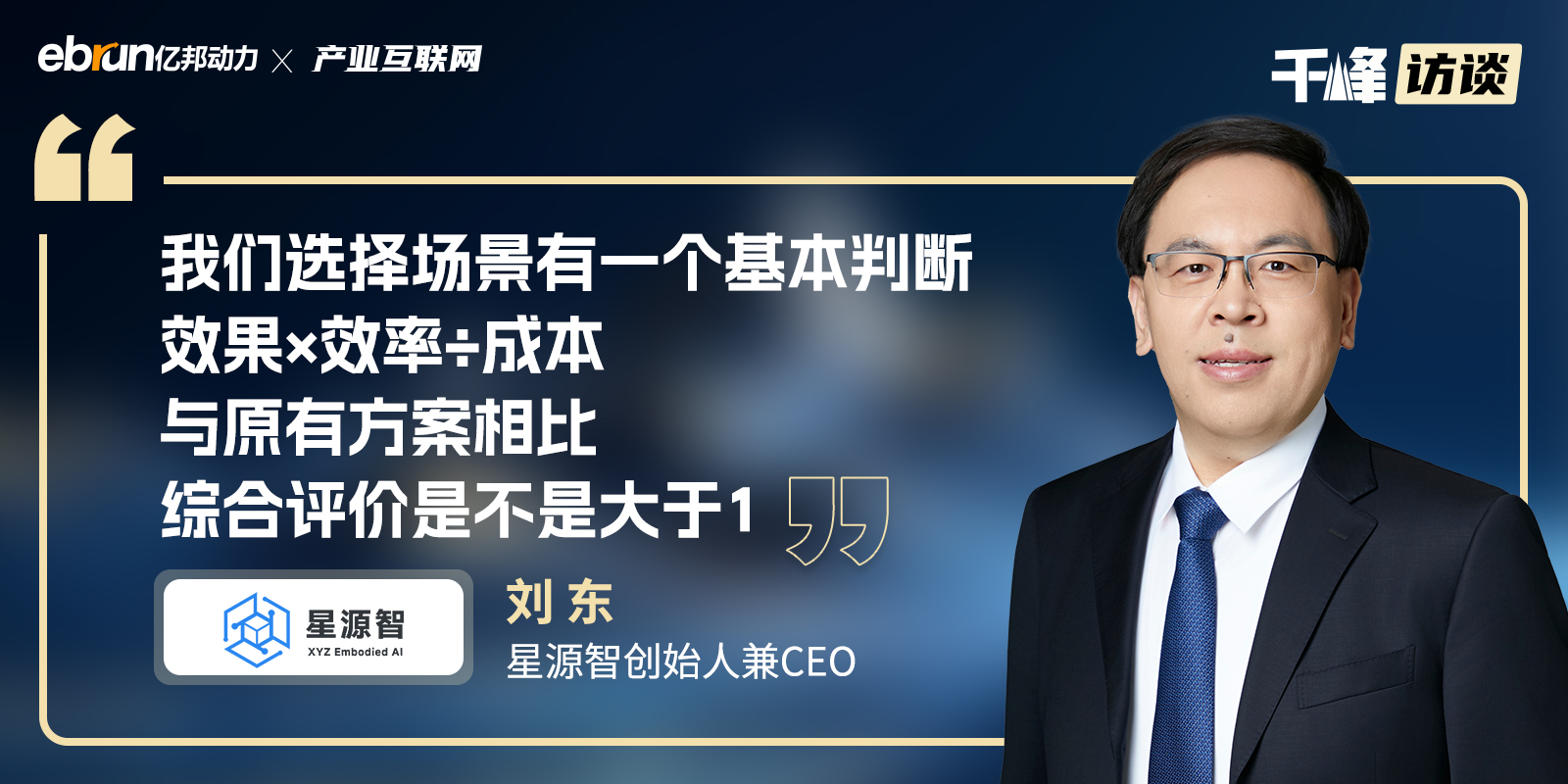
“我们选择场景有一个基本判断:效果x效率÷成本与原有方案相比综合评价是不是大于1”

刘东,星源智创始人兼CEO。星源智定位为具身智能生态提供通用具身大脑、世界模型和端侧算力平台,坚持大脑与本体解耦,一方面向本体厂商提供软硬件一体的具身大脑解决方案,另一方面与本体伙伴合作面向终端场景交付完整方案,现阶段聚焦移动加抓放、移动加轻操作两类能力,优先进入物流搬运、仓内拣选、药店夜间值守和电力巡检等场景。本届千峰奖访谈中,刘东围绕AI与出海带来的模态进化,分享了星源智在具身智能方向的实践与判断。

亿邦:本届千峰奖以「AI与出海带来的模态进化」为核心主题,聚焦产业能力的深层重构。结合具身智能行业,您如何理解这一轮由AI和全球化共同驱动的产业模态进化?星源智在AI能力建设与全球化出海上有哪些核心战略布局?能否具体介绍一下公司的定位及业务模式?

刘东:我理解,具身智能带来的变化,是让AI从数字世界走进物理世界,让机器人真正去理解环境、规划任务、操作物体,成为能干活的生产力工具。

星源智的定位,是为具身智能生态提供通用具身大脑、世界模型和端侧算力平台。我们坚持大脑与本体解耦,因为不同场景需要不同形态的机器人,叉车、机器狗、人形机器人都有各自适合的任务,不能用一种形态去覆盖所有需求。

业务上,我们一方面向本体厂商提供软硬件一体的具身大脑解决方案;另一方面与本体伙伴合作,面向终端场景交付完整方案。我们的重点是把通用大脑、世界模型、端侧工程能力和真实场景结合起来,让算法能力变成客户实际能用的产品。

亿邦:您提到过去做无人配送的经历。那段经历对星源智的定位有什么影响?为什么最终选择做“通用具身大脑”,而不是直接做机器人本体?

刘东:过去做无人配送时,我遇到过一个很具体的问题:无人车能把货送到小区门口,但卸货、上楼还需要人,前面节省的成本又被最后一段消耗掉了。这让我意识到,只解决移动还不够,必须把操作和交互也接进来,才能形成完整的商业闭环。

至于为什么坚持大脑与本体解耦,是因为不同场景需要不同形态的机器人。叉车、机器狗、人形机器人都有各自适合的任务,不能用一种形态去覆盖所有需求。我们选择做通用大脑和端侧算力平台,向本体厂商提供软硬件一体的解决方案,同时与本体伙伴合作面向终端场景交付完整方案。

亿邦:目前贵公司在哪些核心业务环节落地了AI/大模型技术?形成了怎样独具特色的AI或数智化竞争力体系?

刘东:我们现阶段主要聚焦两类能力:移动加抓放,以及移动加轻操作。在这两类能力范围内,优先进入物流搬运、仓内拣选、药店夜间值守和电力巡检等场景。

比如物流场景,机器人需要识别货物和托盘、理解作业空间,再完成搬运和装卸;药店场景,要把移动和拣选衔接起来,满足夜间值守需求;电力巡检则需要打通室内外的环境理解和导航,适应不同地形。我们看重的是一套基础能力在不同场景中的复用,而不是每换一个项目,就重新做一套算法。

技术上,我们发布的具身交互式世界模型ω-EVA采用“设想—验证—执行”的思路。机器人先提出动作,再预测这个动作会带来什么后果,如果可能碰撞或抓取不稳,就先修正再执行。与此同时,我们自研端侧算力平台,让模型在机器人本地运行,减少对远程网络的依赖。模型、底层软件和硬件要联合优化,才能满足真实作业对响应速度和稳定性的要求。

亿邦:您提到ω-EVA世界模型采用“设想—验证—执行”的思路。这和传统的“感知—决策—执行”路线有什么区别?为什么机器人需要在执行前先“预判后果”?

刘东:传统路线更强调感知之后直接决策执行,但在真实作业环境里,很多动作一旦执行就来不及修正。ω-EVA的思路是,机器人先提出动作,再预测这个动作会带来什么后果,如果可能碰撞或抓取不稳,就先修正再执行。这相当于把“验证”环节前置到执行之前,让机器人在动作发生前就能预判风险。模型、底层软件和硬件要联合优化,才能满足真实作业对响应速度和稳定性的要求。

亿邦:您还提到自研端侧算力平台,让模型在机器人本地运行。为什么端侧算力对具身智能这么重要?和云端方案相比,端侧的优势和挑战分别是什么?

刘东:具身智能的作业场景对响应速度和稳定性要求很高,如果依赖远程网络,延迟和断网都会影响执行。我们自研端侧算力平台,让模型在机器人本地运行,减少对远程网络的依赖。挑战在于,端侧算力有限,模型、底层软件和硬件必须联合优化,才能满足真实作业对响应速度和稳定性的要求。

亿邦:能否分享一个最具代表性的“AI+价值链”创新实践案例?它解决了哪些行业共性痛点,创造了哪些可感知、可量化的价值?

刘东:以我们与中力合作的物流叉车场景为例。装卸作业不仅劳动强度大,集装箱等环境还可能面临高温;在海外,叉车司机的人工成本也比较高。这类需求是否值得做,最终还是要算商业账。

搭载我们大脑的自动叉车,可以自主识别卡车、规划卸货顺序、分辨托盘类型。在相关装卸场景中,单车装卸由约90秒缩短到约1分钟。同时我们的模型还会参与动作判断,比如叉臂插入之前,先预判角度和深度是否可能导致货物倾倒,有风险就调整策略。

亿邦:您提到选择场景有一个基本判断:效果乘以效率,再除以成本,与原有方案相比,综合评价是不是大于1。这个公式怎么理解?为什么机器人把一个动作做出来,并不等于有商业价值?

刘东:我们选择场景有一个基本判断:效果乘以效率,再除以成本,与原有方案相比,综合评价是不是大于1。机器人把一个动作做出来,并不等于有商业价值;只有在效果、效率、成本上算得过账,客户才会持续采购,方案才有机会规模化。物流装卸是我们认为具备这种落地条件的场景之一。

亿邦:在推进AI规模化落地过程中,数据要素扮演了怎样的支撑角色?星源智更侧重自有产业数据深耕,还是推进跨主体、跨行业的数据协同?核心挑战是什么、如何应对?

刘东:具身智能的数据,关键不是总量有多大,而是有没有足够多、足够好的交互数据,能支撑机器人在具体场景里把活干好。大量不同任务的数据可以帮助模型建立基础能力,但进入仓库、药店这样的具体场景,还需要用场景数据做后训练,把通用能力提升为场景中的高可用能力。

我们既使用经过清洗验证的高质量开源数据,也积累跨本体数据和真实作业数据。适配某一款机器人时,还要采集它的真机数据,完成从通用能力到具体本体的映射。机器人进入场景后,成功和失败的操作经验再回流到模型训练中,形成持续迭代的闭环。

这里最大的挑战之一是数据质量。有些外部数据的清洗成本,甚至比重新采集还高。摄像头与关节信息如果没有时间同步,空间位置不准确,或者动作过程不完整,都会影响模型学习。因此,我们也在建设自己的数据科学中心,先按统一的采集、对齐和标注方式验证数据有效性,再形成标准流程,推广到产业伙伴的真实工况中。

亿邦:您提到正在建设数据科学中心。这个中心具体解决什么问题?为什么数据质量对具身智能来说比数据总量更重要?

刘东:数据科学中心的核心任务,是先按统一的采集、对齐和标注方式验证数据有效性,再形成标准流程,推广到产业伙伴的真实工况中。具身智能的关键不是数据总量有多大,而是有没有足够多、足够好的交互数据。有些外部数据的清洗成本,甚至比重新采集还高;摄像头与关节信息如果没有时间同步,空间位置不准确,或者动作过程不完整,都会影响模型学习。所以我们要先把数据质量关把住,再谈规模。

亿邦:能否介绍一下星源智盈利模式的迭代情况?您怎么看产业互联网企业盈利模式的演变趋势?TOKEN付费如何才能成为行业标配收入模式?

刘东:我们现在的业务有两种主要方式。一种是作为Tier1供应商,向机器人本体厂商提供具身大脑和端侧算力平台;另一种是面向终端客户,与本体伙伴一起交付完整的机器人解决方案。

产品也可以按客户能力组合。有的客户使用完整模型和算力平台;有的已经有抓取模型,希望补上空间理解或任务规划能力。我们的定位是为整个具身生态提供产品和服务,客户有什么需求,我们就提供相应支持。

亿邦:您提到“模型和算力平台是左右手”。这个比喻怎么理解?为什么只有模型没有工程化载体,或者只有硬件没有模型,都很难形成更高价值?

刘东:从价值上看,模型和算力平台是我们的左右手。只有模型,没有工程化载体,能力很难真正落到场景;只有硬件,没有模型,也很难形成更高的价值。把两者结合起来,并通过完整方案进入实际作业环境,既能为客户提供可用的产品,也能让真实数据持续回流,支撑后续模型迭代。

亿邦:在您看来,当前制约企业AI规模化落地、全球化深度拓展的最大内部瓶颈和外部障碍分别是什么?

刘东:如果只看具身智能的规模化落地,我觉得不能把问题简单归结为模型还不够大。高价值交互数据不足、验证和评测手段不够,以及系统工程能力是否到位,都会影响落地速度。

数据方面,即使只是抓放这类相对明确的任务,也需要针对场景积累足够多的高质量数据。评测方面,我们更关注机器人在真实场景中的表现,以及当前版本相对上一个版本有没有进步。榜单成绩需要参考,但最终还是要看它能不能干活。

另外,模型跑通并不代表整套系统能交付。本体的一致性、关节标定、传感器同步、端侧响应,都可能影响执行结果;遇到处理不了的情况,系统怎样恢复、何时需要人工介入,也要考虑。复杂产线对效率和成功率的要求很高,停线损失又大,因此我们现阶段会先进入商业价值明确、能力边界可控的场景,把一批任务做扎实,再逐步扩展。

亿邦:面向2026年及未来两年,星源智在AI能力迭代与全球化布局上有哪些重点投入规划?您预判这会给行业竞争格局带来哪些关键变化?

刘东:我们接下来会继续围绕具身交互世界模型、端侧算力平台和真实场景数据投入。模型方向上,要进一步把视觉、力觉、触觉等交互信息结构化地接进来,让机器人在执行前能预判风险,在执行中能根据反馈调整动作。更长远的目标,是让模型从失败案例中积累经验,具备持续改进的能力。

落地上,我们仍会先聚焦移动、抓放和轻操作,把物流、拣选等场景做成可以规模化交付的产品,再通过数据回流提升基础模型能力。

亿邦:您提到一个判断:2026年会成为具身智能的“淘汰元年”。这个判断的依据是什么?车企、手机和家电企业进入机器人领域,会给原有整机创业公司带来什么压力?

刘东:行业竞争已经开始分化。之前我认为,2026年会成为具身智能的“淘汰元年”,这个判断没有变。车企、手机和家电企业进入机器人领域,会给原有的整机创业公司带来压力;与此同时,已经进入真实场景的企业,开始一边作业、一边积累数据、改进模型。未来两三年,决定一家企业能否留下来的,还是机器人能不能真正成为生产力工具,能不能形成持续收入和规模化交付能力。

作为TO B领域年度风向标,“2026第八届亿邦产业互联网年会暨首届产业智能体大会”将于2026年11月20日在北京召开。主题定为“AI与出海带来的模态进化”,聚焦产业智能体落地、AI供应链价值重构、数据要素与TOKEN经济、产业出海新生态等前沿议题深度思辨。大会将集结学界权威、央国企标杆、产业龙头、投资机构、服务生态伙伴,汇聚产业核心力量、拆解产业数智化转型路径、分享前沿实战经验。同期还将发布年度产业互联网报告及标杆案例,举办决策人闭门会、“千峰奖”颁奖盛典。

本文首发于 亿邦动力 官方网站

文章来源:亿邦动力

广告
微信
朋友圈

FAQ回顾

星源智是做什么的?

星源智定位为具身智能生态提供通用具身大脑、世界模型和端侧算力平台,坚持大脑与本体解耦。公司一方面向机器人本体厂商提供软硬件一体的具身大脑解决方案,另一方面与本体伙伴合作面向终端场景交付完整方案,现阶段聚焦移动加抓放、移动加轻操作两类能力。

具身智能为什么要坚持大脑与机器人本体解耦?

不同场景需要不同形态的机器人,叉车、机器狗、人形机器人都有各自适合的任务,不能用一种形态覆盖所有需求。星源智因此选择做通用大脑和端侧算力平台,向本体厂商提供软硬件一体解决方案,同时与本体伙伴合作面向终端场景交付完整方案。

具身智能机器人在物流搬运场景有什么应用价值?

以星源智与中力合作的物流叉车场景为例,搭载其大脑的自动叉车可自主识别卡车、规划卸货顺序、分辨托盘类型,相关装卸场景中单车装卸由约90秒缩短到约1分钟。模型还会在叉臂插入前预判角度和深度风险,有风险就调整策略,以应对装卸劳动强度大、高温环境和海外司机成本高等问题。

端侧算力平台对具身智能为什么重要?

具身智能作业场景对响应速度和稳定性要求很高,如果依赖远程网络,延迟和断网都会影响执行。星源智自研端侧算力平台,让模型在机器人本地运行,减少对远程网络的依赖。挑战在于端侧算力有限,模型、底层软件和硬件必须联合优化,才能满足真实作业要求。

为什么2026年被认为是具身智能的“淘汰元年”?

刘东判断2026年会成为具身智能的“淘汰元年”,依据是行业竞争已开始分化。车企、手机和家电企业进入机器人领域,会给原有整机创业公司带来压力;已进入真实场景的企业则一边作业、一边积累数据、改进模型。未来两三年,决定企业能否留下的是机器人能否真正成为生产力工具,并形成持续收入和规模化交付能力。

这么好看,分享一下?

朋友圈 分享

APP内打开

赞 +1
+1
微信好友 朋友圈 新浪微博 QQ空间
关闭
收藏成功
发送
/140 0