广告
加载中

千峰访谈易运盈胡顺伟:把跨境贸易的“乡间小路”修成“高速公路”

黄斌 2026-10-29 14:45
黄斌 2026/10/29 14:45

邦小白快读

EN
全文速览

总:文章核心是把中国供应链与海外市场之间断断续续的乡间小路修成可规模化通行的高速公路。

1.业务模式是一端深入产业带,把工厂、产品、价格、产能和内容数字化;另一端建设海外客户、经销商、本地BD和履约网络,中间用AI完成选品、获客、营销、谈单和客户管理。

2.实操上,AI可用于判断产品适合哪个国家、通过海关地图展会搜索找客户、生产多语种商品和营销素材。

总:对想做出海的人,最有用的是训练与数据闭环。

1.新人先通过LMS学习产品、外贸流程和销售方法,再由AI辅助识别客户意图、生成回复建议和谈判策略,最快一周可产生订单。

2.要沉淀供应链、海外市场客户、询盘沟通报价成交履约三类数据,让真实交易结果反哺下一次选品和客户匹配;线上解决效率,线下解决信任。

总:文章虽聚焦跨境B2B平台,但对品牌商做全球化渠道、内容营销和信任建设有参考。

1.品牌出海不能只把中文网站翻译成英文或投一轮广告;B2B交易金额高、决策周期长,客户要见到人、看到货、建立信任才下单,因此要线上解决效率、线下解决信任。

2.渠道上可建设统一数字底座加本地化运营网络,借助本地BD、经销商、城市合作伙伴、商协会和政府产业资源建联服务,而不是简单复制中国团队。

总:产品和用户运营上,应把商品、报价、资质、图片、视频、技术资料标准化为数字资产。

1.用AI完成多语种商品内容和营销素材生产,并借助海关、地图、展会、搜索等数据获客。

2.关注客户点击、询价、最关心的问题和成交或流失原因,让这些行为数据反哺选品与客户匹配;平台价值最终落在降低搜索、沟通和信任成本。

总:卖家可重点关注市场机会、合作方式和风险提示。

1.重点市场包括印尼、哈萨克斯坦、意大利、匈牙利、智利、肯尼亚、土耳其,并持续建设海外经销商和合作伙伴网络;机会在于中国好产品与海外真实需求之间更快、更低成本、更可信地匹配。

2.可学习平台化打法:国内深入产业带筛选供应商并标准化产品资料,海外通过数字营销、本地BD、经销商和合作伙伴获取采购需求,再用CRM、IM和履约体系推动交易。

总:风险与应对上,B2B出海不是翻译网站或投广告,尤其交易金额高、决策周期长,必须线上线下结合。

1.不同国家产业结构、渠道模式和商业文化不同,不宜简单复制中国团队,应做统一数字底座加本地化运营。

2.新人可通过LMS培训加AI谈单辅助快速出单;商业模式要建立在帮客户找到客户、降成本、带来订单等真实结果上,TOKEN消耗也要看是否更接近真实订单。

总:工厂可关注进入全球B2B供应链的机会和数字化启示。

1.文章强调中国有好产品、海外有真实需求,关键是让两边更快、更低成本、更可信地找到彼此并完成交易;工厂可通过平台进入印尼、哈萨克斯坦、意大利、匈牙利、智利、肯尼亚、土耳其等市场。

2.平台深入产业带做供应链数字化,把工厂、产品、价格、产能、资质、图片、视频、技术资料逐步标准化,形成可被海外客户识别和匹配的数字资产。

总:生产经营上,工厂应重视产品标准化和真实交易数据反馈。

1.AI可辅助判断什么产品适合什么国家,并通过海关、地图、展会、搜索等数据寻找潜在客户;产品进入平台后不再只是图片和报价,而是标准化数字资产。

2.客户点击、询价、关注点、成交或流失原因会反哺下一次选品和客户匹配;数字化意义不是少填表,而是把依赖个人英雄的外贸经验沉淀为组织系统,降低搜索、沟通和信任成本。

总:服务商可关注产业AI与出海带来的趋势、客户痛点和解决方案。

1.趋势是从老板和外贸业务员单兵作战,转向AI辅助决策、平台组织供应链、全球网络完成交易和履约;产业AI的护城河不是先接入大模型,而是拥有持续用真实交易结果喂养AI的数据飞轮。

2.技术落地集中在选品、获客、多语种内容和AI谈单;数据需要覆盖中国供应链、海外市场和客户、业务过程形成的询盘沟通报价成交履约数据,并形成闭环。

总:客户痛点与解法很明确。

1.传统外贸新人依赖语言、产品知识和谈判经验,可能几个月不敢独立面对客户;可用LMS完成产品、外贸流程和销售方法培训,再由AI识别客户意图、生成回复建议和提供谈判策略。

2.工厂和海外采购商存在重复搜索、沟通和信任成本,平台可一次性组织供应、需求获取、商品匹配、谈判和履约;商业模式应按真实商业结果收费,TOKEN要看能否帮助多管客户、缩短成交周期和提高转化率。

总:平台商可关注平台如何组织双边供需、本地化运营和风险规避。

1.平台要解决中国工厂与海外采购商重复发生的成本:国内深入产业带筛选供应商,把产品、报价、资质、图片、视频、技术资料标准化;海外通过数字营销、本地BD、经销商、城市合作伙伴、商协会和政府产业资源持续获取采购需求。

2.运营上建设统一数字底座加本地化运营网络,用商城、CRM、IM、数据和数字营销找客户,用本地BD和合作伙伴建联服务,最终形成持续产生客户和订单的全球商业网络,而不是散落海外的销售。

总:平台招商和风险规避上,文章给出几点。

1.招商合作可围绕本地BD、经销商、城市合作伙伴、商协会及政府产业资源展开;供给端要深入产业带做筛选和标准化。

2.风险在于B2B交易金额高、决策周期长,客户要见到人、看到货、建立信任才下单,不能把翻译网站或投广告当全球化,也不能简单复制中国团队;盈利要建立在真实业务价值上,TOKEN本身不是价值,能更接近真实订单才有商业逻辑。

总:研究者可关注产业新动向、新问题和商业模式变化。

1.新动向是AI与全球化共同驱动跨境B2B模态进化:从个人英雄式外贸转向AI辅助决策、平台组织供应链、全球网络完成交易和履约;平台定位为AI驱动的全球B2B供应链生态平台。

2.新问题包括数据能否形成闭环、B2B高金额长决策周期下的信任建立、不同国家产业结构渠道模式商业文化的本地化差异,以及TOKEN作为AI能力计量单位并不等于价值。

总:商业模式和政策启示上,文章强调结果付费和产业带数字化。

1.未来产业互联网收入可能来自软件、AI、数字营销、供应链、交易服务和履约,但都应建立在帮客户找到客户、降低成本、带来订单等真实业务价值上;产业AI竞争应证明每个TOKEN更接近真实订单。

2.启示是建设统一数字底座加本地化运营网络,借助本地BD、经销商、商协会和政府产业资源;把外贸经验通过LMS和AI变成可培训、复制、规模化输出的企业能力,并用真实交易结果喂养数据飞轮。

返回默认
声明:快读内容全程由AI生成,请注意甄别信息。如您发现问题,请发送邮件至 run@ebrun.com 。

我是 品牌商 卖家 工厂 服务商 平台商 研究者 帮我再读一遍。

Quick Summary

Overall: The core thesis is to turn the fragmented back roads between China's supply chain and overseas markets into a scalable highway.

1. The business model goes deep into industrial belts at one end, digitizing factories, products, prices, capacity, and content; at the other end, it builds overseas customers, distributors, local BD, and fulfillment networks, with AI in the middle handling product selection, customer acquisition, marketing, deal negotiation, and customer management.

2. In practice, AI can determine which country a product suits, find customers through customs data, maps, trade shows, and search, and produce multilingual product and marketing materials.

Overall: For those seeking to expand overseas, the most valuable element is the training and data closed loop.

1. Newcomers first learn products, foreign trade processes, and sales methods through the LMS; AI then helps identify customer intent, generate reply suggestions, and develop negotiation strategies, with orders possible in as little as one week.

2. They need to accumulate three types of data: supply chain, overseas market customers, and inquiries-communications-quotations-deals-fulfillment, so real transaction results feed back into the next round of product selection and customer matching; online channels solve efficiency, while offline channels solve trust.

Overall: Although the article focuses on cross-border B2B platforms, it offers lessons for brands building global channels, content marketing, and trust.

1. Going global cannot be reduced to translating a Chinese website into English or running a single ad campaign; B2B deals are high-value and have long decision cycles, and customers need to meet people, see products, and build trust before ordering. Online channels must solve efficiency, while offline channels must solve trust.

2. On channels, brands can build a unified digital foundation plus a localized operating network, using local BD, distributors, city partners, industry associations, and government industrial resources to connect and serve customers, rather than simply replicating a China team.

Overall: In product and user operations, products, quotations, qualifications, images, videos, and technical materials should be standardized into digital assets.

1. Use AI to produce multilingual product content and marketing materials, and use customs, map, trade show, and search data to acquire customers.

2. Track customer clicks, inquiries, most pressing questions, and reasons for conversion or churn, so these behavioral data feed back into product selection and customer matching; the platform's value ultimately lies in reducing search, communication, and trust costs.

Overall: Sellers should focus on market opportunities, partnership models, and risk warnings.

1. Key markets include Indonesia, Kazakhstan, Italy, Hungary, Chile, Kenya, and Turkey, while overseas distributor and partner networks should be continuously built; the opportunity lies in matching good Chinese products with real overseas demand faster, at lower cost, and with greater trust.

2. Sellers can learn from the platform playbook: go deep into industrial belts in China to screen suppliers and standardize product materials; overseas, acquire purchasing demand through digital marketing, local BD, distributors, and partners; then use CRM, IM, and fulfillment systems to drive transactions.

Overall: On risks and responses, B2B going global is not about translating a website or running ads; because transaction values are high and decision cycles long, online and offline efforts must be combined.

1. Countries differ in industrial structure, channel models, and business culture, so a China team should not be simply replicated; instead, build a unified digital foundation plus localized operations.

2. Newcomers can generate orders quickly through LMS training and AI-assisted deal negotiation; the business model must be built on real outcomes such as helping customers find customers, reducing costs, and generating orders. TOKEN consumption should also be assessed by whether it brings the process closer to real orders.

Overall: Factories should focus on the opportunity to enter the global B2B supply chain and the digitalization lessons.

1. The article emphasizes that China has good products and overseas markets have real demand; the key is to help both sides find each other and complete transactions faster, at lower cost, and with greater trust. Factories can use the platform to enter markets such as Indonesia, Kazakhstan, Italy, Hungary, Chile, Kenya, and Turkey.

2. The platform goes deep into industrial belts to digitalize the supply chain, gradually standardizing factories, products, prices, capacity, qualifications, images, videos, and technical materials into digital assets that overseas customers can identify and match.

Overall: In production and operations, factories should prioritize product standardization and feedback from real transaction data.

1. AI can help determine which products suit which countries and find potential customers through customs, map, trade show, and search data; once products enter the platform, they are no longer just images and quotations but standardized digital assets.

2. Customer clicks, inquiries, areas of concern, and reasons for conversion or churn will feed back into the next round of product selection and customer matching; digitalization is not about less form-filling, but about turning foreign trade experience that depends on individual heroes into an organizational system, reducing search, communication, and trust costs.

Overall: Service providers should focus on the trends, customer pain points, and solutions arising from industrial AI and overseas expansion.

1. The trend is shifting from owners and foreign trade salespeople working alone to AI-assisted decision-making, platform-organized supply chains, and global networks completing transactions and fulfillment. The moat of industrial AI is not being first to connect a large model, but having a data flywheel that continuously feeds real transaction results into AI.

2. Technology adoption centers on product selection, customer acquisition, multilingual content, and AI-assisted deal negotiation; data must cover China's supply chain, overseas markets and customers, and business-process data on inquiries, communications, quotations, deals, and fulfillment, forming a closed loop.

Overall: Customer pain points and solutions are clear.

1. Traditional foreign trade newcomers depend on language, product knowledge, and negotiation experience, and may spend months afraid to face customers independently. LMS can provide training in products, foreign trade processes, and sales methods; AI can then identify customer intent, generate reply suggestions, and provide negotiation strategies.

2. Factories and overseas buyers face repeated search, communication, and trust costs. The platform can organize supply, demand acquisition, product matching, negotiation, and fulfillment in one place; the business model should charge for real business outcomes, and TOKEN should be evaluated by whether it helps manage more customers, shorten deal cycles, and improve conversion rates.

Overall: Marketplace operators should focus on how platforms organize two-sided supply and demand, localize operations, and avoid risks.

1. Platforms need to address recurring costs between Chinese factories and overseas buyers: in China, go deep into industrial belts to screen suppliers and standardize products, quotations, qualifications, images, videos, and technical materials; overseas, continuously acquire purchasing demand through digital marketing, local BD, distributors, city partners, industry associations, and government industrial resources.

2. In operations, build a unified digital foundation plus a localized operating network; use marketplaces, CRM, IM, data, and digital marketing to find customers; use local BD and partners to connect and serve them; ultimately form a global business network that continuously generates customers and orders, rather than scattered overseas sales teams.

Overall: On platform recruitment and risk avoidance, the article makes several points.

1. Recruitment and partnerships can focus on local BD, distributors, city partners, industry associations, and government industrial resources; on the supply side, go deep into industrial belts for screening and standardization.

2. Risks lie in high B2B transaction values and long decision cycles: customers need to meet people, see products, and build trust before ordering. Translating a website or running ads is not globalization, nor should a China team be simply replicated. Profitability must be based on real business value; TOKEN itself is not value, and only a closer path to real orders has commercial logic.

Overall: Researchers should focus on new industry developments, new questions, and changes in business models.

1. A new development is that AI and globalization are jointly driving the evolution of cross-border B2B models: from individual-hero foreign trade to AI-assisted decision-making, platform-organized supply chains, and global networks completing transactions and fulfillment; the platform positions itself as an AI-driven global B2B supply chain ecosystem platform.

2. New questions include whether data can form a closed loop, how to build trust under high-value B2B deals with long decision cycles, how to localize for differences in national industrial structures, channel models, and business cultures, and the fact that TOKEN as a unit for measuring AI capability does not equal value.

Overall: On business models and policy implications, the article emphasizes outcome-based payment and digitalization of industrial belts.

1. Future industrial internet revenue may come from software, AI, digital marketing, supply chain, transaction services, and fulfillment, but all should be based on real business value such as helping customers find customers, reducing costs, and generating orders; competition in industrial AI should prove that each TOKEN brings the process closer to real orders.

2. The implication is to build a unified digital foundation plus a localized operating network, drawing on local BD, distributors, industry associations, and government industrial resources; turn foreign trade experience through LMS and AI into trainable, replicable, and scalable organizational capability, and feed real transaction results into the data flywheel.

Disclaimer: The "Quick Summary" content is entirely generated by AI. Please exercise discretion when interpreting the information. For issues or corrections, please email run@ebrun.com .

I am a Brand Seller Factory Service Provider Marketplace Seller Researcher Read it again.

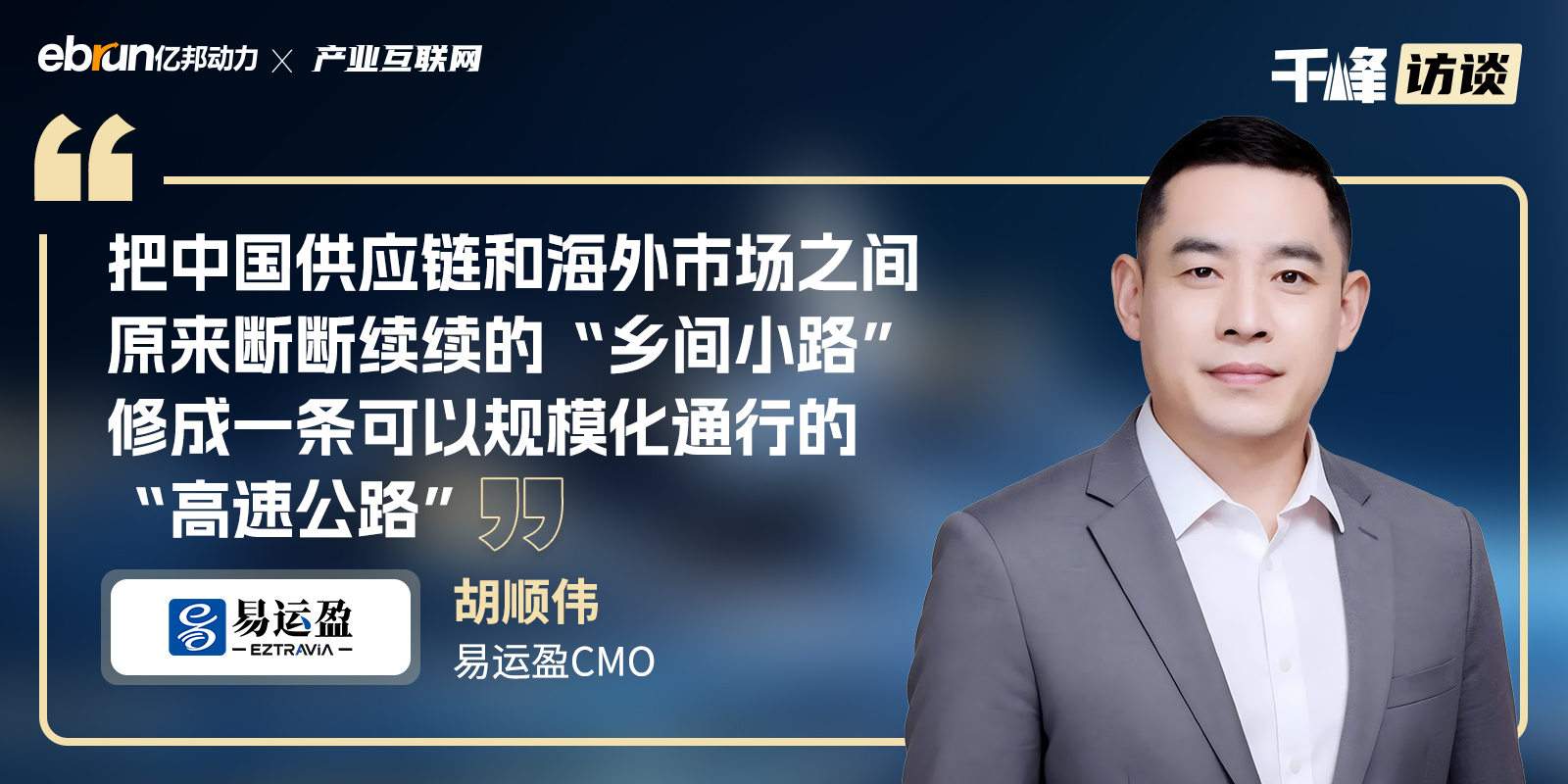
【亿邦原创】“把中国供应链和海外市场之间原来断断续续的‘乡间小路’,修成一条可以规模化通行的‘高速公路’。”

胡顺伟,易运盈(山东)网络科技有限公司CMO。易运盈定位为“AI驱动的全球B2B供应链生态平台”,一端深入中国产业带做供应链数字化,一端建设海外客户、经销商、本地BD和履约网络,中间用AI完成选品、获客、营销、谈单和客户管理,重点推进印尼、哈萨克斯坦、意大利、匈牙利、智利、肯尼亚、土耳其等市场。本届千峰奖访谈中,胡顺伟围绕AI与出海带来的模态进化,分享了易运盈在跨境B2B方向的实践与判断。

亿邦:本届千峰奖以「AI与出海带来的模态进化」为核心主题,聚焦产业能力的深层重构。结合跨境贸易行业,您如何理解这一轮由AI和全球化共同驱动的产业模态进化?易运盈的定位及业务模式是什么?

胡顺伟:我们看到一个非常明显的变化:过去中国企业出海,基本靠老板和外贸业务员“单兵作战”——自己找客户、投广告、跑展会、谈订单、找物流;未来,这套模式会越来越变成由AI辅助决策、平台组织供应链、全球网络完成交易和履约。

所以易运盈做的事情,可以用一句话概括:把中国供应链和海外市场之间原来断断续续的“乡间小路”,修成一条可以规模化通行的“高速公路”。一端,我们进入中国产业带,把工厂、产品、价格、产能和内容数字化;另一端,我们持续建设海外客户、经销商、本地BD和履约网络;中间再用AI完成选品、获客、营销、谈单和客户管理。

易运盈的战略定位是“AI驱动的全球B2B供应链生态平台”,但落到业务上,我们就是在解决一个最朴素的问题:中国有好产品,海外有真实需求,怎么让两边更快、更低成本、更可信地找到彼此并完成交易。

亿邦:目前易运盈在哪些核心业务环节落地了AI和大模型技术?

胡顺伟:我们不太关注“用了多少个AI工具”,更关注一个问题:AI到底能不能直接改变业务结果。

比如选品环节,AI辅助判断什么产品适合什么国家;获客环节,通过海关、地图、展会、搜索等数据快速寻找潜在客户;内容环节,AI可以完成多语种商品内容和营销素材生产。

亿邦:您特别提到AI谈单工具。传统外贸销售很依赖语言、产品知识和谈判经验,一个新人可能几个月都不敢独立面对客户。AI谈单工具具体怎么改变这个局面?

胡顺伟:传统外贸销售很依赖语言、产品知识和谈判经验,一个新人可能几个月都不敢独立面对客户。现在,我们先通过LMS系统完成产品、外贸流程和销售方法培训,再由AI在实际谈单中辅助识别客户意图、生成回复建议、提供谈判策略。

在实际业务实践中,一个过去没有任何外贸经验的新人,经过这套体系训练后,最快一周就可以产生订单。

这件事对我们的意义很大。因为AI真正改变的不是“让老业务员打字更快”,而是把过去只能靠师傅带徒弟传承的外贸经验,变成一种可以培训、复制和规模化输出的企业能力。

亿邦:数据要素在AI规模化落地中扮演什么角色?易运盈的数据竞争力是什么?

胡顺伟:我们有一个判断:模型决定AI聪不聪明,但数据决定AI懂不懂生意。

如果只有一个通用大模型,它可能会写一封很漂亮的开发信,但它不知道什么产品适合哈萨克斯坦,什么客户最近正在采购,也不知道一个询盘最后为什么成交或者流失。

所以易运盈持续沉淀三类数据:第一是中国供应链数据,包括工厂、产品、价格、产能和资质;第二是海外市场和客户数据,包括海关、地图、展会、搜索等多源商业数据;第三是业务过程中形成的询盘、沟通、报价、成交和履约数据。

真正有价值的不是“数据多”,而是数据能够形成闭环。比如一个中国工厂的产品被推到印尼,哪些客户点开了、谁询价了、客户最关心什么、最后为什么成交,这些数据会重新反哺下一次选品和客户匹配。

所以我们认为,产业AI未来真正的护城河不是“谁先接入一个大模型”,而是谁拥有一套持续用真实交易结果喂养AI的数据飞轮。

亿邦:目前易运盈布局了哪些海外市场?如何进行本地化?

胡顺伟:我们目前重点推进印尼、哈萨克斯坦、意大利、匈牙利、智利、肯尼亚、土耳其等市场,同时持续建设更广泛的海外经销商和合作伙伴网络。

在这个过程中我们越来越明确:B2B出海不是把一个中文网站翻译成英文,也不是在海外投一轮广告,就叫全球化。尤其B2B交易金额高、决策周期长,很多客户一定要见到人、看到货、建立信任以后才愿意下订单。

所以我们的策略是:线上解决效率,线下解决信任。线上依靠商城、CRM、IM、数据和数字营销持续找客户;线下依靠本地BD、经销商、城市合作伙伴、商协会以及政府产业资源去建联和服务。

不同国家的产业结构、渠道模式和商业文化都不一样,所以我们不会简单复制一个中国团队到海外,而是建设“统一数字底座+本地化运营网络”。我们最终想形成的,不是一批散落在海外的销售,而是一张真正能够持续产生客户和订单的全球商业网络。

亿邦:易运盈在海外市场形成了怎样的深度价值链模式?

胡顺伟:传统跨境贸易最大的一个问题,是两边都很累。海外采购商为了找一个产品,可能要联系十几家中国工厂;中国工厂为了拿一个海外客户,又要投广告、跑展会、招外贸人员,从零开始建立信任。

易运盈想做的,就是把两边原本重复发生的成本,由平台一次性组织起来。在国内,我们深入产业带筛选供应商,把产品、报价、资质、图片、视频、技术资料逐步标准化;在海外,通过数字营销、本地BD、经销商和合作伙伴持续获取采购需求。当海外客户提出需求后,平台能够更快地从中国供应链里找到合适的产品和工厂,再通过CRM、IM和履约体系推动交易。

因此我们并不是简单“把中国商品放到网上”,而是在建设一套从供应组织、需求获取、商品匹配、沟通谈判到履约交付的完整机制。如果一定要总结易运盈创造的价值,其实就是三个词:降低搜索成本、降低沟通成本、降低信任成本。

亿邦:AI与数字化能力为跨境业务提供了哪些核心支撑?

胡顺伟:跨境B2B天然是一个非常复杂的生意:国家多、语言多、产品多、客户分散,而且每一个业务员能够管理的客户数量都有上限。所以我们把数字化看成全球业务的“操作系统”。

一个商品进入平台以后,不再只是几张图片和一个报价,而是形成标准化数字资产;一个海外客户进入CRM以后,也不再只是业务员手机里的一个WhatsApp联系人,而是逐步形成客户画像、需求、沟通记录和商机状态。

在这个基础上,AI主要帮助我们解决三个问题:什么产品值得卖?应该卖到哪里?哪个客户现在最值得跟?过去,一个优秀外贸业务员的能力,可能存在他的脑子里、微信里和Excel里;一旦这个人离职,大量经验也随之流失。我们希望通过CRM、IM、AI和数据体系,把这些经验逐步沉淀下来。因此,数字化真正的意义不是“少填几张表”,而是让外贸从依赖个人英雄,变成依赖组织系统。

亿邦:产业互联网企业的盈利模式会如何演变?TOKEN付费是否会成为行业标配?

胡顺伟:我们认为,未来产业互联网的盈利模式会越来越接近一句话:谁真正创造了商业结果,谁才能持续获得收入。

过去产业互联网比较常见的是卖软件、卖会员、卖流量,但企业现在越来越理性。客户最终会问:你到底有没有帮我找到客户?有没有降低成本?有没有带来订单?

易运盈也是按照这个逻辑来设计商业模式。软件、AI、数字营销、供应链、交易服务和履约都可以产生收入,但这些收入最终都应该建立在真实业务价值之上。

对于TOKEN也是一样。我们认为TOKEN首先是一种AI能力的计量单位,但它本身不是价值。如果消耗100万个TOKEN,可以帮助一个销售人员多管理几十个客户、缩短成交周期、提高转化率,那么企业愿意付费;如果只是生成了大量内容,却没有带来任何商业结果,再便宜的TOKEN也是成本。

所以未来产业AI真正应该竞争的,不是谁的TOKEN卖得便宜,而是谁能证明:我消耗的每一个TOKEN,最后都更接近一笔真实订单。这才是产业AI最终的商业逻辑。

作为TO B领域年度风向标,“2026第八届亿邦产业互联网年会暨首届产业智能体大会”将于2026年11月20日在北京召开。主题定为“AI与出海带来的模态进化”,聚焦产业智能体落地、AI供应链价值重构、数据要素与TOKEN经济、产业出海新生态等前沿议题深度思辨。大会将集结学界权威、央国企标杆、产业龙头、投资机构、服务生态伙伴,汇聚产业核心力量、拆解产业数智化转型路径、分享前沿实战经验。同期还将发布年度产业互联网报告及标杆案例,举办决策人闭门会、“千峰奖”颁奖盛典。

本文首发于 亿邦动力 官方网站

文章来源:亿邦动力

广告
微信
朋友圈

FAQ回顾

易运盈是什么公司?主要业务模式是什么?

易运盈(山东)网络科技有限公司定位为AI驱动的全球B2B供应链生态平台,一端深入中国产业带做供应链数字化,一端建设海外客户、经销商、本地BD和履约网络,中间用AI完成选品、获客、营销、谈单和客户管理;重点推进印尼、哈萨克斯坦、意大利、匈牙利、智利、肯尼亚、土耳其等市场。

跨境B2B企业如何降低海外获客与交易成本?

易运盈通过平台一次性组织两边重复成本:国内深入产业带筛选供应商,将产品、报价、资质、图片、视频、技术资料标准化;海外用数字营销、本地BD、经销商和合作伙伴获取采购需求;客户提出需求后,平台从中国供应链匹配产品工厂,再通过CRM、IM和履约体系推动交易,核心是降低搜索成本、沟通成本和信任成本。

易运盈如何做海外市场本地化运营?

易运盈重点推进印尼、哈萨克斯坦、意大利、匈牙利、智利、肯尼亚、土耳其等市场,并建设海外经销商和合作伙伴网络;策略是线上解决效率、线下解决信任,线上依靠商城、CRM、IM、数据和数字营销找客户,线下依靠本地BD、经销商、城市合作伙伴、商协会及政府产业资源建联服务;建设“统一数字底座+本地化运营网络”,不简单复制中国团队。

产业AI的数据竞争力体现在哪里?

易运盈认为模型决定AI聪不聪明,数据决定AI懂不懂生意;其沉淀中国供应链数据(工厂、产品、价格、产能、资质)、海外市场和客户数据(海关、地图、展会、搜索等)、业务过程数据(询盘、沟通、报价、成交、履约);关键不是数据多,而是形成闭环,让真实交易结果反哺下一次选品和客户匹配,构建数据飞轮。

产业互联网企业未来如何收费?TOKEN付费会成为标配吗?

未来盈利模式趋于谁真正创造商业结果,谁才能持续获得收入;软件、AI、数字营销、供应链、交易服务和履约都可产生收入,但应建立在真实业务价值上;TOKEN是AI能力计量单位,本身不是价值,若消耗100万个TOKEN能帮销售多管理客户、缩短成交周期、提高转化率,企业愿付费,否则再便宜也是成本。

这么好看,分享一下?

朋友圈 分享

APP内打开

赞 +1
+1
微信好友 朋友圈 新浪微博 QQ空间
关闭
收藏成功
发送
/140 0