广告
加载中

大众日报深度解读 广交会上的AI外贸新实践

龚作仁 2026-10-29 09:02
龚作仁 2026/10/29 09:02

邦小白快读

EN
全文速览

总:广交会外贸服务新变化与AI应用亮点

1. 第140届广交会上,贸易服务从“运费战”转向“全链条”,AI技术应用与贸易服务模式升级成为焦点,广交会不仅是产品对接平台,也是新技术与服务模式集中展示的窗口。

2. 易运盈的AI外贸实践被大众日报作为具体案例报道,其AI工具主要用于客户咨询、产品资料整理、多语言沟通等日常业务环节,帮助提高业务效率。

3. 易运盈将AI应用与全球B2B供应链业务结合,关注产品信息、客户沟通、业务对接等实际环节,并推进产品组织、需求对接及供应链协同,连接中国制造与海外市场。

4. AI被定位为服务实际贸易需求的技术手段,不是独立概念,未来公司将继续推进数字化能力与实际业务场景的结合,围绕产品、需求与交易交付等环节开展实践。

总:AI外贸实践对中国制造品牌出海的启示

1. 品牌展示与沟通:易运盈利用AI工具辅助产品资料整理和多语言沟通,有助于中国制造企业在海外市场更有效地展示产品、对接采购需求,提升品牌与客户沟通效率。

2. 渠道建设:易运盈持续推进全球B2B供应链业务,围绕中国制造与海外市场之间的连接开展产品组织、需求对接及供应链协同,为品牌渠道拓展和海外市场连接提供支撑。

3. 消费趋势与用户行为:文章提到客户咨询、产品资料整理、多语言沟通贯穿外贸业务流程,反映出海外采购沟通方式的变化,AI工具的应用正成为应对这些需求的新手段。

4. 产品研发与展示启示:易运盈关注产品信息、客户沟通及业务对接等实际环节,让数字化工具更好地服务于外贸业务开展,提示品牌商在产品展示和资料组织上可借助数字化工具提升效率。

总:外贸服务变化中的机会与可学习点

1. 增长市场与机会:文章指出广交会上的贸易服务从“运费战”转向“全链条”,AI工具应用成为新趋势,卖家可关注AI辅助客户沟通和资料整理带来的效率提升机会,把握外贸服务模式升级红利。

2. 商业模式:易运盈将AI应用与全球B2B供应链业务结合,围绕产品信息、客户沟通、业务对接等环节开展实践,关注产品走向海外所需的有效展示、采购需求对接和合作交付,为卖家提供AI+供应链的业务模式参考。

3. 事件应对与可学习点:外贸业务中客户咨询、产品资料整理、多语言沟通贯穿流程,借助AI工具辅助处理这些工作有助于提高日常业务效率,这是卖家可借鉴的实操方向。

4. 机会提示:文章强调AI应用贴近真实贸易场景,数字化工具服务于外贸业务开展,卖家可关注AI工具在实际业务环节中的应用,及时调整业务方式。

总:制造企业数字化与海外对接的启示

1. 产品信息展示:易运盈关注产品信息、客户沟通及业务对接等实际环节,借助AI工具辅助产品资料整理,有助于工厂产品更有效地展示并走向海外市场,对接合适的采购需求。

2. 商业机会:易运盈推进全球B2B供应链业务,围绕中国制造与海外市场之间的连接开展产品组织、需求对接及供应链协同,为工厂对接海外采购需求、推进合作与交付提供通道和商业机会。

3. 数字化启示:文章强调AI应用贴近真实贸易场景,让数字化工具更好地服务于外贸业务开展,工厂可关注产品资料整理和多语言沟通等环节的数字化应用,推进业务数字化。

4. 推进电商启示:外贸业务流程中客户咨询、产品资料整理、多语言沟通等工作可借助AI工具辅助处理,提高日常业务效率,为工厂推进电商化和数字化提供参考方向。

总:AI外贸服务趋势与客户痛点解决方案

1. 行业发展趋势:广交会上贸易服务从“运费战”转向“全链条”,AI技术应用与贸易服务模式升级成为新方向,AI工具正逐步进入外贸业务场景。

2. 新技术:易运盈将AI技术应用于客户咨询、产品资料整理、多语言沟通等外贸业务环节,探索AI与全球B2B供应链业务的结合,让数字化工具服务于实际贸易需求。

3. 客户痛点:外贸业务中客户咨询、产品资料整理、多语言沟通等工作贯穿业务流程,如何借助AI工具辅助处理、提高日常业务效率是实际痛点,企业需要新的工具与服务方式应对业务需求。

4. 解决方案:易运盈围绕全球B2B贸易场景,推进AI应用与供应链业务结合,关注产品信息、客户沟通及业务对接等实际环节,并推进产品组织、需求对接及供应链协同,为外贸业务提供AI+供应链的服务方案。

总:外贸平台服务模式变化与AI应用观察

1. 商业对平台的需求:文章显示外贸业务中客户咨询、产品资料整理、多语言沟通等工作需要AI工具辅助,提高日常业务效率,反映企业对平台服务的新需求,平台需关注企业借助新工具应对实际业务需求的趋势。

2. 平台最新做法:广交会不仅是中国制造对接全球市场的重要平台,也是外贸新产品、新技术与服务模式集中展示的窗口,报道将视角延伸至展会背后的贸易服务变化,展示了平台在服务模式升级中的角色。

3. 运营管理:易运盈的AI外贸实践以实际业务为基础,围绕产品、需求与交易交付等环节开展实践,推进数字化能力与实际业务场景的结合,为平台运营管理提供参考。

4. 风向规避:文章提到贸易服务从“运费战”转向“全链条”,提示平台商关注服务模式升级和AI工具应用趋势,避免停留在传统价格竞争模式,及时调整平台服务方向。

总:AI与外贸结合的产业新动向与商业模式

1. 产业新动向:第140届广交会上,贸易服务从“运费战”转向“全链条”,AI技术应用进入外贸业务,易运盈的实践成为外贸服务新变化的具体案例,反映出AI与外贸结合的新趋势。

2. 新问题:AI技术的价值需要在实际业务中得到检验,如何让AI应用贴近真实贸易场景、服务于外贸业务开展,是值得研究的问题,文章强调AI不是脱离业务的独立概念。

3. 商业模式:易运盈将AI应用与全球B2B供应链业务结合,围绕产品信息、客户沟通、业务对接及交易交付等环节开展实践,形成AI+供应链的业务探索模式,关注中国制造与海外市场之间的连接。

4. 政策法规建议和启示:文章将AI定位为服务实际贸易需求的技术手段,提示在推进数字化能力与实际业务场景结合时,应注重实际业务需求导向,围绕产品、需求与交易交付等环节开展实践。

返回默认
声明:快读内容全程由AI生成,请注意甄别信息。如您发现问题,请发送邮件至 run@ebrun.com 。

我是 品牌商 卖家 工厂 服务商 平台商 研究者 帮我再读一遍。

Quick Summary

Overview: New changes in foreign trade services and AI application highlights at the Canton Fair

1. At the 140th Canton Fair, foreign trade services shifted from competing on freight rates to full-chain services, with AI technology applications and upgrades to trade service models becoming focal points. The Canton Fair is not only a platform for product matching but also a window for showcasing new technologies and service models.

2. Yiyunying's AI foreign trade practices were reported by Dazhong Daily as a specific case. Its AI tools are mainly used in daily business processes such as customer inquiries, organizing product materials, and multilingual communication, helping improve operational efficiency.

3. Yiyunying combines AI applications with its global B2B supply chain business, focusing on practical links such as product information, customer communication, and business matching. It also advances product organization, demand matching, and supply chain coordination, connecting Chinese manufacturing with overseas markets.

4. AI is positioned as a technical means to serve actual trade needs rather than a standalone concept. Going forward, the company will continue to integrate digital capabilities with real business scenarios and carry out practices around products, demand, and transaction delivery.

Overview: Implications of AI-enabled foreign trade practices for Chinese manufacturing brands going global

1. Brand display and communication: Yiyunying uses AI tools to support organizing product materials and multilingual communication, helping Chinese manufacturing companies present products more effectively and match procurement needs in overseas markets, improving brand-customer communication efficiency.

2. Channel development: Yiyunying continues to advance its global B2B supply chain business, carrying out product organization, demand matching, and supply chain coordination around the connection between Chinese manufacturing and overseas markets, supporting brand channel expansion and overseas market connections.

3. Market trends and buyer behavior: The article notes that customer inquiries, organizing product materials, and multilingual communication run through foreign trade business processes, reflecting changes in how overseas procurement communication is conducted. The application of AI tools is becoming a new means of responding to these needs.

4. Product R&D and display implications: Yiyunying focuses on practical links such as product information, customer communication, and business matching, enabling digital tools to better serve foreign trade operations. This suggests that brands can use digital tools to improve efficiency in product display and material organization.

Overview: Opportunities and lessons from changes in foreign trade services

1. Growth markets and opportunities: The article points out that trade services at the Canton Fair are shifting from competing on freight rates to full-chain services, and AI tool applications are becoming a new trend. Sellers can look at efficiency gains from AI-assisted customer communication and product material organization, and capture the benefits of upgrading foreign trade service models.

2. Business model: Yiyunying combines AI applications with global B2B supply chain business, carrying out practices around product information, customer communication, and business matching. It focuses on effective display for products entering overseas markets, procurement demand matching, and cooperative delivery, offering sellers a reference for an AI-plus-supply-chain business model.

3. Event response and lessons: In foreign trade operations, customer inquiries, product material organization, and multilingual communication run through the process. Using AI tools to support these tasks can help improve daily business efficiency, an actionable direction sellers can learn from.

4. Opportunity note: The article emphasizes that AI applications should stay close to real trade scenarios and that digital tools serve foreign trade operations. Sellers can watch how AI tools are applied in actual business links and adjust their business methods in a timely manner.

Overview: Implications of digitalization and overseas market connections for manufacturers

1. Product information display: Yiyunying focuses on practical links such as product information, customer communication, and business matching. With AI tools supporting product material organization, factory products can be displayed more effectively and reach overseas markets, matching suitable procurement needs.

2. Business opportunities: Yiyunying advances its global B2B supply chain business, carrying out product organization, demand matching, and supply chain coordination around the connection between Chinese manufacturing and overseas markets, providing channels and business opportunities for factories to connect with overseas procurement demand and advance cooperation and delivery.

3. Digitalization implications: The article emphasizes that AI applications should stay close to real trade scenarios and enable digital tools to better serve foreign trade operations. Factories can focus on digital applications in areas such as product material organization and multilingual communication to advance business digitalization.

4. E-commerce implications: In foreign trade processes, tasks such as customer inquiries, product material organization, and multilingual communication can be supported by AI tools to improve daily business efficiency, offering a reference direction for factories advancing e-commerce and digitalization.

Overview: AI foreign trade service trends and solutions to customer pain points

1. Industry trend: At the Canton Fair, trade services are shifting from competing on freight rates to full-chain services, with AI technology applications and upgrades to trade service models becoming a new direction. AI tools are gradually entering foreign trade business scenarios.

2. New technology: Yiyunying applies AI technology to foreign trade business links such as customer inquiries, product material organization, and multilingual communication, exploring the combination of AI with global B2B supply chain business so that digital tools serve actual trade needs.

3. Customer pain points: In foreign trade operations, tasks such as customer inquiries, product material organization, and multilingual communication run through business processes. How to use AI tools to support these tasks and improve daily business efficiency is a practical pain point, and companies need new tools and service approaches to meet business needs.

4. Solution: Yiyunying focuses on global B2B trade scenarios, advancing the combination of AI applications and supply chain business. It focuses on practical links such as product information, customer communication, and business matching, and advances product organization, demand matching, and supply chain coordination, providing an AI-plus-supply-chain service solution for foreign trade operations.

Overview: Changes in foreign trade platform service models and observations on AI applications

1. Business demand for platforms: The article shows that foreign trade operations require AI tools to support tasks such as customer inquiries, product material organization, and multilingual communication and to improve daily business efficiency, reflecting new demands on platform services. Platforms need to watch how companies use new tools to respond to actual business needs.

2. Latest platform practices: The Canton Fair is not only an important platform for Chinese manufacturing to connect with global markets but also a window for showcasing new foreign trade products, new technologies, and service models. The report extends its view to the changes in trade services behind the exhibition, showing the platform's role in service model upgrading.

3. Operations management: Yiyunying's AI foreign trade practices are based on actual business, carrying out practices around products, demand, and transaction delivery and advancing the integration of digital capabilities with real business scenarios, offering a reference for platform operations management.

4. Trend implications and pitfalls to avoid: The article notes that trade services are shifting from competing on freight rates to full-chain services, suggesting that platform operators should pay attention to service model upgrading and AI tool application trends, avoid remaining in traditional price competition models, and adjust platform service directions in a timely manner.

Overview: New industry trends and business models in the integration of AI and foreign trade

1. New industry trends: At the 140th Canton Fair, trade services shifted from competing on freight rates to full-chain services, and AI technology applications entered foreign trade operations. Yiyunying's practices became a concrete case of new changes in foreign trade services, reflecting a new trend in the integration of AI and foreign trade.

2. New questions: The value of AI technology needs to be tested in actual business. How to make AI applications close to real trade scenarios and serve foreign trade operations is a question worth studying. The article emphasizes that AI is not a standalone concept detached from business.

3. Business model: Yiyunying combines AI applications with global B2B supply chain business, carrying out practices around product information, customer communication, business matching, and transaction delivery, forming an exploratory AI-plus-supply-chain business model and focusing on the connection between Chinese manufacturing and overseas markets.

4. Policy and regulatory suggestions and implications: The article positions AI as a technical means to serve actual trade needs, suggesting that when advancing the integration of digital capabilities with real business scenarios, actors should focus on actual business needs and carry out practices around products, demand, and transaction delivery.

Disclaimer: The "Quick Summary" content is entirely generated by AI. Please exercise discretion when interpreting the information. For issues or corrections, please email run@ebrun.com .

I am a Brand Seller Factory Service Provider Marketplace Seller Researcher Read it again.

近日,《大众日报》刊发《“运费战”退潮、“全链条”走俏,广交会上,贸易服务换打法》,聚焦第140届广交会上的外贸服务新变化,关注AI技术应用与贸易服务模式升级。易运盈在AI外贸领域的实践亮相报道,成为此次广交会外贸服务观察中的一个具体案例。

image.png

易运盈持续探索AI技术与全球B2B供应链业务的结合。此次获得大众日报关注,也让易运盈在AI外贸领域的业务实践得到更多展示。

01 从广交会现场,看AI如何进入外贸业务

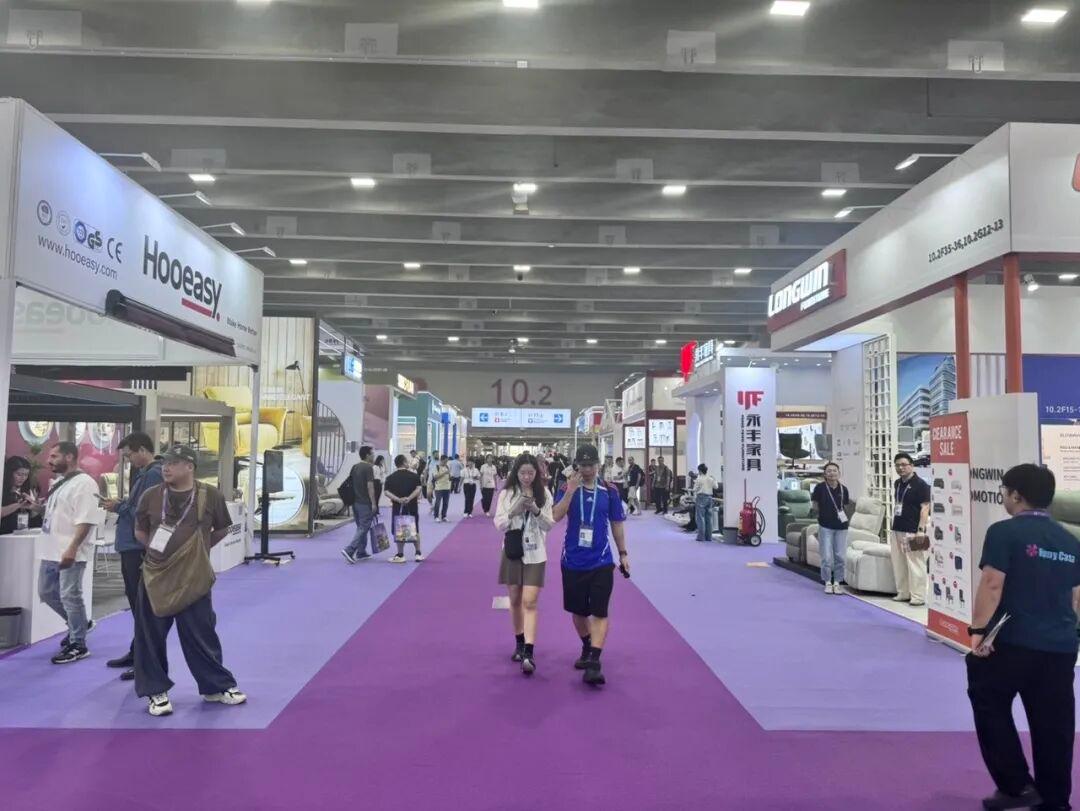
广交会不仅是中国制造对接全球市场的重要平台,也是外贸新产品、新技术与服务模式集中展示的窗口。

72f3aef6a725600e81cff0211e322c94.jpg

在此次报道中,大众日报将视角延伸至展会背后的贸易服务变化。从传统外贸服务到AI工具的应用,报道关注的不只是产品和技术本身,也包括企业如何借助新的工具与服务方式应对实际业务需求。

易运盈的AI外贸实践正是在这一背景下受到关注。

对于外贸业务而言,客户咨询、产品资料整理、多语言沟通等工作贯穿业务流程。如何借助AI工具辅助处理这些工作,提高日常业务效率,是易运盈正在探索的应用方向。

02 易运盈:让AI应用贴近真实贸易场景

AI技术的价值,需要在实际业务中得到检验。

ScreenShot_2026-10-28_180500_039.png

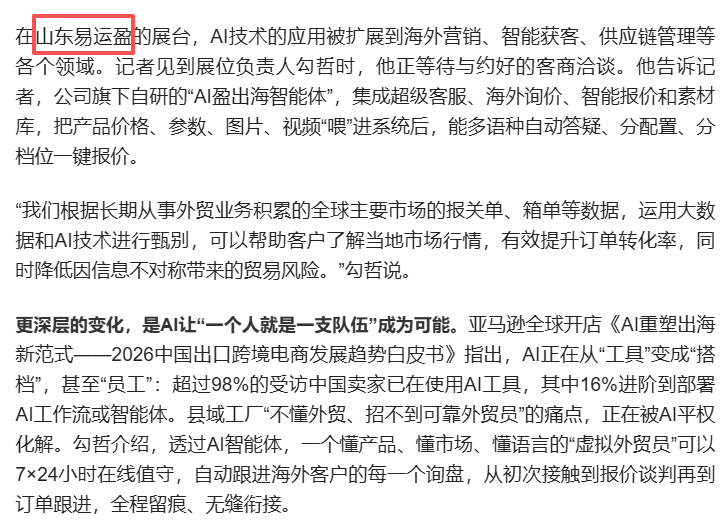
大众日报报道中的易运盈报道

围绕全球B2B贸易场景,易运盈持续推进AI应用与供应链业务的结合,关注产品信息、客户沟通及业务对接等实际环节,希望让数字化工具更好地服务于外贸业务开展。

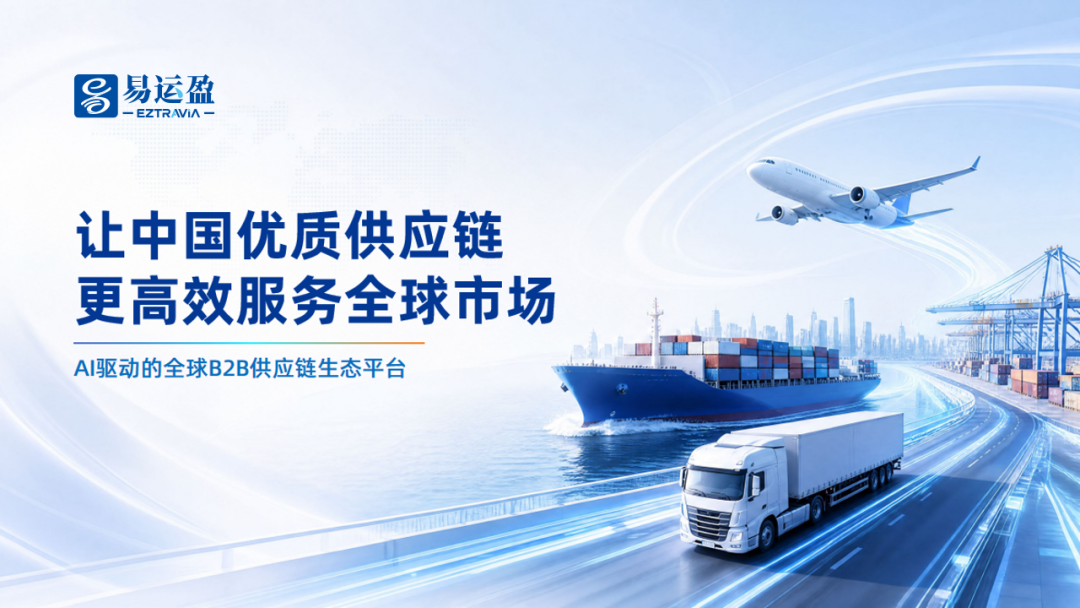
与此同时,易运盈也在持续推进全球B2B供应链业务,围绕中国制造与海外市场之间的连接开展产品组织、需求对接及供应链协同等工作。

从AI应用到供应链业务,易运盈关注的是技术与实际贸易需求如何结合。对于制造企业而言,产品走向海外不仅需要有效展示,也需要对接合适的采购需求,并进一步推进合作与交付。

图片

这也是易运盈持续深耕的业务方向。

03 以实际业务为基础,持续推进全球市场连接

大众日报此次对广交会外贸服务新变化的报道,为观察AI技术在外贸场景中的应用提供了一个窗口。易运盈相关实践进入报道,也进一步展示了企业在AI与供应链业务结合方面的探索。

对易运盈而言,AI不是脱离业务的独立概念,而是服务实际贸易需求的一种技术手段。未来,公司将继续立足全球B2B供应链业务,推进数字化能力与实际业务场景的结合,围绕产品、需求与交易交付等环节开展实践。

从展会现场到业务应用,易运盈将继续扎根真实贸易场景,探索中国制造与全球市场之间更高效的连接方式。

注:文/龚作仁,文章来源:Laborer,本文为作者独立观点,不代表亿邦动力立场。

文章来源:Laborer

广告
微信
朋友圈

FAQ回顾

易运盈是做什么的?

易运盈持续探索AI技术与全球B2B供应链业务的结合,围绕全球B2B贸易场景推进AI应用,关注产品信息、客户沟通及业务对接等环节;同时开展产品组织、需求对接及供应链协同,连接中国制造与海外市场。

AI工具能帮助外贸企业解决哪些实际问题?

外贸业务中,客户咨询、产品资料整理、多语言沟通等工作贯穿流程。AI工具可辅助处理这些工作,提高日常业务效率;易运盈正探索让AI应用贴近真实贸易场景,服务产品信息、客户沟通及业务对接等环节。

第140届广交会反映出外贸服务哪些新趋势?

第140届广交会上的外贸服务出现“运费战”退潮、“全链条”走俏的变化,贸易服务打法正在调整;报道同时关注AI技术应用与贸易服务模式升级,体现外贸服务向全链条和数字化升级的趋势。

制造企业拓展海外市场需要哪些支持?

制造企业产品走向海外,既需要有效展示,也需要对接合适的采购需求,并进一步推进合作与交付。易运盈围绕中国制造与海外市场之间的连接,开展产品组织、需求对接及供应链协同,并结合AI应用服务实际贸易需求。

这么好看,分享一下?

朋友圈 分享

APP内打开

赞 +1
+1
微信好友 朋友圈 新浪微博 QQ空间
关闭
收藏成功
发送
/140 0