广告
加载中

数博会现场丨亿邦智库解读“2026企业数据要素竞争力报告”

亿邦智库黄斌 2026-08-28 18:14
亿邦智库黄斌 2026/08/28 18:14

邦小白快读

EN
全文速览

本文核心是亿邦智库在2026数博会现场发布国内首份企业数据要素竞争力专题报告,核心干货信息整理如下:

1.核心研究成果:亿邦智库耗时近一年走访近百家企业,首次提出“企业数据要素竞争力”概念,构建了“四力模型”,将能力分解为数据获取力、治理力、应用力、安全力四个维度,其中数据应用力权重最高,核心逻辑是数据要最终产生商业价值。

2.核心行业趋势:2026年被国家定为“数据要素价值释放年”,当前有三个核心趋势,分别是数据要素价值释放进入快车道,AI智能体激活企业数据资产,数据要素成为企业竞争护城河。

3.实践参考:报告拆解了多个不同行业龙头企业的落地案例,给想要了解数智转型的普通读者提供了清晰的参考方向。

对于品牌商而言,本文释放了数智时代品牌竞争的新方向,相关干货整理如下:

1.产业与竞争趋势:当前数据要素价值释放进入快车道,AI智能体正在激活企业数据资产,数据要素已经成为品牌新的核心竞争护城河,数据利用能力将成为数智时代品牌的核心竞争力,品牌商需要提前布局数据能力建设,把握新的消费和产业变革趋势。

2.能力构建路径:品牌商可按照四力模型协同搭建能力,即数据获取力保障数据原料质量、数据治理力提升数据可用性、数据应用力聚焦商业价值落地、数据安全力筑牢合规边界,其中要重点倾斜资源打造数据应用能力。

3.实践参考:报告拆解了多个不同领域龙头企业的落地经验,还有头部企业在数智决策领域的技术创新,可供品牌商参考借鉴推进自身战略升级。

对于各类市场卖家而言,本文梳理了数智时代的新增长机会和能力要求,核心干货整理如下:

1.政策与行业风向:2026年被国家明确为“数据要素价值释放年”,当前数据要素价值释放已经进入快车道,是全新的增长风口,卖家需要及时把握行业风向调整自身布局。

2.新竞争规则:未来数据利用能力会成为企业的核心竞争力,数据要素会成为卖家新的竞争护城河,不具备数据能力的卖家会在竞争中逐步落后,需要提前布局相关能力。

3.落地路径参考:卖家可以按照数据获取力、治理力、应用力、安全力四个维度协同搭建自身能力,核心要落在数据应用转化商业价值上,同时可以参考报告中不同行业龙头的成熟实践,少走弯路,抓住数智转型带来的新增长机会。

对于生产工厂而言,本文给出了数字化转型的清晰框架和方向,核心干货整理如下:

1.数字化转型新方向:当前已经进入数智智能经济时代,数据要素成为企业的核心竞争力,工厂推进数字化转型不能只停留在硬件设备升级,要重点构建自身的数据要素竞争力,才能形成长期的竞争壁垒。

2.能力构建清晰框架:工厂可以按照四力模型搭建数据能力,即数据获取力决定数据“原料”质量,治理力提升数据“燃料”纯度,应用力驱动商业价值产出,安全力筑牢数据流转的合规边界,四个维度缺一不可,需要协同推进。

3.实践参考:报告拆解了多个不同行业龙头企业构建数据能力的实践经验,还有头部企业在数智决策、算法创新上的突破,给工厂推进数字化升级提供了清晰的参考框架和可落地的实践样本。

对于面向企业的各类服务商而言,本文梳理了行业最新趋势和客户需求,核心干货整理如下:

1.行业发展新趋势:2026年是国家明确的数据要素价值释放年,当前数据要素价值释放进入快车道,AI智能体正在激活企业的数据资产,市场对数据能力相关服务的需求会快速增长,是服务商下一阶段的重要蓝海市场。

2.客户核心需求:当前各类企业都在推进数智化转型,但多数企业还没有清晰的数据能力构建框架,核心痛点是不知道该如何系统性搭建数据要素竞争力,对可落地的解决方案有强烈需求。

3.业务发展方向:服务商可以围绕企业数据要素竞争力四力模型,针对不同维度的能力缺口开发对应的产品与服务,还可以总结报告中龙头企业的实践经验,提炼可复制的解决方案,服务不同行业企业的转型需求。

对于各类产业、电商平台商而言,本文指明了平台下一阶段的发展方向,核心干货整理如下:

1.行业新风向:当前数据要素价值释放进入加速期,数据能力已经成为企业的核心竞争力,平台需要顺应这一趋势,把数据能力服务作为平台运营和生态建设的核心板块,才能跟上行业发展。

2.入驻企业的新需求:入驻平台的各类商家,都需要构建从获取、治理、应用到安全的全维度数据要素竞争力,平台可以围绕这一需求开发配套服务,提升平台对商家的吸引力和留存率。

3.平台运营方向:平台可以依托自身的数据和流量优势,为商家提供数据能力相关的配套服务,还可以围绕数据要素优势企业开展招商,引入高竞争力商家丰富平台生态,同时要重视数据安全能力建设,规避数据合规风险,保障平台稳定发展。

对于数字经济、产业领域的研究者而言,本文发布了该领域最新的原创研究成果,核心干货整理如下:

1.产业最新动向:2026年被国家定为“数据要素价值释放年”,当前产业端呈现三个核心新动向,分别是数据要素价值释放进入快车道,AI智能体激活企业数据资产,数据要素成为企业尤其是产业互联网、数据服务企业的核心护城河,数据利用能力成为数智时代的核心竞争力。

2.原创研究成果:亿邦智库历时近一年走访近百家实地企业,在国内首次提出“企业数据要素竞争力”概念,构建了包含数据获取力、治理力、应用力、安全力的四力能力模型,明确数据应用力为核心,开启了该领域的系统性研究。

3.研究基础参考:报告拆解了泛鼎国际、国联股份、金联创等多个不同行业龙头企业的实践案例,分析了企业在数智决策服务领域的技术创新,为研究者开展后续相关研究提供了核心研究框架和一手案例基础。

返回默认

声明:快读内容全程由AI生成,请注意甄别信息。如您发现问题,请发送邮件至 run@ebrun.com 。

我是 品牌商 卖家 工厂 服务商 平台商 研究者 帮我再读一遍。

Quick Summary

This article summarizes key takeaways from China’s first special report on enterprise data element competitiveness, released by Ebang Think Tank at the 2026 China International Big Data Industry Expo:

1. Core research findings: After nearly a year of research involving interviews with nearly 100 enterprises, Ebang Think Tank first proposed the concept of "enterprise data element competitiveness" and developed a "four-capability model". It divides the capability into four dimensions: data acquisition capability, data governance capability, data application capability, and data security capability, with data application capability weighted the highest. The core logic is that data must ultimately generate business value.

2. Key industry trends: 2026 has been designated by the Chinese government as the "Year of Data Element Value Release". Three major trends are emerging: the release of data element value is accelerating, AI agents are activating enterprise data assets, and data elements have become a moat for corporate competition.

3. Practical reference: The report breaks down implementation cases of leading enterprises across multiple industries, providing clear guidance for general readers interested in digital-intelligent transformation.

For brand owners, this article outlines the new direction of brand competition in the digital-intelligent era, with key takeaways as follows:

1. Industry and competition trends: The release of data element value is accelerating, AI agents are activating enterprise data assets, and data elements have become a new core competitive moat for brands. Data utilization capability will be the core competitiveness of brands in the digital-intelligent era, so brand owners need to build data capabilities in advance to capture new trends in consumption and industrial transformation.

2. Path to capability building: Brands can build their capabilities in alignment with the four-capability model: data acquisition capability guarantees the quality of raw data, data governance capability improves data availability, data application capability focuses on delivering tangible business value, and data security capability safeguards compliance. Brands should prioritize resource allocation to build strong data application capability.

3. Practical reference: The report analyzes implementation experiences of leading enterprises across multiple fields, as well as technological innovations in data-driven intelligent decision-making from top players, offering references for brands to advance their own strategic upgrades.

For sellers across all marketplaces, this article sorts out new growth opportunities and capability requirements in the digital-intelligent era, with key insights as follows:

1. Policy and industry outlook: 2026 has been officially designated by the Chinese government as the "Year of Data Element Value Release", and the value release of data elements is now accelerating, creating an entirely new growth window. Sellers need to adjust their strategies promptly to capture this industry trend.

2. New rules of competition: Data utilization capability will become the core competitiveness of enterprises in the future, and data elements will become a new competitive moat for sellers. Sellers without mature data capabilities will gradually fall behind in competition, so they need to lay the groundwork for related capabilities in advance.

3. Implementation reference: Sellers can build their capabilities along the four dimensions of the model—acquisition, governance, application, and security—with a core focus on converting data into business value. They can also refer to mature practices from industry leading enterprises included in the report to avoid missteps and capture new growth opportunities brought by digital-intelligent transformation.

For manufacturing factories, this article provides a clear framework and direction for digital transformation, with key takeaways as follows:

1. New direction for digital transformation: We have now entered the era of intelligent digital economy, and data elements have become core competitiveness for enterprises. Factories should not limit digital transformation to only hardware upgrades; they must prioritize building their own data element competitiveness to form long-term competitive barriers.

2. Clear framework for capability building: Factories can build data capabilities following the four-capability model: data acquisition capability determines the quality of data "raw materials", governance capability improves the "purity" of data as "fuel", application capability drives business value output, and security capability safeguards compliance for data circulation. All four dimensions are indispensable and require coordinated advancement.

3. Practical reference: The report analyzes practical experience of data capability building from leading enterprises across multiple industries, as well as breakthroughs in intelligent decision-making and algorithm innovation from top players, providing factories with a clear reference framework and actionable practical samples for advancing digital upgrading.

For business-facing enterprise service providers, this article sorts out the latest industry trends and customer demands, with key insights as follows:

1. New industry development trends: 2026 is the government-designated "Year of Data Element Value Release", and the accelerated release of data element value is driving rapid growth in market demand for data capability-related services, creating a major blue ocean for service providers in the next stage.

2. Core customer demands: While enterprises across all sectors are advancing digital-intelligent transformation, most still lack a clear framework for building data capabilities. Their core pain point is the lack of guidance on systematically building data element competitiveness, leading to strong demand for actionable, implementable solutions.

3. Direction for business growth: Service providers can develop corresponding products and services targeting capability gaps in each dimension of the four-capability model for enterprise data element competitiveness. They can also summarize practical experience from leading enterprises included in the report to refine replicable solutions that meet transformation demands of enterprises across different industries.

For industrial and e-commerce platform operators, this article points out the next stage of development direction for platforms, with key takeaways as follows:

1. New industry direction: The release of data element value is accelerating, and data capability has become core competitiveness for enterprises. Platforms need to adapt to this trend and take data capability services as a core part of platform operation and ecosystem building to keep up with industry development.

2. New demands from onboarded merchants: Merchants on the platform all need to build full-cycle data element competitiveness covering acquisition, governance, application and security. Platforms can develop supporting services around this demand to improve their attractiveness to merchants and boost merchant retention.

3. Direction for platform operation: Leveraging their own data and traffic advantages, platforms can offer supporting data capability-related services to merchants. They can also prioritize onboarding enterprises with strong data element advantages to enrich the platform ecosystem. At the same time, platforms must attach importance to data security capability building to mitigate compliance risks and guarantee stable long-term development.

For researchers focusing on digital economy and industrial sectors, this article releases the latest original research findings in the field, with key insights as follows:

1. Latest industrial dynamics: 2026 has been designated by the Chinese government as the "Year of Data Element Value Release", and three core new trends are emerging on the industrial side: the release of data element value is accelerating, AI agents are activating enterprise data assets, and data elements have become a core competitive moat for enterprises, especially industrial internet and data service firms, with data utilization capability becoming core competitiveness in the digital-intelligent era.

2. Original research findings: After nearly a year of field research involving nearly 100 enterprises, Ebang Think Tank first proposed the concept of "enterprise data element competitiveness" in China, and developed a four-capability model covering data acquisition, governance, application, and security, with data application capability identified as the core. This work initiates systematic research in this field.

3. Reference for further research: The report analyzes practical cases of leading enterprises across multiple sectors, including PanDing International, Guolian Shares, and Jinlianchuang, and examines technological innovation in enterprise intelligent decision-making services, providing core research frameworks and first-hand case materials for researchers to carry out follow-up related research.

Disclaimer: The "Quick Summary" content is entirely generated by AI. Please exercise discretion when interpreting the information. For issues or corrections, please email run@ebrun.com .

I am a Brand Seller Factory Service Provider Marketplace Seller Researcher Read it again.

【亿邦原创】8月28日,亿邦智库正式发布《2026企业数据要素竞争力报告》(以下简称“报告”),这是国内首份分析企业数据要素竞争力的专题研究报告。亿邦智库历时近1年,结合近百家企业实地走访调研,首次提出“企业数据要素竞争力”概念并构建了对应能力模型。

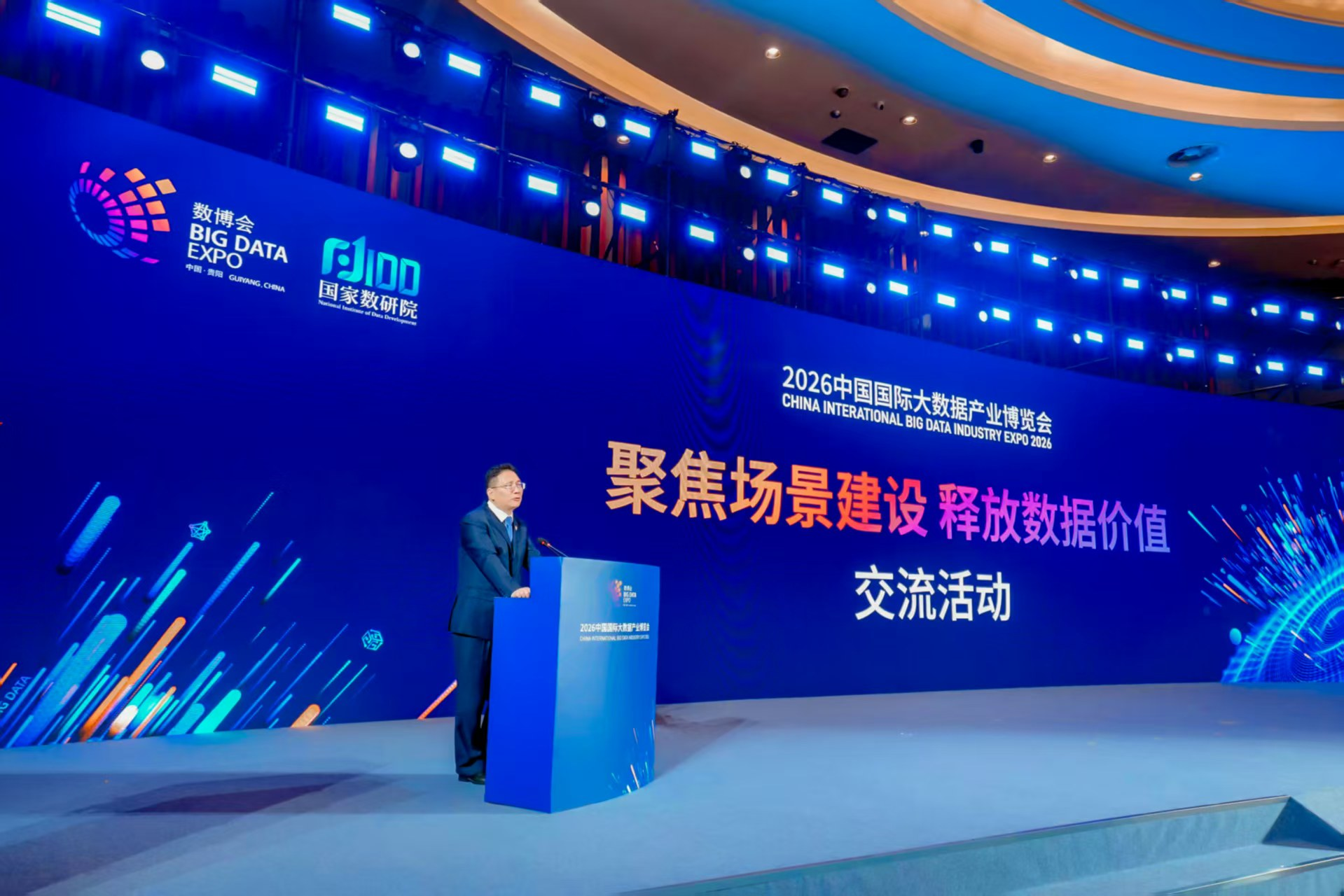
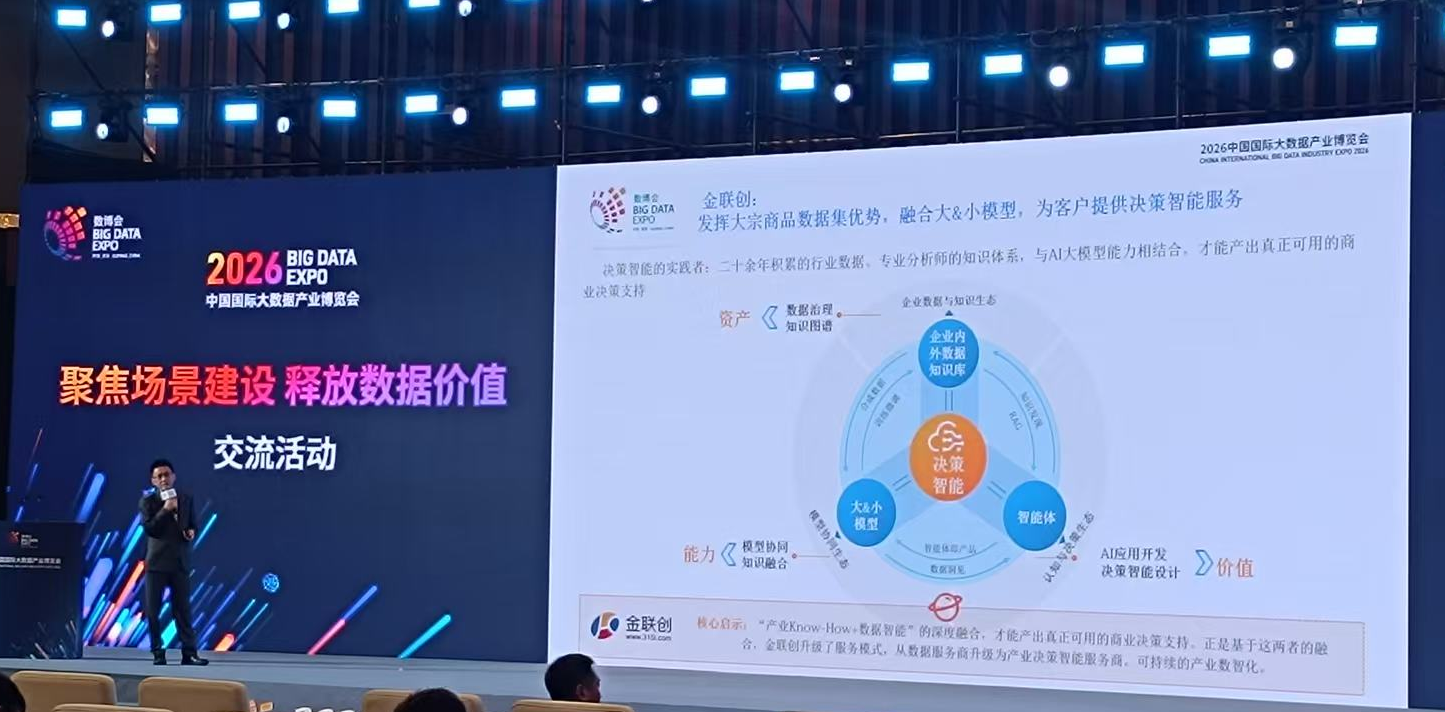
8月28日下午,亿邦智库专家在贵阳2026中国国际大数据产业博览会(以下简称“数博会”)的“聚集场景建设 释放数据价值”的交流活动上,以《数据要素竞争力:数智时代的企业核心竞争力》为主题,对报告核心成果进行了系统阐释。

2026年被国家数据局明确为“数据要素价值释放年”。本届数博会以“词元——数据要素价值释放新路径”为主题。国家数据发展研究院院长胡坚波主持了本次交流活动,国家数据局党组成员、副局长夏冰,贵州省人民政府副省长、省政府党组成员罗强,中国科学技术协会副主席、中国科学院院士徐涛,贵阳市委副书记、市长王宏等领导与嘉宾出席了当日下午的论坛。

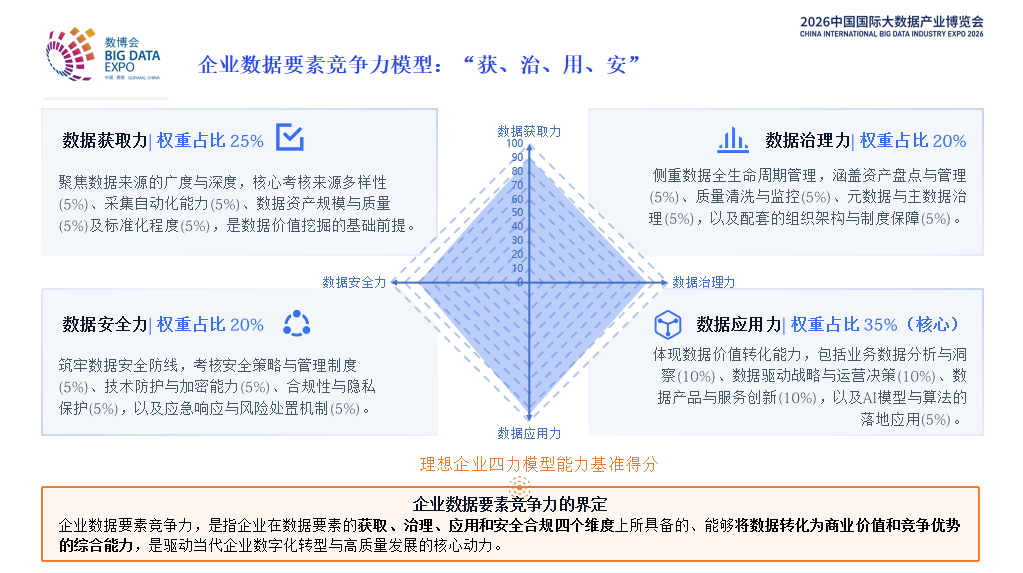
报告提出了企业数据要素竞争力的“四力模型”——将企业数据要素竞争力分解为数据获取力、数据治理力、数据应用力、数据安全力四个维度。其中数据应用力权重最高,体现了“数据最终要产生商业价值,落脚点就在‘用’的核心逻辑。

报告分析认为,2026年有三个重要趋势值得关注:一是数据要素价值释放进入快车道;二是AI智能体正在激活企业数据资产;三是数据要素正在成为企业特别是产业互联网等数据服务企业的“护城河”,数据利用能力成为企业数智时代的核心竞争力。

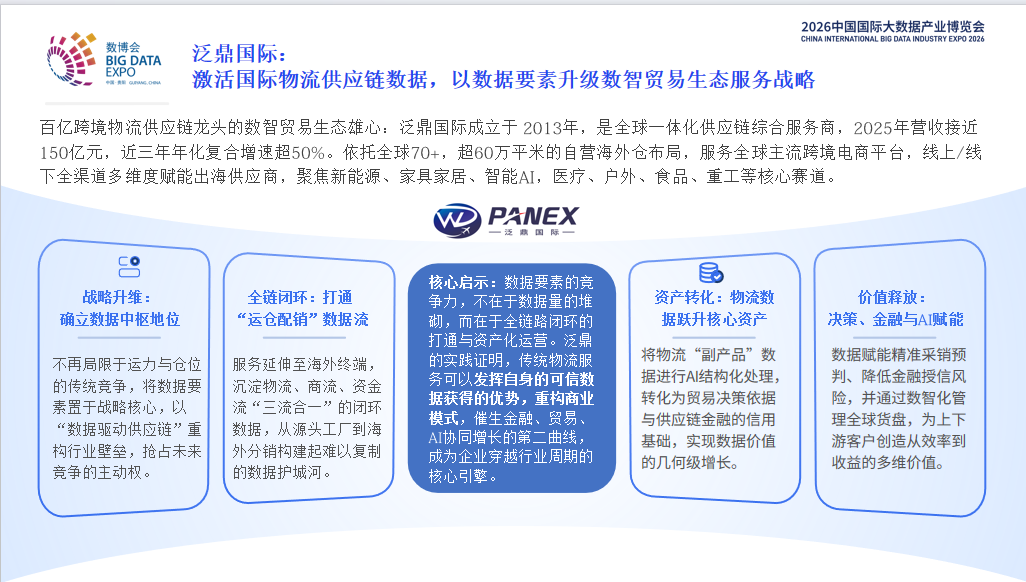
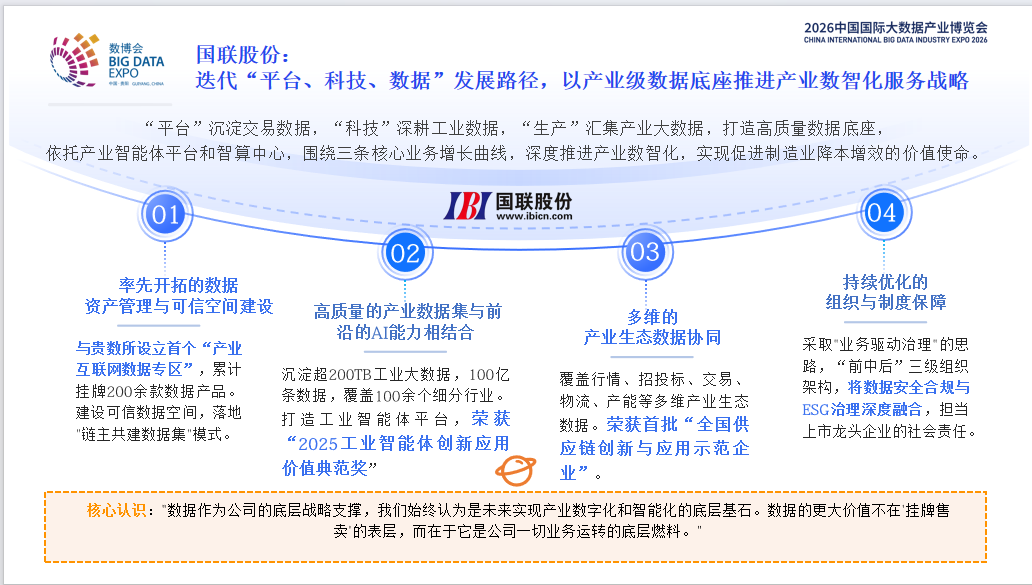
报告分别从“供应链全球化、产业互联网、大宗商品数据服务”三个维度,重点分析了泛鼎国际、国联股份、金联创等三家龙头企业案例,展示了不同行业的企业如何在“获治用安”四个维度上构建自身的数据要素竞争力,促进自身优势发挥,实现新的战略升级。

报告还分析了金联创、深圳拓扑等企业在基于数据要素而形成的决策服务方面的突破,以及其在数智决策服务领域开展的技术与算法创新。

报告研究认为,企业数据要素竞争力需要企业在“获治用安”四个维度上协同发力。获取力决定“原料”质量,治理力提升“燃料”纯度,应用力驱动“产出”价值,安全力筑牢“流转”边界——四者缺一不可,共同构成企业在智能经济时代的核心护城河。

《2026企业数据要素竞争力报告》的发布,开启了企业构建数据要素竞争力的系统研究,为企业数智化转型提供了数据要素视角的发展框架。该报告的下载二维码如下:

本文首发于 亿邦动力 官方网站

文章来源:亿邦智库

广告
微信
朋友圈

FAQ回顾

企业数据要素竞争力是什么?

企业数据要素竞争力由亿邦智库首次提出,对应四力能力模型,可分解为数据获取力、数据治理力、数据应用力、数据安全力四个维度,其中数据应用力权重最高,是数智时代企业的核心竞争力。

2026年数据要素领域有哪些核心发展趋势?

2026年数据要素领域有三大值得关注的趋势:一是数据要素价值释放进入快车道;二是AI智能体正在激活企业数据资产;三是数据要素成为数据服务企业的核心护城河,数据利用能力是企业核心竞争力。

企业如何构建自身的数据要素竞争力?

企业构建数据要素竞争力需要在数据获取、治理、应用、安全四个维度协同发力,获取力决定原料质量,治理力提升燃料纯度,应用力驱动产出价值,安全力筑牢流转边界,四者缺一不可。

《2026企业数据要素竞争力报告》有什么参考价值?

《2026企业数据要素竞争力报告》是国内首份分析企业数据要素竞争力的专题研究报告,由亿邦智库历时近1年调研近百家企业后发布,为企业数智化转型提供了数据要素视角的发展框架。

这么好看,分享一下?

朋友圈 分享

APP内打开

赞 +1
+1
微信好友 朋友圈 新浪微博 QQ空间
关闭
收藏成功
发送
/140 0