广告
加载中

自变量发布新一代具身基础模型 WALL-OSS-1.0:零样本走进真实生产线

亿邦动力 2026-11-23 14:03
亿邦动力 2026/11/23 14:03

邦小白快读

EN
全文速览

核心信息:自变量发布WALL-OSS-1.0,把预训练本身当作智能来源,可零样本执行新场景任务,并以WALL-API-1.0开放。

1.能力数据:312项开放式评测零样本成功率55.1%,真机评测1101/1500,比π0.5多任务微调高70.8%。

2.训练路径:动作前置,语言、视言和动作在同一套权重中训练;第二阶段加入动作专家,单次推理延迟低于60毫秒。

3.落地用法:已进入头部物流分拣线,10小时数据即可学习产线工序,迁移后保持90%以上分拣速度和成功率;轻量版一张英伟达Blackwell显卡可带动18台机器人。

4.可用资源:WALL-API-1.0开箱即用,全球研究者和企业可调用,黑客松也将开放给选手使用。

产品研发与品牌技术定位是本文对品牌商最直接的干货。

1.产品研发:WALL-OSS-1.0把动作前置进预训练,形成理解与行动统一底座;模型家族含AR、Gen、Lite、Nano,适配不同数据和部署需求。

2.品牌营销:以零样本能力、RoboDojo单模型第一、真机高分和物流产线落地作为技术品牌背书,强化通用具身智能与API时代定位。

3.渠道与生态:通过WALL-API-1.0向全球研究者和企业开放,黑客松提供模型调用,利于开发者生态和行业触达。

4.价格竞争:文章未直接谈定价,但轻量版仅需一张英伟达Blackwell显卡可带18台机器人,提示低成本部署和规模化复制可成为竞争点。

5.用户行为:产线客户从超1000小时数据需求降至10小时,迁移保持90%以上,说明客户更看重快速上手和低迁移成本。

对卖家而言,文章释放的是具身智能在物流等场景规模化应用的机会信号。

1.机会市场:模型已部署头部物流分拣产线,执行翻转包裹、对齐条形码、筛选异常件;预训练方案10小时数据即可上手,无预训练需超1000小时。

2.迁移复制:迁移到其他产线仍保持90%以上分拣速度和成功率,无预训练方案不到10%,跨场景复制空间大。

3.合作方式:WALL-API-1.0开放调用,全球研究者和企业可开箱即用,黑客松开放模型调用,适合寻找技术合作与集成。

4.风险提示:零样本成功率55.1%,复杂场景仍有失败可能;人工接管数据飞轮说明执行停滞或失败仍需人工兜底。

5.可学习点:用Agent评估能力边界并分配任务,失败时人工接管,形成数据飞轮,可作为运营和风控思路;政策解读未直接涉及。

文章给工厂的干货集中在产线自动化、低成本部署和数字化升级。

1.生产需求:WALL-OSS-1.0可执行翻转包裹、对齐条形码、筛选异常件等分拣工序,适合物流产线等重复且需判断的任务。

2.部署成本:轻量Lite和Nano仅需一张英伟达Blackwell显卡,就能带动18台机器人同时在物流产线干活;预训练模型10小时数据即可学习产线工序。

3.商业机会:方案迁移到其他产线后保持90%以上分拣速度和成功率,而无预训练方案不到10%,说明可复制、可规模化部署。

4.设计启示:动作前置训练和动作专家分拆状态流与控制流,使无本体数据也能参与训练;RTC把单次推理延迟降至60毫秒以内,利于连续生产节拍。

5.数字化启示:人工接管数据飞轮、20项自动检查和四级语言标注,提示工厂可用数据闭环提升自动化系统可靠性。

服务商可从模型技术路线、客户落地痛点和可复用解决方案三方面获取干货。

1.行业趋势:具身基础模型以预训练为智能来源,零样本进入真实生产线,并通过API走向标准化、产业化。

2.新技术:动作前置加入语言、视言和动作同权重训练;改进X-Tokenizer把连续轨迹压缩为离散动作编码;第二阶段加入动作专家;RTC将单次推理延迟降至60毫秒以内。

3.客户痛点:新产线缺数据、迁移成本高、执行误差累积、失败需恢复。无预训练方案需超1000小时产线数据,迁移后成功率不到10%。

4.解决方案:用预训练通用智能,10小时数据学习产线工序,迁移保持90%以上;Agent驱动接管数据飞轮评估边界并人工接管;WALL-API-1.0开箱即用,降低集成门槛。

5.服务机会:围绕API调用、产线数据标注、接管运营和模型家族选型,可形成服务组合。

文章对平台商的干货集中在具身智能API平台化、开发者运营和生态合作。

1.平台需求:全球研究者和企业希望顶尖能力模型开箱即用,WALL-API-1.0以API形式开放,降低调用门槛,体现模型能力平台化的需求。

2.最新做法:自变量用API开放WALL-OSS-1.0,并在全球具身智能黑客松向选手开放WALL-API-1.0,提供模型调用以搭建任务和应用。

3.运营管理:模型家族AR、Gen、Lite、Nano适配不同数据与部署需求;轻量版一张Blackwell显卡带动18台机器人,便于平台按场景分层运营。

4.生态与招商启示:API开箱即用可吸引研究者和企业开发者,黑客松可作为开发者招募和场景验证入口;文章未提扶持政策。

5.风向规避:零样本成功率55.1%,复杂任务仍需人工接管兜底;平台需关注能力边界、迁移稳定性和失败恢复机制,避免过度承诺。

文章为研究者提供了具身基础模型的新路线、评测证据和产业化问题。

1.产业新动向:自变量发布WALL-OSS-1.0,把预训练本身当作智能来源,追求零样本通用具身智能,并以WALL-API-1.0开放。

2.技术路线:动作前置,将语言、视言和动作数据放入同一预训练过程;改进X-Tokenizer形成共享动作语言;第二阶段动作专家分拆状态流与控制流;RTC降低推理延迟。

3.评测证据:RoboDojo仿真单模型能力第一,超过Astra、Opus 5.5等十万亿参数Agent策略;312项开放评测零样本成功率55.1%,真机1101/1500,较π0.5微调高70.8%。

4.新问题:零样本成功率仍有限,误差累积和失败恢复依赖人工接管;数据质量、规模、多样性及四级语言标注是关键。

5.商业模式与启示:API开放、模型家族分层、产线部署10小时学习与90%以上迁移保持率,提示预训练通用智能可降低复制成本;政策法规建议文章未直接涉及。

返回默认
声明:快读内容全程由AI生成,请注意甄别信息。如您发现问题,请发送邮件至 run@ebrun.com 。

我是 品牌商 卖家 工厂 服务商 平台商 研究者 帮我再读一遍。

Quick Summary

Key takeaway: X Square Robot has released WALL-OSS-1.0, which treats pretraining itself as the source of intelligence, can execute tasks in new scenarios zero-shot, and is opened via WALL-API-1.0.

1. Capability data: 55.1% zero-shot success across 312 open-ended evaluations; 1,101/1,500 on real robots; 70.8% higher than π0.5 multi-task fine-tuning.

2. Training path: action-first, with language, vision-language and action trained in the same set of weights; the second stage adds an action expert; single inference latency is under 60 ms.

3. Deployment use: already deployed on leading logistics sorting lines; 10 hours of data are enough to learn production-line procedures; after transfer it maintains more than 90% sorting speed and success rate; the lightweight version can drive 18 robots with one NVIDIA Blackwell GPU.

4. Available resources: WALL-API-1.0 is out-of-the-box and accessible to global researchers and enterprises; it will also be opened to participants at hackathons.

Product R&D and brand technology positioning are the most direct takeaways for brands.

1. Product R&D: WALL-OSS-1.0 puts action first in pretraining, creating a unified foundation for understanding and action; the model family includes AR, Gen, Lite and Nano to fit different data and deployment needs.

2. Brand marketing: zero-shot capability, first place for a single model on RoboDojo, high real-robot scores and logistics production-line deployment serve as technology brand endorsements, reinforcing its positioning in general embodied intelligence and the API era.

3. Channels and ecosystem: WALL-API-1.0 opens to global researchers and enterprises, while hackathons provide model calls, supporting the developer ecosystem and industry reach.

4. Price competition: the article does not directly discuss pricing, but the lightweight version requires only one NVIDIA Blackwell GPU to drive 18 robots, suggesting low-cost deployment and scalable replication could become competitive points.

5. User behavior: production-line customers reduce data requirements from more than 1,000 hours to 10 hours, with more than 90% retention after transfer, indicating that customers value fast onboarding and low migration cost.

For sellers, the article signals opportunities for scaled embodied intelligence deployment in logistics and other scenarios.

1. Opportunity market: the model has been deployed on leading logistics sorting lines, performing tasks such as flipping parcels, aligning barcodes and screening abnormal items; the pretraining approach learns with 10 hours of data, versus more than 1,000 hours without pretraining.

2. Transfer and replication: after transfer to other lines, it still maintains more than 90% sorting speed and success rate, while non-pretrained approaches are below 10%, indicating substantial cross-scenario replication potential.

3. Cooperation: WALL-API-1.0 is open for calls, global researchers and enterprises can use it out-of-the-box, and hackathons open model calls, making it suitable for finding technology partnerships and integrations.

4. Risk note: zero-shot success is 55.1%, so complex scenarios may still fail; the human-takeover data flywheel indicates that execution stalls or failures still require human backup.

5. Learnings: using an Agent to assess capability boundaries and allocate tasks, with human takeover upon failure to form a data flywheel, can inform operations and risk control; policy interpretation is not directly covered.

The takeaways for factories center on production-line automation, low-cost deployment and digital upgrading.

1. Production needs: WALL-OSS-1.0 can perform sorting procedures such as flipping parcels, aligning barcodes and screening abnormal items, making it suitable for repetitive tasks requiring judgment on logistics lines.

2. Deployment cost: Lite and Nano require only one NVIDIA Blackwell GPU to run 18 robots simultaneously on a logistics line; the pretrained model can learn production-line procedures with 10 hours of data.

3. Business opportunity: after transfer to other production lines, the solution maintains more than 90% sorting speed and success rate, while non-pretrained solutions are below 10%, showing that it can be replicated and deployed at scale.

4. Design implications: action-first training and the action expert split state flow and control flow, allowing training without embodiment data; RTC reduces single inference latency to under 60 ms, supporting continuous production cycles.

5. Digital implications: the human-takeover data flywheel, 20 automatic checks and four-level language annotation suggest that factories can use data closed loops to improve the reliability of automation systems.

Service providers can draw takeaways from three areas: the model technology route, customer deployment pain points and reusable solutions.

1. Industry trend: embodied foundation models use pretraining as the source of intelligence, enter real production lines zero-shot and move toward standardization and industrialization through APIs.

2. New technology: action-first training incorporates language, vision-language and action into same-weight training; an improved X-Tokenizer compresses continuous trajectories into discrete action codes; the second stage adds an action expert; RTC reduces single inference latency to under 60 ms.

3. Customer pain points: new production lines lack data, migration costs are high, execution errors accumulate and failures require recovery. Non-pretrained solutions need more than 1,000 hours of production-line data, and success rate after transfer is below 10%.

4. Solutions: use pretrained general intelligence and 10 hours of data to learn production-line procedures, maintaining more than 90% after transfer; Agent-driven takeover data flywheels assess boundaries and enable human takeover; WALL-API-1.0 is out-of-the-box and lowers integration barriers.

5. Service opportunities: API calls, production-line data annotation, takeover operations and model family selection can form a service portfolio.

The takeaways for platform providers center on platformizing embodied intelligence APIs, developer operations and ecosystem cooperation.

1. Platform demand: global researchers and enterprises want top-capability models to be available out-of-the-box; WALL-API-1.0 is opened in API form, lowering the barrier to calls and reflecting demand for platformized model capabilities.

2. Latest practice: X Square Robot opens WALL-OSS-1.0 via API and opens WALL-API-1.0 to participants at a global embodied intelligence hackathon, providing model calls for building tasks and applications.

3. Operations management: the model family AR, Gen, Lite and Nano fits different data and deployment needs; the lightweight version drives 18 robots with one Blackwell GPU, making it easier for platforms to operate by scenario tier.

4. Ecosystem and recruitment implications: out-of-the-box APIs can attract researcher and enterprise developers, and hackathons can serve as entry points for developer recruitment and scenario validation; the article does not mention support policies.

5. Risk avoidance: zero-shot success is 55.1%, and complex tasks still require human takeover as a backup; platforms need to monitor capability boundaries, migration stability and failure recovery mechanisms to avoid overpromising.

The article offers researchers a new route for embodied foundation models, evaluation evidence and industrialization questions.

1. New industry direction: X Square Robot has released WALL-OSS-1.0, treating pretraining itself as the source of intelligence, pursuing zero-shot general embodied intelligence and opening it via WALL-API-1.0.

2. Technical route: action-first, placing language, vision-language and action data into the same pretraining process; an improved X-Tokenizer forms a shared action language; the second-stage action expert splits state flow and control flow; RTC lowers inference latency.

3. Evaluation evidence: RoboDojo simulation ranks first in single-model capability, surpassing Astra, Opus 5.5 and other 10-trillion-parameter agent policies; zero-shot success is 55.1% across 312 open evaluations; real-robot performance is 1,101/1,500, 70.8% higher than π0.5 fine-tuning.

4. New problems: zero-shot success remains limited, and error accumulation and failure recovery rely on human takeover; data quality, scale, diversity and four-level language annotation are key.

5. Business model and implications: API opening, a tiered model family, and production-line deployment with 10-hour learning and more than 90% transfer retention suggest that pretrained general intelligence can lower replication costs; policy and regulatory recommendations are not directly covered.

Disclaimer: The "Quick Summary" content is entirely generated by AI. Please exercise discretion when interpreting the information. For issues or corrections, please email run@ebrun.com .

I am a Brand Seller Factory Service Provider Marketplace Seller Researcher Read it again.

【亿邦原创】11月23日,自变量发布新一代具身基础模型WALL-OSS-1.0,将预训练本身当作智能的来源,而非后续任务微调的起点。这使得模型面对全新场景、环境和指令,能够零样本执行任务,真正在预训练中产生了通用智能。本次新的WALL-OSS-1.0将以WALL-API-1.0的形式呈现。

其训练分为两个阶段:第一阶段让动作数据前置加入训练,配合多模态数据,让“理解世界”和“动手干活”在同一套权重里成形;第二阶段加入动作专家,学习精确、高效的动作生成。数十万小时的数据高效转化为智能,让scaling up成为可延续的道路。

在主流榜单RoboDojo的仿真赛道中,WALL-OSS-1.0位列单模型能力第一名,还超过了使用Astra、Opus 5.5等十万亿参数模型的Agent策略。多种真机测试中,零样本成功率高达55.1%;无需微调分数比 π0.5经过微调还要高70.8%。

WALL-OSS-1.0证明,机器人正在变得“越来越聪明”:通过预训练,过去积累的经验永久成为模型能力的一部分,能够驾驭全新的场景。“通用具身智能”已在地平线上显现,WALL-OSS-1.0正是朝这一目标迈出的坚实一步。

动作前置加入训练,共同塑造底层能力

机器人执行任务,会反复调用空间理解、任务判断、动作生成等能力。然而传统的训练方式,会先训练视觉-语言模型,再加入动作,导致理解世界的方式在接触动作之前就已经定型。

WALL-OSS-1.0则让动作训练前置,将语言、视言和动作数据放进同一个预训练过程,共同塑造模型理解世界的方式。

要做到这一点,动作必须变成能像单词一样处理的内容。自变量改进了自研动作分词器X-Tokenizer,将连续轨迹等压缩为有语义的离散动作编码,并将不同具身操作的数据翻译成共享的“动作语言”,能够与图像和文字共同进入学习框架。

接下来是提升数据的训练效率。自变量让同一条动作轨迹成为“多面教材”:既能按照示范做动作,也学会看懂动作的含义、判断动作是否正确、出错后如何调整。这能同时教会模型生成、描述、评估与纠正动作。

这些训练还重视通用理解能力的保留:即使在学习动作后,仍具备原本的通用理解与推理能力。

多源数据与接管飞轮,以数据规模塑造通用智能

有了共同的学习框架,模型就能通过扩大数据规模获得更高智能。WALL-OSS-1.0的训练数据包含超过数十万小时操作轨迹、上千万条操作记录,覆盖数十类任务、场景和上百类物体。

其中,占比最大的一部分是操作员使用手持UMI设备采集的无本体数据。这些数据相比真机数据采集成本更低、规模更大、更容易进入日常环境,是扩大数据规模的关键。此外,它还包括机器人遥操作数据、开源数据和人工接管数据。

人工接管数据围绕模型的能力“边界”持续采集,让训练更有针对性。这是因为机器人执行任务的误差会逐步积累,需要学会从错误中恢复。自变量建立了一套Agent驱动的“接管数据飞轮”:由Agent评估模型能力、探查能力边界、分配任务给机器人;执行停滞或失败时,再由人类操作员接管。目前这套系统已经产生数万小时的人工接管数据。

对模型训练来说,数据的质量与规模和多样性同样重要。采集的数据会经过超过20项自动检查,再进行动作处理与语义标注。自变量还为轨迹建立了四个层级的语言标注,例如“收拾桌子”表达整体目标,“拿起杯子”表达局部步骤。这把任务含义与具体运动对应起来,让模型能同时理解多个层次的指令。

高效的“动作专家”,把理解转化为连贯行动

模型对世界的理解,最终需要转化成灵巧的物理动作。预训练的第一阶段构建理解与行动的共同基础,负责理解世界;第二阶段则专门给模型加入动作专家,进一步增强模型的精度与效率。

这个阶段的预训练,将“身体怎样运动”的状态流和“发出什么指令”的控制流分拆,共同训练动作专家。这让无本体数据,尽管缺乏机器人本体和遥操作设备的参与,也能无缝参与模型训练,大幅提升数据利用效率。

动作专家的训练还有一个巧思:由于视觉-语言的计算比动作昂贵,因此多个训练会共享同一个上下文,同一个场景只编码一次,就能支持不同历史长度、预测范围和条件下的多个训练问题。这能以更少的计算获得更丰富的监督。

最后,实时分块(RTC)解决动作衔接的问题。由于模型生成下一段动作需要时间,此前下发的指令还在执行,模型可以将前面的动作作为下一段预测的上下文。这既能让动作在不同分块之间更加丝滑,也能提升推理速度,将单次推理延迟降低到60毫秒以内。

单模型登顶主流榜单,能胜任复杂语义长程任务

这些训练带来了怎样的能力?在312项任务的开放式评测中,WALL-OSS-1.0无需微调,零样本成功率就高达55.1%。面对复杂桌面、全新工具、光照变化、任务中断、甚至换个机器人接着做,模型都能完成超过一半的任务。

经过自变量ManipArena真机评测,WALL-OSS-1.0只需预训练就能拿到1101/1500的高分,比 π0.5经过多任务微调还高出70.8%。表现最好的是需要“先判断、再行动”的语义任务,比如耳机分类、物品配对,模型成功率达到78%,远高于 π0.5的44%。这说明模型真正融合了理解与行动的能力。

值得关注的是,WALL-OSS-1.0推出了模型家族,适配不同数据与部署需求:AR通过动作分词,无需动作专家训练,更加简单方便扩展;Gen通过生成视觉表征的监督,能够利用大量人类视频来学习灵巧操作,提升基础模型的泛化能力;Lite和Nano轻量化、易部署,仅需一张英伟达Blackwell显卡,就能带动18台机器人同时在物流产线上干活。

在这些模型中,即使轻量化Lite版本,也能在主流评测RoboDojo的仿真赛道拿下单模型赛道的第一名,比包含Astra、Opus 5.5等十万亿参数模型的Agent效果还要好,展现出WALL-OSS-1.0强大的通用智能。

规模化部署在真实产线,以API开拓全球应用

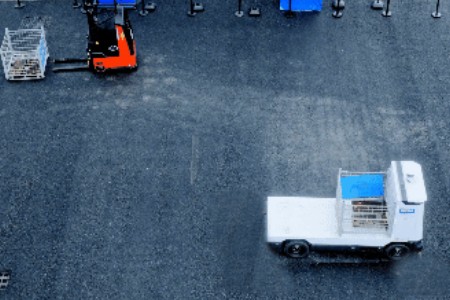
产业应用始终是模型能力的终极考验。目前,WALL-OSS-1.0已经部署在国内一家头部物流企业的分拣产线上,帮助翻转包裹、对齐条形码、筛选异常件。基于预训练智能,模型仅需10小 时数据学习产线工序,就能上手干活儿,而缺乏预训练的方案则需要超过1000小时的产线数据才能上手。

预训练通用智能还带来极低的迁移、复制成本。WALL-OSS-1.0驱动的方案迁移到其他产线后,仍保持90% 以上的分拣速度和成功率,而无预训练的方案只剩不到10%。这说明模型接受的“通识教育”,是走向规模化、低成本部署的产业应用的关键。

为促进模型研究和应用,自变量还开放了WALL-OSS-1.0的API:WALL-API-1.0,让全球研究者与企业都能直接调用模型。顶尖能力模型以API形式“开箱即用”,标志着具身智能走向标准化、产业化的“API时代”,成为能够触及千行百业的“水电煤”。

在即将到来的自变量全球具身智能黑客松上,WALL-API-1.0也将开放给选手使用,提供WALL-OSS-1.0等模型的调用,帮助选手搭建各种丰富任务和应用。

WALL-OSS-1.0通过系统性设计,让丰富的数据转化成通用智能,智能又扩展能力的边界,采集到更多数据。Scaling up真正成为具身模型可延续的路径。同时,WALL-OSS-1.0呈现出对Agent的“亲和力”,通过分工让模型能力如虎添翼。

自变量团队表示:“‘理解世界的智能’和‘与世界交互的能力’构成了更强大的模型,是我们迈向通用智能的里程碑。”自变量坚持预训练能孕育通用智能:让它能够走进陌生环境、理解全新指令、无需示范就能行动自如,最终融入人们的生产和生活。

本文首发于 亿邦动力 官方网站

文章来源:亿邦动力

广告
微信
朋友圈

FAQ回顾

WALL-OSS-1.0是什么?

WALL-OSS-1.0是自变量发布的新一代具身基础模型,将预训练本身当作智能来源,而非后续任务微调的起点。它面对全新场景、环境和指令可零样本执行任务,并以WALL-API-1.0形式呈现,供全球研究者与企业调用。

WALL-OSS-1.0的零样本能力表现如何?

在312项任务的开放式评测中,WALL-OSS-1.0无需微调,零样本成功率达55.1%。ManipArena真机评测中仅靠预训练就拿到1101/1500分,比π0.5经过多任务微调还高70.8%;语义任务成功率达78%,远高于π0.5的44%。

WALL-OSS-1.0适合哪些产业应用场景?

WALL-OSS-1.0已部署在国内头部物流企业分拣产线,用于翻转包裹、对齐条形码、筛选异常件。模型仅需10小时数据学习产线工序即可上手,迁移到其他产线后仍保持90%以上分拣速度和成功率,适合物流分拣等规模化部署场景。

WALL-OSS-1.0与传统具身模型训练方式有什么区别?

传统方式先训练视觉-语言模型再加入动作,理解世界的方式在接触动作前已定型。WALL-OSS-1.0将动作训练前置,把语言、视言和动作数据放进同一预训练过程,并通过改进X-Tokenizer将连续轨迹压缩为离散动作编码,第二阶段再加入动作专家提升动作生成精度与效率。

WALL-API-1.0是什么?

WALL-API-1.0是自变量开放的WALL-OSS-1.0模型API,让全球研究者与企业直接调用模型。顶尖能力模型以API形式开箱即用,推动具身智能走向标准化、产业化,并将在自变量全球具身智能黑客松上开放给选手使用。

这么好看,分享一下?

朋友圈 分享

APP内打开

赞 +1
+1
微信好友 朋友圈 新浪微博 QQ空间
关闭
收藏成功
发送
/140 0