广告
加载中

广东拟试点跨境电商税收征管新模式 平台可按销售收入的1%为卖家预缴所得税

亿邦动力 2026-11-23 13:30
亿邦动力 2026/11/23 13:30

邦小白快读

EN
全文速览

总:广东拟试点跨境电商零售出口税收征管新模式,核心是平台按卖家销售收入1%预缴所得税,征求意见截至12月20日。

1. 适用范围为广东省不含深圳,海关监管代码9610;平台须在广东设立运营实体并实际开展业务,卖家须在广东办理市场主体登记,包括法人企业非总分机构、个人独资企业和个体工商户。

2. 参与采取自愿方式,平台申请经省税务局确认,卖家由平台或代理企业报送并经主管税务机关确认。

操作上,平台或代理企业可按销售收入1%为卖家预缴企业所得税或经营所得个人所得税,还可代办出口报关;代办方要填实际委托出口方信息并申请代理出口货物证明,卖家配合确认货物信息。

卖家仍需自行申报,季度结束后5个工作日内由平台或代理报送代办申报表并缴税,已预缴税款可抵减应纳税额,最终税负由年度汇算清缴确定。

总:文章虽未直接讲品牌营销,但与品牌商最相关的是跨境电商零售出口渠道的税务成本和合规操作。

1. 在广东不含深圳经营品牌出海业务的企业,若以法人企业非总分机构、个人独资企业或个体工商户身份在试点平台开展9610零售出口,可自愿参与,平台按销售收入1%预缴所得税,便于把这项成本纳入定价和渠道测算。

2. 平台或代理企业可代办出口报关,品牌商需配合确认出口货物信息;卖家仍要自行办理纳税申报,预缴税款可抵减,次年汇算清缴,最终税负不由1%直接决定。

渠道建设上,可选择已纳入试点的平台合作,并确认自身在广东办理市场主体登记、平台在广东设立运营实体并实际开展业务。产品研发和消费趋势文章未涉及;可用信息是试点以零售出口和平台化办税为入口,品牌商应把税务合规、报关委托和平台选择纳入跨境渠道管理,避免只按预缴比例做价格竞争判断。

总:这是面向跨境电商零售出口卖家的税收征管试点,核心政策是平台按销售收入1%预缴所得税,自愿参与。

1. 政策适用广东不含深圳,9610零售出口;卖家须在广东办理市场主体登记,主体为法人企业非总分机构、个人独资企业或个体工商户,并由平台或代理报送、主管税务机关确认。

2. 机会在于平台可代办预缴所得税和出口报关,减少卖家多环节操作;平台或代理需填实际委托出口方信息、申请代理出口货物证明,卖家配合确认货物信息。卖家仍须自行纳税申报,季度后5个工作日内平台或代理报送代办申报表并缴税,预缴税款可抵减,次年汇算清缴。

风险提示:1%是预缴比例,不是最终所得税负,最终要年度汇算清缴确定;未纳入试点或不符合主体、区域条件的不适用。应对上,卖家应核对自身登记地和主体资格,选择试点平台并明确信息报送、报关委托和税款抵减流程,保留出口货物确认信息,按时自行申报,避免把预缴当最终税负。

总:文章未直接涉及工厂的产品设计和生产需求,可用干货是跨境电商零售出口试点对工厂以市场主体身份参与平台出海、合规报关和成本测算的启示。

1. 工厂若以法人企业非总分机构、个人独资企业或个体工商户身份,在广东办理市场主体登记,并通过试点平台开展9610零售出口,可自愿参与;平台按这部分销售收入1%预缴所得税,工厂应把该预缴成本纳入产品报价和订单测算。

2. 平台或代理企业可代办出口报关,代办方填实际委托出口方信息并申请代理出口货物证明,工厂需配合确认出口货物信息。卖家仍要自行申报,季度后5个工作日内平台或代理报送并缴税,预缴可抵减,次年汇算清缴。

数字化和电商启示:试点采用平台或代理报送信息、代办申报缴税和报关的方式,工厂参与跨境电商零售出口时需重视主体登记、平台选择、出口信息确认和年度汇算清缴。文章未提供具体产品生产设计需求,工厂可关注的商业机会是借助试点平台合规开展零售出口,并明确平台代办范围与自身申报责任。

总:试点为税务、报关和平台代理类服务商提供了明确的代办场景,核心是平台或代理企业可为卖家预缴所得税并代办出口报关。

1. 客户痛点集中在跨境电商零售出口卖家仍需自行纳税申报、配合确认出口货物信息,以及平台需在季度结束后5个工作日内报送代办申报表并缴纳税款;试点还要求代办方在海关申报清单填列实际委托出口方信息并申请代理出口货物证明。

2. 解决方案是按征求意见稿承接平台委托,提供信息报送、代办申报表、代缴税款、报关和代理出口货物证明等服务,并协助卖家理解1%预缴可抵减、最终税负由年度汇算清缴确定。

行业趋势上,广东不含深圳拟以自愿试点方式,把所得税预缴、申报和报关环节平台化、代理化,服务商可关注平台申请经省税务局确认、卖家经主管税务机关确认的流程。文章未提新技术,但平台代办、信息报送和税务确认构成服务机会;服务商需提醒客户预缴不等于最终税负,并做好季度时限和出口信息确认管理。

总:试点为跨境电商平台提供了新的代办税务和报关做法,平台商应关注申请条件、招商对象和运营时限。

1. 平台须在广东不含深圳设立运营实体并实际开展业务,向主管税务机关申请,经广东省税务局确认后纳入试点;平台可按卖家销售收入1%为其预缴企业所得税或经营所得个人所得税,还可自行或委托代理企业办理出口报关。

2. 招商对象是在试点平台开展零售出口、已在广东办理市场主体登记的法人企业非总分机构、个人独资企业和个体工商户,参与自愿,由平台或代理报送信息并经主管税务机关确认。

运营管理上,平台或代理企业需在每季度结束后5个工作日内报送代办申报表并缴纳代办税款;代办报关时要在海关申报清单填列实际委托出口方信息,向主管税务机关申请代理出口货物证明,卖家配合确认货物信息。风向规避上,1%只是预缴,卖家仍须自行申报,已预缴税款可抵减,次年汇算清缴确定最终税负;平台应明确告知并管理好季度报送、确认和抵减流程。

总:广东拟试点跨境电商税收征管新模式,值得研究的是9610零售出口项下平台按销售收入1%预缴所得税的制度设计及其合规机制。

1. 政策新动向包括广东省不含深圳、自愿参与、平台须在广东设立运营实体并实际开展业务并经省税务局确认,卖家须在广东办理市场主体登记并经主管税务机关确认,征求意见截至12月20日。

2. 征管机制上,平台或代理企业按卖家销售收入1%预缴企业所得税或经营所得个人所得税,可代办出口报关,需填实际委托出口方信息并申请代理出口货物证明;平台或代理每季度结束后5个工作日内报送代办申报表并缴税,卖家仍自行申报,预缴税款可抵减,次年汇算清缴确定最终税负。

新问题与启示:1%预缴与年度汇算清缴之间的税负差异、平台代办与卖家自行申报的责任边界、海关与税务信息衔接、出口货物信息确认,均是该模式落地的关键。商业模式上,平台或代理企业承担信息报送、代办申报缴税和报关服务,体现税收征管平台化、代理化和合规化方向;试点自愿申请和区域限定也为政策评估提供了观察对象。

返回默认
声明:快读内容全程由AI生成,请注意甄别信息。如您发现问题,请发送邮件至 run@ebrun.com 。

我是 品牌商 卖家 工厂 服务商 平台商 研究者 帮我再读一遍。

Quick Summary

Summary: Guangdong plans to pilot a new tax collection and administration model for cross-border e-commerce retail exports. The core measure is for platforms to prepay income tax at 1% of sellers' sales revenue; the consultation period ends December 20.

1. Scope: Guangdong Province excluding Shenzhen, under customs supervision code 9610. Platforms must establish operating entities in Guangdong and conduct actual business there. Sellers must register as market entities in Guangdong, including legal-person enterprises other than head offices and branches, sole proprietorships, and individual industrial and commercial households.

2. Participation is voluntary. Platform applications must be confirmed by the provincial tax authority; sellers are reported by platforms or agent enterprises and confirmed by the competent tax authority.

In practice, platforms or agent enterprises may prepay corporate income tax or individual income tax on business income for sellers at 1% of sales revenue and may also handle export customs declarations on their behalf. The agent must fill in information on the actual entrusting exporter and apply for an agency export goods certificate; sellers must cooperate to confirm the goods information.

Sellers must still file their own tax returns. Within five working days after the end of each quarter, the platform or agent submits the agency filing form and pays the tax. Prepaid tax may offset tax payable, and the final tax burden is determined through the annual settlement.

Summary: Although the article does not directly address brand marketing, the most relevant issue for brands is the tax cost and compliance operations of cross-border e-commerce retail export channels.

1. Enterprises operating brand globalization business in Guangdong excluding Shenzhen may voluntarily participate if, as legal-person enterprises other than head offices and branches, sole proprietorships, or individual industrial and commercial households, they conduct 9610 retail exports through pilot platforms. Platforms prepay income tax at 1% of sales revenue, making it easier to incorporate this cost into pricing and channel calculations.

2. Platforms or agent enterprises may handle export customs declarations on behalf of sellers; brands must cooperate to confirm export goods information. Sellers must still file their own tax returns. Prepaid tax may be offset, with annual settlement in the following year; the final tax burden is not directly determined by the 1% rate.

For channel development, brands can partner with platforms already included in the pilot and should confirm that they have registered as market entities in Guangdong and that the platform has established an operating entity in Guangdong and conducts actual business there. The article does not cover product R&D or consumer trends. The usable takeaway is that the pilot uses retail exports and platform-based tax handling as entry points; brands should incorporate tax compliance, customs declaration entrustment, and platform selection into cross-border channel management, rather than making price-competition judgments based solely on the prepayment rate.

Summary: This is a tax collection pilot for cross-border e-commerce retail export sellers. The core policy is for platforms to prepay income tax at 1% of sales revenue, with voluntary participation.

1. The policy applies to 9610 retail exports in Guangdong excluding Shenzhen. Sellers must register as market entities in Guangdong as legal-person enterprises other than head offices and branches, sole proprietorships, or individual industrial and commercial households, and must be reported by platforms or agents and confirmed by the competent tax authority.

2. The opportunity is that platforms can handle prepaid income tax and export customs declarations, reducing multi-step operations for sellers. Platforms or agents must fill in information on the actual entrusting exporter and apply for an agency export goods certificate; sellers must cooperate to confirm goods information. Sellers must still file their own tax returns. Within five working days after each quarter, the platform or agent submits the agency filing form and pays tax. Prepaid tax may be offset, and the annual settlement occurs the following year.

Risk note: 1% is a prepayment rate, not the final income tax burden, which is determined by the annual settlement. Sellers outside the pilot or not meeting entity or regional conditions are not eligible. In response, sellers should verify their registration location and entity qualifications, choose pilot platforms, clarify information reporting, customs declaration entrustment, and tax offset procedures, retain export goods confirmation information, file their own returns on time, and avoid treating the prepayment as the final tax burden.

Summary: The article does not directly address factories' product design and production needs. The usable takeaway is what the cross-border e-commerce retail export pilot implies for factories participating in platform-based going-global activities as market entities, compliant customs declaration, and cost calculation.

1. Factories may voluntarily participate if, as legal-person enterprises other than head offices and branches, sole proprietorships, or individual industrial and commercial households, they register as market entities in Guangdong and conduct 9610 retail exports through pilot platforms. Platforms prepay income tax at 1% of this sales revenue; factories should incorporate this prepayment cost into product quotations and order calculations.

2. Platforms or agent enterprises may handle export customs declarations on behalf of sellers. The agent fills in information on the actual entrusting exporter and applies for an agency export goods certificate; factories must cooperate to confirm export goods information. Sellers must still file their own returns. Within five working days after each quarter, the platform or agent submits and pays the tax. Prepaid tax may be offset, with annual settlement the following year.

Digitalization and e-commerce implications: The pilot uses platforms or agents to report information, handle filing and tax payment, and customs declarations. When factories participate in cross-border e-commerce retail exports, they need to pay attention to entity registration, platform selection, export information confirmation, and annual settlement. The article does not provide specific product design or production requirements. The business opportunity factories can watch is compliant retail exports through pilot platforms, while clarifying the scope of platform agency services and their own filing responsibilities.

Summary: The pilot creates clear agency scenarios for tax, customs, and platform agency service providers. The core is that platforms or agent enterprises can prepay income tax for sellers and handle export customs declarations on their behalf.

1. Client pain points center on cross-border e-commerce retail export sellers still needing to file their own tax returns and cooperate to confirm export goods information, and platforms needing to submit the agency filing form and pay tax within five working days after each quarter. The pilot also requires agents to fill in information on the actual entrusting exporter in the customs declaration list and apply for an agency export goods certificate.

2. Solutions involve accepting platform mandates under the draft for comment and providing information reporting, agency filing forms, tax payment on behalf, customs declaration, and agency export goods certificate services. They should also help sellers understand that the 1% prepayment can be offset and that the final tax burden is determined by the annual settlement.

Industry trend: Guangdong excluding Shenzhen plans to use a voluntary pilot to move income tax prepayment, filing, and customs declaration toward platform-based and agency-based handling. Service providers can watch the process in which platform applications are confirmed by the provincial tax authority and sellers are confirmed by the competent tax authority. The article does not mention new technologies, but platform agency, information reporting, and tax confirmation constitute service opportunities. Service providers should remind clients that prepayment does not equal the final tax burden and should manage quarterly deadlines and export information confirmation.

Summary: The pilot provides cross-border e-commerce platforms with new approaches to handling tax and customs declarations on behalf. Platform operators should focus on application conditions, merchant recruitment targets, and operational deadlines.

1. Platforms must establish operating entities in Guangdong excluding Shenzhen and conduct actual business there, apply to the competent tax authority, and be included in the pilot after confirmation by the Guangdong Provincial Tax Service. Platforms may prepay corporate income tax or individual income tax on business income for sellers at 1% of their sales revenue and may handle export customs declarations themselves or through agent enterprises.

2. Target merchants are legal-person enterprises other than head offices and branches, sole proprietorships, and individual industrial and commercial households that conduct retail exports on pilot platforms and have registered as market entities in Guangdong. Participation is voluntary; information is reported by platforms or agents and confirmed by the competent tax authority.

Operational management: Platforms or agent enterprises must submit the agency filing form and pay the agency tax within five working days after each quarter. When handling customs declarations on behalf, they must fill in information on the actual entrusting exporter in the customs declaration list, apply to the competent tax authority for an agency export goods certificate, and have sellers cooperate to confirm goods information. On risk management: 1% is only a prepayment; sellers must still file their own returns, prepaid tax may be offset, and the final tax burden is determined by the annual settlement in the following year. Platforms should clearly inform sellers and manage quarterly reporting, confirmation, and offset procedures.

Summary: Guangdong plans to pilot a new cross-border e-commerce tax collection model. The institutional design and compliance mechanism of platforms prepaying income tax at 1% of sales revenue under 9610 retail exports merit research.

1. New policy developments include Guangdong excluding Shenzhen, voluntary participation, platforms needing to establish operating entities in Guangdong and conduct actual business there and be confirmed by the provincial tax authority, and sellers needing to register as market entities in Guangdong and be confirmed by the competent tax authority. The consultation period ends December 20.

2. In the collection mechanism, platforms or agent enterprises prepay corporate income tax or individual income tax on business income at 1% of sellers' sales revenue and may handle export customs declarations on behalf. They must fill in information on the actual entrusting exporter and apply for an agency export goods certificate. Platforms or agents submit the agency filing form and pay tax within five working days after each quarter. Sellers still file their own returns; prepaid tax may be offset, and the final tax burden is determined by the annual settlement in the following year.

New issues and implications: The tax burden difference between the 1% prepayment and the annual settlement, the boundary of responsibility between platform agency and seller self-filing, the linkage between customs and tax information, and confirmation of export goods information are all key to implementation. In business model terms, platforms or agent enterprises take on information reporting, agency filing and tax payment, and customs declaration services, reflecting a shift toward platform-based, agency-based, and compliance-oriented tax administration. The voluntary application and regional scope of the pilot also provide subjects for policy evaluation.

Disclaimer: The "Quick Summary" content is entirely generated by AI. Please exercise discretion when interpreting the information. For issues or corrections, please email run@ebrun.com .

I am a Brand Seller Factory Service Provider Marketplace Seller Researcher Read it again.

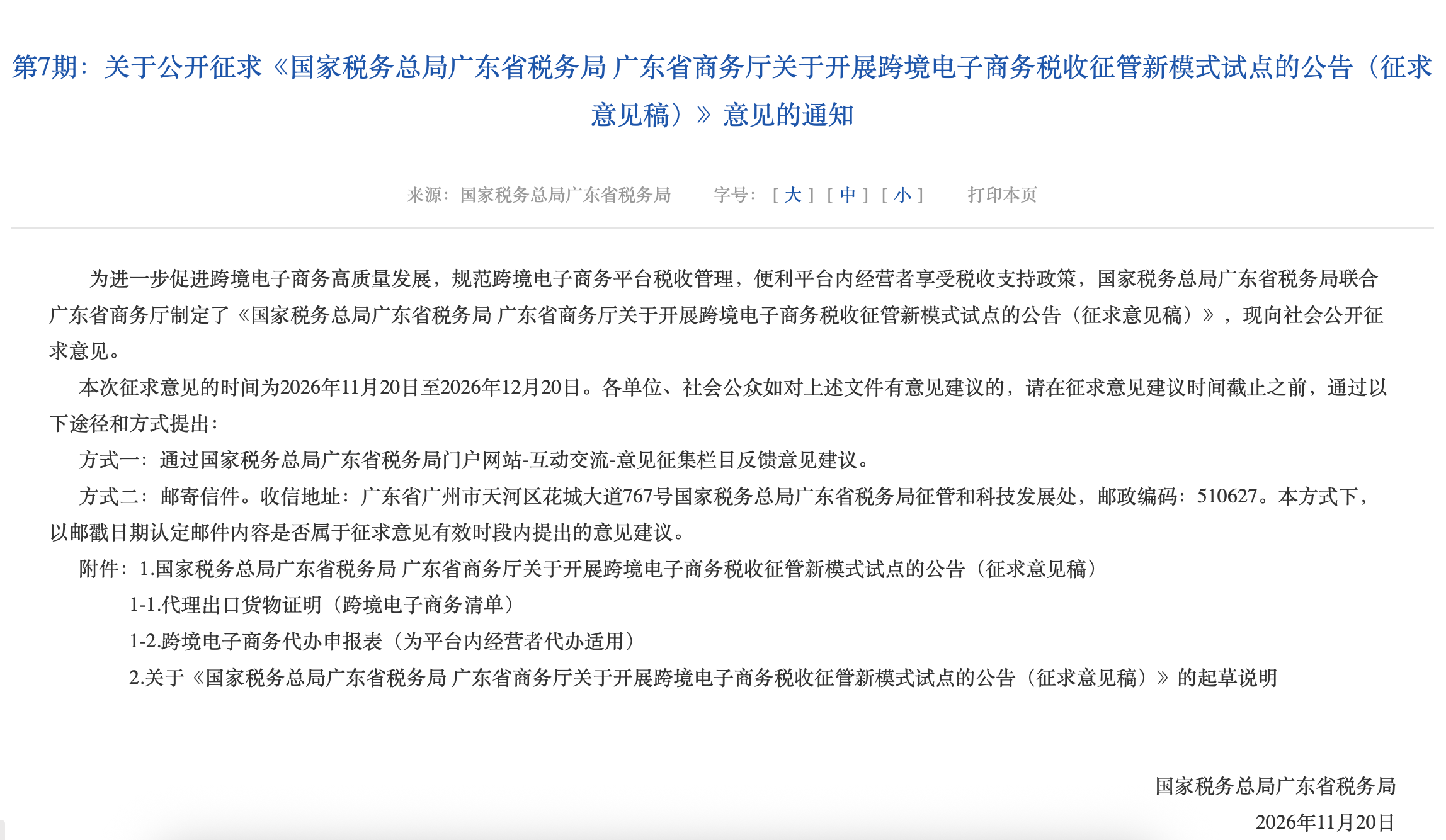
【亿邦原创】11月23日消息,日前,广东省税务局、广东省商务厅就跨境电商税收征管新模式试点公开征求意见。根据征求意见稿,广东省(不含深圳市)拟在跨境电商零售出口业务中开展试点,海关监管方式代码为9610。参与试点的卖家通过试点平台取得跨境电商销售收入后,平台或其委托的代理企业将按这部分收入的1%,为卖家预缴企业所得税或经营所得个人所得税。征求意见截至12月20日。

据了解,试点采取自愿参与的方式,在广东省(不含深圳市)设立运营实体并实际开展业务的跨境电商平台,可向主管税务机关提出申请,经广东省税务局确认后纳入试点。在试点平台上开展零售出口业务、已在广东省办理市场主体登记的法人企业(非总分机构)、个人独资企业和个体工商户,均可自愿参加,由平台或代理企业报送信息,经主管税务机关确认后纳入。

除预缴所得税外,试点平台还可自行或委托代理企业为卖家办理出口报关。按征求意见稿,代办方需在海关申报清单中填列实际委托出口方的信息,并向主管税务机关申请开具代理出口货物证明,卖家则需配合确认出口货物信息。

卖家最终要缴多少所得税,仍需通过年度汇算清缴确定。按拟议安排,平台或代理企业需在每个季度结束后5个工作日内报送代办申报表,并按规定缴纳代办税款。卖家仍需自行办理纳税申报,当期已由平台代办预缴的所得税可抵减相应的所得税应纳税额,次年再按规定自行办理汇算清缴。

本文首发于 亿邦动力 官方网站

文章来源:亿邦动力

广告
微信
朋友圈

FAQ回顾

广东跨境电商税收征管新模式试点适用于哪些卖家?

试点适用于广东省(不含深圳市)跨境电商零售出口业务,海关监管方式代码为9610。在试点平台上开展零售出口业务、已在广东省办理市场主体登记的法人企业(非总分机构)、个人独资企业和个体工商户,均可自愿参加;由平台或代理企业报送信息,经主管税务机关确认后纳入。

跨境电商平台如何按销售收入1%为卖家预缴所得税?

参与试点的卖家通过试点平台取得跨境电商销售收入后,平台或其委托代理企业按这部分收入的1%,为卖家预缴企业所得税或经营所得个人所得税。平台或代理企业需在每个季度结束后5个工作日内报送代办申报表,并按规定缴纳代办税款。最终税额仍需年度汇算清缴确定。

9610跨境电商零售出口试点中平台可以代办出口报关吗?

可以。除预缴所得税外,试点平台还可自行或委托代理企业为卖家办理出口报关。代办方需在海关申报清单中填列实际委托出口方信息,并向主管税务机关申请开具代理出口货物证明;卖家需配合确认出口货物信息。

平台预缴1%所得税后,跨境电商卖家还需要自行申报吗?

需要。平台或代理企业按销售收入1%代办预缴后,卖家仍需自行办理纳税申报,当期已由平台代办预缴的所得税可抵减相应所得税应纳税额,次年再按规定自行办理汇算清缴。卖家最终要缴多少所得税,仍需通过年度汇算清缴确定。

哪些跨境电商平台可以申请参与广东试点?

在广东省(不含深圳市)设立运营实体并实际开展业务的跨境电商平台,可向主管税务机关提出申请,经广东省税务局确认后纳入试点。试点采取自愿参与方式,平台或其委托的代理企业可为卖家报送信息、代办预缴所得税及出口报关。

这么好看,分享一下?

朋友圈 分享

APP内打开

赞 +1
+1
微信好友 朋友圈 新浪微博 QQ空间
关闭
收藏成功
发送
/140 0