广告
加载中

千峰访谈预策科技:让AI真正参与经营,构建持续进化的AI电商经营体系

亿邦动力 2026-11-05 17:51
亿邦动力 2026/11/05 17:51

邦小白快读

EN
全文速览

总1:文章核心是预策科技锚定电商赛道,构建可持续进化的AI经营体系,重点不是单点工具,而是多智能体协同承接完整经营事项。

1.系统架构为能力+业务知识库+Skill+工作流+业务应用,打通数据、智能与业务闭环,持续沉淀可复用智能资产。

2.三大能力是数据理解、行业专家、协同执行,依托API在企业授权下完成真实业务操作。

总2:落地案例与可操作启示值得关注。

1.童装品牌用AI生意高手实现两千余条广告计划全自动化运营,旗舰店落地后单周实现百万元级增量营收。

2.2026年至今Token调用规模月均增长16%,但通过Skill从模型选型、链路稳定性、响应速度、单位任务成本持续优化,强调每次消耗锚定业务目标。

3.企业落地应先做语义层和指标体系,配套AI工作坊识别高价值优先场景,把业务经验转化为可运行的AI专家与工作流。

总1:品牌商可重点关注AI如何进入品牌营销、商品管理、内容生产、广告投放和旗舰店经营。

1.预策AI覆盖市场分析、商品管理、内容生产、广告投放、日常经营等全链路核心环节,可把成熟经营策略标准化、自动化复制。

2.广告投放案例中,大型童装品牌官方旗舰店落地AI生意高手,两千余条广告计划全自动化运营,单周实现百万元级增量营收,说明AI可支撑品牌规模化经营。

总2:品牌经营的数据底座与组织支撑是关键。

1.先建电商全链路数据语义层和指标体系,解决商品、流量、广告、用户、交易数据分散、口径不一、语义不清的问题,让AI理解品牌经营状态与市场动态。

2.多智能体围绕同一经营目标协同,数据理解、行业专家与API执行结合,品牌可把更多专业化经营工作交给AI托管并持续迭代。

3.商业模式正从按AI调用量定价转向基于业务结果的价值定价,品牌评价AI应看真实经营增量与长期经营效率提升。

总1:卖家可关注AI电商带来的市场机会、经营模式变化与风险提示。

1.面向更多市场、平台和消费需求时,经营链路和协同难度提高,AI可让行业知识、经营经验和跨环节任务标准化、自动化复用。

2.机会在于AI覆盖市场分析、商品管理、内容生产、广告投放、日常经营全链路,多智能体可承接完整经营事项,而非只完成零散任务。

总2:落地方法、成本控制与合作方式值得学习。

1.可先做语义层和指标体系,以业务知识库沉淀电商方法论,用Skill封装专业能力,用工作流让多个AI专家围绕同一经营目标协同。

2.预策Token调用规模2026年至今月均增长16%,但不单纯追求调用量,而是通过Skill优化模型选型、链路稳定性、执行响应速度和单位任务成本。

3.风险是各电商平台数据规范不一、接口开放度存在差异,客户对数据安全、权限管控、业务操作风险要求严苛,需建设数据标准化、跨平台连接、细粒度权限与安全风控。

4.合作上可通过API对接电商平台,在企业授权下执行真实业务,并配套AI工作坊与落地实施服务识别高价值优先场景。

总1:工厂可从电商AI全链路落地中看到商品经营数字化和商业机会。

1.预策AI覆盖市场分析、商品管理、内容生产、广告投放、日常经营等环节,说明商品管理、内容生产与投放等经营环节可被AI标准化承接。

2.合作案例中,大型童装品牌实现两千余条广告计划全自动化运营,单周实现百万元级增量营收,显示成熟专业打法可低成本复制、持续运行,支撑业务规模扩张。

总2:推进数字化和电商的启示集中在数据、架构与反馈闭环。

1.先建数据语义层和指标体系,把商品、流量、广告、用户、交易等分散数据结构化、语义化,AI才能参与经营研判、业务执行和智能迭代。

2.采用能力+业务知识库+Skill+工作流+业务应用一体化架构,把业务经验转为可调用AI专家,多智能体围绕经营目标协同作业。

3.通过API在企业授权下完成真实业务操作,并采集行为数据与业务结果形成反馈闭环,反向评估和迭代AI专家能力;配套AI工作坊识别高价值优先场景。

总1:服务商可关注AI电商行业趋势与新技术底座。

1.AI正从Agent元年迈入规模化爆发阶段,AI OS迎来迭代落地、规模化商用的关键窗口期,安全性、稳定性、可管控能力成为核心底座门槛。

2.商业模式正从按AI能力调用量定价,转向基于业务结果的价值定价,持续沉淀可复用智能资产,形成智能复利效应。

3.产业AI演进分为技能化、工作流化、智能复利三阶段,走向智能复利的关键是让AI执行产生的业务数据与结果反馈,持续反哺AI专家与工作流迭代。

总2:客户痛点与解决方案值得服务商重点研究。

1.客户痛点已从技术可行性转向AI深度融入业务流程与组织机制,企业缺的是可直接投产使用的垂直专业智能能力,以及支撑AI常态化参与经营的长效运行机制,单点工具提效难在组织内复制放大。

2.解决方案是五部分一体化架构、三大核心能力,以及四项数据能力,包括行业数据沉淀、以本体建设为核心的数据加工、跨平台经营数据接入与业务执行、AI执行链路反馈闭环。

3.服务落地还包括AI工作坊与落地实施服务,协助企业识别高价值优先场景,把业务经验转化为可运行的AI专家与业务工作流,并推动组织内常态化使用和迭代优化。

总1:平台商可关注企业对平台数据开放、API执行与安全风控的需求和问题。

1.企业需要跨平台经营数据接入与业务执行,依托API通道在企业授权边界内聚合多源业务数据,并支持AI基于语义理解输出可落地的业务动作。

2.各电商平台数据规范不一、接口开放度存在差异,同时客户对数据安全、权限管控、业务操作风险有严苛要求,这是AI规模化落地要解决的平台侧问题。

总2:平台做法与风向规避启示集中在标准化、可控执行和风控。

1.平台侧需要推进数据标准化、跨平台连接、细粒度权限体系与安全风控,保障AI基于真实经营现状开展决策与执行。

2.预策强调平台可控执行通道和平台端深度执行链路,AI专家可在企业授权下完成真实业务操作,并围绕同一经营目标协同承接完整经营事项。

3.平台商应关注开放接口与可控执行之间的平衡,规避数据安全和业务操作风险;同时兼顾多平台数据协同打通与行业数据资产沉淀。

总1:研究者可关注产业AI新动向与商业模式变化。

1.AI能力边界从单点任务、简单问答,升级到对企业完整业务流程的复刻、自动化与持续优化,AI OS进入迭代落地和规模化商用关键窗口,产业智能体推动B2B从交付工具升级为承接业务任务、交付经营结果。

2.产业AI演进分为技能化、工作流化、智能复利三阶段,智能复利依赖AI执行产生的业务数据与结果反馈,持续反哺AI专家与工作流迭代进化。

3.商业模式从按AI能力调用量定价,转向基于业务结果的价值定价,持续沉淀可复用智能资产。

总2:新问题与护城河启示值得研究。

1.新问题包括平台数据规范不一、接口开放度差异,数据安全、权限管控和业务操作风险;企业AI落地主要矛盾从技术可行性转向业务流程与组织机制,缺垂直专业智能能力和长效运行机制。

2.垂类大模型不必每家产业企业从零训练自研基础大模型,产业玩家核心价值在行业深度认知、成熟经营方法论沉淀、合规业务数据连通能力、平台端深度执行链路和可持续迭代闭环机制。

3.产业互联网AI长期护城河是构建行业数据、专业决策、可控业务执行、结果反馈的自运转闭环,从能力增强机制走向能力差距放大机制;数据竞争力不在存量规模,而在让数据持续参与经营研判、业务执行和智能能力迭代。

返回默认
声明:快读内容全程由AI生成,请注意甄别信息。如您发现问题,请发送邮件至 run@ebrun.com 。

我是 品牌商 卖家 工厂 服务商 平台商 研究者 帮我再读一遍。

Quick Summary

Summary 1: The article focuses on Yuce Technology's positioning in e-commerce and its effort to build a sustainably evolving AI business operating system. The emphasis is not on point tools but on multi-agent collaboration that can take on complete business tasks.

1. The system architecture combines capabilities, a business knowledge base, skills, workflows, and business applications, connecting data, intelligence, and business into a closed loop and continuously accumulating reusable intelligent assets.

2. Its three core capabilities are data understanding, industry expertise, and coordinated execution. With enterprise authorization, it completes real business operations through APIs.

Summary 2: The implementation cases and practical implications are noteworthy.

1. A children's apparel brand used AI business experts to fully automate more than 2,000 ad campaigns; after deployment at its flagship store, it generated seven-figure RMB incremental revenue in a single week.

2. Since 2026, token call volume has grown by an average of 16% month over month. Through skills, the company continuously optimizes model selection, pipeline stability, response speed, and cost per task, stressing that every token consumption is tied to a business goal.

3. Enterprises should first build a semantic layer and metric system, use AI workshops to identify high-value priority scenarios, and translate business experience into operational AI experts and workflows.

Summary 1: Brands should focus on how AI enters brand marketing, merchandise management, content production, advertising placement, and flagship-store operations.

1. Yuce AI covers core links across the full chain, including market analysis, merchandise management, content production, advertising placement, and daily operations, enabling mature operating strategies to be standardized and automatically replicated.

2. In the advertising case, a large children's apparel brand deployed AI business experts at its official flagship store, fully automated more than 2,000 ad campaigns, and generated seven-figure RMB incremental revenue in a single week. This shows AI can support brand operations at scale.

Summary 2: The data foundation and organizational support for brand operations are critical.

1. Brands should first build an e-commerce full-chain data semantic layer and metric system to address scattered data, inconsistent definitions, and unclear semantics across products, traffic, advertising, users, and transactions, so AI can understand brand operating status and market dynamics.

2. Multiple agents collaborate around the same business goal; combining data understanding, industry expertise, and API execution allows brands to delegate more specialized operating work to AI and iterate continuously.

3. Business models are shifting from pricing by AI usage volume to value-based pricing tied to business outcomes. Brands should evaluate AI by real operating uplift and long-term operating efficiency gains.

Summary 1: Sellers should pay attention to market opportunities, shifts in operating models, and risk warnings brought by AI e-commerce.

1. As sellers address more markets, platforms, and consumer demands, operating chains and coordination become more complex. AI can standardize and automatically reuse industry knowledge, operating experience, and cross-link tasks.

2. The opportunity lies in AI covering the full chain of market analysis, merchandise management, content production, advertising placement, and daily operations. Multi-agent systems can take on complete business tasks rather than only fragmented ones.

Summary 2: Implementation methods, cost control, and partnership approaches are worth learning from.

1. Sellers can start with a semantic layer and metric system, use a business knowledge base to codify e-commerce methodologies, package professional capabilities as skills, and use workflows to coordinate multiple AI experts around the same business goal.

2. Yuce's token call volume has grown by an average of 16% month over month since 2026, but it does not pursue volume alone. Instead, it uses skills to optimize model selection, pipeline stability, execution response speed, and cost per task.

3. Risks include inconsistent data standards and differing API openness across e-commerce platforms. Clients have stringent requirements for data security, permission control, and business operation risk, so companies need data standardization, cross-platform connectivity, fine-grained permissions, and security risk controls.

4. For partnerships, sellers can connect to e-commerce platforms through APIs and execute real business operations with enterprise authorization, supported by AI workshops and implementation services to identify high-value priority scenarios.

Summary 1: Factories can see the digitalization of merchandise operations and business opportunities in the full-chain implementation of e-commerce AI.

1. Yuce AI covers market analysis, merchandise management, content production, advertising placement, daily operations, and other links, indicating that merchandise management, content production, and advertising placement can be standardized and handled by AI.

2. In the partnership case, a large children's apparel brand fully automated more than 2,000 ad campaigns and generated seven-figure RMB incremental revenue in a single week. This shows mature professional practices can be replicated at low cost and run continuously to support business expansion.

Summary 2: The implications for advancing digitalization and e-commerce center on data, architecture, and feedback loops.

1. Companies should first build a data semantic layer and metric system to structure and semanticize scattered data on products, traffic, advertising, users, and transactions, so AI can participate in business analysis, business execution, and intelligent iteration.

2. Adopt an integrated architecture of capabilities, business knowledge base, skills, workflows, and business applications; turn business experience into callable AI experts; and have multiple agents collaborate around business goals.

3. Through APIs and enterprise authorization, complete real business operations; collect behavioral data and business results to form a feedback loop that in turn evaluates and iterates AI expert capabilities. Support this with AI workshops to identify high-value priority scenarios.

Summary 1: Service providers should focus on industry trends and new technology foundations in AI e-commerce.

1. AI is moving from the first year of agents into a phase of rapid scaling. AI OS is entering a critical window for iterative deployment and scaled commercialization, with security, stability, and controllability becoming baseline requirements for the underlying platform.

2. Business models are shifting from pricing by AI capability usage volume to value-based pricing tied to business outcomes, continuously accumulating reusable intelligent assets and creating an intelligence compounding effect.

3. Industrial AI evolves through three stages: skillization, workflowization, and intelligence compounding. The key to intelligence compounding is using business data and outcome feedback generated by AI execution to continuously feed the iteration of AI experts and workflows.

Summary 2: Client pain points and solutions deserve close study by service providers.

1. Client pain points have shifted from technical feasibility to deeply integrating AI into business processes and organizational mechanisms. What enterprises lack is directly deployable vertical professional intelligence and a long-term operating mechanism that supports AI's routine participation in operations. Efficiency gains from point tools are hard to replicate and scale across the organization.

2. The solution is a five-part integrated architecture, three core capabilities, and four data capabilities: industry data accumulation, data processing centered on ontology construction, cross-platform operating data access and business execution, and a feedback loop for AI execution chains.

3. Service delivery also includes AI workshops and implementation services to help enterprises identify high-value priority scenarios, translate business experience into operational AI experts and business workflows, and promote routine use and iterative optimization within the organization.

Summary 1: Platform operators should focus on enterprises' needs and challenges regarding platform data openness, API execution, and security risk control.

1. Enterprises need cross-platform operating data access and business execution. Through API channels and within the boundaries of enterprise authorization, they aggregate multi-source business data and support AI in generating executable business actions based on semantic understanding.

2. E-commerce platforms have inconsistent data standards and differing API openness. At the same time, clients have stringent requirements for data security, permission control, and business operation risk. These are platform-side issues that must be addressed for AI to scale.

Summary 2: Platform practices and risk-avoidance implications center on standardization, controllable execution, and risk control.

1. Platforms need to advance data standardization, cross-platform connectivity, fine-grained permission systems, and security risk controls to ensure AI makes decisions and executes based on real operating conditions.

2. Yuce emphasizes controllable execution channels on platforms and deep execution links at the platform end. AI experts can complete real business operations under enterprise authorization and collaborate around the same business goal to take on complete business tasks.

3. Platform operators should balance open interfaces and controllable execution, avoid data security and business operation risks, and also balance multi-platform data connectivity with industry data asset accumulation.

Summary 1: Researchers should watch new directions in industrial AI and changes in business models.

1. AI's capability boundary is upgrading from point tasks and simple Q&A to replicating, automating, and continuously optimizing complete enterprise business processes. AI OS has entered a critical window for iterative deployment and scaled commercialization. Industrial agents are pushing B2B from delivering tools to undertaking business tasks and delivering operating results.

2. Industrial AI evolves through three stages: skillization, workflowization, and intelligence compounding. Intelligence compounding depends on business data and outcome feedback generated by AI execution, which continuously feeds the iteration and evolution of AI experts and workflows.

3. Business models are shifting from pricing by AI capability usage volume to value-based pricing tied to business outcomes, continuously accumulating reusable intelligent assets.

Summary 2: New questions and moat implications are worth studying.

1. New questions include inconsistent platform data standards, differing API openness, data security, permission control, and business operation risk. The main challenge in enterprise AI implementation has shifted from technical feasibility to business processes and organizational mechanisms. Enterprises lack vertical professional intelligence capabilities and long-term operating mechanisms.

2. For vertical large models, not every industrial enterprise needs to train its own foundation model from scratch. The core value of industry players lies in deep industry knowledge, accumulated mature operating methodologies, compliant business data connectivity, deep execution links at the platform end, and a sustainable iterative closed-loop mechanism.

3. The long-term moat of industrial internet AI is a self-running closed loop of industry data, professional decision-making, controllable business execution, and outcome feedback, moving from a capability-enhancement mechanism to a capability-gap-widening mechanism. Data competitiveness lies not in existing scale but in enabling data to continuously participate in business analysis, business execution, and intelligent capability iteration.

Disclaimer: The "Quick Summary" content is entirely generated by AI. Please exercise discretion when interpreting the information. For issues or corrections, please email run@ebrun.com .

I am a Brand Seller Factory Service Provider Marketplace Seller Researcher Read it again.

【亿邦原创】刘祚宏,浙江预策科技有限公司创始人。预策科技锚定电商赛道,深耕数据底座、AI OS架构与垂直业务应用三大方向,搭建覆盖电商全链路的数据语义层,以业务目标为核心构建「能力+业务知识库+Skill+工作流+业务应用」一体化系统架构,推动AI从单点任务工具升级为多智能体协同承接完整经营事项。本届千峰奖访谈中,刘祚宏围绕AI与全球化驱动的产业模态进化,分享了预策科技在AI电商方向的实践与判断。

亿邦:本届千峰奖以「AI与出海带来的模态进化」为核心主题,聚焦产业能力的深层重构。结合AI电商行业,您如何理解这一轮由AI和全球化共同驱动的产业模态进化?预策科技在AI能力建设与全球化出海上有哪些核心战略布局?能否具体介绍一下公司的定位及业务模式?

刘祚宏:当前AI正从Agent元年迈入规模化爆发阶段。从电商行业看,AI与全球化带来的变化是相互叠加的。企业面向更多市场、平台和消费需求时,经营链路和协同难度都会提高;AI则让行业知识、经营经验和跨环节任务有机会被标准化、自动化地复用。对预策而言,我们现阶段的重点是把电商经营场景里的数据理解、专业决策和业务执行能力做深做透,形成能够持续复用的AI经营体系。

AI能力的边界,已经从单点任务、简单问答,升级到对企业完整业务流程的复刻、自动化与持续优化;AI OS也随之迎来迭代落地、规模化商用的关键窗口期。伴随产业场景走向复杂,AI OS的安全性、稳定性、可管控能力成为核心底座门槛,行业价值逻辑同步重塑——商业模式正从按AI能力调用量定价,转向基于业务结果的价值定价,持续沉淀可复用的智能资产,形成智能复利效应。

在这一趋势下,预策锚定电商赛道进行战略布局:深耕数据底座、AI OS架构与垂直业务应用三大方向,搭建覆盖电商全链路、高精准高稳定的数据语义层;以业务目标为核心,构建「能力+业务知识库+Skill+工作流+业务应用」的一体化系统架构,打通数据、智能与业务闭环,在电商场景持续沉淀可复用智能资产,落地智能复利。

亿邦:您提到预策构建的是“能力+业务知识库+Skill+工作流+业务应用”一体化架构。这五个部分分别承担什么角色?为什么电商场景需要这样一套架构,而不是直接调用通用大模型?

刘祚宏:通用大模型具备通用理解与推理能力,但想要深度扎根产业经营场景,还需要动态更新的垂直行业数据与企业真实经营数据作为支撑。预策以业务目标为核心,构建「能力+业务知识库+Skill+工作流+业务应用」的一体化系统架构:能力是底层AI能力,业务知识库沉淀电商经营方法论,Skill封装可调用的专业能力,工作流把多个AI专家围绕同一经营目标协同起来,业务应用则落到具体经营环节。这样打通数据、智能与业务闭环,才能在电商场景持续沉淀可复用智能资产。

亿邦:目前贵公司在哪些核心业务环节落地了AI?形成了怎样独具特色的AI或数智化竞争力体系?

刘祚宏:预策AI能力现已覆盖电商市场分析、商品管理、内容生产、广告投放、日常经营等全链路核心环节。区别于单点AI任务工具,我们的核心方向是推动AI从独立完成零散任务,升级为多智能体协同承接完整经营事项。

围绕这个目标,我们打造三大核心能力:一是数据理解能力,让AI统一感知企业内部经营状态与外部市场动态;二是行业专家能力,沉淀成熟的电商经营方法论与业务经验,封装成可直接调用的AI业务专家;三是协同执行能力,依托API对接电商平台,在企业授权下完成真实业务操作,支持多个AI专家围绕同一经营目标协同作业。我们的差异化竞争力,是行业语义数据、电商经营方法论、平台可控执行通道与企业级AI工作流的融合。最终助力电商企业将更多专业化经营工作交给AI托管,沉淀一套可长期复用、持续迭代进化的AI经营体系。

亿邦:您提到“多智能体协同承接完整经营事项”。这和单点AI工具的区别在哪里?多个AI专家围绕同一经营目标协同,具体怎么运行?

刘祚宏:单点AI工具只能完成零散任务,多智能体协同承接的是完整经营事项。我们支持多个AI专家围绕同一经营目标协同作业:数据理解能力让AI统一感知企业内部经营状态与外部市场动态,行业专家能力把成熟电商经营方法论封装成可调用的AI业务专家,协同执行能力依托API对接电商平台,在企业授权下完成真实业务操作。三者结合,才能让AI从“做任务”走向“承接经营事项”。

亿邦:能否分享一个最具代表性的“AI+价值链”创新实践案例?它解决了哪些行业共性痛点,创造了哪些可感知、可量化的价值?

刘祚宏:我们在AI广告投放场景已形成可验证的落地成效。以合作的大型童装品牌为例,依托预策AI生意高手实现两千余条广告计划的全自动化运营;在品牌官方旗舰店落地后,单周实现百万元级增量营收。该案例直观印证AI规模化经营价值:以往企业受人力上限约束,难以批量落地成熟经营策略;借助AI,标准化专业打法可以低成本复制、持续运行,支撑业务规模扩张。我们评判AI价值的核心标尺,是能否为客户带来真实经营增量与长期经营效率提升。

亿邦:您提到预策的Token调用规模在2026年至今保持月均16%的快速增长,但并不单纯追求调用量扩张。那预策怎么判断每一次Token消耗是否值得?Skill体系在控制成本中起什么作用?

刘祚宏:预策的Token调用规模在2026年至今保持了月均16%的快速增长,但我们并不单纯追求调用量扩张。我们通过Skill体系从模型选型、链路稳定性、执行响应速度、单位任务成本多维度持续优化,核心目标是让每一次Token消耗都锚定业务目标、产生可衡量的经营价值。

亿邦:在推进AI规模化落地过程中,数据要素扮演了怎样的支撑角色?预策更侧重自有产业数据深耕,还是推进跨主体、跨行业的数据协同?核心挑战是什么、如何应对?

刘祚宏:数据是产业AI规模化落地的核心底座。通用大模型具备通用理解与推理能力,但想要深度扎根产业经营场景,还需要动态更新的垂直行业数据与企业真实经营数据作为支撑。

预策的数据核心优势,预策的数据核心优势,主要由四项核心能力构成:第一,长期沉淀的电商行业数据能力,支撑AI洞察市场趋势、竞争格局与潜在业务机会;第二,以本体建设为核心的数据加工能力,依托指标体系与业务知识库共同搭建和组织语义层,为AI提供高质量的“燃料”,完成业务数据的结构化、语义化治理;第三,跨平台经营数据接入与业务执行能力,依托API通道,在企业授权边界内聚合多源业务数据,并支持AI基于语义理解输出可落地的业务动作,保障AI基于真实经营现状开展决策与执行;第四,AI执行链路的反馈闭环能力,采集AI作业产生的行为数据与业务结果,反向评估、迭代优化各项垂直AI专家能力。

在数据战略上,我们兼顾行业数据资产沉淀与多平台数据协同打通。现阶段落地过程中仍面临诸多挑战:各电商平台数据规范不一、接口开放度存在差异,同时客户对数据安全、权限管控、业务操作风险有着严苛要求。因此,数据标准化、跨平台连接、细粒度权限体系与安全风控,是我们持续投入建设的重心。

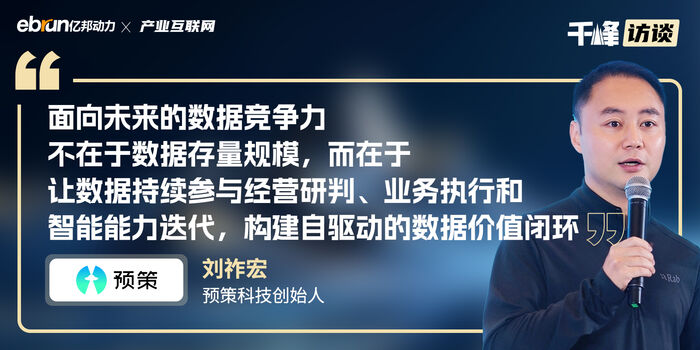
我们认为,面向未来的数据竞争力,不在于数据存量规模,而在于让数据持续参与经营研判、业务执行和智能能力迭代,构建自驱动的数据价值闭环。

亿邦:您提到以本体建设为核心的数据加工能力。为什么电商AI需要先建立语义层和指标体系?为什么电商AI需要先做语义层和指标体系?

刘祚宏:以本体建设为核心的数据加工能力,是依托指标体系与业务知识库共同搭建和组织语义层,为AI提供高质量的“燃料”,完成业务数据的结构化、语义化治理。电商场景里,商品、流量、广告、用户、交易等数据分散在不同平台和系统,口径不一、语义不清,AI很难直接理解。先做语义层和指标体系,才能让数据持续参与经营研判、业务执行和智能能力迭代。

亿邦:您怎么看产业智能体改写B2B?垂类大模型是否有长远发展必要?产业互联网公司的AI护城河在何处?

刘祚宏:产业智能体正在重塑B2B的交付范式,推动B2B软件从交付工具,升级为直接承接业务任务、交付经营结果。传统模式下,企业采购系统,依靠人员操作工具完成业务;未来企业更多只需要定义经营目标,由AI调度各类专业能力协同闭环作业,并基于业务结果持续自适应调优。

我们判断产业AI演进将分为三个阶段:第一阶段为AI技能化,沉淀行业专家知识、经验与决策逻辑,形成可复用、可调用的单项AI专业能力;第二阶段为AI工作流化,驱动多个AI专家协同配合,承接复杂、端到端的完整经营任务;第三阶段为智能复利阶段,依托AI执行产生的业务数据与结果反馈,持续反哺AI专家与工作流迭代进化,让企业智能资产随经营运转不断沉淀增值。这也是预策长期深耕、持续落地的主线方向。

关于垂类大模型:垂直场景离不开专业的产业智能能力,但并不代表每家产业企业都需要从零训练自研基础大模型。伴随通用大模型底座能力持续增强,产业玩家的核心价值,将落脚于行业深度认知、成熟经营方法论沉淀、合规业务数据连通能力、平台端深度执行链路,以及一套可持续迭代优化智能能力的闭环机制。

面向产业互联网,AI长期护城河,本质是构建起行业数据、专业决策、可控业务执行、结果反馈的自运转闭环,实现从能力增强机制走向能力差距放大机制。

亿邦:您把产业AI演进分为技能化、工作流化、智能复利三个阶段。从AI技能化走向工作流化,再到智能复利,您认为最关键的条件是什么?从工作流化走向智能复利,最关键的条件是什么?

刘祚宏:预策长期深耕、持续落地的主线方向就是走向智能复利阶段。从工作流化走向智能复利,最关键的是让AI执行产生的业务数据与结果反馈,持续反哺AI专家与工作流迭代进化,让企业智能资产随经营运转不断沉淀增值。没有真实业务结果反馈,智能复利就无从发生。

亿邦:当前企业AI落地最大的挑战是什么?预策如何帮助企业从单点应用走向规模化落地?

刘祚宏:当前企业AI落地的主要矛盾,已经从技术可行性问题,转向AI深度融入业务流程与组织机制的难题。不少企业并不缺少零散的AI工具,真正稀缺的是可直接投产使用的垂直专业智能能力,以及支撑AI常态化参与日常经营的长效运行机制。

仅靠单点AI工具赋能个别岗位、单点提效,价值很难在组织内复制放大。只有将企业沉淀的成熟经营方法论固化为标准化AI能力,支撑跨部门协同调用,并依托真实业务持续迭代调优,AI才会沉淀为企业内生、长期可用的经营能力。

亿邦:您提到预策在产品之外还配套AI工作坊与落地实施服务,协助企业识别高价值优先场景,把业务经验转化为可运行的AI专家与业务工作流。这套服务具体怎么落地?为什么企业AI能力建设会像数字化转型一样成为长期工程?

刘祚宏:基于企业AI落地主要矛盾已从技术可行性转向业务流程与组织机制这一判断,预策在产品之外配套AI工作坊与落地实施服务:协助企业识别高价值优先场景,把业务经验转化为可运行的AI专家与业务工作流,推动组织内常态化使用,并基于经营反馈持续迭代优化整套智能体系。

我们判断,企业AI能力建设将逐步成为类似数字化转型的长期工程。区别于传统数字化系统相对静态的特征,AI体系可以在持续使用中沉淀业务经验、自我迭代,形成智能复利。预策致力于为客户交付的,不是解决单一任务的AI工具,而是一套伴随企业经营持续生长、动态进化的企业智能体系。

       作为TO B领域年度风向标,“2026第八届亿邦产业互联网年会暨首届产业智能体大会”将于2026年11月20日在北京召开。主题定为“AI与出海带来的模态进化”,聚焦产业智能体落地、AI供应链价值重构、数据要素与TOKEN经济、产业出海新生态等前沿议题深度思辨。大会将集结学界权威、央国企标杆、产业龙头、投资机构、服务生态伙伴,汇聚产业核心力量、拆解产业数智化转型路径、分享前沿实战经验。同期还将发布年度产业互联网报告及标杆案例,举办决策人闭门会、“千峰奖”颁奖盛典。


本文首发于 亿邦动力 官方网站

文章来源:亿邦动力

广告
微信
朋友圈

FAQ回顾

预策科技是一家做什么的公司?

预策科技锚定电商赛道,深耕数据底座、AI OS架构与垂直业务应用三大方向,搭建覆盖电商全链路的数据语义层,并以业务目标为核心构建「能力 业务知识库 Skill 工作流 业务应用」一体化系统架构,推动AI从单点任务工具升级为多智能体协同承接完整经营事项。

电商AI为什么需要先建立语义层和指标体系?

电商场景中商品、流量、广告、用户、交易等数据分散在不同平台和系统,口径不一、语义不清,AI难以直接理解。预策科技以本体建设为核心,依托指标体系与业务知识库搭建和组织语义层,为AI提供高质量“燃料”,完成业务数据结构化、语义化治理,让数据持续参与经营研判、业务执行和智能能力迭代。

多智能体协同和单点AI工具有什么区别?

单点AI工具只能完成零散任务,多智能体协同承接的是完整经营事项。预策科技通过数据理解能力让AI统一感知企业内外部状态,通过行业专家能力把电商经营方法论封装为可调用的AI业务专家,并通过协同执行能力依托API在企业授权下完成真实业务操作,支持多个AI专家围绕同一经营目标协同作业。

AI广告投放能为电商品牌带来什么效果?

预策科技在AI广告投放场景已有验证:合作的大型童装品牌依托预策AI生意高手实现两千余条广告计划的全自动化运营,在品牌官方旗舰店落地后单周实现百万元级增量营收。其价值在于把成熟经营策略标准化、低成本复制并持续运行,突破人力上限,支撑业务规模扩张。

产业AI演进分为哪几个阶段?

产业AI演进分为三个阶段:一是AI技能化,沉淀行业专家知识、经验与决策逻辑,形成可复用、可调用的单项AI专业能力;二是AI工作流化,驱动多个AI专家协同承接复杂、端到端的完整经营任务;三是智能复利阶段,依托AI执行产生的业务数据与结果反馈,持续反哺AI专家与工作流迭代进化,让企业智能资产不断沉淀增值。

这么好看,分享一下?

朋友圈 分享

APP内打开

赞 +1
+1
微信好友 朋友圈 新浪微博 QQ空间
关闭
收藏成功
发送
/140 0