广告
加载中

千峰访谈华翔启源顾金磊:不追热点,深耕长板

亿邦动力 2026-10-20 17:28
亿邦动力 2026/10/20 17:28

邦小白快读

EN
全文速览

总:文章核心是机器人制造不追热点、深耕硬件制造与供应链长板。

1. 定位:把汽车制造工艺迁移到机器人赛道,从来料加工升级为同步设计、共享设计、共创开发,提供设计、供应链开发到量产管理一站式服务。

2. AI落地:自研四足机器人承担泵房、消防设施等高风险区域巡检,用AI视觉识别隐患;量产端沉淀问题数据,开发标准化问题分析数据库。

3. 实操案例:联合汽车测试设备厂商开发人形机器人测试台架,成为行业通用方案;在关节子零件用PEEK替代铝合金,成本可接近甚至低于金属件。

总:对起步者的干货是快速迭代、不重复犯错。

1. 行业要求3个月完成产品迭代,用大量产品级模拟测试验证方案。

2. 组织上思想解放、流程重构、组织重构,允许试错但禁止重复犯错。

3. 建议不要追热点,找到长板深耕,合作大于竞争。

总:产品研发与成本竞争力是品牌商可借鉴重点。

1. 产品路线:不跟风通用大模型,深耕硬件制造、材料迭代、同步设计;与机器人公司互为客户、共创开发,提升客户绑定效应。

2. 材料与成本:PEEK同等体积重量仅为铝合金一半,自带抗腐蚀;量产落地后综合加工成本可接近甚至低于铝合金、钢材,材料成本较进口产品减半、性能优于进口同类。

3. 研发验证:人形机器人测试台架无成熟标准,联合汽车测试设备厂商开发,成为行业通用方案,合作厂商次年出货破百台。

总:价格竞争与出海模式启示。

1. 核心壁垒不是成本,而是产品know-how与场景匹配能力;成本端突破速度会很快,品牌不能只靠低价。

2. 出海输出硬件制造加供应链整合服务,提供从产品设计、供应链开发到量产管理的一站式全链路服务,降低客户非核心投入。

3. 客户合作从来料加工升级为同步设计、共享设计、共创开发,AI能力嵌入共创与供应链服务过程。

总:具身智能被视为大市场机会,类似10年前新能源汽车但迭代更快,行业马拉松才跑100米,市场容量极大。

1. 机会提示:不追热点,切入硬件制造、材料迭代、同步设计等长板;与机器人公司互为客户、共创开发。

2. 商业模式:提供从产品设计、供应链开发到量产管理的一站式全链路服务,降低客户非核心环节投入,形成客户绑定。

3. 合作方式:测试台架共创成为行业通用方案;问题分析数据库基础通用模块向全行业开放,专用模块保留自用。

总:风险与应对。

1. 核心挑战是迭代速度,要求3个月内完成产品迭代,错误不可避免。

2. 应对是快速迭代、不重复犯错,通过大量产品级模拟测试验证方案。

3. 不要为短期排名焦虑,合作大于竞争;很多问题越难的时候,就是离正确越近的时候。

总:工厂可借鉴的是把汽车制造工艺迁移到机器人量产。

1. 生产设计:从传统来料加工升级为同步设计、共享设计、共创开发,在零部件、工艺、测试端与客户联合迭代。

2. 量产能力:作为全球1.7米级全尺寸人形机器人出货量最大的量产工厂,一年积累的产品问题数量是传统汽车工厂10倍以上,量产端问题数据成为核心资产。

3. 材料工艺:PEEK已在量产机器人关节子零件上完全替代,减速器齿轮等核心部件仍在测试迭代;通过上游布局和工艺优化降本。

总:数字化与组织推进。

1. 联合软件厂商开发标准化问题分析数据库,基础通用模块向全行业开放,专用模块自用;计划搭建数据系统快速迭代,避免一直靠加人提效。

2. 自研四足机器人巡检,AI视觉识别隐患,巡逻次数越多异常判断能力越强。

3. 组织三层调整:思想解放、流程重构、组织重构;并行筹备,边同步设计、产能规划,边采购设备做工装,允许试错禁止重复犯错,工艺端人员扩增三倍。

总:具身智能处于早期,市场容量大、迭代快,服务商应关注量产端和场景数据价值。

1. 趋势:AI把智能从数字世界带进实体制造,具身智能有代表性;行业像10年前新能源汽车但迭代更快,马拉松才跑100米。

2. 新技术:AI视觉识别用于四足巡检;垂域应用级模型针对自身生产场景;数据达到临界值后模型能力指数级增长,落地从单台跃升至百台级。

3. 客户痛点:人形机器人测试台架无成熟行业标准;量产问题数据多,过去一年问题数量是传统汽车工厂10倍以上;迭代要求3个月。

总:解决方案。

1. 联合汽车测试设备厂商共创测试台架,成为行业通用方案,合作厂商次年出货破百台。

2. 开发标准化问题分析数据库,基础通用模块开放,专用模块自用;搭建数据系统助力快速迭代。

3. 提供设计、供应链开发到量产管理一站式全链路服务,帮客户降低非核心环节投入。

总:文章虽未直接谈平台,但呈现了产业协作与数据开放对平台化服务的需求。

1. 商业需求:机器人客户需要从产品设计、供应链开发到量产管理的一站式全链路服务,降低非核心环节投入,形成客户绑定。

2. 平台化做法:联合软件厂商开发标准化问题分析数据库,基础通用模块向全行业开放,专用模块保留自用,为行业提供设计、工艺参考边界。

3. 生态合作:与机器人公司互为客户、共创开发;测试台架联合汽车测试设备厂商开发并成为行业通用方案,合作厂商次年出货破百台。

总:运营管理与风向规避。

1. 平台若服务机器人产业,应聚焦产品know-how与场景匹配,而非只拼成本,因为成本端突破会很快。

2. 迭代速度是核心挑战,3个月完成产品迭代,需用产品级模拟测试验证,允许试错但禁止重复犯错。

3. 行业早期合作大于竞争,不必为短期排名焦虑;关注数据临界值后的百台级爆发机会。

总:文章提供具身智能产业化的新动向判断。

1. 产业阶段:具身智能像10年前新能源汽车,迭代更快,马拉松才跑100米,市场容量极大;AI从数字世界进入实体制造。

2. 商业模式:汽车制造工艺迁移机器人赛道,从来料加工升级为同步设计、共享设计、共创开发,提供一站式全链路服务;与机器人公司互为客户。

3. 竞争壁垒:核心不是成本而是产品know-how与场景匹配;不参与通用基座模型竞争,开发垂域应用级模型。

总:新问题与组织启示。

1. 数据价值:场景数据达到临界值后模型能力指数级增长,落地从单台跃升至百台级;量产问题数据是核心资产,基础通用模块开放、专用模块自用。

2. 组织重构:思想解放、流程重构、组织重构,保留底层工艺原理,适配筛选汽车经验,并行筹备,允许试错禁止重复犯错。

3. 材料与供应链:PEEK轻量化替代,成本较进口产品减半、性能优于进口同类;测试台架共创成为行业通用方案,显示供应链资源可复用。

返回默认
声明:快读内容全程由AI生成,请注意甄别信息。如您发现问题,请发送邮件至 run@ebrun.com 。

我是 品牌商 卖家 工厂 服务商 平台商 研究者 帮我再读一遍。

Quick Summary

Summary: The article's core argument is that robotics manufacturing should not chase hype; instead, it should deepen hardware manufacturing and supply-chain strengths.

1. Positioning: Migrate automotive manufacturing processes to robotics, upgrading from toll processing to synchronous design, shared design, and co-development, offering one-stop services from design and supply-chain development to mass-production management.

2. AI implementation: Self-developed quadruped robots conduct inspections in high-risk areas such as pump rooms and fire facilities, using AI vision to identify hazards; on the mass-production side, it accumulates issue data and develops a standardized issue-analysis database.

3. Practical cases: Worked with automotive test-equipment makers to develop a humanoid robot test bench that became an industry-standard solution; uses PEEK instead of aluminum alloy for joint sub-components, with costs approaching or even below metal parts.

Summary: The key takeaway for newcomers is rapid iteration and not repeating mistakes.

1. The industry requires product iteration within three months, validating solutions through extensive product-level simulation testing.

2. Organizationally, it requires freeing mindsets, process restructuring, and organizational restructuring; trial and error is allowed, but repeated mistakes are prohibited.

3. Advice: do not chase hype; identify strengths and go deep; cooperation matters more than competition.

Summary: Product R&D and cost competitiveness are key takeaways for brands.

1. Product roadmap: Do not follow general-purpose large models; deepen hardware manufacturing, material iteration, and synchronous design; act as mutual customer and co-developer with robotics companies, enhancing customer stickiness.

2. Materials and cost: PEEK at the same volume weighs only half as much as aluminum alloy and is inherently corrosion-resistant; after mass production, comprehensive processing costs can approach or even fall below those of aluminum alloy and steel, while material costs are halved versus imported products and performance is superior to comparable imports.

3. R&D validation: There was no mature standard for humanoid robot test benches; the company worked with automotive test-equipment makers to develop one that became an industry-standard solution, with the partner shipping more than 100 units the following year.

Summary: Implications for price competition and overseas expansion.

1. The core barrier is not cost but product know-how and scenario-matching capability; cost breakthroughs can come quickly, so brands cannot rely only on low prices.

2. Overseas expansion exports hardware manufacturing plus supply-chain integration services, providing one-stop full-chain services from product design and supply-chain development to mass-production management, reducing clients' non-core investment.

3. Customer cooperation has upgraded from toll processing to synchronous design, shared design, and co-development, with AI capabilities embedded in co-creation and supply-chain services.

Summary: Embodied intelligence is seen as a large market opportunity, similar to new energy vehicles 10 years ago but iterating faster; the industry marathon has only run 100 meters, and market capacity is enormous.

1. Opportunity: Do not chase hype; enter strengths such as hardware manufacturing, material iteration, and synchronous design; act as mutual customer and co-developer with robotics companies.

2. Business model: Provide one-stop full-chain services from product design and supply-chain development to mass-production management, reducing clients' investment in non-core areas and creating customer stickiness.

3. Collaboration: Co-created test benches have become an industry-standard solution; the basic general modules of the issue-analysis database are opened to the entire industry, while specialized modules remain proprietary.

Summary: Risks and responses.

1. The core challenge is iteration speed: product iteration must be completed within three months, and errors are inevitable.

2. The response is rapid iteration without repeating mistakes, validating solutions through extensive product-level simulation tests.

3. Do not be anxious about short-term rankings; cooperation matters more than competition; often the harder the problems, the closer you are to being right.

Summary: What factories can learn is how to migrate automotive manufacturing processes to robotics mass production.

1. Production design: Upgrade from traditional toll processing to synchronous design, shared design, and co-development, iterating jointly with customers on components, processes, and testing.

2. Mass-production capability: As the world's largest mass-production factory for 1.7-meter full-size humanoid robots by shipment volume, it accumulated more than 10 times the number of product issues in one year than a traditional automotive factory; mass-production issue data has become a core asset.

3. Materials and processes: PEEK has fully replaced metal in joint sub-components of mass-produced robots, while core parts such as reducer gears are still in testing and iteration; costs are reduced through upstream positioning and process optimization.

Summary: Digitalization and organizational advancement.

1. Worked with software vendors to develop a standardized issue-analysis database; basic general modules are open to the entire industry, while specialized modules are for internal use; plans to build a data system for rapid iteration and avoid relying solely on adding staff to improve efficiency.

2. Self-developed quadruped robots for inspection use AI vision to identify hazards; the more patrols they perform, the stronger their anomaly-judgment capability becomes.

3. Three-layer organizational adjustment: freeing mindsets, process restructuring, and organizational restructuring; preparations run in parallel—synchronous design and capacity planning alongside equipment procurement and tooling—trial and error is allowed but repeated mistakes are prohibited; process-side staffing has tripled.

Summary: Embodied intelligence is still early, with large market capacity and fast iteration; service providers should focus on the value of mass-production data and scenario data.

1. Trend: AI is bringing intelligence from the digital world into physical manufacturing, with embodied intelligence as a representative case; the industry resembles new energy vehicles 10 years ago but iterates faster, and the marathon has only run 100 meters.

2. New technologies: AI vision recognition is used for quadruped inspection; vertical-domain application-level models target the company's own production scenarios; once data reaches a critical threshold, model capabilities grow exponentially, and deployment jumps from single units to hundreds.

3. Customer pain points: There is no mature industry standard for humanoid robot test benches; mass-production issue data is extensive, with more than 10 times the number of issues in the past year than a traditional automotive factory; iteration is required within three months.

Summary: Solutions.

1. Co-create test benches with automotive test-equipment makers; they have become an industry-standard solution, with the partner shipping more than 100 units the following year.

2. Develop a standardized issue-analysis database; basic general modules are open, while specialized modules are proprietary; build a data system to support rapid iteration.

3. Provide one-stop full-chain services from design and supply-chain development to mass-production management, helping clients reduce investment in non-core areas.

Summary: Although the article does not directly discuss platforms, it reveals demand for platform-based services from industry collaboration and data openness.

1. Business demand: Robot customers need one-stop full-chain services from product design and supply-chain development to mass-production management, reducing investment in non-core areas and creating customer stickiness.

2. Platform approach: Work with software vendors to develop a standardized issue-analysis database; basic general modules are open to the entire industry, while specialized modules remain proprietary, providing the industry with reference boundaries for design and processes.

3. Ecosystem collaboration: Act as mutual customer and co-developer with robotics companies; test benches are developed jointly with automotive test-equipment makers and have become an industry-standard solution, with the partner shipping more than 100 units the following year.

Summary: Operational management and avoiding misguided trends.

1. If a platform serves the robotics industry, it should focus on product know-how and scenario matching rather than competing only on cost, because cost breakthroughs will come quickly.

2. Iteration speed is the core challenge: complete product iteration within three months, validate through product-level simulation testing, allow trial and error but prohibit repeated mistakes.

3. In the early stage of the industry, cooperation matters more than competition; there is no need to be anxious about short-term rankings; pay attention to the opportunity for hundred-unit-scale breakout after data reaches a critical threshold.

Summary: The article offers judgments on new directions in the industrialization of embodied intelligence.

1. Industry stage: Embodied intelligence resembles new energy vehicles 10 years ago but iterates faster; the marathon has only run 100 meters, and market capacity is enormous; AI is moving from the digital world into physical manufacturing.

2. Business model: Automotive manufacturing processes migrate to robotics; cooperation upgrades from toll processing to synchronous design, shared design, and co-development, providing one-stop full-chain services; acts as mutual customer with robotics companies.

3. Competitive barriers: The core is not cost but product know-how and scenario matching; the company does not compete in general foundation models and instead develops vertical-domain application-level models.

Summary: New questions and organizational implications.

1. Data value: Once scenario data reaches a critical threshold, model capabilities grow exponentially, and deployment jumps from single units to hundreds; mass-production issue data is a core asset, with basic general modules open and specialized modules proprietary.

2. Organizational restructuring: Free mindsets, restructure processes, and restructure the organization; retain underlying process principles, selectively adapt automotive experience, prepare in parallel, allow trial and error, and prohibit repeated mistakes.

3. Materials and supply chain: PEEK offers lightweight substitution, with costs halved versus imported products and performance superior to comparable imports; co-created test benches have become an industry-standard solution, showing that supply-chain resources can be reused.

Disclaimer: The "Quick Summary" content is entirely generated by AI. Please exercise discretion when interpreting the information. For issues or corrections, please email run@ebrun.com .

I am a Brand Seller Factory Service Provider Marketplace Seller Researcher Read it again.

【亿邦原创】顾金磊,宁波华翔启源科技有限公司总经理。华翔启源定位为把汽车制造工艺迁移到机器人赛道,从传统来料加工升级为同步设计、共享设计、共创开发的深度合作,依托汽车行业积累的供应链资源,为机器人客户提供从产品设计、供应链开发到量产管理的一站式全链路服务。本届千峰奖访谈中,顾金磊围绕AI与出海带来的模态进化,分享了华翔启源在智能制造与具身智能方向的实践与判断。

亿邦:本届千峰奖以「AI与出海带来的模态进化」为核心主题,聚焦产业能力的深层重构。结合智能制造行业,您如何理解这一轮由AI和全球化共同驱动的产业模态进化?华翔启源在AI能力建设与全球化出海上有哪些核心战略布局?能否具体介绍一下公司的定位及业务模式?

顾金磊:我对这一轮模态进化的理解是:AI正在把智能从数字世界带进实体制造,具身智能是最有代表性的方向之一。今天的具身智能行业,非常像10年前的新能源汽车,当大家还在质疑的时候,恰恰给我们留好了机会,而且这个行业的迭代速度远快于当年的新能源汽车。整个行业的马拉松才跑了100米,市场容量极大。

而在机会判断和战略布局上,华翔启源的路径可以概括为两句话:不追热点,深耕长板。我们不跟风切入通用大模型、世界模型这类科研领域,坚持深耕硬件制造、材料迭代、同步设计这些自身优势领域。我们不参与通用基座模型的竞争,与机器人公司形成互为客户的共创关系。

关于定位:我们是把汽车制造工艺迁移到机器人赛道。从传统来料加工升级为同步设计、共享设计、共创开发的深度合作,在零部件、工艺、测试端与客户联合迭代。

关于业务模式:依托汽车行业积累的供应链资源,为机器人客户提供从产品设计、供应链开发到量产管理的一站式全链路服务,大幅降低客户在非核心环节的投入,形成很强的客户绑定效应。

亿邦:目前贵公司在哪些核心业务环节落地了AI/大模型技术?AI在纵向打通产供销全链路、横向整合产业资源方面分别发挥了怎样的作用?形成了怎样独具特色的AI或数智化竞争力体系?

顾金磊:AI与模型技术的落地目前主要集中在智能装备+AI算法。我们自研的四足机器人已在宁波江北园区落地,承担泵房、消防设施等高风险区域的巡检任务,搭载AI视觉识别算法自主发现安全隐患。巡检四足的自主巡航、异常自主识别能力来自具身智能模型的迭代——巡逻次数越多,异常判断能力越强。

其次是生产端的数据沉淀与系统化。在人形机器人量产过程中,我们积累了行业最丰富的量产端问题数据,过去一年积累的产品问题数量是传统汽车工厂的10倍以上。我们正联合软件厂商开发标准化的问题分析数据库,这个数据库的基础通用模块将向全行业开放,为行业提供设计、工艺的参考边界;同时计划搭建数据系统助力快速迭代,避免一直靠加人来提效。

亿邦:能否分享一个最具代表性的“AI+价值链”创新实践案例?它解决了哪些行业共性痛点,创造了哪些可感知、可量化的价值?

顾金磊:最有代表性的案例有两个。

第一个是测试台架共创。人形机器人测试台架没有成熟行业标准,我们联合汽车测试设备厂商共同开发,这套设备后来成为行业通用方案,合作厂商次年出货破百台。这个案例验证了汽车行业积累的供应链资源可以直接复用到机器人赛道——机器人的核心关节由电机、减速器构成,与汽车电驱动系统结构一致。

第二个是PEEK材料轻量化替代。PEEK是塑料材料体系的顶端品类,同等体积下重量仅为铝合金的一半,还自带抗腐蚀属性。我们已在量产机器人的关节子零件上实现PEEK材料的完全替代,减速器齿轮等核心部件仍在测试迭代。量产落地后,PEEK零件的综合加工成本可接近甚至低于铝合金、钢材零件;通过上游布局和工艺优化,我们让PEEK材料成本较进口产品减半、性能优于进口同类产品。

亿邦:在数据竞争力方面,您提到量产数据是华翔启源最核心的资产。作为全球1.7米级全尺寸人形机器人出货量最大的量产工厂,这些数据具体怎么用?在“自有数据深耕”和“跨主体协同”之间,华翔启源怎么选择?

顾金磊:量产数据是我们最核心的资产。作为全球1.7米级全尺寸人形机器人出货量最大的量产工厂,我们积累了行业最丰富的量产端问题数据,过去一年积累的产品问题数量是传统汽车工厂的10倍以上。

在「自有数据深耕」还是「跨主体协同」的路径选择上,我们两者都做:自有侧,深耕量产问题数据,联合软件厂商开发标准化的问题分析数据库;行业侧,这个数据库的基础通用模块将向全行业开放,为行业提供设计、工艺的参考边界,专用模块保留自用。

亿邦:您还提到一个判断:场景落地积累的数据达到临界值后,模型能力将呈现指数级增长。这个临界值怎么理解?对机器人落地规模意味着什么?核心挑战是什么、如何应对?

顾金磊:我们对数据价值的判断很明确:场景落地积累的数据达到临界值后,模型能力将呈现指数级增长,机器人的落地规模会从单台增长突然跃升至百台级的爆发。

核心挑战在迭代速度:机器人赛道要求3个月内完成产品迭代,错误不可避免。我们的应对是快速迭代、不重复犯错,通过大量产品级模拟测试验证方案的正确性。

亿邦:您怎么看产业智能体改写B2B?垂类大模型是否有长远发展必要?产业互联网公司的AI护城河在何处?

顾金磊:关于垂类大模型,我们不参与通用基座模型的竞争,只针对自身生产场景开发垂域应用级模型,与机器人公司形成互为客户的共创关系。垂类模型在具体生产场景里有真实价值,通用模型解决不了场景里的具体问题。

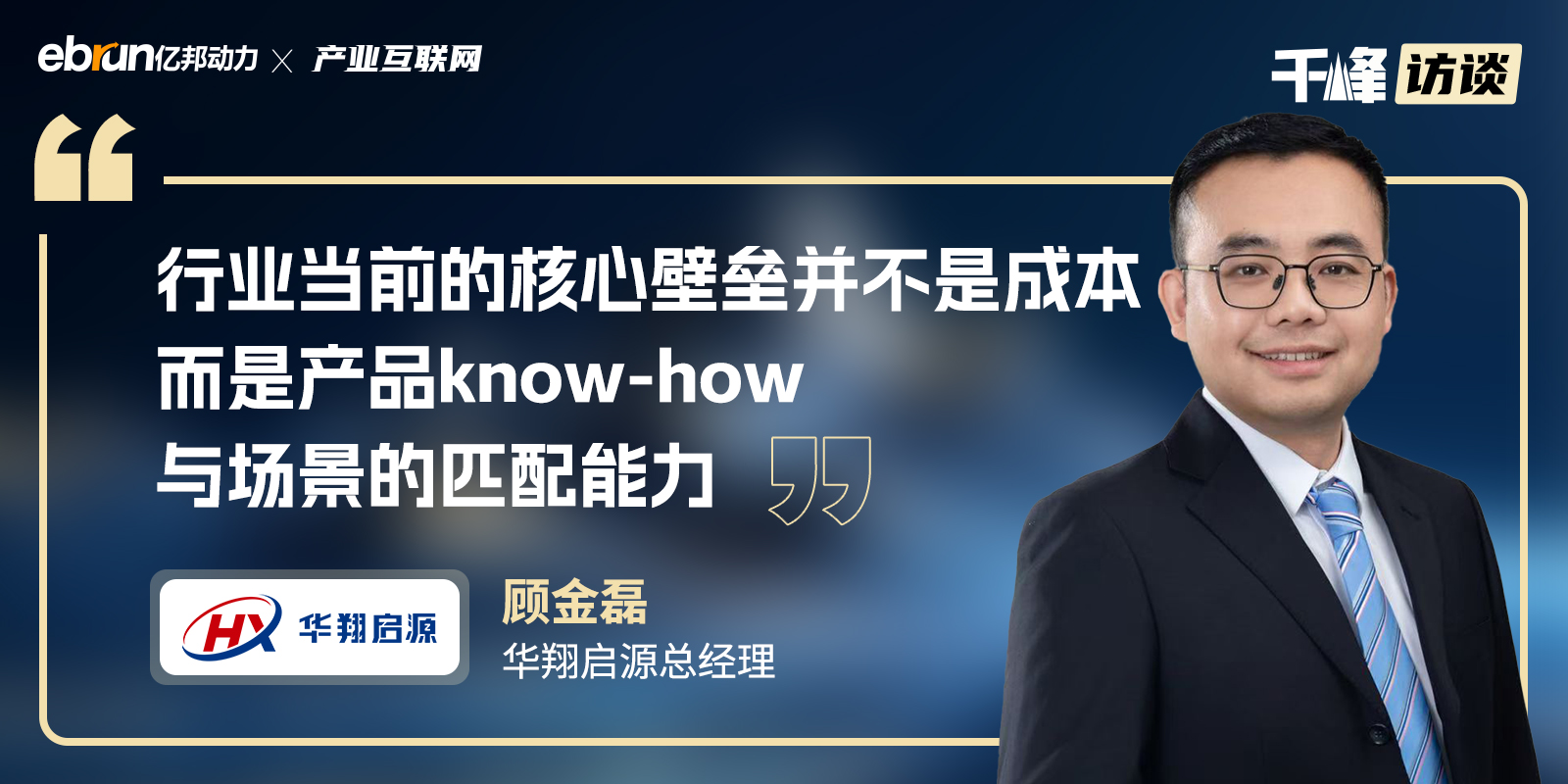
关于AI护城河,我们的判断是:行业当前的核心壁垒并不是成本,而是产品know-how与场景的匹配能力。依托中国完整的供应链,成本端的突破速度会非常快;真正难的是理解场景、把产品适配到场景里去。

关于产业智能体如何改写B2B:我们与客户的合作模式已经从传统来料加工升级为同步设计、共享设计、共创开发的深度合作,AI能力正在深度嵌入这种共创与供应链服务过程,这可能是智能体改写产业协作的一种形态。

亿邦:在海外市场的深度价值链建设上,华翔启源形成了怎样的模式?核心能力是什么?

顾金磊:我们向海外输出的能力,与在国内做的事情一脉相承:硬件制造+供应链整合服务,也就是为客户提供从产品设计、供应链开发到量产管理的一站式全链路服务,降低客户在非核心环节的投入。

亿邦:为统筹AI能力落地、国内价值链升级与海外业务拓展,华翔启源在组织架构或治理机制上做了哪些关键调整?您提到“思想解放、流程重构、组织重构”三层,分别是怎么落地的?

顾金磊:我们的调整可以概括为三层。

思想解放:首先要求团队忘掉汽车行业的固化框架,解放思想,只保留底层工艺原理的积累,其余经验做适配性筛选。团队成员大多来自汽车行业,同时吸纳了部分有机器人行业从业经验的人员。

流程重构:彻底重构原有汽车行业的生产制造流程,核心判断标准有两条——能否快速响应客户需求、能否保障产品核心质量指标。

组织重构:打破传统组织边界,调整架构适配新赛道;采用并行筹备模式,边同步设计、产能规划,边采购设备做工装,允许试错但禁止重复犯错。面对出货需求激增,团队工艺端人员扩增三倍,同时计划搭建数据系统助力快速迭代,避免后续一直靠加人提效。

亿邦:如果给刚刚起步、希望同时构建AI竞争力与全球化能力的同行企业提一条最核心的建议,这条建议会是什么?

顾金磊:最核心的一条建议是:不要追热点,找到自己的长板领域深耕。具身智能赛道的市场容量极大,合作大于竞争,不必为短期排名焦虑。最后分享一句话:很多问题,它越难的时候,就是离正确越近的时候。

作为TO B领域年度风向标,“2026第八届亿邦产业互联网年会暨首届产业智能体大会”将于2026年11月20日在北京召开。主题定为“AI与出海带来的模态进化”,聚焦产业智能体落地、AI供应链价值重构、数据要素与TOKEN经济、产业出海新生态等前沿议题深度思辨。大会将集结学界权威、央国企标杆、产业龙头、投资机构、服务生态伙伴,汇聚产业核心力量、拆解产业数智化转型路径、分享前沿实战经验。同期还将发布年度产业互联网报告及标杆案例,举办决策人闭门会、“千峰奖”颁奖盛典。


本文首发于 亿邦动力 官方网站

文章来源:亿邦动力

广告
微信
朋友圈

FAQ回顾

华翔启源是一家什么公司?在机器人赛道做什么业务?

华翔启源是宁波华翔启源科技有限公司,定位为把汽车制造工艺迁移到机器人赛道。公司从传统来料加工升级为同步设计、共享设计、共创开发,依托汽车行业供应链资源,为机器人客户提供从产品设计、供应链开发到量产管理的一站式全链路服务。

机器人企业如何借助汽车供应链资源加速量产?

机器人企业可复用汽车供应链资源加速量产。机器人核心关节由电机、减速器构成,与汽车电驱动系统结构一致;华翔启源联合汽车测试设备厂商开发的人形机器人测试台架已成为行业通用方案,合作厂商次年出货破百台。其一站式全链路服务可降低客户非核心环节投入。

人形机器人量产阶段的核心挑战是什么?如何应对?

人形机器人量产的核心挑战是迭代速度,赛道要求3个月内完成产品迭代,错误不可避免。应对方式是快速迭代、不重复犯错,通过大量产品级模拟测试验证方案;同时积累量产端问题数据,联合软件厂商开发标准化问题分析数据库,并计划搭建数据系统,避免长期靠加人提效。

PEEK材料在人形机器人轻量化中有什么优势?

PEEK是塑料材料体系的顶端品类,同等体积下重量仅为铝合金的一半,还自带抗腐蚀属性。华翔启源已在量产机器人的关节子零件上实现PEEK完全替代,减速器齿轮等核心部件仍在测试迭代;量产后PEEK零件综合加工成本可接近甚至低于铝合金、钢材,材料成本较进口产品减半且性能更优。

当前机器人行业的核心壁垒是什么?

当前机器人行业的核心壁垒不是成本,而是产品know-how与场景的匹配能力。依托中国完整供应链,成本端突破速度会很快,真正难的是理解场景并把产品适配进去。华翔启源不参与通用基座模型竞争,只针对自身生产场景开发垂域应用级模型,与机器人公司形成互为客户的共创关系。

这么好看,分享一下?

朋友圈 分享

APP内打开

赞 +1
+1
微信好友 朋友圈 新浪微博 QQ空间
关闭
收藏成功
发送
/140 0