广告
加载中

千峰访谈华秋曾海银:从“信息撮合+履约交付”到“AI智能体驱动全链路价值闭环”

亿邦动力 2026-10-13 17:34
亿邦动力 2026/10/13 17:34

邦小白快读

EN
全文速览

这篇文章的核心干货是:华秋搭建了电子产业一站式智能基础设施平台,覆盖EDA/DFM、PCB、PCBA、元器件,提供从设计到交付的全链路服务。其最大亮点在于用AI重构了硬件研发流程:AI EDA工具可提升设计效率30%以上,自动识别80%的可制造性问题;SMT贴片全流程AI自动化使效率提升400%;智能BOM配单从几小时压缩到分钟级;整体交付周期缩短50%以上,从行业平均15至30天压缩到5至7天。

对于普通读者,最值得关注的是硬件创新门槛被大幅降低:以往需要对接板厂、料商、贴片厂,现在一键下单即可打通,最快24小时出货;开源AI EDA工具让个人和小团队也能用上专业设计能力;海外客户通过线上平台可实时查询生产进度和物流,透明化体验大幅提升。此外,文章还提到AI硬件需求井喷、研发周期从6到12个月压缩到数周等趋势,说明电子产业正进入全新阶段。

对于品牌商而言,本文揭示了电子产业品牌营销与渠道建设的新路径。华秋的定位不是简单制造或撮合,而是以一站式智能基础设施平台形成品牌壁垒,通过四位一体闭环实现从设计到交付的全链路品牌体验。其品牌溢价能力的提升来自从加工制造向智造服务升级,用AI和数字化能力增强客户信任,这是传统代工模式难以复制的品牌价值。

在渠道建设上,华秋采用能力输出加本地服务模式,核心能力在中国,服务触点在全球,以数字化平台为纽带,在北美、欧洲等核心市场建立轻量化服务网络,并参加IPCAPEX、PCIM Europe等国际展会直面客户。品牌定价方面,华秋通过智能计价和AI定价模型实现透明化报价,按国际客户习惯重构报价透明度,强化ISO、UL、ROHS等认证背书,以合规和品质提升品牌溢价。对关注用户行为的品牌商,文章也指出研发周期被极限压缩、跨境硬件创新潮兴起,意味着品牌需要更敏捷的供应链和本地化服务来响应全球客户。

从卖家视角,这篇文章提供了多个增长市场和机会信号。一是AI硬件需求井喷,算力、机器人、自动驾驶带动多层板、HDI、高频高速材料需求整体上升;二是跨境硬件创新潮兴起,东南亚、东欧工程师圈带来小批量、快交付、跨境履约的红利;三是国产EDA进入历史性窗口期,国产替代创新潮开启。这些都为卖家调整选品和客户方向提供了参考。

政策与风险方面,文章未直接提及具体政策,但强调了合规与文化调整的重要性,包括ISO、UL、ROHS认证、GPL开源协议、文件规范和报价透明度,提示卖家在欧美市场需重视品质认证和知识产权。可学习点在于华秋的AI能力矩阵:智能BOM配单、智能询价比价、DFM预检、智能排产等,能显著降低人工成本、缩短交付周期。其合作方式值得卖家借鉴:以平台化方式整合物流、金融、园区资源,为上下游提供集中采购、供应链金融和共享制造等增值服务,同时通过赞助高校机器人战队培育早期客户生态。

对工厂类读者,这篇文章最直接的启示是产品生产和设计需求的变化。当前AI硬件需求井喷,多层板、HDI、高频高速材料的需求处于历史性高位,且硬件研发周期从6到12个月压缩到数周,工厂必须具备快速响应和小批量、快交付的能力。华秋的柔性制造模式提供了参考:依托五大PCB和PCBA智造基地,实现24小时快速打样、72小时批量交付。

在数字化和智能化升级方面,华秋展示了清晰路径:自研CRM、ERP、SCM、MES系统打通数据全域贯通,实现从下单到交付的全流程数据流转;SMT贴片全流程AI自动化将效率提升400%;智能排产与质量检测系统提升产线利用率和良率;AI驱动的WMS系统实现智能分拣和库存预警。工厂可以从这些案例中找到自身数字化转型的抓手。此外,文章提到江门基地一期产能12万平方米每月、二期规划24万平方米每月,九江基地一期产能10万平方米每月,说明头部平台正在扩充产能,一般工厂需思考如何通过数字化和AI能力构建差异化竞争力,避免陷入样样能做却样样不深的中间地带。

服务商可以从这篇文章中看到电子产业服务的新趋势和客户痛点。核心趋势是产业互联网从信息撮合加履约交付走向AI智能体驱动全链路价值闭环,AI和全球化正在重写生产要素和价值交换方式。服务商如果仍停留在单点服务,将面临被一站式平台替代的风险。

客户痛点非常明确:供应链分散导致沟通成本高、交付周期长、质量难管控;PCB设计是经验密集型工作,新工程师培养周期需2至3年,60%以上时间被布线、DRC排查、选型占用;高校和初创团队买不起专业EDA工具。华秋的解决方案是打造AI能力矩阵:AI EDA将设计效率提升30%以上,DFM在设计阶段识别80%以上可制造性问题,SMT贴片AI自动化提升效率400%,智能BOM配单从几小时压缩至分钟级。服务商可以借鉴其产品化思路,把AI能力封装成工具和服务,例如智能计价、在线DFM、生产进度透明化等,并从项目制服务转向平台化订阅服务。

此外,华秋坚持开源AI EDA并输出三大核心能力(全链路一站式、数字化智能化、柔性制造快速交付),服务商可思考如何与这类平台合作,共同服务全球硬件创新者。

这篇文章对平台商有重要参考价值。首先,商业对平台的需求正从信息撮合转向全链路价值闭环,华秋用数据验证了这一方向:全球用户30万+,日均订单3000+,准时交付率99.59%,业务覆盖180多个国家和地区。平台需要像华秋一样构建工业软件加柔性智造加元器件供应链加工程师生态社区的四位一体闭环,才能形成真正的粘性。

平台的最新做法包括:在AI技术上推出国内首款深度融合大模型的AI EDA工具(华秋KiCad AI Copilot),并遵循GPL3.0开源协议;在海外以HQNextPCB和HQOnline双品牌运营,通过线上平台提供英文版智能计价、DFM分析、生产进度实时查询和物流追溯;开设全球首家人工智能6S店,探索线上线下融合的本地化服务。这些做法都体现了用产品透明化能力、用服务本地化信任、用认证标准化合规的思路。

平台商还需注意风险规避:AI与全球化均需重投入,资源将加速向头部平台集中,只有单点能力的平台会越发被动。未来竞争是体系与体系的竞争,一站式平台做广度,细分专业平台做深度,中间地带平台压力最大。平台商应参考华秋的三大核心能力输出模式,通过数字化平台将国内制造和供应链能力输出到全球,同时建立轻量化的本地服务网络,避免重资产海外建厂风险。

研究者可以从这篇文章提炼产业新动向和深层问题。产业动向方面,电子产业正经历模态进化:底层生产要素和价值交换方式被同时重写,AI让经验决策变成数据决策,人力协同变成智能协同,全球化让国内产能布局变成全球价值网络。这推动产业互联网从信息撮合加履约交付演进到AI智能体驱动全链路价值闭环。具体到电子产业,表现为AI硬件需求井喷、研发周期极限压缩、跨境硬件创新潮、国产EDA窗口期、垂类Agent真实落地等五个结构性变化。

商业模式层面,华秋的一站式智能基础设施平台提供了一种新范式:以工业软件(EDA/DFM)加柔性智造(PCB/PCBA)加元器件供应链加工程师生态社区形成四位一体闭环,通过AI能力矩阵覆盖设计、采购、生产、服务全链路。其海外价值链建设采用能力输出加本地服务模式,即以数字化平台为纽带输出国内制造和供应链能力,同时在海外建立轻量化服务网络,这种模式值得研究者跟踪研究。

政策法规建议与启示方面,文章强调开源协议(GPL3.0)对硬件创新生态的重要性,以及欧美客户对品质认证和知识产权的重视。研究者可关注开源EDA工具如何降低创新门槛、国产工业软件如何借势替代、以及跨境电商与产业互联网融合中数据合规和认证标准等问题。此外,华秋的三个预判——集中度上升、竞争维度从单点升级为体系、行业分化——也为产业组织研究提供了方向。

返回默认
声明:快读内容全程由AI生成,请注意甄别信息。如您发现问题,请发送邮件至 run@ebrun.com 。

我是 品牌商 卖家 工厂 服务商 平台商 研究者 帮我再读一遍。

Quick Summary

The core value of this article is that Huaqiu has built a one-stop intelligent infrastructure platform for the electronics industry, covering EDA/DFM, PCB, PCBA, and components, providing full-chain services from design to delivery. Its biggest highlight is using AI to reshape the hardware R&D process: AI EDA tools can improve design efficiency by more than 30% and automatically identify 80% of manufacturability issues; the fully AI-automated SMT assembly process boosts efficiency by 400%; intelligent BOM sourcing compresses turnaround from several hours to minutes; and overall delivery cycles are shortened by over 50%, from the industry average of 15 to 30 days down to 5 to 7 days.

For general readers, the most notable implication is that the barrier to hardware innovation has been dramatically lowered. Instead of coordinating with board manufacturers, component suppliers, and assembly plants, users can now complete the process with one click and receive shipments in as little as 24 hours. Open-source AI EDA tools give individual developers and small teams access to professional design capabilities. Overseas customers can track production progress and logistics in real time through the online platform, greatly improving transparency. The article also highlights trends such as surging AI hardware demand and compressed R&D cycles shrinking from 6 to 12 months to just weeks, indicating that the electronics industry is entering a new phase.

For brand owners, this article reveals a new path for brand marketing and channel building in the electronics industry. Huaqiu is not simply a manufacturer or matchmaker; it builds its brand moat through a one-stop intelligent infrastructure platform, delivering a full-chain brand experience from design to delivery via a closed loop of four integrated capabilities. Its brand premium comes from upgrading from manufacturing to smart manufacturing services, using AI and digital capabilities to strengthen customer trust—a brand value difficult to replicate in traditional OEM models.

On channel building, Huaqiu adopts a model of capability export plus local services: core capabilities reside in China, while service touchpoints span the globe. With its digital platform as the link, it builds lightweight service networks in key markets such as North America and Europe, and engages customers directly at international trade shows like IPC APEX EXPO and PCIM Europe. On pricing, Huaqiu achieves transparent quotations through intelligent pricing and AI-driven pricing models, restructuring quotation transparency to suit international customer habits while reinforcing certifications such as ISO, UL, and RoHS to enhance brand premium through compliance and quality. For brands attentive to customer behavior, the article also points out that compressed R&D cycles and the rise of cross-border hardware innovation mean brands need more agile supply chains and localized services to respond to global customers.

From a seller's perspective, this article highlights several growth markets and opportunity signals. First, AI hardware demand is booming: computing power, robotics, and autonomous driving are driving overall growth in multilayer boards, HDI, and high-frequency/high-speed materials. Second, a cross-border hardware innovation wave is emerging, with engineer communities in Southeast Asia and Eastern Europe creating opportunities in small-batch, fast-delivery, cross-border fulfillment. Third, domestic EDA tools are entering a historic window of opportunity, opening a wave of substitution and innovation. These signals provide useful references for sellers adjusting product selection and customer targeting.

In terms of policy and risk, the article does not directly mention specific regulations but emphasizes the importance of compliance and cultural adaptation, including ISO, UL, and RoHS certifications, the GPL open-source license, documentation standards, and quote transparency—reminding sellers that quality certifications and intellectual property are critical in Western markets. A key takeaway is Huaqiu's AI capability matrix: intelligent BOM sourcing, intelligent quotation and price comparison, DFM pre-check, and intelligent production scheduling can significantly reduce labor costs and shorten delivery times. Its partnership model is also worth emulating: integrating logistics, finance, and park resources on a platform basis to provide upstream and downstream partners with centralized procurement, supply chain finance, and shared manufacturing value-added services, while nurturing an early customer ecosystem by sponsoring university robotics teams.

For factory readers, the most direct insight from this article is how product production and design requirements are changing. AI hardware demand is booming, with multilayer boards, HDI, and high-frequency/high-speed materials at historic highs, and hardware R&D cycles compressing from 6 to 12 months to just weeks. Factories must therefore be capable of rapid response and small-batch, fast-delivery production. Huaqiu's flexible manufacturing model provides a benchmark: leveraging five PCB and PCBA intelligent manufacturing bases to achieve 24-hour rapid prototyping and 72-hour batch delivery.

On digitalization and intelligent upgrading, Huaqiu demonstrates a clear path: self-developed CRM, ERP, SCM, and MES systems connect data across the entire enterprise, enabling end-to-end data flow from order placement to delivery; fully AI-automated SMT assembly improves efficiency by 400%; intelligent production scheduling and quality inspection systems raise line utilization and yield rates; and AI-driven WMS systems enable intelligent sorting and inventory alerts. Factories can find practical entry points for their own digital transformation in these cases. In addition, the article notes that the Jiangmen base has a phase-one capacity of 120,000 square meters per month and a phase-two plan of 240,000 square meters per month, while the Jiujiang base has a phase-one capacity of 100,000 square meters per month. This shows that leading platforms are expanding capacity, and ordinary factories need to consider how to build differentiated competitiveness through digitalization and AI capabilities, avoiding the middle ground of being able to do a little of everything but nothing at depth.

Service providers can identify new trends and customer pain points in the electronics industry from this article. The core trend is that industrial internet platforms are moving from information matching plus fulfillment toward AI-agent-driven, full-chain value closure; AI and globalization are rewriting production factors and value exchange. Service providers that remain focused on single-point services face the risk of being replaced by one-stop platforms.

Customer pain points are clear: fragmented supply chains lead to high communication costs, long delivery times, and quality control difficulties; PCB design is an experience-intensive task, with new engineer training taking two to three years and more than 60% of time spent on routing, DRC checks, and component selection; and universities and startups cannot afford professional EDA tools. Huaqiu's solution is to build an AI capability matrix: AI EDA improves design efficiency by over 30%, DFM identifies more than 80% of manufacturability issues at the design stage, SMT assembly AI automation improves efficiency by 400%, and intelligent BOM sourcing shrinks turnaround from hours to minutes. Service providers can borrow this productization mindset by packaging AI capabilities into tools and services such as intelligent quotation, online DFM, and transparent production tracking, and by shifting from project-based services to platform-based subscription services.

Furthermore, Huaqiu insists on open-sourcing its AI EDA and exports three core capabilities (full-chain one-stop service, digitalization and intelligence, and flexible manufacturing with fast delivery). Service providers can consider how to cooperate with such platforms to jointly serve global hardware innovators.

This article offers important reference value for platform operators. First, platform demand is shifting from information matching to full-chain value closure, and Huaqiu proves this direction with data: 300,000+ global users, 3,000+ daily orders, 99.59% on-time delivery rate, and business coverage in more than 180 countries and regions. Platforms need to build Huaqiu's closed loop of industrial software plus flexible manufacturing plus component supply chain plus an engineer community in order to create real stickiness.

The latest moves by Huaqiu include: launching the country's first AI EDA tool deeply integrated with large language models (Huaqiu KiCad AI Copilot), released under the GPL 3.0 open-source license; operating overseas through the dual brands HQNextPCB and HQOnline, offering English-language intelligent quotation, DFM analysis, real-time production progress tracking, and logistics tracing on the online platform; and opening the world's first AI 6S store to explore localized services integrating online and offline channels. These actions reflect a strategy of using products to create transparency, localized services to build trust, and certifications to ensure compliance.

Platform operators should also pay attention to risk avoidance: AI and globalization both require heavy investment, resources will increasingly concentrate among leading platforms, and platforms with only single-point capabilities will become increasingly passive. Future competition is system against system: one-stop platforms expand in breadth, specialized platforms go deep, and platforms caught in the middle face the greatest pressure. Platform operators should study Huaqiu's model of exporting core capabilities, using a digital platform to channel domestic manufacturing and supply chain capacity to global markets while building lightweight local service networks to avoid the risks of heavy overseas factory investment.

Researchers can extract new industry trends and deeper questions from this article. At the industry level, the electronics industry is undergoing a modal evolution: underlying production factors and value exchange mechanisms are being rewritten simultaneously. AI turns experience-based decisions into data-driven decisions, and human coordination into intelligent coordination; globalization transforms domestic capacity deployment into a global value network. This pushes industrial internet platforms from information matching plus fulfillment toward AI-agent-driven full-chain value closure. In the electronics sector specifically, this manifests in five structural changes: surging AI hardware demand, extreme compression of R&D cycles, a cross-border hardware innovation wave, a window of opportunity for domestic EDA, and the real-world application of vertical AI agents.

At the business model level, Huaqiu's one-stop intelligent infrastructure platform provides a new paradigm: a closed loop integrating industrial software (EDA/DFM), flexible manufacturing (PCB/PCBA), component supply chain, and an engineer community, with an AI capability matrix covering design, procurement, production, and service across the full chain. Its overseas value chain is built on a capability-export-plus-local-service model—using a digital platform to export domestic manufacturing and supply chain capabilities while establishing lightweight service networks overseas. This model is worth tracking and studying.

In terms of policy, regulation, and implications, the article emphasizes the importance of open-source licenses (GPL 3.0) to the hardware innovation ecosystem and underscores how Western customers value quality certifications and intellectual property. Researchers can focus on how open-source EDA tools lower the barrier to innovation, how domestic industrial software can capitalize on substitution opportunities, and how data compliance and certification standards evolve in the integration of cross-border e-commerce and industrial internet platforms. In addition, Huaqiu's three predictions—rising industry concentration, competition upgrading from single points to full systems, and industry differentiation—offer useful directions for industrial organization research.

Disclaimer: The "Quick Summary" content is entirely generated by AI. Please exercise discretion when interpreting the information. For issues or corrections, please email run@ebrun.com .

I am a Brand Seller Factory Service Provider Marketplace Seller Researcher Read it again.

【亿邦原创】曾海银,深圳华秋智联股份有限公司副总经理。华秋定位为电子产业的一站式智能基础设施平台,业务覆盖EDA/DFM、PCB、PCBA、元器件,形成“工业软件+柔性智造+元器件供应链+工程师生态社区”四位一体闭环。本届千峰奖访谈中,曾海银围绕AI与出海带来的模态进化,分享了华秋在电子产业AI落地、开源EDA、海外本地化服务等方面的实践与判断。

亿邦:本届千峰奖以「AI与出海带来的模态进化」为核心主题,聚焦产业能力的深层重构。结合电子产业,您如何理解这一轮由AI和全球化共同驱动的产业模态进化?华秋在AI能力建设与全球化出海上有哪些核心战略布局?能否具体介绍一下公司的定位及业务模式?

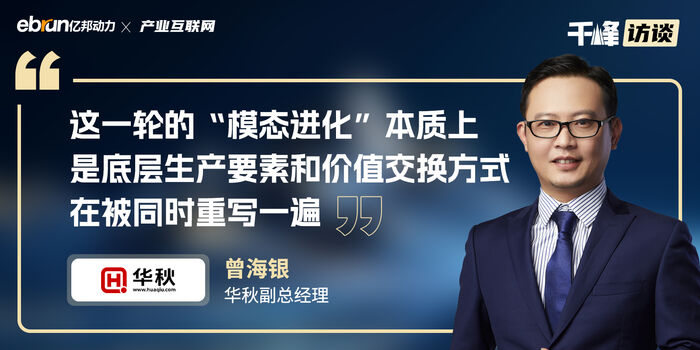
曾海银:我的判断是,这一轮的“模态进化”,本质上是底层生产要素和价值交换方式在被同时重写一遍。

过去这些年,AI让“经验决策”变成“数据决策”,让“人力协同”变成“智能协同”;全球化又把原来“国内的产能布局”变成了“全球价值网络”。两个力量合在一起,产业互联网就从原来“信息撮合+履约交付”,走到如今“AI智能体驱动全链路价值闭环”阶段。

放在电子产业去看,这个切口特别典型。我们服务的30万家企业客户、850万工程师,分布在180多个国家和地区,从他们这里我看到几件事正在发生:

第一,AI硬件需求的井喷:无论算力、机器人还是自动驾驶,都在拉高多层板、HDI、高频高速材料的需求,整体水位是历史性的;

第二,研发周期被极限压缩:原来一个硬件从立项到量产6到12个月很正常,现在窗口期可能就是数周,“快”已经不是加分项,是入场券;

第三,跨境硬件创新潮:东南亚、东欧工程师圈的兴起,让“小批量、快交付、跨境履约”这种能力的供给方吃到了红利;

第四,自主工业软件的窗口期:国产EDA拿到了历史性的机会,国产替代创新潮开启;

第五,垂类Agent的真实落地:BOM选型、DFM检查、布线排错这些场景,今天看来是大模型最“能干活”的地方。

讲回到华秋自己的定位,我们从2011年做到今天,沉淀出来的就是一句话——电子产业的一站式智能基础设施平台。

我们不是做撮合,也不是单纯做制造,我们做的是“工业软件(EDA/DFM)+柔性智造(PCB/PCBA)+元器件供应链+工程师生态社区”四位一体的闭环。具体覆盖EDA/DFM、PCB、PCBA、元器件这四大块,给客户提供“设计→采购→生产→交付”的全链路解决方案。

亿邦:您提到华秋长期赞助高校机器人战队。能否以青岛理工大学沧溟机器人战队为例,说明一站式能力在真实场景中如何体现?

曾海银:这套一站式能力在高校机器人赛事场景里体现得尤为直观。华秋长期赞助全国各大高校机器人战队参加RoboMaster、RoboCon等权威赛事,为其提供从设计到交付的一站式支持。以青岛理工大学「沧溟机器人战队」为例,在ROBOCON2026中凭借超级电容控制板斩获全国八强,其从设计文件到成品板全程由华秋承接:团队先用华秋DFM做可制造性评审,再一站式完成PCB打样、元器件采购与SMT贴片。

过去高校团队要分别对接板厂、料商与贴片厂,沟通成本高、进度难协同;在华秋一键下单即可全链路打通,最快24小时出货,这正是「让硬件创新更简单」的注脚——我们把设计、采购、制造、交付的门槛一并承担,让一线创新者只需专注创造本身。

亿邦:目前贵公司在哪些核心业务环节落地了AI/大模型技术?形成了怎样独具特色的AI能力矩阵?

曾海银:华秋的AI技术落地覆盖了“设计—采购—生产—服务”全链路,形成了三大AI能力矩阵:

第一,AI+设计研发。华秋推出国内首款深度融合大模型的AI EDA工具(华秋KiCad AI Copilot),具备自主感知交互、多模态视觉识别、工具调用与反思验证三大核心能力,能够辅助工程师完成原理图设计、PCB布局、规则检查等工作,将设计效率提升30%以上。华秋DFM可制造性分析软件,采用AI算法实现一键PCB设计分析、SMT装配分析和3D预览,能够在设计阶段识别80%以上的可制造性问题,避免生产返工。

第二,AI+智能制造。SMT贴片全流程AI自动化:系统自动完成物料与焊盘匹配度校验、器件干涉与焊接风险预警,自动调整器件坐标与极性角度,仅少数异形物料需要人工核对,可自动生成贴片机程序,较传统人工作业效率提升400%。智能排产与质量检测:自研MES系统结合AI算法,实现生产订单智能排程、设备状态实时监控、AOI质检AI辅助判读,大幅提升产线利用率和产品良率。智能仓储物流:AI驱动的WMS系统实现元器件智能分拣、库存动态预警、路径优化调度,4小时即可完成现货订单出库。

第三,AI+供应链采购。智能BOM配单:AI算法自动解析客户BOM表,完成元器件型号识别、替代推荐、库存匹配、价格计算,将传统几小时的人工配单缩短至分钟级。智能询价与比价:基于海量交易数据的AI定价模型,实现实时智能计价,支持多品牌、多渠道自动比价。

亿邦:在纵向打通产供销全链路、横向整合产业资源方面,AI发挥了怎样的作用?华秋的AI与数智化竞争力体系如何概括?

曾海银:纵向打通产供销全链路:通过自研CRM、ERP、SCM、MES等核心系统完成数据全域贯通,实现从客户下单、设计审核、采购备料到生产制造、物流交付的全流程数据无缝流转,整体交付周期缩短50%以上。

横向整合产业资源:以平台化方式整合物流、金融、园区等产业资源,为上下游合作伙伴提供集中采购、供应链金融、共享制造等增值服务。

通过AI提升服务效率与品质,实现从“加工制造”向“智造服务”升级,品牌溢价能力显著提升;同时通过智能排产与工艺优化,降低单位能耗,助力绿色制造。

独具特色的AI与数智化竞争力体系,可以概括为“一个底座、三大场景、一个循环”:以全链路数字化底座(自研CRM/ERP/SCM/MES+数据资产)为支撑,在“AI+设计研发、AI+供应链采购、AI+智能制造”三大场景落地,形成“数据驱动AI、AI优化流程、流程沉淀数据”的正向循环。

亿邦:能否分享一个最具代表性的“AI+价值链”创新实践案例?它解决了哪些行业共性痛点,创造了哪些可感知、可量化的价值?

曾海银:我最愿意分享的就是“华秋KiCad AI Copilot/华秋小助手”。这是国内首款深度融合大模型的AI EDA工具,今年也拿了第十五届CFS财经峰会的“2026 AI应用先锋产品奖”。

它解决的痛点非常具体:PCB设计是高度经验密集型的工作。一个新工程师从上手到能稳定输出,培养周期要2—3年;一个工程师60%以上的时间被布线、DRC排查、选型这些事占掉;高校、初创团队买不起、用不好专业的EDA工具,硬件创新的门槛就特别高。

我们做的是把“自主感知与交互、多模态视觉识别、工具调用与反思验证”这三件事做透。再往下沉,就是把云端元器件库、一键DFM、实时询价下单、图片生成符号封装这些动作串起来。

亿邦:您特别提到华秋KiCad AI Copilot遵循GPL3.0开源协议。为什么坚持开源?这对硬件创新生态意味着什么?

曾海银:值得一提的是,华秋KiCad AI Copilot是遵循GPL3.0开源协议的。这是我特别想讲——我们坚持让AI EDA保持开源生态属性,让硬件创新不再被工具门槛锁死。

回到可量化的价值:工程师布线与排错的效率显著提升,部分场景从几小时压到分钟级;AI DFM预检,把制造端的返工成本前置消除;从设计文件直接下到华秋PCB产线,整体交付周期缩短50%以上,从行业平均的15—30天压缩到5—7天;开源协议直接降低工具采购成本,把硬件创新的参与者基数扩大了一大圈。

亿邦:海外布局方面,华秋目前布局了哪些海外核心市场?结合当地产业环境、监管规则与市场文化特点,做了哪些关键本地化调整?

曾海银:华秋以北美、欧洲为核心市场(工程师、中小硬件企业与创客最密集),同时辐射东南亚、日韩等地区,业务覆盖180+国家和地区;全球用户30万+,日均订单3000+,准时交付率99.59%。出海路径上,2019年NextPCB海外电商上线,目前以HQNextPCB(PCB/PCBA智造服务)+HQOnline(元器件分销)双品牌运营海外业务,并依托中国香港国际业务中心统筹全球市场。

关键的本地化调整包括:产品侧,提供英文版智能在线计价与下单系统、HQDFM英文版免费分析工具,支持生产全工序进度实时可查、物流全程可追溯,把“看不见的中国工厂”变成“看得见的在线进度”;服务侧,配置1对1专属客服与工程支持,跨时区响应欧美客户的沟通习惯;合规与文化侧,针对欧美客户重视品质认证与知识产权的特点,强化ISO、UL、ROHS等认证背书,开源工具严格遵循GPL协议,并在文件规范、报价透明度上按国际客户习惯重构;渠道侧,参加美国IPCAPEX、德国PCIM Europe、慕尼黑Electronica等国际展会直面客户。

亿邦:您提到2025年开设全球首家人工智能6S店。这是怎样的探索?线上线下融合的本地化服务形态如何理解?

曾海银:2025年我们开设全球首家人工智能6S店,探索线上线下融合的本地化服务形态。总结起来就是:用产品把能力透明化,用服务把信任本地化,用认证把合规标准化。

亿邦:在海外市场的深度价值链建设上,华秋形成了怎样的模式?核心能力是什么?为海外合作伙伴及当地产业带来了哪些核心价值?

曾海银:华秋的海外价值链建设采用的是“能力输出+本地服务”的模式,简单说就是:核心能力在中国,服务触点在全球。

我们没有简单地把国内产能直接外销,也没有在海外大规模重资产建厂,而是以数字化平台为纽带,将国内强大的制造能力、供应链能力、技术能力通过云端输出到全球,同时在海外市场建立轻量化的服务网络,贴近客户、快速响应。

具体来说,我们向海外输出的是三大核心能力:

第一,全链路一站式服务能力。这是华秋最差异化的能力。海外客户尤其是初创企业,最头疼的就是供应链分散——找设计、找板厂、找元器件、找贴片厂,要对接多家供应商,沟通成本高、交付周期长、质量难管控。华秋提供从设计到交付的一站式服务,客户只需要对接一个窗口,就能完成所有事情,大大降低了硬件创新的门槛。

第二,数字化与智能化能力。我们把国内成熟的数字化体系复制到海外市场:全球客户通过线上平台,可一键完成在线下单、文件上传、DFM分析、智能计价、生产进度实时查询、物流全程追溯。这种“透明化、数字化、自助化”的服务体验,在传统的电子制造服务领域是非常领先的。

第三,柔性制造与快速交付能力。依托国内五大PCB&PCBA智造基地的产能布局,我们能够实现“24小时快速打样、72小时批量交付”的极速交付。这对海外的硬件初创企业尤其有吸引力——他们产品迭代快,对交期极其敏感,快一天交付就可能快一步抢占市场。

为海外合作伙伴与当地产业创造的价值:对海外客户,大幅降低供应链管理成本,缩短产品上市周期,提升研发效率,很多海外客户反馈,使用华秋服务后,产品从设计到量产的时间缩短了一半以上;对当地产业,为当地硬件创新提供了可靠的供应链基础设施,降低了创业门槛,培育了创新生态,尤其是在一些电子制造业不发达的地区,华秋的服务让当地创业者也能获得世界级的制造能力;对产业合作伙伴,帮助国内元器件原厂、设备厂商拓展海外渠道,带动中国电子产业整体出海。

亿邦:面向2026年及未来两年,贵公司在AI能力迭代与全球化布局上有哪些重点投入规划?您预判这会给行业竞争格局带来哪些关键变化?

曾海银:2026年及未来两年的重点投入规划有三个方向。

一是夯实制造与供应链底座:推进全国智能制造基地智能化升级与产能优化,扩充高可靠PCB、高端PCBA制造能力,持续完善元器件供应链体系,深化平台数字化运营能力,提升综合服务能力。其中,江门一站式智造基地(占地60亩)一期产能12万平方米/月、二期规划24万平方米/月,九江PCB智造基地(占地205亩)一期产能10万平方米/月。

二是强化工业软件自主研发:加大AI及国产EDA、DFM等工业软件研发投入,增强端到端产品化与工程化能力;在核心业务流程中持续部署生产级AI应用,同时面向客户推出可外部部署的AI赋能工具,涵盖智能EDA、原理图验证及可制造性设计等环节。AI EDA将从“设计辅助”向更完整的“设计Agent”演进,持续沉淀电子产业知识图谱。

三是拓展产品边界与全球市场:优化现有产品及解决方案,孵化新业务线,加速海外布局完善海外销售及服务网络,在北美、欧洲等核心区域增设本地服务节点。华秋将坚守“让硬件创新更简单”的使命,以技术驱动和生态协同,为全球电子产业提供更高效、可靠的数字化智造服务,助力更多硬件创新从创意走向量产。

对行业格局的预判:首先是带来集中度上升,AI与全球化均需重投入,资源将加速向头部平台集中;其次是竞争维度从“单点”升级为“体系”,未来比拼的是全链路协同效率,仅有单点能力的公司将愈发被动;最后是行业出现分化,一站式平台型企业做广度、细分领域专业化企业做深度,而“样样能做却样样不深”的中间地带企业压力最大。

作为TO B领域年度风向标,“2026第八届亿邦产业互联网年会暨首届产业智能体大会”将于2026年11月20日在北京召开。主题定为“AI与出海带来的模态进化”,聚焦产业智能体落地、AI供应链价值重构、数据要素与TOKEN经济、产业出海新生态等前沿议题深度思辨。大会将集结学界权威、央国企标杆、产业龙头、投资机构、服务生态伙伴,汇聚产业核心力量、拆解产业数智化转型路径、分享前沿实战经验。同期还将发布年度产业互联网报告及标杆案例,举办决策人闭门会、“千峰奖”颁奖盛典。


本文首发于 亿邦动力 官方网站

文章来源:亿邦动力

广告
微信
朋友圈

FAQ回顾

华秋是做什么的?

华秋是深圳华秋智联股份有限公司旗下的电子产业一站式智能基础设施平台,覆盖EDA/DFM、PCB、PCBA、元器件,提供从设计到交付的全链路解决方案,服务30万家企业客户和850万工程师,业务遍及180多个国家和地区。

AI在电子制造行业有哪些应用场景?

在电子制造行业,AI已在设计、制造、供应链三大场景落地。以华秋为例:AI EDA工具将设计效率提升30%以上;SMT贴片全流程AI自动化较人工作业效率提升400%;智能BOM配单将人工配单从几小时缩短至分钟级。

华秋KiCad AI Copilot是什么?

华秋KiCad AI Copilot是国内首款深度融合大模型的AI EDA工具,具备自主感知交互、多模态视觉识别、工具调用与反思验证三大能力,可辅助工程师完成原理图设计、PCB布局和规则检查,将设计效率提升30%以上,并遵循GPL3.0开源协议。

为什么开源EDA对硬件创新很重要?

开源EDA可以降低工具采购成本,让更多工程师和初创团队能用上专业设计工具,扩大硬件创新参与者基数。华秋KiCad AI Copilot遵循GPL3.0开源协议,避免硬件创新被工具门槛锁死。

华秋的快速交付能力如何实现?

华秋依托国内五大PCB&PCBA智造基地,通过自研CRM、ERP、SCM、MES系统贯通全流程数据,实现24小时快速打样、72小时批量交付,整体交付周期从行业平均15-30天缩短至5-7天。

这么好看,分享一下?

朋友圈 分享

APP内打开

赞 +1
+1
微信好友 朋友圈 新浪微博 QQ空间
关闭
收藏成功
发送
/140 0