广告
加载中

企采AI提效实践白皮书发布:从“人找货”到“AI跑流程” 中小企业采购的效率拐点

亿邦智库 2026-10-13 21:28
亿邦智库 2026/10/13 21:28

邦小白快读

EN
全文速览

总:企业采购正从人工跑流程转向AI跑流程。淘宝企业购推出AI采购助手小源,白皮书显示约六到七成重复采购活可被AI接走,帮助中小企业降本提效。

1. 关键数字:2025年全国企业物资采购总额达196.3万亿元,数字化采购总额为23.2万亿元。中小企业采购长期靠手工重复劳动,效率慢、易错、响应迟,隐性成本高。

2. 实操场景:找货时一次说清多个参数,AI集中返回候选;说不清型号可讲用途,AI推荐解决方案;只有图片也能识别定位商品。比较确认时,AI同时筛商品条件与开票条件,还能批量咨询商家并总结回复。订单可集中查看、批量催发货、批量开票;常购品一键加购,历史订单自动归集成供应商档案。

3. 真实案例:内测中61项物料清单约10分钟生成567条推荐;368笔订单约17分钟批量开票,合计14.5万元;1200笔订单归成60家供应商档案。

4. 如何体验:电脑端访问caigou.taobao.com,移动端打开淘宝APP搜索淘宝小源。

总:AI采购助手改变中小企业采购行为,品牌商需把商品信息和服务承诺做得足够清晰,才能在AI筛选中被优先找到和购买。

1. 用户行为变化:采购者不再只用关键词搜索,而是用多参数、应用场景甚至一张图片描述需求,AI按结构化信息匹配商品。品牌商要在商品标题、参数、资质、服务信息上下功夫,让机器能读懂并推荐。

2. 渠道与竞争规则:AI会在比较确认环节同时筛商品条件和开票条件,品牌商能否开票、履约记录是否良好,成为被推荐的关键。历史交易数据沉淀越丰富,越容易形成供应商档案,进入采购者复购名单。

3. 消费趋势与产品研发:采购者常购清单按采购次数排序,下架商品会触发相似寻源,提示品牌商持续完善产品线信息并积累真实交易。

4. 市场规模:2025年全国企业物资采购总额196.3万亿元,数字化采购23.2万亿元;中小企业通过AI获得专业选型能力,采购决策更依赖平台数据,品牌商应适应这种评审流程。

总:淘宝企业购推出AI采购助手小源,对卖家是新的渠道机会和流量规则变化。平台数据显示,中小企业采购数字化市场空间巨大,而商品信息和服务承诺的清晰度直接决定能否被AI推荐。

1. 市场与增长机会:2025年全国企业物资采购总额达196.3万亿元,数字化采购总额为23.2万亿元;中小企业采购长期被忽视,AI工具填补服务空白,卖家可以借助淘宝企业购触达海量中小企业买家。

2. AI筛选带来的新规则:找货环节AI按参数、场景、图片匹配商品;比较确认环节把开发票作为筛选条件。卖家发布商品时把参数写全、支持开票、完善履约记录,更容易被AI选中;信息不清的商家可能在第一轮就被过滤。

3. 事件应对与可学习点:内测案例显示AI能批量咨询商家、批量处理订单,这意味着询单和跟单变得更透明,回复效率影响成交。平台提出要共建商品信息和服务承诺,卖家应主动参与,把商品资料结构化、服务承诺确定化。

4. 风险提示:如果商品信息陈旧、下架商品引发相似寻源,说明店铺常购品维护要及时,否则复购可能流向他家。

总:工厂作为供给方,需要适应采购端由AI驱动的变化。白皮书指出,商品信息越清楚,生意越好做,这给产品设计、生产和数字化带来明确启示。

1. 生产与产品设计需求:AI找货选型要求商品参数结构化、完整可读取。工厂在设计产品资料时,要把型号、规格、材质等关键参数写清楚,并尽量标准化,方便被AI匹配;对于说不清型号的采购者,AI会按应用场景推荐解决方案,工厂应围绕常见应用场景组织产品信息。

2. 商业机会:中小企业采购AI化后,找货、比价、开票、催单等环节效率提升,工业品线上采购需求会被激活。工厂可通过淘宝企业购等平台获得更多订单,尤其是常购品和复购品,因为AI会把历史订单归集成供应商档案,履约记录成为评估依据。

3. 数字化与电商启示:工厂要推进商品数据的数字化,不能只靠业务员个人经验;要积累线上交易数据和履约记录,提升供应商档案评分。同时,平台规模和基建已形成,工厂参与共建信息清晰度,就能获得AI辅助采购带来的红利。

总:AI Agent在企业采购场景出现规模化落地,服务商可关注新机会。淘宝企业购推出小源,核心是把重复劳动交给AI,把专业判断留给人,这为采购提效类服务提供了范本。

1. 行业趋势:采购从信息化、电商化走向AI直接办事,AI Agent成为落地实体经济的新标杆。中小企业市场庞大,长期缺乏定制系统和专职团队,用得起、上手快的AI采购工具有很大空间。

2. 客户痛点:中小企业采购者面对重复、分散、难兼顾三座大山,具体包括逐项搜型号、逐家问价格、逐单催发货、逐笔填开票等。约六到七成重复工作可被AI接走,剩下的专业判断才是人的重点。

3. 解决方案能力要求:AI需要综合多参数检索、场景推荐、图片识别;比较确认要同时筛商品与开票条件,并对商家进行批量咨询和智能总结;订单环节要支持集中查看、批量催发货和批量开票;历史订单要能自动归集成供应商档案。服务商可参考小源覆盖这些环节的产品化设计。

4. 平台生态启示:与单点工具相比,平台级AI采购助手能完成从找货、问商、下单、开票到复购的闭环。服务商可以思考如何接入电商生态,复用交易数据和履约数据,而不是只提供搜索结果。

总:平台商可从淘宝企业购小源的做法中看到新方向:AI原生采购基础设施,而非单点功能。文章展示了平台如何把数据、闭环和规模叠加起来,服务中小企业采购。

1. 平台最新做法:淘宝企业购推出AI采购助手小源,内测中实现61项物料清单10分钟生成567条推荐,368笔订单17分钟批量开票,1200笔订单归成60家供应商档案。新入口包括电脑端caigou.taobao.com和淘宝APP搜索淘宝小源。

2. 对平台的需求和问题:中小企业采购需要的不只是工具,而是能搭把手的协作者,把重复执行接走、把关键判断留给人。平台要解决找货、问商、下单、开票、复购的完整闭环,否则价值会停在中间结果。

3. 平台运营管理:原生土壤依赖商品、商家、交易和履约数据;能办成事要求流程闭环;规模和基建让提效可以普惠。平台商应推动供给方把商品信息说清楚、服务承诺确定化,因为信息越清楚,AI辅助采购越高效。

4. 风向规避:AI筛选会优先推荐参数完整、可开票、履约记录好的商家。平台若纵容商品信息虚假或服务承诺模糊,会破坏AI匹配的精准度。需要持续共建商品信息标准,防范信息失真风险。

总:这份白皮书反映了企业采购进入AI Agent阶段的新动向,也揭示中小企业长期被低估的采购效率损耗,具有研究价值。

1. 产业新动向:采购从信息化、电商化走到AI直接办事。AI接走六到七成重复劳动,使专业选型能力从大企业专利变成中小企业可获得的平权工具。这标志着AI在实体经济中找到一个高频、规则明确、链路长的标杆场景。

2. 新问题:中小企业采购者一人兼两岗,没有专职选型工程师和独立跟单员;采购数据分散在商品页、聊天窗口、订单后台和手工表格,供应商评估缺失。文章提出隐性成本概念,效率慢、容易错、响应迟,但未被报表体现。

3. 商业模式亮点:淘宝企业购小源不是单点功能,而是平台级AI原生采购基础设施,依托原生数据、完整交易闭环和规模基建三层能力。这种低成本、普惠型产品填补了中小企业采购服务市场空白,区别于大企业定制系统。

4. 政策法规与建议启示:需要推动商品信息和服务承诺的标准化,让信息清晰成为竞争力;关注供给侧共建和平台治理,防范信息失真对AI匹配的损害。企业采购总额196.3万亿元、数字化采购23.2万亿元的数据也为产业政策提供基数。

返回默认
声明:快读内容全程由AI生成,请注意甄别信息。如您发现问题,请发送邮件至 run@ebrun.com 。

我是 品牌商 卖家 工厂 服务商 平台商 研究者 帮我再读一遍。

Quick Summary

Overall: Enterprise procurement is shifting from manual workflows to AI-driven ones. Taobao Enterprise Procurement has launched an AI procurement assistant called Xiaoyuan. A white paper shows that about 60%–70% of repetitive procurement activities can be taken over by AI, helping small and medium-sized enterprises (SMEs) reduce costs and improve efficiency.

1. Key figures: In 2025, China's total corporate material procurement reached 196.3 trillion yuan, while digital procurement totaled 23.2 trillion yuan. SME procurement has long relied on manual repetitive work, which is slow, error-prone, and sluggish in response, carrying high hidden costs.

2. Practical scenarios: When sourcing, a buyer can describe multiple parameters at once, and AI returns candidates in a single pass; if the model number is unclear, the buyer can describe the intended use, and AI recommends solutions; even with just an image, AI can identify and locate the product. During comparison and confirmation, AI simultaneously screens product conditions and invoicing requirements, and can also batch-query suppliers and summarize replies. Orders can be viewed in a centralized list, with batch reminders for shipment and batch invoicing; frequently purchased items can be reordered with one click, and historical orders are automatically aggregated into supplier profiles.

3. Real cases: In internal testing, a bill of materials with 61 items generated 567 recommendations in about 10 minutes; 368 orders were batch-invoiced in about 17 minutes, totaling 145,000 yuan; 1,200 orders were consolidated into 60 supplier profiles.

4. How to experience it: Visit caigou.taobao.com on desktop, or open the Taobao app on mobile and search for Taobao Xiaoyuan.

Overall: The AI procurement assistant is changing the procurement behavior of SMEs. Brands need to make product information and service commitments sufficiently clear in order to be found and purchased first in AI-based screening.

1. User behavior change: Buyers no longer rely solely on keyword search; they describe needs using multiple parameters, application scenarios, or even a single image. AI matches products based on structured information. Brands need to invest in product titles, parameters, qualifications, and service information so that machines can understand and recommend them.

2. Channel and competition rules: In the comparison and confirmation stage, AI screens both product conditions and invoicing requirements. Whether a brand can issue invoices and has a good fulfillment record becomes key to being recommended. The richer the historical transaction data, the easier it is to form a supplier profile and enter the buyer's repurchase list.

3. Consumption trends and product development: Buyers' frequently purchased lists are sorted by purchase frequency. Discontinued products can trigger similar sourcing, reminding brands to continuously improve product line information and accumulate real transactions.

4. Market size: In 2025, China's total corporate material procurement reached 196.3 trillion yuan, with digital procurement at 23.2 trillion yuan. SMEs gain professional selection capabilities through AI, and procurement decisions increasingly rely on platform data. Brands should adapt to this evaluation process.

Overall: Taobao Enterprise Procurement's launch of the AI procurement assistant Xiaoyuan represents a new channel opportunity and a shift in traffic rules for sellers. Platform data shows a huge market space for the digitalization of SME procurement. The clarity of product information and service commitments directly determines whether a seller gets recommended by AI.

1. Market and growth opportunity: In 2025, China's total corporate material procurement reached 196.3 trillion yuan, with digital procurement at 23.2 trillion yuan. SME procurement has long been overlooked; AI tools fill the service gap. Sellers can use Taobao Enterprise Procurement to reach a vast number of SME buyers.

2. New rules brought by AI screening: In the sourcing stage, AI matches products based on parameters, scenarios, and images; in the comparison and confirmation stage, invoice issuance becomes a screening condition. Sellers who provide complete parameters, support invoicing, and maintain a clear fulfillment record are more likely to be selected by AI. Merchants with unclear information may be filtered out in the first round.

3. Event response and takeaways: Internal test cases show that AI can batch-query merchants and batch-process orders, meaning that inquiry and order tracking become more transparent, and response speed affects conversion. The platform proposes co-building product information and service commitments. Sellers should actively participate by structuring product data and making service commitments concrete.

4. Risk alert: If product information is outdated or discontinued products trigger similar sourcing, it indicates that a store's frequently purchased items need timely maintenance; otherwise, repurchases may flow to competitors.

Overall: As the supply side, factories need to adapt to AI-driven changes on the procurement end. The white paper points out that the clearer the product information, the better the business, which has clear implications for product design, production, and digitalization.

1. Production and product design requirements: AI-based sourcing and selection require product parameters to be structured, complete, and readable. When designing product documentation, factories should clearly list key parameters such as model, specifications, and materials, and standardize them as much as possible to facilitate AI matching. For buyers who cannot specify a model, AI will recommend solutions based on application scenarios; factories should organize product information around common application scenarios.

2. Business opportunities: As SME procurement becomes AI-enabled, steps such as sourcing, price comparison, invoicing, and order chasing become more efficient, activating demand for online industrial purchases. Factories can gain more orders through platforms like Taobao Enterprise Procurement, especially for frequently purchased and repeat items, because AI aggregates historical orders into supplier profiles, and fulfillment records become an evaluation basis.

3. Digitalization and e-commerce implications: Factories should promote the digitalization of product data and not rely solely on sales representatives' individual experience. They should accumulate online transaction data and fulfillment records to improve their supplier profile scores. With the platform's scale and infrastructure in place, factories that participate in building information clarity can reap the benefits of AI-assisted procurement.

Overall: AI agents are seeing scaled deployment in enterprise procurement, and service providers should pay attention to new opportunities. Taobao Enterprise Procurement launched Xiaoyuan, centered on handing repetitive work to AI and leaving professional judgment to humans, offering a template for procurement efficiency services.

1. Industry trend: Procurement is moving from informatization and e-commerce to direct AI execution. AI agents are becoming a new benchmark for deployment in the real economy. The SME market is huge and has long lacked custom systems and dedicated teams; an affordable and easy-to-use AI procurement tool has significant room to grow.

2. Customer pain points: SME procurement professionals face three challenges: repetition, fragmentation, and juggling multiple tasks. Specifically, they search for models item by item, ask for prices from each supplier, chase shipments one order at a time, and fill out invoices transaction by transaction. About 60%–70% of repetitive tasks can be taken over by AI, leaving professional judgment as the core focus for humans.

3. Solution capability requirements: AI needs to integrate multi-parameter search, scenario-based recommendations, and image recognition. Comparison and confirmation should simultaneously screen product and invoicing conditions, and support batch inquiries to merchants with intelligent summaries. Order management should include centralized viewing, batch shipment reminders, and batch invoicing. Historical orders should be automatically aggregated into supplier profiles. Service providers can use Xiaoyuan as a reference for productizing these capabilities.

4. Platform ecosystem implications: Compared with single-point tools, a platform-level AI procurement assistant can complete a closed loop from sourcing, supplier inquiry, ordering, invoicing, to repurchase. Service providers should think about how to integrate into the e-commerce ecosystem and reuse transaction and fulfillment data, rather than merely providing search results.

Overall: Platform operators can see a new direction from Taobao Enterprise Procurement's Xiaoyuan: an AI-native procurement infrastructure rather than a single-function tool. The article shows how a platform can combine data, closed-loop processes, and scale to serve SME procurement.

1. Latest platform moves: Taobao Enterprise Procurement launched Xiaoyuan. In internal testing, a 61-item bill of materials generated 567 recommendations in about 10 minutes; 368 orders were batch-invoiced in about 17 minutes; and 1,200 orders were consolidated into 60 supplier profiles. New entry points include caigou.taobao.com on desktop and searching for Taobao Xiaoyuan in the Taobao app.

2. Platform requirements and challenges: What SMEs need is not just a tool, but an assistant that can share the load—taking over repetitive execution while leaving critical judgment to humans. The platform must solve the complete loop of sourcing, supplier inquiry, ordering, invoicing, and repurchase; otherwise, value stops at intermediate results.

3. Platform operations and management: The native foundation relies on product, merchant, transaction, and fulfillment data. Getting things done requires process closure. Scale and infrastructure make efficiency improvements universally accessible. Platform operators should push supply-side participants to clarify product information and lock down service commitments, because the clearer the information, the more effective AI-assisted procurement becomes.

4. Risk avoidance: AI screening will prioritize merchants with complete parameters, invoicing capability, and good fulfillment records. If a platform tolerates false product information or vague service commitments, it undermines the accuracy of AI matching. Continuous efforts are needed to co-build product information standards and prevent information distortion risks.

Overall: This white paper reflects a new trend of enterprise procurement entering the AI agent phase, and also reveals the long-underestimated efficiency losses in SME procurement, making it of research value.

1. New industry trends: Procurement has moved from informatization and e-commerce to direct AI execution. AI takes over 60%–70% of repetitive work, turning professional selection capabilities from a privilege of large enterprises into a leveling tool accessible to SMEs. This marks AI finding a high-frequency, rule-clear, and long-chain benchmark scenario in the real economy.

2. New problems: SME procurement professionals often wear two hats, with no dedicated selection engineer or independent order tracker. Procurement data is scattered across product pages, chat windows, order backends, and manual spreadsheets, and supplier evaluation is lacking. The article introduces the concept of hidden costs—slow, error-prone, and slow to respond—but these are not reflected in financial reports.

3. Business model highlights: Taobao Enterprise Procurement's Xiaoyuan is not a single-point feature but a platform-level AI-native procurement infrastructure, built on three layers: native data, a complete transaction loop, and scale infrastructure. This low-cost, inclusive product fills a gap in the SME procurement services market, distinguishing itself from custom systems for large enterprises.

4. Policy, regulation, and recommendations: There is a need to promote standardization of product information and service commitments, making information clarity a competitive advantage. Attention should be paid to supply-side co-building and platform governance to prevent information distortion from harming AI matching. The figures of 196.3 trillion yuan in corporate procurement and 23.2 trillion yuan in digital procurement also provide a baseline for industrial policy.

Disclaimer: The "Quick Summary" content is entirely generated by AI. Please exercise discretion when interpreting the information. For issues or corrections, please email run@ebrun.com .

I am a Brand Seller Factory Service Provider Marketplace Seller Researcher Read it again.

【亿邦原创】企业采购是一笔巨大的生意。据亿邦智库测算,2025年全国企业物资采购总额达196.3万亿元,同比增长4.2%;数字化采购总额达到23.2万亿元,盘子巨大,结构性问题却很突出。大企业早已建立了采购系统与专职团队,从寻源到付款跑在一条数字线上;而数量占绝大多数的中小企业,虽然也用上办公、财务软件,但最频繁、最耗人的“采购”环节仍靠人扛——拿着一份Excel清单逐行搜型号、逐家问价格、逐单催发货、逐笔填开票资料。这种重复劳动推高的,是没有体现在报表上的隐性成本:效率慢、容易错、响应迟。对实体经济来说,这是长期被低估的一块损耗。

转折点出现在当下,当AI从“能对话”进入“能办事”的Agent阶段,那些高频、规则明确、链路长的采购场景,成为提效的最优切口。亿邦智库联合淘宝企业购发布《2026企业采购AI提效实践白皮书》,用真实任务记录直接回答了一个问题——AI到底能给中小企业采购省下多少事。

01

中小企业采购,困在重复劳动里

中小企业采购者日常面对的问题,可以归结为三座大山:重复、分散、难兼顾。

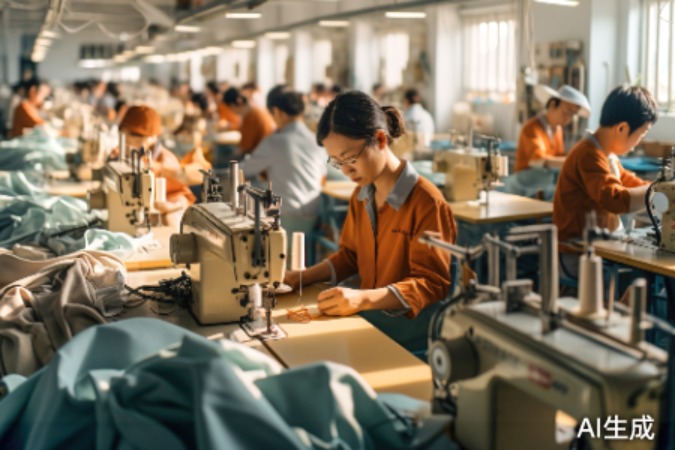
重复,是找货、问价、催票、复购这些动作反复出现。一张清单几十项物料,要逐项搜型号、核规格、整理链接;多家商家要逐家问交期、价格、发票;订单要逐笔查进度、催发货、填开票资料。常购品还要反复比对,大量精力耗在机械操作上。

分散,是信息散在商品页、聊天窗口、订单后台和手工表格里。供应商评估往往靠翻旧订单、手动拉表对比,费时且容易遗漏。于是这项本该定期做的工作,多数企业干脆不做。

难兼顾,是专业判断和事务执行压在同一个人身上。这就是中小企业的真实组织现实,没有专职选型工程师,也没有独立跟单员,“一人兼两岗”是常态。一个人扛着技术选型和采购执行两摊活,负担加倍。

所以,中小企业采购者需要的不是多一个工具,而是能搭把手的协作者:把重复的执行接走,把关键的判断留给人,这是整份报告的出发点。

02

AI让SMB采购变得简单高效

SMB采购链路上的每一个核心环节,都有大量的重复劳动可以交给AI。

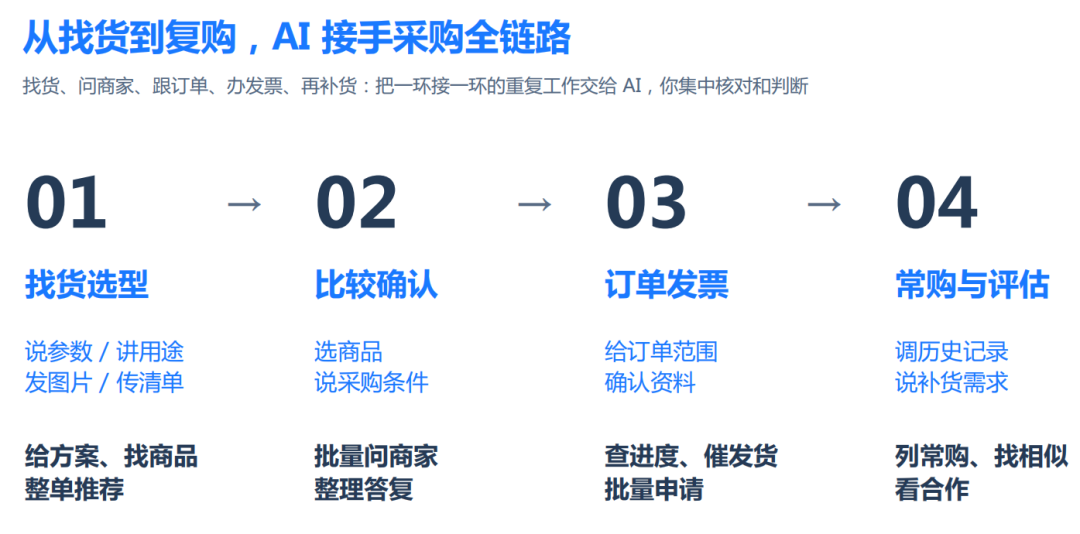
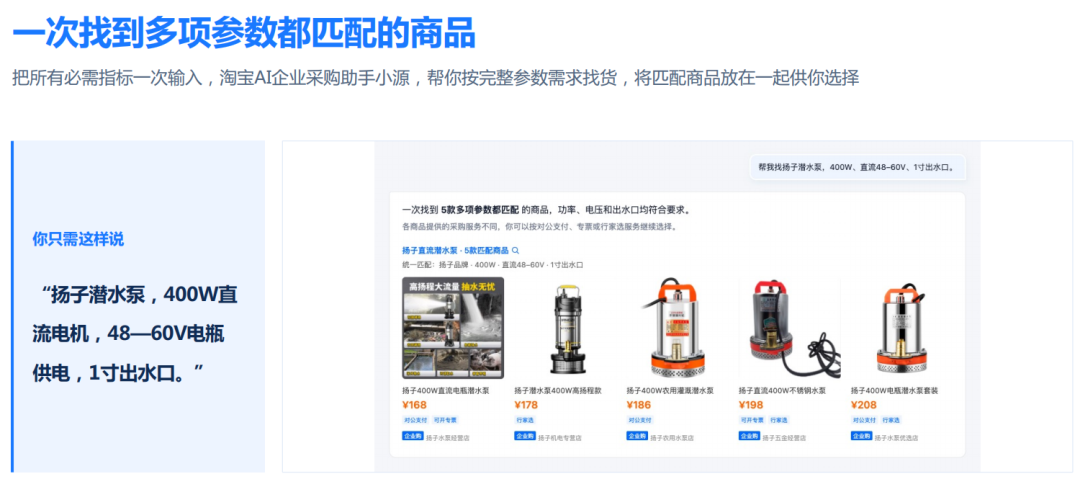
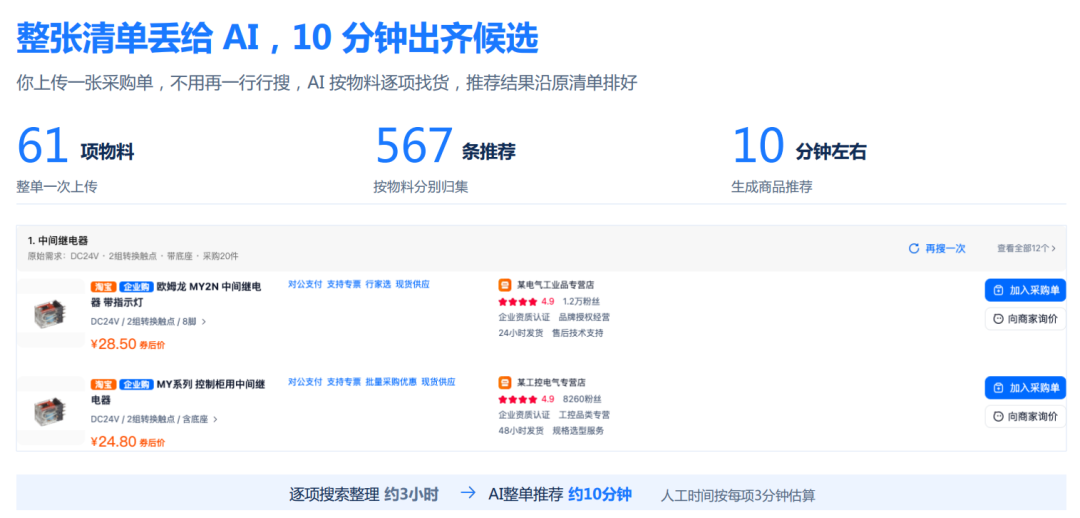
找货选型环节,变化最直接。采购者一次说清多个参数,AI按参数检索并集中返回候选。比如采购扬子潜水泵,以往采购者需要先搜索扬子潜水泵,然后在结果里面一个个人工挑选符合其他参数要求的商品,效率极低,而AI可以综合所有要求返回最适配的商品,省去大量人工筛选的工作。当采购者说不清型号时,也可以只讲用途,AI将根据应用场景推荐最适配的几个解决方案。很多时候寻源只有一张图片,采购者也不知道具体是什么东西,AI也可以根据图片和上面的标注信息,快速定位目标商品。

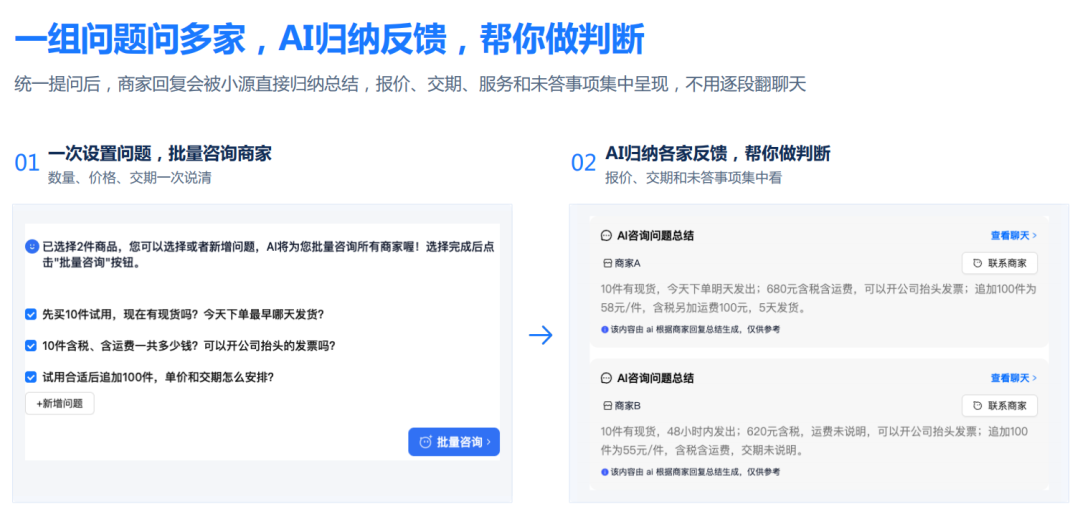
比较确认环节,AI把商品条件和开票条件放在一起筛。例如,内六角螺丝M18×85全牙,要求可开发票,过去是先找商品、再逐家问票,不符合再重找;AI则是先匹配商品属性,再筛选支持开票的商家。而采购过程中会有很多需要来回沟通确认的事宜,比如发货方式、适配条件等,以往需要大量一对一人肉进行沟通的过程,现在AI可以用同样的问题批量咨询商家,并智能总结商家的回复,供采购者快速判断。

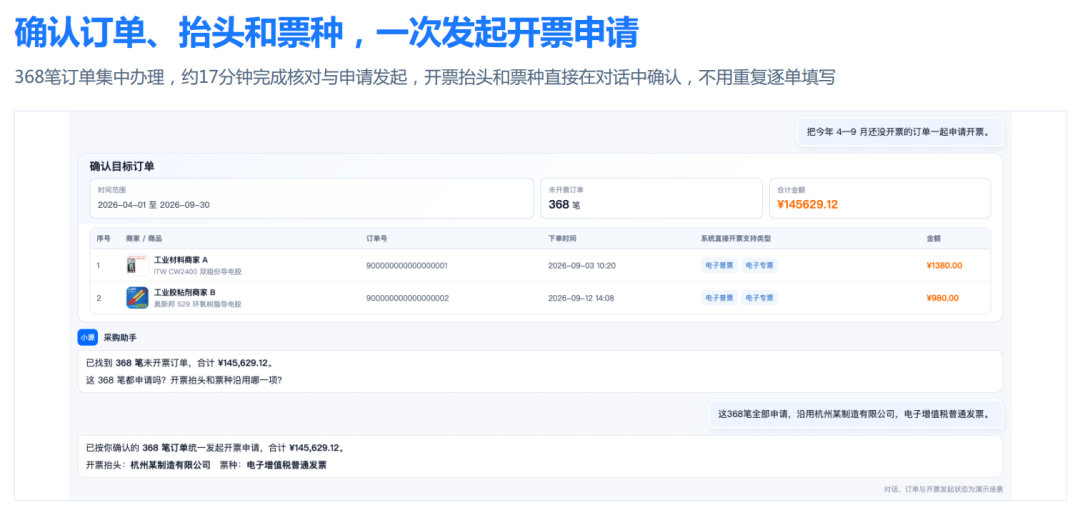
订单发票环节,重点在“集中”。全部订单或同一采购单下的订单可以放在一起看,待发货、已发货、物流中一目了然,选中一批统一催发货。开票同样如此:指定票种和抬头后,AI复用资料并批量提交,按订单查询进度、统一催开。

常购复购和供应商评估,则把历史记录变成可用信息。常购清单按采购次数排序,可售商品一键加购,下架商品发起相似寻源;多笔历史订单可以归集成一组组供应商档案,评估从“整理报表”直接进入“合作判断”。

这样跑下来,采购里约六到七成的重复活可以被接走,剩下留给人的专业判断。这就是AI让采购变得简单的真实注脚。

03

淘宝企业购推出小源,助力中小企业采购平权

以上的情节都已经在淘宝企业购新推出的AI采购助手“小源”上真实发生。小源是把上述能力产品化的AI采购助手,它的定位是帮助中小企业采购提效。

从内测买家真实使用情况中,我们看到了很多大幅提效的案例,比如找货环节,61项物料清单约10分钟生成567条推荐;执行环节,368笔订单约17分钟批量开票,合计145,629.12元;管理环节,1,200笔订单归成60家供应商档案,合作表现一眼看清。三组数字分别对应找货、办理、管理,覆盖了采购者最耗时的几类工作。

这一组数据很重要。它区分了演示能力和落地能力,对行业发展具有多重意义。

对中小企业来说,这是第一次以“用得起、上手快”的方式,获得了采购生产力的实打实提升。AI把采购能力平权给每一个人手有限的企业,专业选型不再是大企业专利,事务性采购也不必一个人硬扛。

对行业发展而言,采购从信息化、电商化走到了用AI直接办事的阶段,是AI落地实体经济的一个标杆场景。而长期以来,中小企业付不起定制系统,也养不起专职团队,恰恰是这个浪潮里被落下的一方。淘宝企业购“小源”以人人用得起的产品形态,直接填补了AI采购时代中小企业采购服务市场的空白。

对供给侧的启发则在于,信息越清楚,生意越好做。谁把商品信息说清楚,谁就更容易被找、被买,信息清晰成了新的竞争力。

04

为什么是淘宝:不靠单点功能,靠平台生态

原因不在单点功能,而在平台底子。具体可以拆成三层来看。

首先,有原生土壤。淘宝、天猫积累的大量商品、商家、交易和履约数据,构成了采购Agent的“原料”。找货要按参数精准匹配,靠的是结构化的商品资料;比较确认要筛出“可开发票”的商家,靠的是清晰的服务信息;供应商评估要归集履约记录,靠的是交易数据的长期沉淀。这是大部分采购工具难以复制的部分。

第二,能办成事。找货、问商、下单、开票、复购都可以在生态内完成,形成完整闭环。相比之下,很多AI工具停留在“给链接、给摘要”,最后一步仍要用户自己跳出去操作。小源的价值在于继续往下走,把流程办完——批量开票从核对到发起、催发货从筛选到执行,都是系统直接落地,而不只是停在中间结果。

第三,有规模和基建。平台天然连接海量中小买卖两端,规模效应让提效可以普惠,而不是少数大客户的定制方案;商品、资质、履约的可信沉淀,又反过来支撑AI的精准匹配。白皮书最后一页专门写给供给方:商品信息越清晰、服务承诺越确定,AI辅助采购就越高效——提示这是一场平台与供给方持续共建的过程,而非一蹴而就的功能上线。

三层能力叠在一起,指向同一个判断:这不是一个孤立功能或产品,更像平台级AI原生采购基础设施的雏形。

亿邦智库认为,“让中小企业采购变得简单”的本质,是把过去只有大企业靠专业团队和系统才能享有的采购能力,平权给每一个小老板、每一个采购员。

采购提效只是起点。当AI接走重复执行,采购者才有更多时间做判断:选什么、和谁合作、条件是否合适。对中小企业来说,这种生产力下沉,比单点功能更有价值。

想亲身感受AI采购如何简化流程、降本提效吗?马上行动,看见数字化采购的新可能👇,

电脑端访问caigou.taobao.com;

移动端打开淘宝APP搜索“淘宝小源”。

点击链接下载完整白皮书报告

本文首发于 亿邦动力 官方网站

文章来源:亿邦动力

广告
微信
朋友圈

FAQ回顾

淘宝企业购的“小源”AI采购助手是什么?能做什么?

小源是淘宝企业购推出的AI采购助手,专注帮助中小企业采购提效。它支持按参数、用途或图片找货,批量咨询商家并智能总结回复;订单管理可统一催发货、批量开票;常购清单一键加购,历史订单归集成供应商档案,覆盖找货、办理、管理三大类耗时工作。

中小企业采购面临哪些主要痛点?

中小企业采购主要面临三座大山:重复、分散、难兼顾。找货、问价、催票、复购等动作反复出现,大量精力耗在机械操作上;信息散在商品页、聊天窗口、订单后台和手工表格里,供应商评估常被搁置;更因没有专职选型工程师或跟单员,一个人要同时扛技术选型和采购执行两摊活。

AI如何帮助中小企业提升采购效率?

AI通过接手采购链路上的重复劳动来提效:找货时一次说清参数即可返回适配商品,说不清型号也可按用途或图片推荐;比较时同时筛选商品属性和开票条件;订单集中查看并批量催发货、开票;常购和历史订单归集成清单与供应商档案。据白皮书,采购中约六到七成的重复活可以被AI接走,人负责专业判断。

2025年中国企业物资采购市场规模如何?

据亿邦智库测算,2025年全国企业物资采购总额达196.3万亿元,同比增长4.2%,数字化采购总额为23.2万亿元。市场虽大,但大企业已建立采购系统和专职团队,中小企业仍以手工方式做采购,因此AI采购提效被视为中小企业采购的效率拐点。

供应商如何适应AI采购时代?

《2026企业采购AI提效实践白皮书》最后一页专门写给供给方:商品信息越清晰、服务承诺越确定,AI辅助采购就越高效。在AI采购时代,结构化商品资料和清晰服务信息会直接提升被AI检索、推荐的概率,信息清晰成为供给方新的竞争力,需要与平台持续共建。

这么好看,分享一下?

朋友圈 分享

APP内打开

赞 +1
+1
微信好友 朋友圈 新浪微博 QQ空间
关闭
收藏成功
发送
/140 0