广告
加载中

从DOS时代到AI办公时代 WPS凭什么陪了一代又一代人?

胡镤心 2026-09-29 14:39
胡镤心 2026/09/29 14:39

邦小白快读

EN
全文速览

AI办公时代,WPS推出面向个人的灵犀专业版和面向组织的WPS Comate,全球月活用户超6.76亿,AI活跃用户突破8000万,在办公套件市场份额上超越微软。普通读者可以抓住这些重点:

1. AI能干活才是真的实用。能聊天和能干活是两码事,好用的办公AI要能理解公司自己的流程、数据、规则和边界,而不是只会写文档、做表格、生成PPT。

2. 个人提效从身边文档做起。公司所有文档、合同、报表、邮件、会议纪要叠在一起,就是公司运转的记录,也是AI理解业务的基础。使用WPS 365积累的文档越多,AI给出的帮助越精准。

3. 用AI要选对场景。要选高频、高数据密度、多人多钱多时间的场景,不要指望AI解决所有问题;AI项目不能做甩手掌柜,得和懂业务的人一起进场。

4. 数据安全值得放心。WPS Comate底层是安全和权限规则,并获颁AI办公行业首个国家级智能体身份码节点资质。

WPS从DOS时代走到AI办公时代,2026年第一季度以32.1%的市场份额超越微软的28.5%,其品牌建设、产品研发和竞争策略值得品牌商借鉴。

1. 品牌靠陪伴用户成长。WPS服务中国企业信息化全过程,看过纸质办公、单机、联网、订阅制、数字化再到智能化的演进,见过各种类型和发展阶段的企业,这种深厚积累形成了品牌信任。

2. 产品研发要分阶段。金山办公做AI分三代:AI 1.0是办公组件AI,让员工在熟悉工具中用AI;2.0是知识基座AI,构建AI可理解、可执行、可治理的企业知识资产;3.0是AI Office、智能体AI Copilot和灵犀,搭建组织级人机协同平台。从工具到知识再到组织,逻辑清晰。

3. 竞争靠本土化上下文。大模型不懂企业,WPS用38年看懂了企业知识长什么样、数据怎么流转、规则藏在哪里。企业选AI不是选聊天框,而是选能把模型能力接进业务流程的机制。

4. 用户行为表明,AI办公消费趋势从个人效率转向组织效率。企业渴望AI成为数字员工,而不只是文档工具。

AI办公市场正处爆发期,WPS全球月活超6.76亿,AI活跃用户突破8000万,WPS 365业绩同比增长61%,办公套件市场份额金山以32.1%居首。卖家可关注这些机会与风险。

1. 增长市场:字节豆包工作、腾讯WorkBuddy、阿里千问办公相继整合发布,AI办公赛道玩家激增,企业级AI需求旺盛。

2. 需求变化:企业不再满足于能聊天的AI,真正需要AI懂公司流程、数据、规则并直接干活。谁能解决上下文工程,谁就能抓住客户。

3. 风险提示:企业AI投入未转化为组织效率是普遍困境,数据孤岛、经验堵点、行动堵点是三大堵点。卖工具不帮打通流程,很难成功。

4. 合作方式:WPS Comate发布后一周内数百家中大型企业达成共创意向,覆盖交通、金融、制造、医药、能源。金山的落地经验是通数据、通知识、通能力,管安全、管成本,统一到办公AI平台,客户需和FDE团队一起进场。

5. 实操要点:选场景要找高频、高数据密度、多人多钱多时间的;把内部数据喂给Agent,AI输出才能从正确变成可用。

制造企业正在被AI办公重塑,WPS服务过制造企业三个厂区工艺标准互通等场景,中集集团、开沃汽车等制造企业成为WPS Comate首批共创企业。工厂可从以下方面获取启发。

1. 生产数据要先变成AI能懂的上下文。合同、报表、工艺标准、审批记录等日常数据叠起来,就是工厂如何决策和运转的记录。工厂推进数字化,要先积累和管理好这些知识资产。

2. 上下文工程六要素是AI落地关键。知识、数据、时间、关系、规则、边界,决定了AI能不能理解工厂真实业务。比如工艺标准的互通、审批规则、每个岗位的边界,都要结构化地喂给AI。

3. 商业机会明确。AI办公正进入组织级人机协同阶段,WPS Comate连接组织的数据、系统、流程、知识和能力模型,从给建议变成直接执行。制造企业可以借助这类平台打通厂区间、部门间的数据孤岛。

4. 推进启示。要通数据、通知识、通能力,管安全、管成本,统一到一个办公AI平台;选高频、高数据密度、多人多钱多时间的场景,AI项目不能当甩手掌柜,要和实施团队一起进场。

企业级AI落地正从工具走向组织,WPS Comate为服务商提供了理解客户痛点和解决方案的完整样本。以下几点值得关注。

1. 客户痛点:大模型懂世界但不懂公司,不知道成本在不同部门的含义、审批规则、采购卡点。企业AI投入普遍未转化为组织效率,三大堵点是数据孤岛、经验堵点、行动堵点。

2. 解决方案:核心是上下文工程,包含知识、数据、时间、关系、规则、边界六要素。把专业数据、内部信息、模拟数据喂给Agent,客户研究报告会从看上去正确变成真正能用。

3. 架构参考:WPS Comate底层是安全和权限规则,向上是API Hub、Data Hub、AI Hub三个Hub,再往上是核心能力层(管理专家、Skill、知识图谱、团队空间),最上面支持本地和云端任务、多端接入。

4. 落地经验:通数据、通知识、通能力,管安全、管成本,统一到一个办公AI平台。选场景要找高频、高数据密度、多人多钱多时间的,AI项目客户不能做甩手掌柜,要和FDE团队一起进场,否则很难见效。

AI办公的平台化趋势正在加速,WPS用38年积累把AI装进组织级人机协同平台,给平台商提供了新的范本。

1. 平台需求:企业选AI平台不是选聊天框,而是选能把模型能力接进业务流程的机制。平台要连接组织的数据、系统、流程、知识和能力模型,从建议者进化成执行者。

2. 平台架构:WPS Comate底层是安全和权限规则,向上是API Hub连接业务系统、Data Hub做数据治理、AI Hub管大模型消耗和调度,再往上是核心能力层,最上层支持本地和云端任务、多端接入。

3. 运营管理:平台要做好五件事:管好知识和数据,链接企业内部系统,把知识转变成经验,管好大模型使用和专家全生命周期,保障信息安全。

4. 风向规避:要避免AI能聊天但不能干活的局面,避免做孤立插件或业务系统替代者。企业AI投入没转化为组织效率是普遍风险,平台要帮助企业通数据、通知识、通能力,管安全、管成本。

5. 最新做法:WPS灵犀和Comate获颁AI办公行业首个国家级智能体身份码节点资质,率先拿到智能体互联协同的数字身份证,是平台合规和互联互通的重要探索。

金山办公从DOS到AI的38年,以及WPS Comate的发布,为研究AI办公产业提供了重要案例。核心观察如下。

1. 产业新动向:AI办公赛道玩家众多,但能聊天和能干活是两码事。企业级AI落地的真正瓶颈不是模型能力,而是上下文工程。大模型提供智力,软件提供上下文的判断,区分了AI产品和企业应用之间的命门。

2. 新问题:绝大多数企业的AI投入没有转化为组织效率,员工个人提效不等于组织提效。数据孤岛、经验堵点、行动堵点是企业级AI落地三道堵点,这为后续技术和管理研究提供了问题清单。

3. 商业模式:金山办公分三代做AI,从办公组件AI到知识基座AI再到智能体AI Copilot和灵犀,从工具到知识到组织,最终走向一站式AI native办公平台。Agent跑在WPS上下文上,知识资产越多,上下文越精准,Agent执行越高效,形成增长飞轮。

4. 治理探索:WPS获颁AI办公行业首个国家级智能体身份码节点资质,率先拿下智能体互联协同的数字身份证,提示智能体身份认证和互联协同治理正在成为制度创新方向。

5. 竞争启示:金山办公以32.1%市场份额超越微软,说明本土化上下文沉淀和长期服务中国企业信息化的经验,是中国办公软件竞争的关键变量。

返回默认

声明:快读内容全程由AI生成,请注意甄别信息。如您发现问题,请发送邮件至 run@ebrun.com 。

我是 品牌商 卖家 工厂 服务商 平台商 研究者 帮我再读一遍。

Quick Summary

In the age of AI-powered office work, WPS has launched Lingxi Professional Edition for individuals and WPS Comate for organizations. With over 676 million global monthly active users and more than 80 million active AI users, it has surpassed Microsoft in office suite market share. Here are the key points for general readers:

1. AI that gets work done is what truly matters. Being able to chat and being able to work are two different things. A useful office AI must understand a company's own processes, data, rules, and boundaries, not just write documents, make spreadsheets, or generate PPTs.

2. Personal productivity starts with your own documents. When a company’s documents, contracts, reports, emails, and meeting minutes are combined, they form a record of how the company operates and the foundation for AI to understand the business. The more documents accumulated in WPS 365, the more accurate the AI's assistance becomes.

3. Choose the right scenarios for AI. Pick scenarios that are high-frequency, data-dense, and involve many people, money, and time. Don’t expect AI to solve everything; AI projects cannot be left unattended—they require close collaboration with people who understand the business.

4. Data security can be trusted. WPS Comate is built on security and permission rules at its core, and has been awarded the first national-level intelligent agent identity code node qualification in the AI office industry.

WPS has evolved from the DOS era to the AI office era. In the first quarter of 2026, it surpassed Microsoft with a 32.1% market share versus Microsoft's 28.5%. Its brand building, product R&D, and competitive strategy offer lessons for brand owners.

1. Brands grow by accompanying users. WPS has served the entire informatization journey of Chinese enterprises, witnessing the evolution from paper-based office work to standalone computers, networked systems, subscription models, digitalization, and now intelligentization. Having seen all types and stages of enterprises, this deep accumulation builds brand trust.

2. Product R&D should be phased. Kingsoft Office has developed AI in three generations: AI 1.0 is office component AI, letting employees use AI within familiar tools; 2.0 is knowledge base AI, building enterprise knowledge assets that AI can understand, execute, and govern; 3.0 is AI Office, intelligent agent AI Copilot, and Lingxi, creating an organizational human-machine collaboration platform. The logic is clear: from tools to knowledge to organization.

3. Competition relies on localized context. Large models don’t understand enterprises, but WPS has spent 38 years learning what enterprise knowledge looks like, how data flows, and where rules are hidden. Enterprises choose AI not for a chat window, but for a mechanism that can integrate model capabilities into business processes.

4. User behavior shows that AI office consumption is shifting from individual efficiency to organizational efficiency. Enterprises want AI to become digital employees, not just document tools.

The AI office market is booming. WPS has over 676 million global monthly active users, more than 80 million active AI users, and WPS 365 revenue grew 61% year-over-year. In office suite market share, Kingsoft leads with 32.1%. Sellers should watch these opportunities and risks.

1. Growing market: ByteDance Doubao Work, Tencent WorkBuddy, and Alibaba Qianwen Office have all launched integrated releases. Players in the AI office space are surging, and enterprise-level AI demand is strong.

2. Changing demand: Enterprises are no longer satisfied with AI that can chat; they truly need AI that understands company processes, data, and rules and can get work done directly. Whoever solves context engineering will capture customers.

3. Risk alert: A common dilemma is that enterprise AI investment has not translated into organizational efficiency. The three major bottlenecks are data silos, experience blockages, and action blockages. Selling tools without helping to connect processes makes success difficult.

4. Partnership approach: Within a week of WPS Comate's launch, hundreds of large and medium-sized enterprises expressed co-creation intent, spanning transportation, finance, manufacturing, healthcare, and energy. Kingsoft's implementation experience is to connect data, knowledge, and capabilities; manage security and costs; and unify into an office AI platform. Customers need to work with the FDE team from the outset.

5. Practical points: When selecting scenarios, look for high-frequency, data-dense, and involving many people, money, and time. Feed internal data to the agent so AI output moves from being correct to being usable.

Manufacturing enterprises are being reshaped by AI-powered office tools. WPS has served scenarios such as interconnecting process standards across three factory sites for manufacturing companies. CIMC Group, Kaiwo Automobile, and other manufacturers have become among the first co-creation enterprises of WPS Comate. Factories can draw inspiration from the following.

1. Production data must first become context that AI can understand. When contracts, reports, process standards, approval records, and other daily data are stacked together, they form a record of how a factory makes decisions and operates. To advance digitalization, factories should first accumulate and manage these knowledge assets.

2. The six elements of context engineering are key to AI implementation. Knowledge, data, time, relationships, rules, and boundaries determine whether AI can understand the real business of a factory. For example, the interoperability of process standards, approval rules, and the boundaries of each role must be fed to AI in a structured way.

3. Commercial opportunities are clear. AI office is entering the stage of organization-level human-machine collaboration. WPS Comate connects an organization's data, systems, processes, knowledge, and capability models, moving from providing suggestions to directly executing. Manufacturing enterprises can use such platforms to break down data silos between plants and departments.

4. Implementation insights. Connect data, knowledge, and capabilities; manage security and costs; and unify into one office AI platform. Choose scenarios that are high-frequency, data-dense, and involve many people, money, and time. AI projects cannot be left unattended—work with the implementation team from the start.

Enterprise AI implementation is moving from tools to organizations. WPS Comate provides service providers with a complete sample for understanding customer pain points and solutions. The following points deserve attention.

1. Customer pain points: Large models understand the world but not the company. They don't know the meaning of costs in different departments, approval rules, or procurement bottlenecks. Enterprises' AI investments generally have not translated into organizational efficiency. The three major bottlenecks are data silos, experience blockages, and action blockages.

2. Solution: The core is context engineering, which includes six elements: knowledge, data, time, relationships, rules, and boundaries. Feed professional data, internal information, and simulation data to the agent, and the customer research report will move from looking correct to actually being usable.

3. Architecture reference: WPS Comate is built on security and permission rules at the bottom. Above that are three hubs—API Hub, Data Hub, and AI Hub—then the core capability layer (management experts, Skills, knowledge graphs, team spaces). The top layer supports local and cloud tasks and multi-device access.

4. Implementation experience: Connect data, knowledge, and capabilities; manage security and costs; and unify into one office AI platform. When selecting scenarios, look for high-frequency, data-dense, and involving many people, money, and time. Customers of AI projects cannot be absentee landlords—they need to work with the FDE team from the start, otherwise results will be hard to achieve.

The trend toward platformization in AI office is accelerating. WPS has used 38 years of accumulation to embed AI into an organization-level human-machine collaboration platform, offering a new model for platform operators.

1. Platform demand: Enterprises do not choose an AI platform for a chat window, but for a mechanism that can integrate model capabilities into business processes. The platform must connect an organization's data, systems, processes, knowledge, and capability models, evolving from advisor to executor.

2. Platform architecture: WPS Comate is built on security and permission rules at the bottom. Above that is API Hub to connect business systems, Data Hub for data governance, and AI Hub to manage large model consumption and scheduling. Then comes the core capability layer, and the top layer supports local and cloud tasks and multi-device access.

3. Operations and management: The platform needs to do five things well: manage knowledge and data, connect internal enterprise systems, turn knowledge into experience, manage large model usage and the full lifecycle of experts, and ensure information security.

4. Avoiding pitfalls: Avoid the situation where AI can chat but cannot work; avoid becoming an isolated plugin or a replacement for business systems. The failure of enterprise AI investment to translate into organizational efficiency is a common risk. Platforms should help enterprises connect data, knowledge, and capabilities, and manage security and costs.

5. Latest moves: WPS Lingxi and Comate have received the first national-level intelligent agent identity code node qualification in the AI office industry, becoming the first to obtain the digital identity for agent interconnectivity and collaboration. This is an important exploration of platform compliance and interoperability.

Kingsoft Office's 38-year journey from DOS to AI, along with the release of WPS Comate, provides an important case for studying the AI office industry. Core observations are as follows.

1. New industry trends: The AI office track has many players, but being able to chat and being able to work are two different things. The real bottleneck in enterprise AI implementation is not model capability but context engineering. Large models provide intelligence, while software provides contextual judgment—this distinguishes the critical point between AI products and enterprise applications.

2. New problems: The vast majority of enterprises' AI investments have not translated into organizational efficiency; individual employee productivity does not equal organizational productivity. Data silos, experience blockages, and action blockages are the three major bottlenecks in enterprise AI implementation, offering a problem checklist for future technical and management research.

3. Business model: Kingsoft Office has developed AI in three generations, from office component AI to knowledge base AI, then to intelligent agent AI Copilot and Lingxi. From tools to knowledge to organization, it ultimately moves toward a one-stop AI-native office platform. Agents run on WPS context; the more knowledge assets, the more accurate the context, the more efficient agent execution, forming a growth flywheel.

4. Governance exploration: WPS has received the first national-level intelligent agent identity code node qualification in the AI office industry, securing the digital identity for agent interconnectivity and collaboration. This suggests that intelligent agent identity authentication and interconnected collaboration governance are becoming directions for institutional innovation.

5. Competitive insights: Kingsoft Office's 32.1% market share surpassing Microsoft demonstrates that localized context accumulation and long-term experience in serving Chinese enterprises' informatization are key variables in the competition of Chinese office software.

Disclaimer: The "Quick Summary" content is entirely generated by AI. Please exercise discretion when interpreting the information. For issues or corrections, please email run@ebrun.com .

I am a Brand Seller Factory Service Provider Marketplace Seller Researcher Read it again.

企业AI落地的缺口,WPS Comate补齐了。

【亿邦原创】2026年,AI办公赛道挤满了新玩家,也让企业挑花了眼。

近三个月,字节豆包工作、腾讯WorkBuddy、阿里千问办公相继完成整合并发布,字节豆包工作更与飞书深度打通。与此同时,深耕办公软件38年的WPS于7月15日连发两款AI办公智能体——面向个人的灵犀专业版和面向组织的WPS Comate,稳稳站在AI办公四强的牌桌上。

大模型厂商做Agent,协同办公厂商做AI助手,创业公司做垂直工具,AI产品迭代得热火朝天,但用过的都知道,能聊天和能干活,是两码事。

大模型懂世界,但不懂你的公司——它不知道成本在销售部和研发部代表完全不同的东西,不知道合同审批的规则写在哪封邮件里,不知道采购下单卡在哪个环节。

这个缺口,成了AI产品和企业应用之间的命门。不少企业布置了半天发现,AI能说会道能写文档、能做表格、能生成PPT,却不知道公司自己的流程怎么走、数据在哪、规则是什么。

金山办公CEO章庆元得出一个判断:“大模型提供智力,软件提供上下文。”

这家成立了38年的公司,恰恰一直在服务企业的文档资产管理、内部知识流转,以及流程、数据、规则、边界等问题。一份合同、一张报表、一封邮件、一次会议纪要,单看都是日常工作留下的痕迹。但它们叠在一起,就是一家公司怎么做事、怎么决策、怎么运转的全部记录。

从DOS到AI,WPS完整经历了中国企业信息化的全过程,见过各种类型、各种发展阶段的中国企业。现在,它把38年攒下的东西,装进了一个叫WPS Comate的产品里。

01

AI来了,金山办公长出了新本事

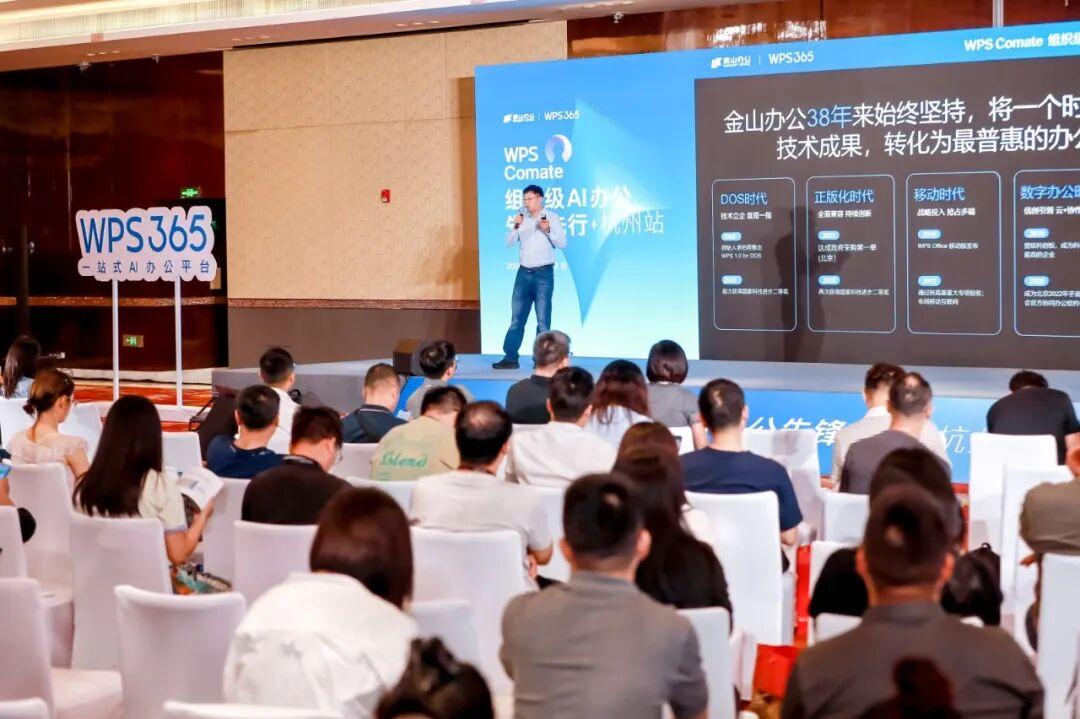
2026年9月,在杭州的一场行业峰会上,金山办公副总裁王少康披露了一组数据:WPS全球月活用户超6.76亿,AI国内活跃用户突破8000万,云文档数量突破2900亿份,WPS 365业绩同比增长61%。

据统计,2026年第一季度中国办公套件市场跟踪报告,按终端用户授权数测算,金山办公以32.1%的份额位居国内第一,微软以28.5%紧随其后——金山办公正式在市场份额上超越了微软。

成立于1988年的金山办公,完整经历了DOS时代、正版化时代、移动时代、数字办公时代,一直在把最先进的技术,变成最普惠的办公产品。现在,它跟着科技周期一起进入智能办公时代。

图片

金山办公做AI不是临时起意。王少康介绍,早在大模型出现10年前,WPS就有独立的AI团队,做版面分析、文字识别。2022年底大模型横空出世后,金山办公迅速制定了All in AI的战略。

金山办公做AI的方式和很多公司不一样,它没有直接跳到Agent,而是分了三代产品,一代解决一个层级的问题。王少康表示,AI 1.0的产品是办公组件AI,让员工在熟悉的工具中随手使用AI能力。2.0是知识基座AI,面向组织办公,构建AI可理解、可执行、可治理的企业知识资产。3.0是AI Office、智能体AI Copilot和灵犀,搭建组织级的人机协同平台。

演进逻辑很清晰:从工具到知识,从知识到组织。王少康说,前两代产品里,AI仍然是工具的一部分,人通过软件工具使用AI。但AI的理想形态应该是人的一部分——由人直接操作AI,由AI按需调动各个工具,工具为AI服务。AI应该是人的个人助理和组织的数字员工。

这是WPS Comate诞生的前提。

据介绍,Comate不再是一个单纯的聊天机器人,也不是一个孤立的AI插件,更不是业务系统的替代者。它是一个组织级的人机协同平台,连接组织的数据、系统、流程、知识和能力模型,从建议者进化为执行者——不仅提供回答,还能调用工具直接执行。

2026年7月,WPS Comate在上海发布,布会后不到一周,数百家中大型企业达成共创意向。中集集团、上海机场、四川发展、国药集团、开沃汽车、紫金投资——首批共创企业覆盖交通、金融、制造、医药、能源。

从这些企业的选择,能看出一种普遍的饥渴,他们不是在选一个更聪明的聊天框,而是在选一套能把模型能力接进业务流程的机制。

WPS Comate就是他们选中的回应这个缺口的最佳方式。

02

大模型不懂的事情,金山办公研究了38年

WPS Comate能干活,核心源自它解决了大模型在企业里最缺的那一环——上下文。

今年2月,金山办公解决方案负责人武岳的团队在使用小龙虾时,做的第一件事是把专业数据、内部信息、模拟数据全部喂给Agent平台。当这些数据接入之后,客户研究报告从一份“看上去很正确但没法用”的文档,变成了真正能帮团队理解客户历史成交记录、服务背景、问题聚类和产品契合关系的深度报告。现在,这份报告已经成为团队每个人拜访客户前的标准动作。

这证明企业级AI落地真正的瓶颈不是模型能力,是上下文工程。

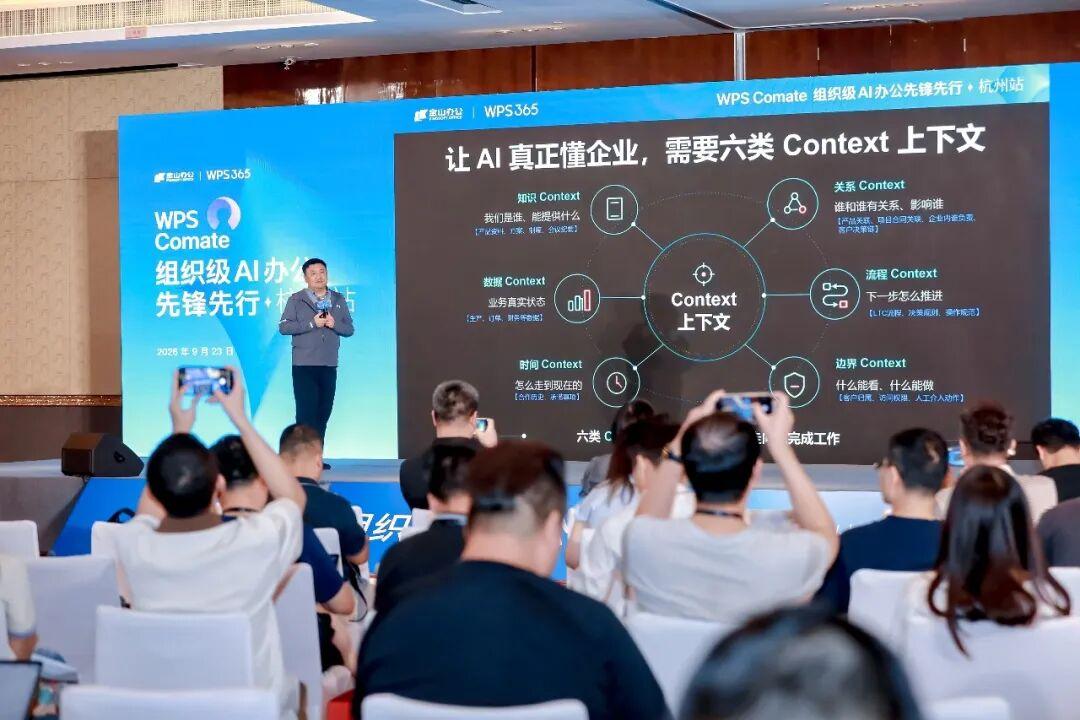
武岳还给出一个更具体的分析框架:企业级上下文工程包含六个核心要素——知识、数据、时间、关系、规则、边界。这六样东西决定了AI能不能理解企业真实的业务。

图片

这些,恰恰是WPS在过去38年里反复打交道的东西。

从1988年到现在,金山办公见过各种类型、各种发展阶段的中国企业——从纸质办公到电子文档,从单机到联网,从买license到订阅制,从信息化到数字化再到智能化;它见过还在用纸质审批流程的传统国企,也见过已经全面上云的互联网公司;见过几十人的初创团队,也见过几十万人的央企集团;见过农商行在农忙时期怎么做信贷,见过制造企业三个厂区的工艺标准怎么互通。

这些企业的知识长什么样、数据怎么流转、规则藏在哪、边界划在哪——WPS不是在2026年才开始研究,它已经看了38年。

武岳说的那六个要素,在不同企业里有不同的形态,WPS都见过。

通用大模型不懂这些,新入场的AI公司也没见过这些。只有那些在行业里泡了足够久、服务过足够多客户的公司,手里才有这样的样本库。

这大概就是WPS 365做企业级AI时,最不显眼、但最扎实的那层底子。

03

AI办公从工具走向组织,WPS Comate站上了潮头

回到WPS Comate。它诞生在AI办公市场剧烈变动的2026年,背景是过去两年企业级AI应用的普遍困境——绝大多数企业的AI投入没有转化为组织效率。员工个人提效了,公司整体没变。

武岳认为,企业级AI落地有三道堵点:数据堵点,来自数据孤岛;经验堵点,来自人的分工和认知局限;行动堵点,来自各部门流程割裂。个人提效没有这些堵点,但组织提效绕不开。

所以AI办公的下一步,不是把工具做得更聪明,而是疏通组织的数据、流程、规则、边界。

这是WPS Comate的切入点,它不生产模型,而是把金山办公38年见过的企业流程、数据形态、规则边界,变成AI能调用的上下文。

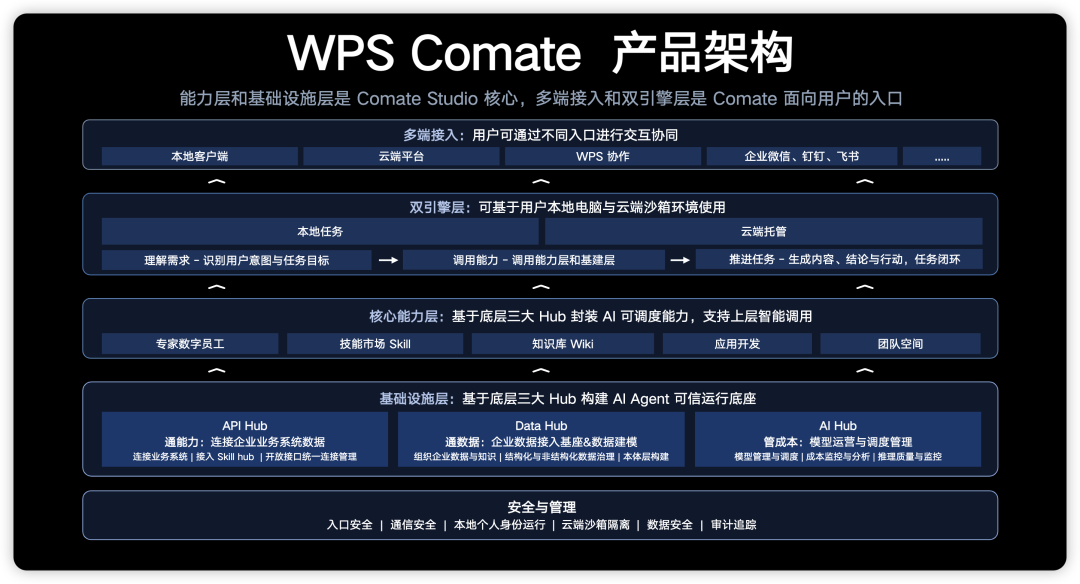
WPS Comate的架构也围绕这个逻辑展开:最底层是安全和权限规则。往上是三个Hub:API Hub连接企业业务系统,Data Hub做数据治理,AI Hub管好大模型的消耗和调度。再往上是核心能力层,管理专家、Skill、知识图谱、团队空间。最上面是消费端,支持本地任务和云端任务,支持多端接入。

图片

它要做好五件事:管好知识和数据,链接企业内部系统,把知识转变为经验,管好大模型使用和专家全生命周期管理,保障信息安全。

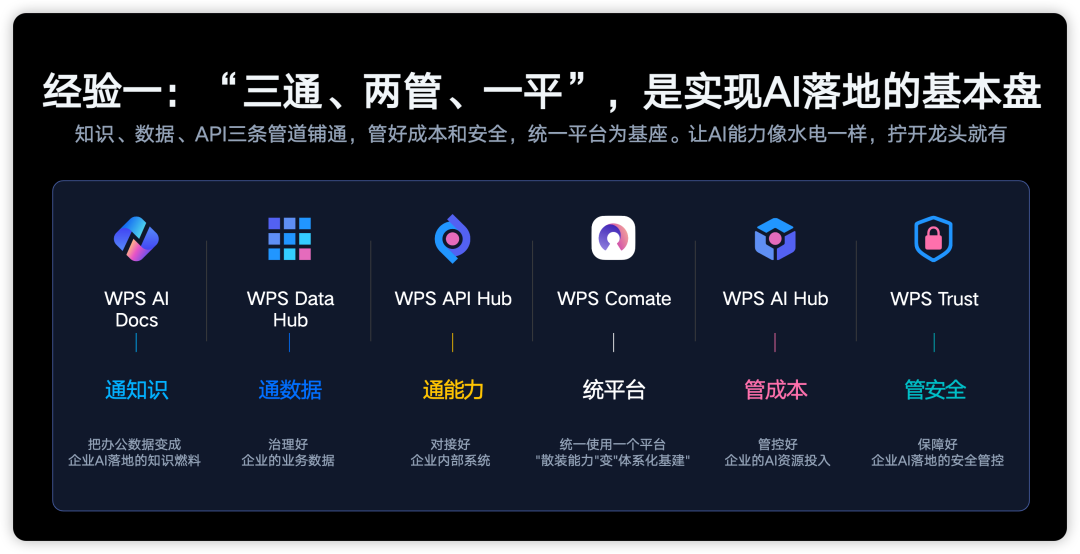
在服务企业落地的过程中,金山办公还把落地经验凝练成几条朴素的判断:通数据、通知识、通能力,管安全、管成本,最后统一到一个办公AI平台上;选场景要找高频、高数据密度、多人多钱多时间的;AI项目客户不能做甩手掌柜,和金山的FDE团队得一起进场。

图片

除了让AI能干活,更根本的是,这套机制形成了飞轮效应:当AI Agent跑在WPS的上下文上,之前在WPS上沉淀的知识资产越多,上下文工程就越精准;越精准的上下文工程,Agent跑得就越高效;执行效果越好,Agent产生的文档和知识质量就越高,又会反哺整个办公链路。最终形成让Agent越来越专业、让组织越来越高效的增长飞轮。

那些企业使用WPS 365写过的所有文档,都是这个飞轮的起点。

回顾过去十几年,中国办公软件的竞争规则几经变化,金山办公正是凭借这种扎实的本土化上下文沉淀与AI战略,完成了对传统巨头的赶超。

同时,WPS Comate和WPS灵犀更获颁AI办公行业首个国家级智能体身份码节点资质,率先拿下了智能体互联协同的“数字身份证”。

章庆元曾指出,“办公软件的边界在扩展、拓宽。”“未来的办公软件是一个一站式的AI native办公平台。”

王少康也认为:“办公的这条路很长,我们已经走了38年。AI的这条路很难,现在才刚刚起步。”

从DOS时代到AI办公时代,WPS一直是那个让办公变得更简单的工具,WPS Comate是它在AI时代交出的新答卷。

亿邦持续追踪报道该情报,如想了解更多与本文相关信息,请扫码关注作者微信。

本文首发于 亿邦动力 官方网站

文章来源:亿邦动力

广告
微信
朋友圈

FAQ回顾

金山办公是一家什么样的公司?

金山办公成立于1988年,是中国领先的办公软件和服务提供商,旗下WPS全球月活用户超6.76亿,AI国内活跃用户突破8000万。2026年第一季度,金山办公以32.1%的份额位居中国办公套件市场第一,超越了微软。

WPS Comate是什么?适合哪些企业?

WPS Comate是金山办公2026年7月发布的组织级人机协同平台,连接企业数据、系统、流程、知识和能力模型,从建议者进化为执行者。它面向中大型企业,首批共创企业覆盖交通、金融、制造、医药、能源等领域,如中集集团、上海机场、国药集团等。

企业级AI落地有哪些常见堵点?

金山办公认为企业级AI落地存在三道堵点:数据堵点来自数据孤岛,经验堵点来自人的分工和认知局限,行动堵点来自各部门流程割裂。解决思路是通数据、通知识、通能力,并管好安全和成本,最终统一到办公AI平台上。

2026年AI办公赛道有哪些主要玩家?

2026年AI办公赛道的主要玩家包括字节豆包工作、腾讯WorkBuddy、阿里千问办公,以及金山办公推出的WPS灵犀和WPS Comate,形成AI办公四强格局。各厂商路径不同:大模型厂商做Agent,协同办公厂商做AI助手,创业公司做垂直工具。

WPS的AI战略是如何演进的?

WPS的AI战略分三代演进:1.0是办公组件AI,让员工在熟悉工具中使用AI;2.0是知识基座AI,构建企业知识资产;3.0是智能体AI Copilot和灵犀,搭建组织级人机协同平台。核心逻辑是从工具到知识,从知识到组织,让AI成为人的助理和组织数字员工。

这么好看,分享一下?

朋友圈 分享

APP内打开

赞 +1
+1
微信好友 朋友圈 新浪微博 QQ空间
关闭
收藏成功
发送
/140 0