广告
加载中

“欧派们”收缩 京东贝壳为何还要进场?

李金津 2026-10-12 17:05
李金津 2026/10/12 17:05

邦小白快读

EN
全文速览

这篇文章的核心干货在于,定制家居行业正经历剧烈洗牌,传统巨头欧派等公司业绩暴跌,而京东、贝壳等外来者却逆势进场,市场格局正在重塑。

1. 行业现状:2026年上半年,九家主要定制家居上市公司营收全部下滑,平均降幅25.5%,五家已亏损;欧派营收同比降27.79%,净利润腰斩,经营现金流降超九成。但行业整体市场规模仍达5500亿元,同比增长8.2%,说明增量并未流向传统龙头。

2. 原因解析:新房竣工面积连续两年累计缩水超四成,门店自然客流骤减,依赖新房和经销商专卖店的模式开始失灵;年轻消费者不再接受“到店再报价”、“套餐外增项”等传统玩法,有人绕开全屋定制,选择穷装或成品家具,大单被拆散。

3. 机会与动作:京东收购生活家家居并推出自营家装,贝壳推出自营定制品牌“萌象”,从房产交易入口切入,家装业务收入从2021年约2亿元增长到2025年154.3亿元。对普通消费者而言,这意味着未来可以获得更透明、更标准化的装修选择,但也需留意施工和交付环节的标准化难题。

面对行业下行,品牌商最需要关注的是渠道、定价、产品研发和用户行为的变化,这场危机也给出了明确的转型信号。

1. 品牌渠道建设:欧派8700多家门店从壁垒变成包袱,2026年门店数量大幅收缩,广州分公司领导频繁更换。京东从平台转向自营装修,贝壳收购圣都后推出自营定制,说明渠道入口已从新房楼盘转向线上流量和二手房交易场景。品牌商需要反思过度依赖经销商专卖店的模式,探索与房产中介、互联网平台合作的新入口。

2. 品牌定价与价格竞争:价格战从2023年699元/㎡打到2026年499元/㎡,欧派旗下菲思卡尔、欧铂尼均下探至499元/㎡,并定位为大众市场品牌。这种价格下探严重压缩利润,欧派经营现金流跌超九成,说明单纯降价换规模不可持续,需要寻找差异化价值而非陷入低价泥潭。

3. 用户行为观察:年轻消费者习惯在线比价、看评论,要求价格透明、所见即所得;他们可能不选择全屋定制,而是将预算分配给家电和软装,或购买成品家具。品牌商应针对这种心理,改善计价体系和服务流程,减少增项猫腻,强化线上内容和口碑运营,才有可能重新赢得新一代用户。

对于定制家居产业链上的卖家(经销商、装修公司、材料商等),这篇文章透露了明确的风险和机会信号,值得仔细研判。

1. 风险提示:传统定制家居上市公司普遍业绩下滑,2026年上半年平均降幅25.5%,五家亏损;欧派经销商体系正在收缩,门店从鼎盛时8700多家大幅减少,销售人员不得不自己经营小红书、抖音找客户,靠私信拓客。依赖新楼盘开盘和交付的获客模式基本失效,手头有门店或库存的卖家应控制扩张,谨慎备货。

2. 增长市场:全国定制家居市场规模仍达5500亿元,同比增长8.2%,说明需求没有消失,只是流向变了。二手房交易量持续上升(2026年前8个月同比增10.6%),二手房翻新、局部改造、局改定制是确定性较高的增长点;年轻消费者的“穷装”和“成品家具+软装”偏好也催生了新的碎片化供应机会。

3. 应对措施与合作方式:欧派等企业提出精简机构、优化人员和压降费用,经销商应加速转型线上获客,运营小红书、抖音等平台;京东自营装修、贝壳自营定制都在扩招供应链和施工合作方,卖家可关注成为其服务商或安装商的机会;入局整家、整装赛道的兔宝宝、顾家等企业也需要新的渠道合作。总之,别再死守传统新盘大单,向存量房、线上流量和平台生态靠拢才有出路。

对生产制造型工厂而言,这篇文章揭示了定制家居产业的需求变迁和转型方向,工厂需要重新理解产品与生产逻辑。

1. 产品生产和设计需求:传统定制家居依赖新房批量订单,如今新房竣工面积两年缩水超四成,大宗工程订单和经销商囤货需求减弱;年轻消费者要求价格透明、设计所见即所得,生产端需要更标准的模块化、套餐化产品,而不是完全非标定制。京东把定制拆成面积、材料、套餐等可在线筛选的选项,这套思路也需要工厂配合,提供标准化程度更高的半成品或部件。

2. 商业机会:行业集中度低,外来者进入带来新的供应链需求。贝壳自营定制品牌“萌象”三个月订单超1000单,京东自营装修和收购家装集团后需要稳定的生产供应;兔宝宝从板材向上游延伸做整家定制,也会释放板材、五金、台面等配套需求。工厂可以争取成为这些新玩家的供应商,或者发展代工、柔性制造能力。

3. 推进数字化和电商的启示:欧派等头部企业都在提数字化和AI设计,但传统交付高度依赖人、非标程度高,这恰恰是工厂升级的机会——引入数字化拆单、智能排产和柔性生产线,降低对熟练工人的依赖,提高小批量多批次订单的生产效率。能够配合电商平台实现标准化生产、快速交付的工厂,将具备更强的议价能力和合作价值。

面向家装和定制家居行业的服务商(设计、施工、安装、软件等),这篇文章提示了几个重要趋势和客户痛点,值得深入挖掘。

1. 行业发展趋势:定制家居市场总量仍在增长(2025年规模5500亿元,同比增8.2%),但传统定制公司业务萎缩,利润下滑,行业参与者增多,产业链边界模糊。京东、贝壳等平台型玩家入场,把装修和定制做成更标准化的产品,这将带来服务方式的改变——服务商可能需要适应平台方制定的标准流程和计价规则。

2. 客户痛点:传统定制家居长期存在价格不透明、延期交付、货不对板、售后扯皮的问题,年轻消费者尤其不接受这些旧规则。服务商如果能提供透明报价、规范施工、稳定交付和售后保障,就有机会在存量房和二手房翻新市场中建立口碑。贝壳收购圣都家装后,就在尝试用标准化管理和经纪人推荐订单来解决交付和获客问题。

3. 解决方案和新技术:文章提到数字化、AI设计是头部企业共同的关键词,但标准化生产容易,人工施工标准化难。服务商可以围绕施工管理软件开发、AI量房设计工具、安装工人培训与调度系统、监理平台等方向提供解决方案。另外,京东尝试把非标定制拆成可在线上筛选的标准化选项,服务商需要思考如何对接这类平台的数据接口,帮助客户在线完成设计、报价和合同流程。这些能力将帮助服务商在传统巨头收缩、外来平台扩张的窗口期赢得客户。

平台型企业(如电商平台、房产平台、家居卖场等)可以从本文看到定制家居行业对平台的需求、平台做法与运营机会。

1. 商业对平台的需求和问题:传统定制家居企业门店客流减少,销售被迫转向小红书、抖音等线上渠道获客,但线上流量如何转化成定制订单仍是难点;消费者需要价格透明、所见即所得,平台如果能提供更好的比价、评价、设计展示和交易担保机制,就能吸引定制商家入驻。同时,传统经销商模式造成的价格不透明和售后扯皮问题,也为平台介入制定服务标准提供了切入点。

2. 平台的最新做法:京东从卖家居商品延伸到自营装修,收购生活家家居成立京东家装集团,把设计、卖定制、管工人、控施工和交付全部做重;贝壳从房产交易切入,推出被窝家装、收购圣都,并推出自营定制品牌“萌象”,利用经纪人推荐输送家装订单,其家装收入已增至2025年的154.3亿元。这些案例表明,平台不能只做信息撮合,必须深入到供应链和交付环节才能建立壁垒。

3. 招商和运营管理:贝壳的二手房交易为家装订单带来显著增量,平台可围绕“房产交易+装修+定制+软装家电”整合服务链条;京东则强调标准化,把定制产品拆成面积、材料、套餐等可在线筛选选项。平台商应关注这些模式对招商规则的影响——自营和第三方商家的利益如何平衡,如何避免价格战伤及生态,以及如何在快速扩张中严控施工质量和售后风险。此外,平台还可考虑像居然之家、红星美凯龙那样从渠道向设计、家装和定制延伸,但需要注意警惕风向:传统巨头收缩不一定代表行业衰退,谁能掌握消费者家装第一站入口,谁就能获得预算再分配的好处。

从产业研究角度看,这篇文章提供了定制家居行业从狂飙到收缩的完整样本,涉及新问题、新动向和政策启示。

1. 产业新动向:定制家居行业呈现“总量增长、龙头下滑”的奇特现象——2025年行业规模5500亿元、同比增长8.2%,但九家主要上市公司2026年上半年营收平均下降25.5%,五家亏损。这说明行业统计口径可能涵盖大量非上市、区域性和新兴玩家,规模增长被非传统企业承接;同时产业链边界模糊,京东、贝壳等外来者从流量和房产入口侵入,兔宝宝从板材向上延伸,顾家从成品家具向下延伸,原有竞争格局正在被重构。

2. 新问题:传统定制家居模式过度依赖新房竣工交付和经销商门店,而住宅竣工面积两年累计缩水超四成,门店自然客流接近枯竭,导致欧派等企业市值缩水超八成,出现“穿行于生死一线”的危机。年轻消费者对传统“到店报价”、“套餐外增项”模式不信任,部分人甚至放弃全屋定制,选择穷装或成品家具,说明高非标、低频高客单、过度依赖人的交付模式面临代际需求冲突。

3. 政策法规建议和启示:文章间接揭示了几点值得研究的问题——如何完善定制家居行业的价格透明机制和服务标准,避免价格战和增项陷阱损害消费者权益;如何引导房产竣工下行后的产业转型,支持存量房翻新和二手房交易配套的家装服务;如何规范平台型企业在装修、定制领域的自营行为,防止垄断和挤压中小商家。行业“只会少,不会倒”,但预算流向正在改变,研究者和政策制定者应关注新入口(房产交易平台、线上内容社区)对渠道格局的影响,以及标准化与个性化之间的平衡。

返回默认

声明:快读内容全程由AI生成,请注意甄别信息。如您发现问题,请发送邮件至 run@ebrun.com 。

我是 品牌商 卖家 工厂 服务商 平台商 研究者 帮我再读一遍。

Quick Summary

The core insight of this article is that the custom home furnishing industry is undergoing a dramatic reshuffle. Traditional giants such as Oppein are seeing sharp revenue declines, while outsiders like JD.com and Beike are entering the market against the trend, reshaping the competitive landscape.

1. Industry status: In the first half of 2026, all nine major listed custom home furnishing companies saw revenue declines, with an average drop of 25.5%, and five fell into losses. Oppein's revenue fell 27.79% year-on-year, its net profit halved, and operating cash flow dropped by over 90%. Yet the overall market size remains at 550 billion yuan, up 8.2% year-on-year, indicating that growth is not flowing to traditional leaders.

2. Cause analysis: Total floor space of newly completed residential buildings has shrunk by more than 40% cumulatively over two years, drastically reducing foot traffic in showrooms. The old model relying on new housing projects and dealer-owned stores is failing. Younger consumers no longer accept traditional practices such as "quote only in-store" or "extra charges beyond the package." Some bypass full custom furnishing altogether, choosing budget renovations or ready-made furniture, breaking up what used to be large orders.

3. Opportunities and actions: JD.com acquired Shengshi House and launched its own home renovation service; Beike launched its own custom brand "Meng Xiang," entering through real estate transaction traffic. Its home renovation revenue grew from about 200 million yuan in 2021 to 15.43 billion yuan in 2025. For ordinary consumers, this means more transparent and standardized renovation options in the future, but they should also be mindful of the challenges in standardizing construction and delivery.

Facing a downturn, brands need to focus on changes in channels, pricing, product development, and consumer behavior. This crisis also sends clear signals for transformation.

1. Brand channel building: Oppein's more than 8,700 stores have turned from a moat into a burden. Its store count shrank sharply in 2026, and the general manager of its Guangzhou branch was replaced frequently. JD.com has moved from platform to self-operated renovation, and Beike, after acquiring Shengdu, launched its own custom furnishing line. This shows the channel entry point has shifted from new housing projects to online traffic and second-hand home transactions. Brands need to rethink the model of over-reliance on dealer-owned stores and explore new entry points through partnerships with real estate agents and internet platforms.

2. Brand pricing and competition: The price war has escalated from 699 yuan per square meter in 2023 to 499 yuan per square meter in 2026. Oppein's sub-brands Fiskaal and Oppein have both dropped to 499 yuan per square meter and repositioned as mass-market brands. Such price cuts severely compress profits—Oppein's operating cash flow fell by over 90%—proving that simply cutting prices to gain scale is unsustainable. Brands need to find differentiated value rather than sink into a low-price trap.

3. Consumer behavior observation: Younger consumers habitually compare prices online and read reviews; they demand transparent pricing and "what you see is what you get." They may choose not to use full custom furnishing, instead allocating budget to appliances and soft furnishing, or buying ready-made furniture. Brands should respond by improving pricing systems and service processes, reducing hidden add-ons, and strengthening online content and reputation management to win back the new generation of customers.

For sellers in the custom home furnishing supply chain (dealers, renovation companies, material suppliers, etc.), this article reveals clear risk and opportunity signals worth careful analysis.

1. Risk warnings: Traditional listed custom home furnishing companies are generally seeing declining performance, with an average drop of 25.5% in the first half of 2026; five are losing money. Oppein's dealer network is contracting, store numbers have fallen significantly from a peak of over 8,700, and sales staff are now forced to manage Xiaohongshu and Douyin accounts to find customers, relying on private messages to generate leads. The old model of acquiring customers through new project openings and deliveries is largely failing. Sellers with stores or inventory should control expansion and be cautious about stockpiling.

2. Growth markets: The national custom home furnishing market still stands at 550 billion yuan, up 8.2% year-on-year, showing that demand has not disappeared—only the flow has changed. Second-hand home transaction volumes continue to rise (up 10.6% year-on-year in the first eight months of 2026), making second-hand home renovation, partial upgrades, and localized customization relatively high-certainty growth points. Younger consumers' preference for "budget renovation" and "ready-made furniture plus soft furnishing" also creates new fragmented supply opportunities.

3. Responses and cooperation methods: Companies like Oppein are proposing organizational streamlining, workforce optimization, and cost reduction. Dealers should accelerate the shift to online customer acquisition, operating on platforms such as Xiaohongshu and Douyin. JD.com's self-operated renovation and Beike's self-operated customization are both expanding supply chain and construction partners; sellers can watch for opportunities to become their service providers or installers. Companies like Tubao and Kuka, which are entering the whole-home and whole-decoration space, also need new channel partners. In short, stop clinging to traditional new-project bulk orders; moving toward existing housing, online traffic, and platform ecosystems is the way out.

For manufacturing factories, this article reveals changing demand and transformation directions in the custom home furnishing industry. Factories need to rethink their product and production logic.

1. Product production and design needs: Traditional custom home furnishing relied on bulk orders from new housing projects. Now, with newly completed residential floor space shrinking by over 40% in two years, both large-scale project orders and dealer stocking demand have weakened. Younger consumers demand transparent pricing and design that matches what they see online, so production needs more standardized modular and package-based products rather than fully non-standard customization. JD.com has broken customization down into selectable online options such as area, material, and package—this approach requires factories to cooperate by providing more highly standardized semi-finished products or components.

2. Business opportunities: Industry concentration is low, and new entrants bring fresh supply chain demand. Beike's self-operated custom brand "Meng Xiang" received over 1,000 orders in three months. JD.com's self-operated renovation and acquisition of home furnishing groups require stable production supply. Tubao is extending upward from panels to whole-home customization, which will release demand for panels, hardware, countertops, and other supporting products. Factories can strive to become suppliers to these new players, or develop OEM and flexible manufacturing capabilities.

3. Implications for digitalization and e-commerce: Leading companies like Oppein are all talking about digitalization and AI design, but traditional delivery remains highly labor-dependent and non-standard. This is precisely the upgrade opportunity for factories—introducing digital order splitting, intelligent scheduling, and flexible production lines to reduce reliance on skilled workers and improve efficiency for small-batch, multi-order production. Factories that can support e-commerce platforms with standardized production and fast delivery will gain stronger bargaining power and partnership value.

For service providers in the home renovation and custom furnishing industry (design, construction, installation, software, etc.), this article highlights several important trends and customer pain points worth exploring.

1. Industry trends: The total custom home furnishing market is still growing—550 billion yuan in 2025, up 8.2% year-on-year—but traditional custom companies are contracting in business and profitability. The number of players is increasing and industry boundaries are blurring. Platform players like JD.com and Beike are entering and turning renovation and customization into more standardized products. This will change how services are delivered: service providers may need to adapt to the standard processes and pricing rules set by platforms.

2. Customer pain points: Traditional custom home furnishing has long suffered from opaque pricing, delayed delivery, products not matching what was promised, and poor after-sales dispute resolution. Younger consumers in particular reject these old rules. Service providers that can offer transparent quotes, standardized construction, reliable delivery, and after-sales guarantees will have a chance to build reputation in the existing-home and second-hand renovation market. After acquiring Shengdu, Beike has been trying to solve delivery and customer acquisition through standardized management and broker-recommended orders.

3. Solutions and new technologies: The article mentions digitalization and AI design as common keywords among leading companies. While standardized production is relatively easy, standardizing manual construction is hard. Service providers can offer solutions around construction management software, AI-based measurement and design tools, installer training and scheduling systems, and supervision platforms. In addition, JD.com is trying to turn non-standard customization into standardized online-selectable options. Service providers should consider how to interface with such platforms' data systems to help customers complete design, quoting, and contract processes online. These capabilities will help service providers win customers during the window when traditional giants are contracting and new platforms are expanding.

Platform companies (such as e-commerce platforms, real estate platforms, home furnishing malls, etc.) can observe from this article the demand for platforms in the custom home furnishing industry, platform approaches, and operational opportunities.

1. Business demand and problems for platforms: Traditional custom home furnishing companies are losing store traffic, and sales staff are being forced to acquire customers through Xiaohongshu and Douyin. Yet converting online traffic into custom orders remains difficult. Consumers demand transparent pricing and "what you see is what you get." If platforms can provide better price comparison, reviews, design display, and transaction guarantee mechanisms, they can attract custom furnishing merchants. At the same time, the price opacity and after-sales disputes caused by traditional dealer models give platforms a natural entry point to set service standards.

2. Latest platform moves: JD.com has extended from selling home products to self-operated renovation, acquiring Shengshi House and establishing JD Home Group, taking on design, selling customization, managing workers, construction, and delivery all in-house. Beike, entering from real estate transactions, launched BeWo Home, acquired Shengdu, and launched its own custom brand "Meng Xiang," using broker referrals to funnel renovation orders. Its renovation revenue has grown to 15.43 billion yuan in 2025. These cases show that platforms must go beyond information matching and delve into the supply chain and delivery to build a moat.

3. Merchant recruitment and operations: Beike's second-hand transaction business provides significant incremental orders for renovation. Platforms can integrate the service chain around "real estate transaction + renovation + customization + soft furnishing and appliances." JD.com emphasizes standardization, breaking custom products into selectable online options such as area, material, and package. Platform companies should watch how these models affect merchant recruitment rules—how to balance self-operated and third-party merchant interests, how to prevent price wars from harming the ecosystem, and how to strictly control construction quality and after-sales risk during rapid expansion. Additionally, platforms could consider extending from channels into design, renovation, and customization, like Easyhome and Red Star Macalline, but they should be alert: the contraction of traditional giants does not necessarily mean industry decline. Whoever controls the first-stop entry point for consumers' home renovation budget will capture the benefits of budget redistribution.

From an industry research perspective, this article provides a complete sample of the custom home furnishing industry moving from rapid growth to contraction, covering new issues, new trends, and policy implications.

1. New industry trends: The custom home furnishing industry shows the peculiar phenomenon of "total market growth but leading company decline"—in 2025 the industry reached 550 billion yuan, up 8.2% year-on-year, yet the nine major listed companies saw their revenue fall an average of 25.5% in the first half of 2026, with five losing money. This suggests the industry statistics likely cover a large number of non-listed, regional, and emerging players, and that growth is being captured by non-traditional enterprises. Meanwhile, industry boundaries are blurring: JD.com and Beike are entering from traffic and real estate entry points, Tubao is extending upward from panels, and Kuka is extending downward from finished furniture. The original competitive structure is being reconstructed.

2. New problems: The traditional custom home furnishing model is overly reliant on new housing completion and dealer stores. With residential completion floor space down over 40% cumulatively in two years, natural store traffic is nearly exhausted. Companies like Oppein have seen their market value shrink by over 80%, facing a crisis described as "walking on the edge of life and death." Younger consumers distrust the traditional "quote in-store" and "extra charges outside package" model; some have abandoned full custom furnishing altogether, choosing budget renovations or ready-made furniture. This indicates that the high-non-standard, low-frequency, high-ticket, labor-intensive delivery model is colliding with generational demand shifts.

3. Policy and regulatory implications: The article indirectly reveals several questions worth studying—how to improve price transparency mechanisms and service standards in the custom home furnishing industry to prevent price wars and hidden extra charges from harming consumers; how to guide industrial transformation after the downturn in new housing completion, supporting renovation services for existing homes and second-hand transactions; and how to regulate self-operated behavior by platform companies in the renovation and customization space to prevent monopolies and squeeze on small and medium merchants. The industry "will shrink but not disappear," but budget flows are changing. Researchers and policymakers should pay attention to the impact of new entry points (real estate transaction platforms, online content communities) on channel dynamics, as well as the balance between standardization and personalization.

Disclaimer: The "Quick Summary" content is entirely generated by AI. Please exercise discretion when interpreting the information. For issues or corrections, please email run@ebrun.com .

I am a Brand Seller Factory Service Provider Marketplace Seller Researcher Read it again.

定制家居市场在重新洗牌?

文丨李金津    编辑丨黄俊峰

【亿邦原创】2026年9月的一场投资者交流会上,欧派家居董事长姚良松承认,公司实际情况与年初判断“差距比较大”。原本准备面对的是“风雨”,真正到来的却是“狂风暴雨”和“惊涛骇浪”。

这是他创办欧派的第32年。从1994年进入橱柜行业,到后来扩张至衣柜、全屋定制和整装,欧派依靠庞大的经销商体系一路做大。2023年,公司营收达到227.8亿元,创下历史最高。

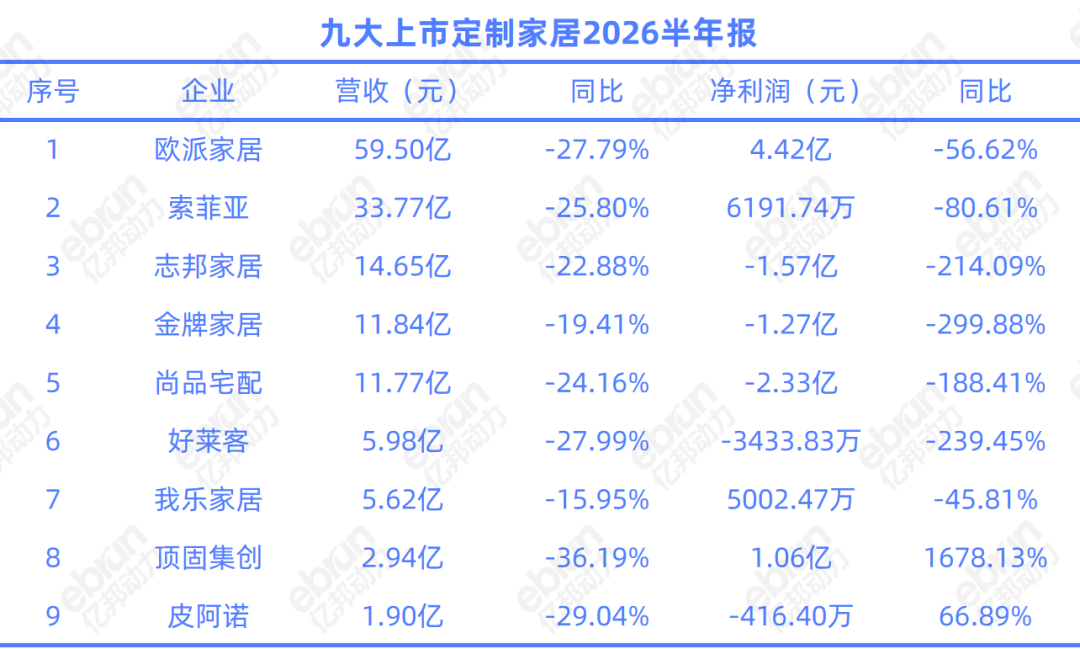
但2026年上半年,欧派营收只剩59.5亿元,同比下降27.79%;归母净利润腰斩,经营现金流净额仅0.92亿元,同比下降超九成。

“如果你认为欧派一定不会死,欧派就100%会死。”姚良松说,“我们很怕死。”

这不是欧派一家公司的困境。2026年上半年,九家主要定制家居上市公司营收全部下滑,平均降幅达到25.5%;其中五家公司已经亏损。扣除非经常性收益后,仍保持主业盈利的只剩欧派、索菲亚和我乐。

图片

下跌并非从2026年才开始。2025年,九家企业中,只有我乐家居实现营收增长,其余8家全部下降,合计收入约423亿元,同比减少约一成。

可以说,行业龙头的“惊涛骇浪”,也是整个定制家居行业共同面对的风暴。

但另一组数据却给出了不同的视角。根据中国建筑装饰协会发布的《2025年中国定制家居行业发展报告》,2025年全国定制家居行业市场规模达5500亿元,同比增长8.2%。

九家公司集体下滑,一个5500亿元的市场却仍在扩大。既然传统头部品牌没有分享到行业所显示的增长,增量去了哪里?

从狂飙到收缩,千亿想象破灭

定制家居,是指根据消费者的个性化需求和住宅空间,通过测量、设计、生产、配送安装等环节,提供定制化家居产品及服务的行业。产品由早期的橱柜、衣柜,逐步扩展至木门、墙板、浴室柜等,并发展为全屋定制和整装。

这曾经是家居行业最风光的赛道之一。

它的崛起,踩中了中国房地产高速发展的红利,也踩中了消费升级和柔性制造的浪潮。大量家庭从“找木工现场打柜子”,转向品牌化和工业化定制。2017年,索菲亚在年报中称,当时主要定制家具企业仍保持30%以上的高速增长,而定制家具占整个家具市场的比例还不足20%,市场远未饱和。

资本市场随之蜂拥而至。2017年,仅半年时间,欧派家居、尚品宅配、皮阿诺、金牌厨柜、我乐家居、志邦家居6家公司先后IPO。加上此前上市的索菲亚、好莱客,一批全国性的定制家居公司就此成形。

图片

行业一路狂飙,疯狂开店、招商、建工厂,成为最直接的增长方式。鼎盛时,欧派拥有8700多家门店,净利润超过30亿元。

到2021年,九家主要上市定制企业合计营收达到549.78亿元,线下门店超过2万家;2023年,九家公司合计营收进一步达到556.85亿元。欧派以227.8亿元遥遥领先,索菲亚超过百亿元,志邦、尚品宅配、金牌构成腰部力量。

行业对未来的想象也一度非常激进且乐观。百得胜张健早在2012年就判断,未来大家居行业会诞生千亿级企业,而主入口会来自定制家居。

但张健口中的“千亿级”尚未到来,行业就以惊人的速度坠落。

首先被打下来的是价格。2023年,欧派旗下菲思卡尔推出699元/㎡的衣柜、橱柜,欧铂丽打到599元/㎡;索菲亚旗下米兰纳随后推出688元/㎡,尚品宅配也跟进699元/㎡。此前普遍千元以上的品牌定制,第一次大规模下探到六七百元的价格带。

到2026年,价格战还未停止。欧派旗下菲思卡尔打到499元/㎡;欧铂尼也推出499元/㎡的惠民系列。在半年报中,欧派将菲思卡尔定位为抢占大众市场的品牌。

图片

价格一路下探,组织也不得不收缩。2026年6月,一封《致全体欧派同仁书》流出。欧派称公司正“穿行于生死一线”,提出精简机构、优化人员和压降费用。欧派市值从一度超过千亿元,到2026年9月已不足180亿元,缩水超过八成。

一位前欧派家装规划师告诉亿邦动力,他从2023年入职欧派,当时所在地区覆盖12个门店,到今年提出离职时仅剩3个店。

“这两年广州分公司的领导都换了好几批。”他说。

新房退潮,门店模式开始失灵

定制家居的黄金时代,也埋下了今天困境的伏笔。

这个行业最舒服的生意,来自新房。一个新楼盘集中交付,上百户甚至上千户业主同时产生装修需求;一个销售团队盯住几个楼盘,就能持续获得客源。橱柜、衣柜、玄关柜等一次性打包,一套房天然是一笔大单。

这个入口正在快速缩小。2024年,全国住宅竣工面积同比下降27.4%;2025年又下降20.2%,两年累计缩水超过四成。2026年前8个月,住宅竣工面积又同比下降25.4%。

“我们部门原来是做新楼盘的,广州市内任何一家新盘开盘或者交付,客户资料都会优先给我们。”欧派前销售王先生告诉亿邦动力,“现在是所有门店一起消化。”

他记得,以前销售的日子“还是很好过的”。2024年以后,门店自然客流越来越少,销售开始自己经营小红书、抖音,甚至靠私信找客户。

图片

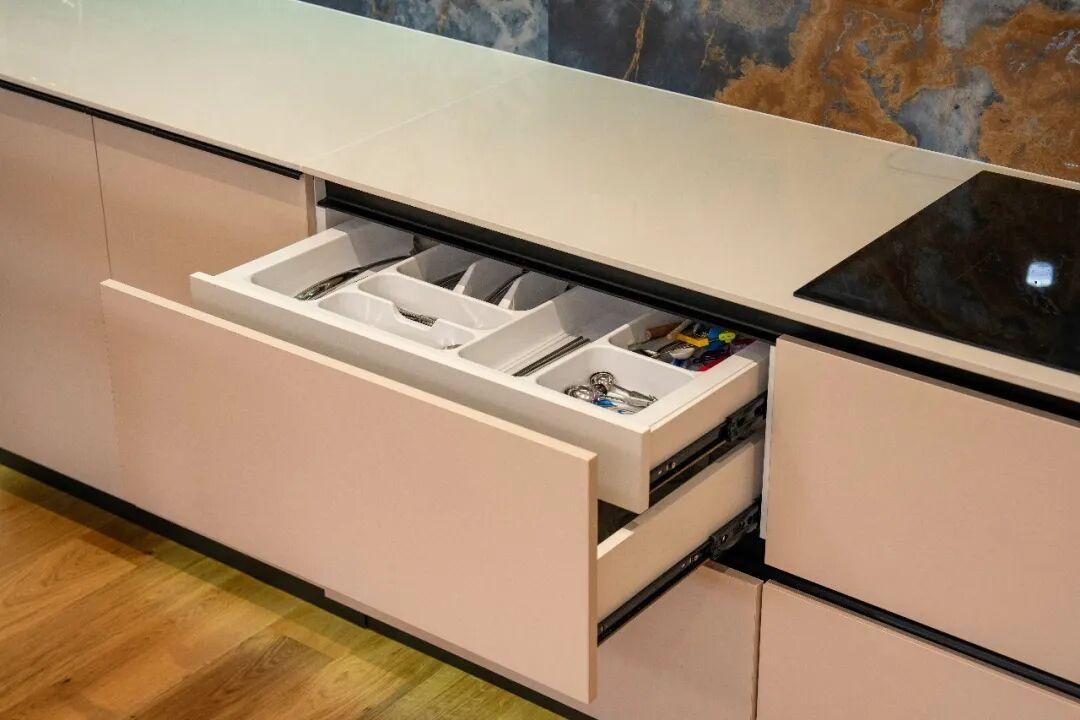
图源:禾辰全屋定制

这对欧派们意味着另一层压力。数千家门店曾经是最重要的渠道壁垒。新房多、商场有自然客流时,一家店就像一张撒在城市里的网。客流减少后,店里的租金、样品、销售、设计师等却都成了固定成本。

门店越多,调整起来越重。欧派目前仍以经销商专卖店为核心渠道,这种历史路径很难迅速切换。

房地产之外,消费者的需求也在变化。

定制家居天生是一门难做的生意:产品高度非标,交易低频高价,服务周期长;生产可以标准化,交付却高度依赖人。再加上复杂的计价体系和经销商模式,价格不透明、延期交付、货不对板和售后扯皮,成为这个行业被长期诟病的问题。

而年轻的消费者,恰恰是最不接受这套旧规则的一代人。在入口上,他们习惯了在网上比价、看评论,希望价格一目了然、设计所见即所得。因此,很难接受传统渠道做法中的“到店再报价”、“套餐之外增项”。

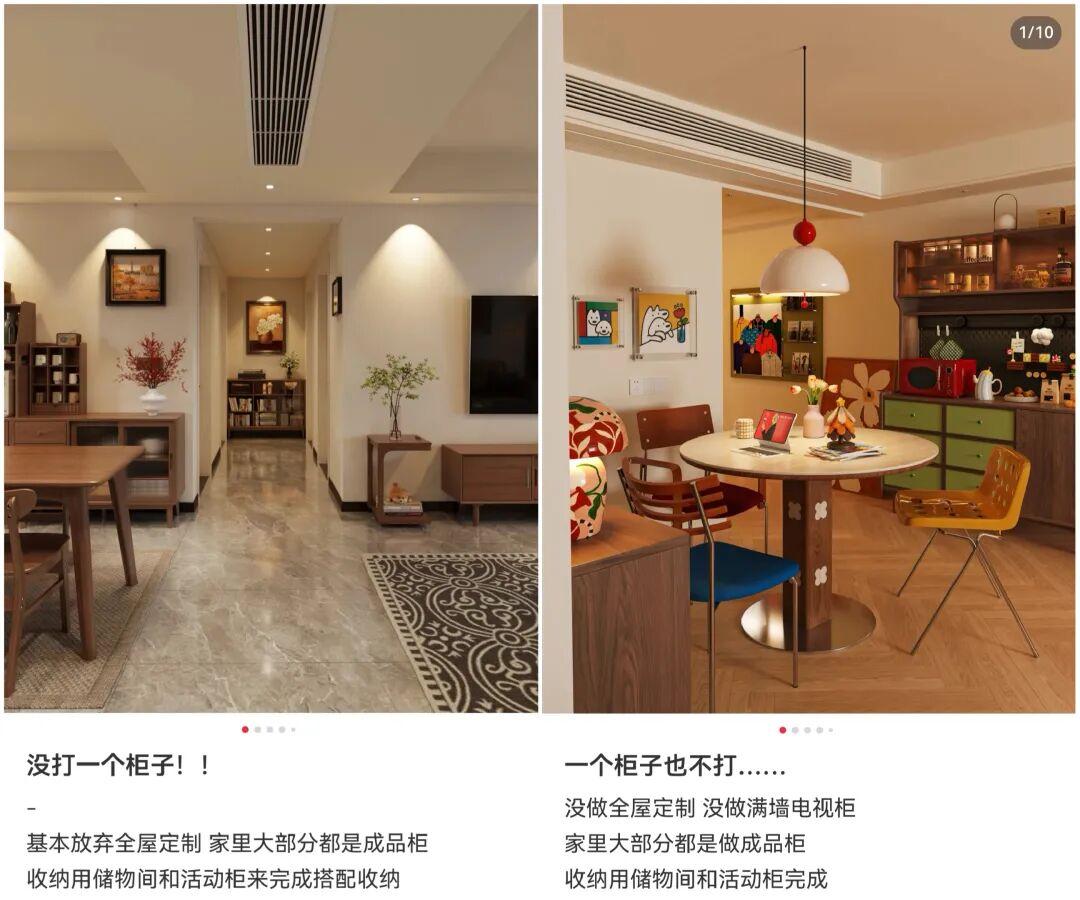
一部分年轻消费者干脆绕开“全屋定制”。小红书上,不少用户分享“不做全屋定制”的装修方案。有人嫌贵,选择“穷装”,把钱留给家电和软装;有人喜欢成品家具,价格更透明,买完就能送;还有人嫌一屋子同色柜门太像样板间,希望自己慢慢淘家具。

图片

图源:森晞-Senci(左)白桃予夏(右)

一套十万元的全屋定制大单,由此可能被拆开,不再全交给一家定制品牌。

需求的变化和入口迁移,对传统定制企业来说是一次艰难的模式重构。关店、减员、压缩费用成为普遍动作;数字化、AI设计、整装、出海,也几乎成了头部企业共同的关键词。而眼下最难的,是赶在原有模式失速之前,完成转身。

这对另一批企业来说,却孕育了新的机会。一些原本不属于这个行业的玩家,已经从新的入口进入。

入口重新洗牌,外来者纷纷入场

定制家居的市场足够大,龙头却一直没有形成压倒性份额。欧派年报曾披露,2021年末主要8家上市定制家居企业的集中度约10.73%。近年来,龙头企业仍在年报中反复强调,行业参与者众多、集中度较低。

这也给外来者留下了位置。

早在2019年出版的《定制家居黄金十年》中,作者就曾预言:要颠覆欧派、索菲亚、尚品等各个领域或品类的老大位置,新来者不会再做传统产品,而在统筹新的地盘与空间——要么替代旧者,要么变成一起玩的行业大玩家。

颠覆者还没有真正出现,但外来趋势已经非常明显。

图片

京东就是互联网模式的入侵者。2023年,京东与爱空间合作推出自营装修业务;2025年5月,京东开出首批家装自营门店;到6月,京东收购四川生活家家居集团股权,到今年更名为“京东家装集团”。

这笔收购意味着,京东在家装上越做越重,已经从一个卖家居商品的平台,开始亲自设计、卖定制、管工人、控施工和做交付。

一方面,京东天生拥有线上流量入口;另一方面,京东还在尝试把非标生意尽量做得像标准商品。定制产品被拆成面积、材料、套餐等可以在线筛选的选项,价格、规格和服务尽量摆到一个页面里。

这套方法能解决多少问题还需时间验证。柜子可以标准化,人工却很难标准化。北京的一次安装体验,并不能保证在另一座城市完全复制。京东也尚未单独披露全屋定制收入。

而另一大外来者,是掌握房产入口的贝壳。2019年,贝壳推出被窝家装;2021年宣布收购圣都家装,2022年完成收购。由此,装修、定制、软装和家电逐渐被接到房产交易之后。

到2026年9月,贝壳又推出自营定制品牌“萌象”,全国首个橱柜展厅落地上海。据品牌披露,进入上海市场三个月,订单已经超过1000单。

贝壳赶上的恰好是另一场迁移。新房减少,二手房交易却在上升。2026年前8个月,全国二手房交易网签面积5.49亿平方米,同比增长10.6%,已经连续多个月高于新房销售面积。

2025年一季度,贝壳称家装家居收入增长22.3%的主要原因,就是房产交易服务向家装输送了更多订单;二季度收入增长13%时,公司再次提到,经纪人推荐的家装订单增加是增长来源之一。

在传统定制家居企业连连下跌的年份,贝壳的家装业务从2021年收入1.97亿元,增长到2025的154.3亿元,即便该数字包含的不止定制家居部分,但一家从房产交易切入的公司,几年时间把家装业务做到百亿元级,也足已说明入口的价值。

京东和贝壳看中的,未必是“卖定制”本身。关键在于,装修预算重新分配之后,谁能成为消费者进入家装链条的第一站。

此外,上游板材厂如兔宝宝,从材料供应商走向整家定制;下游成品家具企业如顾家,从沙发、软床延伸到整家;家居卖场如居然之家、红星美凯龙,也从渠道平台向设计、家装和定制延伸。

原本处在产业链不同位置的企业,都在试图从定制家居分走一杯羹。欧派们守了很多年的那块地,边界开始变得模糊。

“这个行业是不会倒的,它只会少,不会倒。”一位欧派老员工对亿邦动力说,“买房装修永远都会有生意。”

但他又强调,“只是预算会先流进谁的口袋,还不好说。”

亿邦持续追踪报道该情报,如想了解更多与本文相关信息,请扫码关注作者微信。

本文首发于 亿邦动力 官方网站

文章来源:亿邦动力

广告
微信
朋友圈

FAQ回顾

定制家居行业为什么会集体下滑?

主要受新房市场萎缩和价格战影响:2024年全国住宅竣工面积同比下降27.4%,2025年又降20.2%,欧派旗下菲思卡尔等品牌将定制价格打到499元/㎡。2026年上半年九家主要定制家居上市公司营收平均下降25.5%,其中五家亏损,但行业整体规模仍达5500亿元、同比增长8.2%。

京东家装业务是什么?为什么做家装?

京东2023年与爱空间合作推出自营装修,2025年5月开出首批家装自营门店,6月收购四川生活家家居集团并更名为“京东家装集团”。京东从家居电商平台延伸到设计、定制、施工和交付环节,尝试把非标定制拆成面积、材料、套餐等可在线上筛选的标准化选项,以抢占家装消费入口。

贝壳家装业务做得怎么样?

贝壳家装业务增长迅速,收入从2021年1.97亿元增至2025年的154.3亿元,增长主要来自房产交易服务向家装输送订单。贝壳2019年推出被窝家装,2021年收购圣都家装,2026年9月又推出自营定制品牌“萌象”,全国首个橱柜展厅落地上海,三个月订单超1000单。

定制家居行业有哪些新玩家和新趋势?

外来者主要包括:京东通过收购生活家家居和自营门店切入装修定制;贝壳通过被窝家装、圣都家装及自营定制品牌“萌象”从房产交易延伸至家装。此外,板材厂兔宝宝走向整家定制,成品家具企业顾家从沙发延伸到整家,居然之家、红星美凯龙也从卖场向设计、家装和定制延伸。

欧派家居市值为什么大跌?

欧派家居2026上半年营收59.5亿元,同比下降27.79%,归母净利润腰斩,经营现金流净额仅0.92亿元,同比下降超九成;市值从超千亿元跌至不足180亿元,缩水超八成。主要原因是新房客流减少使经销商门店模式成本过重,叠加价格战、机构精简和门店收缩,公司内部也称正“穿行于生死一线”。

这么好看,分享一下?

朋友圈 分享

APP内打开

赞 +1
+1
微信好友 朋友圈 新浪微博 QQ空间
关闭
收藏成功
发送
/140 0