广告
加载中

无人配送车加速走向规模化 顺丰同城多场景布局打开更多增长空间

龚作仁 2026-08-03 13:21
龚作仁 2026/08/03 13:21

邦小白快读

EN
全文速览

本文核心信息是当前无人配送车正加速从试点走向规模化落地,在物流行业降本提质增效方面有显著价值和广阔前景,核心干货如下:

1. 国内头部即配平台顺丰同城已经落地运营超1000台无人配送车,覆盖116个城市,月均活跃行程超5万趟,已经建成初具规模的无人配送网络,推动整个即配行业的数智化升级。

2. 无人配送车的应用价值不止是替代人力,还能重构物流全链路:把配送员从低效转运工作中释放出来专注面客服务,解决夜间配送运力缺口、偏远地区用工难问题,适配小批量高频次的即时消费需求,还符合绿色低碳的发展方向。

3. 目前已经有餐饮配送、中小商家货运等多个成熟的商业化落地案例,普通消费者未来会在更多生活场景接触到无人配送服务,体验会持续完善。

本文披露了即时配送领域无人配送的产业新趋势,对品牌商布局配送渠道、适配新消费需求有多方面参考价值,干货如下:

1. 消费趋势层面,当前消费者对夜间配送、小批次高频次即时配送的需求持续提升,无人配送可以补齐品牌商的末端运力短板,支撑品牌商布局夜间经济、即时零售等新的增长场景。

2. 渠道接入层面,目前已经有成熟的第三方开放无人运力平台,品牌商可以轻资产方式接入,不需要投入重资产布局无人设备,就能提升配送效率、降低末端配送成本,增强自身产品的定价竞争力。

3. 模式参考层面,餐饮品牌肯德基已经验证了“无人车+骑手”的协同配送模式,可有效提升团餐等订单的配送效率,品牌商可参考该模式拓展自身配送服务边界,提升消费者体验。

本文梳理了无人配送规模化落地的行业现状,能给卖家带来新的增长机会与可参考的运营思路,干货如下:

1. 机会层面,当下无人配送已经进入市场化发展阶段,开放共享的无人运力平台已经建成,卖家可以轻资产接入无人运力,拓展之前受限于人力成本无法布局的夜间配送、偏远区域配送业务,挖掘新的业绩增长点。

2. 效率提升层面,已经验证成熟的“无人车+骑手”协同模式,可以帮助卖家提升长距离、大载重订单的配送效率,降低整体配送成本,还能解决配送高峰、夜间时段的运力缺口问题。

3. 风险提示层面,目前无人配送的运营环节需要专业平台支撑,卖家不要盲目重资产投入无人配送设备,选择第三方开放运力平台接入是更稳妥的方案,可降低自身经营风险。

本文披露了无人配送车规模化发展的行业现状,能给生产无人配送相关产品的工厂带来启发与商业机会,干货如下:

1. 生产定位层面,当前行业已经明确了分工边界,无人配送车的硬件制造和实际场景运营分离,路线规划、运力调度等运营环节由专业物流运营方完成,硬件工厂只需要聚焦核心制造环节,不需要兼顾运营,可明确自身生产定位。

2. 商业机会层面,目前无人配送车正处于快速规模化扩张阶段,仅顺丰一家就投入运营超1000台,未来还有大量的市场需求,同时校园、医疗专线、园区等多元场景对硬件有差异化需求,工厂可针对性开发产品获取更多订单。

3. 升级启示层面,无人配送是物流行业数智化升级的核心方向,工厂也可借此机会推进自身生产、物流环节的数字化改造,适配产业升级的大趋势,提升自身竞争力。

本文梳理了无人配送商业化落地的行业趋势,明确了当前产业的客户痛点,为相关服务商指明了发展方向,干货如下:

1. 行业发展趋势层面,当前无人配送车已经完成概念验证,正式从试点阶段进入规模化落地的市场化阶段,整个行业处于快速上升期,市场需求持续增长,有非常广阔的发展空间。

2. 客户痛点层面,当前中小物流企业、商超零售客户都有使用无人运力的需求,但普遍不想承担重资产投入的压力;同时硬件制造厂商不具备物流场景运营能力,无法完成路线规划、运力调度等环节的价值闭环,存在明确的市场缺口。

3. 解决方案参考层面,可以参考顺丰同城子公司顺丰智联的模式,打造开放的第三方无人车运营平台,提供车辆租售+运营管理+运力服务的综合解决方案,覆盖多元场景满足客户需求,打开自身增长空间。

本文分享了顺丰同城布局无人配送的成熟经验,对布局即时物流相关业务的平台商有较高的参考价值,干货如下:

1. 市场需求层面,当前市场对无人运力的需求已经从试点验证转向规模化接入,中小商家、中小物流企业都有轻资产接入开放共享无人运力的需求,这是平台商新的重要增长机会。

2. 平台运营可参考的做法:可以成立专业的子公司运营无人配送业务,搭建自研智慧运营平台,构建“二轮+四轮+无人配送”的多元运力体系,用人车协同模式覆盖多元场景,同时打造开放共享运力平台对外输出服务,拓展盈利渠道。

3. 风险规避层面,要明确硬件制造和场景运营的能力边界,不需要跨界做硬件生产,聚焦自身擅长的场景运营环节打造差异化优势,避免盲目多元化投入带来的资金与运营风险。

本文结合最新行业实践与联合发布的行业报告,梳理了无人配送车商业化的最新产业动向,对产业研究有较高的资料价值,干货如下:

1. 最新产业动向:当前无人配送车伴随技术成熟与成本下探,已经正式从概念验证、试点阶段进入规模化落地的市场化阶段,能够推动物流行业全链路数智化升级,降本提质增效的价值已经得到实践验证。

2. 创新商业模式:当前行业已经跑通第三方开放无人运力运营的创新商业模式,区别于头部企业自研自用的封闭模式,新模式面向全行业开放,支持中小客户轻资产接入,拓展了无人配送的应用范围,是产业分工细化带来的新模式。

3. 研究参考方向:本文明确了当前产业新的分工边界,提出了无人配送综合价值的四个衡量维度,总结了多场景落地的实践经验,为后续研究无人配送产业发展提供了清晰的基础框架。

返回默认

声明:快读内容全程由AI生成,请注意甄别信息。如您发现问题,请发送邮件至 run@ebrun.com 。

我是 品牌商 卖家 工厂 服务商 平台商 研究者 帮我再读一遍。

Quick Summary

This article outlines that last-mile autonomous delivery vehicles are accelerating their transition from pilot trials to large-scale commercial deployment, with clear value and broad prospects for cutting costs and improving efficiency in the logistics industry. Key takeaways are as follows:

1. China’s leading on-demand delivery platform SF Express Same City has already deployed over 1,000 operational autonomous delivery vehicles across 116 Chinese cities, with an average of over 50,000 active trips per month. It has built an initial scaled autonomous delivery network, driving digital and intelligent upgrading across the entire on-demand delivery industry.

2. Beyond replacing manual labor, autonomous delivery can restructure the entire logistics workflow: it frees up human couriers to focus on customer-facing services instead of inefficient transfer work, fills gaps in nighttime delivery capacity, addresses labor shortages in remote areas, meets the demand for small-batch, high-frequency immediate consumption, and aligns with green, low-carbon development goals.

3. Mature commercial use cases already exist in multiple scenarios, including food delivery and freight for small and medium-sized merchants. Consumers will increasingly encounter autonomous delivery services in daily life, and the user experience will continue to improve.

This article outlines new industry trends in autonomous delivery for on-demand logistics, offering multiple insights for brands looking to optimize their delivery channels and align with shifting consumer demand. Key takeaways are as follows:

1. On the demand side, consumer demand for nighttime delivery and small-batch, high-frequency on-demand delivery continues to grow. Autonomous delivery helps brands fix gaps in last-mile delivery capacity, supporting their expansion into high-growth new areas such as the nighttime economy and instant retail.

2. For channel integration, mature third-party open autonomous capacity platforms already exist. Brands can connect to these platforms with an asset-light model, no heavy investment in autonomous equipment required, to boost delivery efficiency, cut last-mile costs, and improve the price competitiveness of their products.

3. For operational model reference, quick-service restaurant brand KFC has already validated the "autonomous vehicle + human courier" collaborative delivery model, which effectively improves delivery efficiency for group meal orders. Brands can adapt this model to expand the scope of their delivery services and improve customer experience.

This article summarizes the current state of large-scale autonomous delivery deployment, highlighting new growth opportunities and actionable operational insights for sellers. Key takeaways are as follows:

1. In terms of opportunities, autonomous delivery has now entered a phase of marketized development, and open shared autonomous capacity platforms are already available. Sellers can access this capacity via an asset-light model to expand into nighttime delivery and remote area delivery services previously unviable due to high labor costs, unlocking new sources of revenue growth.

2. For efficiency improvements, the validated "autonomous vehicle + human courier" collaborative model helps sellers boost delivery efficiency for long-distance and heavy-load orders, cut overall delivery costs, and resolve capacity gaps during peak delivery hours and nighttime periods.

3. For risk mitigation, autonomous delivery operations currently require support from professional platforms. Sellers should not blindly invest heavily in autonomous delivery equipment; connecting to a third-party open capacity platform is a more reliable approach that reduces operational risk.

This article outlines the current state of large-scale development of autonomous delivery vehicles, offering insights and new business opportunities for factories producing autonomous delivery-related hardware. Key takeaways are as follows:

1. For production positioning, the industry has now established clear division of labor: hardware manufacturing of autonomous vehicles is separated from real-scenario operations. Operational functions such as route planning and capacity scheduling are handled by professional logistics operators, so hardware factories only need to focus on core manufacturing instead of taking on operational responsibilities, allowing them to clarify their market positioning.

2. In terms of business opportunities, autonomous delivery vehicles are currently in a phase of rapid large-scale expansion. SF Express alone has already deployed over 1,000 vehicles, meaning significant continued market demand ahead. At the same time, diverse scenarios such as campuses, medical routes and industrial parks have differentiated hardware requirements, so factories can develop targeted products to win more orders.

3. For upgrading insights, autonomous delivery is a core direction for digital and intelligent upgrading of the logistics industry. Factories can leverage this trend to push forward digital transformation of their own production and logistics processes, align with the broader industrial upgrading trend, and improve their competitiveness.

This article summarizes industry trends in the commercial deployment of autonomous delivery, clarifies current customer pain points, and points out clear development directions for relevant service providers. Key takeaways are as follows:

1. For industry trends, autonomous delivery vehicles have now completed proof of concept and officially transitioned from the pilot phase to large-scale commercial deployment. The entire industry is in a period of rapid growth, with continuously expanding market demand and broad development space.

2. In terms of customer pain points, small and medium-sized logistics firms and retail clients all have demand for autonomous delivery capacity, but generally do not want to bear the pressure of heavy capital investment. Meanwhile, hardware manufacturers lack operational capabilities for logistics scenarios, and cannot complete the full value chain of route planning and capacity scheduling, creating a clear gap in the market.

3. For solution reference, service providers can follow the model of SF Smart Connect, a subsidiary of SF Express Same City, by building an open third-party autonomous vehicle operation platform that offers integrated solutions covering vehicle leasing and sales, operation management and capacity services, to serve diverse scenarios and meet client demand, and unlock new growth opportunities.

This article shares SF Express Same City’s mature experience in building out autonomous delivery operations, offering high-value reference for platform operators engaged in on-demand logistics. Key takeaways are as follows:

1. In terms of market demand, market demand for autonomous capacity has shifted from pilot testing to large-scale access. Small and medium-sized merchants and logistics firms all have demand for asset-light access to open shared autonomous capacity, which represents a major new growth opportunity for platform operators.

2. For platform operation reference, operators can set up a dedicated subsidiary to run autonomous delivery business, build an in-house intelligent operation platform, develop a diversified capacity system covering two-wheelers, four-wheel vehicles and autonomous delivery, use a human-autonomy collaboration model to serve diverse scenarios, and build an open shared capacity platform to output services to third parties and expand revenue channels.

3. For risk mitigation, operators should clarify the capability boundary between hardware manufacturing and scenario operation, avoid crossing into hardware production, focus on their core strength in scenario operation to build differentiated advantages, and avoid capital and operational risks brought by blind diversified expansion.

This article summarizes the latest industrial developments in the commercialization of autonomous delivery vehicles based on the latest industry practices and a co-published industry report, offering high reference value for industrial research. Key takeaways are as follows:

1. The latest industry developments: Along with maturing technology and falling costs, autonomous delivery vehicles have officially transitioned from proof of concept and pilot trials to large-scale commercial deployment. They are driving end-to-end digital and intelligent upgrading of the logistics industry, and their value in cutting costs and improving quality and efficiency has been validated through real-world practice.

2. Innovative business models: The industry has now proven the viability of a new innovative business model of third-party open autonomous capacity operation. Different from the closed in-house model developed and used only by leading industry players, this new model is open to the entire industry, supports small and medium-sized clients to access capacity via an asset-light model, and expands the application scope of autonomous delivery. It is a new model born from refined industrial division of labor.

3. Directions for future research: This article clarifies the new division of labor boundaries in the current industry, proposes four dimensions to measure the comprehensive value of autonomous delivery, and summarizes practical experience of multi-scenario deployment, providing a clear foundational framework for future research on the development of the autonomous delivery industry.

Disclaimer: The "Quick Summary" content is entirely generated by AI. Please exercise discretion when interpreting the information. For issues or corrections, please email run@ebrun.com .

I am a Brand Seller Factory Service Provider Marketplace Seller Researcher Read it again.

8月3日,《智行未来:物流无人车商业化应用与场景重塑展望》正式发布。该报告由白犀牛、顺丰同城、中国交通报社及中物联同城即时物流分会联合编撰,基于大量一线实践系统梳理无人配送车(以下简称Robovan)商业化应用场景,指出伴随着技术成熟与成本下探,Robovan正加速从试点走向规模化,在推动物流行业降本提质增效方面展现出显著价值与广阔前景。

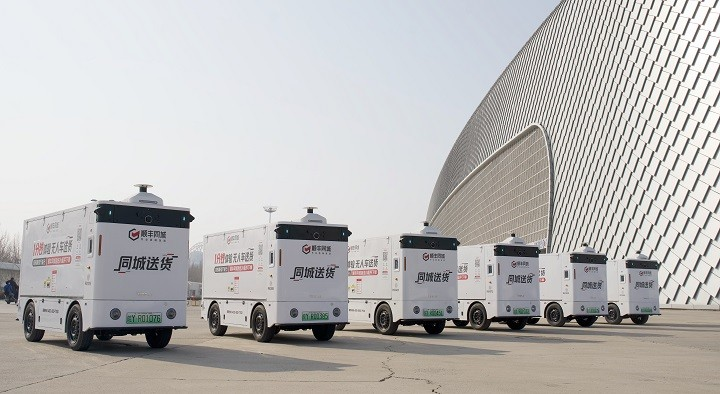
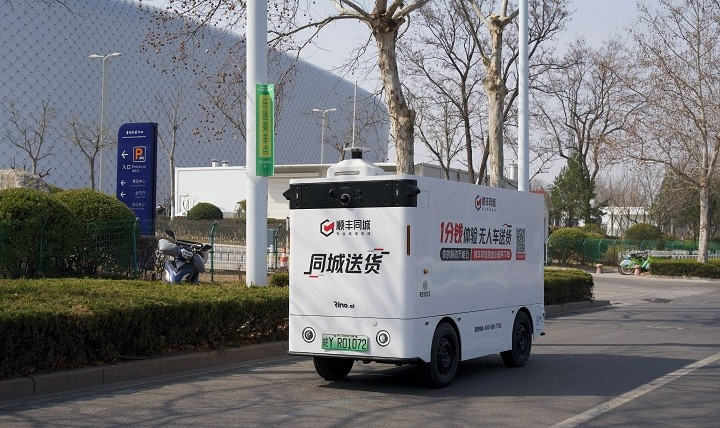
这一趋势已在物流龙头企业的布局中得以验证。作为国内规模最大的第三方即配服务平台,顺丰同城无人车投入运营超1000台,覆盖116个城市,月均活跃行程超50000趟。持续扩容的无人配送网络,正推动平台全链路履约体系向数智化迭代升级。

布局专业化运营平台,搭建产业落地关键基础设施

报告指出,Robovan的硬件制造与实际场景运营存在能力边界,路线规划、运力调度等环节,仍需深耕物流场景的运营方来完成价值闭环。在此背景下,顺丰同城成立子公司“顺丰智联”(以下简称智联),聚焦第三方无人车运营平台与智慧场景运营业务,推动无人车在城市物流末端的商业化应用。

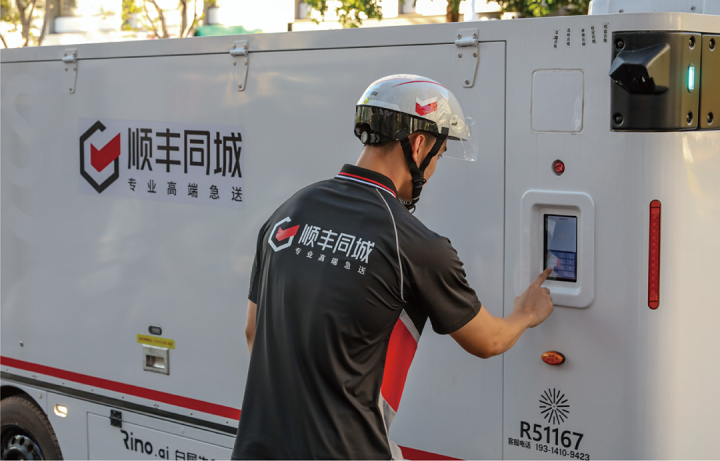
依托自研智慧运营平台,智联提供“车辆租售+运营管理+运力服务”的综合解决方案,覆盖快递末端接驳、即时零售配送、医疗物资专线、园区内部循环、校园智慧配餐等多元场景。伴随无人配送产业进入市场化阶段,中小物流企业、商超零售客户以轻资产方式接入无人运力的需求持续增加,智联正打造开放共享运力平台,推动无人配送从局部可行向更广范围延伸。

拓展即配服务边界,加速Robovan价值兑现

报告指出,Robovan的应用价值并非单一替代人力,而是对物流全链路形成系统性重构:将配送员从高频低效的转运工作中释放,使其聚焦面客服务;以全天候运力消除排班瓶颈与夜间配送压力;同时以灵活性适配柔性供应链的小批次、高频次需求;以电力驱动与智能路径规划助力绿色低碳转型;更以自动化运力破解偏远地区用工结构性难题。

在Robovan从概念验证阶段迈入价值兑现的关键窗口期,报告建议物流企业以提升全链路时效、改善服务质量、优化人力结构及增强网络弹性作为其综合价值的衡量维度。

而这套价值逻辑,已在物流企业的商业化运营中得到验证。以顺丰同城为例,其构建的“二轮+四轮+无人配送”多元运力体系,可高效承接长距离、大载重等高附加值非标订单,进一步丰富多元场景服务能力。比如,顺丰同城与肯德基合作在深圳推出无人车智能餐饮配送服务,以“无人车+骑手”协同模式提升团餐配送效率;在山东潍坊试点无人车货运,为中小商家提供“自主装卸+无人运输”服务,将无人配送从B端集散延伸至C端即时使用场景。

随着Robovan迈入规模化落地阶段,顺丰同城依托专业化运营平台、人车协同履约模式与全场景落地经验,建立起差异化优势,在降低配送成本的同时,也有望在夜间经济、即时货运等场景培育新的增长点。未来,随着无人配送网络持续扩容、运营密度逐步提升,更广的应用场景与规模化运营带来的降本增效优势,将助力其打开更广阔的增长空间。

注:文/龚作仁,文章来源:Laborer,本文为作者独立观点,不代表亿邦动力立场。

文章来源:Laborer

广告
微信
朋友圈

FAQ回顾

无人配送车商业化应用有哪些常见场景?

无人配送车商业化应用可覆盖快递末端接驳、即时零售配送、医疗物资专线、园区内部循环、校园智慧配餐等多元场景,还可通过人车协同模式承接长距离、大载重等高附加值非标订单,满足团餐配送、中小商家货运等不同需求。

顺丰同城在无人配送领域的布局情况如何?

目前顺丰同城无人车投入运营超1000台,覆盖116个城市,月均活跃行程超50000趟。其成立子公司顺丰智联,聚焦第三方无人车运营平台业务,提供“车辆租售、运营管理、运力服务”的综合解决方案,打造开放共享运力平台。

无人配送车落地能为物流行业带来哪些价值?

无人配送车可推动物流行业降本提质增效,将配送员从高频低效的转运工作中释放使其聚焦面客服务,消除排班瓶颈与夜间配送压力,适配柔性供应链小批次高频次需求,助力绿色低碳转型,破解偏远地区用工结构性难题。

这么好看,分享一下?

朋友圈 分享

APP内打开

+1
+1
微信好友 朋友圈 新浪微博 QQ空间
关闭
收藏成功
发送
/140 0