广告
加载中

世界杯本地生活报告:这届球迷扎堆在洗浴中心和酒吧看球

姜琪 2026-07-17 12:23
姜琪 2026/07/17 12:23

邦小白快读

EN
全文速览

本文梳理了本届世界杯期间中国球迷本地生活消费的核心变化,披露了多个有意思的消费新趋势和核心干货信息。

1. 核心消费变化:外卖晚高峰从常规晚餐延后到21至23点,啤酒闪购在该时段爆单,酒吧94%的核销订单集中在21点到次日凌晨1点。深夜外卖TOP3从四年前的奶茶、汉堡、烧烤变成奶茶、汉堡、咖啡,咖啡成为观赛提神新刚需。

2. 观赛场景新变化:除了传统酒吧,洗浴中心成为新兴观赛地,过夜类洗浴GTV环比增长超两成,连锁品牌海茵汇的观赛过夜含餐套餐销量同比翻了3.5倍,实现看球泡汤睡觉一条龙体验。

3. 区域消费差异:北上球迷偏向出门到餐厅看球,广深球迷更爱在家点外卖观赛,世界杯早茶搜索量增幅超53倍,东道主菜系巴西菜、墨西哥菜外卖分别增长35.2%、29%。

本文总结了本届世界杯期间的本地消费新趋势,披露了成功的品牌营销案例,对品牌布局热点营销、把握消费趋势有较高参考价值。

1. 消费趋势与用户行为:大型赛事会彻底改变用户作息,观赛场景多元化,除酒吧外洗浴中心、家庭客厅都成为观赛据点,情绪驱动型复购成为典型特征,赛事期间闪购5小时多单用户新增近80万;不同区域消费习惯差异明显,北上偏好线下观赛,广深偏好居家点单。

2. 营销案例参考:库迪咖啡依托阿根廷国家队赞助IP,联合美团采用“3天预热、2天爆发、1天返场”的节奏,通过门店场景焕新、分层货盘搭建获得全域2.13亿曝光,非咖啡品类GTV同比增长44.3%,验证了精准捕捉用户意图能大幅提升流量转化效率。

3. 机会提示:打标观赛场所的核销业绩比未打标高74%,世界杯相关菜品销量增速超5倍,品牌可借热点绑定场景获得增长。

本文梳理了世界杯这类大型赛事期间本地消费的变化规律,给本地卖家提供了明确的机会参考和可复用的经验。

1. 可把握的增长机会:新兴观赛场景红利明显,洗浴中心等非传统场所借赛事获得大幅增长;提前参与平台热点打标,能获得远超未打标商家的业绩,打标门店核销GTV比未打标高74%;世界杯相关餐饮团购销量增速超5倍,可借热点推出相关套餐产品。

2. 需求变化带来的机会:深夜观赛的提神需求崛起,咖啡替代烧烤进入深夜外卖前三,东道主菜系巴西菜、墨西哥菜外卖分别增长35.2%、29%,卖家可及时调整货盘匹配需求。

3. 可学习的运营经验:借鉴库迪咖啡的打法,联动平台做分阶段营销,匹配用户观赛时间调整运营节奏,提前备货应对球迷“上半场囤货、下半场补单”的消费特征,抓住流量转化机会。

本文披露的世界杯消费数据,能给面向本地消费市场的工厂带来产品方向和数字化转型的多重新启示。

1. 产品生产设计方向:观赛场景已经多元化,覆盖酒吧、洗浴中心、家庭客厅等多个场景,对应开发不同规格的产品,针对观赛提神需求,咖啡相关产品需求增长明显,可扩大适配即时零售渠道的咖啡单品、小份装产品产能;针对东道主菜系的热度增长,巴西菜、墨西哥菜相关食材的需求分别上涨35.2%、29%,食材加工厂可提前布局对应产能。

2. 商业机会:大型热点赛事会带动小众品类爆发,工厂可绑定品牌和平台的热点营销,提前对接需求获得批量订单。

3. 数字化转型启示:要顺应即时消费的趋势,对接本地生活平台的热点规则,参与热点相关的供给调整,提升订单响应效率,数据显示适配平台热点的商家业绩增长远高于普通商家,工厂也可借热点数字化转型实现增长。

本文展现了大型体育赛事期间本地生活服务行业的新变化,给本地生活相关服务商提供了行业方向和业务参考。

1. 行业发展趋势:大型热点赛事会带动即时本地消费爆发,观赛场景多元化打破了传统酒吧独大的格局,新兴场景洗浴中心的观赛消费GTV增长超两成,情绪驱动型即时复购成为新的消费特征,赛事期间闪购5小时多单用户新增近80万,市场空间大。

2. 客户核心痛点:多数中小本地商家面对大型赛事流量不知道如何承接,不少商家没有意识到平台热点打标的价值,没有参与相关活动,错过了流量红利,不同区域商家也不了解当地消费特征,无法匹配需求。

3. 可落地的解决方案:服务商可以为商家提供热点营销全案服务,帮助商家对接平台流量资源,根据商家品类和所在区域设计分阶段营销节奏,适配不同观赛场景调整产品组合,帮助商家精准捕捉用户需求,提升流量转化效率,可复用库迪咖啡的成熟营销模式输出服务。

本文披露的世界杯消费数据,给本地生活平台优化运营、承接热点流量提供了明确的参考方向。

1. 商家需求:热点赛事期间,商家对平台的热点流量扶持、营销标识赋能需求很强,数据显示参与平台观赛打标的门店,核销GTV比未打标商家高出74%,打标对商家业绩拉动效果明显。

2. 运营优化方向:大型热点事件期间,可针对不同区域的消费习惯调整流量分发策略,针对北上用户偏好线下观赛的习惯,多推送线下观赛餐厅酒吧,针对广深用户偏好居家观赛的习惯,多推送外卖相关产品;可以提前挖掘新兴观赛场景的商家,针对性开展招商,丰富平台供给。

3. 风险规避:大型赛事期间订单集中在夜间特定时段,用户有“上半场囤货、下半场补单”的特点,要提前协调运力应对订单波动,提前做好流量扩容,保障用户体验和商家转化。

本文基于美团一手的世界杯本地生活消费数据,展现了大型体育事件下本地生活产业的新动向,为产业研究提供了丰富的一手资料。

1. 产业新动向:观赛场景多元化发展,本地生活的“第二观赛现场”已经覆盖餐饮、洗浴、零售等多个领域,即时零售成为核心消费路径,情绪驱动型即时复购成为大型赛事期间的典型消费特征,区域消费习惯差异在热点事件下被进一步放大。

2. 新商业模式验证:IP+本地生活平台的分阶段全域营销模式已经跑通,库迪咖啡依托阿根廷国家队IP,联合美团按照节奏做营销,实现超2亿曝光,非咖啡品类增长44%,验证了该模式的有效性。

3. 研究启示:本地生活平台的场景匹配能力是流量转化的核心,用户产生观赛需求的瞬间,能否快速触达是竞争的关键,未来本地生活产业会进一步向场景化、即时化方向发展,新兴场景会持续涌现带来新增长。

返回默认

声明:快读内容全程由AI生成,请注意甄别信息。如您发现问题,请发送邮件至 run@ebrun.com 。

我是 品牌商 卖家 工厂 服务商 平台商 研究者 帮我再读一遍。

Quick Summary

This article outlines the core shifts in Chinese football fans' local consumption during the 2022 FIFA World Cup, and reveals several intriguing new consumption trends and key insights.

1. Core consumption shifts: The evening food delivery peak shifted from the traditional dinner window to 9-11 PM, when flash orders for beer surged. 94% of in-bar venue redemptions were concentrated between 9 PM and 1 AM the next day. The top 3 late-night food delivery items shifted from bubble tea, burgers and barbecue (four years prior) to bubble tea, burgers and coffee, with coffee becoming a new must-have for staying alert during matches.

2. New viewing trends: Beyond traditional bars, bath houses have emerged as an unexpected new match-watching destination. Overnight bath house transaction value grew over 20% month-on-month, and chain brand Haiyinhui saw a 4.5x year-on-year sales jump for its "watch matches, bathe and stay overnight with meals" package, offering a one-stop matchday experience.

3. Regional consumption differences: Fans in Beijing and Shanghai prefer going out to restaurants to watch matches, while fans in Guangzhou and Shenzhen favor ordering food delivery and watching at home. Search volume for World Cup-themed dim sum surged over 53 times, and delivery orders for host-nation cuisines—Brazilian and Mexican food—increased 35.2% and 29% respectively.

This article summarizes new local consumption trends during the 2022 World Cup, shares successful brand marketing case studies, and offers high-value reference for brands planning hot-spot marketing and navigating changing consumer trends.

1. Consumption trends and user behavior: Major sports events completely reshuffle user daily routines, and viewing scenarios have diversified. Beyond bars, bath houses and home living rooms are now common match-watching locations. Emotion-driven repeat purchases have become a defining characteristic, and the World Cup added nearly 800,000 new users who placed multiple orders within 5 hours of flash sale windows. Clear regional differences in consumer habits persist: Beijing and Shanghai consumers prefer offline viewing, while Guangzhou and Shenzhen consumers favor ordering in.

2. Actionable marketing case study: Cotti Coffee leveraged its sponsorship of the Argentina National Team, and partnered with Meituan on a phased marketing rhythm of "3 days of pre-heating, 2 days of peak activation, 1 day of post-event follow-up". Through in-store scenario refresh and tiered product assortment, the campaign drove 213 million total impressions across all channels, and delivered a 44.3% year-on-year increase in GTV for non-coffee categories. The case proves that accurately capturing user intent can significantly boost traffic conversion efficiency.

3. Growth opportunity note: Venues tagged as official match-watching locations delivered 74% higher redemption revenue than untagged venues, and sales of World Cup-themed menu items grew more than 5 times faster than regular items. Brands can drive growth by tying their offerings to hot-spot match-watching scenarios.

This article maps out consumption patterns during major events like the World Cup, and provides clear opportunity references and replicable operational experience for local merchants.

1. Capturable growth opportunities: Emerging match-watching scenarios offer clear dividend growth, with non-traditional venues like bath houses seeing sharp growth tied to the tournament. Early participation in platform hot-spot tagging delivers far better performance than non-participation: tagged venues saw 74% higher redemption GTV than untagged competitors. Sales of World Cup-themed dining group-buy packages grew more than 5 times faster than average, so merchants can capture growth by launching related packaged offerings.

2. Opportunities from shifting demand: Demand for late-night matchday stimulants has risen, with coffee displacing barbecue to enter the top 3 late-night delivery categories. Delivery orders for host-nation cuisines—Brazilian and Mexican food—increased 35.2% and 29% respectively, so merchants can adjust their product assortments to match this new demand in a timely manner.

3. Replicable operational takeaways: Merchants can replicate Cotti Coffee's playbook: partner with platforms for phased marketing, adjust operational rhythms to align with match schedules, stock up in advance to match fans' consumption pattern of "stock up before kickoff, reorder during halftime", and capture traffic conversion opportunities.

The World Cup consumption data revealed in this article offers multiple new insights on product positioning and digital transformation for factories serving the local consumer market.

1. Product development and design direction: Match-watching scenarios have diversified across bars, bath houses, home living rooms and more, so factories should develop product variations tailored to each scenario. Coffee-related products have seen clear demand growth driven by matchday alertness needs, so factories can expand production of coffee SKUs and small-pack products adapted for instant retail channels. With the rising popularity of host-nation cuisines, demand for Brazilian and Mexican food-related ingredients rose 35.2% and 29% respectively, so ingredient manufacturers can frontload capacity expansion for these products.

2. Business opportunities: Major hot-spot events drive explosive growth for niche categories. Factories can tie into brands' and platforms' hot-spot marketing campaigns, and frontload demand matching to secure bulk orders.

3. Digital transformation insights: Factories should align with the instant consumption trend, integrate with local life platform hot-spot rules, participate in hot-spot related supply adjustments, and improve order response efficiency. Data shows merchants that adapt to platform hot-spots deliver far higher growth than general merchants, and factories can also drive growth via hot-spot aligned digital transformation.

This article outlines new shifts in the local life service industry during major sports events, and provides industry direction and business references for local life service providers.

1. Industry development trends: Major hot-spot events drive explosive growth in instant local consumption. The diversification of match-watching scenarios has broken the traditional monopoly of bars, with transaction value for matchday consumption at the emerging bath house scenario growing over 20%. Emotion-driven instant repeat purchases have become a new consumer characteristic, with the World Cup adding nearly 800,000 new users who placed multiple orders within 5-hour flash sale windows, creating significant market space.

2. Core client pain points: Most small and medium-sized local merchants do not know how to capture event traffic, many fail to recognize the value of platform hot-spot tagging, do not participate in related activities, and miss out on traffic dividends. Additionally, merchants in different regions often lack understanding of local consumer characteristics, so they cannot adjust their offerings to match demand.

3. Implementable solutions: Service providers can offer end-to-end hot-spot marketing services for merchants, help them connect to platform traffic resources, design phased marketing rhythms based on merchants' categories and regions, adjust product assortments for different match-watching scenarios, help merchants accurately capture user demand, and improve traffic conversion efficiency. Providers can replicate Cotti Coffee's proven marketing model to deliver standardized services.

The World Cup consumption data revealed in this article provides clear reference directions for local life platforms to optimize operations and capture hot-spot traffic.

1. Merchant needs: During hot-spot events, merchants have strong demand for platform traffic support and marketing tagging empowerment. Data shows venues that participated in platform match-watching tagging delivered 74% higher redemption GTV than untagged merchants, proving tagging has a clear performance-driving effect for merchants.

2. Operational optimization directions: During major hot-spot events, platforms can adjust traffic distribution strategies based on regional consumption habits: for Beijing and Shanghai consumers who prefer offline viewing, push more offline viewing restaurants and bars; for Guangzhou and Shenzhen consumers who prefer at-home viewing, push more food delivery offerings. Platforms can also proactively identify merchants in emerging match-watching scenarios and launch targeted recruitment to enrich platform supply.

3. Risk mitigation: During major events, orders are concentrated in specific late-night time slots, and users follow the pattern of "stock up before the first half, reorder during the second half". Platforms should coordinate delivery capacity in advance to handle order fluctuations, pre-scale up traffic infrastructure, and protect user experience and merchant conversion.

Based on first-party Meituan data on local life consumption during the World Cup, this article reveals new trends in the local life industry driven by major sports events, and provides rich first-hand data for industrial research.

1. New industry trends: Match-watching scenarios have diversified, and local life's "secondary viewing venues" now cover catering, bath, retail and multiple other sectors. Instant retail has become the core consumption path, emotion-driven instant repeat purchases have become a defining consumer characteristic during major events, and regional differences in consumption habits are further amplified during hot-spot events.

2. New business model validation: The phased omni-channel marketing model combining IP licensing and local life platforms has been proven viable. Cotti Coffee leveraged its Argentina National Team IP and partnered with Meituan on a rhythm-aligned marketing campaign, driving over 200 million impressions and 44% growth in non-coffee categories, validating the model's effectiveness.

3. Research implications: Local life platforms' scenario matching capability is the core of traffic conversion. The ability to reach users the moment they generate a match-watching demand is the key to competition. Going forward, the local life industry will continue to evolve toward scenario-based and instant operations, and emerging scenarios will continue to emerge to drive new growth.

Disclaimer: The "Quick Summary" content is entirely generated by AI. Please exercise discretion when interpreting the information. For issues or corrections, please email run@ebrun.com .

I am a Brand Seller Factory Service Provider Marketplace Seller Researcher Read it again.

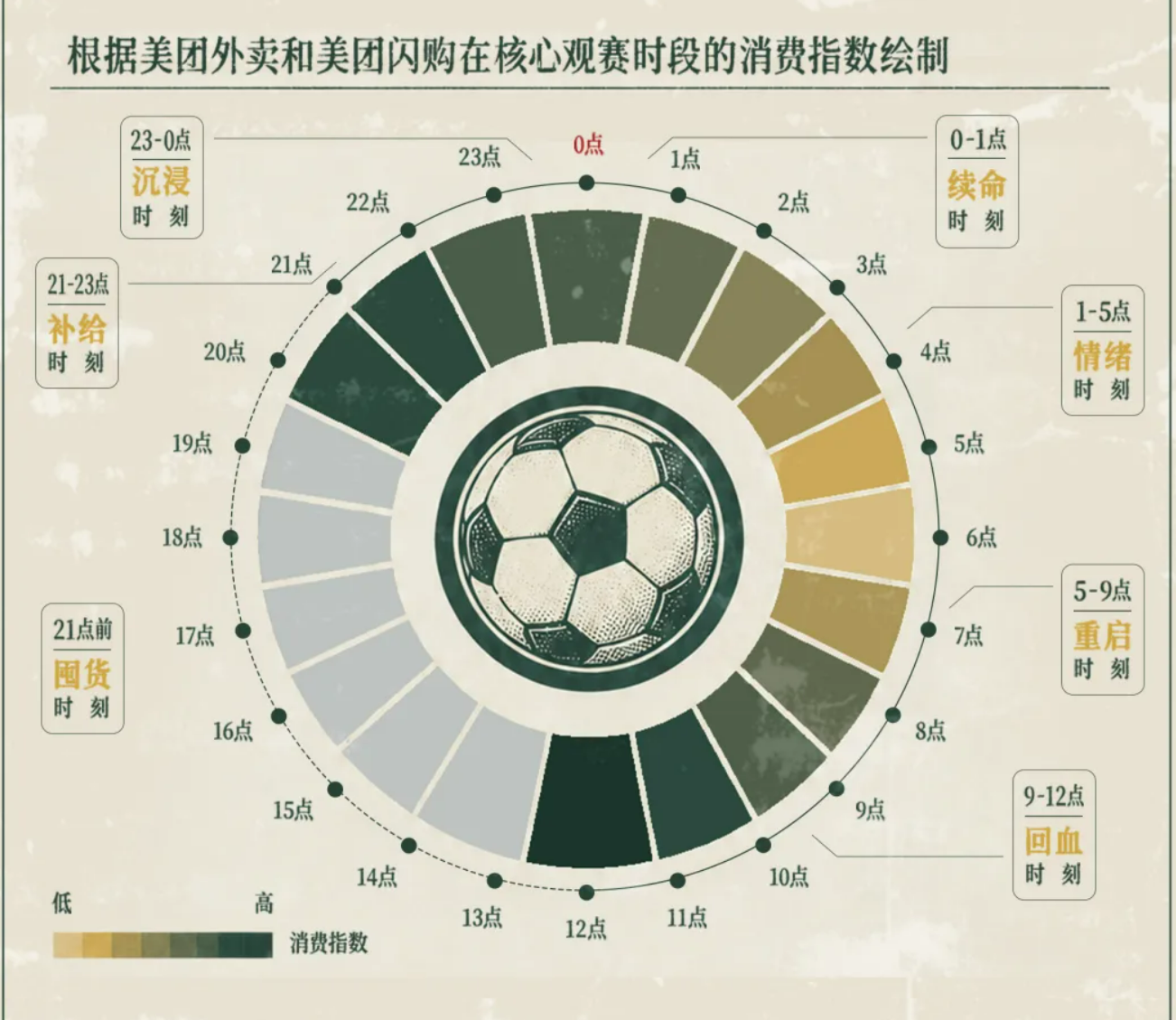
【亿邦原创】世界杯进入最后阶段,在过去的三十多天里,中国球迷的消费时钟被彻底拨乱。美团数据显示,世界杯期间,外卖晚高峰从常规的晚餐时段延后至21至23点,闪购啤酒在同一时段爆单,酒吧94%的核销订单集中在21点至次日凌晨1点。

更有意思的是,东道主菜系也借赛事破圈。核心观赛时段,巴西菜外卖环比增长35.2%,墨西哥菜增长29%。真球迷连点外卖都开始“站队”。当比赛哨声吹响,千万人的作息、饮食、消费、社交,在同一个瞬间重新排列。

观赛场景也在向外蔓延。这届世界杯,洗浴中心成为新兴观赛地。过夜类洗浴供给GTV环比增长超两成,球迷实现看球、泡汤、睡觉一条龙。以海茵汇为例,其“节假日夜间含餐门票加过夜费”套餐在21点至次日13点的销售同比翻了3.5倍。

深夜外卖Top 3从四年前的“奶茶、汉堡、烧烤”变成了“奶茶、汉堡、咖啡”。烧烤退居第八,咖啡首次挤入前三。凌晨三点的咖啡不再是办公桌上的提神工具,而是客厅沙发前球迷的新刚需。

此外,世界杯期间闪购的5小时多单用户,相比赛前多出来近80万。球迷们“上半场囤货、下半场补单”,情绪驱动型复购,成为赛事消费的典型特征。

消费地理也在分化。上海、北京、深圳是世界杯餐厅搜索前三城,但切换到外卖核心观赛时段,深圳和广州反超上海拿下冠亚军。“世界杯早茶”搜索量增幅超过53倍,广式早茶餐厅搜索量增长超3倍。北上球迷出门吃,广深球迷在家买——两地消费习惯的差异,在世界杯期间被放大成两种截然不同的生活方式。

搜索词的变化则暴露了更精准的意图。世界杯期间,搜索“世界杯看球酒吧”“大屏幕看球”等关键词的点击率超过60%,赛期打标观赛酒吧近5000家,打标门店单店核销GTV比未打标商家高出74%。餐饮团购中“世界杯”相关菜品销量增速超5倍,供需两端实现高频共振。

世界杯期间,不少品牌借助营销快速破圈。库迪咖啡依托阿根廷国家队赞助IP与“潘帕斯蓝”品牌资产,联手美团采用“3天预热、2天爆发、1天返场”的节奏,通过门店场景焕新、分层货盘搭建和平台流量加码,全域总曝光2.13亿,引流单品金奖美式活动期GTV占品牌总GTV的22.2%,非咖啡增量品类GTV同比增长44.3%。赛事流量的转化效率取决于对用户意图的捕捉精度。

世界杯只有16座球场,但本地生活有无数个第二现场。烤肉店、洗浴中心、客厅沙发、早茶餐厅——每一个有屏幕和座位的地方,都可能成为观赛据点。平台和品牌要做的,是在用户产生“今晚有球要看”这个念头的瞬间,用最短的路径把商品、场所或送达时间推到他们面前。谁能在那个瞬间做出最快反应,谁就接住了这些夜晚。

亿邦持续追踪报道该情报,如想了解更多与本文相关信息,请扫码关注作者微信。

文章来源:亿邦动力

广告
微信
朋友圈

FAQ回顾

世界杯期间球迷的观赛场景有哪些新变化?

除传统酒吧外,洗浴中心成为新兴观赛地,过夜类洗浴供给GTV环比增长超两成,海茵汇相关夜间含餐过夜套餐销量同比翻3.5倍;此外客厅、早茶餐厅、烤肉店等带屏幕的场所都成为观赛据点,赛期打标观赛酒吧近5000家,单店核销GTV比未打标商家高出74%。

世界杯期间国内球迷的消费习惯有哪些变化?

世界杯期间球迷消费时钟发生变化,外卖晚高峰从常规晚餐时段延后至21至23点,闪购啤酒该时段爆单;深夜外卖Top3变为奶茶、汉堡、咖啡,咖啡首次跻身前三成为观赛提神刚需,巴西菜、墨西哥菜等东道主菜系外卖环比分别增长35.2%、29%。

品牌如何借世界杯赛事流量提升消费转化?

品牌可精准捕捉用户观赛消费意图,联动本地生活平台规划合理营销节奏,通过焕新门店场景、搭建分层货盘、加码平台流量等方式提升转化。比如库迪咖啡联动美团开展的营销活动获全域总曝光2.13亿,引流单品GTV占品牌总GTV的22.2%。

这么好看,分享一下?

朋友圈 分享

APP内打开

赞 +1
+1
微信好友 朋友圈 新浪微博 QQ空间
关闭
收藏成功
发送
/140 0