广告
加载中

世界杯让即时零售爆火 下单主力竟不是男性

姜琪 2026-07-10 10:31
姜琪 2026/07/10 10:31

邦小白快读

EN
全文速览

本文核心内容是2026美加墨世界杯时差原因催生了国内即时零售的新消费热潮,出现了多个值得关注的新变化。

1. 消费场景和路径变化:七成赛事在凌晨到上午,催生早茶看球、通勤观赛新场景,消费从以往提前囤货变成边看边买、30分钟送达的即时消费。

2. 消费人群变化:观赛高峰女性消费者下单占比达到51%,首次超越男性,35岁以下消费者占比近六成,新一线城市消费热情全面反超传统一线城市。

3. 消费习惯和品类变化:独享观赛替代多人狂欢,小额高频消费成主流,啤酒重回销量第一,冰感消费渗透到全品类,住宅小区成为订单主力,占比达到65%。

本届世界杯即时零售爆火,呈现了多个新消费趋势,为品牌布局营销和产品提供了明确参考。

1. 消费趋势变化:女性已经成为观赛消费下单主力,年轻人和新一线城市是核心消费群体,住宅小区是核心消费场景,独享观赛催生小额高频需求,冰感消费从酒饮向全品类渗透,市场需求发生明显变化。

2. 营销渠道参考:头部品牌百威、可口可乐、蒙牛已经提前布局,依托即时零售平台推出限时折扣、赛事竞猜、联名定制、深夜专属套餐等多元营销活动,成功把赛事流量转化为实际订单增量。

3. 方向提示:即时零售已经成为品牌捕捉突发情绪消费的核心阵地,品牌可布局即时零售渠道适配新的消费习惯,挖掘增量空间。

本届世界杯即时零售的消费变化,给各类卖家带来了明确的增长机会和运营参考。

1. 机会提示:时差催生了早茶看球、通勤观赛等新消费场景,带来新增量;女性成为下单主力,新一线城市消费热度反超一线城市,住宅小区订单占比达65%,卖家可针对性布局这些人群、区域和场景。

2. 产品调整方向:冰感消费已经向全品类渗透,啤酒、精酿、冰品需求大幅上涨,同时独享观赛成为主流,小额高频消费占比提升,卖家可推出适配单人场景的小额产品套餐,满足用户反复下单的实时补给需求。

3. 运营参考:卖家可对接即时零售平台,结合赛事等节点性热点推出专属营销活动,承接用户突发的情绪消费需求,获得订单增长。

本届世界杯即时零售爆火,给生产端工厂带来了新的需求变化和发展启示,指明了新的方向。

1. 产品生产设计需求:当前消费市场偏向单人独享的小额产品,冰感消费需求已经从酒饮渗透到全品类,同时女性成为消费主力,工厂可针对性开发小包装单人份产品,布局冰感相关全品类产品线,适配女性消费者的偏好。

2. 商业机会:即时零售已经从原来的应急补位转变为主流消费方式,用户“当下就要”的消费习惯已经养成,且不会随着赛事结束消失,工厂可对接本地即时零售供应链,开辟新的出货渠道,获取新增量。

3. 转型启示:工厂可加快数字化转型,适配即时零售小单快发的需求,优化供应链响应速度,抓住即时零售发展的行业红利。

本届世界杯即时零售的爆发,清晰展现了即时零售行业的发展趋势,也给相关服务商指明了业务方向。

1. 行业发展趋势:经过本届世界杯验证,即时零售已经脱离原本的应急补位定位,成为国内零售市场的主流消费方式,用户“当下就要”的即时消费习惯已经养成,未来行业规模会持续扩大,发展空间充足。

2. 客户核心痛点:传统零售无法捕捉赛事这类突发、随机、带有强烈情绪的即时消费需求,品牌和线下卖家都需要能承接脉冲式流量的营销和履约支持。

3. 业务方向:服务商可围绕本地即时零售的短时效履约体系优化自身服务,针对节点性大流量事件推出配套的营销工具、供应链服务,帮助品牌和卖家把流量转化为实际订单,解决客户的核心痛点。

本届世界杯即时零售的消费爆发,给即时零售平台的运营和发展带来了多维度的参考,指明了新的增长方向。

1. 用户需求变化:当前女性消费者、新一线城市用户、年轻用户已经成为即时零售核心消费群,住宅小区是核心消费场景,用户偏爱小额高频的即时消费,冰感全品类需求崛起,平台可针对性调整流量分配和运营策略。

2. 商家端需求:品牌和线下卖家有借助节点热点转化流量的需求,平台可开发更多适配节点营销的工具,吸引更多品牌商家入驻开展合作。

3. 运营方向:平台可进一步优化本地供给和30分钟履约体系,满足用户“当下就要”的核心需求,同时加大新一线城市的招商布局,挖掘新的增长极,规避行业增长放缓的风险。

本届2026美加墨世界杯的即时零售消费现象,展现了零售产业多个新动向,为产业研究提供了新的样本和方向。

1. 产业新动向:即时零售已经摆脱应急补位的小众定位,成为国内零售市场的主流消费选项,用户“当下就要”的即时消费习惯已经初步养成,且这种习惯不会随着赛事结束消失,会持续影响整个零售行业的格局。

2. 商业模式创新:即时零售依托本地供给和短时效履约体系,能够承接传统零售无法捕捉的突发情绪消费需求,已经成为品牌获取增量的新渠道,形成了适配脉冲式流量的成熟零售商业模式。

3. 消费研究新方向:足球相关消费已经从传统的“他经济”转变为“她经济”,独享消费替代了传统的多人狂欢,新一线城市消费能力反超传统一线,这些新变化都为消费和零售产业研究提供了新的课题。

返回默认
声明:快读内容全程由AI生成,请注意甄别信息。如您发现问题,请发送邮件至 run@ebrun.com 。

我是 品牌商 卖家 工厂 服务商 平台商 研究者 帮我再读一遍。

Quick Summary

This article outlines how time zone differences for the 2026 FIFA World Cup co-hosted by the U.S., Canada and Mexico have sparked a new consumption boom in China’s instant retail sector, bringing with it several notable shifts:

1. Shifts in consumption scenarios and patterns: 70% of matches will air between midnight and mid-morning China time, giving rise to new scenarios such as watching matches while enjoying morning tea or during commutes. Instead of stocking up on supplies in advance as in past tournaments, consumers now shop on-demand while watching, with orders delivered within 30 minutes.

2. Shifts in consumer demographics: Female shoppers accounted for 51% of orders during peak viewing hours, outnumbering men for the first time. Consumers under 35 make up nearly 60% of the total, and spending enthusiasm among consumers in China’s new first-tier cities has fully surpassed that in traditional first-tier hubs.

3. Shifts in consumption habits and category preferences: Solo viewing has replaced group viewing parties, making small-value, high-frequency purchases the new norm. Beer has retaken the top spot in sales volume; "cool-themed consumption" (for iced or cold products) has penetrated all product categories, and residential neighborhoods account for 65% of all orders, making them the top source of demand.

The boom in instant retail during this World Cup has revealed multiple new consumer trends, offering clear guidance for brands’ marketing and product strategies:

1. Shifting consumer trends: Women have become the main group driving viewing-related consumption, while young people and consumers in new first-tier cities make up the core customer base. Residential neighborhoods are the key consumption scenario, and solo viewing has generated strong demand for small-value, high-frequency purchases. Cool-themed consumption has expanded from alcohol and beverages to all categories, resulting in clear shifts in overall market demand.

2. Insights for marketing channels: Leading brands including Budweiser, Coca-Cola and China Mengniu Dairy have already made early布局, launching diverse marketing campaigns on instant retail platforms such as time-limited discounts, match prediction games, co-branded products and late-night exclusive packages. They have successfully converted tournament-related traffic into tangible order growth.

3. Strategic guidance: Instant retail has become a core channel for brands to capture impulsive, emotion-driven consumption. Brands can布局 instant retail channels to adapt to new consumer habits and unlock new growth opportunities.

The shifts in instant retail consumption during this World Cup have brought clear growth opportunities and operational guidance for all types of sellers:

1. Growth opportunities: Time zone differences have created new consumption scenarios such as morning tea viewing and commute viewing, bringing incremental demand. Women are now the main consumer group, spending in new first-tier cities has surpassed that in traditional first-tier cities, and 65% of orders come from residential neighborhoods. Sellers can target these consumer groups, regions and scenarios for targeted布局.

2. Product adjustment guidance: Cool-themed consumption has penetrated all product categories, driving sharp growth in demand for beer, craft beer and frozen desserts. Meanwhile, solo viewing has become the mainstream, increasing the share of small-value, high-frequency purchases. Sellers can launch small-value product packages tailored for solo viewing scenarios to meet consumers’ needs for real-time, repeated restocking.

3. Operational guidance: Sellers can partner with instant retail platforms and launch exclusive marketing campaigns tied to event-driven hotspots like the World Cup to capture consumers’ sudden, emotion-driven demand and drive order growth.

The instant retail boom during this World Cup has brought new demand shifts and development insights for manufacturing factories, pointing to new strategic directions:

1. Product design and development demands: The current consumer market favors small-sized products for solo consumption, and cool-themed demand has expanded from alcoholic beverages to all categories. With women now the main consumer group, factories can develop targeted single-serve, small-packaging products, build out full-category cool-themed product lines, and adapt to the preferences of female consumers.

2. New business opportunities: Instant retail has evolved from a niche emergency backup option to a mainstream consumption method, and consumers’ "I want it now" habit is well established and will not disappear after the World Cup ends. Factories can connect to local instant retail supply chains to open up new distribution channels and capture incremental demand.

3. Transformation insights: Factories can accelerate digital transformation to adapt to the small-batch, fast-delivery requirements of instant retail, optimize supply chain response speed, and capture the industry growth dividend brought by the expansion of instant retail.

The boom in instant retail during this World Cup has clearly outlined the development trend of the instant retail industry and pointed out clear business directions for relevant service providers:

1. Industry development trends: Validated by this World Cup, instant retail has outgrown its original positioning as an emergency backup to become a mainstream consumption method in China’s retail market. Consumers’ "I want it now" consumption habit is firmly established, and the industry will continue expanding in scale with ample room for future growth.

2. Core pain points of clients: Traditional retail cannot capture the sudden, random and emotion-driven instant consumption demand triggered by events like the World Cup. Brands and offline sellers both need marketing and fulfillment support that can handle pulsed, event-driven traffic spikes.

3. Strategic business directions: Service providers can optimize their offerings around the short-delivery fulfillment system of local instant retail, launch supporting marketing tools and supply chain services for large, event-driven traffic events, and help brands and sellers convert traffic into actual orders to solve their core pain points.

The consumption boom in instant retail during this World Cup has provided multi-dimensional guidance for the operation and development of instant retail platforms, pointing out new growth directions:

1. Shifts in user demand: Female consumers, users in new first-tier cities and young consumers have now become the core consumer group of instant retail. Residential neighborhoods are the core consumption scenario, users prefer small-value, high-frequency instant purchases, and full-category demand for cool-themed products is rising. Platforms can adjust traffic allocation and operation strategies accordingly.

2. Demand from merchants: Brands and offline sellers have strong demand to convert traffic from event-driven hotspots. Platforms can develop more marketing tools adapted for event-driven campaigns to attract more brands and merchants to settle and partner on the platform.

3. Operational directions: Platforms can further optimize local product supply and the 30-minute delivery fulfillment system to meet users’ core "I want it now" demand. Meanwhile, they can increase merchant recruitment布局 in new first-tier cities to unlock new growth poles and offset the risk of slowing industry growth in traditional markets.

The instant retail consumption phenomenon surrounding the 2026 U.S.-Canada-Mexico World Cup reveals multiple new trends in the retail industry, providing new samples and directions for industrial research:

1. New industrial trends: Instant retail has shaken off its niche positioning as an emergency backup to become a mainstream consumption option in China’s retail market. Consumers’ "I want it now" consumption habit has taken root, and this habit will not disappear after the World Cup ends; it will continue reshaping the overall landscape of the retail industry.

2. Business model innovation: Leveraging local supply and short-delivery fulfillment systems, instant retail can capture sudden, emotion-driven consumption demand that traditional retail cannot address. It has become a new channel for brands to unlock incremental growth, and formed a mature retail business model adapted to pulsed event-driven traffic.

3. New directions for consumption research: Football-related consumption has shifted from the traditional "he-economy" to a "she-economy"; solo consumption has replaced traditional group viewing parties, and the consumption capacity of new first-tier cities has surpassed that of traditional first-tier hubs. All these new shifts bring new research topics for scholars focused on consumption and the retail industry.

Disclaimer: The "Quick Summary" content is entirely generated by AI. Please exercise discretion when interpreting the information. For issues or corrections, please email run@ebrun.com .

I am a Brand Seller Factory Service Provider Marketplace Seller Researcher Read it again.

【亿邦原创】2026年盛夏,美加墨世界杯赛程过半。当赛场远在北美、时差颠倒,传统的“深夜看球”模式被打破时,中国零售业用即时零售,在“第二现场”还原了一场消费盛宴。

本届世界杯因时差原因,七成赛事集中在凌晨至上午。这并未浇灭球迷热情,反而催生了“早茶看球”、“通勤观赛”等新场景,且改变了消费路径——过往需要提前囤货的“看球标配”(啤酒、小龙虾、卤味),如今通过即时零售平台,实现了“边看边买、30分钟即达”。

最有意思的变化,发生在性别端。美团闪购数据显示,观赛高峰时段,下单女性消费者数量首次超越男性——2026年世界杯女性用户占比51%,对比上届提升了2.6个百分点。足球不再只是“他经济”的专属领地,即时零售正在把世界杯变成“她经济”的新主场。

年轻人和新一线城市撑起了这届世界杯的消费热度。小组赛观赛高峰时段,35岁以下消费者占比近六成,35-40岁年龄段增量最高。城市排位上,深圳居首,成都超越北京、上海位列第二,长沙排名第八,超越多个传统A级城市——新一线城市的足球消费热情正在全面反超。

从空间来看,住宅小区成为绝对主场。数据显示,比赛期间,送往住宅小区订单占比达65%,酒店、写字楼排名第二、第三。从时间来看,相较赛前同时段,深夜0-3点仍是下单高峰,增幅最显著在23点。

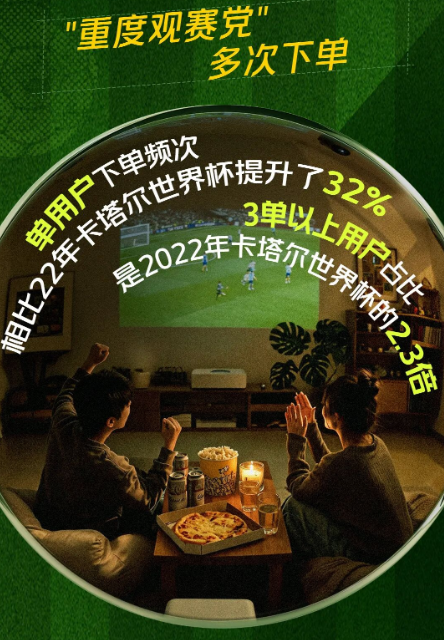
独享观赛替代了往届的多人狂欢。观赛高峰时段,95%的订单金额不足100元,相比2022年卡塔尔世界杯,小额订单占比提升了6%。但小额不意味低频:单用户下单频次相比上届提升32%,3单以上用户占比是上届的2.3倍——重度观赛党在反复下单中,把即时零售当作了“赛事实时补给站”。

啤酒重回王座,冰感消费全面升级。啤酒订单量超越上届的碳酸饮料,成为本届最热单品;精酿啤酒冲至第15名,雪糕/冰淇淋位列第8,食用冰排在第11——这不仅是口味的更替,更是“冰感”场景从酒饮向全品类渗透的信号。

品牌端的反应同样迅速。百威啤酒、可口可乐、蒙牛等头部品牌,通过即时零售平台展开多元营销,如限时折扣、赛事竞猜、联名定制、深夜档专属套餐等,把流量脉冲转化为实打实的订单增量。即时零售正在成为品牌捕获情绪消费的重要阵地。

世界杯是一次注意力的大规模脉冲,传统零售很难捕捉这种突发、随机、带着强烈情绪的即时需求,但即时零售凭借本地供给与30分钟履约的体系,恰好承接了“当下就要”的冲动。

这届世界杯让人们看到,即时零售不再是应急补位,而是观赛消费的主流选项。从提前囤货到随点随到,球迷更松弛了,也更懂得为当下的热爱加码。而这种“当下就要”的习惯,不会随终场哨响而结束。

亿邦持续追踪报道该情报,如想了解更多与本文相关信息,请扫码关注作者微信。

文章来源:亿邦动力

广告
微信
朋友圈

FAQ回顾

世界杯期间即时零售的消费群体有哪些特征?

2026年世界杯观赛高峰时段,女性消费者占比达51%首次超过男性,较上届提升2.6个百分点;35岁以下消费者占比近六成,35-40岁年龄段增量最高;新一线城市消费热情反超传统一线城市,深圳、成都消费热度位居前二。

世界杯期间即时零售观赛消费有哪些新特点?

消费场景以住宅小区为主,订单占比达65%;95%的订单金额不足100元,小额订单占比较上届提升6%,单用户下单频次较上届提升32%;冰感相关品类走俏,啤酒成为最热单品,精酿、雪糕、食用冰销量靠前。

品牌如何借助世界杯即时零售热潮提升销量?

百威啤酒、可口可乐、蒙牛等头部品牌可通过即时零售平台开展限时折扣、赛事竞猜、联名定制、深夜档专属套餐等多元营销活动,将赛事流量脉冲转化为实打实的订单增量。

即时零售为什么能承接世界杯带来的突发消费需求?

世界杯期间用户消费需求突发、随机且带有强烈情绪,传统零售很难捕捉这类即时需求,而即时零售凭借本地供给与30分钟履约体系,可满足用户“边看边买、当下就要”的消费需求,已成为观赛消费主流选项。

这么好看,分享一下?

朋友圈 分享

APP内打开

赞 +1
+1
微信好友 朋友圈 新浪微博 QQ空间
关闭
收藏成功
发送
/140 0