广告
加载中

炒至140美元 世界杯第一波爆品火了!

AMZ123 2026-06-15 09:21
AMZ123 2026/06/15 09:21

邦小白快读

EN
全文速览

这篇文章梳理了2026世界杯开赛后周边消费爆火的核心现象,整理了相关核心信息和可关注的趋势:

1. 核心事件是可口可乐推出的足球造型世界杯限量瓶,在美国沃尔玛线下售价单瓶2.5美元,流入eBay二级市场后,一组17瓶标价140美元,单瓶价格翻三倍多。这款商品爆火的原因是供应有限仅指定门店铺货、足球造型包装有辨识度、刚好踩中世界杯节点,激发收藏欲。

2. 目前这类带节点纪念属性的低价快消,已经成为新的转售方向,此前就有迷你帆布袋、限量杯等多个类似案例,热度往往先从TikTok等内容平台发酵,再传导到二级市场。

3. 当前世界杯周边整体市场升温,同时做相关商品要注意合规风险,涉及官方标识、知名品牌的侵权商品会被美国海关查扣。

本文通过可口可乐世界杯限量瓶爆火的案例,给品牌借大型赛事做营销、布局产品提供了多方向干货:

1. 品牌营销层面,可长期绑定顶级赛事IP,在节点推出限量纪念款产品,通过控制铺货规模制造稀缺感,搭配差异化辨识度高的包装,激发消费者的抢购和收藏欲望,借助节点情绪放大传播效果。

2. 产品和消费趋势层面,消费者愿意为带赛事记忆的纪念商品付费,原本的低价快消品也可以开发收藏赛道,借助TikTok等内容平台可以快速聚集声量,引爆市场。

3. 当前海外采购端更偏向小批量、多SKU的合作模式,同时赛事周边合规风险升高,品牌要做好自身IP的知识产权保护,推出正规授权产品抓住增长机会。

本文给做跨境世界杯周边生意的卖家梳理了市场机会、选品方向和风险提示,干货如下:

1. 机会层面,2026世界杯由三国联合举办,参赛队扩容赛程拉长,直接拉长了周边商品的销售周期,除传统球衣、加油道具外,纪念瓶、主题零食、限定联名款这类收藏型快消,已经成为小众选品的新观察方向。

2. 选品和运营层面,当前商品热度已经转变为先在TikTok等内容平台聚集声量,再传导到电商和二级市场,卖家选品要关注内容平台的声量变化,同时适配市场需求,采用先小批量测款再补单的模式,降低压货风险。

3. 风险提示:美国海关近期查扣了超4万件侵权世界杯周边,涉及FIFA官方标识、知名品牌商标的商品都有风险,做通用足球元素、观赛场景类商品相对更稳妥。

本文给做外贸出口的工厂梳理了世界杯商机下的需求变化和转型方向,干货如下:

1. 商业机会层面,2026世界杯带动全球体育周边、纪念商品需求大幅上涨,据义乌海关统计,2026年一季度义乌体育用品出口货值增长12%,前两个月同比增长38.5%,对北美三国出口增长21.3%。除传统品类外,官方授权的小纪念品、塑胶周边也有大量稳定订单,需求旺盛。

2. 生产需求变化:和过去依赖低价、大货、提前囤货的模式不同,现在海外采购商和卖家更看重快速补货、较低起订量、小批量测试、多SKU组合的合作模式,工厂需要适配这种小单快反的新需求。

3. 产品方向上,带纪念属性、设计差异化的周边更受市场欢迎,工厂可以针对性开发相关产品线,抓住赛事经济的增长红利。

本文梳理了世界杯跨境周边产业的最新发展趋势,给服务相关从业者的服务商整理了核心方向,干货如下:

1. 行业发展趋势:顶级大型赛事持续带动周边消费增长,带纪念属性的收藏型快消已经成为新的细分增长赛道,内容平台成为商品热度的核心发源地,转售二级市场的规模也在不断扩大,整体市场随世界杯扩容进一步增长。

2. 客户核心痛点:工厂端传统适配大订单的生产模式,无法满足当前小批量多SKU快反的需求;卖家端很难提前预判热点需求,同时缺乏合规判断能力,容易踩侵权红线,选品也缺乏数据支撑。

3. 解决方案方向:服务商可以针对性开发新业务,比如给工厂提供小单快反的生产配套服务,给卖家提供内容平台声量监测服务、知识产权合规咨询服务,适配市场新变化获取新增长。

本文梳理了当前世界杯周边消费的新变化,给各类电商、零售平台调整运营招商方向提供了参考,干货如下:

1. 市场新需求:限量纪念类商品更容易形成消费热点,带动二级市场交易,内容种草带动交易的路径已经成熟,消费者对收藏类纪念商品的需求持续提升,北美市场世界杯周边整体需求增长明显。

2. 运营和招商调整方向:平台可以针对世界杯周边开设专门的活动会场,倾斜流量引入正规授权的合规周边商品,针对小卖家的小批量商品,可以设置更灵活的入驻政策,降低中小卖家入场门槛。

3. 风向规避:平台要加强站内侵权商品的排查,重点整治带FIFA官方标识、知名品牌商标的违规世界杯周边,避免平台承担合规风险,同时可以给合规卖家提供流量扶持,规范平台内相关品类的经营秩序。

本文呈现了赛事经济下跨境快消和周边产业的最新动向,给产业研究提供了鲜活案例和新的观察方向,干货如下:

1. 产业新动向:一是低价快消品的纪念化、收藏化转售已经形成了成熟的新商业模式,依托内容平台种草,稀缺性商品从线下零售流向二级市场转售的路径已经跑通,多个案例验证了模式的可行性。二是世界杯周边产业从过去的提前囤大货,转向小批量测款、快速补单的模式,适配赛事热点的不确定性。

2. 产业新问题:随着全球知识产权保护力度加强,跨境赛事周边的合规风险大幅提升,美国海关近期已经查扣了数万件侵权商品,中小商家的合规经营成本明显上升。

3. 零售链路新特征:内容平台已经成为影响消费热度的核心渠道,商品热度的产生逻辑从传统的搜索驱动转向内容驱动,这是整个零售链路值得关注的新变化。

返回默认
声明:快读内容全程由AI生成,请注意甄别信息。如您发现问题,请发送邮件至 run@ebrun.com 。

我是 品牌商 卖家 工厂 服务商 平台商 研究者 帮我再读一遍。

Quick Summary

This article outlines the core phenomena behind the skyrocketing demand for 2026 FIFA World Cup merchandise and summarizes key insights and notable trends:

1. The breakout hit is Coca-Cola's limited-edition soccer-shaped World Cup bottles. Priced at $2.5 per bottle at Walmart's physical stores in the U.S., a set of 17 bottles was listed for $140 on the secondary market eBay, pushing the per-bottle price up more than threefold. The product's viral success stems from its limited distribution only at selected stores, recognizable soccer-shaped packaging, and perfect timing with the World Cup that has sparked strong collector demand.

2. Low-priced fast-moving consumer goods (FMCG) with event-themed commemorative value have emerged as a new niche for resale. Preceding similar hits include mini tote bags and limited-edition cups, with demand typically first gaining traction on content platforms like TikTok before spilling over to secondary resale markets.

3. As the overall World Cup merchandise market heats up, stakeholders need to stay alert to compliance risks: counterfeit goods that infringe on official logos and well-known brand trademarks are subject to seizure by U.S. customs.

Through the case of Coca-Cola's viral limited-edition World Cup bottles, this article shares actionable insights for brands looking to leverage major sports events for marketing and product strategy:

1. For brand marketing, brands can build long-term partnerships with top-tier sports IPs, launch limited-edition commemorative products aligned with event timelines, create scarcity by controlling distribution volume, and use distinct, high-recognition packaging to drive consumer panic-buying and collector demand. This approach amplifies marketing reach by tapping into event-driven consumer sentiment.

2. In terms of product and consumer trends, consumers are willing to pay a premium for commemorative products that carry event memories. Even low-priced FMCG can tap into the collectibles segment, and can quickly build buzz and go viral via content platforms such as TikTok.

3. Currently, overseas buyers increasingly prefer small-batch, multi-SKU cooperation models. At the same time, compliance risks for event merchandise are rising, so brands need to strengthen intellectual property protection for their own IP and capture growth opportunities by launching officially licensed products.

This article summarizes market opportunities, product selection direction and risk warnings for cross-border sellers doing World Cup merchandise business, with key takeaways as follows:

1. In terms of opportunity, the 2026 World Cup is co-hosted by three countries, with an expanded team roster and longer tournament schedule that directly extends the sales cycle for merchandise. Beyond traditional categories such as jerseys and game-day props, collectible FMCG including commemorative bottles, themed snacks and limited co-branded items have emerged as a promising new niche for product selection.

2. For product selection and operations, product demand now first builds buzz on content platforms like TikTok before spreading to e-commerce platforms and secondary markets. Sellers should track buzz trends on content platforms, and adapt to market demand by testing products with small batches before placing replenishment orders to reduce inventory risk.

3. Risk warning: U.S. Customs has recently seized more than 40,000 counterfeit World Cup merchandise items. Products featuring official FIFA logos or well-known brand trademarks carry high infringement risk, while merchandise featuring generic soccer elements or designed for game-day viewing scenarios are considerably safer.

This article sorts out demand changes and transformation directions for export-oriented factories amid the World Cup business boom, with key insights as follows:

1. In terms of business opportunity, the 2026 World Cup has driven significant growth in global demand for sports merchandise and commemorative products. According to Yiwu Customs statistics, the export value of sports goods from Yiwu rose 12% year-on-year in the first quarter of 2026, with a 38.5% year-on-year increase in the first two months of the year, and a 21.3% growth in exports to the three North American host countries. In addition to traditional categories, officially licensed small souvenirs and plastic merchandise also see strong, stable demand with large order volumes.

2. Shifts in production demand: Unlike the past model that relied on low prices, large bulk orders and advance stocking, overseas buyers and sellers now prioritize cooperation models featuring fast restocks, low minimum order quantities, small-batch testing and multi-SKU combinations. Factories need to adapt to this new demand for "small orders with fast turnaround".

3. In terms of product direction, merchandise with commemorative value and differentiated design is more popular in the market. Factories can develop targeted product lines to capture the growth dividend of the event economy.

This article summarizes the latest development trends in the cross-border World Cup merchandise industry, and outlines core opportunity directions for industry service providers, with key takeaways as follows:

1. Industry development trends: Top major events continue to drive growth in merchandise consumption, and commemorative collectible FMCG has become a new fast-growing niche segment. Content platforms have become the core origin of product buzz, and the scale of the secondary resale market is also expanding. The overall market will grow further as the World Cup expands its scale.

2. Core customer pain points: Factories' traditional production models built for large bulk orders cannot meet the current demand for small-batch, multi-SKU fast turnaround. On the seller side, it is difficult to predict hot demand in advance, and sellers also lack compliance judgment capabilities that make them vulnerable to infringement risks, while also lacking data support for product selection.

3. Solution directions: Service providers can develop targeted new services, for example providing production support services for small-batch fast turnaround for factories, and content platform buzz monitoring services and intellectual property compliance consulting services for sellers, to adapt to new market changes and capture new growth.

This article summarizes the new changes in current World Cup merchandise consumption, and provides a reference for e-commerce and retail platforms to adjust their operation and merchant recruitment strategies, with key insights as follows:

1. New market demand: Limited-edition commemorative products are more likely to become consumer hits and drive secondary market transactions. The content-seeding-to-transaction path is now well-established, and consumer demand for collectible commemorative products continues to rise. Overall demand for World Cup merchandise in the North American market has grown significantly.

2. Adjustment directions for operation and recruitment: Platforms can set up dedicated event pages for World Cup merchandise, allocate more traffic to introduce officially licensed, compliant merchandise, and introduce more flexible onboarding policies for small-batch products from small sellers to lower the entry barrier for small and medium-sized sellers.

3. Risk mitigation: Platforms should step up internal inspection of infringing products, crack down on unlicensed World Cup merchandise featuring official FIFA logos and well-known brand trademarks to avoid the platform bearing compliance risk. Platforms can also provide traffic support to compliant sellers to standardize the operation of related categories on the platform.

This article presents the latest developments in cross-border FMCG and the event merchandise industry under the event economy, and provides fresh cases and new observation directions for industry research, with key takeaways as follows:

1. New industry trends: First, a mature new business model has formed around the commemorative and collectible resale of low-priced FMCG. The path—where scarcity-driven products seeded via content platforms flow from offline retail to secondary market resale—has been proven viable across multiple cases. Second, the World Cup merchandise industry has shifted from the traditional model of bulk advance stocking to small-batch testing and fast restocking, to adapt to the uncertainty of event-driven hot trends.

2. New industry challenges: As global intellectual property protection strengthens, compliance risks for cross-border event merchandise have increased significantly. U.S. Customs has recently seized tens of thousands of infringing products, pushing up the compliance operating costs for small and medium-sized merchants considerably.

3. New characteristics of the retail value chain: Content platforms have become the core channel influencing consumer demand, and the logic of generating product buzz has shifted from traditional search-driven to content-driven, which is a notable new change for the entire retail industry.

Disclaimer: The "Quick Summary" content is entirely generated by AI. Please exercise discretion when interpreting the information. For issues or corrections, please email run@ebrun.com .

I am a Brand Seller Factory Service Provider Marketplace Seller Researcher Read it again.

世界杯刚开球,消费市场先听到了“开瓶声”。

随着2026年FIFA世界杯正式打响,全球球迷消费迅速进入升温通道。球衣、围巾、加油道具等传统周边陆续走热,而在美国市场,一款可口可乐足球造型限量瓶意外站上了话题中心。

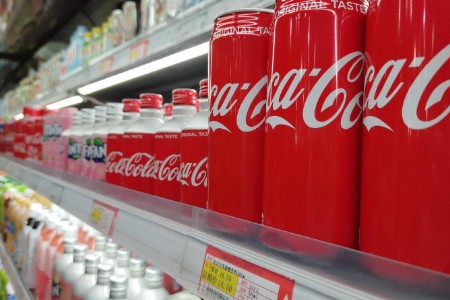
AMZ123获悉,近日据外媒报道,可口可乐推出的一款世界杯主题限量瓶在美国沃尔玛门店引发抢购,随后流入eBay等二级交易平台。

据了解,这款产品为13.5盎司足球形状瓶装可乐,瓶身采用红、白、蓝配色,并带有世界杯主题元素。在线下门店,其单瓶售价约为2.50美元;而在eBay上,相关商品多以组合装出现,价格从几十美元到上百美元不等。其中,一组17瓶装标价约140美元,折合单瓶约8.24美元,已明显高于线下售价。

不少卖家还在标题中标注“未开封”“限量”“世界杯纪念”等字样,将这款可乐作为纪念品出售。

从沃尔玛货架走向eBay,这款可乐的热度并非偶然。

供应有限,是抢购最直接的原因。外媒提到,可口可乐尚未明确这款足球造型瓶是否会在全美大规模铺货,消费者目前更多是在指定沃尔玛门店寻找现货。货源不稳定,门店一缺货,抢购和转售就有了空间。

包装设计也提高了产品辨识度。足球形状瓶身与普通瓶装饮料形成明显区分,也更适合陈列、拍照和收藏。对于球迷和可口可乐收藏者而言,瓶子本身已经具备购买吸引力。

世界杯节点则进一步推高了这种情绪。大型赛事本身就会制造强烈的参与感,消费者愿意为带有赛事记忆的商品付费。可口可乐长期绑定世界杯营销,这次限量瓶又赶在开赛节点出现,自然更容易被球迷和收藏玩家注意到。

在业内人士看来,低价快消品一旦具备纪念属性,也可能进入收藏和转售市场。

这类商品单价不高、决策成本低,若外观有记忆点,又踩中赛事或节日节点,就容易被收藏玩家和转售卖家盯上。对跨境卖家来说,纪念瓶、主题零食、限定礼盒、联名杯具等收藏型快消品,正在成为小众选品中的观察方向。

值得注意的是,TikTok等内容平台也在改变这类商品的走热路径。AMZ123了解到,类似现象此前已多次出现:

如Trader Joe’s原价2.99美元的迷你帆布袋曾在TikTok走红后迅速售罄,并被转卖到eBay等平台;Stanley限量杯也曾因开箱、晒单和门店抢购视频出圈,引发排队购买和高价转售。

这意味着,部分商品的热度已经不只由平台搜索决定。门店实拍、开箱测评、价格对比和“哪里还能买到”的寻货内容,往往会先在TikTok上聚集注意力,再传导到电商平台和二级市场。对跨境卖家来说,判断一款收藏型快消品是否值得跟进,内容平台上的声量变化同样值得关注。

可口可乐纪念瓶的走热,只是世界杯周边市场提前升温的一个缩影。

其实在赛事正式开打前,供应链端已经先一步忙了起来。作为全球小商品和体育周边的重要集散地,义乌率先感受到赛事经济的热度。

据义乌海关统计,2026年一季度,义乌体育用品及设备出口货值达到28.3亿元,同比增长12%;仅前两个月,义乌体育用品及设备出口额已突破23.4亿元,同比增长38.5%,其中对美国、加拿大、墨西哥出口额达5.5亿元,同比增长21.3%。

供应链提前升温,背后是更大的赛事规模和更长的销售窗口。2026年世界杯由美国、加拿大、墨西哥联合举办,参赛球队扩容至48支,赛程覆盖104场比赛。更长的赛事周期、更分散的举办地,也拉长了球迷服饰、派对用品、加油道具和纪念品的销售周期。

从义乌到更多产业带,世界杯相关商品已经进入集中出货阶段。AMZ123此前在文章中提到,除足球、球衣、围巾、旗帜等传统品类外,小纪念品和授权周边也在加速出海。例如,湖南湘潭一批25.2万个官方授权世界杯周边塑胶玩具已发往美国、墨西哥,产品包括吉祥物主题摆件、公仔挂饰和手办等。

不过,今年世界杯周边的变化不只是“启动更早”。相比过去依赖低价、大货和提前囤货,如今海外采购商和卖家更看重快速补货、较低起订量、小批量测试和多SKU组合。

这种变化与赛事期间的热点节奏有关。一场比赛、一支球队或一个球迷视频,都可能带动某类商品短时间走热。卖家很难提前押中所有需求,因此更倾向于先测款,再根据销量和内容热度追加订单。

不过,世界杯周边生意不能只看热度,合规风险也在升高。

AMZ123获悉,当地时间6月11日,美国海关与边境保护局(CBP)公布的《扣押及没收意向通知》显示,2026年3月至5月期间,美国海关查扣了超4万项进口违规商品。其中,仿冒FIFA、阿迪达斯、耐克、彪马、New Era等品牌的侵权商品被多次提及,涉及足球服、短裤、球袜、帽子、足球、钥匙扣等世界杯相关品类。

对中小卖家来说,通用足球元素、国家配色、观赛场景设计和球迷氛围用品相对稳妥;涉及FIFA、世界杯官方Logo、球队徽章、球员肖像和知名运动品牌商标的商品,则需要格外谨慎。

对此你有什么看法呢?欢迎评论区交流讨论~~

注:文/AMZ123,文章来源:AMZ123跨境电商(公众号ID:amz123net),本文为作者独立观点,不代表亿邦动力立场。

文章来源:AMZ123跨境电商

广告
微信
朋友圈

这么好看,分享一下?

朋友圈 分享

APP内打开

+1
+1
微信好友 朋友圈 新浪微博 QQ空间
关闭
收藏成功
发送
/140 0