广告
加载中

马云预言成真 阿里拿下美的大单

赵云合 2026-06-12 09:30
赵云合 2026/06/12 09:30

邦小白快读

EN
全文速览

本文核心信息是阿里AI商业化落地取得新进展,拿下美的AI合作大单,印证了马云AI将改变各行各业的预言,普通读者可获得这些干货:

1. C端AI购物已经落地,千问全域打通淘宝生态,背靠40亿商品库,用户仅需一句话就能完成比价、下单、预约配送、售后咨询全流程,还能联动高德、飞猪,一句话完成出行规划、酒店机票预订、攻略生成,体验比传统购物模式便捷很多;

2. B端AI已经落地多个行业的消费场景,未来普通用户将享受更多AI升级服务,比如阿里和美的合作研发全屋场景AI大脑,会从用户发指令控制设备升级为主动预判需求,联动全屋设备自动提供服务;

3. 目前AI行业已经进入商业化落地竞争阶段,阿里、京东、抖音都在加码布局,未来AI会给普通用户带来更多更便捷的服务体验。

本文披露了阿里AI商业化最新布局,以及头部品牌美的的AI转型路径,对各类品牌布局AI有诸多参考价值:

1. 消费趋势层面,AI已经重构消费体验,C端对话式AI购物已经落地,用户接受度不断提升,品牌需要跟上AI购物的新趋势,调整运营和产品策略;

2. 研发投入方向,美的过去五年累计研发投入超600亿元,未来三年将再投入超600亿元重点布局AI与具身智能,加速转型AI+科技集团,这种研发投入方向对各类传统品牌有参考意义;

3. 合作落地路径,品牌缺通用大模型技术和算力支撑时,可以和成熟AI平台合作补齐短板,目前已经有多个成功案例:肯德基落地AI智能点餐、森马用AI生成商品素材、宝马打造车载AI,都已经落地见效。

本文围绕阿里AI商业化落地进展展开,给各类电商卖家带来了新的机会提示和方向参考:

1. 新增长机会层面,AI已经打通全域交易闭环,千问对接淘宝40亿商品库,支持对话式购物全流程,卖家可以依托平台AI工具优化运营,参考森马的模式,用AI生成商品素材、优化商品推荐,降低运营成本,提升用户转化;

2. 需求适配方向,用户已经逐步接受AI主动服务、对话式购物的新形态,卖家需要适配新的购物场景调整运营策略,抓住AI电商的增长红利;

3. 风险提示,当前AI行业已经进入场景落地、生态协同、商业变现的综合竞争阶段,各大平台都在加速AI升级,卖家需要跟上平台的AI迭代节奏,避免落后于行业变化;

4. 卖家可以对接平台现成的AI能力,不需要自身投入高额技术研发,就能获得AI带来的运营增益。

本文披露了头部制造企业美的和阿里的AI战略合作,给各类制造工厂的AI转型、数字化升级带来了诸多启示:

1. 转型方向参考,美的作为头部家电制造企业,已经将AI与具身智能定为未来核心研发方向,计划未来三年投入超600亿元布局,说明AI已经成为制造业升级转型的核心赛道,工厂需要提前布局跟上趋势;

2. 商业机会,制造工厂拥有硬件场景和制造能力,但普遍缺成熟的通用大模型技术、稳定的算力支撑,工厂可以和阿里这类拥有完整全栈AI能力的平台合作,优势互补,共同开发AI智能产品,还能依托平台的全球化云基础设施,赋能自身的出海业务;

3. 转型启示,工厂不需要从零搭建完整的AI技术体系,可以依托第三方平台的成熟能力,快速落地AI应用,不管是生产端效率升级还是消费端产品智能化,都有可复制的合作范式参考。

本文梳理了当前AI大模型行业商业化的最新发展趋势,跑通的成熟合作模式,对AI相关服务商有较高参考价值:

1. 行业发展趋势,AI大模型已经度过初期技术培育阶段,正式进入跨行业规模化商业化落地的周期,竞争也从单纯的技术比拼,升级为场景落地、生态协同、商业变现三位一体的综合比拼,B端C端都有大量的市场需求待挖掘;

2. 核心客户痛点,传统行业企业布局AI转型,普遍存在缺成熟通用大模型技术、缺稳定充足的算力支撑、缺全栈AI落地能力的痛点,这是服务商的核心市场机会;

3. 成熟解决方案参考,目前已经跑通“传统企业提供行业场景与硬件能力,AI服务商提供技术、算力、线上流量生态”的优势互补合作模式,已经在家电、餐饮、汽车、体育传媒多个行业落地,具备通用适配性,可复制拓展。

本文披露了阿里AI商业化的最新布局,以及当前AI行业的竞争格局,对布局AI的平台商有诸多参考信息:

1. 市场需求,当前各行各业的头部企业都有AI转型的需求,普遍缺大模型技术、算力支撑和全域商业生态配套,平台可针对性推出相关服务,拓展自身业务边界;

2. 平台内部组织升级参考,阿里为推进大模型落地,专门升级了组织架构,成立全新的事业部由集团CEO直接负责,统筹技术落地和产业赋能,这种组织架构调整方式值得同类平台参考;

3. 业务布局参考,阿里目前B端做AI技术输出、行业定制方案、MaaS模型服务,C端打通全域生活服务搭建AI交易闭环,这种B+C双线落地的路径值得参考;

4. 竞争风险提示,当前AI赛道竞争激烈,国内已经形成多玩家竞争格局,尚未出现绝对领先者,平台需要持续投入技术迭代,强化场景落地能力才能保持竞争力。

本文记录了国内AI大模型行业商业化的最新动向,提供了鲜活的案例和公开数据,对产业研究有较高的价值:

1. 产业新动向,国内头部平台阿里的全栈AI技术已经跨越初期培育节点,进入规模商业化回报周期,最新财报显示,阿里云AI相关收入占比首次突破30%,单季收入达89.71亿元,连续十一个季度实现三位数同比增长,AI商业化已经开始兑现增长;

2. 新商业模式总结,目前行业已经跑通两类成熟商业模式,B端是AI平台输出技术、算力、生态,合作企业提供行业场景,优势互补共赢,已经跨多个行业落地,验证了大模型的通用适配能力;C端是打通全域生态的对话式AI购物模式,验证了AI交易闭环的可行性;

3. 行业竞争新特征,AI竞赛已经脱离单纯技术比拼,进入场景落地、生态协同、商业变现三位一体的综合竞争阶段,国内形成阿里、京东、抖音多玩家竞争格局,尚未出现绝对领先者,产业仍处于快速变化中。

返回默认

声明:快读内容全程由AI生成,请注意甄别信息。如您发现问题,请发送邮件至 run@ebrun.com 。

我是 品牌商 卖家 工厂 服务商 平台商 研究者 帮我再读一遍。

Quick Summary

This article covers the latest commercial progress of Alibaba's AI technologies, highlighted by its major AI cooperation deal with Midea, which proves Jack Ma's long-held prediction that AI will transform every industry. Key takeaways for general readers include:

1. AI-powered consumer-facing shopping is already live. Alibaba's Qianwen large language model is fully integrated into the Taobao ecosystem backed by a 4-billion-product catalog. Users can complete the entire shopping process – from price comparison and checkout to delivery booking and after-sales inquiries – with just a single sentence of text. It also connects to Alibaba's Amap and Fliggy platforms, enabling users to create travel itineraries, book hotels and flights, and generate travel guides all in one conversation, delivering far greater convenience than traditional shopping methods.

2. AI has also been rolled out to consumer scenarios across multiple B2B industries, meaning ordinary users will soon enjoy more AI-upgraded services. For example, the whole-home AI brain co-developed by Alibaba and Midea will evolve from user-commanded device control to proactively predicting user needs and coordinating all connected home devices to deliver automated services.

3. The AI industry has now entered a phase of competition centered on commercial落地. Alibaba, JD.com and Douyin are all ramping up their AI investments, and AI will eventually deliver a far more convenient service experience for general consumers.

This article discloses Alibaba's latest AI commercial layout and Midea's AI transformation roadmap, offering valuable insights for brands looking to adopt AI:

1. On consumer trends: AI is already reshaping the consumer experience, with conversational AI shopping now live and gaining steady user adoption. Brands need to align with this new AI shopping trend and adjust their operations and product strategies accordingly.

2. On R&D direction: Midea has invested over 60 billion yuan in R&D over the past five years, and will invest another 60 billion yuan over the next three years to prioritize AI and embodied intelligence, accelerating its transformation into an AI-powered technology group. This R&D strategy offers a useful reference for traditional brands across sectors.

3. On partnership paths for commercialization: When brands lack general large model technology and computing power, they can partner with established AI platforms to fill capability gaps. There are already multiple proven successful cases: KFC has launched AI-powered smart ordering, Semir uses AI to generate product content, and BMW has built in-car AI, all of which have delivered tangible results.

This article outlines the latest commercial progress of Alibaba's AI, offering new opportunities and directional guidance for e-commerce sellers:

1. On new growth opportunities: AI has enabled a full closed-loop transaction across Alibaba's ecosystem. Qianwen connects to Taobao's 4-billion-product catalog and supports end-to-end conversational shopping. Sellers can leverage the platform's AI tools to optimize operations – following Semir's example, they can use AI to generate product content, improve product recommendations, cut operational costs and boost conversion rates.

2. On demand adaptation: Users are gradually adopting new formats such as proactive AI service and conversational shopping. Sellers need to adjust their operational strategies to fit these new shopping scenarios and capture the growth dividends of AI-powered e-commerce.

3. On risk warning: The AI industry has entered a phase of comprehensive competition centered on scenario implementation, ecosystem collaboration and commercial monetization, and all major platforms are accelerating AI upgrades. Sellers need to keep up with their platforms' AI iteration pace to avoid falling behind industry changes.

4. Sellers can access ready-made AI capabilities from e-commerce platforms, without needing to invest heavily in in-house technology development, to gain operational improvements from AI.

This article covers the AI strategic cooperation between leading manufacturing firm Midea and Alibaba, offering multiple insights for AI transformation and digital upgrading for manufacturing factories:

1. On transformation direction reference: As a leading home appliance manufacturer, Midea has identified AI and embodied intelligence as core future R&D directions, planning to invest over 60 billion yuan in the sector over the next three years. This confirms that AI has become a core track for manufacturing upgrading and transformation, and factories need to make early布局 to keep up with industry trends.

2. On business opportunities: Manufacturing factories have hardware scenarios and production capabilities, but most lack mature general large model technology and stable computing power support. They can partner with full-stack AI platforms like Alibaba to combine complementary strengths, co-develop AI-powered smart products, and leverage the platform's global cloud infrastructure to empower their overseas expansion.

3. On transformation insights: Factories do not need to build a complete AI technology system from scratch. They can leverage the mature capabilities of third-party platforms to roll out AI applications quickly. Replicable cooperation frameworks exist for both production efficiency upgrades on the manufacturing end and smart product development on the consumer end.

This article sorts out the latest commercial development trends of the AI large model industry and proven mature cooperation models, offering high reference value for AI-related service providers:

1. On industry development trends: Large language models have completed the initial technology development phase and officially entered a cycle of cross-industry large-scale commercial落地. Competition has also evolved from pure technology rivalry into comprehensive three-dimensional competition covering scenario implementation, ecosystem collaboration and commercial monetization, with massive unmet market demand in both B2B and B2C markets.

2. On core customer pain points: Traditional enterprises adopting AI transformation generally face three common pain points: lack of mature general large model technology, lack of stable and sufficient computing power, and lack of full-stack AI implementation capabilities. These pain points represent core market opportunities for service providers.

3. On proven solution references: A complementary cooperation model has already been validated: traditional enterprises provide industry scenarios and hardware capabilities, while AI service providers provide technology, computing power and online traffic ecosystems. This model has been implemented across multiple sectors including home appliances, food service, automotive and sports media, is universally adaptable, and can be replicated and expanded to new sectors.

This article discloses Alibaba's latest AI commercial布局 and the current competitive landscape of the AI industry, offering useful reference information for platform companies building out AI capabilities:

1. On market demand: Leading enterprises across almost all sectors currently have AI transformation demand, and most lack large model technology, computing power support and integrated business ecosystem配套. Platforms can launch targeted services to meet these needs and expand their business boundaries.

2. On internal organizational upgrade reference: To advance large model落地, Alibaba has restructured its organization by establishing a dedicated new business division directly overseen by the group CEO, to coordinate technology implementation and industry empowerment. This organizational adjustment approach is a useful reference for peer platforms.

3. On business布局 reference: Alibaba currently focuses on B2B AI technology output, customized industry solutions and MaaS (Model-as-a-Service), while on the B2C side it has built an AI-powered closed transaction loop by connecting its full ecosystem of lifestyle services. This dual B2B+B2C implementation path offers a useful reference.

4. On competitive risk warning: The AI track is currently highly competitive, with a multi-player landscape already formed in China and no clear market leader yet emerging. Platforms need to continuously invest in technology iteration and strengthen scenario implementation capabilities to maintain competitiveness.

This article documents the latest commercial developments in China's domestic AI large model industry, providing fresh case studies and public data with high value for industry research:

1. New industry developments: Full-stack AI technology from Chinese leading platform Alibaba has passed the initial development phase and entered a cycle of large-scale commercial returns. According to Alibaba's latest financial report, AI-related revenue at Alibaba Cloud exceeded 30% of total revenue for the first time, hitting 8.971 billion yuan in a single quarter, and has maintained triple-digit year-on-year growth for 11 consecutive quarters. AI commercialization is already delivering tangible growth.

2. Summary of new business models: Two mature business models have been validated in the industry. In the B2B space, AI platforms output technology, computing power and ecosystem access, while partner companies provide industry scenarios, creating mutually beneficial complementary partnerships that have been rolled out across multiple sectors, proving the general adaptability of large models. In the B2C space, a conversational AI shopping model connected to a full ecosystem has proven the feasibility of an AI-powered closed transaction loop.

3. New characteristics of industry competition: The AI race has moved beyond pure technical competition and entered a phase of comprehensive three-dimensional competition covering scenario implementation, ecosystem collaboration and commercial monetization. China has formed a multi-player competitive landscape with Alibaba, JD.com and Douyin as major players, no clear market leader has yet emerged, and the industry remains in a period of rapid change.

Disclaimer: The "Quick Summary" content is entirely generated by AI. Please exercise discretion when interpreting the information. For issues or corrections, please email run@ebrun.com .

I am a Brand Seller Factory Service Provider Marketplace Seller Researcher Read it again.

马云再一次走在时代的前沿。

出品 | 电商头条 作者 |赵云合

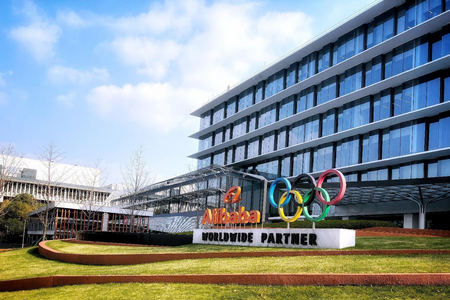
马云曾说:“AI带来的改变会超出所有人的想象,AI会是一个更加伟大的时代,AI会改变一切。”如今,阿里正在印证马云的预言。

大众最能直观感知到的变化,无疑是AI购物带来的全新消费体验。千问全域打通淘宝,搭建起完整AI购物交易闭环。

而大众鲜少了解的是,阿里正在向各行各业输出AI技术解决方案。

比如为肯德基提供门店轻量化AI系统,实现智能点餐、销量预测等;助力服饰品牌森马用AI生产商品素材、优化商品推荐;为宝马打造车载AI,实现车况诊断、智能出行规划等等。这些合作,充分印证了阿里大模型跨行业商业的落地能力。

现在,阿里仍在不断拓展AI的商业应用场景。近日,阿里又迎来了一位重量级合作伙伴——美的,双方准备在AI领域大干一场。

阿里巴巴与美的达成战略合作

日前,美的集团与阿里巴巴集团签署战略合作协议。

美的集团董事长兼总裁方洪波、阿里巴巴集团CEO吴泳铭、阿里云智能集团资深副总裁刘伟光、阿里千问事业部总裁吴嘉等核心负责人共同出席了签约仪式,足以证明双方对本次合作的重视。

实际上,双方早在2014年就开始了合作。12年来,双方一直保持着良好的关系,合作也在不断深入。

而本次双方的合作,更显特殊性,落地的时间节点也十分巧妙。

今年年初,美的透露,集团过去五年累计研发投入超过600亿元,并计划未来三年继续投入超过600亿元,重点布局AI与具身智能领域,加速转型为“AI+”的全球性科技集团。

反观阿里,前几天,阿里升级了大模型组织架构,成立全新的Token Foundry事业部,由集团CEO吴泳铭直接负责,全面统筹大模型技术落地与产业赋能。

结合双方当下的战略布局,美的亟需成熟通用大模型补齐技术短板,而阿里拥有完整全栈AI能力,可快速落地深度产业合作。双方的合作是顺势而为,合作重点也在AI领域。

接下来,双方将充分发挥各自核心优势,共同探索"全屋智能+AI大模型+商业生态"的下一代业务形态。

全屋智能方面,千问大模型将与美的联合研发面向家庭场景的AI大脑,实现全模态语音、视觉感知。从“人发指令控制设备” 升级为意图驱动空间,AI不再只是“听话”的工具,而能主动预判家庭需求,联动全屋多设备自动提供适配服务。

同时,双方打通美的美居App与阿里全域商业体系,串联淘宝、高德本地生活、即时零售等多元服务,构建完整 “家电 + 生活服务” 闭环。

算力平台方面,双方联合攻坚高性能算力:阿里云依托芯片、算力供应链与调度优势,为美的全屋智能、具身智能、行业模型训练提供稳定算力支撑,并深化AI Tokens合作,持续输出前沿大模型能力。

云基础设施方面,双方共建海内外一体化云底座,巩固国内云服务质量,同步布局欧亚、亚太云资源,赋能美的全球化经营。

此外,双方还将联合开展AI研发人才培养、技术团队交流,搭建家电 + 云计算复合型AI研发体系。

双方的这次合作意义非凡。美的提供硬件场景与制造能力,阿里提供AI大模型、算力、线上商业流量,共同创造全新业务形态。

于美的而言,依托阿里全栈AI实力,能补齐自身在通用大模型、云端算力层面的短板,加速落地AI+ 全球科技集团转型战略,创造新的商业价值。

于阿里而言,锁定家电行业顶级大客户,大规模落地千问行业大模型、云计算、AI Tokens商业化。同时,为家居、制造行业提供了可复制的标准化AI合作范式。

本次合作,比双方以往的任何一次合作都要深入。阿里从 “渠道、云服务商” 升级为AI底层战略伙伴;美的从 “硬件供货商” 升级为阿里大模型、算力、本地生活最重要线下硬件流量载体。双方优势互补,合作共赢。

阿里持续推进AI商业化落地

在全球AI浪潮的席卷下,阿里再一次站在了时代的前沿。

阿里巴巴集团CEO吴泳铭已明确表示:阿里全栈AI技术投入已正式跨越初期培育节点,进入争先的规模商业化回报周期。

阿里最新财报数据更能直观反映吴泳铭所言,阿里云AI相关收入占比首次突破30%,单季收入达89.71亿元,并连续十一个季度实现三位数同比增长。

这些成绩,也将激励着阿里持续推进AI商业化,落地方向主要在B端和C端。

B端的商业化,主要体现为对外输出AI技术、行业定制方案、MaaS模型服务。上文所提到的阿里和美的的合作,即属于B端商业化。美的之外,阿里今年以来为自己寻求到了更多的合作伙伴。

年初,千问大模型接入肯德基。具体表现为,肯德基在APP上线了一个新功能AI智能点餐助手“小K”,该助手基于阿里千问大模型打造,能在多种使用场景下了解用户的需求,用户发出指令即可完成点单到支付的全流程。

紧接着,阿里基于千问大模型为宝马新款车推出了AI座舱智能体,重构人车交互,实现从“能听懂”到“会办事”的跨越。

时间来到6月,阿里先和欧洲杯达成合作,成为2028欧洲杯独家AI、云计算合作伙伴,为足球赛事提供运营AI和云转播全链路AI的服务;随后又携手NBA上线首个官方大模型“NBA Chat”,为篮球赛事提供自然语言深度问答、实时视觉AI等服务。

这些合作,跨越了家电家居、线下实体零售、汽车行业、国际传媒转播等领域,足以证明千问大模型基座不局限于单一行业,具备通用适配底层能力。阿里AI,确实已经进入跨行业规模化商用兑现周期。

C端的商业化,主要体现在,以千问APP为核心,打通阿里全域生活服务。

最初,千问用“一分钱点奶茶”活动进行了AI电商的一次实验,吸引了大批用户的参与,也验证了AI对话下单交易模式的可行性。

今年5月,阿里全面推进AI电商化,千问正式全域打通淘宝生态,背靠淘宝40亿商品库,用户仅需一句话,即可完成比价、下单、预约配送、售后咨询全流程。同时,联动高德、飞猪,一句话规划通勤路线、预订酒店机票、景区攻略生成。

不管是B端还是C端,AI的办事能力,都正在为大众提供全新的服务体验。正如马云所言:“未来不是让AI取代人类,而是应该让AI解放人类,更懂人类,服务好人类。”

当下,全球玩家都在押注AI,行业竞争激烈,各大玩家都在持续加码技术研发与商业化落地,你追我赶,谁都不甘落后。在这一背景下,阿里对AI的探索仍在持续深化,始终保持高强度投入与迭代节奏。

而在国内,阿里直面两大核心竞争对手:京东与抖音。

京东全力打磨AI全链路落地能力,实现消费端、商家端、供应链端全覆盖。比如面向消费者推出“京东AI购”以及各种AI助手;同时,针对商家和仓储供应链也推出了相应的AI工具。

抖音旗下的豆包发展态势凶猛,日活已突破2亿。一边深度联动抖音商城,打通内容种草、AI导购、下单交易全流程,深耕AI电商场景;一边开启豆包收费模式,商业化的尝试多样化。

AI竞赛已经脱离单纯的技术比拼,进入了场景落地、生态协同、商业变现三位一体的综合比拼阶段。当下还没有出现绝对的领先者,未来谁将会是赢家,且拭目以待。

注:文/赵云合,文章来源:电商头条(公众号ID:ecxinwen),本文为作者独立观点,不代表亿邦动力立场。

文章来源:电商头条

广告
微信
朋友圈

这么好看,分享一下?

朋友圈 分享

APP内打开

+1
+1
微信好友 朋友圈 新浪微博 QQ空间
关闭
收藏成功
发送
/140 0