广告
加载中

易达云.融易卖供应链金融平台正式上线!

易达云 2026-06-09 13:28
易达云 2026/06/09 13:28

邦小白快读

EN
全文速览

本文核心介绍了2026年跨境电商行业普遍存在的资金痛点,以及易达云新推出的融易卖供应链金融平台的相关干货信息,核心内容如下

1. 当前跨境出海共有三道门槛,分别是流量、合规、资金,其中资金是最容易被忽略、也最致命的门槛,是阻挡卖家规模化增长的核心原因,目前卖家普遍面临爆款抓不住、旺季备货回款错配等四种资金困局。

2. 融易卖是针对跨境场景打造的供应链金融平台,采用资方+供应链方双驱模式,易达云提供数据风控底座,持牌机构提供资金,核心提供代付融资、代采融资两类服务,共享授信额度,随借随还。

3. 该平台有八大核心优势,准入条件仅三条:海外仓有存货、历史信用良好、店铺数据可验证,符合条件的卖家可以抢先测算授信额度,预留资金应对未来机会。

本文揭示了2026年跨境电商出海的行业现状与增长机会,能给布局出海的品牌商提供不少参考,核心干货如下

1. 当前出海的核心门槛已经从早期的流量获取、合规适配,转向资金能力,很多优质卖家哪怕店铺数据好,也会因为资金缺口卡在规模化增长的门口,这个痛点普遍存在。

2. 行业发展趋势已经从单点能力比拼进入全链路竞争,单点能力再强,只要一个环节掉链就可能全盘皆输,品牌商可以依托成熟生态补齐非核心环节,聚焦自身品牌建设、产品研发核心能力。

3. 融易卖供应链金融可以很好解决品牌旺季备货、海外仓账单的资金缺口问题,参考年化成本仅6%-10%,低于同类服务,符合条件即可申请,能帮助品牌抓住爆款窗口,不会因为资金错过增长机会。

本文针对跨境卖家普遍面临的资金痛点推出了新的解决方案,也点明了未来行业的发展方向,干货内容如下

1. 目前跨境卖家大概率会遇到四种资金困局:爆款窗口短没钱备货错过机会、旺季备货投入大平台回款周期长、海外仓账单早于回款需要拆东补西、传统融资只看固定资产不认可跨境店铺数据,这些都是卖家经营中常见的风险。

2. 新推出的融易卖针对跨境场景设计,核心特征是不看固定资产看店铺库存数据、动态质押可边卖边融资、随借随还按天计费,能解决卖家海外仓账单压力和备货资金缺口。

3. 行业判断2026-2028年是跨境电商的分水岭,全链路效率才是竞争核心,中小卖家可以抱团依托生态平台补齐短板,符合准入条件的卖家建议先获取授信额度,等待机会来临。

本文介绍了2026年跨境电商行业的最新变化,能给对接跨境的工厂带来不少商业机会和发展启示,核心干货如下

1. 当前跨境卖家普遍面临备货资金缺口,很多卖家哪怕有优质订单,也拿不出足额现款给工厂,新推出的融易卖可以解决卖家的备货资金问题,卖家资金周转顺畅后,会给工厂带来更多更稳定的订单,工厂不用担心回款风险,可以拿到稳定的批量订单。

2. 行业趋势显示跨境已经进入全链路生态竞争,中小卖家和品牌都会把仓储、物流、金融等非核心环节交给第三方生态平台,工厂可以专注聚焦产品生产和设计,不需要额外投入资源搭建全链路,专注核心能力就能获得发展。

3. 目前卖家抓爆款的窗口只有4-8周,对排单效率要求很高,工厂需要提升自身排单响应速度,才能抓住突发的爆款订单需求,获得更多增长机会。

本文清晰梳理了当前跨境电商行业的核心痛点和未来发展方向,对跨境服务商优化服务、拓展业务有很多参考价值,干货如下

1. 当前跨境卖家的核心痛点已经从流量、合规转向资金,资金缺口已经成为阻碍卖家规模化的核心门槛,传统金融机构不懂跨境场景,无法匹配卖家基于店铺数据、库存授信的需求,市场存在大片空白,是服务商可以切入的方向。

2. 行业发展趋势是从单点能力竞争转向全链路生态竞争,单一服务已经无法满足卖家需求,生态聚合、抱团出海是未来的主流方向,服务商可以探索和不同环节玩家联合,打造整合式服务提升竞争力。

3. 融易卖的模式给行业提供了成熟参考:依托自身仓储物流SaaS积累的数据搭建风控底座,联合持牌金融机构双驱赋能,解决了跨境场景的风控和周转需求,这个模式值得同行参考借鉴。

本文揭示了当前跨境商家对平台服务的核心需求,也给出了平台生态建设的参考方向,干货内容如下

1. 当前商家对平台的需求已经从单一的仓储、物流、SaaS服务,延伸到全链路配套服务,资金服务是商家最迫切的未被满足的需求,平台补齐金融服务板块,能大幅提升商家粘性和平台整体竞争力,吸引更多优质商家入驻。

2. 融易卖的双驱模式值得平台参考:采取“持牌资方+供应链平台”的合作模式,供应链平台输出场景和数据做风控底座,资方提供资金,既解决了跨境场景的风控痛点,又匹配了商家的实际资金需求。

3. 未来跨境平台的竞争核心是全链路效率,打通仓、物流、SaaS、金融全链路的平台才能胜出,平台运营要走生态聚合路线,整合不同环节资源给商家提供完整基础设施,还可以针对符合条件的商家开放授信测算,提前挖掘优质商家。

本文记录了2026年中国跨境电商行业的最新发展变化,呈现了产业新动向和创新商业模式,对产业研究有较高参考价值,核心内容如下

1. 产业发展新动向:跨境电商的核心竞争点已经从早期的流量争夺、合规建设,逐步转向全链路效率竞争,资金门槛已经成为当前阻碍中小跨境卖家规模化增长的核心痛点,传统金融服务的授信逻辑和跨境电商轻资产、未来导向的模式不匹配,存在明显的市场空白。

2. 创新商业模式:融易卖开创了“资方+供应链方”双驱赋能的供应链金融新模式,依托供应链方多年积累的海外仓、物流、店铺运营数据搭建风控底座,解决了资金方和卖家之间的信息不对称问题,针对性推出代付、代采两类服务适配卖家不同场景的周转需求。

3. 行业层面提出了新判断:2026-2028年是跨境电商的发展分水岭,生态聚合、抱团出海是未来的主流发展方向,全链路基础设施整合会成为行业新的研究方向。

返回默认

声明:快读内容全程由AI生成,请注意甄别信息。如您发现问题,请发送邮件至 run@ebrun.com 。

我是 品牌商 卖家 工厂 服务商 平台商 研究者 帮我再读一遍。

Quick Summary

This article outlines the most pressing capital pain points widely seen in the cross-border e-commerce industry in 2026, and shares key insights on Edasun’s newly launched Rongyimai supply chain finance platform. Key takeaways are as follows:

1. Cross-border sellers currently face three major entry barriers: traffic, compliance, and capital. Among these, capital is the most overlooked yet fatal barrier, and the core bottleneck stopping sellers from scaling up. Sellers today commonly encounter four major capital dilemmas, including inability to capitalize on hit product opportunities and cash flow mismatches between peak season inventory preparation and account receivable cycles.

2. Rongyimai is a supply chain finance platform purpose-built for cross-border scenarios, adopting a dual-driver model that combines capital providers and supply chain players. Edasun provides a data-powered risk control foundation, while licensed financial institutions supply the capital. It primarily offers two services: payment financing and procurement financing, with shared credit lines that allow borrowers to access funds on demand and repay at any time.

3. The platform features eight core advantages, and only three eligibility requirements: available inventory in overseas warehouses, good historical credit, and verifiable store operating data. Eligible sellers can pre-calculate their credit line to reserve capital for future growth opportunities.

This article analyzes the current state of cross-border e-commerce expansion in 2026 and emerging growth opportunities, offering valuable insights for brands with global expansion plans. Key takeaways are as follows:

1. The core barrier for cross-border expansion has shifted from early-stage traffic acquisition and compliance adaptation to capital capacity. Many high-quality sellers with strong store performance remain stuck at the scaling threshold purely due to capital gaps, a problem that is widely prevalent across the industry.

2. Industry competition has evolved from competing on individual capabilities to full-link competition. Even a leading player can suffer total failure from a single broken link in the supply chain. Brands can fill gaps in non-core capabilities by leveraging mature ecosystems, allowing them to focus on their core strengths of brand building and product R&D.

3. Rongyimai supply chain finance effectively solves capital gaps for peak season inventory preparation and overseas warehouse billing, with a reference annualized cost of only 6%-10%, lower than comparable services. Eligible brands can apply easily, enabling them to seize hit product windows and avoid missing growth opportunities due to capital constraints.

This article introduces a new solution to the widespread capital pain points faced by cross-border sellers, and clarifies the future direction of industry development. Key insights are as follows:

1. Cross-border sellers today commonly face four major capital dilemmas: missing hit product opportunities due to insufficient inventory preparation capital, heavy capital outlay for peak season inventory paired with long platform payment cycles, the need to juggle funds to cover overseas warehouse bills that come due before receivables arrive, and traditional financing that only accepts fixed assets as collateral and doesn’t recognize cross-border store performance data. These are common, material risks in day-to-day seller operations.

2. The newly launched Rongyimai is purpose-built for cross-border scenarios: its core differentiator is that it bases credit on store and inventory data rather than fixed assets, enables dynamic pledging to allow sellers to raise funds while selling inventory, and offers on-demand access with daily billing. It effectively addresses overseas warehouse billing pressure and inventory preparation capital gaps.

3. Industry analysis indicates 2026-2028 will be a watershed period for cross-border e-commerce, where full-link efficiency will be the core competitive advantage. Small and medium-sized sellers can fill their capability gaps by joining ecosystem platforms, and eligible sellers are advised to secure a credit line in advance to prepare for upcoming opportunities.

This article outlines the latest changes in the 2026 cross-border e-commerce industry, offering valuable business opportunities and development insights for factories that serve cross-border sellers. Key takeaways are as follows:

1. Cross-border sellers currently face widespread capital gaps for inventory preparation: many sellers with high-quality orders cannot pay the full amount upfront to factories. Rongyimai solves sellers’ inventory preparation capital problems. When sellers have smoother cash flow, they can place larger, more stable orders with factories, eliminating factories’ receivable risks and enabling them to secure consistent bulk orders.

2. Industry trends show cross-border e-commerce has entered an era of full-link ecosystem competition. Both small and medium-sized sellers and brands outsource non-core links such as warehousing, logistics and finance to third-party ecosystem platforms. This allows factories to focus exclusively on product manufacturing and design, without needing to invest extra resources to build a full in-house operation, and grow by leaning into their core strengths.

3. Hit product windows for sellers now only last 4-8 weeks, putting high requirements on scheduling efficiency. Factories that improve their order response speed will be better positioned to capture unexpected bulk orders for hit products and unlock more growth opportunities.

This article clearly sorts out the core pain points and future development direction of the cross-border e-commerce industry, offering valuable references for cross-border service providers to optimize their services and expand their business. Key takeaways are as follows:

1. The core pain point for cross-border sellers has shifted from traffic and compliance to capital, and capital gaps have become the core barrier to seller scaling. Traditional financial institutions lack understanding of cross-border scenarios, and cannot meet sellers’ demand for credit based on store data and inventory, leaving a large untapped market opportunity for service providers to enter.

2. The industry trend is shifting from competition on individual capabilities to full-link ecosystem competition. Standalone services can no longer meet seller demand, and ecosystem aggregation and collaborative expansion will be the mainstream direction going forward. Service providers can explore partnerships with players across different links to build integrated services and improve competitiveness.

3. The Rongyimai model provides a mature reference for the industry: it builds a risk control foundation using data accumulated from its own warehousing and logistics SaaS business, and partners with licensed financial institutions for a dual-driver enablement model that solves both the risk control and working capital needs of cross-border scenarios. This model is worthy of reference for industry peers.

This article outlines the core demand of cross-border merchants for platform services, and provides a reference direction for platform ecosystem building. Key takeaways are as follows:

1. Merhant demand for platforms has expanded from standalone warehousing, logistics and SaaS services to full-link supporting services, and capital services are the most pressing unmet need for merchants. Adding financial services to a platform’s offering can substantially improve merchant retention and overall platform competitiveness, attracting more high-quality merchants to join.

2. Rongyimai’s dual-driver model is a valuable reference for platforms: it adopts a "licensed capital provider + supply chain platform" cooperation model, where the supply chain platform contributes scenario data to build the risk control foundation, and capital providers supply the funding. This model solves the core risk control pain point of cross-border scenarios while meeting merchants’ actual capital needs.

3. The core competitive advantage of cross-border platforms going forward will be full-link efficiency; only platforms that integrate warehousing, logistics, SaaS and finance across the full value chain will win. Platform operations should follow the ecosystem aggregation route, integrating resources from different links to provide complete infrastructure for merchants, and can open credit line calculation to eligible merchants to identify and cultivate high-quality merchants in advance.

This article documents the latest developments in China’s cross-border e-commerce industry in 2026, presenting new industry trends and innovative business models with high reference value for industrial research. Core content is as follows:

1. New industry trends: The core competitive focus of cross-border e-commerce has gradually shifted from early-stage traffic competition and compliance building to full-link efficiency. The capital barrier has become the core pain point holding back small and medium-sized cross-border sellers from scaling up. The credit approval logic of traditional financial services is mismatched with the asset-light, future-oriented business model of cross-border e-commerce, leaving a clear market gap.

2. Innovative business model: Rongyimai has created a new supply chain finance model with "capital provider + supply chain player" dual-driver enablement. It builds a risk control foundation based on years of accumulated data on overseas warehouses, logistics, and store operations from the supply chain side, solving the information asymmetry problem between capital providers and sellers. It has launched two targeted services, payment financing and procurement financing, to meet working capital needs across different seller scenarios.

3. New industry judgment: 2026-2028 will be a watershed period for cross-border e-commerce development, where ecosystem aggregation and collaborative expansion will be the mainstream development direction. Full-link infrastructure integration will become a new research direction for the industry.

Disclaimer: The "Quick Summary" content is entirely generated by AI. Please exercise discretion when interpreting the information. For issues or corrections, please email run@ebrun.com .

I am a Brand Seller Factory Service Provider Marketplace Seller Researcher Read it again.

凌晨两点,深圳一位跨境卖家盯着两块屏幕:左边美国海外仓库存看板——Q4旺季剩47天,主推款只够卖22天;右边工厂报价单——“SKU能排,但60% 现款,周一到账”。

他的店铺数据很漂亮:类目Best Seller前 3、连续12个月盈利、零负面绩效。可银行App只回一行字:“暂不符合授信要求,建议补充房产/车辆抵押凭证。”有单、有数据、有海外仓库存,却卡在“差一笔钱”上。

——这是2026年中国跨境电商最常见的场景。而把这道坎拆掉,正是易达云·融易卖要做的事。

01讲出海门槛,却只聊两道

第一道是流量:Amazon、TEMU、TikTok Shop、SHEIN、独立站、Google、Meta、网红营销,每个流量入口都有一堆方法论。

第二道是合规:502关税、欧盟VAT、IOSS、5H查验,合规已从“可选项”变成“准入证”。

但很少有人公开聊第三道: 资金。

不是它不重要,是它太具体,太“上不了台面”。流量能写白皮书,合规能做培训,但“下个月备货差一百万”很难写成10w+爆款热文,可它偏偏是把卖家挡在规模化门口、最沉默也最致命的那道门槛。

02四种资金困局

我们和几十家卖家聊过,资金困局基本四种,你大概率躲不开一种:

1)爆款抓不住:窗口只有4-8周,打样、开模、海运、入仓一套走完,窗口已经关了,爆款不是没看到,是没钱抓。

2)旺季备货最焦虑:Q4备货要砸钱,平台回款却要60-180天。7月备的货,到账可能等到12月底,很多卖家不是输给对手,是输给11月那张账单。

3)海外仓账单永远比回款早:仓储费月底必须结清,平台回款14-180天不等,于是每月“拆东墙补西墙”,看着在转,其实原地打转。

4)传统融资看不懂跨境:银行看过去(财报、固定资产),跨境看未来(店铺数据、库存、信用),两套语言,鸡同鸭讲。

03易达云-融易卖:一套懂跨境的金融生态

跨境电商需要的不是“贷款”,是一套懂跨境的金融生态——能把海外仓库存当成动态质押物、能直连店铺数据授信、能跟着销售节奏循环周转、能从申请到放款压缩到“天”。

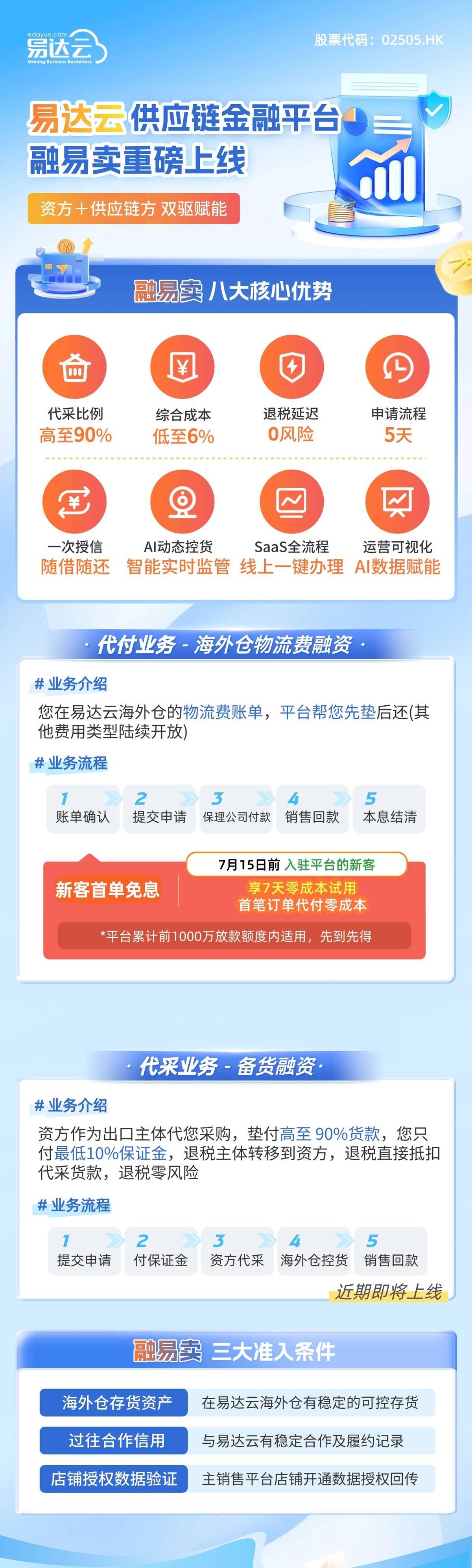
为此,易达云将12年自营仓储与物流积累的履约与信用数据能力,转化为可量化的风控底座,联合多家持牌金融机构,正式推出供应链金融服务平台·融易卖👇👇👇

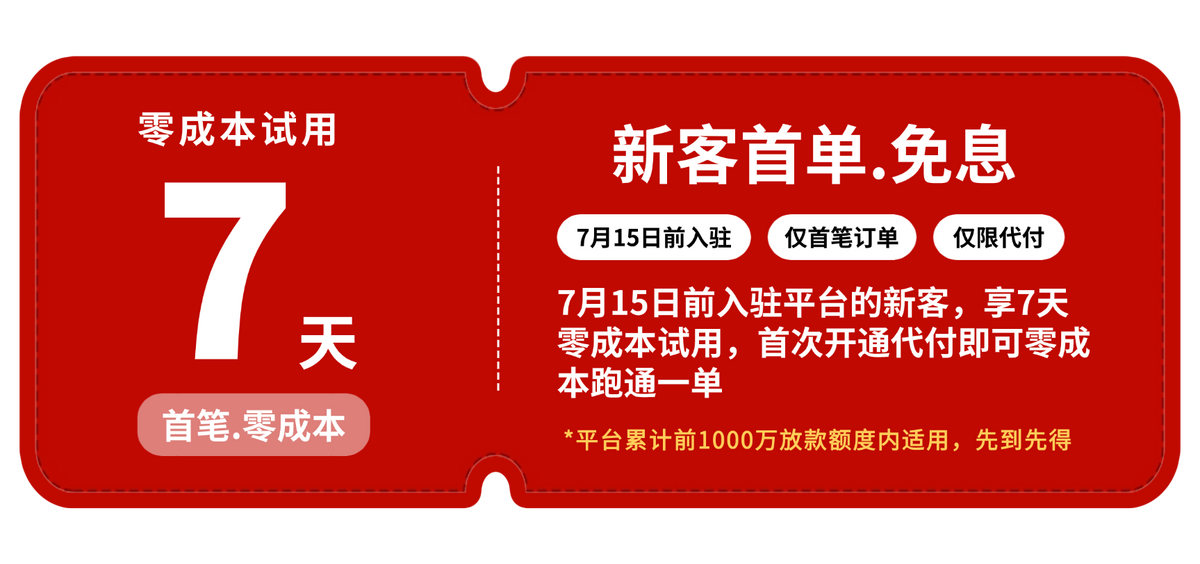
融易卖上线专属福利:

和市面上单一资金方的产品不同,融易卖走“资方 + 供应链方”双驱赋能:持牌金融机构提供资金,易达云提供海外仓库存、物流轨迹与自研SaaS的数据底座。

一句话:让资金看得懂跨境电商,也让跨境电商接得住资金。

它做两件事,共用一个授信额度池,借了又还、还了又借,不用反复申请:

① 代付融资:覆盖你在易达云海外仓的仓储、操作、末端配送费用,延后支付,直接释放当月现金流。解决海外仓账单压力。

② 代采融资:平台资金方作为出口主体帮你采购,垫付高至90%货款,你付10% 保证金即可,商品入海外仓后正常销售,到期还款。解决备货资金缺口。

融易卖.八大核心优势:

√ 代采垫付高至90%:保证金最低10%,剩余平台资金方作为出口主体垫付

√ 综合成本低至6%:参考年化6%-10%,跨境同类金融服务偏低水平

√ 退税延贷0占用:出口退税收益归客户所有,直接抵减融资成本

√ 最快5个工作日:全线上化入驻,从申请到放款压缩到“天”不是“月”

√ 随借随还:支持7天后随借随还,服务费按实际使用天数和金融结算

√AI动态控货:WMS实时联动库存,边卖货边周转,货权随还款转移

√SaaS全程线上:申请、放款、还款、提货全程在线,不递纸质材料

√ 全程可视化:授信额度、库存覆盖率、还款节点实时可查

三大核心特征:数据直连(不看房产看数据)、动态质押(边卖货边融资)、随借随还(按天计费)。

准入三条:海外仓有存货 / 历史信用良好 / 店铺数据可验证。

为什么这套东西要等到2026年才有?因为它不是单一金融产品能完成的——它需要海外仓数据、SaaS实时联动、物流轨迹背书、风控引擎判断,缺一块都跑不起来。

04生态聚合,抱团出海

2026年的跨境电商,正在从“单点能力比拼”进入“全链路vs全链路”。

选品强、流量猛、SKU多,这些都是单点,但单点再强,卡在一个环节就全盘崩:备货跟不上、合规过不去、现金流断了,都是一夜回到解放前。

没有一个中小卖家能自建“工厂 + 物流 + 仓储 +SaaS+ 合规 + 金融”全链路,这就是“抱团出海”的本质:卖家把“产品、品牌、运营”做到极致,把“仓储、物流、SaaS、合规、金融”交给生态平台。

易达云从成立起做的每件事,都朝这个方向:

●11国 60+ 海外仓(沙利文行业数据:业内管理海外仓数量最多)——解决“货放哪儿”

● 全段物流(海运拼柜整柜 + 目的港自营卡车送仓)——解决“货怎么来”

● 自研SaaS平台(OMS/ TMS/ WMS)——解决“怎么管”

● 正式推出的融易卖(供应链金融平台)——解决“用什么转起来”

四块拼到一起,才是一套真正可以“抱团”的基础设施。

一个判断:2026-2028是跨境电商的分水岭,不在“流量分发”也不仅在“合规适配”,而在“全链路效率”,能把“仓 + 物流 +SaaS+ 金融”打通的卖家,会是下一轮规模化的主角。

一个行动建议:如果你已在易达云海外仓有库存、过往信用良好、店铺数据稳健——现在就是测算一次“融易卖授信额度”的最好时间,先把额度拿到手里,机会来了再决定怎么用。

注:文/易达云,文章来源:易达云,本文为作者独立观点,不代表亿邦动力立场。

文章来源:易达云

广告
微信
朋友圈

这么好看,分享一下?

朋友圈 分享

APP内打开

+1
+1
微信好友 朋友圈 新浪微博 QQ空间
关闭
收藏成功
发送
/140 0