广告
加载中

智元主办AGIBOT WORLD CHALLENGE 2026收官 比赛结果公布

亿邦动力 2026-06-08 10:21
亿邦动力 2026/06/08 10:21

邦小白快读

EN
全文速览

本文核心内容是智元在ICRA 2026同期主办的AGIBOT WORLD CHALLENGE 2026具身智能赛事收官,各赛道比赛结果已经正式公布,核心干货信息整理如下:

1. 赛事基本情况:本次赛事吸引全球27个国家及地区的526支产学研团队参赛,设置推理-操作、世界模型、全身控制三大技术赛道,采用线上标准化评测加线下真机验证的模式,主办方提供开源数据、仿真平台和机器人硬件作为赛事研发基础。

2. 各赛道获奖结果:世界模型赛道冠军为中科院自动化所联合高德组建的团队,推理-操作赛道冠军为vivo团队,全身控制赛道冠军为小米机器人团队,超百支队伍通过官方基准考核线。

3. 赛事后续安排:智元后续会上线常态化仿真打榜服务器,持续迭代评测基准和工具链,开放相关资源和全行业合作,降低行业研发门槛。

本次赛事为人形机器人领域的品牌商提供了技术趋势和品牌布局的干货参考,具体内容如下:

1. 技术与消费趋势参考:当前具身智能人形机器人行业的核心研发方向聚焦推理操作、世界模型、全身控制三大领域,行业核心痛点是仿真训练结果无法直接适配真实环境,真实场景下的任务执行稳定性已经成为技术落地和产品竞争的核心指标。

2. 品牌营销参考:本次赛事作为ICRA官方竞赛,吸引了全球顶级产学研团队参与,品牌参赛并取得名次可以快速打造自身技术品牌影响力,对接全球前沿研发资源。

3. 研发成本优化参考:智元开放了开源数据、仿真平台、真机硬件等公共研发资源,品牌可以依托这类资源降低自身算法研发和测试的成本,加快产品落地节奏。

针对人形机器人赛道的从业卖家,本次赛事透露出的机会和干货信息整理如下:

1. 赛道机会提示:当前具身智能人形机器人已经进入落地验证阶段,商超等真实消费场景的移动操作需求已经成为核心测试方向,对应场景的落地产品存在明确的增长机会,提前布局相关技术的卖家可获得先发优势。

2. 可用资源整理:智元开放了开源数据集、Genie Sim 3.0仿真平台、精灵G2真机硬件等资源,后续还会上线常态化仿真打榜服务器,中小卖家可以借助这些公开资源,不用自行投入高额成本搭建测试环境,大幅降低研发门槛,加快算法迭代速度。

3. 技术方向提示:当前产品落地的核心门槛是仿真结果到真实环境的稳定性,卖家需要重点提升机器人对复杂多变物理环境的适应能力,这是中小卖家实现弯道超车的核心方向。

对于人形机器人产业链相关工厂,本次赛事透露出的干货信息整理如下:

1. 产品生产设计需求:当前人形机器人研发越来越依赖标准化的真机测试环节,对标准化的人形机器人硬件本体、统一硬件底座的需求大幅提升,本次赛事统一采用精灵G2人形机器人作为测试载体,也印证了标准化硬件是行业研发的共性需求。

2. 可对接的商业机会:行业对开源测试资源、公共研发平台的需求非常旺盛,智元后续会持续迭代全栈工具链,围绕硬件、数据、仿真平台开放生态合作,相关零部件生产、整机组装的工厂可以对接头部企业的生态需求,获得稳定长期的商业订单。

3. 数字化转型启示:人形机器人研发已经形成“数据—仿真—真机”的全链路数字化研发流程,工厂可以参考这种标准化研发模式,推进自身生产研发的数字化升级,借助统一工具降低研发测试成本,提升新品迭代效率。

对于具身智能人形机器人领域的服务商,本次赛事透露出的行业干货整理如下:

1. 行业发展趋势:当前具身智能评测已经从早期关注单一模型指标,逐步延伸到真实场景下的任务执行稳定性、物理环境适应性、长程任务完成能力等多维度,行业对标准化、可复现、可横向对比的评测服务需求正在快速增长,市场空间较大。

2. 行业核心客户痛点:目前人形机器人研发的普遍痛点是整体研发成本过高,中小团队和初创企业难以获得标准化的真机测试环境,同时仿真环境的测试结果和真机实际表现差距较大,算法从仿真到真机的迁移难度很高,困扰大量研发团队。

3. 可切入的解决方案方向:服务商可以围绕“数据—仿真—真机”的全链路研发评测流程,搭建标准化的公共测试服务平台,为中小研发团队提供低成本的按需测试、验证服务,精准匹配行业当前的痛点需求。

对于机器人领域的行业平台商,本次赛事给出的运营参考干货整理如下:

1. 当前行业对平台的核心需求:全球研发团队都需要统一标准、可复现、覆盖从数据到仿真再到真机的全链路研发测试平台,以此降低研发门槛,目前市场上这类符合要求的标准化公共平台供给不足,存在布局机会。

2. 可参考的平台运营模式:本次智元的赛事采用线上自动化评测加线下真机验证结合的模式,依托自研的两项评测基准,统一测试硬件,有效解决了过往仿真评测和真机落地脱节的问题,这种评测模式值得平台参考。

3. 后续运营方向提示:平台在举办赛事后,可以将沉淀的资源转为常态化运营,上线公开打榜服务器,持续新增测试任务和多元化评测基准,不断吸引产学研团队入驻丰富生态,同时要侧重贴近真实落地场景设计任务,规避只关注仿真指标不看重落地能力的方向偏差。

对于具身智能领域的研究者,本次赛事透露出的研究参考干货整理如下:

1. 产业最新动向:当前全球具身智能研发聚焦三大核心方向,分别是任务理解到动作执行的决策、物理世界交互预测建模、机器人连续动作的全身协调控制,三个方向对应人形机器人落地的核心技术环节,整个行业已经从纯技术演示转向关注真实场景的落地能力,产学研结合的研发模式越来越普遍。

2. 领域新发现的核心问题:目前具身智能评测的核心难点是仿真环境的高分表现无法等价于真实机器人的稳定执行,真实环境中的物体位置、抓取误差、遮挡等大量不可控变量都会影响任务完成率,标准化的适配全链路的评测体系仍在构建过程中。

3. 后续研究方向参考:本次赛事开放的评测基准、开源数据集、仿真平台资源,以及线上线下结合的评测模式,为后续研究提供了可复用的基础框架,同时也指出了仿真到真机迁移、真实场景任务稳定性等核心研究方向,供研究者参考。

返回默认
声明:快读内容全程由AI生成,请注意甄别信息。如您发现问题,请发送邮件至 run@ebrun.com 。

我是 品牌商 卖家 工厂 服务商 平台商 研究者 帮我再读一遍。

Quick Summary

This article covers the conclusion of the AGIBOT WORLD CHALLENGE 2026, an embodied intelligence competition hosted by Zhiyuan alongside ICRA 2026, where results across all tracks have been officially released. Key takeaways are summarized below:

1. Event overview: The competition drew 526 industry-university-research teams from 27 countries and regions worldwide, with three core technical tracks: Inference & Manipulation, World Model, and Whole-Body Control. It adopted a format of standardized online evaluation plus on-site real robot validation, with the organizer providing open-source data, a simulation platform and robot hardware as development infrastructure for participants.

2. Competition results: The World Model track was won by a joint team from the Institute of Automation, Chinese Academy of Sciences and Amap. The Inference & Manipulation track champion was the vivo team, while the Xiaomi Robotics team took first place in the Whole-Body Control track. More than 100 teams passed the official benchmark assessment threshold.

3. Upcoming plans: Zhiyuan will launch a permanent simulation ranking server, continuously iterate evaluation benchmarks and toolchains, open up relevant resources for industry-wide collaboration, and lower development barriers for the sector.

This competition provides valuable insights on technology trends and brand positioning for brands active in the humanoid robot industry, summarized below:

1. Technology and consumer trend reference: The core R&D focus of the current embodied intelligence humanoid robot industry lies in three areas: inference and manipulation, world model, and whole-body control. A key industry pain point is that simulation training results cannot directly transfer to real-world environments, and task execution stability in real scenarios has become the core metric for technology commercialization and product competition.

2. Brand marketing reference: As an official ICRA co-hosted competition that attracts top global industry-university-research teams, competing and placing well in this event allows brands to quickly build their technical brand influence and connect with cutting-edge global R&D resources.

3. R&D cost optimization reference: Zhiyuan has opened up public R&D resources including open-source data, a simulation platform and real robot hardware. Brands can leverage these resources to cut their own algorithm R&D and testing costs, and accelerate product commercialization.

For sellers operating in the humanoid robot track, the key opportunities and insights from this competition are summarized as follows:

1. Track opportunity outlook: Embodied intelligence humanoid robots have now entered the validation and commercialization phase. Mobile manipulation requirements for real consumer scenarios such as retail stores have become a core testing direction, and commercial products targeting these scenarios offer clear growth opportunities. Sellers that lay out relevant technology early can capture first-mover advantage.

2. Accessible resources: Zhiyuan has opened up resources including an open-source dataset, the Genie Sim 3.0 simulation platform, and the Genie G2 real robot hardware, with a permanent simulation ranking server set to launch. Small and medium-sized sellers can use these public resources to avoid the high upfront cost of building in-house testing environments, significantly lowering R&D barriers and speeding up algorithm iteration.

3. Technology direction guidance: The core barrier to commercialization today is transfer stability from simulation results to real environments. Sellers should prioritize improving robots' adaptability to complex and dynamic physical environments, which is the key opportunity for small and medium-sized sellers to outpace incumbents.

For factories across the humanoid robot supply chain, key insights from the competition are as follows:

1. Product design and manufacturing demand: Humanoid robot R&D is increasingly reliant on standardized real robot testing, driving growing demand for standardized humanoid robot hardware bodies and unified hardware bases. The competition uniformly adopted the Genie G2 humanoid robot as the testing platform, confirming that standardized hardware is a common industry R&D requirement.

2. Accessible business opportunities: Industry demand for open-source testing resources and public R&D platforms is booming. Zhiyuan will continue iterating its full-stack toolchain and open up ecosystem collaboration around hardware, data and simulation platforms. Factories specializing in component production and complete robot assembly can partner with leading firms to fulfill ecosystem demand and secure stable long-term orders.

3. Digital transformation insights: Humanoid robot R&D has formed a full-stack digital R&D workflow spanning "data – simulation – real robot testing". Factories can adopt this standardized R&D model to advance the digital upgrade of their own production and R&D, reduce R&D and testing costs via unified tools, and improve new product iteration efficiency.

For service providers in the embodied intelligence humanoid robot sector, key industry insights from the competition are as follows:

1. Industry development trends: Embodied intelligence evaluation has evolved from focusing on single-model metrics in the early stage to multi-dimensional assessments covering task execution stability in real scenarios, adaptability to physical environments, and long-horizon task completion capability. Industry demand for standardized, reproducible, cross-comparable evaluation services is growing rapidly, creating significant market opportunity.

2. Core customer pain points: A pervasive pain point in humanoid robot R&D today is high overall development costs. Small and medium-sized teams and startups struggle to access standardized real robot testing environments. In addition, there is a large performance gap between simulation testing results and real robot operation, making the transfer of algorithms from simulation to real robots extremely challenging, a problem that plagues most R&D teams.

3. Viable solution directions: Service providers can build standardized public testing service platforms aligned with the full "data – simulation – real robot" R&D and evaluation workflow, to provide low-cost on-demand testing and validation services for small and medium-sized R&D teams, directly addressing current industry pain points.

For industry platform operators in the robotics sector, operational insights from this competition are summarized as follows:

1. Current core industry demand for platforms: R&D teams globally need unified, reproducible full-stack R&D and testing platforms covering the entire workflow from data to simulation to real robot testing to lower development barriers. Currently, the market lacks sufficient supply of standardized public platforms meeting these requirements, creating room for strategic layout.

2. Referenceable platform operation model: Zhiyuan's competition combined automated online evaluation with offline real robot validation, used two self-developed evaluation benchmarks and unified testing hardware, effectively solving the long-standing problem of disconnect between simulation evaluation and real-world deployment. This evaluation model is a valuable reference for platforms.

3. Guidance for future operations: After hosting competitions, platforms can convert accumulated resources into permanent operations, launch public ranking servers, continuously add new testing tasks and diversified evaluation benchmarks, and attract more industry-university-research teams to join and enrich the ecosystem. Platforms should also design tasks aligned with real-world commercial scenarios to avoid the common pitfall of overprioritizing simulation metrics over actual deployment capability.

For researchers in the embodied intelligence field, key research insights from the competition are as follows:

1. Latest industry trends: Global embodied intelligence R&D currently focuses on three core areas: decision-making from task understanding to action execution, interactive predictive modeling of the physical world, and whole-body coordinated control for continuous robot movement. All three correspond to core technical links for humanoid robot commercialization. The entire industry has shifted from pure technology demonstration to focusing on real-scenario deployment capability, and industry-university-research collaboration has become an increasingly common R&D model.

2. Newly identified core challenges: The core difficulty in embodied intelligence evaluation today is that high performance in simulation does not equate to stable performance on real robots. Numerous uncontrollable variables in real environments, such as object position shifts, grasping errors and occlusion, all reduce task completion rates, and a standardized full-stack evaluation system is still under development.

3. Guidance for future research: The evaluation benchmarks, open-source datasets, simulation platform resources and hybrid online-offline evaluation model open-sourced for this competition provide a reusable foundational framework for future research, and also highlight core research directions including simulation-to-real transfer and real-scenario task stability for researchers to explore.

Disclaimer: The "Quick Summary" content is entirely generated by AI. Please exercise discretion when interpreting the information. For issues or corrections, please email run@ebrun.com .

I am a Brand Seller Factory Service Provider Marketplace Seller Researcher Read it again.

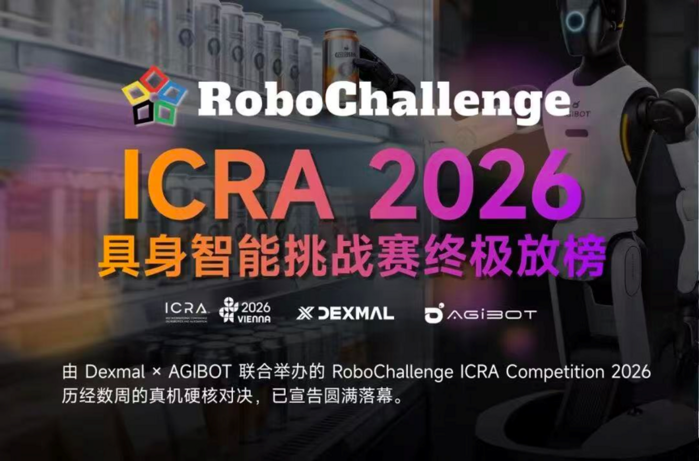
6月5日,机器人与自动化领域会议ICRA 2026在维也纳落幕。由智元主办的AGIBOT WORLD CHALLENGE 2026也同期结束。

据主办方介绍,本届赛事吸引了来自全球27个国家及地区的526支科研与产业团队参赛。赛事设置Reasoning to Action(推理-操作)、World Model(世界模型)和WBC(全身控制)三大技术赛道,采用线上标准化评测与线下真机验证相结合的方式,并提供开源数据、仿真平台和机器人硬件作为赛事基础。

ICRA是IEEE(国际电气与电子工程师学会)机器人与自动化领域的重要国际会议之一。6月1日至5日,ICRA 2026在奥地利维也纳举行,本届会议官方竞赛项目中包括AGIBOT WORLD CHALLENGE 2026。相较于单纯展示机器人动作能力的演示类活动,赛事评测更强调统一任务、统一规则和可复现结果,因此也成为观察具身智能技术进展的一类窗口。

三个赛道围绕推理操作、世界模型和全身控制展开

本届AGIBOT WORLD CHALLENGE设置Reasoning to Action、World Model和WBC三个赛道,分别面向任务理解与行动决策、物理世界预测与交互建模、云端推理与全身控制等方向。

参赛队伍包括中科院、清华大学、中国科学技术大学、加州大学圣迭戈分校等海内外院校团队,也包括小米、Sber Robotics Center、阿里巴巴、高德、vivo等产业研发团队。据主办方披露,超百支队伍通过官方基准考核线。

从技术链路看,三个赛道分别对应具身智能研发中的不同问题:Reasoning to Action关注模型如何从任务理解走向动作执行;World Model关注模型对物理世界变化的预测能力;WBC则面向机器人移动、抓取、放置等连续动作中的全身协调控制。对人形机器人而言,这些能力并不是孤立存在的,最终需要在真实任务中形成从感知、规划到执行的闭环。

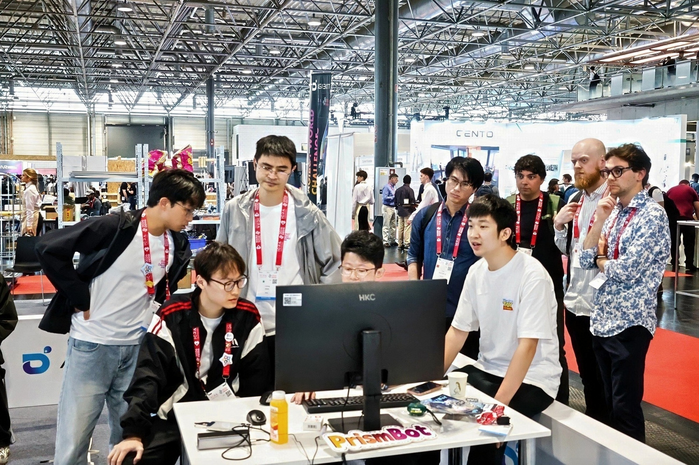
参赛选手在多个任务场景中调试机器人

赛制方面,本届赛事采用线上自动化测评与维也纳线下真机决赛结合的方式。赛事评测依托智元自研的EWMBench、Genie Sim Benchmark两项评测基准,围绕评测流程自动化、考核指标标准化和实验结果可复现展开。

在线下总决赛阶段,赛事统一采用精灵G2人形机器人进行实景比拼,并将真机运行稳定性、物理环境适配度和长周期任务可靠性纳入评分依据。

近年来,具身智能评测的一个核心难点在于,仿真环境中的高分表现并不必然等同于真实机器人上的稳定执行。真实环境中的物体位置、抓取误差、碰撞、遮挡和地面条件等变量,都会影响机器人任务完成率。因此,本届赛事将线上评测与线下真机验证结合,评估标准更接近真实部署场景下的工作表现。

World Model、R2A、WBC 三赛道结果公布

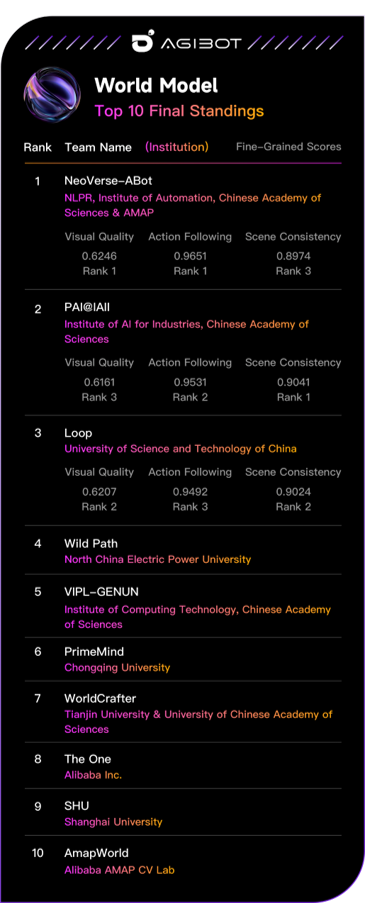
三大赛道中,World Model赛道率先完成全部比拼。中科院自动化所联合高德CV Lab组建的NeoVerse-ABot团队获得冠军,中科院工业人工智能研究院PAI@IAII团队、中国科学技术大学Loop团队分列第二、第三。

据介绍,该赛道在任务设计中加入了物品掉落、抓取失误等非理想化物理样本,用于考察模型对复杂物理交互过程的预测和建模能力。

AGIBOT WORLD CHALLENGE 2026 World Model赛道最终结果

Reasoning to Action(R2A)赛道在维也纳完成线下决赛。该赛道考核内容从单一动作执行,扩展至环境理解、任务规划和实体操作等环节,重点考察算法从仿真环境迁移到真机任务中的表现。

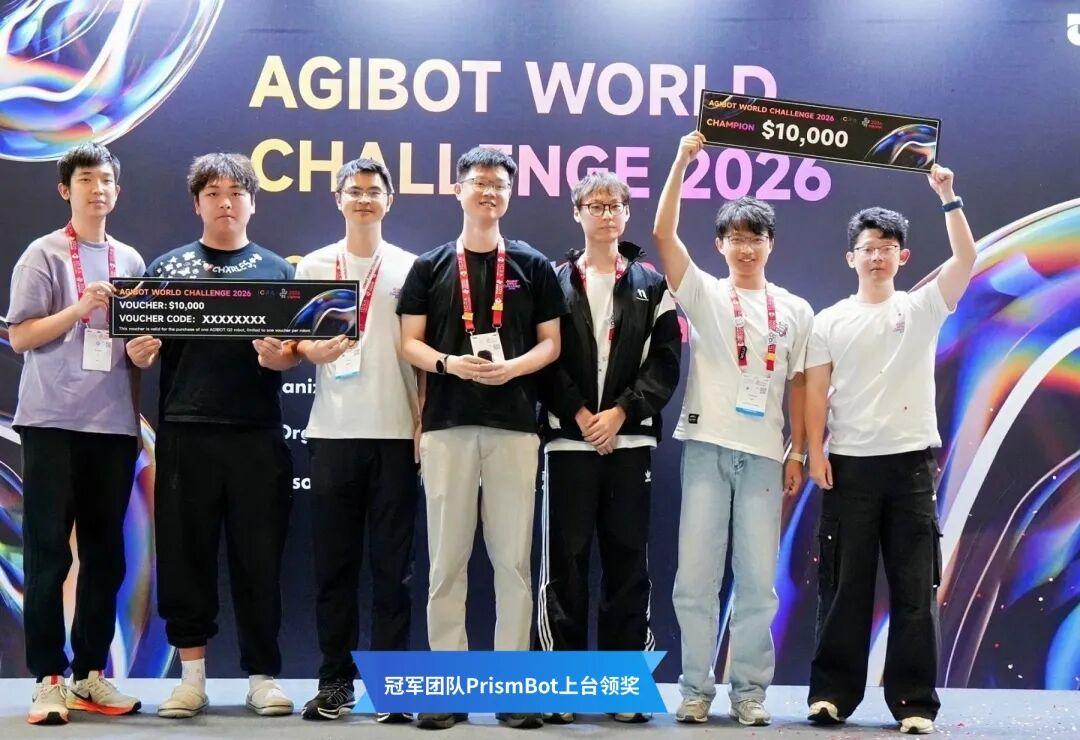
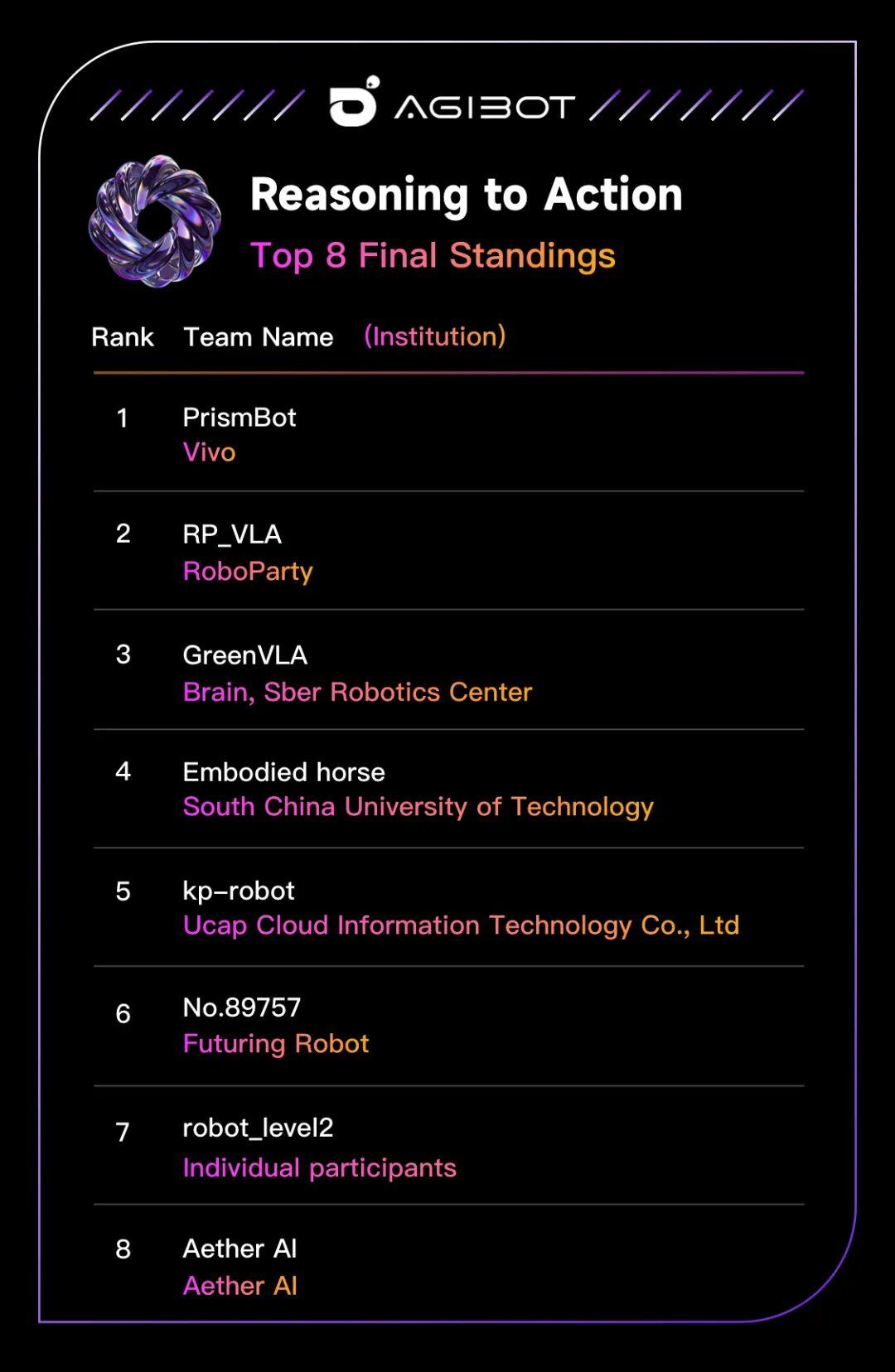
最终,来自vivo的PrismBot获得R2A赛道冠军,来自上海萝博派对的RP-VLA获得第二名,俄罗斯团队GreenVLA获得第三名。

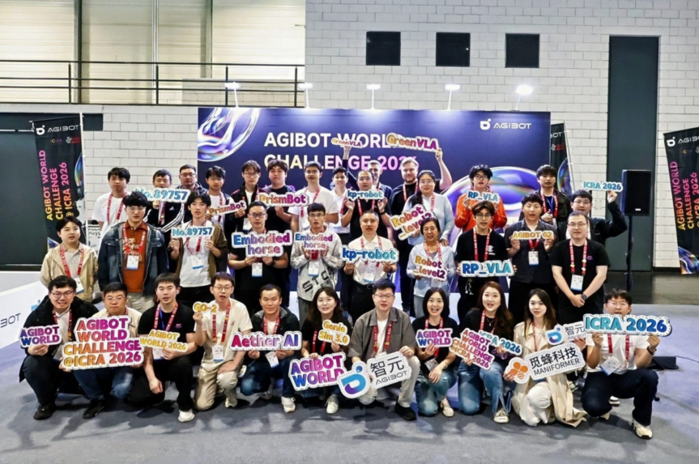
主办方与冠军团队PrismBot合影

AGIBOT WORLD CHALLENGE 2026 Reasoning to Action赛道最终结果

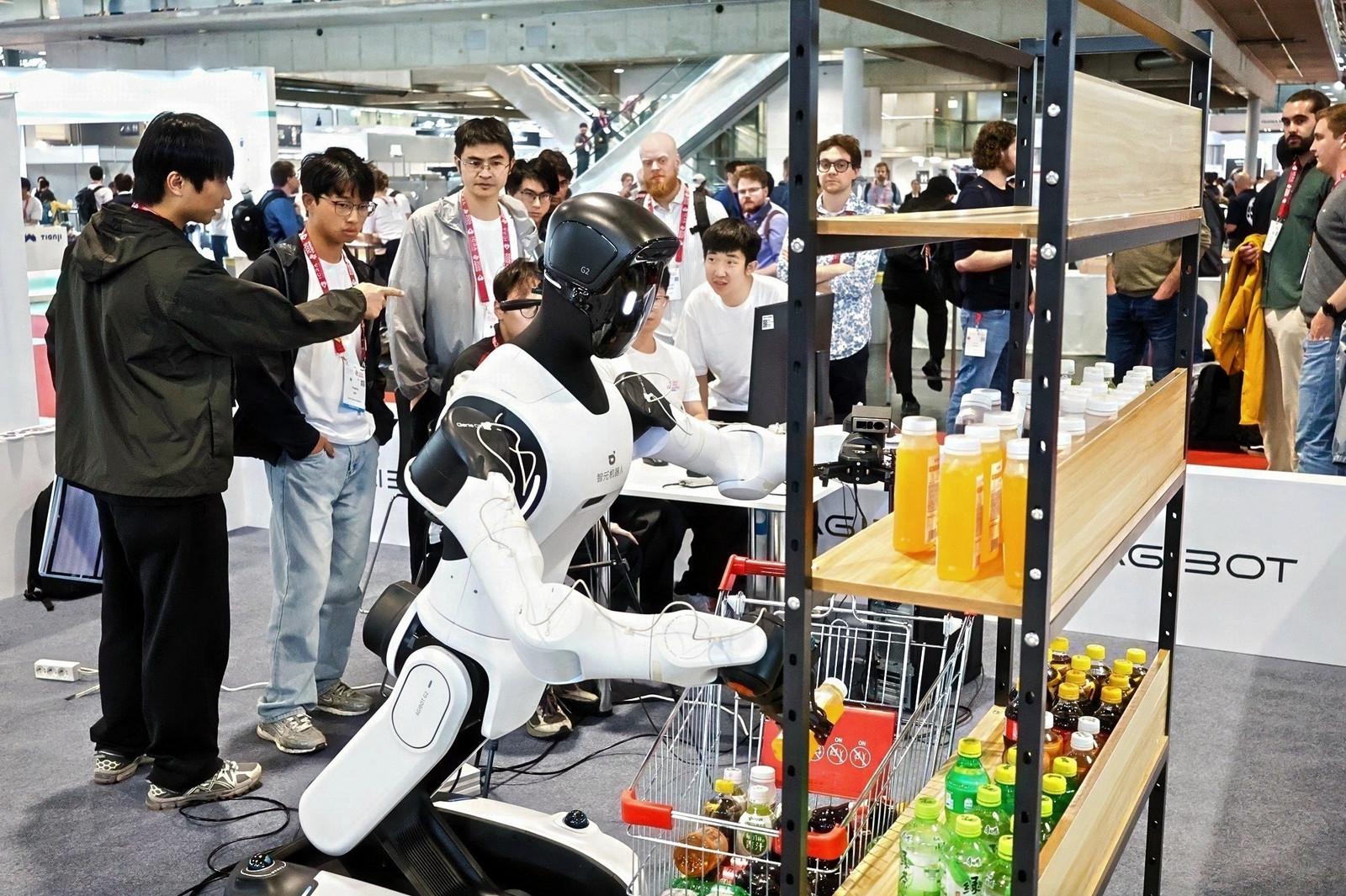
WBC赛道由智元与Dexmal原力灵机联合打造,面向真实商超场景下的全身控制和移动操作任务。该赛道使用智元Genie Sim 3.0开源仿真平台和精灵G2真机,任务覆盖自主导航、取货、行走和放置等环节。

与单一抓取任务不同,WBC赛道要求机器人在货架层高限制、物品随机摆放等环境条件下,完成从自主导航、取货到行走放置的连续操作。赛事采用API远程直连模式,选手代码直接驱动真实物理机器人完成测试。

最终,来自小米机器人的周熊队以99.2的综合得分和94%的整体任务成功率获得冠军,GRNVLA和PrismBot分获第二、第三名。

开源数据、仿真平台和真机资源构成赛事基础

除竞赛本身外,本届赛事也提供了AGIBOT WORLD开源真机数据集、Genie Sim 3.0开源仿真平台和精灵G2机器人本体等资源,形成“数据—仿真—真机”的评测与研发流程。

对于参赛团队而言,这类资源可以降低获取标准化真机环境和测试平台的门槛,使算法训练、仿真调试和真机测试能够在统一框架下进行。主办方表示,部分参赛科研人员反馈,标准化真机资源是本次赛事的重要价值之一。

对外部研发团队而言,开源数据、仿真平台和统一硬件底座的价值在于降低测试门槛。尤其在人形机器人研发成本较高的背景下,标准化数据集和仿真环境可以帮助团队在早期阶段完成算法训练和对比实验,而真机验证则进一步检验算法在物理世界中的稳定性。

从行业角度看,具身智能评测正在从单一模型指标,逐步延伸至任务执行稳定性、物理环境适应性和长程任务完成能力等维度。对于机器人研发而言,能否在统一规则下完成可复现、可横向比较的测试,将影响算法从实验室走向真实场景的效率。

智元后续将上线仿真打榜服务器

据智元介绍,本次赛事沉淀的技术和生态资源后续将进入常态化运营。公司计划上线仿真打榜服务器,并增设更多测试任务和多元化评测基准,以持续考察模型的综合能力。

未来,智元还将继续迭代评测基准和全栈工具链,并围绕开源数据、仿真平台和机器人硬件资源,与科研机构、开发者和产业链企业展开合作。

对于具身智能行业而言,标准化评测、仿真到真机的迁移能力,以及真实场景下的任务执行稳定性,仍将是后续技术演进中的重要方向。AGIBOT WORLD CHALLENGE 2026的赛事结果,也提供了一个观察相关技术路线和团队进展的样本。


文章来源:亿邦动力

广告
微信
朋友圈

这么好看,分享一下?

朋友圈 分享

APP内打开

+1
+1
微信好友 朋友圈 新浪微博 QQ空间
关闭
收藏成功
发送
/140 0