广告
加载中

有人投诉就“限单”?商品品质差要被抖音电商严惩了

廖紫琳 2026-06-29 10:39
廖紫琳 2026/06/29 10:39

邦小白快读

EN
全文速览

本文核心是公布抖音电商最新更新的《综合认定商品/商家品质差》违规管控细则,即日起正式执行,核心干货如下:

1. 新规明确了品质差违规的具体范围,涵盖描述不符、做工瑕疵、商品破损变质、以残次冒充新品、标识不合格、功能缺陷等十多种影响消费者购买使用的情形,所有符合情形的都会被认定违规。

2. 新规采用综合研判机制,会结合消费者评价、投诉、售后反馈,以及商家差评率、品质问题退货率、商品体验分等多类数据,对比同类目平均水平来认定违规。

3. 违规分为品质问题风险和已确认品质差违规两类,对应梯度处罚,轻则警告限单,重则冻结货款,违规越严重处罚力度越大。

本次抖音电商更新品质管控新规,对布局抖音电商的品牌商有多方面的经营参考价值,核心干货如下:

1. 合规层面:新规明确了平台对品质违规的判定标准,品牌商需要对照新规梳理全品类产品,排查描述不符、以次充好、标识不合格等常见问题,避免违规处罚影响品牌信誉与正常经营。

2. 运营层面:平台判定违规会结合消费者反馈与商家经营数据,品牌商需要重视用户评价与售后反馈,及时优化产品品质,维持稳定的好评率、低退货率与合格的商品体验分,符合平台导向。

3. 趋势层面:抖音电商明确要打造用户好物首选平台,未来品质管控会持续收紧,品牌商需要将品质建设放在品牌运营的核心位置,顺应平台消费升级趋势,才能获得长期增长。

抖音电商本次更新的品质管控新规,给在抖音经营的卖家明确了合规要求,也提示了经营风险,干货总结如下:

1. 政策解读:新规明确了品质差违规的认定范围,将十多种影响用户体验的情形都纳入违规,采用消费者反馈加经营数据结合的综合判定方式,对比同类目平均水平确认违规,标准清晰可参考。

2. 风险提示:违规分为品质问题风险和已确认品质差违规两类,就算只是风险情形也会触发警告、3-100单限单、冻结货款等处罚,确认违规后处罚力度更大,直接影响店铺正常经营。

3. 经营提示:卖家需要在日常运营中重视品控管理,及时响应用户售后投诉,主动维护好评率、商品体验分等核心指标,提前规避违规风险,保障店铺稳定经营。

抖音电商更新严格的品质管控新规,给给抖音电商供货的生产工厂带来了多方面的启示,核心干货如下:

1. 生产需求层面:平台对商品品质的要求进一步细化明确,工厂在生产环节需要严格把控各个流程的品质,避免出现做工瑕疵、材质成分不符、标识不合格、破损污损等常见问题,满足平台的硬性合规要求。

2. 商业机会层面:抖音电商主打好物平台定位,未来会持续倾斜资源给优质品质的商品和商家,工厂如果能稳定输出符合标准的高品质产品,就能获得更多和品牌商、大卖家的合作机会,拿到更多稳定订单。

3. 转型启示:平台基于数据综合判定品质,工厂可以配合合作商家做好品控数据的追踪,针对性优化生产环节,推进生产端的品质数字化管理,提升自身的市场竞争力。

抖音电商收紧品质管控,反映了兴趣电商行业的最新发展趋势,也给电商服务商带来了新的业务方向,核心干货如下:

1. 行业发展趋势:抖音电商已经从早期的流量扩张转向品质经营,整个电商行业对商品品质管控的需求会持续上升,品质管理会成为未来平台和商家共同的核心需求,行业整体向高质量方向发展。

2. 客户痛点梳理:现在绝大多数中小商家、新兴品牌都没有完善的品控体系,很容易触发平台的违规处罚,一旦违规就会面临限单、冻结货款的处罚,严重影响正常经营,品控合规已经成为商家的核心痛点。

3. 解决方案方向:服务商可以针对商家痛点开发对应服务,比如提前做商品品质合规检测、帮商家梳理内部合规流程、实时监测用户评价和品质相关数据提前预警,帮商家规避风险,抓住新的业务增长机会。

抖音电商本次更新品质管控细则,给其他电商平台提供了可参考的运营经验,也明确了平台发展的方向,干货总结如下:

1. 可借鉴的最新做法:抖音采用综合判定机制,结合消费者多渠道反馈和商家多维度经营数据,对比同类目平均水平认定违规,同时划分品质问题风险和已确认违规两个等级,设置梯度处罚,既提前防控风险,也对严重违规严厉惩处,这套机制可复制性强。

2. 平台运营方向:当前消费者对商品品质的要求越来越高,平台主动做好品质管控,才能提升用户信任度,打造良好的平台口碑,符合平台长期发展的核心利益。

3. 风向规避:平台通过明确违规标准和处罚规则,可以倒逼商家主动提升商品品质,减少消费者投诉,降低平台的口碑风险,有效维护平台正常的经营秩序,规避行业监管风险。

抖音电商更新品质管控新规,反映了国内兴趣电商领域的产业新动向,对电商行业研究有较高的参考价值,核心干货如下:

1. 产业新动向:国内电商行业已经完成早期的流量积累和规模扩张,正在从流量竞争、价格竞争转向品质竞争,头部平台开始主动升级管控规则,推动全行业向高质量发展转型,抖音本次新规是这一动向的典型案例。

2. 规则层面的新探索:本次新规推出的“综合研判+梯度处罚”机制,区别于传统一刀切的处罚方式,既提前防控品质风险,给商家预留调整空间,也对严重违规行为予以严惩,是电商平台品质管控规则的创新探索。

3. 商业模式研究:兴趣电商依托内容种草带货,对商品品质的要求远高于传统电商,本次规则更新也说明兴趣电商正在不断完善供应链与品控端的规则体系,推动整个商业模式走向成熟。

返回默认
声明:快读内容全程由AI生成,请注意甄别信息。如您发现问题,请发送邮件至 run@ebrun.com 。

我是 品牌商 卖家 工厂 服务商 平台商 研究者 帮我再读一遍。

Quick Summary

This article announces Douyin E-commerce's newly updated regulatory rules for non-compliance involving low-quality products and merchants, which officially take effect immediately. Key takeaways are as follows:

1. The new rules clearly define the specific scope of low-quality non-compliance, covering more than a dozen scenarios that affect consumers' purchase and usage, including inconsistent product descriptions, workmanship defects, damaged or spoiled goods, selling defective products as new, unqualified labeling, and functional defects. Any product or merchant matching these scenarios will be deemed non-compliant.

2. The new rules adopt a comprehensive assessment mechanism that identifies non-compliance by cross-referencing multiple data sources including consumer reviews, complaints, after-sales feedback, merchant negative review rates, quality-related return rates, and product experience scores against the average level of the same category.

3. Non-compliance is divided into two categories: quality risk and confirmed low-quality non-compliance, with corresponding tiered penalties. Minor violations result in warnings and order limits, while severe violations lead to frozen funds, with punishment intensity increasing with the severity of non-compliance.

Douyin E-commerce's updated quality control rules provide multiple operational insights for brands operating on the platform. Key takeaways are as follows:

1. Compliance: The new rules clarify the platform's standards for judging quality non-compliance. Brands need to review their full product portfolio against the new rules to investigate common issues such as inconsistent descriptions, selling substandard goods as high-quality, and unqualified labeling, to avoid non-compliance penalties that damage brand reputation and disrupt normal operations.

2. Operations: The platform's non-compliance judgment incorporates consumer feedback and merchant operational data. Brands need to prioritize user reviews and after-sales feedback, promptly optimize product quality, and maintain a stable positive review rate, low return rate and qualified product experience score to align with the platform's requirements.

3. Industry trend: Douyin E-commerce is positioning itself as a go-to platform for quality goods, and will continue to tighten quality control going forward. Brands must put quality development at the core of their brand operations, and adapt to the platform's consumer upgrading trend to achieve long-term growth.

Douyin E-commerce's updated quality control rules clarify compliance requirements for sellers operating on the platform and highlight operational risks. Key takeaways are as follows:

1. Policy interpretation: The new rules clearly define the scope of low-quality non-compliance, including more than a dozen scenarios that harm user experience. It uses a comprehensive assessment method that combines consumer feedback and operational data, and confirms non-compliance by comparing against the same category average, resulting in clear, actionable standards.

2. Risk warning: Non-compliance is divided into quality risk and confirmed low-quality non-compliance. Even risk-level cases can trigger penalties including warnings, order limits of 3 to 100 orders, and frozen funds. Confirmed non-compliance carries harsher penalties that directly disrupt normal store operations.

3. Operational guidance: Sellers should prioritize quality control in daily operations, respond promptly to user after-sales complaints, and proactively maintain core metrics such as positive review rate and product experience score to prevent non-compliance risks and ensure stable store operations.

Douyin E-commerce's strict updated quality control rules bring multiple insights for manufacturers that supply goods to the platform. Key takeaways are as follows:

1. Production requirements: The platform's product quality requirements have become more detailed and clear. Factories need to strictly control quality across all production processes to avoid common issues such as workmanship defects, inconsistent material composition, unqualified labeling, and damage or staining, to meet the platform's mandatory compliance requirements.

2. Business opportunities: Douyin E-commerce positions itself as a quality goods platform and will continue to allocate more traffic and resources to high-quality products and merchants going forward. Factories that can stably deliver high-quality products that meet standards will gain more cooperation opportunities with brands and large sellers, and secure more stable orders.

3. Transformation insights: The platform assesses quality based on comprehensive data. Factories can cooperate with partner merchants to track quality control data, make targeted improvements to production processes, advance digital quality management in production, and boost their own market competitiveness.

Douyin E-commerce's tightening of quality control reflects the latest development trend of the interest e-commerce industry, and brings new business opportunities for e-commerce service providers. Key takeaways are as follows:

1. Industry development trend: Douyin E-commerce has shifted from early-stage traffic expansion to quality-focused operation. Demand for product quality control across the entire e-commerce industry will continue to rise, and quality management will become a core shared demand for platforms and merchants going forward, driving the overall industry toward high-quality development.

2. Client pain points: The vast majority of small and medium-sized merchants and emerging brands lack a complete quality control system, making them vulnerable to triggering platform non-compliance penalties. Once penalized with order limits or frozen funds, their normal operations are severely disrupted, making quality control compliance a core pain point for merchants.

3. Solution opportunities: Service providers can develop targeted services to address this pain point, such as pre-shipment product quality compliance testing, supporting merchants to build internal compliance processes, and real-time monitoring of user reviews and quality-related data for early warning. These services help merchants avoid risks and allow service providers to capture new growth opportunities.

Douyin E-commerce's updated quality control rules provide reference operational experience for other e-commerce platforms and clarify the direction for platform development. Key takeaways are as follows:

1. Replicable best practices: Douyin uses a comprehensive assessment mechanism that combines multi-channel consumer feedback and multi-dimensional merchant operational data, and confirms non-compliance by comparing against the same category average. It also divides non-compliance into two tiers—quality risk and confirmed non-compliance—and implements tiered penalties. This mechanism enables early risk prevention and harsh punishment for severe violations, and is highly replicable.

2. Platform development direction: As consumers increasingly demand higher product quality, proactive quality control allows platforms to boost user trust, build a strong market reputation, and align with the core interests of long-term platform development.

3. Risk mitigation: By clarifying non-compliance standards and penalty rules, platforms can incentivize merchants to proactively improve product quality, reduce consumer complaints, lower the platform's reputation risk, effectively maintain normal operational order on the platform, and avoid industry regulatory risks.

Douyin E-commerce's updated quality control rules reflect new industry developments in China's interest e-commerce sector, and offer high reference value for e-commerce industry research. Key takeaways are as follows:

1. New industry trends: China's e-commerce industry has completed early-stage traffic accumulation and scale expansion, and is shifting from competition over traffic and prices to competition over quality. Leading platforms are proactively updating regulatory rules to push the entire industry toward a high-quality development transformation, and Douyin's new rules are a typical example of this trend.

2. New exploration in regulatory design: The "comprehensive assessment + tiered penalty" mechanism introduced in the new rules differs from traditional one-size-fits-all penalty approaches. It enables early quality risk prevention, leaves room for merchants to make adjustments, and still imposes harsh penalties on severe violations, representing an innovative exploration of quality control rules for e-commerce platforms.

3. Business model research: Interest e-commerce relies on content-driven recommendation and marketing, and has much higher requirements for product quality than traditional e-commerce. This rule update confirms that interest e-commerce platforms are continuously improving their supply chain and quality control rule systems, pushing the entire business model toward maturity.

Disclaimer: The "Quick Summary" content is entirely generated by AI. Please exercise discretion when interpreting the information. For issues or corrections, please email run@ebrun.com .

I am a Brand Seller Factory Service Provider Marketplace Seller Researcher Read it again.

【亿邦原创】即日起,挂羊头卖狗肉,只要是描述与售卖不一致(商品名称、规格、成分、材质、产地、年份等),或者做工瑕疵、商品破损/污损/变形、商品变质/异物等等,在抖音电商都会被认定为“商品品质差”的违规行为。

根据抖音电商日前更新的《综合认定商品/商家品质差》的相关细则,常见违规类型除了上述情形外,还有效期问题、异味问题、身体不适、以残次品或处理品冒充新品售卖、产品外观/使用性/功能出现异常或缺陷问题、商品标识标志不合格等产品不具备应有使用功能,或影响消费者购买或使用体验的情形。

平台方面表示,抖音电商致力于 “成为用户发现丰富好物的首选平台”,倡导商家做品质经营,优化商品品质。

具体来说,“综合认定商品/商家品质差”是指平台基于消费者反馈、商家/商品经营行为及数据等信息,综合研判认定商家/商品存在品质差问题或存在品质问题风险。其中:

消费者反馈来源包括但不限于:商品评价、售后反馈、消费者投诉等;

商家/商品经营数据包括但不限于:差评率、好评率、品质问题商品退货量、品质问题商品退货率、品质问题反馈订单占比、品质问题商品订单数、品质问题商品订单占比、商品体验分;

综合研判认定商家/商品存在品质差问题的判定标准,包括但不限于:商品或商家的经营数据差于同类目商品或商家的平均水平且具有一定距离,或存在一定消费者负面反馈,则认定为商品品质差违规或商家品质差违规;

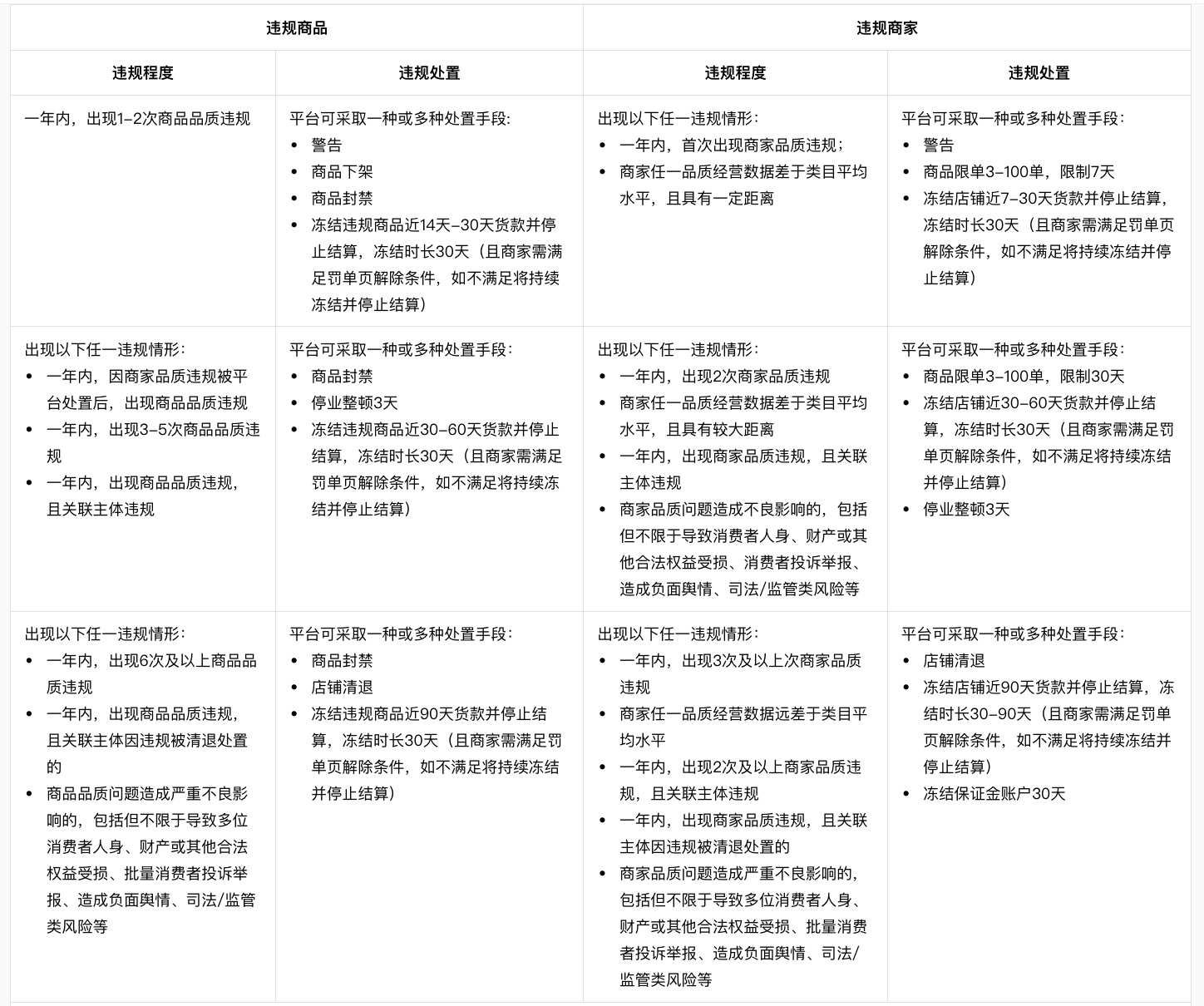
对于后者,经研判认定商品存在品质问题风险的情形,平台将结合商品特性、违规程度、影响程度等情形,综合评估采取处置手段,包括警告、商品限单3-100单(限制7天)、冻结违规商品近7天货款并停止结算,冻结时长7天(且商家需满足罚单页解除条件,如不满足将持续冻结并停止结算)。

对于经研判认定商家存在品质问题风险的情形,处置手段包括限单3-100单(限单7天-30天),冻结店铺全部货款并停止结算,冻结时长7-30天(且商家需满足罚单页解除条件,如不满足将持续冻结并停止结算)。

如果是综合研判认定商品/商家存在品质差问题的商品、商家,处罚将更为严格。品质差问题判定将参考差评率、好评率、品质问题商品退货量、品质问题商品退货率、品质问题反馈订单占比、品质问题商品订单数、品质问题商品订单占比和:商家体验分中的商品分。

具体处罚措施见下表:

亿邦持续追踪报道该情报,如想了解更多与本文相关信息,请扫码关注作者微信。

文章来源:亿邦动力

广告
微信
朋友圈

这么好看,分享一下?

朋友圈 分享

APP内打开

赞 +1
+1
微信好友 朋友圈 新浪微博 QQ空间
关闭
收藏成功
发送
/140 0