广告
加载中

天猫发力文化消费新场景:让文物可触摸、可使用、可传承

石磊 2026-02-03 17:53
石磊 2026/02/03 17:53

邦小白快读

EN
全文速览

文章重点介绍了天猫“镇馆之宝”计划如何让文物融入日常生活,文创产业迎来发展黄金期。

1. 关键数据:2025年我国文化产业营收将突破15万亿元,核心领域增速达11.5%,显示文化自信觉醒;冰墩墩销售额达30亿元,国家博物馆“凤冠”冰箱贴热销数百万件,证明文创产品市场潜力巨大。

2. 实操干货:天猫推出专属文创频道,提供沉浸式购物体验,目标年内孵化100款成交破百万的新品;消费者趋势转向情绪价值驱动,核心场景包括礼赠、装饰、祈福、婚庆,产品需可玩可互动可分享。

3. 代表案例:敦煌研究院莲花飞天藻井化妆镜、苏州博物馆“吴王夫差胖宝剑”等成功案例,展示如何以现代审美激活传统文化,让文物“活”在当下。

天猫“镇馆之宝”计划为品牌商提供品牌营销和产品研发新机遇。

1. 品牌营销:天猫推动1万个品牌与博物馆IP深度联名,如万仟堂、铜师傅、罗莱等已参与合作,通过跨界联动提升品牌影响力;消费趋势显示消费者关注点从功能转向情绪价值,礼赠等场景成为核心,品牌可借力文化传播增强情感连接。

2. 产品研发:需以时代审美激活文化内核,案例如国家博物馆“凤冠”冰箱贴、敦煌研究院化妆镜,产品形态应可玩可互动可分享;天猫提供趋势洞察和新品设计支持,帮助品牌开发符合市场需求的文化衍生品。

3. 消费趋势:2026年天猫文创行业报告指出,用户行为观察显示文化自信觉醒,年轻人圈粉现象频发,品牌可针对四大核心场景优化定价和渠道建设。

天猫“镇馆之宝”计划解读为卖家带来增长市场和合作机会。

1. 政策解读:北京市文旅局支持电商平台传播文化,夯实传承基础并激发消费活力,卖家可借力政策红利进入文创市场;天猫提供全链路扶持,包括趋势洞察、新品设计、品牌联名和供应链支持,目标年内孵化100款百万新品。

2. 机会提示:消费需求变化转向情绪价值驱动,核心场景如礼赠、装饰等,卖家可通过天猫平台参与博物馆IP联名,抓住1万个品牌合作机会;正面影响包括市场扩容,案例显示冰墩墩等爆款销售额达30亿元,风险提示是需避免单纯文物复刻,确保产品可互动可分享。

3. 合作方式:卖家可与天猫及文博机构如中国国家博物馆、故宫博物院联动,学习最新商业模式如“文化+科技+生活”融合,利用数字化手段激活故事。

文创产业兴起为工厂带来产品生产和数字化新启示。

1. 产品需求:设计需结合时代审美激活文化内核,如冰箱贴、化妆镜等实用物品,案例中国家博物馆“凤冠”热销数百万件,显示生产规模潜力;工厂可针对消费趋势开发可玩可互动产品,满足礼赠、装饰等核心场景。

2. 商业机会:天猫“镇馆之宝”计划目标孵化100款成交破百万新品,推动1万个品牌联名,工厂可参与供应链合作;数据显示2025年文化产业营收突破15万亿元,增速11.5%,提供巨大生产空间。

3. 数字化启示:天猫通过科技融合路径,用数字化手段激活文物故事,工厂可推进电商合作,借鉴平台赋能模式优化生产流程。

文创行业发展趋势为服务商提供客户痛点和解决方案方向。

1. 行业趋势:文化产业2025年营收将突破15万亿元,核心领域增速11.5%,消费升级驱动文化传播;天猫深耕“文化+科技+生活”融合,数字化手段成为突围关键,服务商可关注新技术应用如沉浸式体验。

2. 客户痛点:品牌和博物馆需趋势洞察、联名支持和供应链优化,痛点包括如何让文物活起来;天猫提供全链路扶持解决方案,包括新品设计、品牌联名和频道上线,目标孵化百万新品。

3. 解决方案:服务商可借鉴天猫模式,帮助客户解决产品形态问题,如确保可玩可互动可分享;案例中敦煌研究院化妆镜走红社交平台,展示如何通过情绪价值满足消费需求。

天猫作为平台商优化“镇馆之宝”计划运营管理。

1. 平台做法:上线专属文创频道,提供“边逛边买”沉浸式消费体验,并给予全链路扶持包括趋势洞察、设计、联名和供应链;目标年内孵化100款成交破百万新品,推动1万个品牌与博物馆IP合作。

2. 招商信息:已携手10家顶级文博机构如中国国家博物馆、故宫博物院,以及知名品牌万仟堂、铜师傅等,平台需持续吸引更多参与者;运营管理包括架起消费者、博物馆与品牌桥梁,确保文化传承与商业平衡。

3. 风向规避:需关注消费需求转向情绪价值与兴趣驱动,核心场景礼赠、装饰等,避免功能单一产品;天猫总经理强调以现代语言讲传统故事,平台应规避风险如过度商业化。

文创产业新动向展示商业模式和政策创新。

1. 产业动向:文化自信觉醒,文创成为消费升级核心力量,2025年营收突破15万亿元,增速11.5%;案例如冰墩墩引爆30亿元销售额,显示“传统文化+现代创新”爆发力。

2. 新问题:如何让文物可触摸可使用可传承,天猫通过平台赋能解决;政策法规启示:北京市文旅局认可电商平台夯实文化传承基础,研究者可探讨政府支持模式。

3. 商业模式:跨界联动如博物馆与品牌联名,天猫推动“文化+科技+生活”融合,数字化手段激活历史;商业模式创新包括全链路扶持和沉浸式体验,目标孵化百万新品,研究者可分析其可持续性。

返回默认
声明:快读内容全程由AI生成,请注意甄别信息。如您发现问题,请发送邮件至 run@ebrun.com 。

我是 品牌商 卖家 工厂 服务商 平台商 研究者 帮我再读一遍。

Quick Summary

Tmall's "Treasures of Museums" initiative integrates cultural relics into daily life, signaling a golden era for the cultural and creative industry.

1. Key data: China's cultural industry revenue is projected to exceed 15 trillion yuan by 2025, with core sectors growing at 11.5%, reflecting rising cultural confidence. Bing Dwen Dwen generated 3 billion yuan in sales, while the National Museum's "Phoenix Crown" fridge magnets sold millions, demonstrating massive market potential.

2. Practical insights: Tmall launched a dedicated cultural creation channel offering immersive shopping experiences, aiming to incubate 100 new products with over 1 million yuan in sales this year. Consumer trends are shifting toward emotional value, with key scenarios including gifting, decoration, blessings, and weddings—products must be interactive and shareable.

3. Case studies: The Dunhuang Research Academy's lotus-themed makeup mirror and Suzhou Museum's "King Fuchai's Sword" replica show how modern aesthetics revitalize traditional culture, making artifacts "live" in the present.

Tmall's "Treasures of Museums" plan offers brands new opportunities in marketing and product development.

1. Brand marketing: Tmall facilitates deep collaborations between 10,000 brands and museum IPs (e.g., WANQIAN Tang, Tong Shifu, Luolai), enhancing brand influence through cross-sector partnerships. Consumers prioritize emotional value over functionality, with gifting as a core scenario—brands can leverage cultural storytelling to strengthen connections.

2. Product R&D: Designs must reinterpret cultural heritage through contemporary aesthetics, as seen in the National Museum's fridge magnets and Dunhuang mirrors. Products should be interactive and shareable. Tmall provides trend insights and design support to help brands develop market-ready cultural derivatives.

3. Consumer trends: Tmall's 2026 cultural industry report highlights awakened cultural confidence and youth engagement. Brands should optimize pricing and channels for four core scenarios: gifting, decoration, blessings, and weddings.

Tmall's "Treasures of Museums" initiative unlocks growth markets and partnership opportunities for sellers.

1. Policy context: Beijing's cultural tourism bureau supports e-commerce platforms in promoting cultural heritage, creating policy tailwinds. Tmall offers full-chain support—trend analysis, product design, IP collaborations, and supply chain assistance—targeting 100 million-yuan products annually.

2. Market opportunities: Emotion-driven demand in scenarios like gifting and decoration allows sellers to partner with museum IPs. Success cases like Bing Dwen Dwen (3 billion yuan sales) show market expansion potential. Risks include avoiding mere replica products; focus on interactivity.

3. Collaboration models: Sellers can work with Tmall and institutions like the National Museum and Palace Museum, adopting "culture + technology + lifestyle" models to digitize cultural narratives.

The cultural creative industry's rise presents production and digitalization insights for factories.

1. Product demand: Designs must blend modern aesthetics with cultural essence, as seen in practical items like fridge magnets and mirrors. The National Museum's "Phoenix Crown" sold millions, indicating scalable production potential. Factories should develop interactive products for gifting and decoration scenarios.

2. Business opportunities: Tmall's plan to incubate 100 million-yuan products and 10,000 brand collaborations opens supply chain partnerships. The cultural industry's 15 trillion yuan revenue (11.5% growth) by 2025 signals vast production space.

3. Digital transformation: Tmall uses technology to revive cultural stories, suggesting factories adopt e-commerce partnerships and platform-enabled production optimization.

Cultural creative industry trends reveal client pain points and solution directions for service providers.

1. Industry trends: Cultural sector revenue will surpass 15 trillion yuan by 2025 (11.5% growth), driven by consumption upgrades. Tmall's "culture + technology + lifestyle" integration highlights digitalization as key; service providers should focus on immersive tech applications.

2. Client pain points: Brands and museums need trend insights, IP collaboration support, and supply chain optimization—especially how to make relics accessible. Tmall's full-chain solutions (design, partnerships, channel launches) target million-yuan products.

3. Solutions: Service providers can emulate Tmall's approach, helping clients create interactive, shareable products. Dunhuang's viral makeup mirror exemplifies meeting emotional demand through social media appeal.

Tmall optimizes "Treasures of Museums" operations as a platform.

1. Platform strategy: Launched a dedicated cultural channel with "shop-while-you-explore" immersive experiences, offering full-chain support (trends, design, IP, supply chain). Targets include 100 million-yuan products and 10,000 brand-museum partnerships annually.

2. Partnership outreach: Collaborates with 10 top institutions (e.g., National Museum, Palace Museum) and brands like WANQIAN Tang. The platform must attract more participants while balancing cultural preservation and commerce.

3. Risk management: Focus on emotion-driven demand (gifting/decoration scenarios) and avoid functionally narrow products. Tmall's lead emphasizes using modern narratives for traditional stories, cautioning against over-commercialization.

Cultural creative industry trends reveal business model and policy innovations.

1. Industry dynamics: Cultural confidence is awakening, with the sector poised to hit 15 trillion yuan revenue (11.5% growth) by 2025. Cases like Bing Dwen Dwen (3 billion yuan sales) demonstrate the power of "traditional culture + modern innovation."

2. Research questions: How to make relics tangible, usable, and inheritable? Tmall's platform empowerment offers solutions. Policy insights: Beijing endorses e-commerce's role in cultural preservation, inviting study of government support models.

3. Business models: Cross-sector collaborations (museums × brands) and Tmall's "culture + technology + lifestyle" fusion use digital tools to activate history. Innovations include full-chain support and immersive experiences targeting million-yuan products—worthy of sustainability analysis.

Disclaimer: The "Quick Summary" content is entirely generated by AI. Please exercise discretion when interpreting the information. For issues or corrections, please email run@ebrun.com .

I am a Brand Seller Factory Service Provider Marketplace Seller Researcher Read it again.

【亿邦原创】“让‘镇馆之宝’不仅成为爆款产品,更成为文化传播的使者。”在2月3日举行的天猫“镇馆之宝”计划活动上,天猫家居总经理长骁道出了当下文创产业发展的核心逻辑——文化不是陈列在玻璃柜里的静物,而是可以触摸、使用、传承的生活好物。


01

文化自信觉醒,文创产业迎来黄金时代

近年来,文创产业早已告别小众标签,正成为驱动文化传播与消费升级的核心力量。数据显示,2025年我国文化产业营收突破15万亿元,核心领域增速高达11.5%。

这一数字背后,是国人文化自信的全面觉醒,更是“传统文化+现代创新”的强大爆发力。

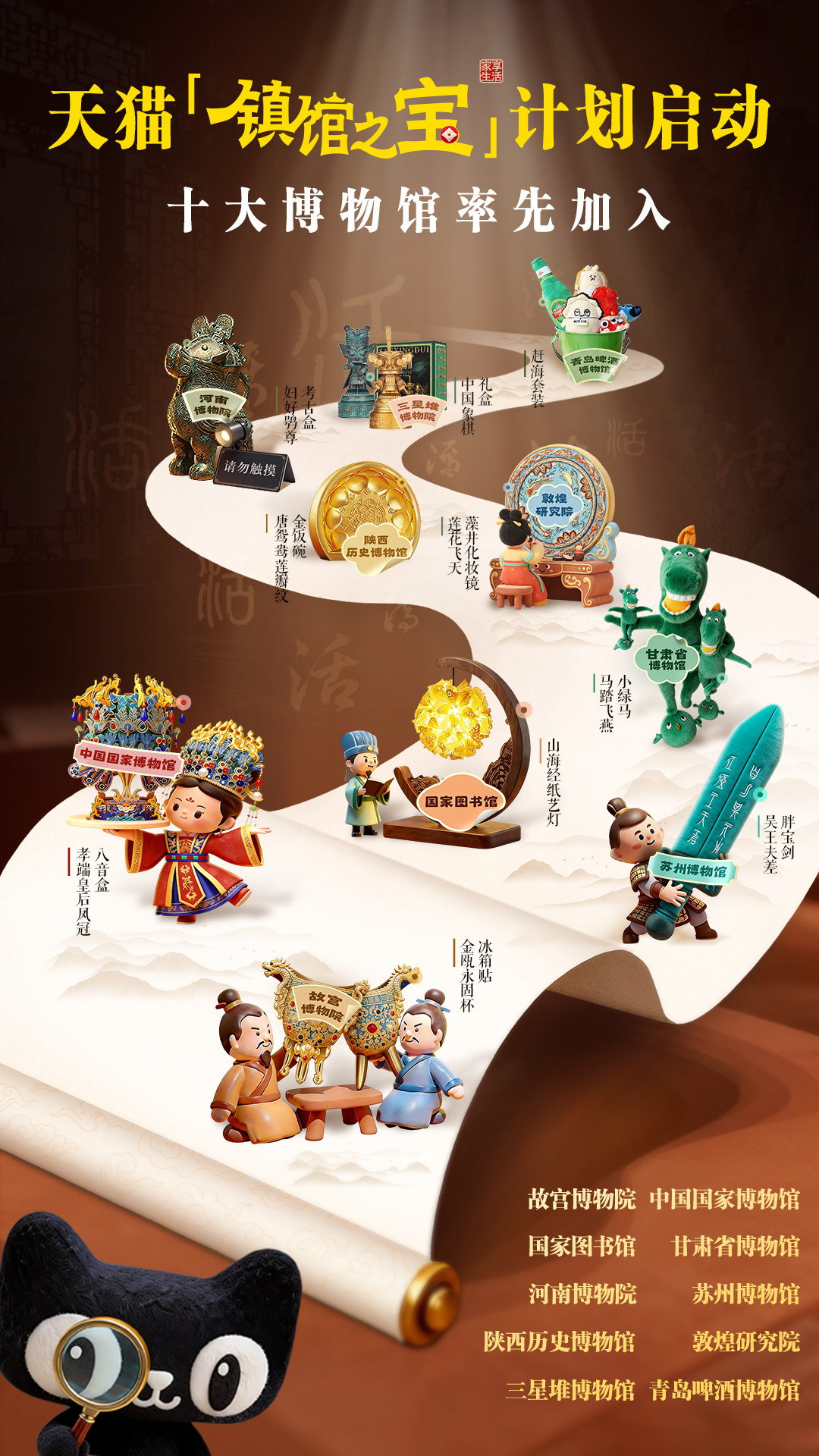
从冰墩墩引爆30亿元销售额,到国家博物馆“凤冠”冰箱贴热销数百万件;从敦煌研究院莲花飞天藻井化妆镜走红社交平台,到苏州博物馆“吴王夫差胖宝剑”圈粉无数年轻人。

这些现象级案例无不印证:文创的核心,在于以时代审美激活文化内核,让文物真正“活”在当下。

正如本次发布会传递的那样,“文创不再是一个简简单单的文物复刻,而是用现代的语言去讲好传统故事,让收藏在博物馆里的文物、书写在古籍里的文字,真正走向日常生活。”

02

平台赋能+跨界联动,打造文创新生态

亿邦动力获悉,为加速这一趋势,天猫在2026年重磅推出“镇馆之宝”计划,全面升级对博物馆文创的支持体系。该计划将上线专属文创频道,聚合新品资源,打造“边逛边买”的沉浸式消费体验。

同时提供从趋势洞察、新品设计、品牌联名到供应链的全链路扶持,目标年内孵化100款成交破百万的文创新品,并推动1万个品牌与博物馆IP深度联名。

目前,中国国家博物馆、故宫博物院、敦煌研究院、三星堆博物馆等10家顶级文博机构,已携手万仟堂、铜师傅、罗莱等知名品牌共同启动该计划。

北京市文旅局相关负责人表示:“电商平台让优质文创走出博物馆边界,既夯实文化传承基础,也激发文化消费活力。”

《2026天猫文创行业趋势报告》指出,消费者对文创产品的关注已从单纯功能性转向情绪价值与兴趣驱动,礼赠、装饰、祈福、婚庆成为四大核心场景。而“可玩、可互动、可分享”的产品形态,正成为突围关键。

天猫家居及文博行业总经理长骁表示:“天猫拥有全网最多的高净值用户、最丰富的品牌资源和最多的博物馆旗舰店,我们将架起消费者、博物馆与品牌之间的桥梁,让镇馆之宝‘火’起来——既是火爆的火,也是生活的活。”

接下来,天猫将持续深耕“文化+科技+生活”融合路径,通过数字化手段激活文物故事,以多元化产品满足消费升级需求,让每一件镇馆之宝,不仅承载历史厚重,更点亮当代生活。

亿邦持续追踪报道该情报,如想了解更多与本文相关信息,请扫码关注作者微信。

文章来源:亿邦动力

广告
微信
朋友圈

这么好看,分享一下?

朋友圈 分享

APP内打开

+1
+1
微信好友 朋友圈 新浪微博 QQ空间
关闭
收藏成功
发送
/140 0