广告
加载中

北京市商务局副局长卢慧玲:数智商业的时代已经来临

亿邦动力 2024-09-13 14:51
亿邦动力 2024/09/13 14:51

邦小白快读

EN
全文速览

文章详细介绍了数智商业时代的技术应用和北京的实践举措,提供关键信息和实操干货。

1. 新技术加速落地:人工智能、大模型等技术在电商中快速应用,如AIGC个性化推荐和内容生成,提升运营效率并创造新消费场景。这为普通用户带来更智能的购物体验和高效服务。

2. 数字化消费升级:北京推动数字消费创新,通过培育元宇宙、AR/VR虚拟体验等新业态,以及支持直播电商和即时零售,扩大高品质网络消费供给,帮助消费者享受便捷多样的购物方式。

3. 多业态转型案例:新老品牌如老字号通过潮流IP重构和跨界联名焕发活力,生活服务业如餐饮和零售数字化升级,提升消费便利性。这些举措为个人提供实操启示,如学习利用新技术优化日常消费。

文章聚焦品牌如何利用数智商业机遇,涉及品牌营销、渠道建设和消费趋势。

1. 品牌营销创新:新消费品牌借助社交网络和新媒介加速产品上新,提升消费体验;老字号品牌通过重构潮流IP、开发周边和跨界联名,讲好老故事并焕发新活力,这直接助力品牌差异化竞争。

2. 品牌渠道与消费趋势:北京推动数字技术赋能商业,培育元宇宙、AR/VR等新业态,反映用户行为偏向虚拟体验和绿色消费;联动线上线下,如建设智慧商圈和开设跨境电商体验店,为品牌拓展渠道提供机会。

3. 产品研发与定价启示:技术如AI和大模型改变生产生活方式,品牌可借鉴优化产品设计以适应数字化需求;同时,政策支持新型消费,引导品牌关注消费提质扩容,优化定价策略。

文章解读政策支持和市场机会,提供增长策略和风险规避点。

1. 政策解读与机会提示:北京优化电子商务支持政策,推动“一业一策”数字化升级行动,为卖家带来发展机遇;支持直播电商、即时零售等新业态快速增长,拓展跨境消费新场景,识别潜力市场。

2. 消费需求变化与应对措施:技术催生新商业模式,卖家可学习应用AIGC和大模型提升个性化推荐和智能客服,应对用户需求变化;正面影响包括提升运营效率和用户体验,负面影响可能涉及竞争加剧。

3. 合作方式和扶持政策:北京强调大平台带动赋能,卖家可寻求平台合作;政策推动数字化转型,提供可学习点如新老品牌案例,帮助规避风险并把握机会。

文章揭示数字化对生产和设计的启示,以及相关商业机会。

1. 产品生产与设计需求:人工智能、大模型等技术改变生产方式,工厂需适应以数据为中心的模式,优化产品设计;例如,AIGC应用可提升个性化定制能力,满足消费升级需求。

2. 商业机会与启示:参与多业态数字化转型如生活服务业升级,带来订单增长机会;北京“一业一策”政策鼓励工厂推进电商化,例如老字号焕新案例显示跨界联名潜力。

3. 推进数字化启示:北京推动新科技落地,工厂可借鉴运用AR/VR等技术提升生产效率;同时,智慧商圈建设和跨境电商为供应链提供新路径,启示工厂利用数字技术降低风险。

文章强调行业趋势和解决方案,针对客户痛点和新技术应用。

1. 行业发展趋势与新技术:数智商业时代来临,人工智能、大模型和虚拟现实技术快速发展,催生新业态如元宇宙和AR/VR体验;北京作为数字经济标杆,推动技术从模型向数据为中心转变,反映市场方向。

2. 客户痛点与解决方案:电商中客户痛点如流量获取和用户体验问题,解决方案包括大模型在个性化推荐、内容生成和高效智能客服的应用,助力商家提升效率;北京案例如智慧商圈升级提供实操参考。

3. 政策启示和未来机遇:北京强化数字消费创新行动,服务商可抓住新业态支持机会;技术加速落地带来需求,如跨境电商体验店启示解决跨境痛点,拓展服务范围。

文章探讨平台需求和最新做法,涉及招商和运营管理。

1. 商业需求与问题:平台需响应数智商业需求,如支持个性化推荐和智能客服提升用户体验;北京强调大平台带动赋能,反映出平台需解决新业态如直播电商和即时零售的运营挑战。

2. 平台最新做法:北京推动智慧商圈建设和数智化升级,开设跨境电商体验店,提供招商机会;平台可借鉴联动线上线下消费,扩大高品质网络供给,规避风向如竞争风险。

3. 运营管理和扶持策略:政策优化电子商务发展,平台可学习“一业一策”模式管理多业态;同时,新科技应用如AIGC助力流量转化,为平台招商提供工具,提升效率。

文章分析产业动向和政策启示,聚焦商业模式和新问题。

1. 产业新动向与新问题:人工智能、数字人等技术驱动新商业模式,如AIGC应用改变电商生态;北京案例显示数字化转型带来供给侧改革机遇,但也引出问题如业态融合挑战。

2. 政策法规建议与启示:北京以“四个中心”战略定位推动政策,如数字消费创新行动和“一业一策”升级,提供法规启示;研究者可探索政策对经济创新发展的影响。

3. 商业模式研究:新老品牌案例如老字号跨界联名和新消费社交网络策略,展现商业模式创新;同时,技术从模型向数据中心转变的动向,为研究提供实证方向。

返回默认

声明:快读内容全程由AI生成,请注意甄别信息。如您发现问题,请发送邮件至 run@ebrun.com 。

我是 品牌商 卖家 工厂 服务商 平台商 研究者 帮我再读一遍。

Quick Summary

The article details technological applications in the digital intelligence business era and Beijing's practical initiatives, offering key insights and actionable guidance.

1. Rapid Technology Adoption: AI and large language models are being quickly integrated into e-commerce, enabling AIGC for personalized recommendations and content generation. This boosts operational efficiency and creates new consumption scenarios, leading to smarter shopping experiences and more efficient services for users.

2. Digital Consumption Upgrade: Beijing is fostering digital consumption innovation by cultivating new formats like the metaverse and AR/VR virtual experiences, while supporting live-streaming e-commerce and instant retail. This expands the supply of high-quality online consumption, helping consumers enjoy more convenient and diverse shopping methods.

3. Multi-Format Transformation Cases: Heritage brands are revitalizing through trendy IP reinvention and cross-border collaborations, while lifestyle service sectors like dining and retail are undergoing digital upgrades to enhance convenience. These cases provide practical inspiration for individuals, such as learning to leverage new technologies to optimize daily consumption.

The article focuses on how brands can leverage opportunities in the digital intelligence business era, covering brand marketing, channel development, and consumption trends.

1. Brand Marketing Innovation: Emerging brands utilize social networks and new media to accelerate product launches and enhance consumer experiences. Heritage brands are reinventing themselves through trendy IP reconstruction, merchandise development, and cross-border collaborations, telling classic stories in new ways to achieve differentiation.

2. Brand Channels & Consumption Trends: Beijing's push to empower commerce with digital technologies, including cultivating metaverse and AR/VR formats, reflects shifting user behavior towards virtual experiences and green consumption. The integration of online and offline channels, such as smart business districts and cross-border e-commerce experience stores, presents new channel expansion opportunities for brands.

3. Product R&D & Pricing Insights: Technologies like AI and LLMs are altering production and lifestyles, offering brands models to optimize product design for digital demands. Simultaneously, policy support for new consumption types guides brands to focus on quality improvement and market expansion, informing pricing strategy optimization.

The article interprets policy support and market opportunities, offering growth strategies and risk mitigation points.

1. Policy Interpretation & Opportunity Identification: Beijing is refining e-commerce support policies and promoting 'one industry, one policy' digital upgrade initiatives, creating development opportunities for sellers. Support for rapidly growing formats like live-streaming e-commerce and instant retail, along with new cross-border consumption scenarios, helps identify potential markets.

2. Evolving Consumer Demands & Countermeasures: New technologies are spawning novel business models. Sellers can learn to apply AIGC and LLMs to enhance personalized recommendations and smart customer service, adapting to changing user needs. Positive impacts include improved operational efficiency and user experience, while potential negatives involve intensified competition.

3. Collaboration Models & Support Policies: Beijing emphasizes empowerment led by major platforms, suggesting sellers seek platform partnerships. Policies promoting digital transformation provide learnable points from case studies of both heritage and new brands, helping to mitigate risks and seize opportunities.

The article reveals implications of digitalization for production and design, along with related commercial opportunities.

1. Product Production & Design Needs: Technologies like AI and LLMs are transforming production methods, requiring factories to adapt to data-centric models and optimize product design. For instance, AIGC applications can enhance personalized customization capabilities to meet upgraded consumption demands.

2. Commercial Opportunities & Insights: Participation in the digital transformation of various sectors, such as lifestyle service upgrades, presents order growth opportunities. Beijing's 'one industry, one policy' approach encourages factories to advance e-commerce integration, with heritage brand revitalization cases demonstrating the potential of cross-border collaborations.

3. Digital Advancement Insights: Beijing's push for new technology adoption provides models for factories to utilize AR/VR and other technologies to boost production efficiency. Additionally, the development of smart business districts and cross-border e-commerce offers new pathways for the supply chain, illustrating how digital technologies can be leveraged to reduce risks.

The article emphasizes industry trends and solutions, targeting client pain points and new technology applications.

1. Industry Trends & New Technologies: The advent of the digital intelligence business era sees rapid development in AI, LLMs, and virtual reality, spawning new formats like the metaverse and AR/VR experiences. Beijing, as a digital economy benchmark, is driving a shift from model-centric to data-centric technology, reflecting market direction.

2. Client Pain Points & Solutions: Common e-commerce challenges like traffic acquisition and user experience issues can be addressed through solutions involving LLMs for personalized recommendations, content generation, and efficient smart customer service, helping merchants improve efficiency. Beijing's cases, such as smart business district upgrades, offer practical references.

3. Policy Insights & Future Opportunities: Beijing's reinforced digital consumption innovation initiatives present opportunities for service providers to capitalize on support for new formats. The accelerated adoption of technology creates demand; for example, cross-border e-commerce experience stores offer insights into solving cross-border pain points and expanding service scope.

The article explores platform requirements and latest practices, involving merchant acquisition and operational management.

1. Business Needs & Challenges: Platforms must respond to digital intelligence demands, such as supporting personalized recommendations and smart customer service to enhance user experience. Beijing's emphasis on major platforms leading empowerment reflects the need to address operational challenges in new formats like live-streaming e-commerce and instant retail.

2. Latest Platform Practices: Beijing's promotion of smart business district development and digital upgrades, including establishing cross-border e-commerce experience stores, creates merchant acquisition opportunities. Platforms can learn from integrating online and offline consumption to expand high-quality online supply and mitigate risks like competition.

3. Operational Management & Support Strategies: Policies optimizing e-commerce development offer models like the 'one industry, one policy' approach for managing diverse formats. Concurrently, new tech applications like AIGC aid traffic conversion, providing tools for merchant acquisition and enhancing platform efficiency.

The article analyzes industry movements and policy implications, focusing on business models and emerging issues.

1. Industry Movements & New Issues: Technologies like AI and digital humans are driving new business models, such as AIGC applications transforming the e-commerce ecosystem. Beijing's case studies reveal opportunities for supply-side reform through digital transformation, but also raise issues like the challenges of format integration.

2. Policy & Regulatory Implications: Beijing's strategy, aligned with its 'Four Centers' positioning, includes initiatives like the Digital Consumption Innovation Action and 'one industry, one policy' upgrades, offering regulatory insights. Researchers can explore the impact of these policies on economic innovation and development.

3. Business Model Research: Case studies of heritage brands (e.g., cross-border collaborations) and new consumer brands (e.g., social network strategies) demonstrate business model innovation. Furthermore, the industry shift from model-centric to data-centric technology provides empirical research directions.

Disclaimer: The "Quick Summary" content is entirely generated by AI. Please exercise discretion when interpreting the information. For issues or corrections, please email run@ebrun.com .

I am a Brand Seller Factory Service Provider Marketplace Seller Researcher Read it again.

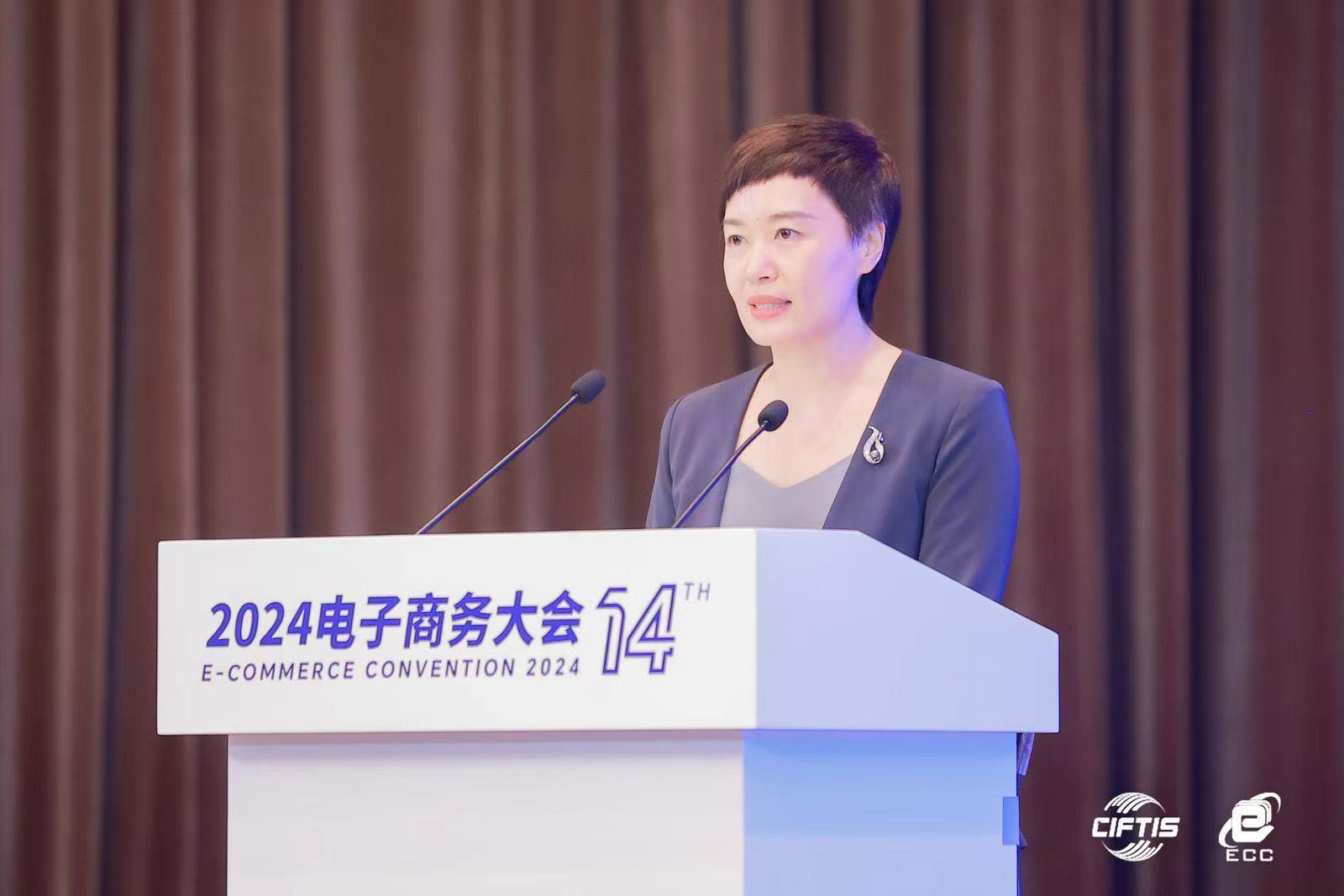
【亿邦原创】9月13日消息,在2024电子商务大会上,北京市商务局副局长卢慧玲为AI+数智商业专场致辞。她指出,人工智能、大模型、数字人、虚拟现实等技术快速发展,不断催生出新的商业模式和业态场景,数智商业的时代已经来临,企业应勇立数字电商的潮头,抓住创新发展机遇,开拓更加广阔的未来。

温馨提示:本文为速记初审稿,在不影响原意的基础上,由亿邦动力编辑整理。

以下为演讲实录:

尊敬的各位嘉宾,各位朋友,大家下午好!

非常高兴和大家相聚北京,共同出席2024电子商务大会AI+数智商业专场,共同展望AI赋能下的电子商务创新发展路径。在此,我谨代表北京市商务局对各位嘉宾的到来表示热烈的欢迎!向长期以来关心支持北京电子商务发展的各界人士表示衷心的感谢!

近年来,人工智能、大模型、数字人、虚拟现实等技术快速发展,不断催生出新的商业模式和业态场景,影响和改变着我们的生产与生活方式,成为深化推进供给侧改革、带动消费提质扩容、推进贸易转型升级、促进经济创新发展的新动能。北京以落实“四个中心”首都城市战略定位为指引,牢牢把握“五子联动”优势,积极融入新发展格局,加快推动数字经济赋能,助力北京国际消费中心城市建设。

在数字化的进程中,北京充分发挥数字经济领先优势,运用新科技、培养新业态、打造新品牌,促进新型数字消费提质扩容。

一是新技术加速落地应用,成为驱动电子商务发展的“新动能”。进入2024年,数字技术应用快速普及,以AI为代表的技术创新正在深刻改变生产生活方式。AIGC(生成式人工智能)技术应用火遍全球,大模型在个性化推荐、内容生成、高效智能客服、流量获取与转化等方面的解决方案加速落地,人工智能从“以模型为中心”加速向“以数据为中心”转变,助力商家、平台提升运营效率和用户体验,进一步创造新消费场景、打造新消费体验,催生电子商务增长的新动能新空间。

二是数字化赋能消费升级,成为引领消费创新的“风向标”。北京借势科技创新中心和数字经济标杆城市建设,强化数字技术,赋能商业发展,深入实施数字消费创新引领行动。发挥数字产业优势,丰富数字经济产品和服务供给,培育壮大元宇宙、AR/VR虚拟体验等数字消费新业态,扩大信息消费、绿色消费等新型消费。推动大平台带动赋能,支持直播电商、即时零售等新业态健康快速发展,扩大高品质网络消费供给。联动线上线下消费,加快推进智慧商圈建设,推动商圈时尚化数智化升级改造;开设10余家跨境电商体验店,打造跨境消费新场景。

三是多业态搭上数字经济快车,成为释放居民消费潜力的“加速器”。北京紧扣“便民”“提质”,持续优化迭代电子商务发展支持政策,引导推动各行各业数字化转型。新消费品牌发挥技术和流量优势,加速基于社交网络和新媒介的上新落地,持续提升消费体验、丰富消费内涵。老字号品牌通过重构潮流IP、开发周边、跨界联名等举措,讲好老故事、玩出新花样、焕发新活力。“一业一策”推进餐饮、零售、便利店等生活服务业数字化升级行动,为实体商家带来新的发展机遇,同时有力提升居民消费便利性多样性。

各位嘉宾,各位朋友,数智商业的时代已经来临。北京市将坚决贯彻落实国家部署,以推动高质量发展为主题,着力推动数智商业新技术新模式新业态发展,大力拓展新型数字消费场景,以数字技术赋能消费升级,推进北京培育建设国际消费中心城市再上新台阶。

创新时代,唯变不变。我们驭时代之风,以变应变。衷心希望本次大会能为大家带来思想的启迪和灵感的迸发,勇立数智电商的潮头,把握创新发展的机遇,开拓更加广阔的未来。

最后,预祝大会取得圆满成功!祝各位嘉宾在北京生活愉快、工作顺利、身体健康!

谢谢大家!

关于本次会议:

电子商务大会自2011年以来已连续举办十四届,作为中国国际服务贸易交易会(简称“服贸会”)重要组成部分,已成为引领电子商务发展前沿理念、展现电子商务创新成果、洞悉电子商务发展趋势的国际化专业化交流平台。

本届大会以“全景融合 数智领航”为主题,邀请到上合组织、商务部研究院、中国国际电子商务中心等机构专家代表,以及京东、阿里、美团、多点、同仁堂、转转集团、齐心集团、硅基智能、敦煌网、极睿科技等企业高管共聚一堂,探索电商全景融合的业态发展趋势,展望数智创新导向的产业变革方向。

文章来源:亿邦动力

广告
微信
朋友圈

FAQ回顾

数智商业时代的主要驱动技术有哪些?

数智商业时代主要由人工智能、大模型、数字人、虚拟现实和AIGC(生成式人工智能)等技术驱动,这些技术催生了新的商业模式和业态场景。

北京在推动数智商业发展方面有哪些具体举措?

北京通过实施数字消费创新引领行动,培育元宇宙、AR/VR等新业态,支持直播电商和即时零售,建设智慧商圈,并开设10余家跨境电商体验店以打造新消费场景。

2024电子商务大会的主题和重点是什么?

2024电子商务大会主题为“全景融合 数智领航”,重点探讨AI赋能下的电子商务创新发展路径、数智商业新技术新模式以及电商全景融合的业态发展趋势。

这么好看,分享一下?

朋友圈 分享

APP内打开

赞 +1
+1
微信好友 朋友圈 新浪微博 QQ空间
关闭
收藏成功
发送
/140 0