广告
加载中

量利双升 石头科技Q3营收56.14亿元 同比增长34.85%

龚作仁 2026-10-30 16:55
龚作仁 2026/10/30 16:55

邦小白快读

EN
全文速览

总1

1.核心业绩:前三季度营收156.99亿元,同比增长30.10%;归母净利润14.66亿元,同比增长41.23%;扣非归母净利润12.06亿元,同比增长44.50%。第三季度营收56.14亿元,同比增长34.85%;归母净利润4.79亿元,同比增长33.01%;扣非归母净利润4.03亿元,同比增长20.25%。

2.行业对比:三季度中国扫地机器人零售额30.20亿元,同比下降12.41%,均价3230元/台,同比下降5.41%;洗地机零售额27.67亿元,同比下降8.75%,均价同比下降12.58%。石头扫地机器人零售额9.19亿元,同比增长2.24%,份额30.44%,同比提升4.34个百分点;洗地机零售额7.52亿元,同比增长23.27%,份额27.17%,同比提升7.06个百分点。

总2

1.价格表现:石头扫地机器人均价3896元/台,为头部最高,价格指数120.64居头部首位且同比提升1.69个百分点;洗地机均价2038元/台,价格指数121.57,同比提升9.06个百分点,增长并非以价换量。

2.终端动销:天猫双11品牌竞速榜登顶淘系全站小家电、居家清洁、扫地机器人、洗地机四大榜单;抖音开门红GMV达1.4亿元,环比提升220%,位列清洁电器类目第一;京东竞速榜扫地机器人品类、洗地机品类均位列第一。

3.经营细节:销售费用率从去年同期26.36%降至21.95%;三季度主动为双十一、黑五及圣诞季加大核心产品备货,叠加海外仓布局深化、新品类渠道拓展,阶段性增加资金占用。

总1

1.品牌营销:石头科技登顶天猫双11品牌竞速榜淘系全站小家电、居家清洁、扫地机器人、洗地机四大榜单;抖音平台开门红GMV达1.4亿元,环比提升220%,位列清洁电器类目第一;京东竞速榜扫地机器人品类、洗地机品类均位列第一,体现品牌在大促节点的动销能力。

2.定价与价格竞争:三季度石头扫地机器人均价3896元/台,为头部最高,价格指数120.64居头部首位且同比提升1.69个百分点;洗地机均价2038元/台,同样为头部最高,价格指数121.57,同比提升9.06个百分点。在部分头部品牌大幅降价对比下,石头扫地机器人均价同比仅下降4.06%,低于行业平均降幅,价盘保持相对坚挺。

总2

1.产品研发:扫地机器人基本盘稳固,G30S Ultra等旗舰机型站稳高端市场,价格体系保持坚挺;洗地机第二增长曲线加速放量,A30 Pro Steam 3.0等差异化产品竞争力突出,产品结构持续优化是盈利改善的核心抓手。

2.消费趋势与用户行为:全球清洁电器行业由规模扩张转向高质量深耕,增长含金量与经营稳定性成为核心竞争力;三季度扫地机器人、洗地机大盘零售额和均价均下降,行业前五品牌扫地机器人份额约89.9%、洗地机约83.4%,头部效应凸显,用户向具备技术壁垒、品牌力和渠道管控能力的龙头集中。

总1

1.增长市场:扫地机器人行业整体承压,三季度零售额30.20亿元,同比下降12.41%,均价3230元/台,同比下降5.41%;石头扫地机器人零售额9.19亿元,同比增长2.24%,份额30.44%,同比提升4.34个百分点。洗地机行业零售额27.67亿元,同比下降8.75%,石头洗地机零售额7.52亿元,同比增长23.27%,份额27.17%,同比提升7.06个百分点,洗地机是更亮眼的增长点。

2.需求与机会:行业竞争转向技术、品牌与渠道综合实力比拼,头部集中加速,具备技术壁垒、品牌力和渠道管控能力的龙头企业正在收割份额;石头双品类协同带动收入增长,盈利中枢持续上移。

总2

1.事件应对:海外亚马逊Prime Day大促前置至6月,部分销售高峰前移,三季度主业仍实现稳健增长,增长不依赖单一大促拉动,日常经营底盘扎实。

2.风险与机会:行业大盘微缩、均价下行,部分头部品牌大幅降价;石头扫地机器人均价同比仍下降4.06%,但价盘相对坚挺。机会在于份额提升、洗地机放量、费用率从26.36%降至21.95%、规模效应释放。

3.经营节奏:三季度是四季度消费旺季前置备货窗口,公司主动为国内双十一、海外黑五及圣诞季加大核心产品备货,并叠加海外仓布局深化、新品类渠道拓展,阶段性增加资金占用。

总1

1.产品生产和设计需求:扫地机器人G30S Ultra等旗舰机型站稳高端市场,价格体系保持坚挺;洗地机A30 Pro Steam 3.0等差异化产品竞争力突出;产品结构持续优化是盈利改善的核心抓手,双品类协同带动收入稳步增长。

2.商业机会:洗地机第二增长曲线加速放量,三季度零售额7.52亿元,同比增长23.27%,份额27.17%,同比提升7.06个百分点;扫地机器人基本盘稳固,三季度零售额9.19亿元,同比增长2.24%,份额30.44%,同比提升4.34个百分点。

总2

1.备货与渠道启示:三季度是四季度消费旺季的前置备货窗口,公司针对国内双十一、海外黑五及圣诞季主动加大核心产品备货力度,同时叠加海外仓布局深化、新品类渠道拓展等战略性资金投入。

2.电商与数字化启示:终端动销依托天猫、抖音、京东等平台,天猫双11品牌竞速榜四榜第一,抖音开门红GMV达1.4亿元、环比提升220%,京东竞速榜扫地机器人和洗地机均第一;渠道精细化运营和主动经营节奏安排形成支撑。

3.经营效率:销售费用率从26.36%降至21.95%,规模效应持续释放;扣非归母净利润同比增长44.50%,增速快于收入增速,主营业务盈利能力持续增强。

总1

1.行业趋势:全球清洁电器行业处于结构调整阶段,发展重心由规模扩张转向高质量深耕,增长含金量与经营稳定性成为衡量企业核心竞争力的重要标尺;行业集中度持续提升,扫地机器人前五品牌合计销额份额约89.9%,洗地机前五品牌份额约83.4%,头部效应凸显。

2.客户痛点:三季度中国扫地机器人零售额30.20亿元,同比下降12.41%,均价3230元/台,同比下降5.41%;洗地机零售额27.67亿元,同比下降8.75%,均价同比下降12.58%;部分头部品牌大幅降价,行业大盘微缩,价盘与份额承压。

总2

1.解决方案:以技术驱动、品牌建设和渠道精细化运营为增长路径;产品结构优化,G30S Ultra等旗舰站稳高端,A30 Pro Steam 3.0等差异化产品提升竞争力;双品类协同带动收入增长,费用率优化和规模效应释放。

2.运营安排:三季度主动为双十一、黑五及圣诞季备货,叠加海外仓布局深化、新品类渠道拓展,阶段性增加资金占用;终端动销在天猫、抖音、京东榜单领先,抖音开门红GMV达1.4亿元,环比提升220%,验证渠道运营效果。

总1

1.平台需求与动销:品牌在双11、开门红等节点集中释放,石头科技登顶天猫双11品牌竞速榜淘系全站小家电、居家清洁、扫地机器人、洗地机四大榜单;抖音平台开门红GMV达1.4亿元,环比提升220%,位列清洁电器类目第一;京东竞速榜扫地机器人品类、洗地机品类均位列第一。

2.平台最新做法:文章呈现天猫双11品牌竞速榜、抖音开门红、京东竞速榜等榜单营销和竞速机制,平台成为品牌大促动销、品类竞争和头部品牌排位的重要场域。

总2

1.运营管理:清洁电器行业集中度提升,扫地机器人前五品牌合计销额份额约89.9%,洗地机前五品牌份额约83.4%,头部品牌效应凸显,平台需关注头部品牌份额和价盘变化。

2.风向规避:三季度扫地机器人零售额同比下降12.41%,均价同比下降5.41%;洗地机零售额同比下降8.75%,均价同比下降12.58%;海外亚马逊Prime Day大促前置至6月,部分销售高峰前移;品牌主动为双十一、黑五及圣诞季备货带来阶段性资金占用,平台应关注大促节奏和备货资金安排。

总1

1.产业新动向:全球清洁电器行业正处于结构调整阶段,发展重心由规模扩张转向高质量深耕,增长含金量与经营稳定性已成为衡量企业核心竞争力的重要标尺;行业集中度持续提升,扫地机器人前五品牌合计销额份额约89.9%,洗地机前五品牌份额约83.4%,头部效应凸显。

2.新问题:三季度中国扫地机器人零售额30.20亿元,同比下降12.41%,均价3230元/台,同比下降5.41%;洗地机零售额27.67亿元,同比下降8.75%,均价同比下降12.58%;部分头部品牌大幅降价,而石头扫地机器人均价同比仅下降4.06%,价格指数120.64居头部首位,价盘相对坚挺。

总2

1.商业模式:石头科技验证技术驱动、品牌建设和渠道精细化运营的增长路径;产品结构优化,G30S Ultra等旗舰机型站稳高端,A30 Pro Steam 3.0等差异化产品提升竞争力,洗地机第二增长曲线加速放量,双品类协同带动收入增长。

2.经营启示:前三季度扣非归母净利润同比增长44.50%,增速快于收入增速;销售费用率从26.36%降至21.95%,规模效应持续释放;增长不依赖单一大促,日常经营底盘扎实;主动备货和海外仓、新品类渠道投入带来阶段性资金占用。

返回默认
声明:快读内容全程由AI生成,请注意甄别信息。如您发现问题,请发送邮件至 run@ebrun.com 。

我是 品牌商 卖家 工厂 服务商 平台商 研究者 帮我再读一遍。

Quick Summary

Summary 1

1. Core performance: Revenue in the first three quarters reached RMB 15.699 billion, up 30.10% YoY; net profit attributable to shareholders was RMB 1.466 billion, up 41.23% YoY; net profit attributable to shareholders excluding non-recurring items was RMB 1.206 billion, up 44.50% YoY. In Q3, revenue was RMB 5.614 billion, up 34.85% YoY; net profit attributable to shareholders was RMB 479 million, up 33.01% YoY; net profit attributable to shareholders excluding non-recurring items was RMB 403 million, up 20.25% YoY.

2. Industry comparison: In Q3, China's robot vacuum retail sales were RMB 3.020 billion, down 12.41% YoY, with an ASP of RMB 3,230 per unit, down 5.41% YoY; floor washer retail sales were RMB 2.767 billion, down 8.75% YoY, and ASP fell 12.58% YoY. Roborock's robot vacuum retail sales were RMB 919 million, up 2.24% YoY, with a 30.44% share, up 4.34 pp YoY; floor washer retail sales were RMB 752 million, up 23.27% YoY, with a 27.17% share, up 7.06 pp YoY.

Summary 2

1. Pricing performance: Roborock's robot vacuum ASP was RMB 3,896 per unit, the highest among leading players; its price index of 120.64 ranked first among leading players and rose 1.69 pp YoY. Floor washer ASP was RMB 2,038 per unit, with a price index of 121.57, up 9.06 pp YoY; growth was not achieved by trading price for volume.

2. Retail sell-through: Topped four Tmall Double 11 brand race rankings across the Taobao ecosystem—small home appliances, home cleaning, robot vacuums, and floor washers; Douyin opening-campaign GMV reached RMB 140 million, up 220% from the prior period, ranking first in the cleaning appliances category; ranked first in both robot vacuum and floor washer categories on JD's brand race rankings.

3. Operating details: The selling expense ratio fell from 26.36% in the year-ago period to 21.95%. In Q3, the company proactively increased inventory of core products for Double 11, Black Friday, and the Christmas season; combined with deeper overseas warehouse deployment and channel expansion for new categories, this temporarily increased working capital occupation.

Summary 1

1. Brand marketing: Roborock topped four Tmall Double 11 brand race rankings across the Taobao ecosystem—small home appliances, home cleaning, robot vacuums, and floor washers. On Douyin, opening-campaign GMV reached RMB 140 million, up 220% from the prior period, ranking first in the cleaning appliances category. On JD's brand race rankings, it ranked first in both robot vacuums and floor washers, demonstrating the brand's sell-through capability during major promotions.

2. Pricing and price competition: In Q3, Roborock's robot vacuum ASP was RMB 3,896 per unit, the highest among leading players; its price index of 120.64 ranked first among leading players and rose 1.69 pp YoY. Floor washer ASP was RMB 2,038 per unit, also the highest among leading players, with a price index of 121.57, up 9.06 pp YoY. Against sharp price cuts by some leading brands, Roborock's robot vacuum ASP fell only 4.06% YoY, below the industry average decline, keeping its pricing relatively firm.

Summary 2

1. Product R&D: The robot vacuum base remains solid, with flagship models such as the G30S Ultra holding firm in the high-end market and the pricing structure remaining resilient. The floor washer second growth curve is accelerating, with differentiated products such as the A30 Pro Steam 3.0 showing strong competitiveness; continuous product mix optimization is the core driver of profitability improvement.

2. Consumer trends and user behavior: The global cleaning appliance industry is shifting from scale expansion to high-quality deepening, with growth quality and operational stability becoming core competitiveness. In Q3, both retail sales and ASPs of robot vacuums and floor washers declined. The top five brands accounted for about 89.9% of robot vacuum share and about 83.4% of floor washer share, highlighting the leader effect as users concentrate toward leaders with technical barriers, brand strength, and channel control capabilities.

Summary 1

1. Growth market: The robot vacuum industry is under overall pressure. Q3 retail sales were RMB 3.020 billion, down 12.41% YoY, with an ASP of RMB 3,230 per unit, down 5.41% YoY. Roborock's robot vacuum retail sales were RMB 919 million, up 2.24% YoY, with a 30.44% share, up 4.34 pp YoY. The floor washer industry's retail sales were RMB 2.767 billion, down 8.75% YoY; Roborock's floor washer retail sales were RMB 752 million, up 23.27% YoY, with a 27.17% share, up 7.06 pp YoY, making floor washers the brighter growth point.

2. Demand and opportunities: Industry competition is shifting to a comprehensive contest of technology, brand, and channels, with leader concentration accelerating. Leading companies with technical barriers, brand strength, and channel control are capturing share; Roborock's two-category synergy drives revenue growth and continues to lift its profitability level.

Summary 2

1. Event response: Amazon's overseas Prime Day was moved earlier to June, shifting some sales peaks forward. In Q3, the core business still achieved steady growth, showing that growth does not depend on a single major promotion and that the day-to-day operating foundation is solid.

2. Risks and opportunities: The overall market contracted slightly and ASPs declined, with some leading brands cutting prices sharply. Roborock's robot vacuum ASP still fell 4.06% YoY, but its pricing remained relatively firm. Opportunities lie in share gains, floor washer volume growth, the selling expense ratio falling from 26.36% to 21.95%, and economies of scale being released.

3. Operating rhythm: Q3 is a pre-stocking window ahead of the Q4 peak consumption season. The company proactively increased inventory of core products for domestic Double 11 and overseas Black Friday and Christmas, while deepening overseas warehouse deployment and expanding channels for new categories, temporarily increasing working capital occupation.

Summary 1

1. Product production and design requirements: Flagship models such as the robot vacuum G30S Ultra hold firm in the high-end market, and the pricing structure remains resilient; differentiated products such as the floor washer A30 Pro Steam 3.0 are highly competitive. Continuous product mix optimization is the core driver of profitability improvement, and two-category synergy drives steady revenue growth.

2. Business opportunities: The floor washer second growth curve is accelerating, with Q3 retail sales of RMB 752 million, up 23.27% YoY, and a 27.17% share, up 7.06 pp YoY. The robot vacuum base remains solid, with Q3 retail sales of RMB 919 million, up 2.24% YoY, and a 30.44% share, up 4.34 pp YoY.

Summary 2

1. Inventory and channel implications: Q3 is a pre-stocking window for the Q4 peak consumption season. The company proactively increased stocking of core products for domestic Double 11 and overseas Black Friday and Christmas, while making strategic capital deployments such as deeper overseas warehouse deployment and channel expansion for new categories.

2. E-commerce and digitalization implications: Retail sell-through relies on platforms including Tmall, Douyin, and JD. It ranked first on all four Tmall Double 11 brand race lists; Douyin opening-campaign GMV reached RMB 140 million, up 220% from the prior period; and it ranked first in both robot vacuums and floor washers on JD's brand race rankings. Refined channel operations and proactive operating pacing provide support.

3. Operating efficiency: The selling expense ratio fell from 26.36% to 21.95%, and economies of scale continued to be released. Net profit attributable to shareholders excluding non-recurring items rose 44.50% YoY, faster than revenue growth, and the profitability of the core business continued to strengthen.

Summary 1

1. Industry trends: The global cleaning appliance industry is in a structural adjustment phase, with its development focus shifting from scale expansion to high-quality deepening. Growth quality and operational stability have become important gauges of core competitiveness. Industry concentration continues to rise: the top five robot vacuum brands account for about 89.9% of sales share, and the top five floor washer brands account for about 83.4%, highlighting the leader effect.

2. Customer pain points: In Q3, China's robot vacuum retail sales were RMB 3.020 billion, down 12.41% YoY, with an ASP of RMB 3,230 per unit, down 5.41% YoY; floor washer retail sales were RMB 2.767 billion, down 8.75% YoY, and ASP fell 12.58% YoY. Some leading brands cut prices sharply, the overall market contracted slightly, and pricing and share came under pressure.

Summary 2

1. Solutions: Pursue growth through technology drivers, brand building, and refined channel operations; optimize the product mix, with flagships such as the G30S Ultra holding the high end and differentiated products such as the A30 Pro Steam 3.0 enhancing competitiveness; two-category synergy drives revenue growth, while expense ratio optimization and economies of scale are released.

2. Operational arrangements: In Q3, the company proactively stocked for Double 11, Black Friday, and Christmas, while deepening overseas warehouse deployment and expanding channels for new categories, temporarily increasing working capital occupation. Retail sell-through led on Tmall, Douyin, and JD rankings; Douyin opening-campaign GMV reached RMB 140 million, up 220% from the prior period, validating channel operation results.

Summary 1

1. Platform demand and sell-through: Brands concentrated their releases around campaign nodes such as Double 11 and opening campaigns. Roborock topped four Tmall Double 11 brand race rankings across the Taobao ecosystem—small home appliances, home cleaning, robot vacuums, and floor washers. On Douyin, opening-campaign GMV reached RMB 140 million, up 220% from the prior period, ranking first in the cleaning appliances category. On JD's brand race rankings, it ranked first in both robot vacuums and floor washers.

2. Latest platform practices: The article presents ranking-based marketing and race mechanisms such as Tmall's Double 11 brand race rankings, Douyin's opening campaign, and JD's brand race rankings. Platforms have become key arenas for brand sell-through during major promotions, category competition, and leading-brand rankings.

Summary 2

1. Operations management: Concentration in the cleaning appliance industry is rising. The top five robot vacuum brands account for about 89.9% of sales share, and the top five floor washer brands account for about 83.4%, highlighting the leading-brand effect. Platforms need to monitor changes in leading brands' share and pricing.

2. Market risks to watch: In Q3, robot vacuum retail sales fell 12.41% YoY and ASP fell 5.41% YoY; floor washer retail sales fell 8.75% YoY and ASP fell 12.58% YoY. Amazon's overseas Prime Day was moved earlier to June, shifting some sales peaks forward. Brands proactively stocking for Double 11, Black Friday, and Christmas creates temporary working capital occupation, so platforms should monitor promotion pacing and stocking-related funding arrangements.

Summary 1

1. New industry developments: The global cleaning appliance industry is in a structural adjustment phase, with its development focus shifting from scale expansion to high-quality deepening. Growth quality and operational stability have become important gauges of core competitiveness. Industry concentration continues to rise: the top five robot vacuum brands account for about 89.9% of sales share, and the top five floor washer brands account for about 83.4%, highlighting the leader effect.

2. Emerging issues: In Q3, China's robot vacuum retail sales were RMB 3.020 billion, down 12.41% YoY, with an ASP of RMB 3,230 per unit, down 5.41% YoY; floor washer retail sales were RMB 2.767 billion, down 8.75% YoY, and ASP fell 12.58% YoY. Some leading brands cut prices sharply, while Roborock's robot vacuum ASP fell only 4.06% YoY; its price index of 120.64 ranked first among leading players, and its pricing remained relatively firm.

Summary 2

1. Business model: Roborock validates a growth path driven by technology, brand building, and refined channel operations. Product mix optimization, with flagship models such as the G30S Ultra holding the high end and differentiated products such as the A30 Pro Steam 3.0 enhancing competitiveness, plus the floor washer second growth curve accelerating, drives revenue growth through two-category synergy.

2. Operational implications: In the first three quarters, net profit attributable to shareholders excluding non-recurring items rose 44.50% YoY, faster than revenue growth. The selling expense ratio fell from 26.36% to 21.95%, and economies of scale continued to be released. Growth did not depend on a single major promotion, and the day-to-day operating foundation was solid. Proactive stocking and investment in overseas warehouses and new-category channels brought temporary working capital occupation.

Disclaimer: The "Quick Summary" content is entirely generated by AI. Please exercise discretion when interpreting the information. For issues or corrections, please email run@ebrun.com .

I am a Brand Seller Factory Service Provider Marketplace Seller Researcher Read it again.

石头科技10月30日晚发布的2026年第三季度业绩显示,公司前三季度营收156.99亿元,同比增长30.10%;归母净利润14.66亿元,同比增长41.23%;扣非归母净利润12.06亿元,同比增长44.50%。其中,第三季度实现营业收入56.14亿元,同比增长34.85%;归母净利润4.79亿元,同比增长33.01%;扣非归母净利润4.03亿元,同比增长20.25%。

当前全球清洁电器行业正处于结构调整阶段,发展重心由规模扩张转向高质量深耕,增长的含金量与经营稳定性已成为衡量企业核心竞争力的重要标尺。

行业调整的幅度,从最新的第三方数据可见一斑。据奥维云网数据,2026年三季度中国扫地机器人整体市场零售额30.20亿元,同比下降12.41%;市场均价3230元/台,同比下降5.41%。洗地机市场同样承压,三季度整体零售额27.67亿元,同比下降8.75%,市场均价同比下降12.58%。

在大盘微缩的背景下,石头科技的逆势增长尤为突出。

奥维云网数据显示,三季度石头科技扫地机器人零售额9.19亿元,同比增长2.24%,是头部品牌中少数保持正增长的企业;市场份额达30.44%,同比提升4.34个百分点。洗地机业务增速更为亮眼,零售额7.52亿元,同比增长23.27%,份额达27.17%,同比大幅提升7.06个百分点,稳居行业头部梯队。

值得关注的是,石头科技的增长并非以价换量。数据显示,三季度石头扫地机器人均价3896元/台,为头部品牌最高,价格指数120.64居头部首位且同比提升1.69个百分点。在部分头部品牌大幅降价的对比下,石头均价同比仅下降4.06%,低于行业平均降幅,价盘保持相对坚挺。洗地机均价2038元/台同样为头部最高,价格指数121.57同比提升9.06个百分点,在行业均价同比下降超12%的环境下实现了份额与产品定位的双重提升。

这种逆势增长的背后,是行业集中度持续提升的大趋势。当前扫地机器人行业前五品牌合计销额份额约89.9%,洗地机前五品牌份额约83.4%,头部效应凸显,具备技术壁垒、品牌力和渠道管控能力的龙头企业正在加速收割市场份额。

财报数据印证了盈利质量的改善。前三季度扣非归母净利润同比增长44.50%,增速快于收入增速,说明主营业务的盈利能力在持续增强。公司在财报中表示,营收增长的同时,各项费率持续优化,运营效率进一步提升。销售费用率从去年同期的26.36%降至21.95%,规模效应持续释放。

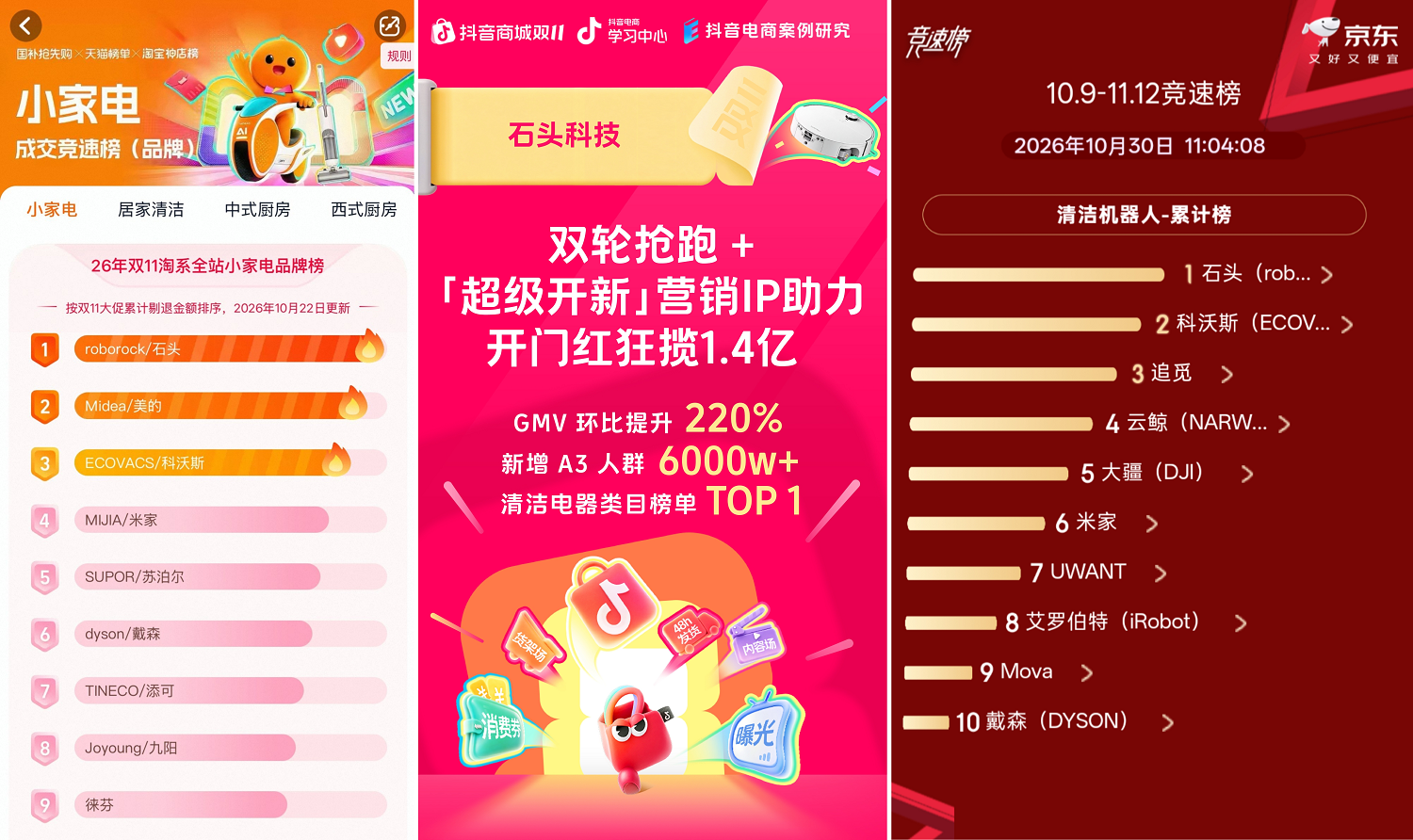
终端动销数据也印证了增长的可持续性。据天猫双11品牌竞速榜(10月22日更新),石头科技登顶淘系全站小家电、居家清洁、扫地机器人、洗地机四大品牌榜单;抖音平台开门红GMV达1.4亿元,环比提升220%,位列清洁电器类目第一;京东平台竞速榜(10月30日更新)扫地机器人品类、洗地机品类均位列第一。

尽管海外亚马逊Prime Day大促前置至6月、部分销售高峰前移,三季度主业依然实现稳健增长,增长不依赖单一大促拉动,由此可见日常经营底盘扎实。

现金流方面,三季度现金流波动源于公司主动的经营节奏安排。三季度是四季度消费旺季的前置备货窗口期,公司针对国内“双十一”、海外“黑五”及圣诞季主动加大核心产品备货力度,同时叠加海外仓布局深化、新品类渠道拓展等战略性资金投入,阶段性增加了资金占用。

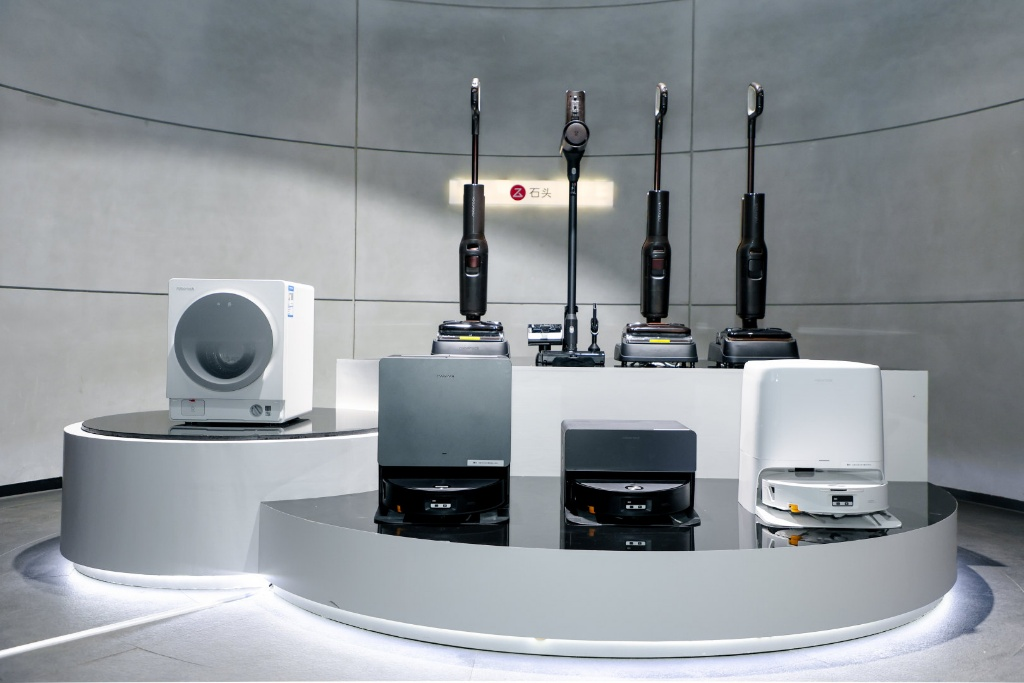
盈利质量的稳步提升,源于产品、规模、费用等多维度的协同优化,内生增长动力充足。产品端,产品结构的持续优化是盈利改善的核心抓手。扫地机器人基本盘稳固,G30S Ultra等旗舰机型站稳高端市场,价格体系保持坚挺;洗地机第二增长曲线加速放量,A30 Pro Steam 3.0等差异化产品竞争力突出。双品类协同带动收入稳步增长,盈利中枢持续上移。

整体来看,当前清洁电器市场份额持续向头部集中,行业竞争已转向技术、品牌与渠道的综合实力比拼。石头科技在行业调整期实现份额提升与价盘坚挺,验证了技术驱动、品牌建设和渠道精细化运营的增长路径正在奏效。随着行业出清进入深水区,龙头企业的经营韧性与增长质量将进一步凸显。

注:文/龚作仁,文章来源:Laborer,本文为作者独立观点,不代表亿邦动力立场。

文章来源:Laborer

广告
微信
朋友圈

FAQ回顾

2026年三季度中国扫地机器人市场整体表现如何?

据奥维云网数据,2026年三季度中国扫地机器人整体市场零售额30.20亿元,同比下降12.41%;市场均价3230元/台,同比下降5.41%。同期洗地机零售额27.67亿元,同比下降8.75%,均价同比下降12.58%。行业处于结构调整阶段,发展重心由规模扩张转向高质量深耕。

石头科技2026年三季度业绩如何?

2026年第三季度石头科技营收56.14亿元,同比增长34.85%;归母净利润4.79亿元,同比增长33.01%。前三季度营收156.99亿元,同比增长30.10%;扣非归母净利润12.06亿元,同比增长44.50%,增速快于收入,主营业务盈利能力持续增强。

石头科技在扫地机器人和洗地机市场的份额是多少?

奥维云网数据显示,2026年三季度石头科技扫地机器人零售额9.19亿元,同比增长2.24%,市场份额30.44%,同比提升4.34个百分点;洗地机零售额7.52亿元,同比增长23.27%,市场份额27.17%,同比提升7.06个百分点,稳居行业头部梯队。

清洁电器行业为什么出现市场份额向头部集中?

当前扫地机器人行业前五品牌合计销额份额约89.9%,洗地机前五品牌份额约83.4%,头部效应凸显。行业竞争转向技术、品牌与渠道综合实力比拼,具备技术壁垒、品牌力和渠道管控能力的龙头企业正在加速收割市场份额。

石头科技双11在主要电商平台表现如何?

据天猫双11品牌竞速榜(10月22日更新),石头科技登顶淘系全站小家电、居家清洁、扫地机器人、洗地机四大品牌榜单;抖音平台开门红GMV达1.4亿元,环比提升220%,位列清洁电器类目第一;京东平台竞速榜(10月30日更新)扫地机器人、洗地机品类均位列第一。

这么好看,分享一下?

朋友圈 分享

APP内打开

赞 +1
+1
微信好友 朋友圈 新浪微博 QQ空间
关闭
收藏成功
发送
/140 0