广告
加载中

声访携手联合利华 以AI深访洞察一瓶美白沐浴露如何打动消费者

龚作仁 2026-10-22 10:58
龚作仁 2026/10/22 10:58

邦小白快读

EN
全文速览

总1 文章讲的是联合利华旗下力士携手京东百灵访谈调研数字员工“声访”,用AI深访研究美白型沐浴露消费者。

1. 研究在数天内完成近20位消费者深度访谈,覆盖已购用户、意向未购用户、竞品用户和跨品类用户。

2. 访谈用动态大纲和追问,围绕产品体验、复购条件、购买卡点、替代选择、身体护理需求等还原决策过程。

总2 文章给出三个可操作洞察。

1. 有美白需求不等于认可沐浴露功效,品牌要帮助消费者理解产品与功效关系。

2. 竞争来自同类品牌、同品类功效产品、基础洗护价格参照以及身体乳、磨砂膏等跨品类分流。

3. 卖点吸引注意不等于建立信任,需要清晰完整的检测信息和可信的效果表达。

总3 研究结果还转化为产品、传播、促销、人群运营与平台运营五方面策略建议,并结合私域触达和人群资产沉淀。这提示消费者研究可更快、更常态化地服务业务。

总1 文章核心是力士用AI深访洞察美白沐浴露消费者决策,为产品策略与营销优化提供参考。

1. 研究分层覆盖已购、意向未购、竞品和跨品类用户,分别追问产品体验与复购条件、购买卡点、替代选择原因、身体护理需求与选择逻辑。

2. 消费者有美白需求不等于认可沐浴露美白功效,品牌不能只突出卖点,还要帮助消费者理解产品与功效关系,建立认知与信任。

3. 消费者比较的是多种满足需求的方案,竞争包括同类品牌、同品类功效产品的成分认知与性价比、基础洗护价格参照、身体乳和磨砂膏等跨品类分流。

总2 营销沟通上,品牌传播若始终围绕同一组卖点,可能与消费者当下关心的问题错位,需将传播内容与决策阶段匹配。

1. 卖点能吸引注意但不足以建立信任,官方资质之外还需清晰完整的检测信息,避免过于绝对或缺乏参照的效果量化表达。

2. 未下单原因包括价格预期、产品认知不足、缺乏可信口碑验证、特定渠道库存情况,需识别不同人群真实流失原因,针对性调整产品表达、信息呈现与运营策略,而非仅靠降价或强化卖点。

3. 研究还转化为产品、传播、促销、人群运营与平台运营建议,并结合私域触达、人群资产沉淀。

总1 文章虽未涉及平台政策与扶持政策,但从消费需求变化和合作模式看,卖家可获得若干经营提示。

1. 需求机会在于身体美白需求存在,但消费者不一定认可沐浴露功效;卖家需在商品表达中解释产品与功效关系,并用清晰证据建立信任。

2. 竞争不只来自同类品牌,还包括同品类功效产品的成分认知与性价比、基础洗护价格参照、身体乳和磨砂膏等跨品类分流,选品和卖点表达需识别替代方案。

3. 未下单卡点包括价格预期、产品认知不足、缺乏可信口碑验证和特定渠道库存情况,提示卖家优化信息呈现、口碑验证与库存协同,不能只靠降价。

总2 可学习点是力士与京东百灵“声访”合作,用AI深访在数天内完成近20位消费者访谈,并形成结构化洞察。

1. 访谈按已购、意向未购、竞品、跨品类用户分层,动态追问购买卡点、复购条件和替代选择。

2. 洞察进一步转化为产品、传播、促销、人群运营与平台运营建议,并结合私域触达和人群资产沉淀,说明消费者研究可与数字化营销动作衔接。

3. 对卖家而言,可借鉴按决策阶段匹配传播内容,并关注渠道库存和口碑验证等转化阻碍。

总1 文章从美白型沐浴露消费者深访出发,为工厂理解产品设计与生产需求提供参考。

1. 消费者有身体美白需求,但不等于认可沐浴露能实现美白效果,产品设计不能只停留在功效宣称,还要让消费者理解产品与功效之间的关系。

2. 卖点能吸引注意但不足以建立信任,官方资质之外,清晰、完整的检测信息很关键;过于绝对或缺乏明确参照的效果量化表达会增加理解成本,影响可信度。

3. 竞争方案包括同品类功效产品的成分认知与性价比、基础洗护产品的价格参照,以及身体乳、磨砂膏等跨品类产品分流,提示产品研发要关注成分、性价比和使用场景的综合满足。

总2 在商业机会和数字化电商方面,研究把洞察转化为产品、传播、促销、人群运营与平台运营五维建议,并结合私域触达、人群资产沉淀。

1. 工厂可学习用分层访谈了解已购、意向未购、竞品和跨品类用户,识别购买卡点与复购条件。

2. AI深访在数天内完成近20位消费者访谈并形成结构化洞察,说明消费者声音可更快进入产品创新与营销决策。

3. 对工厂的启示是,产品卖点、证据呈现和渠道库存等都会影响转化,需与品牌和平台协同优化。

总1 文章呈现了消费者研究服务的新趋势:AI驱动定性研究正从阶段性专项走向更灵活、高效的常态化探索。

1. 新技术是京东百灵访谈调研数字员工“声访”,基于大模型原生驱动,能理解个护行业语境与消费场景,并在访谈中动态追问。

2. 服务流程覆盖研究设计、受访者招募、AI主持访谈与洞察提炼,数天内完成近20位消费者深度访谈并形成结构化洞察报告。

3. 研究设计采用分层访谈大纲和逻辑分支,自动匹配已购、意向未购、竞品和跨品类用户的追问路径。

总2 客户痛点在于消费者真实需求、功效认知与购买顾虑难以快速捕捉,品牌宣传卖点可能与消费者当下关心的问题错位。

1. 解决方案是用AI识别受访者状态并动态调整问题,从消费者选择什么追问为什么这样选择,以及哪些因素影响最终决定。

2. 洞察提炼出三类关键问题:美白需求不等于认可沐浴露功效;消费者比较的是多种满足需求的方案;卖点吸引注意不等于建立信任。

3. 服务还将访谈发现转化为产品、传播、促销、人群运营与平台运营建议,并与私域触达、人群资产沉淀等数字化营销动作结合,减少洞察与营销之间的翻译环节。

总1 文章体现品牌对平台的深层需求:不只是曝光和交易,而是快速捕捉消费者真实需求、功效认知与购买顾虑,并把消费者声音转化为产品与营销策略。

1. 京东百灵访谈调研数字员工“声访”承接这一需求,覆盖研究设计、受访者招募、AI主持访谈和洞察提炼,数天内完成近20位消费者深度访谈。

2. 平台做法是用分层访谈大纲和逻辑分支匹配已购、意向未购、竞品和跨品类用户,由AI主持人识别状态并动态追问购买卡点、复购条件和替代选择。

3. 平台还把洞察转化为产品、传播、促销、人群运营与平台运营五维建议,并与私域触达、人群资产沉淀等数字化营销动作结合。

总2 从运营管理和风向规避看,文章提示平台服务品牌时需关注三类问题。

1. 消费者有美白需求不等于认可沐浴露功效,传播内容需与决策阶段匹配,避免始终围绕同一组卖点造成错位。

2. 竞争包括同品类功效产品、基础洗护价格参照和跨品类分流,未下单还受价格预期、产品认知、口碑验证和渠道库存影响,平台需帮助品牌识别真实流失原因。

3. 卖点吸引注意不等于建立信任,需推动清晰完整的检测信息和可信效果表达,平衡卖点吸引力与信息可信度。平台可借此将消费者研究常态化,提升对品牌的服务能力。

总1 文章呈现产业新动向:AI驱动的定性用户研究进入快消个护场景,消费者研究有望从阶段性专项项目走向更灵活、高效的常态化探索。

1. 新主体是京东百灵访谈调研数字员工“声访”,其以深耕泛零售场景的大模型原生驱动,串联研究设计、受访者招募、AI主持访谈与洞察提炼。

2. 新效率是数天内完成近20位消费者深度访谈,并形成结构化洞察报告;访谈可按已购、意向未购、竞品和跨品类用户分层,动态匹配追问路径。

3. 新问题是消费者有美白需求不等于认可沐浴露功效,消费者比较的是多种满足需求的方案,卖点吸引注意不等于建立信任。

总2 从商业模式和启示看,研究结果被转化为产品、传播、促销、人群运营与平台运营五维策略建议,并与私域触达、人群资产沉淀等数字化营销动作结合,形成洞察到营销的闭环。

1. 这提示消费者研究不只需发现问题,还要为后续行动提供依据。

2. 对信息表达的研究启示是,官方资质之外还需清晰完整的检测信息,避免过于绝对或缺乏明确参照的效果量化表达,平衡卖点吸引力与信息可信度。

3. 文章未直接讨论政策法规,但从功效沟通与信任建立看,可为效果宣称、证据呈现和消费者认知匹配提供研究议题。

返回默认

声明:快读内容全程由AI生成,请注意甄别信息。如您发现问题,请发送邮件至 run@ebrun.com 。

我是 品牌商 卖家 工厂 服务商 平台商 研究者 帮我再读一遍。

Quick Summary

Summary 1: The article discusses how LUX, under Unilever, partnered with JD Bailing's AI voice-interview digital employee Shengfang to conduct AI deep interviews with consumers of whitening body wash.

1. The study completed in-depth interviews with nearly 20 consumers within a few days, covering existing buyers, interested non-buyers, competitor users, and cross-category users.

2. The interviews used dynamic outlines and follow-up questions to reconstruct decision processes around product experience, repurchase conditions, purchase barriers, alternative choices, and body care needs.

Summary 2: The article presents three actionable insights.

1. Having a whitening need does not mean consumers accept the efficacy of body wash; brands need to help consumers understand the relationship between the product and its efficacy.

2. Competition comes from similar brands, efficacy products in the same category, basic personal-care price references, and cross-category alternatives such as body lotion and scrubs.

3. Attention-grabbing selling points do not equal trust; clear and complete test information and credible efficacy claims are needed.

Summary 3: The findings were also translated into strategy recommendations across five areas: product, communications, promotion, audience operations, and platform operations, combined with private-domain outreach and audience asset accumulation. This suggests consumer research can serve the business faster and more routinely.

Summary 1: The article focuses on how LUX used AI deep interviews to understand consumer decision-making for whitening body wash, providing a reference for product strategy and marketing optimization.

1. The study covered existing buyers, interested non-buyers, competitor users, and cross-category users by layer, probing respectively into product experience and repurchase conditions, purchase barriers, reasons for choosing alternatives, and body care needs and choice logic.

2. A consumer whitening need does not mean acceptance of body wash whitening efficacy; brands should not only highlight selling points but also help consumers understand the product-efficacy relationship and build awareness and trust.

3. Consumers compare multiple solutions that meet their needs. Competition includes similar brands, ingredient perceptions and value for money of efficacy products in the same category, basic personal-care price references, and cross-category diversion such as body lotion and scrubs.

Summary 2: In marketing communications, if brand communications always revolve around the same set of selling points, they may mismatch the issues consumers currently care about; communication content needs to match the decision stage.

1. Selling points can attract attention but are insufficient to build trust. Beyond official qualifications, clear and complete test information is needed, avoiding overly absolute or unbenchmarked quantified efficacy claims.

2. Reasons for not purchasing include price expectations, insufficient product knowledge, lack of credible word-of-mouth validation, and inventory conditions in specific channels. Brands need to identify the real reasons for churn among different groups and adjust product messaging, information presentation, and operations accordingly, rather than relying only on discounts or stronger selling points.

3. The study also translated findings into recommendations for product, communications, promotion, audience operations, and platform operations, combined with private-domain outreach and audience asset accumulation.

Summary 1: Although the article does not cover platform policies or support programs, it offers several operational takeaways for sellers from changes in consumer demand and collaboration models.

1. The demand opportunity lies in the existence of body-whitening needs, but consumers may not accept the efficacy of body wash; sellers need to explain the product-efficacy relationship in product messaging and use clear evidence to build trust.

2. Competition comes not only from similar brands but also from ingredient perceptions and value for money of efficacy products in the same category, basic personal-care price references, and cross-category diversion such as body lotion and scrubs. Product selection and selling-point messaging need to identify substitutes.

3. Barriers to purchase include price expectations, insufficient product knowledge, lack of credible word-of-mouth validation, and inventory conditions in specific channels. Sellers should optimize information presentation, word-of-mouth validation, and inventory coordination rather than relying only on discounts.

Summary 2: A key lesson is LUX's collaboration with JD Bailing's Shengfang, using AI deep interviews to complete interviews with nearly 20 consumers within a few days and generate structured insights.

1. Interviews were segmented by existing buyers, interested non-buyers, competitor users, and cross-category users, with dynamic follow-up questions on purchase barriers, repurchase conditions, and alternatives.

2. The insights were further translated into recommendations for product, communications, promotion, audience operations, and platform operations, combined with private-domain outreach and audience asset accumulation, showing that consumer research can connect with digital marketing actions.

3. For sellers, they can learn to match communication content to decision stages and pay attention to conversion barriers such as channel inventory and word-of-mouth validation.

Summary 1: Based on in-depth interviews with consumers of whitening body wash, the article provides a reference for factories to understand product design and production requirements.

1. Consumers have body-whitening needs, but this does not mean they accept that body wash can deliver whitening effects. Product design cannot stop at efficacy claims; it must also help consumers understand the relationship between the product and its efficacy.

2. Selling points can attract attention but are insufficient to build trust. Beyond official qualifications, clear and complete test information is critical; overly absolute or unbenchmarked quantified efficacy claims increase comprehension costs and undermine credibility.

3. Competing solutions include ingredient perceptions and value for money of efficacy products in the same category, price references from basic personal-care products, and cross-category diversion from body lotion, scrubs, and other products. This suggests product R&D should address ingredients, value for money, and use scenarios in combination.

Summary 2: In terms of business opportunities and digital commerce, the study translated insights into recommendations across five dimensions: product, communications, promotion, audience operations, and platform operations, combined with private-domain outreach and audience asset accumulation.

1. Factories can learn to use segmented interviews to understand existing buyers, interested non-buyers, competitor users, and cross-category users, and to identify purchase barriers and repurchase conditions.

2. AI deep interviews completed interviews with nearly 20 consumers within a few days and generated structured insights, showing that consumer voices can enter product innovation and marketing decisions faster.

3. The implication for factories is that selling points, evidence presentation, and channel inventory all affect conversion, requiring coordinated optimization with brands and platforms.

Summary 1: The article presents a new trend in consumer research services: AI-driven qualitative research is moving from periodic special projects toward more flexible and efficient routine exploration.

1. The new technology is Shengfang, JD Bailing's AI voice-interview digital employee. Natively driven by a large model, it can understand personal-care industry context and consumption scenarios and ask dynamic follow-up questions during interviews.

2. The service process covers research design, respondent recruitment, AI-hosted interviews, and insight extraction. It completed in-depth interviews with nearly 20 consumers within a few days and produced a structured insight report.

3. The research design uses segmented interview outlines and logic branches to automatically match follow-up paths for existing buyers, interested non-buyers, competitor users, and cross-category users.

Summary 2: The client pain point is that consumers' real needs, efficacy perceptions, and purchase concerns are hard to capture quickly, and brand selling points may mismatch the issues consumers currently care about.

1. The solution is to use AI to identify respondent states and dynamically adjust questions, probing from what consumers choose to why they choose it and which factors influence the final decision.

2. The insights highlight three key issues: a whitening need does not equal acceptance of body wash efficacy; consumers compare multiple solutions that meet their needs; and attention-grabbing selling points do not equal trust.

3. The service also translates interview findings into recommendations for product, communications, promotion, audience operations, and platform operations, and integrates them with digital marketing actions such as private-domain outreach and audience asset accumulation, reducing the translation gap between insights and marketing.

Summary 1: The article reflects brands' deeper demand for platforms: not just exposure and transactions, but rapid capture of consumers' real needs, efficacy perceptions, and purchase concerns, and translation of consumer voices into product and marketing strategies.

1. Shengfang, JD Bailing's AI voice-interview digital employee, addresses this demand, covering research design, respondent recruitment, AI-hosted interviews, and insight extraction, and completing in-depth interviews with nearly 20 consumers within a few days.

2. The platform approach uses segmented interview outlines and logic branches to match existing buyers, interested non-buyers, competitor users, and cross-category users, with an AI host identifying respondent states and dynamically probing purchase barriers, repurchase conditions, and alternatives.

3. The platform also translates insights into recommendations across five dimensions—product, communications, promotion, audience operations, and platform operations—and integrates them with digital marketing actions such as private-domain outreach and audience asset accumulation.

Summary 2: From the perspective of operations management and risk avoidance, the article highlights three issues platforms should address when serving brands.

1. Consumers having a whitening need does not mean they accept body wash efficacy; communication content must match the decision stage and avoid persistent mismatches caused by always focusing on the same set of selling points.

2. Competition includes efficacy products in the same category, basic personal-care price references, and cross-category diversion. Non-purchase is also affected by price expectations, product knowledge, word-of-mouth validation, and channel inventory. Platforms need to help brands identify the real reasons for churn.

3. Attention-grabbing selling points do not equal trust. Platforms should promote clear and complete test information and credible efficacy claims, balancing selling-point appeal with information credibility. Platforms can use this to make consumer research routine and improve their service capabilities for brands.

Summary 1: The article presents a new industry development: AI-driven qualitative user research has entered the FMCG personal-care context, and consumer research is expected to move from periodic special projects toward more flexible and efficient routine exploration.

1. The new actor is Shengfang, JD Bailing's AI voice-interview digital employee. Natively driven by a large model developed for pan-retail scenarios, it connects research design, respondent recruitment, AI-hosted interviews, and insight extraction.

2. The new efficiency is completing in-depth interviews with nearly 20 consumers within a few days and producing a structured insight report; interviews can be segmented by existing buyers, interested non-buyers, competitor users, and cross-category users, with dynamically matched follow-up paths.

3. The new issues are that a whitening need does not equal acceptance of body wash efficacy, consumers compare multiple solutions that meet their needs, and attention-grabbing selling points do not equal trust.

Summary 2: From the perspective of business models and implications, the findings were translated into five-dimensional strategy recommendations for product, communications, promotion, audience operations, and platform operations, and integrated with digital marketing actions such as private-domain outreach and audience asset accumulation, forming a closed loop from insight to marketing.

1. This suggests consumer research should not only identify problems but also provide a basis for subsequent action.

2. The research implication for information presentation is that, beyond official qualifications, clear and complete test information is needed, avoiding overly absolute or unbenchmarked quantified efficacy claims and balancing selling-point appeal with information credibility.

3. The article does not directly discuss policies and regulations, but from the perspective of efficacy communication and trust building, it can provide research topics on efficacy claims, evidence presentation, and matching consumer perceptions.

Disclaimer: The "Quick Summary" content is entirely generated by AI. Please exercise discretion when interpreting the information. For issues or corrections, please email run@ebrun.com .

I am a Brand Seller Factory Service Provider Marketplace Seller Researcher Read it again.

消费者真正想要什么?为什么对产品感兴趣,却迟迟没有下单?品牌宣传的功效卖点,究竟有没有打动消费者?

对于快消个护品牌而言,消费者的真实需求、功效认知与购买顾虑,直接影响新品定位和营销转化。如何快速捕捉这些决策背后的真实原因,并将消费者声音转化为业务策略,成为品牌持续探索的课题。

近日,全球日化企业联合利华旗下知名品牌力士(LUX)携手京东百灵访谈调研数字员工“声访”(以下简称“声访”),围绕美白型沐浴露开展全流程AI驱动的定性用户研究。项目在数天内高效完成近20位消费者的深度访谈,并形成结构化洞察报告,为产品策略与营销优化提供参考。

从研究设计、受访者招募,到AI主持访谈与洞察提炼,声访串联起消费者研究的关键环节,不仅帮助品牌了解消费者“怎么想”,也进一步探索“接下来可以怎么做”。

从研究问题出发,让AI走进消费者的决策现场

一次有效的消费者研究,不只是收集用户反馈,更要根据不同人群的真实经历,持续追问行为背后的原因。围绕力士美白型沐浴露的研究目标,声访将AI能力贯穿研究全流程,让访谈随受访者的实际情况动态调整。

研究设计:动态大纲,让不同人群进入对应的访谈路径。 针对已购用户、意向未购用户、竞品用户和跨品类用户,声访搭建分层访谈大纲并预设逻辑分支,由AI主持人识别受访者状态,自动匹配追问路径:已购用户重点探讨产品体验与复购条件,意向未购用户深入分析购买卡点,竞品用户分享替代选择的原因,跨品类用户则进一步说明身体护理需求与选择逻辑,帮助品牌还原不同人群的决策过程。

样本招募:围绕业务目标,匹配合适的研究对象。 声访结合用户生活场景、消费经历与相关偏好进行多维度筛选和核验,匹配符合研究条件的真实受访者,兼顾样本真实性与人群结构的多样性,为洞察分析奠定基础。

深度访谈:动态追问,挖掘决策背后的真实动机。 基于深耕泛零售场景的大模型原生驱动,声访AI主持人能够理解个护行业语境与消费场景,并根据用户回答灵活调整问题。 例如,询问“想要身体美白时,最先想到什么产品”后,若用户提及沐浴露,则追问其相信美白效果的依据;若未提及,则进一步了解为何优先选择其他产品,从而识别消费者对沐浴露功效的理解及品类心智壁垒。

一次回答由此成为下一轮探索的起点。品牌获得的不只是消费者选择了什么,更包括他们为什么这样选择,以及哪些因素可能影响最终决定。

从近20场深访中,找到影响购买决策的关键变量

通过对近20场深度访谈的结构化提炼,声访帮助力士梳理了美白型沐浴露消费决策中的关键影响因素。

洞察一:消费者有美白需求,不等于认可沐浴露的美白功效。

访谈发现,身体美白需求并不会自动转化为对美白沐浴露的功效认同。消费者可能认可美白需求,却仍对沐浴露能否实现相应效果存在疑问。品牌因此不仅需要突出产品卖点,还要帮助消费者理解产品与功效之间的关系,逐步建立认知与信任。

与此同时,消费者在不同购买阶段关注的因素各不相同。品牌传播若始终围绕同一组卖点展开,就可能与消费者当下真正关心的问题产生错位。将传播内容与决策阶段相匹配,才能更有效地回应疑虑、推动转化。

洞察二:消费者比较的不只是一款产品,而是多种满足需求的方案。

访谈发现,美白沐浴露面临的竞争不局限于同类品牌,还包括同品类功效产品的成分认知与性价比竞争、基础洗护产品形成的价格参照,以及身体乳、磨砂膏等跨品类产品带来的需求分流。

消费者未下单的原因同样复杂,价格预期、产品认知不足、缺乏可信的口碑验证,以及特定渠道库存情况,都可能成为购买阻碍。这意味着,品牌需要识别不同人群的真实流失原因,有针对性地调整产品表达、信息呈现与运营策略,而非仅依靠降价或强化卖点。

洞察三:卖点能够吸引注意,不代表足以建立信任。

访谈发现,消费者对产品信息的判断,不仅取决于表达本身,也受到证据呈现方式的影响。官方资质能够提供一定背书,但如果缺少清晰、完整的检测信息,仍可能引发疑问;过于绝对或缺乏明确参照的效果量化表达,也可能增加理解成本,影响宣传可信度。

对于功效型产品而言,品牌既要让消费者看见产品价值,也要让消费者理解价值的依据。平衡卖点吸引力与信息可信度,是产品沟通和营销优化的重要课题。

从消费者洞察到营销策略,让研究结果服务业务

消费者研究的价值,不止于发现问题交付洞察,更在于为后续行动提供依据。

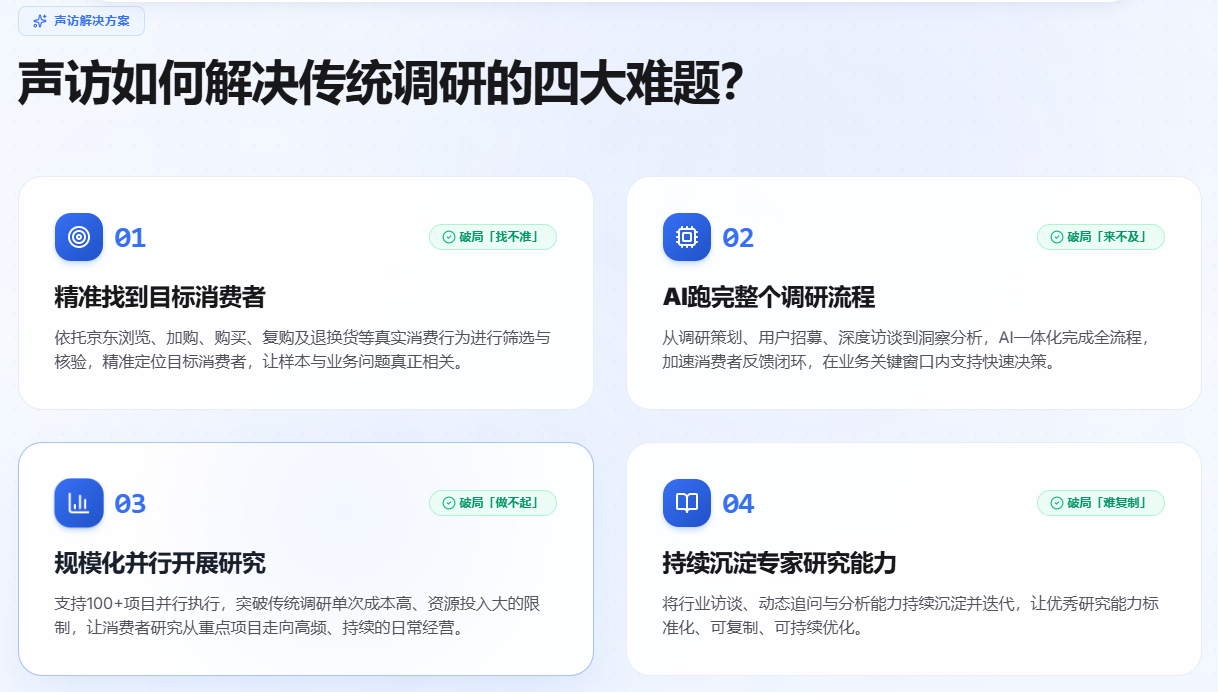
依托京东百灵数字员工多年AI营销实践,以及成熟的营销产品与服务能力,声访在本次项目中将访谈发现进一步转化为业务策略建议,覆盖产品、传播、促销、人群运营与平台运营五个维度,将定性洞察与后续的私域触达、人群资产沉淀等数字化营销动作紧密结合。让洞察与营销之间,不需要再翻译一遍。

随着AI进一步融入市场研究流程,消费者研究有望从阶段性的专项项目,走向更加灵活、高效的常态化探索。声访也将持续以AI驱动的访谈与洞察能力,重新定义品牌与消费者对话的方式,帮助品牌更快听见消费者、更深理解需求,让消费者声音成为产品创新与营销决策的有益参考。

注:文/龚作仁,文章来源:Laborer,本文为作者独立观点,不代表亿邦动力立场。

文章来源:Laborer

广告
微信
朋友圈

FAQ回顾

声访是什么?

声访是京东百灵访谈调研数字员工,面向快消个护品牌提供全流程AI驱动的定性用户研究。本次围绕力士美白型沐浴露,数天内完成近20位消费者深度访谈,并形成结构化洞察报告,支持产品策略与营销优化。

AI深度访谈如何用于消费者研究?

声访将AI能力贯穿研究设计、样本招募、深度访谈与洞察提炼:按已购、意向未购、竞品和跨品类用户搭建分层大纲并动态追问,匹配真实受访者,数天完成近20场深访,再提炼结构化洞察。

美白沐浴露消费者为什么感兴趣却不下单?

消费者有身体美白需求,但不等于认可沐浴露的美白功效;还会比较同类功效产品的成分与性价比、基础洗护价格参照,以及身体乳、磨砂膏等跨品类替代。价格预期、产品认知不足、缺少口碑验证和渠道库存也会阻碍下单。

品牌如何让美白沐浴露功效宣传更可信?

品牌可借官方资质提供背书,同时呈现清晰完整的检测信息;避免过于绝对或缺少明确参照的效果量化表达。传播内容还应匹配消费者所处购买阶段,在卖点吸引力与信息可信度之间取得平衡。

AI消费者洞察能帮品牌输出哪些营销策略?

声访会把访谈发现转化为业务策略建议,覆盖产品、传播、促销、人群运营与平台运营五个维度,并与私域触达、人群资产沉淀等数字化营销动作结合,帮助品牌判断消费者怎么想以及接下来怎么做。

这么好看,分享一下?

朋友圈 分享

APP内打开

赞 +1
+1
微信好友 朋友圈 新浪微博 QQ空间
关闭
收藏成功
发送
/140 0