广告
加载中

电信翼商超市:搭建智能管控体系 AI破解物料采购痛点

亿邦智库 2026-10-14 09:22
亿邦智库 2026/10/14 09:22

邦小白快读

EN
全文速览

这篇文章的核心干货是中国电信翼商超市如何用AI破解物料采购痛点,落地效果显著,其关键做法可以借鉴。

1. 搭建智能管控体系:以物料主数据治理、SKU映射、AI智能匹配三大引擎为支撑,融合NLP语义解析与向量检索技术,自动完成商品与标准物料的匹配和冲突检测,并通过人工复核兜底。

2. 实现全流程自动化闭环:覆盖物料接入、入库、出库全流程,接入环节统一数据建立唯一标识,映射环节支持一对多、多对一配置,入库环节自动执行合规校验并实时预警,出库环节智能匹配需求与库存、精准发货。

3. 让合规从人防变技防:全流程强校验、全环节留痕、全程可追溯,将合规管控从事后检查前移至事中拦截、事前预防。

4. 用数据反哺决策:打通电商平台与集团主数据库,统一归集采购数据,为价格分析、供应商评估、预算管控等提供高质量数据基础。落地后物料配置效率提升超60%。

对品牌商而言,文章展现了中国电信电商化采购平台的渠道价值与合作门槛,核心信息集中在如何进入这类采购渠道并做好合规管理。

1. 渠道机会:电信翼商超市面向中国电信集团及全国各省下属单位提供集中化、标准化物料采购服务,覆盖办公、福利、生产运营等多类场景,品牌商可以将此类平台视为进入国央企采购体系的重要渠道。

2. 标准化要求:平台会对商品名称、品牌、型号、规格参数进行标准化清洗与NLP语义解析,识别同品异名、异品同名等复杂场景,品牌商需按规范提供准确、完整的商品信息,否则难以完成SKU映射,影响上架和成交。

3. 合规生命线:供应商管理采用正向激励和负面惩戒结合机制,2025年处理供应商不良行为2149例、涉及2018家供应商,违规会被限期禁入或份额调整,并可能与主要基础电信运营商共享违规信息,因此品牌商必须重视信用和履约质量。

这篇文章对卖家的核心价值在于揭示国央企电商化采购平台带来的B端订单机会、合作方式和合规风险。

1. 增长市场与业务机会:电信翼商超市将采购流程迁移至线上,提供电子商城、供应链工作台、电子招投标、阳光采购门户等模块,供应商可通过中国电信阳光采购网完成注册、CA办理,并获取招投标服务和供应链金融支持,办公、福利、生产运营等采购场景均可切入。

2. 商业模式与合作方式:中国电信正构建开放共赢的供应链生态,2024年发起成立天翼供应链生态发展论坛,成员从36家发展至58家,卖家可借助平台加生态的协同模式对接更多产业链资源。

3. 风险提示:平台对供应商不良行为采用限期禁入、份额调整等惩戒措施,并共享违规信息,卖家需严守合规底线,避免因失信行为丧失客户。

4. 可学习点:平台用AI提升采购效率与透明度,卖家也应围绕阳光、透明、高效提升交付和服务能力,才能更好适应数字化采购趋势。

工厂可以从文章中获取对接数字化采购平台的产品标准化要求和潜在订单机会,也能得到生产数字化升级的启示。

1. 产品生产与设计需求:大型企业物料采购品类繁杂、规格参数多样,平台要求物料主数据统一接入并建立唯一标识,因此工厂在产品命名、品牌标识、型号规格设计上做到标准化,可以大幅降低进入采购平台的障碍。

2. 商业机会:电信翼商超市集中服务集团及全国各省下属单位,采购场景覆盖办公、福利、生产运营,工厂可以通过入驻此类电商化采购平台获得更稳定的订单来源。

3. 数字化与电商启示:平台依靠物料主数据治理、SKU映射和AI智能匹配实现物料配置效率提升超60%,工厂也应加强自身物料编码标准化和产品数据数字化,提高与采购方系统对接的能力。

4. 供应链协同要求:平台建设强调开放接入和系统顺畅衔接,工厂需要推进自身生产、库存、物流等环节的数据化,才能融入国央企供应链体系。

这篇文章为服务商提供了一个完整的AI采购管控产品案例,展示了客户痛点、技术架构和解决方案卖点。

1. 行业趋势与客户痛点:大型企业物料采购面临品类繁杂、人工匹配效率低、合规依赖人工经验、数据孤岛割裂等普遍问题,这是服务商切入供应链数字化市场的明确需求点。

2. 技术架构参考:方案核心是物料主数据治理、SKU映射、AI智能匹配三大引擎,数据基座包括物料主数据库、SKU映射库、向量索引、NLP模型和审计日志,智能中枢由NLP语义解析、向量检索、规则推理、异常预警、全链路追溯引擎组成。

3. 解决方案设计:系统覆盖物料接入、入库、出库全流程,用强校验机制实现全环节留痕、全程可追溯,并通过人工复核兜底,兼顾效率与准确率,这些功能设计可直接转化为产品能力。

4. 可验证价值:落地后物料配置效率提升超60%,合规从人防变为技防,采购数据统一归集支撑经营决策,服务商在推广同类方案时可引用这些成效增强说服力。

平台商可以借鉴中国电信打造电商化采购平台的整体架构、技术开放方式和生态运营策略。

1. 平台最新做法:中国电信统筹规划端到端一体化的供应链数字化管理运营平台,打造电子商城、供应链工作台、电子招投标、阳光采购门户等模块,并针对采购文件实施结构化管理和实时字段级管控,这对平台商建设采购类平台有直接参考价值。

2. 招商与运营管理:平台以SaaS服务封装业务与数据,采用开放性接入平台,降低系统链接门槛,使供应商系统能够顺畅衔接,同时通过电商平台与集团主数据库贯通,统一归集数据支撑决策,可提升平台粘性和运营效率。

3. 生态建设与风向规避:中国电信携手产业链企业发起天翼供应链生态发展论坛,成员企业已发展至58家,并通过阳光采购网提供供应商注册、CA办理、招投标服务、供应链金融等功能,平台商可通过类似方式构建产业生态;同时应内置强校验和智能审核规则库,实现异常实时预警、全流程可追溯,降低违规采购风险。

这篇文章提供了央国企供应链数字化、智能化转型的典型案例,可以从产业新动向、新问题、政策启示和商业模式四个层面进行观察。

1. 产业新动向:中国电信全面对标全球供应链TOP10领先企业,推进供应链数智化转型、生态化发展、服务化创新,建设现代供应链,并将电商化采购平台作为供应链数字化转型的关键一环,体现出央国企在供应链领域的系统化升级趋势。

2. 新问题与应对:大型企业物料采购普遍存在品类繁杂、人工匹配效率低、合规依靠人防、数据孤岛等问题;电信翼商超市以物料主数据治理、SKU映射、AI智能匹配三大引擎和全流程强校验机制,实现物料配置效率提升超60%,合规从人防转技防,数据统一归集支撑决策,为破解这些顽疾提供了实证。

3. 商业模式创新:通过电子商城、供应链工作台、阳光采购门户等模块,加上天翼供应链生态发展论坛和阳光采购网,形成平台加生态的价值枢纽,把内部采购能力转化为产业链协同服务,值得深入研究。

4. 政策法规与治理启示:供应商不良行为处理数据、跨运营商违规信息共享机制、采购全流程留痕审计等做法,对完善央国企阳光采购制度、供应商信用监管和数字化合规治理具有参考价值,可复制推广的空间较大。

返回默认
声明:快读内容全程由AI生成,请注意甄别信息。如您发现问题,请发送邮件至 run@ebrun.com 。

我是 品牌商 卖家 工厂 服务商 平台商 研究者 帮我再读一遍。

Quick Summary

The core takeaway of this article is how China Telecom's Yishang Mall leverages AI to address procurement pain points, with significant on-the-ground results and replicable practices.

1. Build an intelligent control system: Supported by three engines—material master data governance, SKU mapping, and AI-powered intelligent matching—it combines NLP semantic parsing with vector retrieval to automatically match products against standard materials and detect conflicts, with manual review as a safety net.

2. Achieve a closed-loop, end-to-end automated process: It covers the entire material lifecycle from onboarding and warehousing to outbound delivery. At onboarding, data is standardized and assigned unique identifiers; at mapping, one-to-many and many-to-one configurations are supported; at warehousing, compliance checks run automatically with real-time alerts; at outbound, demand is intelligently matched against inventory to enable accurate shipment.

3. Shift compliance from human oversight to technology-enabled controls: Strong validation across the entire workflow, full audit trails at every step, and complete traceability move compliance management from after-the-fact review to during-process interception and pre-event prevention.

4. Use data to inform decisions: By connecting the e-commerce platform with the group's master database, procurement data is consolidated to provide a high-quality data foundation for price analysis, supplier assessment, and budget control. After implementation, material configuration efficiency improved by more than 60%.

For brand suppliers, the article highlights the channel value and cooperation thresholds of China Telecom's e-procurement platform, with the key message centered on how to enter such procurement channels and manage compliance effectively.

1. Channel opportunity: Yishang Mall provides centralized, standardized material procurement services to China Telecom Group and its provincial subsidiaries, spanning office supplies, employee benefits, production operations, and more. Brand suppliers should view the platform as a key gateway into the procurement systems of state-owned enterprises.

2. Standardization requirements: The platform standardizes product names, brands, models, and specification parameters through data cleansing and NLP semantic parsing, identifying complex cases such as same products under different names and different products under the same name. Brand suppliers must provide accurate and complete product information according to the standards; otherwise, SKU mapping is difficult and listing and transactions may be affected.

3. Compliance as a lifeline: Supplier management combines positive incentives with negative penalties. In 2025, the platform processed 2,149 cases of supplier misconduct involving 2,018 suppliers. Violations can lead to temporary bans or quota adjustments, and violation information may be shared with major basic telecommunications operators. As a result, brand suppliers must prioritize creditworthiness and contract performance quality.

For sellers, the article's core value lies in revealing the B2B order opportunities, cooperation models, and compliance risks offered by state-owned enterprise e-procurement platforms.

1. Growth market and business opportunities: Yishang Mall has moved procurement processes online, offering modules such as an e-mall, supply chain workbench, electronic tendering, and a sunshine procurement portal. Suppliers can register through China Telecom's Sunshine Procurement Network, obtain CA certificates, access bidding services, and receive supply chain finance support. Office supplies, benefits, production operations, and other procurement scenarios are all addressable.

2. Business model and cooperation approach: China Telecom is building an open, win-win supply chain ecosystem. In 2024, it launched the Tianyi Supply Chain Ecosystem Development Forum, whose membership has grown from 36 to 58 enterprises. Sellers can leverage the platform-plus-ecosystem synergy to access more resources across the industrial chain.

3. Risk alert: The platform enforces penalties such as temporary bans and quota adjustments for supplier misconduct, and shares violation information. Sellers must strictly uphold compliance standards to avoid losing customers due to dishonest behavior.

4. Key takeaway: The platform uses AI to improve procurement efficiency and transparency. Sellers should also strengthen their delivery and service capabilities around openness, transparency, and efficiency to adapt to the digital procurement trend.

Factories can draw from this article both the product standardization requirements and potential order opportunities of digital procurement platforms, as well as insights for upgrading production digitalization.

1. Product production and design requirements: Large enterprises face complex material procurement categories and diverse specification parameters. The platform requires unified material master data integration and unique identifiers. Therefore, factories that standardize product naming, brand identification, and model/spec design can significantly lower the barriers to entering procurement platforms.

2. Business opportunities: Yishang Mall centrally serves China Telecom Group and its provincial subsidiaries across office, benefits, and production operations scenarios. By joining such e-procurement platforms, factories can secure more stable order sources.

3. Digitalization and e-commerce insights: The platform relies on material master data governance, SKU mapping, and AI-driven intelligent matching to improve material configuration efficiency by more than 60%. Factories should similarly strengthen material code standardization and product data digitalization to improve integration with buyers' systems.

4. Supply chain collaboration requirements: Platform development emphasizes open access and smooth system interconnection. Factories need to digitize their production, inventory, logistics, and other processes to integrate into state-owned enterprise supply chains.

For service providers, this article offers a complete case study of an AI-powered procurement control product, demonstrating customer pain points, technical architecture, and solution selling points.

1. Industry trends and customer pain points: Large enterprises face widespread challenges in material procurement, including complex categories, low manual matching efficiency, compliance relying on human experience, and fragmented data silos. These represent clear demand signals for service providers entering the supply chain digitalization market.

2. Technical architecture reference: The solution is built on three core engines—material master data governance, SKU mapping, and AI intelligent matching. The data foundation includes a material master database, SKU mapping library, vector index, NLP models, and audit logs. The intelligent core consists of NLP semantic parsing, vector retrieval, rule-based reasoning, anomaly alerting, and full-chain traceability engines.

3. Solution design: The system covers the entire material lifecycle—onboarding, warehousing, and outbound delivery. Strong validation ensures complete audit trails and end-to-end traceability, while manual review acts as a safety net to balance efficiency and accuracy. These functional designs can be directly translated into product capabilities.

4. Verifiable value: After implementation, material configuration efficiency improved by more than 60%, compliance shifted from human-based to technology-based controls, and procurement data was unified to support business decisions. Service providers can cite these measurable outcomes to strengthen their pitches for similar solutions.

Marketplace operators can learn from China Telecom's approach to building an e-procurement platform, including its overall architecture, technical openness, and ecosystem operation strategy.

1. Latest platform practices: China Telecom has coordinated an end-to-end integrated supply chain digital management and operations platform, with modules such as an e-mall, supply chain workbench, electronic tendering, and a sunshine procurement portal. It also applies structured management and real-time field-level control over procurement documents—practices directly relevant to marketplace operators building procurement platforms.

2. Merchant onboarding and operations management: The platform packages business functions and data as SaaS services and adopts an open access model to lower system integration barriers, enabling smooth connectivity with supplier systems. At the same time, it connects the e-commerce platform with the group's master database to consolidate data for decision-making, increasing platform stickiness and operational efficiency.

3. Ecosystem building and risk avoidance: China Telecom has joined with industrial chain companies to launch the Tianyi Supply Chain Ecosystem Development Forum, which has grown to 58 member enterprises. The Sunshine Procurement Network provides supplier registration, CA handling, tendering services, supply chain finance, and more. Marketplace operators can build similar industrial ecosystems. Additionally, they should embed strong validation and intelligent review rule libraries to achieve real-time anomaly alerts and full-process traceability, reducing non-compliant procurement risks.

This article provides a typical case study of digital and intelligent transformation in the supply chains of central state-owned enterprises. It can be examined from four perspectives: new industry trends, emerging problems and responses, business model innovation, and policy/governance implications.

1. New industry trends: China Telecom is benchmarking against the world's top 10 supply chain leaders, advancing digital-intelligent supply chain transformation, ecosystem development, and service-oriented innovation to build a modern supply chain. It treats the e-procurement platform as a key component of supply chain digital transformation, reflecting the systematic upgrade trend among central state-owned enterprises in supply chain management.

2. Emerging problems and responses: Large enterprises commonly face challenges such as complex material categories, low manual matching efficiency, compliance dependent on human oversight, and data silos. Through three engines—material master data governance, SKU mapping, and AI intelligent matching—plus an end-to-end strong validation mechanism, Yishang Mall has achieved more than 60% improvement in material configuration efficiency, shifted compliance from human-based to technology-based control, and consolidated data to support decision-making. This provides empirical evidence for solving these persistent problems.

3. Business model innovation: By combining modules such as the e-mall, supply chain workbench, and sunshine procurement portal with the Tianyi Supply Chain Ecosystem Development Forum and the Sunshine Procurement Network, the platform forms a platform-plus-ecosystem value hub, transforming internal procurement capabilities into collaborative industrial chain services. This model warrants further research.

4. Policy, regulation, and governance implications: Practices such as processing supplier misconduct cases, cross-operator sharing of violation information, and full-chain audit trails for procurement are valuable references for improving sunshine procurement systems, supplier credit supervision, and digital compliance governance in central state-owned enterprises. They have significant potential for replication and scaling.

Disclaimer: The "Quick Summary" content is entirely generated by AI. Please exercise discretion when interpreting the information. For issues or corrections, please email run@ebrun.com .

I am a Brand Seller Factory Service Provider Marketplace Seller Researcher Read it again.

【亿邦原创】在央国企全面推进数字化转型、供应链加速迈向精益化管理的当下,物料管理低效、合规管控薄弱、数据孤岛割裂等痛点,长期困扰着大型企业采购运营的提质增效。作为中国电信集团倾力打造的一站式电商化采购平台,电信翼商超市(https://ztf58.cn/)直面上述难题,搭建起AI驱动的全流程智能管控体系。该体系以物料主数据治理、SKU映射、AI智能匹配三大引擎为支撑,融合NLP语义解析与向量检索技术,自动完成商品与标准物料的匹配及冲突检测,并以人工复核兜底,构建起覆盖物料接入、入库、出库全流程的强校验机制,实现全环节留痕、全程可追溯。落地以来,物料配置效率提升超60%,采购合规实现由“人防”向“技防”转变;同时打通电商平台与集团主数据库,破除数据孤岛,统一归集数据支撑经营决策,为央国企物料标准化、智能化管控输出了可复制的范式。

电商化采购破解传统采购难题

大型企业物料采购普遍面临品类繁杂、规格参数多样的挑战,传统模式下人工匹配效率低、出错率高,合规管控高度依赖人工经验,分散的物料数据更难以支撑集团层面的统一决策。为此,中国电信将电商化采购平台建设作为供应链数字化转型的关键一环。

据国务院国资委网站刊发的中国电信供应链建设情况介绍,中国电信全面对标全球供应链TOP10领先企业,深入学习精益管理理念,推进供应链“数智化转型、生态化发展、服务化创新”,建设“运营高效、韧性安全、价值更优”的现代供应链;在平台层面,统筹规划,打造端到端一体化的供应链数字化管理运营平台(CTSC),构建现代供应链的核心设施,并针对供应链用户的常态化需求,打造电子商城、供应链工作台、电子招投标、阳光采购门户等模块,与外部合作伙伴相关系统深度对接,持续迭代完善。在平台建设过程中,中国电信还实施采购文件结构化管理,在对资格预审、招标、投标等文件结构化的基础上,实现采购过程实时“字段级”管控;并以SaaS服务封装业务与数据,采用开放性接入平台,降低系统链接门槛,实现与供应商系统的顺畅衔接[1]。

电信翼商超市正是这一体系中的重要载体——作为中国电信电商采购平台,它将采购流程迁移至线上,面向集团及全国各省下属单位提供集中化、标准化的物料采购服务,覆盖办公、福利、生产运营等多类场景[2]。

三大引擎协同智能管控体系有效运转

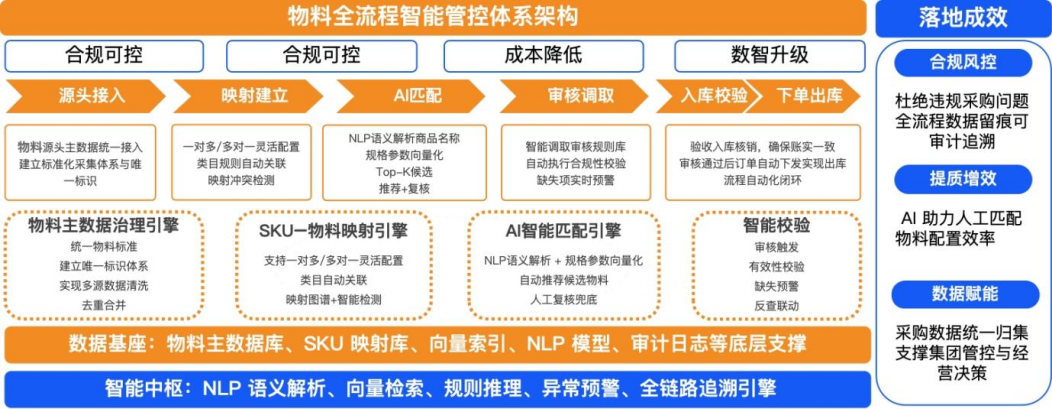
针对物料管理中的标准化难题,电信翼商超市搭建起“物料主数据治理、SKU映射、AI智能匹配”三大引擎协同的智能管控体系,并配以智能校验机制,实现从源头接入到下单出库的全流程自动化闭环。其中:源头接入环节,系统对物料源头主数据进行统一接入,建立标准化采集体系与唯一标识,为后续管控奠定数据基础;映射建立环节,SKU-物料映射引擎支持一对多、多对一的灵活配置,实现类目规则自动关联与映射冲突检测,化解同物多码、一码多物等难题;AI匹配环节,AI智能匹配引擎通过NLP语义解析商品名称、量化规格参数,输出Top-K候选物料并推荐,辅以人工复核兜底,既保证效率又守住准确率;审核调取与入库校验环节,系统智能调取审核规则库,自动执行合规性校验,对缺失项实时预警,验收入库时核销账实,确保账实一致;下单出库环节,审核通过后订单自动出库,实现流程自动化闭环。

在这一体系背后,物料主数据库、SKU映射库、向量索引、NLP模型、审计日志等构成数据基座,NLP语义解析、向量检索、规则推理、异常预警、全链路追溯引擎组成智能中枢,为各环节智能决策提供底层支撑。整个系统内置强校验机制,物料从接入到出库的每一个动作都有迹可循、有据可查,全环节留痕、全程可追溯。落地后,物料配置效率提升超60%。从落地成效看,体系带来三方面价值:合规风控维度,杜绝违规采购问题,全流程数据留痕可审计、可追溯;提质增效维度,AI助力人工匹配,显著提升物料配置效率;数据赋能维度,采购数据统一归集,支撑集团管控与经营决策。

AI合规从“人防”变“技防”

合规是央国企采购的生命线。电信翼商超市构建了覆盖物料全生命周期的智能审核链路,将合规管控从事后检查前移至事中拦截、事前预防。在物料接入环节,系统对商品名称、品牌、型号、规格参数等关键信息进行标准化清洗与去重,通过NLP语义解析技术识别同品异名、异品同名等复杂场景,自动完成SKU映射;在入库环节,系统依据预设规则进行冲突检测,自动标记异常物料并推送人工复核,确保入库物料的准确性与规范性;在出库环节,系统通过智能匹配采购需求与库存物料,实现精准发货,减少错发、漏发等人为失误。借助这一链路,采购合规实现由“人防”向“技防”转变,杜绝违规采购问题,全流程数据留痕可审计、可追溯。这一智能化合规能力,也延续了中国电信在供应链合规管理上的一贯思路。根据中国电信集团官网发布的《2025年社会责任报告》,中国电信持续推进供应商管理体系建设,依据《中国电信集团供应商管理办法》《中国电信集团供应商不良行为管理办法》等制度开展供应商管理与合作,采用正向激励和负面惩戒相结合的方式,优化不良行为管理机制;2025年,公司处理供应商不良行为2149例,涉及2018家供应商,按规则采取限期禁入或份额调整等措施,并与国内主要基础电信运营商开展违规供应商信息共享,形成优胜劣汰的良性生态[3]。

数据治理反哺采购管理决策

数据割裂是传统采购的另一大顽疾。电信翼商超市建立了统一的物料主数据库,将分散在不同系统中的物料信息归一化管理,形成集团级的物料标准字典。这一字典不仅支撑日常采购业务的标准化运行,更为价格分析、供应商评估、预算管控等高级应用提供了高质量的数据基础。通过AI智能匹配与向量检索技术的深度融合,系统能够理解采购人员使用自然语言描述的物料需求,自动推荐最匹配的标准物料,大幅降低采购人员的操作门槛与学习成本。在打通数据壁垒的同时,电信翼商超市推动电商平台与集团主数据库实现贯通,采购数据统一归集,为集团管控与经营决策提供支撑。这一做法与中国电信供应链数据治理的整体布局一脉相承。中国电信开展供应链数据治理行动,夯实既有数据基础,推进供应商等合作伙伴信息库与物料数据体系建设,做好实物出入库数据采集,并针对需求预测、风险管控等场景开展大数据建模,推进风险防控、供应商画像、流程可视化等智慧化应用[1]。

从交易工具迈向供应链价值枢纽

电信翼商超市的价值不止于交易本身。在采购实践中,中国电信中山分公司曾通过电信翼商超市线上采购中秋慰问物资,采购过程阳光透明,从线上订单、备货包装、物流配送,到收货分发等各环节一气呵成,受到基层一致好评。这一案例正是电信翼商超市“阳光、透明、高效”采购体验的缩影[2]。围绕电信翼商超市等核心平台,中国电信积极构建开放共赢的供应链生态。据中国电信集团官网介绍,2024年中国电信携手36家来自产业链上下游的精英企业代表,共同倡议发起成立“天翼供应链生态发展论坛”,加强产业链、供应链、创新链“三链融合”,打造互利共赢的供应链生态发展环境;论坛成员企业发展至58家[1]。在平台支撑层面,中国电信阳光采购网为供应商及其他用户提供供应商注册、CA办理、招投标服务、供应链金融等功能,是中国电信供应链外部门户平台。通过“平台+生态”的协同模式,电信翼商超市不仅服务自身采购提质增效,更成为连接供需两端、赋能产业链协同的“价值枢纽”[4]。

从物料主数据治理到SKU映射,从AI智能匹配到全流程留痕,电信翼商超市以AI为支点,撬动了物料采购从“人海战术”向“智能管控”的跃迁。效率提升超60%、合规由人防转技防、数据反哺决策,三大成效背后,是央国企供应链数字化、智能化转型的生动实践。随着数字化、智能化采购的深入推进,电信翼商超市的智能管控模式有望在更多央国企落地复制,为现代化供应链建设注入源源不断的数智动能[1]。

信息来源

[1] 国务院国资委网站要闻 中国电信集团:《中国电信以数智赋能加快推进现代供应链建设》(华龙网转载):http://news.cqnews.net/1/detail/1198025159975391232/h5/content_1198025159975391232.html

[2] 中国电信官方澎湃号:《让关爱如月光洒满人间——中国电信中山分公司驻镇帮扶干部中秋走访脱贫户》:https://m.thepaper.cn/newsDetail_forward_28745204

[3] 中国电信集团官网:《2025年社会责任报告》之“共筑产业生态”:http://www.chinatelecom.com.cn/ct/shzr/test2025/2025shzrzy/167533.html

[4] 中国电信阳光采购网:天翼供应链生态发展论坛资讯《中国电信张新:数字经济时代,供应链自身数字化应走在前端》:https://caigou.chinatelecom.com.cn/efsc/news/detail?id=1641370005363134466

亿邦智库持续关注央国企数字化采购领域的最新进展,如想了解更多与本文相关信息,请扫码关注作者微信或发送邮箱。联系邮箱:zhangjing@ebrun.com

作为TO B领域年度风向标,“2026第八届亿邦产业互联网年会暨首届产业智能体大会”将于11月20日在北京召开。主题定为“AI与出海带来的模态进化”,聚焦产业智能体落地、AI供应链价值重构、数据要素与TOKEN经济、产业出海新生态等前沿议题深度思辨。大会将集结学界权威、央国企标杆、产业龙头、投资机构、服务生态伙伴,汇聚产业核心力量、拆解产业数智化转型路径、分享前沿实战经验。同期还将发布年度产业互联网报告及标杆案例,举办决策人闭门会、“千峰奖”颁奖盛典。

本文首发于 亿邦动力 官方网站

文章来源:亿邦动力

广告
微信
朋友圈

FAQ回顾

电信翼商超市是什么?

电信翼商超市是中国电信集团打造的一站式电商化采购平台,面向集团及全国各省下属单位提供集中化、标准化的物料采购服务,覆盖办公、福利、生产运营等场景。平台搭建了AI驱动的全流程智能管控体系,以物料主数据治理、SKU映射、AI智能匹配三大引擎为支撑,解决央国企物料采购管理难题。

央国企物料采购有哪些痛点?电信翼商超市如何解决?

大型企业物料采购普遍面临品类繁杂、规格参数多样、人工匹配效率低、合规管控依赖人工经验、数据孤岛等痛点。电信翼商超市通过物料主数据治理、SKU映射、AI智能匹配三大引擎,融合NLP语义解析与向量检索技术,自动完成商品与标准物料匹配及冲突检测,并以人工复核兜底,实现物料接入、入库、出库全流程强校验,物料配置效率提升超60%,采购合规由“人防”转向“技防”。

电信翼商超市的AI智能管控体系包含哪些关键技术?

电信翼商超市的智能管控体系以物料主数据库、SKU映射库、向量索引、NLP模型、审计日志为数据基座,由NLP语义解析、向量检索、规则推理、异常预警、全链路追溯引擎等组成智能中枢。系统通过NLP解析商品名称和规格参数,使用向量检索匹配候选物料,配合规则推理进行合规校验,实现全环节留痕、全程可追溯。

电信翼商超市对央国企采购数字化转型有什么价值?

电信翼商超市落地后带来三方面价值:合规风控上,杜绝违规采购问题,全流程数据留痕可审计、可追溯;提质增效上,AI辅助人工匹配,显著提升物料配置效率;数据赋能上,采购数据统一归集,打破数据孤岛,支撑集团管控与经营决策,为央国企物料标准化、智能化管控输出可复制范式。

这么好看,分享一下?

朋友圈 分享

APP内打开

赞 +1
+1
微信好友 朋友圈 新浪微博 QQ空间
关闭
收藏成功
发送
/140 0