广告
加载中

中海油物装采购中心:打造高质量数据集,全域赋能采购全流程

亿邦智库 2026-10-12 09:41
亿邦智库 2026/10/12 09:41

邦小白快读

EN
全文速览

总1:央企采购数智化转型核心路径

1.中国海油物装采购中心建成采购专属数据中台,包含1600余张表、50000余个数据项,打通供应链平台与ERP等多系统数据壁垒,统一数据标准。

2.依托自研海能AI大模型,分层搭建采购供应链智能体集群,覆盖需求提报、物料管控、履约风控等核心场景。

总2:AI带来的直接效益

1.安全钻井模型0.1秒识别风险,不安全行为减少95%;燃机智能健康管理准确率达90%,排故时间从1至3天缩短至3小时,每年节约运维费用近亿元。

2.智能体自动生成采购需求建议、实时监测库存并触发补货调拨、持续跟踪供应商履约风险。

总3:对普通人的启发

1.高质量数据集是智能化转型的基础,数据治理能提升决策科学性。

2.行业数字化采购渗透率仅11.8%,AI在招标投标八大环节和20类场景应用,智能化升级空间广阔。

总1:央企采购渠道新入口

1.中国海油集采电商模块已完成外部电商主体业务打通和全集团推广,品牌商可通过外部电商平台直接对接央企采购。

2.供应商集中管理、全生命周期管理成为核心功能,供应商需适应数据化绩效评估。

总2:价格数据与竞争参考

1.数据中台包含价格类数据项,支撑招标采购价格监测,品牌商可掌握央企采购价格走势。

2.智能体支持需求匹配、品类分析和供应商查询,帮助品牌商更精准定位采购需求。

总3:产品研发与需求洞察

1.需采协同是供应链改革方向,品牌商可依据采购数据和需求预测调整产品设计。

2.物资类、需求类主题域覆盖全息物料数据,为产品研发提供市场导向。

总1:增长市场机会

1.2025年我国企业物资采购总额达196.3万亿元,数字化采购渗透率升至11.8%,央企采购数智化带来巨大市场空间。

2.中国海油集采电商模块打通外部电商并全集团推广,卖家可借此进入大型央企供应链。

总2:风险提示与必备能力

1.智能体持续跟踪供应商履约表现和外部风险信息,能自动预警违约或交付延迟,信用或履约问题将更易被监控。

2.供应商评价和全生命周期管理被数据化,卖家需提升交货稳定性与质量记录。

总3:可学习点与机会

1.数据中台产出近200项经营指标,卖家可借鉴数据驱动决策方法优化自身经营。

2.AI辅助评标、智能寻源、风险预警等应用正在改变采购模式,卖家应提前布局数字化对接能力。

总1:生产与设计新需求

1.需采协同模式下,采购需求与生产计划联动,工厂需更精准地响应多变物料需求。

2.物料管控智能体实时监测库存水位与消耗趋势,自动触发补货或调拨,要求工厂提升交付弹性。

总2:数字化升级启示

1.数据中台打通供应链平台与ERP系统,工厂应重视统一数据标准和消除信息孤岛。

2.执行类智能体支持物资工厂一键拓展,降低工厂对接采购平台的数字化门槛。

总3:商业机会

1.央企智能化采购对高质量物料数据、智能硬件和数字化协同能力有持续需求。

2.数字化采购渗透率仍处低位,工厂可提前布局电商化交付与智能化供应链能力。

总1:客户痛点清晰

1.央国企采购面临多系统数据割裂、业务孤岛,需要数据中台整合各类系统并统一标准。

2.数据覆盖需求、仓储、供应商、合同、价格等十余类业务域,客户需要端到端数据治理与AI应用方案。

总2:新技术演进方向

1.数据中台采用DIM、DWD、DWS、ADS四层架构,包含可视化流式编排、知识库RAG检索等能力。

2.智能体集群分执行类、决策类、资讯类,以协同调度引擎联动,代表采购领域AI落地形态。

总3:解决方案量化价值

1.项目周期缩短三分之二,低资源预训练使AI训练成本降低30%至50%,模块化设计便于低成本推广。

2.安全钻井和燃机健康管理案例可作为行业标杆,证明AI能显著提升效率与降低费用。

总1:平台最新做法

1.中国海油在采办2.0基础上打通外部电商主体业务,完成全流程数据贯通并全集团推广。

2.智能体平台与训推平台双轮驱动,支持拖拽式流程构建、可视化编排、自定义模型微调。

总2:平台需求与问题

1.采购全流程需要需求匹配、品类分析、时效预测等智能能力,平台需支持大数据聚合与分析建模。

2.多系统对接与数据同步是刚需,平台要提供自动化同步和灵活数据服务接口。

总3:运营管理与风向规避

1.通过协同调度引擎实现三类智能体联动,形成执行到决策的闭环管理。

2.AI对供应商履约与外部风险自动预警,可帮助平台提高合规风控能力。

总1:产业新动向

1.央国企采购正从流程线上化迈向智能自主化,AI大模型与垂直领域智能体深度融合。

2.行业数据显示,2025年企业物资采购总额196.3万亿元,数字化采购渗透率仅11.8%,AI覆盖招投标八大环节和20类场景。

总2:数据治理与创新模式

1.采购数据中台以四层架构沉淀高质量数据集,通过数据血缘分析和质量监控实现全生命周期管控。

2.智能体集群采用八大原子能力与三类智能体协同,构成可复用的数智化采购业务模式。

总3:政策启示

1.管办分离、集中化、需采协同原则为央国企采购体制改革提供框架。

2.廉洁供应链管理结合AI穿透式监管,对完善采购合规和政策制定有参考价值。

返回默认

声明:快读内容全程由AI生成,请注意甄别信息。如您发现问题,请发送邮件至 run@ebrun.com 。

我是 品牌商 卖家 工厂 服务商 平台商 研究者 帮我再读一遍。

Quick Summary

Summary 1: Core path for digital and intelligent transformation of central enterprise procurement

1. CNOOC Materials and Equipment Procurement Center built a dedicated procurement data platform containing over 1,600 tables and more than 50,000 data items, breaking down data barriers among supply chain platforms, ERP and other systems, and unifying data standards.

2. Based on its self-developed Haineng AI large model, it built a layered procurement supply chain agent cluster covering core scenarios such as demand reporting, material control, and contract performance risk control.

Summary 2: Direct benefits brought by AI

1. The safe drilling model identifies risks in 0.1 seconds, reducing unsafe behaviors by 95%; the gas turbine intelligent health management accuracy reaches 90%, cutting troubleshooting time from 1-3 days to 3 hours, saving nearly 100 million yuan in annual maintenance costs.

2. Agents automatically generate procurement demand suggestions, monitor inventory in real time and trigger replenishment or allocation, and continuously track supplier performance risks.

Summary 3: Implications for ordinary people

1. High-quality datasets are the foundation of intelligent transformation; data governance improves the scientific basis of decision-making.

2. The industry digital procurement penetration rate is only 11.8%, with AI applied across eight bidding and tendering stages and 20 scenarios, leaving broad space for intelligent upgrades.

Summary 1: New entry channels for central enterprise procurement

1. CNOOC's centralized procurement e-commerce module has completed integration with external e-commerce entities and been rolled out across the group, allowing brand owners to directly connect with central enterprise procurement through external e-commerce platforms.

2. Centralized supplier management and full lifecycle management have become core functions, so suppliers must adapt to data-driven performance evaluation.

Summary 2: Price data and competitive reference

1. The data platform contains price-related data items that support price monitoring in tendering and procurement, enabling brand owners to track price trends in central enterprise procurement.

2. Agents support demand matching, category analysis, and supplier queries, helping brand owners pinpoint procurement demand more accurately.

Summary 3: Product development and demand insights

1. Demand-procurement collaboration is the direction of supply chain reform; brand owners can adjust product design based on procurement data and demand forecasts.

2. The material- and demand-themed domains cover full-scope material data, providing market orientation for product development.

Summary 1: Growth market opportunities

1. In 2025, China's total enterprise material procurement volume reached 196.3 trillion yuan, with digital procurement penetration rising to 11.8%. The digital and intelligent transformation of central enterprise procurement brings enormous market space.

2. CNOOC's centralized procurement e-commerce module has connected external e-commerce platforms and been promoted across the group, allowing sellers to enter the supply chains of large central enterprises.

Summary 2: Risk warnings and required capabilities

1. Agents continuously track supplier performance and external risk information, automatically alerting for contract breaches or delivery delays, making credit and performance issues easier to monitor.

2. Supplier evaluation and full lifecycle management have been digitalized, so sellers must improve delivery reliability and quality records.

Summary 3: Lessons and opportunities

1. The data platform generates nearly 200 operational indicators, and sellers can draw on data-driven decision-making methods to optimize their own operations.

2. AI-assisted bid evaluation, intelligent sourcing, and risk early warning applications are transforming procurement models; sellers should prepare digital connectivity capabilities in advance.

Summary 1: New demands for production and design

1. Under the demand-procurement collaboration model, procurement demand is linked with production planning, requiring factories to respond more precisely to changing material needs.

2. Material control agents monitor inventory levels and consumption trends in real time, automatically triggering replenishment or allocation, which requires factories to enhance delivery flexibility.

Summary 2: Implications for digital upgrading

1. The data platform connects supply chain platforms with ERP systems; factories should prioritize unified data standards and eliminating information silos.

2. Execution-type agents support one-click expansion for material factories, lowering the digital barrier for factories to connect with procurement platforms.

Summary 3: Business opportunities

1. Central enterprises' intelligent procurement creates sustained demand for high-quality material data, smart hardware, and digital collaboration capabilities.

2. With digital procurement penetration still low, factories can position themselves early in e-commerce-based delivery and intelligent supply chain capabilities.

Summary 1: Clear customer pain points

1. Central and state-owned enterprises face fragmented data across multiple systems and business silos, requiring a data platform to integrate various systems and unify standards.

2. Data covers more than ten business domains including demand, warehousing, suppliers, contracts, and prices; customers need end-to-end data governance and AI application solutions.

Summary 2: Directions for new technology evolution

1. The data platform adopts a four-layer architecture (DIM, DWD, DWS, ADS), incorporating capabilities such as visual stream orchestration and knowledge-base RAG retrieval.

2. The agent cluster is categorized into execution, decision, and information agents linked by a collaborative scheduling engine, representing a practical AI deployment model in procurement.

Summary 3: Quantified value of solutions

1. Project cycles are shortened by two-thirds, and low-resource pretraining reduces AI training costs by 30% to 50%, while modular design enables low-cost scaling.

2. The safe drilling and gas turbine health management cases can serve as industry benchmarks, demonstrating that AI significantly improves efficiency and reduces costs.

Summary 1: Latest platform practices

1. Building on its Procurement 2.0 foundation, CNOOC integrated external e-commerce entity operations, achieved end-to-end data connectivity, and promoted the solution across the group.

2. The agent platform and training/inference platform operate in tandem, supporting drag-and-drop process construction, visual orchestration, and custom model fine-tuning.

Summary 2: Platform demand and challenges

1. The entire procurement process requires intelligent capabilities such as demand matching, category analysis, and lead-time prediction, so platforms must support big-data aggregation and analytical modeling.

2. Multi-system integration and data synchronization are essential; platforms need to provide automated synchronization and flexible data service interfaces.

Summary 3: Operations management and risk avoidance

1. Through a collaborative scheduling engine, three types of agents are linked, forming closed-loop management from execution to decision-making.

2. AI automatically alerts on supplier performance and external risks, helping platforms improve compliance and risk-control capabilities.

Summary 1: New industry trends

1. Procurement in central and state-owned enterprises is moving from process digitization to intelligent autonomy, with deep integration of AI large models and vertical-domain agents.

2. Industry data shows that in 2025, enterprise material procurement volume will reach 196.3 trillion yuan, with digital procurement penetration at only 11.8%, while AI covers eight bidding and tendering stages and 20 scenarios.

Summary 2: Data governance and innovative models

1. The procurement data platform uses a four-layer architecture to consolidate high-quality datasets, achieving full lifecycle control through data lineage analysis and quality monitoring.

2. The agent cluster employs eight atomic capabilities coordinated with three types of agents, forming a reusable digital intelligence procurement business model.

Summary 3: Policy implications

1. The principles of separating management from execution, centralization, and demand-procurement collaboration provide a framework for reforming central enterprise procurement systems.

2. Clean supply chain management combined with AI-enabled transparent supervision offers reference value for improving procurement compliance and policy formulation.

Disclaimer: The "Quick Summary" content is entirely generated by AI. Please exercise discretion when interpreting the information. For issues or corrections, please email run@ebrun.com .

I am a Brand Seller Factory Service Provider Marketplace Seller Researcher Read it again.

【亿邦原创】当AI大模型从概念走向产业深水区,央企采购正在经历一场从“流程线上化”到“智能自主化”的深刻变革。中国海油物装采购中心率先搭建采购专属数据中台,建成包含1600余张表、50000余个数据项的高质量数据集,并依托自研“海能”AI大模型基座分层搭建采购供应链垂直领域智能体集群,实现AI技术在需求提报、物料管控、履约风控等核心场景的深度应用。

从“采办2.0”到“海能”大模型

中国海油物装采购中心承担着集团公司集中采购、集中招标、供应商集中管理的核心职能,是保障海上油气勘探开发、工程建设物资供应的“粮草官”。2025年以来,中国海油持续推进供应链体制改革,以“管办分离”为原则、“集中化”为方向、“需采协同”为目的、“数智化”为刚性支撑,加强集中采购、集中招标、供应商集中管理,加快推进采购仓储一体化建设,进一步优化供应链管理体系,筑牢廉洁供应链管理模式。

在数智化底座层面,中国海油于2024年10月14日在北京正式发布“海能”(HI-ENERGY)人工智能模型。该模型围绕智能油气田、智能工程、智能工厂、智能贸销、智能QHSE、智能供应链、智能管理、智能办公等8大类100多个业务场景,实现小模型和大模型兼备、专业场景和通用场景兼容、生产和经营管理全覆盖。发布会上优选5个具有海油特色的专业场景模型和6个通用场景模型;其中安全钻井模型可对劳保穿戴不合规、贴近旋转钻柱等危险行为进行24小时全天候监测,0.1秒即可识别风险,使不安全行为数量减少95%;燃机智能健康管理系统准确率达90%,把原先耗时1至3天的排故时间缩短至3小时以内,每年节约设备运维费用近亿元。中国海油董事长汪东进表示,将加强与中国电信、科大讯飞等专业公司的务实合作,力争“十四五”末整体数字化率达到50%,“十五五”末达到80%,全面形成“智慧海油”生态。2025年,中国海油持续完善“海能”人工智能模型,部署实施“AI+”重点场景,为产业智能化升级提供顶层指引[1]。

2026年3月9日,中国海油总经理、党组副书记黄永章赴物装采购中心调研,听取供应链数字化驾驶舱系统成果介绍,明确要求“深入贯彻集团公司‘1566’总体发展思路,以全局视野和底线思维谋划供应链布局,着力构建自主可控、安全可靠、竞争力强的现代化采购供应链体系”,并部署价值创造、专业化发展、数智化转型、生态建设和廉洁合规“五大攻坚”。在数智转型方面,黄永章强调要“深化AI、大数据等技术与采购业务的融合,统筹推进数据治理与系统升级,重点强化智能寻源、辅助评标、风险预警等场景应用,不断提升智能化决策与穿透式监管能力”[2]。

在此战略指引下,物装采购中心以中国海油供应链数字化平台(“采办2.0”)为业务载体,集采电商模块已完成外部电商主体业务打通、全流程数据贯通,并按计划完成外部电商业务的全集团推广。

高质量数据集为AI应用奠定数据底座

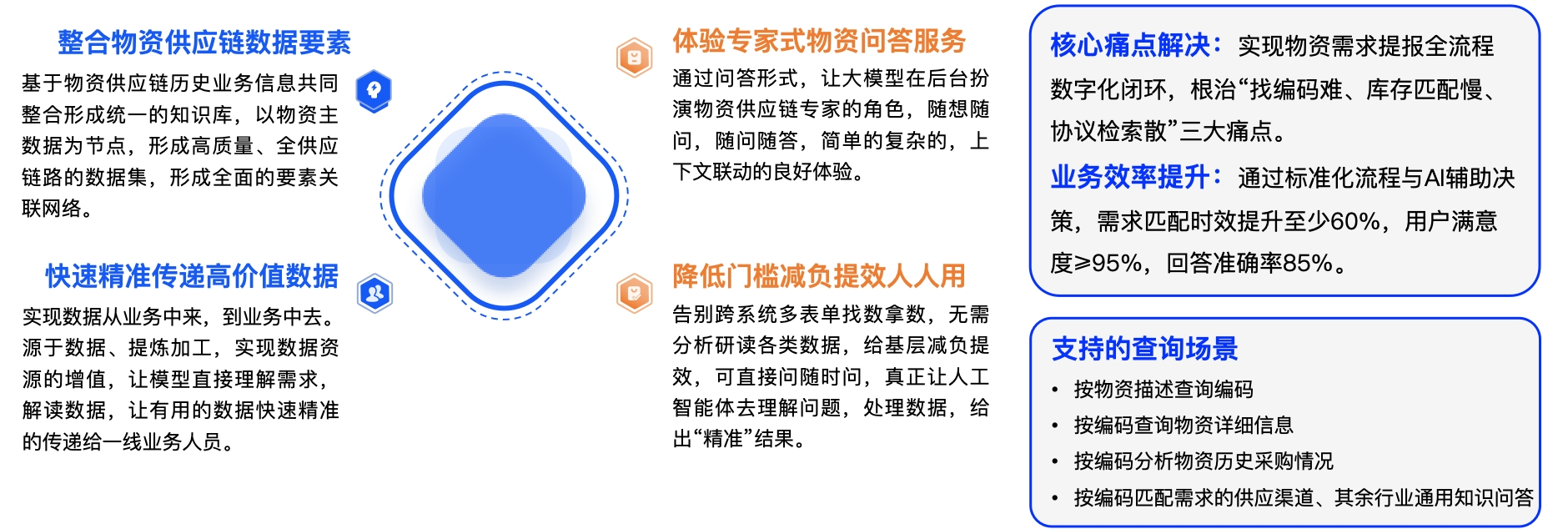
物装采购中心深刻认识到数据是数智化转型的核心资产。面对过去供应链平台、ERP等多系统数据割裂、业务孤岛林立的痛点,中心率先搭建采购专属数据中台,打通供应链平台与ERP等多系统数据壁垒,统一数据标准,建成了包含1600余张表、50000余个数据项的高质量数据集,为AI应用奠定了坚实的数据底座。

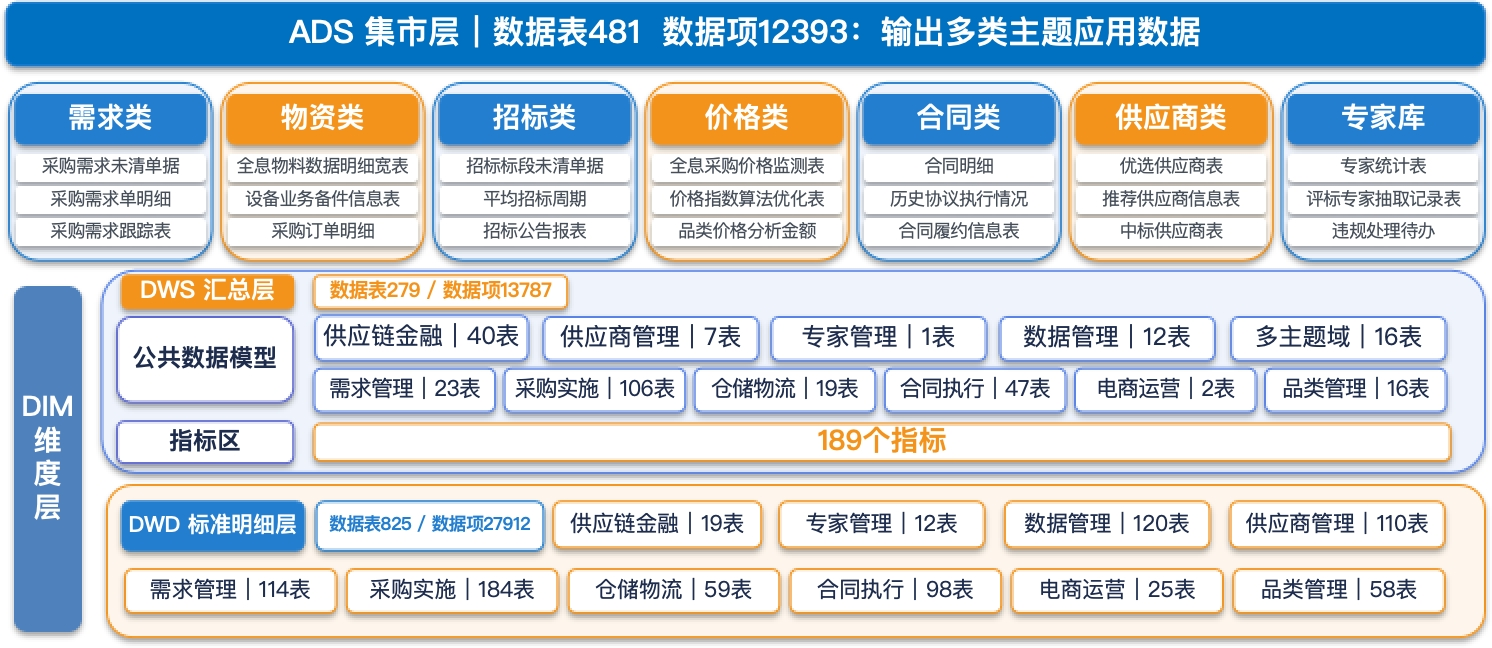
在技术架构上,数据中台采用业界成熟的分层设计——DIM维度层、DWD标准明细层、DWS汇总层、ADS集市层四层贯通。其中DWD标准明细层沉淀825张表、27912个数据项,覆盖需求管理114表、采购实施184表、仓储物流59表、合同执行98表、电商运营25表、品类管理58表、供应链金融19表、专家管理12表、数据管理120表、供应商管理110表;DWS汇总层构建279张表、13787个数据项,形成公共数据模型与189个经营指标;ADS集市层面向应用输出481张表、12393个数据项,覆盖需求类、物资类、招标类、价格类、合同类、供应商类、专家库七大主题域,支撑采购需求未清单据、全息物料数据明细、招标采购价格监测、供应商评价等多类主题应用。

数据集覆盖需求、仓储、供应商、合同、价格等十余类业务域,形成统一的数据口径与质量标准。通过数据清洗、去重、补全、校验等治理流程,确保数据的准确性、完整性与时效性。中心还引入数据血缘分析与质量监控工具,实现数据全生命周期的可追溯与可管控;通过机器学习算法自动识别数据异常与潜在问题,持续提升数据质量。基于高质量数据集,中台产出近两百项经营指标,为管理层决策与业务优化提供量化依据,并通过灵活的数据服务接口为各类AI应用提供便捷、高效的数据调用能力。

智能体集群赋能采购全流程

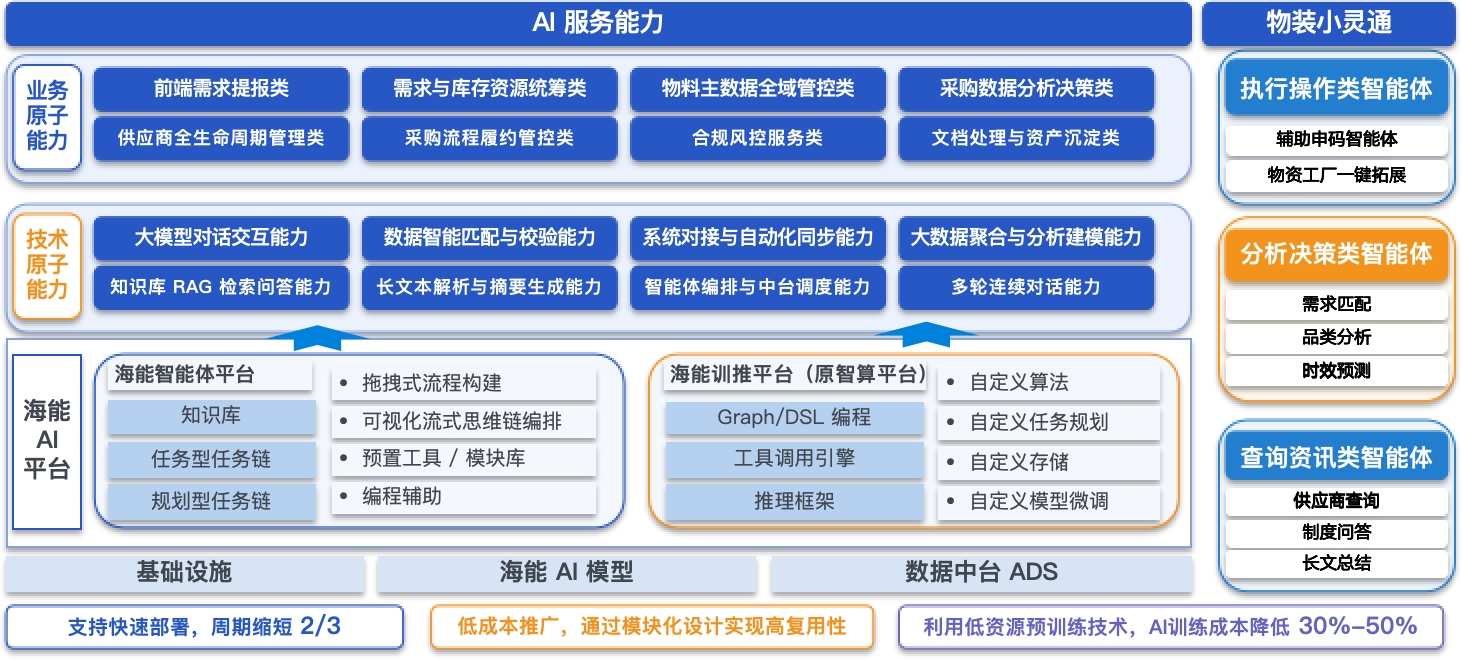
依托“海能”大模型基座,物装采购中心分层搭建了采购供应链垂直领域智能体集群,实现AI技术在采购全流程的深度应用与价值释放。该智能体集群覆盖前端需求提报、需求与库存资源统筹、物料主数据全域管控、采购数据分析决策、供应商全生命周期管理、采购流程履约管控、合规风控服务、文档处理与资产沉淀等八大业务原子能力,并搭载协同调度引擎,推动执行类、决策类、资讯类三类智能体高效联动。

在需求提报环节,智能体基于历史数据与生产计划自动生成采购需求建议,辅助业务人员精准提报,减少漏报、错报;在物料管控环节,智能体实时监测库存水位与消耗趋势,智能触发补货或调拨指令,优化库存结构;在履约风控环节,智能体持续跟踪供应商履约表现与外部风险信息,自动预警潜在违约或交付延迟,辅助采取应对措施。三类智能体通过协同调度引擎实现信息共享与任务流转,形成闭环管理。

从“物装小灵通”的实际产品形态看,执行操作类智能体可提供辅助审码、物资工厂一键拓展等能力;分析决策类智能体支撑需求匹配、品类分析、时效预测;查询资讯类智能体则面向供应商查询、制度问答、长文总结等高频场景。在技术原子能力层面,平台具备大模型对话交互、数据智能匹配与校验、系统对接与自动化同步、大数据聚合与分析建模、知识库RAG检索问答、长文本解析与摘要生成、智能体编排与中台调度、多轮连续对话等八项核心能力。

底层“海能AI平台”由智能体平台与训推平台(原智算平台)双轮驱动:智能体平台提供知识库、任务型任务链、规划型任务链,并支持拖拽式流程构建、可视化流式思维编排、预置工具与模块库、编程辅助;训推平台支持Graph/DSL编程、工具调用引擎、推理框架,并提供自定义算法、自定义任务规划、自定义存储、自定义模型微调能力。这一架构带来显著效率提升:支持快速部署,项目周期缩短三分之二;通过模块化设计实现低成本推广与高复用性;利用低资源预训练技术,AI训练成本降低30%至50%。

高质量数据集的建成,使中国海油采购数智化转型从“经验驱动”迈向“数据驱动”。近两百项经营指标的实时呈现,使采购策略制定、供应商管理、成本控制等决策更加科学精准;数据底座的筑牢,也为后续AI大模型训练、智能体开发提供了高质量“燃料”。从行业坐标看,2025年我国企业物资采购总额达196.3万亿元,数字化采购渗透率由11.5%升至11.8%,AI应用正覆盖招标投标八大环节和20类场景,推动编标、投标、开标、评标、定标、监管风控等环节提质增效。

面向未来,物装采购中心将按照中国海油“十五五”发展规划,持续深化AI、大数据与采购业务的融合,重点强化智能寻源、辅助评标、风险预警等场景应用,不断提升智能化决策与穿透式监管能力;同时加快培育覆盖全产业链采购领域的技术技能人才,锻造一支政治过硬、业务精湛、作风优良、纪律严明的“物装铁军”,为建设具有鲜明海洋特色的世界一流能源资源集团贡献物装采购的专业价值[2]。从数据中台到智能体集群,从“采办2.0”到“海能”大模型,中国海油物装采购中心正在走出一条具有海洋石油特色的AI采购之路。

信息来源

[1] 上海证券报:《中国海洋石油有限公司2025年半年度报告摘要》https://paper.cnstock.com/html/2025-08/28/content_2112171.htm

[2] 中国海洋石油集团有限公司官网:《黄永章赴物装采购中心工作调研并提出要求——以全局视野和底线思维谋划供应链布局》https://www.cnooc.com.cn/zxzx/yw/202603/t20260316_120321.html

亿邦智库持续关注央国企数字化采购领域的最新进展,如想了解更多与本文相关信息,请扫码关注作者微信或发送邮箱。联系邮箱:zhangjing@ebrun.com

作为TO B领域年度风向标,“2026第八届亿邦产业互联网年会暨首届产业智能体大会”将于11月20日在北京召开。主题定为“AI与出海带来的模态进化”,聚焦产业智能体落地、AI供应链价值重构、数据要素与TOKEN经济、产业出海新生态等前沿议题深度思辨。大会将集结学界权威、央国企标杆、产业龙头、投资机构、服务生态伙伴,汇聚产业核心力量、拆解产业数智化转型路径、分享前沿实战经验。同期还将发布年度产业互联网报告及标杆案例,举办决策人闭门会、“千峰奖”颁奖盛典。


本文首发于 亿邦动力 官方网站

文章来源:亿邦动力

广告
微信
朋友圈

FAQ回顾

中国海油“海能”AI大模型是什么?

中国海油于2024年10月14日在北京正式发布“海能”(HI-ENERGY)人工智能模型,围绕智能油气田、智能工程、智能工厂、智能贸销、智能QHSE、智能供应链、智能管理、智能办公等8大类100多个业务场景,实现小模型和大模型兼备、专业场景和通用场景兼容。

央企采购数智化转型如何构建数据底座?

中国海油物装采购中心搭建采购专属数据中台,打通供应链平台与ERP等多系统数据壁垒,统一数据标准,建成包含1600余张表、50000余个数据项的高质量数据集。数据中台采用DIM、DWD、DWS、ADS四层分层设计,覆盖需求、仓储、供应商、合同、价格等十余类业务域,为AI应用奠定数据基础。

AI技术在采购履约风控中如何发挥作用?

采购供应链智能体集群中的履约风控智能体会持续跟踪供应商履约表现与外部风险信息,自动预警潜在违约或交付延迟,辅助采购方采取应对措施。通过协同调度引擎,执行类、决策类、资讯类智能体实现信息共享与任务流转,形成闭环管理,提升风控效率。

中国海油“海能”AI大模型在采购领域有哪些应用场景?

依托“海能”大模型基座,物装采购中心搭建采购供应链垂直领域智能体集群,覆盖需求提报、物料管控、履约风控等核心场景。具体包括智能生成采购需求建议、实时监测库存水位并触发补货、辅助审码、需求匹配、品类分析、时效预测、制度问答等,实现采购全流程的智能化。

2025年我国数字化采购渗透率有何变化?

2025年我国企业物资采购总额达196.3万亿元,数字化采购渗透率由11.5%升至11.8%。AI应用正覆盖招标投标八大环节和20类场景,推动编标、投标、开标、评标、定标、监管风控等环节提质增效。

这么好看,分享一下?

朋友圈 分享

APP内打开

赞 +1
+1
微信好友 朋友圈 新浪微博 QQ空间
关闭
收藏成功
发送
/140 0