广告
加载中

大唐电商:三位一体智能评标,护航合规招标采购全流程

亿邦智库 2026-10-12 15:00
亿邦智库 2026/10/12 15:00

邦小白快读

EN
全文速览

总1:大唐电商用AI+制度+组织三位一体改造采购评标,对普通读者最有价值的干货是看懂智能评标如何提升效率、省钱和防风险。

1. 三大AI工具:投标文件解析与资质审查用OCR和NLP实现秒级比对,评标效率提升70%;智能比价系统基于历史和市场参考价分析报价合理性,综合成本降15%;AI异常行为监测实时分析音视频和日志,风险预警准确率98%。

2. 制度与组织保障:修订管理办法明确AI是辅助研判、专家有最终决策权,并设跨部门团队持续训练和维护模型,解决机器说了算的担忧。

总2:智能评标已带来可量化的采购改善。

1. 采购周期大幅缩短:母公司2025年招标采购周期31天、非招7.9天,同比下降36天和17天。

2. 平台生态可观:年成交额超1000亿元,注册供应商超17万家,采购主体超1000家,评标专家近3万名,为大型企业采购提供可复制方案。

总1:大唐电商的犀维网是央企采购平台品牌建设的典型样本。

1. 品牌历史:平台前身上线于2005年,历经近20年升级为覆盖招标、非招标、电子超市、竞拍四大模块的统一门户,并获评中央企业电商平台数智化创新领先企业。

2. 渠道价值:注册供应商超17万家,采购主体超1000家,申能股份、陕煤集团等50多家集团外能源企业加盟,说明这是切入能源行业采购的高价值B2B渠道。

总2:智能评标正在改变采购定价与产品研发逻辑。

1. 定价影响:智能比价系统基于历史数据与市场参考价分析报价合理性,供应商靠信息差溢价的难度增加,品牌定价需回归真实成本和市场行情。

2. 产品研发方向:平台研发重点转向AI辅助评审、信创适配和DeepSeek私有化部署,以客观项评分准确率100%、主观项合格率80%作为竞争力指标,采购方更看重合规、效率和数据价值。

总1:对希望进入能源采购市场的卖家,大唐电商平台是年交易额超千亿的增量渠道。

1. 市场机会:2025年平台交易额近1500亿元,采购主体超1000家;电子超市在架商品超56万项,长协交易额51.77亿元、同比增长24.75%,交付及时率99%以上,可重点关注长协和超市供货机会。

2. 竞拍渠道:平台通过竞拍帮助盘活闲置物资交易额3.91亿元,有处置或采购闲置物资需求的企业可关注该模式。

总2:智能评标改变了供应商的投标和报价规则。

1. 资质审查更严:系统用OCR、NLP自动比对投标文件与招标要求,标书格式不规范、资质材料模糊容易废标,投标文件需标准化。

2. 报价须合理:智能比价系统结合历史价和市场参考价辅助评审,需基于成本和行情报价;AI异常行为监测自动预警串通投标,合规是底线。

总3:政策支持与入局路径。

1. 国家发改委等八部门发文推动招标投标AI应用,平台正扩展智能管、编、审、答、评场景,符合条件的供应商可关注政策红利。

2. 平台欢迎集团外能源企业加盟,可关注招商条件和合作方式,借助共享服务体系对接更多采购方。

总1:能源央企采购平台的需求变化为工厂带来明确订单信号。

1. 行业覆盖与采购规模:平台覆盖电力、煤炭、化工等行业,电子超市在架商品超56万项,长协交易额51.77亿元、长协覆盖率58.02%,意味着央企更倾向长协稳定供货,工厂可争取进入电子超市和长协名单。

2. 产品要求:交付及时率稳定在99%以上,说明对供应链响应速度和交付能力要求高,工厂需强化生产计划和库存管理。

总2:数字化能力成为工厂对接智能采购的入场券。

1. 投标文件智能解析要求标书要素标准化、格式规范,以减少因格式错误导致的废标率,工厂需提升产品资料和投标文件的数字化质量。

2. 大唐电商提供可复制的供应链数字化方案,采用分层微服务和AI能力中心架构,工厂可借鉴其架构思路推进自身数字化,更好融入央企采购体系。

3. 平台部署DeepSeek大模型,未来招投标文件解析更智能,工厂应提前准备结构化产品数据。

总1:服务商可把大唐电商智能评标体系看作AI在招投标领域落地的成熟样本。

1. 行业趋势:招标采购正从流程自动化走向AI驱动决策,智能化3.0时代已实现非招智能辅助评审,客观项评分准确率100%、主观项合格率80%,国家政策也在推动AI应用。

2. 客户痛点:评标环节效率低、成本高、廉洁风险大,信息不对称和人为干预突出,关键核心技术存在卡脖子风险。

总2:可复制的解决方案包含技术、制度和组织三层。

1. 技术层:OCR、NLP、智能比价、AI异常行为监测三大利器,配合云原生混合云架构和AI能力中心,并私有化部署DeepSeek R1 70B大模型。

2. 制度和组织层:修订智能评标管理办法明确AI辅助地位与专家决策权;组建跨部门运营团队维护模型,确保AI与业务对齐。

3. 可复制性:方案已获得国家级大赛一等奖和行业典型案例,可为服务商服务大型能源企业提供参考模板。

总1:平台运营商可借鉴大唐电商二十年的平台架构演进。

1. 架构模式:采用共享服务、统一门户,将招标、非招标、电子超市、竞拍四大交易模块融为一体;与计划、法务、ERP、网银、物流系统对接,实现全流程一体化电子交易。

2. 创新功能:移动扫码签章、异地分散评标、一键清标、电子合同、物流在线、互联网金融、在线支付等,提升交易透明度和便捷性。

总2:平台运营和招商的实操要点。

1. 运营管理:组建跨部门智能评标运营团队,负责模型训练、规则维护与效果评估;修订智能评标管理办法,平衡AI效率与合规责任。

2. 招商策略:平台注册供应商超17万家,采购主体超1000家,集团外能源企业是重要增量,可参考其50多家集团外企业加盟模式。

3. 风控与信任:通过国家等保三级、电子招标投标系统三星认证和信创适配,用AI异常行为监测防范串通投标,这些是平台赢得客户的关键。

总1:大唐电商智能评标案例反映了AI大模型与招投标制度深度融合的产业新动向。

1. 智能评标体系采用“AI赋能+制度保障+组织创新”三位一体模式,让AI承担辅助研判、专家保留最终决策权,形成人机协同新机制。

2. 技术架构上采用分层微服务云原生混合云,部署DeepSeek R1 70B,构建AI能力中心,非招智能辅助评审客观项准确率达100%。

总2:案例为政策法规完善提供了实践样本。

1. 智能评标带来“机器说了算”的法律边界问题,大唐电商通过修订管理办法明确AI辅助地位与责任边界,可供政策制定参考。

2. 获奖项目深度契合发改法规〔2026〕195号政策,覆盖智能管、编、审、答、评五大场景,形成智慧采购全流程闭环。

总3:商业模式和成效具有研究价值。

1. 共享服务、统一门户整合四大交易模块,通过数据共享和AI能力中心沉淀高价值数据资产,形成可持续平台模式。

2. 成效数据:效率提升70%、综合成本降低15%、风险预警准确率98%,母公司2025年经营业绩创六个历史新高,证明数智化采购的商业价值。

返回默认
声明:快读内容全程由AI生成,请注意甄别信息。如您发现问题,请发送邮件至 run@ebrun.com 。

我是 品牌商 卖家 工厂 服务商 平台商 研究者 帮我再读一遍。

Quick Summary

Key takeaway 1: Datang E-commerce has overhauled procurement bid evaluation with a trinity of AI, institutional rules, and organizational support. For the general reader, the essential insight is how AI-assisted evaluation boosts efficiency, cuts costs, and mitigates risk.

1. Three AI tools: Bid document parsing and qualification review use OCR and NLP for second-level comparison, raising evaluation efficiency by 70%. An intelligent price-comparison system benchmarks quoted prices against historical and market references, reducing overall costs by 15%. AI anomaly detection monitors audio, video, and logs in real time, delivering 98% accuracy in risk alerts.

2. Institutional and organizational safeguards: The company revised management rules to position AI as an aid to human judgment, with experts retaining final decision-making authority. A cross-departmental team continuously trains and maintains the models, addressing concerns about machines calling the shots.

Key takeaway 2: Intelligent bid evaluation has already generated measurable procurement improvements.

1. Procurement lead times have fallen sharply: in 2025, the parent company's procurement cycle for tenders was 31 days and 7.9 days for non-tender procurement, down 36 days and 17 days year-on-year, respectively.

2. The platform ecosystem is substantial: annual transaction value exceeds RMB 100 billion, with over 170,000 registered suppliers, more than 1,000 procurement entities, and nearly 30,000 evaluation experts—a replicable model for large-enterprise procurement.

Key takeaway 1: Xiwei.com, operated by Datang E-commerce, is a representative example of brand building for a centrally administered enterprise (central SOE) procurement platform.

1. Brand history: The platform's predecessor went live in 2005 and, after nearly 20 years of upgrades, has evolved into a unified portal covering four modules—tender, non-tender, e-supermarket, and auction. It has also been recognized as a leading enterprise in digital and intelligent innovation among central SOE e-commerce platforms.

2. Channel value: With more than 170,000 registered suppliers, over 1,000 procurement entities, and over 50 external energy companies such as Shenergy and Shaanxi Coal Group joining, it is clearly a high-value B2B channel for entering energy-industry procurement.

Key takeaway 2: Intelligent bid evaluation is changing the logic of procurement pricing and product R&D.

1. Pricing impact: The intelligent price-comparison system analyzes quotation reasonableness against historical data and market reference prices, making it harder for suppliers to charge premiums through information asymmetry. Brand pricing must return to true costs and market conditions.

2. Product R&D direction: The platform's R&D focus is shifting toward AI-assisted evaluation, Xinchuang (domestic IT innovation) adaptation, and private deployment of DeepSeek. It uses 100% accuracy on objective scoring and 80% pass rate on subjective items as competitiveness indicators; buyers increasingly value compliance, efficiency, and data value.

Key takeaway 1: For sellers looking to enter the energy procurement market, Datang E-commerce is an incremental channel with annual transaction value above RMB 100 billion.

1. Market opportunity: In 2025, the platform's transaction value approached RMB 150 billion, with over 1,000 procurement entities. The e-supermarket carries more than 560,000 listed items; long-term agreement (LTA) transactions totaled RMB 5.177 billion, up 24.75% year-on-year, with on-time delivery above 99%. Sellers should pay particular attention to opportunities in LTAs and supermarket supply.

2. Auction channel: The platform used auctions to revitalize idle-asset transactions worth RMB 391 million. Companies seeking to dispose of or procure idle assets should watch this model.

Key takeaway 2: Intelligent bid evaluation has changed the rules for suppliers' bidding and pricing.

1. Stricter qualification review: The system automatically compares bid documents against tender requirements using OCR and NLP. Non-standard formatting and blurred qualification materials are prone to rejection, so bid documents must be standardized.

2. Reasonable pricing required: The intelligent price-comparison system assists evaluation by combining historical prices and market references, so pricing must be based on costs and market conditions. AI anomaly detection automatically warns of bid-rigging, and compliance is the bottom line.

Key takeaway 3: Policy support and entry paths.

1. The NDRC, together with seven other departments, has issued a document promoting AI applications in tendering and bidding. The platform is expanding smart management, preparation, review, Q&A, and evaluation scenarios; eligible suppliers should watch for policy dividends.

2. The platform welcomes external energy companies to join. Interested parties should monitor recruitment conditions and collaboration models, and leverage the shared service system to reach more procurement entities.

Key takeaway 1: Demand shifts at the energy central SOE procurement platform send clear order signals to factories.

1. Industry coverage and procurement scale: The platform covers power, coal, chemical, and other industries. The e-supermarket carries over 560,000 listed items; LTA transactions reached RMB 5.177 billion, with an LTA coverage rate of 58.02%. This indicates that central SOEs increasingly favor stable, long-term supply, so factories should pursue inclusion in the e-supermarket and LTA rosters.

2. Product requirements: On-time delivery has remained above 99%, reflecting high demands on supply-chain responsiveness and delivery capability. Factories need to strengthen production planning and inventory management.

Key takeaway 2: Digital capability is the entry ticket for factories to connect with intelligent procurement.

1. Intelligent parsing of bid documents requires standardized bid essentials and formatting, reducing rejection rates caused by format errors. Factories must improve the digital quality of product documentation and bid files.

2. Datang E-commerce offers replicable supply-chain digitalization solutions built on layered microservices and an AI capability center. Factories can apply the same architectural thinking to their own digital transformation and better integrate with central SOE procurement systems.

3. With the platform deploying DeepSeek large models, future parsing of bidding documents will become even more intelligent. Factories should prepare structured product data in advance.

Key takeaway 1: Service providers can regard Datang E-commerce's intelligent bid-evaluation system as a mature example of AI applied in the tendering and bidding domain.

1. Industry trend: Procurement is moving from process automation to AI-driven decision-making. In the Intelligence 3.0 era, AI-assisted evaluation for non-tender procurement has achieved 100% accuracy on objective scoring and 80% pass rates on subjective items, and national policies are promoting AI adoption.

2. Client pain points: Bid evaluation suffers from low efficiency, high costs, elevated integrity risks, information asymmetry, and prominent human interference. There are also bottleneck risks in critical core technologies.

Key takeaway 2: The replicable solution spans technology, institutions, and organization.

1. Technology layer: Three core tools—bid-document parsing (OCR/NLP), intelligent price comparison, and AI anomaly detection—combined with a cloud-native hybrid cloud architecture and an AI capability center, plus private deployment of the DeepSeek R1 70B large model.

2. Institutional and organizational layer: The company revised its intelligent bid-evaluation management rules to clarify AI's auxiliary role and experts' decision-making authority, and formed a cross-departmental operations team to maintain the models and keep AI aligned with business.

3. Replicability: The solution has won first prize in a national competition and is recognized as an industry best practice, providing a reference template for service providers working with large energy enterprises.

Key takeaway 1: Platform operators can learn from Datang E-commerce's two-decade platform architecture evolution.

1. Architecture model: It uses shared services and a unified portal to integrate four transaction modules—tender, non-tender, e-supermarket, and auction—into one platform. Integration with planning, legal, ERP, online banking, and logistics systems enables end-to-end integrated electronic transactions.

2. Innovative functions: Mobile QR-code signing and sealing, remote decentralized bid evaluation, one-click bid clearing, e-contracts, online logistics, internet finance, and online payment all enhance transaction transparency and convenience.

Key takeaway 2: Operational and merchant-acquisition essentials for platform operators.

1. Operations management: Build a cross-departmental intelligent bid-evaluation operations team responsible for model training, rule maintenance, and effectiveness evaluation; revise the intelligent bid-evaluation management measures to balance AI efficiency with compliance responsibilities.

2. Merchant acquisition strategy: The platform has over 170,000 registered suppliers and more than 1,000 procurement entities. External energy enterprises are an important growth source; its model of bringing on more than 50 external enterprises is worth referencing.

3. Risk control and trust: Meeting the national Class 3 Cybersecurity Level Protection, the three-star certification for e-tendering systems, and Xinchuang (domestic IT innovation) adaptation, while using AI anomaly detection to prevent bid-rigging, are critical to winning customers.

Key takeaway 1: The Datang E-commerce intelligent bid-evaluation case reflects a new industry trend of deep integration between AI large models and tendering and bidding institutions.

1. The intelligent bid-evaluation system adopts a trinity model of AI empowerment, institutional safeguards, and organizational innovation, in which AI supports analysis and experts retain final decision-making authority, forming a new mechanism of human-machine collaboration.

2. The technical architecture uses layered microservices and a cloud-native hybrid cloud, deploys DeepSeek R1 70B, and builds an AI capability center. AI-assisted evaluation for non-tender procurement achieves 100% accuracy on objective scoring.

Key takeaway 2: The case provides a practical reference for improving policies and regulations.

1. Intelligent bid evaluation raises the legal boundary issue of machines calling the shots. Datang E-commerce addressed this by revising management rules to clarify AI's auxiliary role and responsibility boundaries, a useful reference for policymakers.

2. The award-winning project closely aligns with the NDRC's Document No. 195 (2026), covering five smart scenarios—management, document preparation, review, Q&A, and evaluation—creating a closed loop for smart procurement.

Key takeaway 3: The business model and performance results have research value.

1. Shared services and a unified portal integrate four transaction modules. Through data sharing and an AI capability center, high-value data assets are accumulated, forming a sustainable platform model.

2. Performance data: 70% efficiency improvement, 15% overall cost reduction, and 98% risk-alert accuracy. In 2025, the parent company set six historical records in operating performance, demonstrating the business value of digital-intelligent procurement.

Disclaimer: The "Quick Summary" content is entirely generated by AI. Please exercise discretion when interpreting the information. For issues or corrections, please email run@ebrun.com .

I am a Brand Seller Factory Service Provider Marketplace Seller Researcher Read it again.

【亿邦原创】大唐电商技术有限公司2016年注册成立,注册资金5000万元,是中国水利电力物资集团有限公司“互联网+采购”信息化建设运营的全资专业子公司,也是国家高新技术企业、北京市“创新型”中小企业和“专精特新”中小企业[1]。

其核心载体犀维网的历史可追溯至2005年上线的中国大唐采购网。彼时平台以询价采购为核心,2013年统一建设大唐电子商务平台(https://www.cdt-ec.com/),历时近20年持续升级优化,实现业务类型全覆盖、采购组织全覆盖。通过共享服务、统一门户,平台将招标、非招标、电子超市、竞拍(卖)四大交易模块融为一体;通过与计划、法务、ERP、网银及物流系统对接,实现基础数据、业务数据实时共享交互和全流程一体化电子交易;并应用移动扫码签章、异地分散评标、一键清标、电子合同、物流在线、互联网金融、在线支付等创新方案,营造透明、便捷、互利的交易环境。

截至2026年8月,犀维网注册供应商已超17万家,涵盖电力、煤炭、化工等多个行业;采购主体超过1000家,申能股份、辽宁能源、宁夏电投、陕煤集团、山西建投集团等50多家集团外能源企业先后加盟,平台年成交额超过1000亿元[1]。

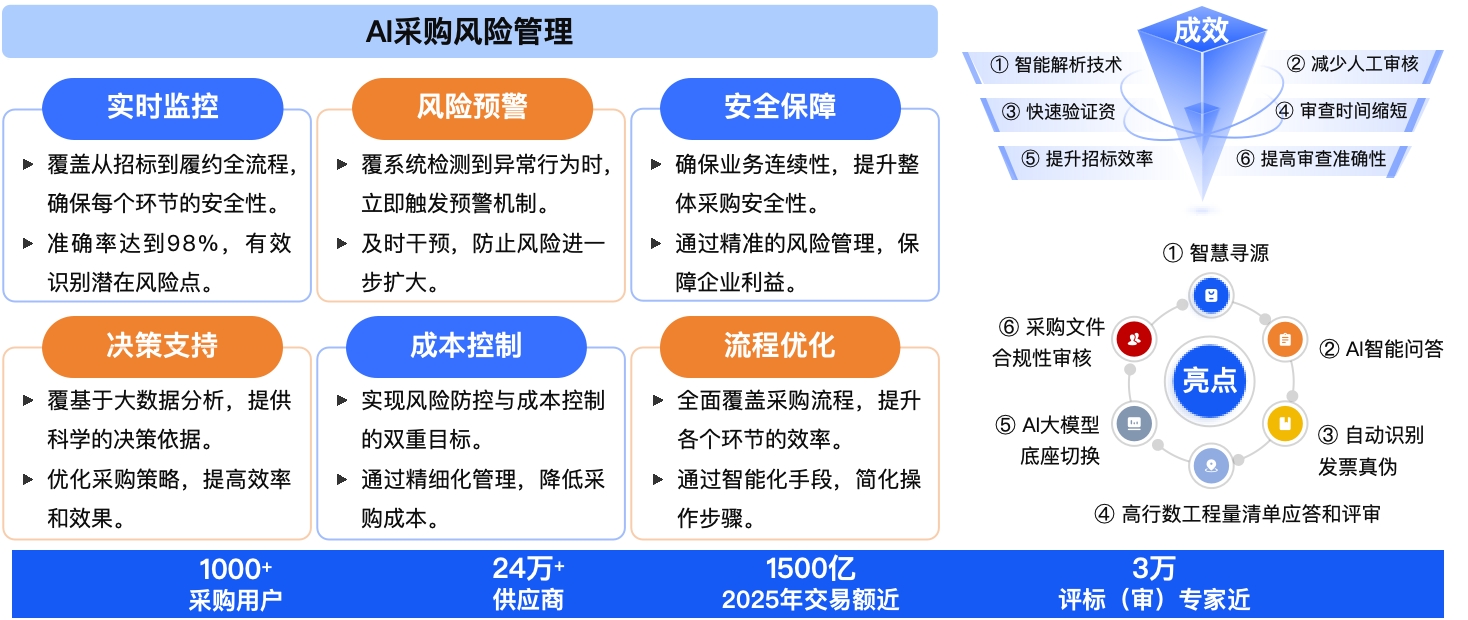
当AI大模型与招投标制度深度耦合,央企采购的“评标”环节正在发生一场静默革命。大唐电商技术有限公司依托信创适配能力,以“AI赋能+制度保障+组织创新”三位一体模式,构建新一代智能评标体系,在评标效率提升70%、综合采购成本降低15%、风险预警准确率达98%的同时,实现合规招标采购全流程护航。平台已服务采购用户1000余家、供应商24万余家,2025年交易额近1500亿元,评标专家近3万名[2]。

三大AI利器重构评标全流程

招标采购是廉洁风险高发领域,评标环节的公正性与效率性直接决定采购质量,大唐电商依托三大利器精准破解该项突出难题。

第一,投标文件智能解析与资质审查系统。系统利用OCR、NLP等技术自动提取投标文件关键信息,与招标文件要求逐项比对,实现资质符合性、商务技术响应度的秒级审查,评标效率提升70%,大幅缩短评标周期,也让“暗标”“异地分散评审”等创新模式有了技术支撑。

第二,智能比价系统。系统基于历史数据与市场参考价自动分析报价合理性,辅助评标专家进行价格评审决策,实现综合采购成本降低15%。在母公司中水物资层面,采购质效持续保持行业领先——2025年招标、非招采购周期分别压缩至31天、7.9天,同比下降36天和17天,成功率提升至88.92%和91.8%[2]。

第三,AI异常行为监测模型。模型实时分析评标过程中的音视频、操作日志等数据,对串通投标、异常打分等行为自动预警,风险预警准确率达98%,有效防范合规风险。

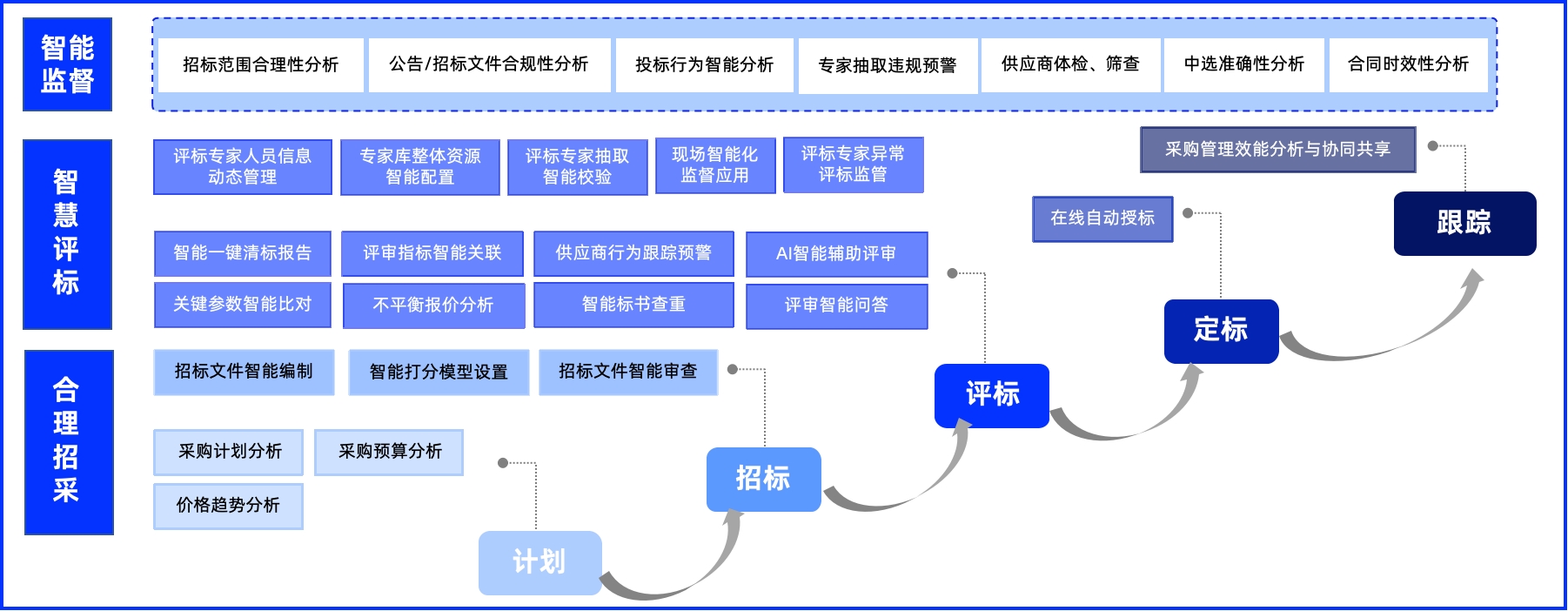
在技术底座上,电商公司秉持“平台化、组件化、低侵入”的设计理念,总体采用分层、微服务的云原生混合云架构,构建涵盖OCR识别、文本向量化、主观项评分等能力的AI能力中心,可有效提升采购效率、降低合规风险、沉淀高价值数据资产,为大型能源企业供应链数字化转型提供可复制方案[3]。2025年2月,公司完成DeepSeek R1 70B大模型的私有化部署,结合平台现有技术实力与DeepSeek强大的自然语言处理及推理能力,率先在招采制度问答、招投标文件解析等关键场景展开应用研究,为电商平台数智化升级注入强大动力[4]。

2025年,电商平台正式迈入智能化3.0时代,非招智能辅助评审正式上线,客观项评分准确率达100%,主观项评价合格率达80%,达到行业领先水平[2]。

制度保障与组织创新让AI用得起用得稳

AI进入评标环节,最大的顾虑在于“机器说了算”的法律边界。大唐电商同步推进制度保障与组织创新,为智能评标装上“双保险”。

制度层面,公司修订完善智能评标管理办法,明确了AI辅助评标的法律地位与责任边界——AI承担辅助研判角色,评标专家保留最终决策权,既发挥机器的高效与客观,又守住人的专业与责任。组织层面,公司组建跨部门的智能评标运营团队,负责模型训练、规则维护与效果评估,确保AI系统与业务需求持续对齐[5]。

这套机制的成效已获国家级检验。2026年4月30日,第九届数字中国创新大赛在福州落幕,由北京国电工程招标有限公司与大唐电商技术有限公司联合组建的“大唐数智领航队”,以大唐集团非招标智能评审实践为赛题,从全国5000余支队伍中脱颖而出,斩获大赛一等奖。该项目所处的“智能科技赛道”竞争尤为激烈——1500余支队伍参赛,仅56支晋级决赛[6]。

政策契合与行业认可的实践样本

“大唐数智领航队”的获奖项目《基于数字技术的智能采购及评审应用》深度契合国家发改委等八部门印发的《关于加快招标投标领域人工智能推广应用的实施意见》(发改法规〔2026〕195号)政策导向,紧扣采购管理智慧化发展要求。项目依托大模型技术,构建覆盖“智能管、编、审、答、评”五大场景,形成智慧采购全流程闭环;区别于传统采购平台的流程自动化,聚焦AI驱动决策、数据协同共享、全链条风险防控三大核心优势,打破传统采购中信息不对称、人为干预等痛点,筑牢采购公平性防线。项目不仅为行业提供了可复制、可推广的智慧采购实践样本,更为社会层面公平交易体系建设注入数智动能[6]。

2026年5月29日,电商公司受邀参加中国电子企业协会主办的“2026(第三届)电力企业数智技术创新研讨会暨电力企业网络与信息安全技术研讨会”,其申报的“基于数字技术驱动的智能采购及辅助评审系统”项目列入《电力企业数智化、网络与信息安全技术创新典型案例及论文集(2026)》。在长达数月的信创适配攻关中,团队完成了从可行性研究到全面上线的全过程闭环管理,系统从多个维度提升采购供应链质量、优化供应商选择、降低因格式错误导致的废标率,从根本上化解关键核心技术面临的"卡脖子"风险[3]。

在资质与创新能力上,电商公司已获得各类专利12项、软件著作权45项;电商平台通过国家信息安全等级保护三级认证,电子招标投标系统持续保持国家级“三星”认证——标志着其在系统功能、技术安全、数据交互、流程管理等方面达到国家认可的最高级别标准;旗下犀维网获得国家非金融领域最高级别网络安全等级保护三级认证;公司还顺利获得国际公认的软件研发和项目管理能力(CMMI)三级认证,并连续两年获评“中央企业电商平台数智化创新领先企业”[2][1]。

三重机制叠加,大唐电商智能评标体系的成效全面显现:投标文件解析与资质审查效率提升70%,大幅缩短评标周期;智能比价系统降低综合采购成本15%;AI异常行为监测风险预警准确率达98%。在母公司层面,中水物资2025年实现经营业绩“六个历史新高”,获集团公司经营业绩考核A级;通过竞拍助力集团公司盘活闲置物资交易额3.91亿元;电子超市在架商品超56万项,长协交易额51.77亿元、同比增长24.75%,长协覆盖率58.02%、同比增加9.2个百分点,交付及时率稳定在99%以上;服务保障集团公司在央企供应链对标中“保A晋位”,排名第14位、同比提升11位[2]。

面向未来,大唐电商将持续深化AI技术与采购业务的融合创新,加快推进招标智能评标等核心功能建设。按照“数字大唐”建设要求,公司将以数智化赋能采购管理升级,为招标投标领域AI深度应用贡献“大唐方案”,也为更多央国企采购的合规、高效、智能运行提供可复制、可推广的实践样本[3][6]。

信息来源

[1] 中国大唐集团有限公司官网:《优秀品牌展播|电商公司——“犀维电商”品牌》https://www.china-cdt.com/dtwz/dtpps/ppjq/2026/1/I1463568928297975808.html

[2] 中国大唐集团有限公司官网:《A级企业展播|物资公司:驭时而进向新而行》https://www.china-cdt.com/dtwz/xwzx/sdbd/2026/3/I1480583969815658496.html

[3] 中国日报网/中国经济网:《自主技术助力国企采购提质增效》http://cnews.chinadaily.com.cn/a/202606/03/WS6a1fc2eea310942cc49afd08.html

[4] 中国大唐集团有限公司官网:《电商公司:完成DeepSeek大模型部署》https://www.china-cdt.com/dtwz/xwzx/jcdt/2025/2/I1341716103264468992.html

[5] 中国大唐集团有限公司官网:《让青春在数智赋能的道路上奋力奔跑》https://www.china-cdt.com/dtwz/ddjs/qcdt/2024/12/I1313457343513493504.html

[6] 中国日报网/中国经济网:《深耕数智招采 赋能行业发展》https://qiye.chinadaily.com.cn/a/202605/11/WS6a017109a310942cc49ab9a4.html

亿邦智库持续关注央国企数字化采购领域的最新进展,如想了解更多与本文相关信息,请扫码关注作者微信或发送邮箱。联系邮箱:zhangjing@ebrun.com

作为TO B领域年度风向标,“2026第八届亿邦产业互联网年会暨首届产业智能体大会”将于11月20日在北京召开。主题定为“AI与出海带来的模态进化”,聚焦产业智能体落地、AI供应链价值重构、数据要素与TOKEN经济、产业出海新生态等前沿议题深度思辨。大会将集结学界权威、央国企标杆、产业龙头、投资机构、服务生态伙伴,汇聚产业核心力量、拆解产业数智化转型路径、分享前沿实战经验。同期还将发布年度产业互联网报告及标杆案例,举办决策人闭门会、“千峰奖”颁奖盛典。


本文首发于 亿邦动力 官方网站

文章来源:亿邦动力

广告
微信
朋友圈

FAQ回顾

大唐电商技术有限公司是做什么的?

大唐电商技术有限公司2016年注册成立,注册资金5000万元,是中国水利电力物资集团有限公司“互联网+采购”信息化建设运营的全资专业子公司,也是国家高新技术企业、北京市“创新型”中小企业和“专精特新”中小企业,旗下核心载体犀维网提供招标采购等全流程电子交易服务。

犀维网是什么平台?

犀维网是大唐电商技术有限公司旗下采购平台,历史可追溯至2005年上线的中国大唐采购网,2013年统一建设为大唐电子商务平台,融合招标、非招标、电子超市、竞拍(卖)四大交易模块。截至2026年8月,注册供应商超17万家,采购主体超1000家,年成交额超1000亿元。

智能评标系统如何提升采购效率?

智能评标系统通过投标文件智能解析与资质审查实现资质和商务技术响应度秒级审查,用智能比价系统辅助价格评审,用AI异常行为监测模型预警串通投标和异常打分。实际数据显示,评标效率提升70%,综合采购成本降低15%,风险预警准确率达98%。

AI在招标采购领域有哪些应用场景?

大唐电商的实践显示,AI在招标采购领域可覆盖“智能管、编、审、答、评”五大场景,包括投标文件自动解析与资质审查、智能比价、异常行为监测、招采制度问答、招投标文件解析等。2025年非招智能辅助评审上线,客观项评分准确率达100%,主观项评价合格率达80%。

大唐电商智能评标如何保障合规性?

大唐电商以“AI赋能、制度保障、组织创新”三位一体模式保障合规:制度上明确AI承担辅助研判角色、评标专家保留最终决策权;组织上组建跨部门智能评标运营团队负责规则维护;技术上用AI异常行为监测模型实时分析音视频与操作日志,风险预警准确率达98%。

这么好看,分享一下?

朋友圈 分享

APP内打开

赞 +1
+1
微信好友 朋友圈 新浪微博 QQ空间
关闭
收藏成功
发送
/140 0