广告
加载中

AI全球化要从交易、生产经营和算力基础设施三层推进

亿邦会展 2026-10-08 12:09
亿邦会展 2026/10/08 12:09

邦小白快读

EN
全文速览

这篇文章的核心干货是国联股份提出的AI全球化三层推进路径,以及企业出海从卖产品转向本地化经营的新做法。

1. 出海需求变了:中小型工业企业不仅需要海外订单,还要面对政治、文化、商贸、支付和金融等落地经营问题。国联股份在巴基斯坦和哈萨克斯坦设立国别总部,专门帮企业解决这类问题。

2. AI三层怎么落地:第一层是贸易层,把海外订单归集起来在国内分发,提高订单匹配效率;第二层是生产层,投资AI探矿企业,用地质数据做勘探识别,同时把国内工业生产拆成30多个细分场景,开发AI应用和垂直模型;第三层是算力层,结合当地需求建国别算力中心,比如哈萨克斯坦通过霍尔果斯联动,围绕算力、算法和数据三个方向展开。

3. 实操启示:出海不直接照搬国内方案,而是把已有经验和当地需求结合,未来还会在其他国家探索算力中心,这是最值得借鉴的思路。

对品牌商来说,这篇文章揭示了B2B工业品出海的新趋势:品牌价值不只来自产品,还来自本地化服务和AI赋能的整体解决方案。

1. 品牌渠道建设:国联股份通过国别总部进入巴基斯坦和哈萨克斯坦,并配合当地政府建设供应链体系,说明品牌出海需要深度本地化渠道,而不能只依赖跨境交易。

2. 产品研发与效率:AI探矿和30多个工业生产细分场景的垂直模型,能降低勘探和制造成本,品牌商可借此提升产品竞争力和研发效率,把技术能力转化为品牌优势。

3. 用户行为观察:客户需求已从单纯采购商品,转变为要求解决政治、文化、支付、金融等综合问题。品牌商应围绕这些场景做服务设计,用服务带动品牌粘性和复购。

4. 定价与竞争:通过AI订单匹配和算力基础设施建设,企业能以更低成本触达海外客户,可能改变传统跨境贸易的价格竞争格局。

卖家可以从这篇文章中看到明确的海外增长市场、需求变化和可复制的合作模式。

1. 增长市场与机会:巴基斯坦、哈萨克斯坦是当前重点布局的国别市场,当地政府希望建设自己的供应链体系,这为工业品卖家提供了新入口;未来其他国家算力中心建设也可能带来配套设备和服务需求。

2. 需求变化:海外买家不仅要订单,还要解决政治、文化、商贸、支付和金融等本地化问题。卖家若不能提供综合服务,就需要与国别总部等服务方合作。

3. 可学习点与商业模式:国联股份的订单归集与国内分发机制,可帮助卖家提高订单匹配效率;AI生产层的30多个场景垂直模型和AI探矿,为卖家提供了卖技术服务的可能。

4. 风险提示与应对:出海不能简单把国内方案搬过去,要结合当地实际需求。卖家应提前了解目标国政策文化,避免踩坑。

这篇文章给工厂带来了生产数字化和产品创新的具体启发。

1. 生产应用场景:工厂可将国内工业生产拆分为30多个细分场景,开发AI应用和垂直模型,或直接采用已被验证的AI工具来降低人工成本、提升效率。

2. 资源勘探商机:国联股份投资AI探矿企业,用地质数据开展勘探和识别。对涉及原材料的工厂来说,AI探矿可能在原料保障和成本控制上带来新机会。

3. 数字化与电商:通过工业品跨境电商平台归集订单,工厂可以获得更稳定的海外订单,但需要具备承接海外订单的本地化能力,比如理解当地政策、文化和支付规则。

4. 实践路径:文章强调不是把国内方案原样搬到海外,而是把已有经验与当地需求结合。工厂在做数字化升级时也应先验证场景,再逐步复制。

服务商能从这篇文章找准跨境服务的客户痛点和未来解决方案方向。

1. 行业趋势:企业出海的诉求从产品交易延伸到本地化生产经营,AI正在成为跨越国界的服务基础设施,服务商需跟上从卖产品到卖服务的转变。

2. 客户痛点:中小型工业企业进入新市场时,会遇到政治、文化、商贸、支付和金融等多重障碍,这正是服务商可以切入的空白领域。

3. 解决方案:国联股份采用国别总部+三层AI架构:贸易层归集订单、生产层用AI探矿和30多个场景垂直模型、算力层建设国别算力中心。服务商可以参考这种分层方式设计可复用的模块。

4. 新技术机会:AI探矿、垂直模型、国别算力等具体技术方向,以及与哈萨克斯坦通过霍尔果斯联动算力算法数据的模式,都有可能成为服务商的交付物。

平台商可以从这篇文章中了解跨境平台如何从交易层走向产业服务层,并借此优化运营和招商。

1. 平台需求变化:用户不再满足于交易撮合,还需要订单匹配、本地化落地、支付金融等综合服务。平台商应把这些需求纳入产品设计。

2. 平台最新做法:国联股份通过设立国别总部实现本地对接,用归集海外订单、国内分发的方式提升匹配效率,这是很好的双边资源整合模式。

3. 运营管理与风向:AI应用分为三层——贸易服务、生产经营服务和算力服务。平台商需关注算力、算法和数据方向的横向联动,未来这类基建可能成为平台新的护城河。

4. 招商与合作机会:当地政府希望建设自有供应链体系,平台可通过国别总部承接此类项目,并吸引有出海能力的卖家和服务商入驻。

5. 风险规避:出海不是复制国内方案,平台在海外扩张时需结合当地政治、文化、商贸等条件灵活调整,避免方向性失误。

这篇文章为研究者提供了关于AI全球化和中企出海的新动向、新问题及商业模式样本。

1. 产业新动向:企业出海需求从单一跨境交易转向海外扎根,并参与东道国供应链建设。国联股份在巴基斯坦和哈萨克斯坦设立国别总部,反映中国工业品电商正在深度嵌入全球产业链。

2. 新问题:中小工业企业在海外面临政治、文化、经济、商贸、支付和金融等系统性问题,这些问题的解决需要企业、平台和国家政策协同。

3. 商业模式创新:文章提出了AI全球化的三层框架——交易匹配、生产经营和算力基础设施,这是对跨境产业互联网模式的新探索,可作为研究数字贸易的案例。

4. 政策法规启示:国别算力建设(如霍尔果斯与哈萨克斯坦联动)涉及跨境数据、算力协同和基础设施合作,政策研究者可关注数据跨境流动、算力互联和相关合规机制建设。

返回默认

声明:快读内容全程由AI生成,请注意甄别信息。如您发现问题,请发送邮件至 run@ebrun.com 。

我是 品牌商 卖家 工厂 服务商 平台商 研究者 帮我再读一遍。

Quick Summary

The core insight of this article is UBM's three-tiered AI globalization roadmap, along with a new approach for enterprises going global that shifts from selling products to localizing operations.

1. The demand for going global has changed: Small and mid-sized industrial enterprises not only need overseas orders but also must handle on-the-ground operational issues including politics, culture, trade, payment, and finance. UBM has set up country headquarters in Pakistan and Kazakhstan specifically to help companies solve these problems.

2. How the three AI layers work: The first is the trade layer, which aggregates overseas orders and distributes them domestically, improving order-matching efficiency. The second is the production layer, which invests in AI-powered mineral exploration companies to use geological data for exploration and identification; it also divides domestic industrial production into more than 30 sub-scenarios to develop AI applications and vertical models. The third is the computing layer, which builds national computing centers aligned with local demand—for example, in Kazakhstan, connecting through Khorgos and focusing on computing power, algorithms, and data.

3. Practical takeaways: Going global does not mean copying domestic solutions directly; instead, it combines existing experience with local needs. Future exploration of computing centers in other countries is the most valuable idea to borrow.

For brand owners, this article reveals a new trend in B2B industrial products going global: brand value derives not only from products but also from localized services and AI-enabled total solutions.

1. Brand channel building: UBM entered Pakistan and Kazakhstan through country headquarters and supported local governments in building supply chain systems. This shows that brand globalization requires deeply localized channels, not just cross-border transactions.

2. Product development and efficiency: AI mineral exploration and vertical models covering more than 30 industrial production sub-scenarios can reduce exploration and manufacturing costs. Brand owners can use this to enhance product competitiveness and R&D efficiency, turning technological capability into brand advantage.

3. Observing user behavior: Customer demand has shifted from simply purchasing goods to solving comprehensive issues related to politics, culture, payment, and finance. Brand owners should design services around these scenarios, using service to drive brand stickiness and repurchase.

4. Pricing and competition: Through AI order matching and computing infrastructure, companies can reach overseas customers at lower costs, potentially reshaping pricing competition in traditional cross-border trade.

Sellers can identify clear overseas growth markets, demand shifts, and replicable cooperation models from this article.

1. Growth markets and opportunities: Pakistan and Kazakhstan are currently key country markets. Local governments want to build their own supply chain systems, providing new entry points for industrial product sellers; future computing center construction in other countries may also create demand for supporting equipment and services.

2. Demand shifts: Overseas buyers not only want orders but also need solutions to localization issues such as politics, culture, trade, payment, and finance. If sellers cannot provide comprehensive services, they need to partner with service providers like country headquarters.

3. Learning points and business models: UBM's order aggregation and domestic distribution mechanism helps sellers improve order-matching efficiency. The AI production layer's 30+ vertical models and AI mineral exploration offer sellers the possibility of selling technical services.

4. Risk warnings and responses: Going global cannot simply transplant domestic solutions; it must align with local actual needs. Sellers should study the target country's policies and culture in advance to avoid pitfalls.

This article offers factories concrete inspiration for production digitalization and product innovation.

1. Production application scenarios: Factories can divide domestic industrial production into more than 30 sub-scenarios to develop AI applications and vertical models, or directly adopt proven AI tools to reduce labor costs and improve efficiency.

2. Resource exploration opportunities: UBM invests in AI mineral exploration companies that use geological data for exploration and identification. For factories involving raw materials, AI mineral exploration may create new opportunities in raw material security and cost control.

3. Digitalization and e-commerce: Through cross-border e-commerce platforms for industrial products that aggregate orders, factories can gain more stable overseas orders, but they need to develop localized capabilities to fulfill them—such as understanding local policies, culture, and payment rules.

4. Practical path: The article emphasizes not copying domestic solutions wholesale overseas, but combining existing experience with local needs. Factories should first validate scenarios during digital upgrading, then replicate progressively.

Service providers can identify client pain points in cross-border services and future solution directions from this article.

1. Industry trend: The demand for going global has extended from product transactions to localized operations, and AI is becoming cross-border service infrastructure. Service providers must follow the shift from selling products to selling services.

2. Client pain points: Small and mid-sized industrial enterprises face multiple barriers when entering new markets—politics, culture, trade, payment, and finance—which are exactly the gaps service providers can fill.

3. Solutions: UBM adopts a structure of country headquarters plus a three-tier AI architecture: trade layer for order aggregation, production layer using AI mineral exploration and vertical models for 30+ scenarios, and computing layer building national computing centers. Service providers can design reusable modules inspired by this layered approach.

4. New technology opportunities: Specific technical directions such as AI mineral exploration, vertical models, and national computing, as well as the Khorgos-Kazakhstan model linking computing power, algorithms, and data, may all become deliverables for service providers.

Platform operators can learn from this article how cross-border platforms move from the transaction layer to the industrial service layer, and use that to optimize operations and merchant recruitment.

1. Changing platform demands: Users are no longer satisfied with transaction matching; they also need comprehensive services including order matching, localized implementation, payment, and finance. Platform operators should incorporate these needs into product design.

2. Latest platform practices: UBM has set up country headquarters for local connections and uses order aggregation overseas with domestic distribution to improve matching efficiency. This is a strong bilateral resource integration model.

3. Operations management and trends: AI applications are divided into three layers—trade services, production and operation services, and computing services. Platform operators should monitor horizontal linkages across computing power, algorithms, and data; such infrastructure may become a new moat.

4. Merchant recruitment and partnership opportunities: Local governments want to build their own supply chain systems. Platforms can take on such projects through country headquarters and attract sellers and service providers with global capabilities.

5. Risk avoidance: Going global is not about copying domestic approaches. Platforms expanding overseas must flexibly adjust to local political, cultural, and trade conditions to avoid strategic mistakes.

This article provides researchers with new trends, emerging issues, and business model cases regarding AI globalization and the international expansion of Chinese enterprises.

1. New industry dynamics: Enterprise demand for going global is shifting from single cross-border transactions to deep localization and participation in host-country supply chain construction. UBM's establishment of country headquarters in Pakistan and Kazakhstan reflects how Chinese industrial e-commerce is embedding itself into global industrial chains.

2. New issues: Small and mid-sized industrial enterprises face systemic challenges overseas—political, cultural, economic, trade, payment, and financial—that require coordination among enterprises, platforms, and national policy.

3. Business model innovation: The article proposes a three-tier framework for AI globalization—transaction matching, production operations, and computing infrastructure—representing a new exploration of cross-border industrial internet models and a useful case for digital trade research.

4. Policy and regulatory implications: National computing construction (such as the Khorgos-Kazakhstan linkage) involves cross-border data, computing collaboration, and infrastructure cooperation. Policy researchers should focus on cross-border data flows, computing interconnection, and related compliance mechanisms.

Disclaimer: The "Quick Summary" content is entirely generated by AI. Please exercise discretion when interpreting the information. For issues or corrections, please email run@ebrun.com .

I am a Brand Seller Factory Service Provider Marketplace Seller Researcher Read it again.

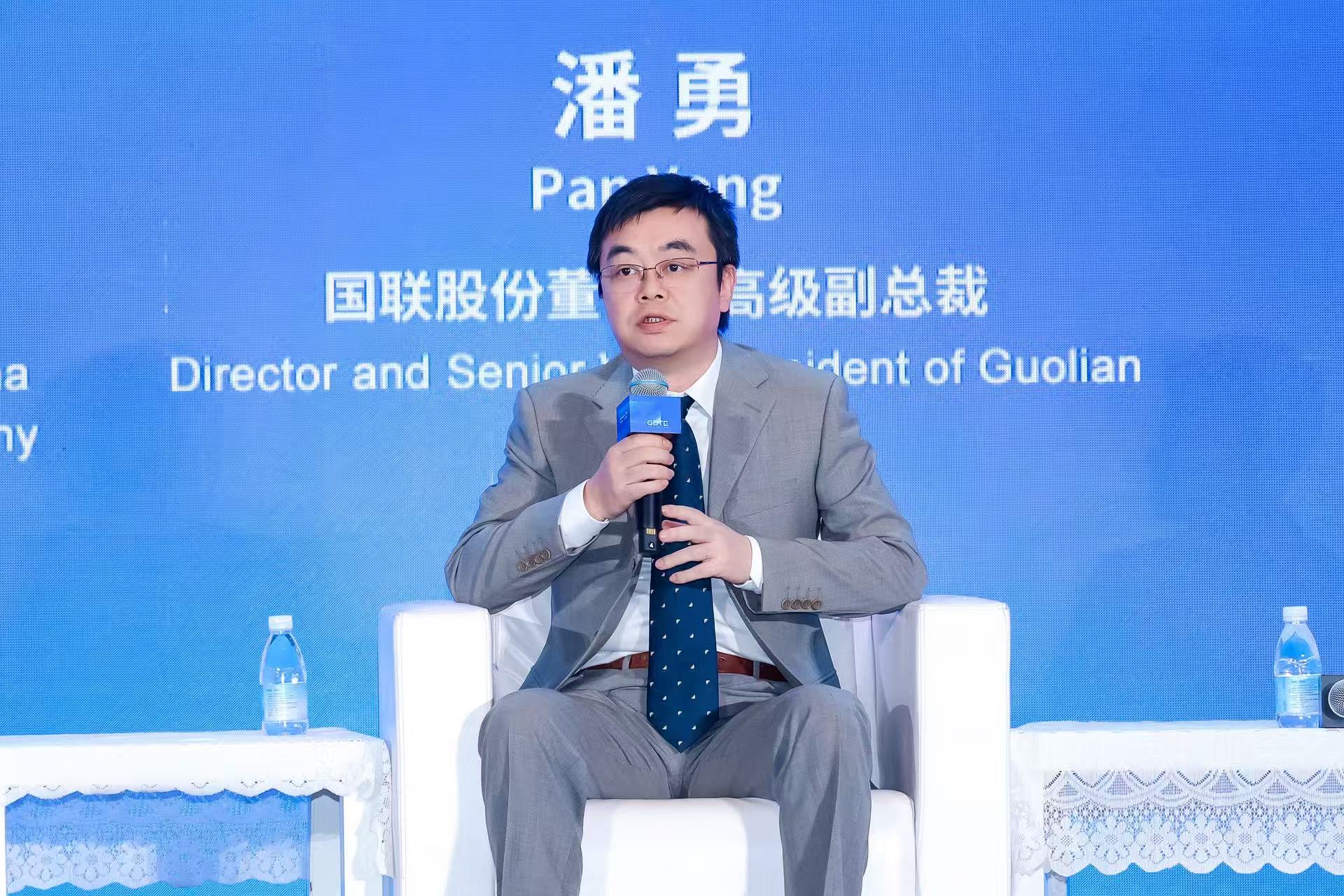
【亿邦原创】9月24日,在第五届全球数字贸易博览会“丝路电商日”启动仪式暨“丝路电商”资源对接会圆桌对话中,国联股份潘勇介绍了企业从工业品跨境交易向国别服务和“AI全球化”延伸的探索。

潘勇表示,企业出海需求已经超越单一的产品跨境交易。中小型工业企业既需要订单,也需要解决落地经营中的政治、文化、商贸、支付和金融问题。国联股份据此在巴基斯坦和哈萨克斯坦设立国别总部,并从交易、生产经营和算力基础设施三个层次推进AI应用。

本文根据圆桌现场速记整理,在不影响原意的基础上有所删改。

以下为潘勇观点整理:

国联股份主要从事工业品和大宗原材料电商,同时提供企业数字化、人工智能和数据服务。我们的跨境业务最初从工业品进口和出口交易切入。

随着业务推进,我们发现,无论是合作国家还是企业自身,需求都已经超越产品交易。许多中国企业希望真正走出去、在海外扎根,当地政府也希望建设自己的供应链体系。为此,我们在今年5月设立巴基斯坦国别总部,8月设立哈萨克斯坦国别总部,帮助中小型工业企业解决进入当地市场时遇到的政治、文化、经济、商贸、支付和金融等本地化问题。

我们的AI服务目前沿着三个层次推进。第一层是服务跨境进出口贸易,通过归集海外订单、在国内进行分发,帮助企业对接需求,提高订单匹配效率。这个功能看起来并不复杂,但对跨境交易效率的提升十分直接。

第二层是把AI延伸到生产经营。我们投资了AI探矿企业,通过地质数据开展勘探和识别;同时把国内工业生产拆分为30多个细分场景,开发AI应用和垂直模型,并依靠数据持续完善。这些经过实践验证的能力,也可以根据海外市场需要进行应用。

第三层是结合不同国家的具体情况推进算力基础设施建设。以哈萨克斯坦为例,当地希望建设国别算力。通过霍尔果斯与哈萨克斯坦形成联动后,相关工作可以围绕算力、算法和数据三个方向持续展开。

这并不是把国内方案原样搬到海外,而是把已经形成的经验、路径和步骤与当地需求结合。未来,我们还计划在其他国家探索相应的算力中心和服务能力,以更高效率、更低成本帮助企业和合作伙伴解决全球化过程中的实际问题。

本文首发于 亿邦动力 官方网站

文章来源:亿邦动力

广告
微信
朋友圈

FAQ回顾

国联股份是做什么的?

国联股份主要从事工业品和大宗原材料电商,同时提供企业数字化、人工智能和数据服务。跨境业务最初从工业品进口和出口交易切入,目前已在巴基斯坦和哈萨克斯坦设立国别总部,帮助中小型工业企业解决海外市场落地中的本地化问题。

中小企业出海面临哪些问题?国联股份能提供什么帮助?

中小企业出海既需要订单,也需要解决落地经营中的政治、文化、经济、商贸、支付和金融等本地化问题。国联股份通过设立巴基斯坦和哈萨克斯坦国别总部,帮助中小型工业企业解决进入当地市场时遇到的相关问题,同时通过AI归集海外订单、在国内分发,提高匹配效率。

企业如何推进AI全球化?

企业可以从三个层次推进AI全球化:第一,服务跨境进出口贸易,通过归集海外订单在国内分发,提高订单匹配效率;第二,把AI延伸到生产经营,例如投资AI探矿企业,并将国内工业生产拆分为30多个细分场景开发AI应用和垂直模型;第三,结合不同国家情况推进算力基础设施建设。

国联股份在海外设立了哪些国别总部?

国联股份于今年5月设立巴基斯坦国别总部,8月设立哈萨克斯坦国别总部,目的是帮助中小型工业企业解决进入当地市场时遇到的政治、文化、经济、商贸、支付和金融等本地化问题,满足企业从单一产品跨境交易向国别服务延伸的需求。

哈萨克斯坦算力基础设施建设将如何推进?

哈萨克斯坦希望建设国别算力,通过霍尔果斯与哈萨克斯坦形成联动后,相关工作可以围绕算力、算法和数据三个方向持续展开。相关方案并非把国内方案原样搬至海外,而是将已有经验、路径和步骤与当地需求结合,未来还计划在其他国家探索算力中心和服务能力。

这么好看,分享一下?

朋友圈 分享

APP内打开

赞 +1
+1
微信好友 朋友圈 新浪微博 QQ空间
关闭
收藏成功
发送
/140 0