广告
加载中

卖出450万个 Babycare推出安抚大师奶瓶

龚作仁 2026-09-21 13:28
龚作仁 2026/09/21 13:28

邦小白快读

EN
全文速览

这篇文章介绍了Babycare新上市的安抚大师奶瓶,可帮助家长解决宝宝抗拒奶瓶、喂养哭闹、厌奶等常见喂养难题,核心实用信息如下。

1.这款奶瓶针对高敏宝宝的多感官敏感源设计,视觉上联合国际色彩专家研发了适配新生儿感知的“柔光橘”低刺激色系,搭配波纹外形缓解宝宝焦躁情绪;喂养体验上采用13°歪头奶嘴,做了“中心柔、边缘韧”的软硬分区设计,搭配超敏回气阀与环形进气结构,能有效防胀气、防呛奶,奶嘴触感更贴近母乳亲喂感受。

2.该产品品质有稳定支撑,品牌投入近千万元升级自有工厂的高精度奶嘴智能生产线,奶嘴孔径、孔位加工精度达行业先进水平,截至2026年7月Babycare奶瓶累计销量已达415万只,市场认可度较高,有喂养困扰的家长可重点关注。

Babycare推出安抚大师奶瓶的落地路径,为母婴品类品牌的用户运营、产品研发与品牌建设提供了可参考的成熟样本,核心参考信息如下。

1.用户洞察与消费趋势层面,品牌精准捕捉到高敏宝宝喂养的细分痛点,跳出传统奶瓶只关注吸吮功能的研发思路,关注到视觉刺激、空气混入、奶嘴触感等多维度敏感源,覆盖了过去被忽略的宝宝情绪安抚需求,切中了精细化育儿的消费趋势。

2.品牌建设与产品研发层面,品牌采用跨界联合专业学者的模式,邀请国际色彩科学领域专家共研适合新生儿的视觉设计,为产品建立专业背书;同时构建从感官设计、结构技术到自建精密生产线的全链路能力,把“安抚”从营销概念落地为系统的产品能力,目前该品牌奶瓶累计销量超415万只,验证了这一模式的市场接受度。

Babycare安抚大师奶瓶的推出,折射出母婴喂养品类的新增长机会与可复制的经营思路,对一线卖家的选品、运营有较强的参考价值,核心信息如下。

1.市场机会与需求变化层面,当前母婴喂养赛道存在高敏宝宝细分市场的增长空间,传统奶瓶产品未覆盖宝宝多感官敏感导致厌奶、哭闹的痛点,家长对能减少喂养不适、降低胀气呛奶风险的安抚型产品有明确付费意愿,这类差异化产品的市场竞争力更强。

2.经营实操层面,选品可优先选择有专业背书、技术壁垒清晰的产品,比如这款产品有国际色彩专家联合研发背书、双重防胀防呛结构设计,还有品牌近千万投入的智能生产线做品控支撑,全系列奶瓶累计销量达415万只,已通过市场验证;销售时可围绕宝宝厌奶、喂养哭闹的具体场景做痛点讲解,提升转化效率。

Babycare在奶瓶品类上的研发投入与生产布局,为婴童用品生产工厂的升级方向、订单捕捉提供了明确指引,核心参考信息如下。

1.产品设计与生产需求层面,当前高端母婴产品对核心零部件的加工精度要求大幅提升,以奶嘴为例,其孔径大小、孔位位置的精度和一致性,直接影响奶液流速、回气效率与防呛防胀效果,是品牌方重点打磨的核心环节;此外适配新生儿感知特点的色彩、触感设计,也成为产品设计的新方向。

2.生产升级与商业机会层面,核心部件的自研自产能力正在成为品牌的核心竞争力,Babycare投入近千万元升级自有工厂,自研高精度奶嘴智能打孔生产线,将加工精度提升至行业先进水平。工厂可针对性布局硅胶婴童用品的高精度智能加工设备,匹配高端母婴品牌的精度要求,捕捉高端婴童用品的生产订单机会。

Babycare安抚大师奶瓶的产品创新逻辑,折射出母婴行业的发展趋势与品牌方的核心痛点,为服务商的业务设计、服务优化提供了方向参考,核心信息如下。

1.行业趋势与客户痛点层面,母婴行业已进入细分需求深挖阶段,仅满足基础使用功能的产品已无法匹配精细化育儿的需求,品牌方普遍面临三类痛点:一是难以精准捕捉细分人群的未被满足需求,二是缺少打造差异化专业背书的资源,三是难以将研发阶段的设计参数稳定落地到量产环节,当前行业竞争已从单一功能竞争转向多感官体验、全链路品质的系统竞争。

2.服务机会层面,可针对母婴品牌提供跨学科专家资源对接服务,比如儿童感知研究、色彩科学等领域的专业资源,帮助品牌打造差异化卖点;也可面向制造端提供智能生产线改造、高精度加工技术解决方案,帮助品牌提升核心部件的生产品质。

Babycare这类母婴品牌的产品创新实践,为母婴类平台的招商选品、运营管理、风向引导提供了清晰的参考方向,核心信息如下。

1.招商选品层面,可重点引入具备细分痛点解决能力、全链路自研生产能力的母婴品牌,比如布局自有智能生产线、针对高敏宝宝等细分人群打造差异化产品的品牌,这类产品的用户认可度高,像Babycare奶瓶截至2026年7月累计销量已超415万只,能够丰富平台的高品质商品供给,提升用户留存。

2.运营与风控层面,运营端可围绕母婴人群的高频痛点打造内容场景,比如针对宝宝厌奶、喂养哭闹、胀气呛奶等普遍问题,重点推送具备实际功能支撑的适配产品,匹配用户需求提升转化;同时要引导平台商家跳出低价竞争思路,注意甄别仅将“安抚”“防胀”作为营销噱头却无实际支撑的产品,规避虚假宣传的合规风险。

Babycare安抚大师奶瓶的研发与生产布局,反映了我国婴童喂养产业的多个发展新动向,具备较高的产业研究价值,核心观察点如下。

1.产业发展新动向层面,一是婴童产品的研发逻辑正在从单一功能导向转向多感官系统体验导向,本次推出的奶瓶产品不再仅聚焦防胀气等基础功能,而是引入儿童色彩感知等跨学科研究成果,从视觉、触感、口感、使用体验全维度搭建安抚式喂养的产品系统;二是母婴品牌的核心壁垒正在向上游制造端延伸,改变了过往品牌只做研发设计、生产全部外包的传统模式,如Babycare投入近千万元自研奶嘴智能生产设备,打通了设计、研发、制造的全链路能力链。

2.商业模式创新层面,跨学科研究成果的商业化落地正在成为产品创新的重要来源,比如色彩科学领域的婴儿视觉感知研究,已经从学术成果转化为可落地的产品设计方案,为婴童产业的创新提供了新路径。

返回默认
声明:快读内容全程由AI生成,请注意甄别信息。如您发现问题,请发送邮件至 run@ebrun.com 。

我是 品牌商 卖家 工厂 服务商 平台商 研究者 帮我再读一遍。

Quick Summary

This article covers Babycare’s newly launched Soothing Master baby bottle, designed to help parents address common feeding challenges including bottle refusal, fussing during feeds, and milk aversion. Key practical takeaways are as follows:

1. Engineered for multi-sensory sensitivities in highly reactive babies, the bottle features a low-stimulation "soft glow orange" color co-developed with international color experts to match newborn visual perception, paired with a rippled exterior to ease infant distress. For feeding experience, it uses a 13° angled nipple with a dual-firmness design (soft at the center, firmer at the edges), paired with an ultra-sensitive air return valve and circular vent structure to effectively reduce colic and choking risk, while delivering a texture closely mimicking direct breastfeeding.

2. The product is backed by consistent quality guarantees: the brand invested nearly RMB 10 million to upgrade high-precision smart nipple production lines at its owned factories, achieving industry-leading processing accuracy for nipple aperture size and positioning. As of July 2026, cumulative sales of Babycare bottles have reached 4.15 million units, reflecting strong market recognition, making it a key option for parents navigating feeding difficulties.

The go-to-market strategy for Babycare’s Soothing Master bottle offers a proven reference model for maternal and infant category brands across user operations, product R&D, and brand building. Core insights are as follows:

1. For user insight and consumer trends, the brand accurately identified the unmet segment pain point of feeding highly sensitive babies, departing from traditional bottle R&D that focused solely on suction functionality. It addressed multi-dimensional sensory triggers including visual stimulation, air ingestion, and nipple texture, covering the previously overlooked need for infant emotional soothing and aligning with the trend of precision parenting.

2. For brand building and product R&D, the brand adopted a cross-sector collaboration model with academic experts, partnering with international color science specialists to co-develop newborn-appropriate visual design and build professional product credibility. It also built end-to-end capabilities spanning sensory design, structural technology, and in-house precision production lines, translating "soothing" from a marketing concept into systematic product capabilities. To date, the brand’s cumulative bottle sales have exceeded 4.15 million units, validating market acceptance of this model.

The launch of Babycare’s Soothing Master bottle reflects new growth opportunities and replicable operational approaches in the infant feeding category, offering strong reference value for frontline sellers on product selection and operations. Key takeaways are as follows:

1. For market opportunities and demand shifts, there is clear growth potential in the niche segment of products for highly sensitive babies in the infant feeding track. Traditional bottle products fail to address pain points such as milk aversion and fussing caused by infants’ multi-sensory sensitivities, and parents demonstrate clear willingness to pay for soothing-oriented products that reduce feeding discomfort and lower colic and choking risks, giving such differentiated products stronger market competitiveness.

2. For operational practice, prioritize product selection with clear professional endorsement and technical barriers: this model, for example, is backed by co-development with international color experts, a dual-structure colic and choke prevention design, and quality control supported by the brand’s nearly RMB 10 million investment in smart production lines, with cumulative series sales of 4.15 million units already validated by the market. During sales, frame messaging around specific pain point scenarios including infant milk aversion and feeding fussing to improve conversion rates.

Babycare’s R&D investment and production layout in the bottle category provide clear guidance for children’s product factories on upgrading directions and order capture. Core reference points are as follows:

1. For product design and production requirements, high-end maternal and infant products now demand significantly higher processing precision for core components. Taking nipples as an example, the precision and consistency of aperture size and positioning directly impact milk flow rate, air return efficiency, and colic and choke prevention performance, making them a core priority for brands. In addition, color and texture design adapted to newborn perceptual characteristics has emerged as a new direction for product development.

2. For production upgrades and commercial opportunities, in-house R&D and production capacity for core components is becoming a core brand competitive advantage. Babycare invested nearly RMB 10 million to upgrade its owned factories, developing proprietary high-precision smart nipple punching lines that raise processing accuracy to industry-leading levels. Factories can make targeted investments in high-precision smart processing equipment for silicone children’s products to meet the precision requirements of high-end maternal and infant brands and capture production order opportunities in the premium children’s product segment.

The product innovation logic behind Babycare’s Soothing Master bottle reflects development trends in the maternal and infant industry and core pain points for brands, offering directional reference for service providers on business design and service optimization. Key takeaways are as follows:

1. For industry trends and client pain points, the maternal and infant sector has entered a stage of deep segmentation, where products meeting only basic functional needs can no longer satisfy precision parenting demands. Brands generally face three core pain points: difficulty accurately identifying unmet needs among niche user groups, lack of resources to build differentiated professional endorsements, and challenges in translating R&D design parameters into stable mass production. Industry competition has shifted from single-function rivalry to systematic competition across multi-sensory experience and full-chain quality.

2. For service opportunities, providers can offer cross-disciplinary expert resource matching for maternal and infant brands, connecting them with specialists in areas such as children’s perception research and color science to help build differentiated selling points. They can also provide smart production line transformation and high-precision processing technology solutions for manufacturers, helping brands improve production quality for core components.

Product innovation practices from maternal and infant brands such as Babycare offer clear reference directions for maternal and infant-focused platforms across merchant recruitment and product selection, operational management, and trend guidance. Core insights are as follows:

1. For merchant recruitment and product curation, prioritize onboarding maternal and infant brands with niche pain point solving capabilities and end-to-end in-house production capacity, such as brands that have deployed proprietary smart production lines and developed differentiated products for niche groups including highly sensitive babies. Such products enjoy high user recognition: as of July 2026, cumulative sales of Babycare bottles have exceeded 4.15 million units, helping platforms enrich high-quality product offerings and improve user retention.

2. For operations and risk control, operations teams can build content scenarios centered on high-frequency pain points for maternal and infant users, such as common issues including infant milk aversion, feeding fussing, colic, and choking, and prominently recommend products with verifiable functional support to match user needs and improve conversion. Platforms should also guide merchants to move away from low-price competition, and screen out products that use "soothing" or "anti-colic" solely as marketing gimmicks without functional support to mitigate compliance risks associated with false advertising.

The R&D and production layout of Babycare’s Soothing Master bottle reflects multiple new development trends in China’s infant feeding industry, carrying high value for industrial research. Core observations are as follows:

1. For new industrial development trends, first, the R&D logic of infant products is shifting from single-function orientation to multi-sensory systematic experience orientation. The newly launched bottle no longer focuses solely on basic functions such as colic prevention, but introduces cross-disciplinary research outcomes including children’s color perception, building a soothing feeding product system across visual, tactile, taste, and usage experience dimensions. Second, the core competitive moat of maternal and infant brands is extending upstream to the manufacturing end, breaking from the traditional model where brands only handled R&D and design while fully outsourcing production. For example, Babycare invested nearly RMB 10 million to develop proprietary smart nipple production equipment, building an integrated capability chain spanning design, R&D, and manufacturing.

2. For business model innovation, the commercial application of cross-disciplinary research outcomes is becoming a key source of product innovation. For instance, research on infant visual perception from the field of color science has been translated from academic findings into implementable product design solutions, providing a new pathway for innovation in the infant and child industry.

Disclaimer: The "Quick Summary" content is entirely generated by AI. Please exercise discretion when interpreting the information. For issues or corrections, please email run@ebrun.com .

I am a Brand Seller Factory Service Provider Marketplace Seller Researcher Read it again.

宝宝抗拒奶瓶、喂养过程中哭闹、出现厌奶小情绪,是不少家庭都会遇到的喂养难题。这背后的原因,可能在于宝宝的“敏感”——牛奶混入太多空气、奶嘴口感不佳、外界颜色光感太刺激等等,都可能是孩子烦躁的刺激源。

近日,Babycare为高敏宝宝专研的安抚大师奶瓶新品正式上市,这款产品围绕光感、触感、口感、手感等全感官专研宝宝喝奶安抚系统。不仅专研“超敏回气阀”,搭配“中间柔、周边韧”的特制歪头奶嘴,防胀气、防呛奶的同时也让奶嘴更贴合母乳亲喂口感。特别地,Babycare还基于国际色彩科学专家、利兹大学色彩科学与技术学院教授、Colour Intelligence Ltd联合创始人Stephen Westland教授关于婴儿色彩感知的相关研究,联合专家共研更适用于新生儿视觉感知特点的“柔光橘”安抚色系,关注宝宝在喂养过程中的敏感情绪,为日常喂养提供更柔和的体验。

一只奶瓶背后的婴儿色彩感知研究

你是否想过,宝宝每天都会接触到的视觉环境,可能是其“厌奶”的原因之一?

作为颜色科学、色彩设计等领域的大师,Stephen Westland教授曾在在英国德比大学、基尔大学和工业界任教,已发表过上百篇学术文章和著作,并于2008年被英国皇家影像协会授予Davies奖章。

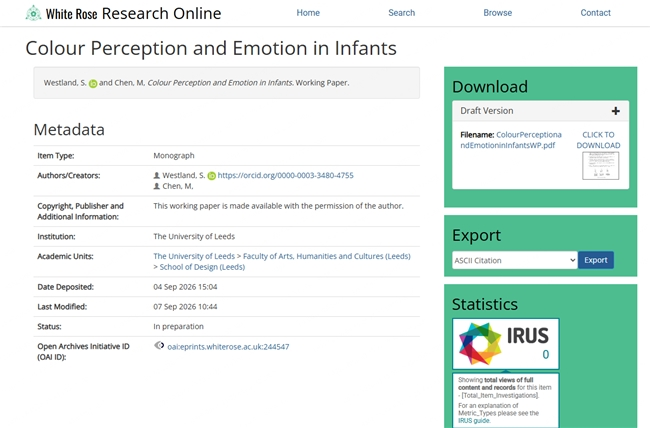
Babycare联合Stephen Westland教授共同开展婴儿色彩感知相关研究。研究发现,婴儿视觉发育的过程中,对不同色相的感知能力会逐步发展,其中红色色相是较早能够被识别的色相之一;同时,色彩的饱和度、对比度等视觉属性,也会影响视觉刺激的强弱。相关研究已发表在英国利兹大学、谢菲尔德大学和约克大学共同创建的学术资源网站。

基于共研成果,Babycare将暖色调应用于安抚大师奶瓶的视觉设计,打造“柔光橘”安抚色彩方案,希望在宝宝接触奶瓶的过程中,提供更加柔和的视觉体验。不仅如此,Babycare安抚大师奶瓶还专门设计了波纹纹理的外形,能进一步缓解宝宝焦躁情绪。

从“歪头”开始,重新设计一只奶瓶

如果说“柔光橘”解决的是视觉体验,那么奶嘴则直接关系到宝宝每天与奶瓶发生的接触。

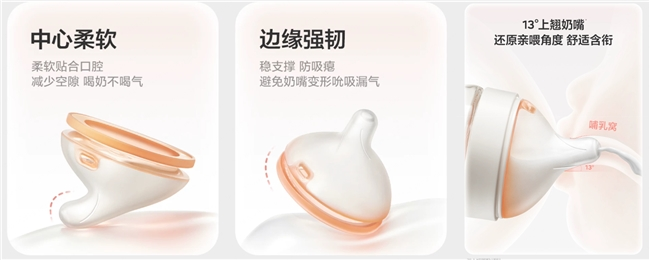
Babycare安抚大师奶瓶延续了“歪头奶嘴”设计,13°角度设计,让奶嘴形态更贴近宝宝含接时的自然状态;同时,底部采用独特的环形进气结构,通过结构设计帮助减少喂养过程中空气进入奶液的情况。

两项设计共同作用于喂养过程,形成针对防胀气需求的“双重结构设计”。

对于新生儿而言,一次喂养看似简单,却包含了吸吮、吞咽、呼吸等多个动作之间的协调。奶嘴的角度、进气方式以及奶嘴本身的柔软度,都可能影响宝宝的喂养体验。

为了让新生儿喝得更顺、更少吞入空气,Babycare的“软硬分区奶嘴”——将“中心柔、边缘韧”做成一项核心奶嘴技术。其背后的研发难题,是奶嘴的柔软度与回气效率天然存在一定矛盾——越柔软,宝宝含接体验越友好,但过软容易造成回气孔闭合;而增强结构支撑,又可能带来安装困难和残奶死角。

而Babycare通过分区设计,让奶嘴实现中心柔软、边缘更具韧性:中心区域更贴近宝宝口腔的含接与吸吮需求,边缘区域则帮助维持整体结构和回气通道稳定;同时,通过超敏回气阀设计,让家长更容易识别回气位置。由此,实现“防胀+防呛”的双重喂养设计,帮助减少喂养过程中空气进入和呛奶风险,舒缓宝宝肠胃敏感带来的喂养不适。

从13°奶嘴角度,到环形进气结构,再到奶嘴分区设计,Babycare试图解决的并不是一个单点问题,而是围绕新生儿“怎么含、怎么吸、怎么喝”,把每一个细节拆开重新研究。

这也让“安抚”不再只是一个视觉概念,而成为贯穿产品结构、材料和使用体验的一套研发思路。

近千万元投入自研奶嘴智能生产线

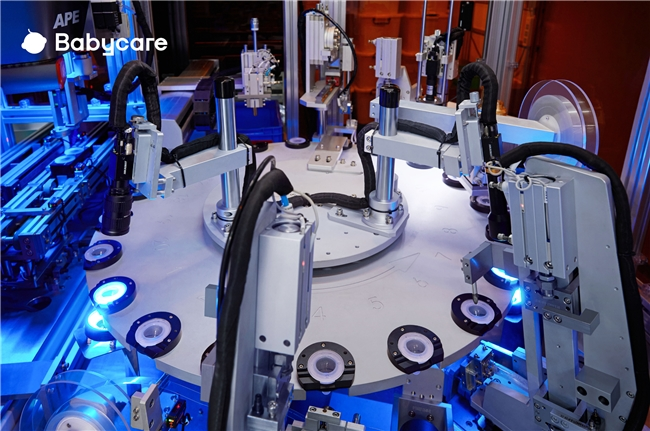
截至2026年7月,Babycare奶瓶已销售415万只。据悉,Babycare投入近千万升级自有奶瓶奶嘴工厂,并引入全球高端设备,自主研发了一条高精度奶嘴智能打孔生产线。

早在2017年,Babycare便自建工厂生产硅胶奶嘴。此外,Babycare进一步升级奶瓶奶嘴工厂,并自主研发高精度奶嘴智能打孔生产线,将核心研发能力延伸至制造端。并通过提升奶嘴孔径、孔位等关键参数的加工精度与一致性,整体制造精度达到行业先进水平。

对奶嘴而言,孔径并不是一个简单的数字。它会影响液体流速和宝宝的吸吮节奏,孔位和结构精度也会影响奶嘴的进气与使用表现。因此,只有把精度真正做到生产端,研发阶段设定的每一个参数,才能稳定地落到最终产品上。

从“研发一只奶嘴”到“自主研发生产奶嘴的设备”,Babycare正在把奶嘴这一核心部件的研发能力进一步向制造端深入,形成从结构设计、材料研发到精密制造的完整能力链。

从“柔光橘”的视觉设计,到13°歪头奶嘴、环形进气结构与奶嘴材料,再到自有工厂的精密制造,安抚大师奶瓶将研发深入到喂养的每一个细节。

对Babycare而言,“安抚”并非一个单一功能,而是一套从视觉、口腔到喂养体验,再延伸至材料与制造的系统设计。

从产品设计到系统研发,Babycare希望把看不见的研发投入,最终转化为宝宝每天都能感受到的细节。

注:文/龚作仁,文章来源:Laborer,本文为作者独立观点,不代表亿邦动力立场。

文章来源:Laborer

广告
微信
朋友圈

FAQ回顾

Babycare安抚大师奶瓶有哪些针对高敏宝宝的设计?

Babycare安抚大师奶瓶专为高敏宝宝研发,打造全感官喝奶安抚系统:联合色彩专家研发低刺激“柔光橘”安抚色系;搭配13°歪头软硬分区奶嘴、超敏回气阀与环形进气结构,实现防胀气防呛奶,贴合母乳亲喂口感;波纹外形可缓解宝宝喂养时的焦躁情绪。

奶瓶的视觉配色会影响宝宝的喂养状态吗?

会产生直接影响。婴儿视觉发育阶段对高饱和度、高对比度色彩更敏感,易受刺激引发烦躁、厌奶情绪。Babycare联合国际色彩科学专家基于婴儿色彩感知研究成果,为安抚大师奶瓶设计“柔光橘”低刺激配色,给宝宝柔和的视觉体验,缓解喂养时的敏感情绪。

奶嘴加工精度对奶瓶喂养体验有什么影响?

奶嘴加工精度直接影响喂养体验。奶嘴孔径决定奶液流速与宝宝吸吮节奏,孔位、结构精度则影响进气效果与防胀气表现。Babycare投入近千万元升级自有工厂,自研高精度奶嘴智能打孔生产线,提升奶嘴关键参数的加工精度与一致性,保障喂养体验稳定。

这么好看,分享一下?

朋友圈 分享

APP内打开

赞 +1
+1
微信好友 朋友圈 新浪微博 QQ空间
关闭
收藏成功
发送
/140 0