广告
加载中

SHEIN品牌版图揭开面纱:已有6大自孵化子品牌

亿邦动力 2026-09-01 10:52
亿邦动力 2026/09/01 10:52

邦小白快读

EN
全文速览

本文核心披露了全球第三大时尚零售商SHEIN的完整品牌矩阵布局,核心干货整理如下:

1. 基本盘情况:SHEIN除旗舰品牌外,一共布局了10个品牌,通过自孵化+收购结合的方式,覆盖不同价位、风格和产品品类,满足多样消费需求。

2. 自孵化子品牌都走差异化卡位路线:MOTF是亲民价中高端女装,Glowmode以不到Lululemon三分之一价格切入运动赛道,Dazy定位韩系风格已积累超500万官网粉丝,SHEGLAM主打美妆以中东为核心向外扩张。

3. 收购路径清晰:早期收购补齐供应链和区域运营能力,后期转向收购优质品牌资产补齐自身短板,整体扩张逻辑清晰。

本文披露的SHEIN品牌布局思路,对品牌商有多维度的参考干货,具体如下:

1. 品牌矩阵布局策略:采用自孵化+收购结合的方式搭建品牌矩阵,针对不同价位、风格、品类做差异化分层卡位,覆盖更多消费群体,避开单一品牌的增长瓶颈。

2. 定价与赛道切入参考:针对成熟赛道可以用高性价比定价切入,比如Glowmode以不足头部品牌三分之一的价格打入运动服饰赛道,MOTF以亲民价格切入中高端女装赛道,降低用户尝试门槛。

3. 扩张与补短板思路:可以通过收购快速补齐自身短板,比如收购Forever21母公司股权补足线下渠道短板,收购环保品牌Everlane获得可持续发展理念的品牌加持,收购逻辑可从补能力转向收品牌资产。

本文披露的SHEIN发展路径,给各类时尚卖家人提供了可参考的干货与机会提示,总结如下:

1. 可学习的增长路径:SHEIN从纯转售模式起步,通过收购吸收对方的自有生产能力,逐步转型为具备供应链能力的全链条零售商,还通过收购本土品牌搭建区域客服、运营体系,快速扩大区域市场份额,路径可复制性强。

2. 赛道机会提示:时尚行业仍存在大量分层赛道机会,不同价位、垂类风格的细分领域都有切入空间,无论是中高端女装、高性价比运动服饰还是风格化服饰、美妆都有增长空间。

3. 渠道与品牌升级提示:纯线上卖家可通过收购、合作获得线下渠道资源补全短板,还可以从主品牌现有品类延伸孵化独立子品牌,依托主站流量起步再逐步独立,降低创业风险。

本文关于SHEIN的品牌布局信息,给服装、美妆类工厂带来了这些启示和商业机会,整理如下:

1. 生产与设计需求方向:当前市场对差异化定位的产品需求旺盛,不同价位、不同风格的垂类产品都有头部品牌在布局,比如亲民中高端女装、高性价比运动服饰、韩系风格成衣、大众美妆都有稳定的品牌订单需求,工厂可对应调整自身生产和设计方向匹配需求。

2. 商业合作机会:SHEIN正在快速扩充品牌矩阵,覆盖多品类多区域市场,对供应链的需求持续增长,具备对应产能、设计能力的工厂可对接获得长期合作机会。

3. 转型启示:SHEIN的发展说明具备自有生产能力的供应链更有竞争力,工厂不仅可以给品牌做代加工,也可以依托生产能力向上延伸做自有品牌,获得更高利润空间。

本文披露的SHEIN扩张路径,反映了当前时尚行业的发展趋势,也给服务商带来了客户痛点与机会干货,总结如下:

1. 行业发展趋势:当前头部快时尚品牌已经从单一品牌运营转向多品牌矩阵布局,通过自孵化+收购结合的方式快速扩张,收购逻辑已经从早期补齐供应链能力,转向收购成熟优质品牌资产补齐自身品牌短板,行业整合速度加快。

2. 品牌方核心痛点:头部品牌在扩张过程中,普遍存在线下渠道缺失、区域市场运营经验不足、品牌调性不完善等痛点,比如SHEIN长期做线上,就需要通过收购获得线下门店资源补全短板。

3. 服务商可落地方向:可针对品牌多品牌布局提供差异化定位咨询、跨区域运营、供应链整合服务,也可围绕品牌收购后的整合提供运营、合规、流量对接等服务,满足头部品牌扩张的多元需求。

本文关于SHEIN的品牌布局信息,给各类时尚电商平台提供了这些运营和招商参考干货,整理如下:

1. 品牌方对平台的核心需求:头部品牌孵化子品牌的常规路径是先依托主站运营,验证模式后再逐步独立,因此平台需要提供多品牌入驻、分层运营的支持,满足品牌从孵化到独立的全周期成长需求。

2. 全渠道运营新方向:头部线上品牌成熟后,普遍开始补足线下渠道短板,平台可探索和线下实体渠道的合作模式,为入驻品牌提供全渠道运营支持,提升平台对品牌的吸引力。

3. 招商方向启示:平台可参照SHEIN的差异化卡位思路,调整招商方向,吸引不同定位、不同价位、不同风格的垂类品牌入驻,丰富平台品牌矩阵,覆盖更多需求的用户,提升平台整体竞争力。

本文披露的SHEIN品牌矩阵布局,反映了当前全球快时尚产业的新动向,可供产业研究者参考的干货如下:

1. 产业发展新动向:全球头部快时尚品牌已经从单一品牌的流量增长,转向多品牌矩阵的边界扩张,普遍采用自孵化+收购双路径推进布局,覆盖不同需求的消费群体,同时行业收购逻辑发生明显转变,早期以补齐供应链、技术、区域市场能力为主,当前转向收购成熟品牌资产完善自身品牌调性、补足短板。

2. 商业模式创新:SHEIN的多品牌差异化卡位模式,是快时尚品牌延伸增长边界的新尝试,既依托主品牌的供应链和流量优势孵化子品牌,降低子品牌的起步风险,又通过独立运营打造差异化定位,避免内部同质性竞争。

3. 产业特征总结:当前快时尚行业的增长已经从流量驱动转向品牌资产驱动,头部企业通过整合行业内品牌资源实现快速扩张,行业整合趋势明显。

返回默认
声明:快读内容全程由AI生成,请注意甄别信息。如您发现问题,请发送邮件至 run@ebrun.com 。

我是 品牌商 卖家 工厂 服务商 平台商 研究者 帮我再读一遍。

Quick Summary

This article reveals the full brand portfolio of SHEIN, the world's third-largest fashion retailer, with key takeaways as follows:

1. Core business overview: In addition to its flagship brand, SHEIN has built a portfolio of 10 brands via a combination of in-house incubation and acquisition. The portfolio covers different price points, styles and product categories to meet diverse consumer demands.

2. Differentiated positioning for in-house incubated sub-brands: MOTF targets affordable mid-to-high-end women’s fashion; Glowmode enters the activewear segment at less than one-third of Lululemon’s price point; Dazy positions around Korean-style fashion and has accumulated over 5 million followers on its official website; and SHEGLAM focuses on beauty, with expansion centered on the Middle East before rolling out to other markets.

3. Clear acquisition strategy: Early acquisitions focused on shoring up supply chain and regional operational capabilities, while later acquisitions shifted to acquiring quality brand assets to fill gaps in SHEIN’s business, resulting in a well-defined expansion logic.

This article outlines SHEIN’s brand portfolio strategy, offering multi-dimensional takeaways for other brand owners, summarized below:

1. Brand portfolio strategy: SHEIN builds its brand portfolio through a mix of in-house incubation and acquisitions, adopting differentiated layered positioning across price points, styles and product categories. This approach allows it to reach more consumer segments and avoid the growth bottlenecks that come with relying on a single brand.

2. Reference for pricing and market entry: Brand owners can enter mature segments with value pricing to lower the barrier for consumer trial. For example, Glowmode entered the activewear market at less than one-third of the leading brand’s price, while MOTF entered the mid-to-high-end women’s fashion segment with an accessible price point.

3. Approach to expansion and gap-filling: Acquisitions allow brands to quickly close capability gaps. SHEIN, for example, acquired a stake in Forever 21’s parent company to shore up its offline channel presence, and acquired sustainable brand Everlane to add a sustainability-focused brand asset to its portfolio. The acquisition logic can evolve from closing capability gaps to acquiring curated brand assets.

This article outlines SHEIN’s growth path, offering actionable takeaways and opportunity insights for fashion sellers of all types, summarized below:

1. Replicable growth path: SHEIN started as a pure resale business, then gradually transformed into a full-chain retailer with in-house supply chain capabilities by acquiring production capacity from acquired targets. It also built regional customer service and operational systems by acquiring local brands to quickly expand market share in new regions, creating a highly replicable model.

2. Segment opportunity outlook: The fashion industry still offers substantial opportunities in segmented niches across price points and aesthetic verticals. There is room for growth across mid-to-high-end women’s fashion, value activewear, style-focused apparel and mass beauty.

3. Guidance for channel and brand upgrading: Pure-play online sellers can fill offline gaps via acquisition or partnership, and can incubate independent sub-brands extending from their core brand’s existing categories. Starting sub-brands off the main brand’s existing traffic before spinning them out independently reduces startup risk.

This article’s insights into SHEIN’s brand expansion offer the following implications and business opportunities for apparel and beauty manufacturers:

1. Guidance for production and design design direction: Demand for differentiated positioned products is strong, and leading brands are building out offerings across price points and aesthetic verticals. There is steady order demand for affordable mid-to-high-end women’s fashion, value activewear, Korean-style ready-to-wear and mass beauty, and factories can adjust their production and design focus to match this demand.

2. Business collaboration opportunities: As SHEIN rapidly expands its brand portfolio across multiple categories and regions, its demand for supply chain capacity continues to grow. Factories with matching production capacity and design capabilities can secure long-term collaboration opportunities by partnering with the company.

3. Transformation insights: SHEIN’s growth demonstrates that supply chains with in-house production capabilities are more competitive. Rather than only doing OEM processing for brands, factories can leverage their production capabilities to move upstream and launch their own brands to capture higher profit margins.

This article’s analysis of SHEIN’s expansion path reflects current trends in the fashion industry, and offers insights into client pain points and growth opportunities for service providers, summarized below:

1. Industry trend overview: Leading fast fashion players have shifted from operating a single brand to building multi-brand portfolios, expanding rapidly via a combination of in-house incubation and acquisition. Acquisition logic has evolved from early-stage moves to shore up supply chain capabilities, to today’s strategy of acquiring mature quality brand assets to fill gaps in brand positioning, accelerating industry consolidation.

2. Core pain points for expanding brands: Leading brands commonly face gaps in offline distribution, regional operational experience and brand positioning during expansion. For example, as a long-time pure-play online brand, SHEIN needed to acquire offline store assets via acquisition to close this gap.

3. Actionable service opportunities: Service providers can offer differentiated positioning consulting, cross-regional operation and supply chain integration services to support brands building multi-brand portfolios. They can also offer operational, compliance and traffic matching services for post-acquisition integration to meet the diverse needs of expanding leading brands.

This article’s insights into SHEIN’s brand portfolio offer the following operational and merchant recruitment guidance for fashion e-commerce platforms, summarized below:

1. Core brand demands on platforms: The standard path for leading brands incubating sub-brands is to launch on the parent brand’s main site first, validate the business model, then spin the sub-brand out independently. Platforms therefore need to support multi-brand onboarding and tiered operations to meet brands’ full-cycle growth needs from incubation to independence.

2. New direction for omni-channel operations: As leading online brands mature, they are increasingly moving to fill gaps in offline distribution. Platforms can explore partnership models with offline physical channels to offer omni-channel operational support for入驻 brands, boosting their appeal to brand partners.

3. Guidance for recruitment strategy: Platforms can adopt SHEIN’s differentiated positioning approach to adjust their recruitment focus, attracting vertically focused brands across different positioning, price points and styles. This enriches the platform’s own brand portfolio, reaches more user segments with diverse demands, and improves the platform’s overall competitiveness.

This article’s disclosure of SHEIN’s brand portfolio reflects new trends in the global fast fashion industry, with key takeaways for industry researchers as follows:

1. New industry trends: Leading global fast fashion brands have shifted from pursuing traffic growth for a single brand to expanding boundaries via multi-brand portfolios, generally pursuing this strategy through a dual path of in-house incubation and acquisition to reach consumer groups with diverse needs. Acquisition logic has also shifted notably: early deals focused on shoring up supply chain, technological and regional market capabilities, while today’s acquisitions focus on buying mature brand assets to refine brand positioning and close capability gaps.

2. Business model innovation: SHEIN’s multi-brand differentiated positioning model is a new experiment for fast fashion brands looking to expand growth boundaries. It leverages the core brand’s supply chain and traffic advantages to incubate sub-brands, lowering their startup risk, while enabling independent operation to build clear differentiated positioning and avoid internal homogeneous competition.

3. Summary of current industry characteristics: Growth in the fast fashion industry has shifted from being traffic-driven to being driven by brand equity. Leading players are expanding rapidly by consolidating brand assets across the industry, making industry consolidation a clear defining trend.

Disclaimer: The "Quick Summary" content is entirely generated by AI. Please exercise discretion when interpreting the information. For issues or corrections, please email run@ebrun.com .

I am a Brand Seller Factory Service Provider Marketplace Seller Researcher Read it again.

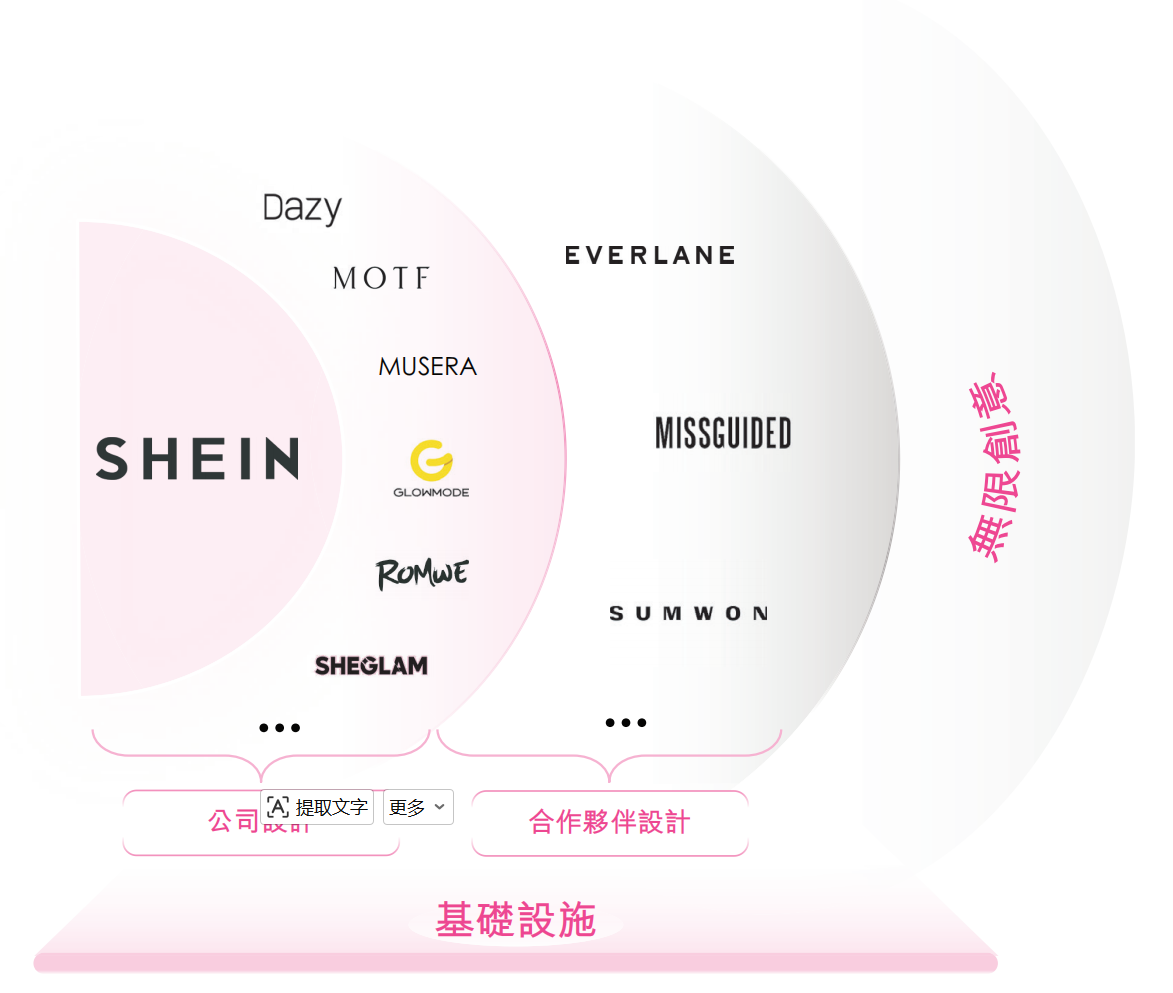
【亿邦原创】今日(9月1日)上午,全球在线时尚和生活方式公司希音(以下统称SHEIN)正式在港股敲钟上市。作为如今全球排第三的时尚零售商,SHEIN旗下除了旗舰品牌SHEIN之外,多年来还通过自孵化以及收购的方式建立起丰富的品牌矩阵,将业务覆盖至更多价位、独特风格和更广泛的产品类别。据SHEIN招股书信息,目前,其品牌矩阵已包含十大品牌。

其中,自孵化品牌,如中高端品牌MOTF、运动品牌Glowmode、美妆品牌SHEGLAM和韩系服装品牌Dazy等;收购品牌包括美国时尚品牌EVERLANE、英国快时尚品牌MISSGUIDED、迪拜时尚品牌SUMWON等。

具体来看,SHEIN自有品牌方面,除了旗舰品牌SHEIN,各子品牌已形成差异化卡位。MOTF最初以SHEIN Premium系列推出,后升级为独立品牌,以相对亲民的价格切入中高端女装;Glowmode于2022年上线独立站,以不到Lululemon三分之一的价格打入运动赛道;Dazy定位韩系风格,2021年在SHEIN主站上线后逐步独立运营,2024年签约韩国演员金裕贞为全球代言人,官网积累超500万粉丝;SHEGLAM则从SHEIN美妆品类延伸独立,覆盖彩妆与护肤,以中东市场为核心,同时向欧洲、澳大利亚和其他市场扩张。

收购品牌方面,SHEIN相关动作最早可以追溯到2014年。当年,SHEIN收购了亚文化快时尚平台ROMWE,吸收其自有生产能力,此后也从纯转售模式转型为具备供应链能力的全链条零售商。2015年,SHEIN又将美国品牌Make Me Chic收入麾下,并借此在美国建立了客服中心,显著扩大了北美市场份额。

2023年,SHEIN的收购步伐明显提速:8月收购了Forever 21母公司SPARC Group约三分之一的股权,借助其在美国的实体门店网络补足SHEIN线下渠道的短板;10月,SHEIN又买下了英国快时尚品牌Missguided,借此深耕英国市场,随后SHEIN将Missguided的品牌IP许可给迪拜时尚集团SUMWON Studios运营。

最新一笔收购发生于2026年5月,SHEIN以约8000万美元从LVMH旗下私募基金L Catterton手中100%收购了以“彻底透明”理念著称的美国DTC品牌Everlane,该品牌在环保、供应链透明、可持续发展等方面可对SHEIN形成加持。

纵观SHEIN过往的一系列收购,其逻辑似乎也正从补齐供应链与技术能力转向购买品牌资产。

亿邦持续追踪报道该情报,如想了解更多与本文相关信息,请扫码关注作者微信。

本文首发于 亿邦动力 官方网站

文章来源:亿邦动力

广告
微信
朋友圈

FAQ回顾

SHEIN旗下有哪些自孵化子品牌?

SHEIN目前共有6大自孵化子品牌,包括中高端女装品牌MOTF、运动品牌Glowmode、美妆品牌SHEGLAM、韩系服装品牌Dazy等,各子品牌形成差异化卡位,覆盖不同价位、风格与产品类别。

SHEIN收购海外品牌的逻辑是什么?

SHEIN早期收购以补齐供应链与技术能力、拓展区域市场份额为主,2023年以来收购步伐提速,逻辑转向购买品牌资产,最新收购的美国DTC品牌Everlane可在环保、供应链透明、可持续发展层面形成加持。

Dazy品牌的定位和发展情况如何?

Dazy是SHEIN自孵化的韩系风格服装品牌,2021年在SHEIN主站上线后逐步独立运营,2024年签约韩国演员金裕贞为全球代言人,目前官网已积累超500万粉丝。

Glowmode品牌的核心优势是什么?

Glowmode是SHEIN自孵化的运动服饰品牌,2022年上线独立站,主打高性价比,产品售价不到Lululemon的三分之一,可覆盖更多大众运动消费需求。

这么好看,分享一下?

朋友圈 分享

APP内打开

赞 +1
+1
微信好友 朋友圈 新浪微博 QQ空间
关闭
收藏成功
发送
/140 0